

Planning anchor
Tank, payload, and floorplan reality
A good rig decision usually starts with the limits that shape daily use: how much water it carries, what it can haul, and where people actually live inside it.
Compare by
Travel style, workspace, upgrade headroom
The right rig is the one that supports the way you move, work, store gear, and add solar, batteries, or cargo later.
Best companion
Use-case comparisons
Rig reviews get clearer when they are paired with side-by-side type comparisons and scenario pages instead of one-off dealership thinking.
TL;DR
- Winterization is not one job. You are draining tanks, protecting pressurized hot and cold lines, bypassing or draining the water heater correctly, protecting traps, and finding every hidden fixture that can hold water.
- The antifreeze method is usually the safest DIY path for freeze-prone storage. Air blowout can work when done carefully, but it is less forgiving around check valves, pump strainers, outside showers, washers, ice makers, and hydronic domestic-water loops.
- Your exact rig decides the exceptions. Tankless water heaters, Aqua-Hot systems, washer hookups, residential refrigerators with ice makers, filter housings, outside kitchens, and utility-center valve panels need their own manual checks before you call the job done.
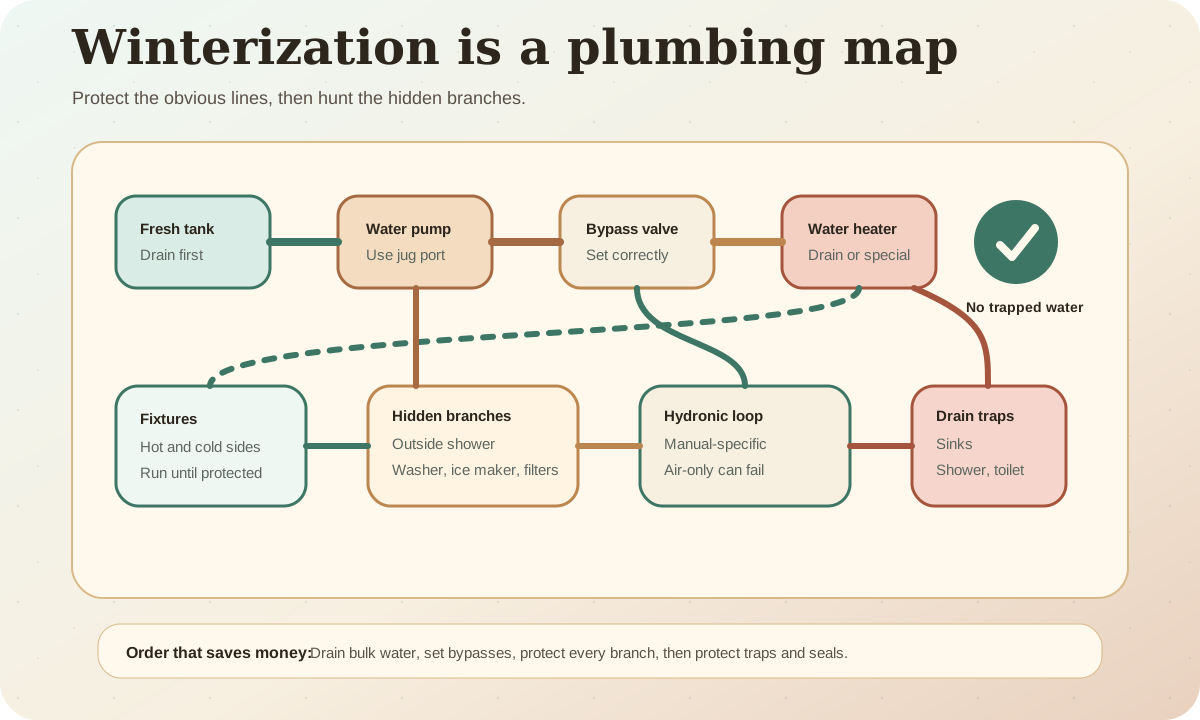
RV winterization snapshot
Use this as a method filter before you touch valves. Your owner manual still wins when a component has special instructions.
Safest DIY method
Drain, bypass, pump RV antifreeze
It protects more hidden plumbing than air-only work, as long as you run both hot and cold sides until they show solid pink.
Air blowout fit
Useful, less forgiving
Air can clear lines before antifreeze or protect mild-risk storage, but pressure, sequence, and hidden fixtures matter.
Big exception
Hydronic domestic loops
Aqua-Hot says the domestic water coil must be protected with approved RV antifreeze and cannot be winterized by air alone.
Common miss
Outside and optional water points
Outside showers, spray ports, washer valves, ice makers, filters, and outside kitchens often hold the water people forget.
Official winterization references
These are starting points for method checks. Your exact RV and component manuals still decide valve positions, pressure limits, and appliance exceptions.
Pre-arrival checks
Find every water-using option
Check for outside showers, black-tank flushes, washer prep, ice makers, water filters, outdoor kitchens, tankless heaters, and hydronic domestic-water loops.
Use the right antifreeze
RV plumbing winterization antifreeze is not automotive antifreeze, and hydronic boiler fluid is a separate product category.
Document valve positions
A phone photo of the utility panel before and after winterization makes spring de-winterizing much less mysterious.
Winterization fails in the hidden water paths
Most first-time winterization checklists make the job sound like opening a few drains and pouring pink liquid somewhere.
That is why people miss expensive parts. The kitchen sink is obvious. The water trapped in a pump strainer, city-water check valve, outside shower hose, black-tank flush line, washer valve, refrigerator ice-maker line, tankless heater, or hydronic domestic-water coil is easier to forget.
The goal is simple: no freezeable water gets trapped where expansion can crack plastic, fittings, brass valves, pump housings, water heater components, or appliance solenoids.
If you use the rig in shoulder season before storage, pair this with the off-grid RV readiness checklist. Winterization is easier when you already know where the water pump, low-point drains, water heater bypass, filters, and utility-panel valves live.
Choose the method before you start
There are three practical winterization lanes.
Compare fast
| Spec | Antifreeze method | Air blowout method | Hybrid method |
|---|---|---|---|
| Best fit | Most freeze-prone storage, first-time DIY winterization, rigs with many hidden fixtures | Milder storage, owners who know the plumbing well, or a pre-step before antifreeze | Cold storage where you want air to clear bulk water before pumping antifreeze |
| Main upside | Visible confirmation when pink fluid reaches each fixture | Uses less antifreeze in the pressurized lines | Reduces diluted antifreeze and gives better confidence at hidden branches |
| Main watchout | You must bypass the tank-style water heater or you can waste gallons into the tank | Air can miss trapped pockets, appliance valves, pump strainers, check valves, and hydronic loops | Takes longer and still requires careful valve sequencing |
| Special exceptions | Tankless heaters, Aqua-Hot, washers, filters, and ice makers still need manual-specific steps | Do not rely on air-only for Aqua-Hot domestic-water loops | Still pour antifreeze into drain traps, toilet bowl seal, and sometimes tanks |
For most owners storing in real freezing weather, the hybrid method is the calmest answer: drain first, use low-pressure air to move bulk water, then pump RV antifreeze through the fresh-water plumbing and protect the traps.
That sounds like more work. It is still cheaper than a cracked water pump, split fitting, water heater mistake, or hidden appliance valve.
Do not use automotive antifreeze in RV plumbing
Automotive antifreeze is not for potable RV water systems. Use RV plumbing winterization antifreeze intended for freshwater plumbing, and keep boiler antifreeze for hydronic heating systems separate from the pink plumbing antifreeze conversation.
The antifreeze method, step by step
Start with the water heater off and cool. If the water heater was recently used, give it time. Opening a hot pressurized water heater is a burn risk, not a badge of confidence.
Drain and flush the black and gray tanks before winterization. The plumbing job is cleaner when the waste tanks are already handled, and you do not want diluted antifreeze sitting in a dirty trap or tank because you skipped the unpleasant part.
Then drain the freshwater tank, open low-point drains, open fixtures briefly to admit air, and drain the water heater according to the heater type. Tank-style water heaters usually need the drain plug or anode removed, while tankless heaters often have a different drain sequence.
After the water heater is drained, set the tank-style water heater bypass before pumping antifreeze. The bypass keeps several gallons of RV antifreeze out of the water heater tank. If the bypass valves are wrong, you will either waste antifreeze or leave part of the hot-water side unprotected.
Use the onboard pump winterization port or pump converter kit to draw RV antifreeze from the jug. Do not pour antifreeze into the freshwater tank unless your manual specifically tells you to. Many systems are designed to pull from a jug so the fresh tank is not coated with antifreeze.
Run each fixture until solid pink appears:
- kitchen sink cold
- kitchen sink hot
- bathroom sink cold
- bathroom sink hot
- shower cold
- shower hot
- toilet valve
- outside shower or spray port
- outside kitchen sink or sprayer
- low-point lines if your manufacturer instructs that step
- washer valves, ice maker, or other water-using options by manual procedure
Finish by pouring RV antifreeze into every drain trap. Include the shower, sinks, and any washer standpipe or floor drain. Leave a little antifreeze in the toilet bowl to help protect the seal, unless your toilet manufacturer says otherwise.
The air blowout method
Air blowout is not magic. It is controlled pressure moving water out of lines, one branch at a time.
Use a regulator and stay within the pressure limit in your manual. Winnebago references low regulated pressure in its winterization material, with some towable manuals around 20 psi and other consumer guidance warning not to exceed 30 psi. The safe answer is not a forum number. It is your RV and component manual.
Connect the compressor through a blowout fitting at the city-water inlet. Open one fixture at a time so air is not taking the easy branch while water stays trapped in a different line. Hot and cold sides need separate attention even when the faucet has one handle.
Air-only winterization still needs drain-trap antifreeze. P-traps and toilet seals are not protected just because the pressurized lines were blown out.
The weak point is hidden plumbing. Air can leave water in check valves, pump bodies, filter bowls, appliance valves, and dead-end branches. That is why many careful owners use air as a pre-step, not the whole winterization strategy.
Water heaters change the method
Tank-style water heaters and tankless water heaters are not winterized the same way.
A tank-style water heater usually gets turned off, cooled, depressurized, drained, and bypassed before antifreeze is pumped through the rest of the system. The bypass matters because a six-gallon or ten-gallon water heater tank can swallow a lot of antifreeze without improving protection.
Tankless heaters need manual-specific handling. Truma AquaGo documentation uses the Easy Drain Lever to drain the appliance and notes that winterizing with fluid is only possible when the proper bypass kit is installed. Other tankless heaters may want antifreeze run through certain internal passages while the heater is off, or they may have drain plugs and filters that must be opened.
Do not assume "tankless" means "nothing to do." It means the old water-heater tank habit may not apply.
If you bought the RV used and do not know what water heater it has, add that to your used RV inspection checklist. Freeze damage often tells a quiet story until pressure testing exposes it.
The fixtures people forget
The easiest way to miss a line is to think only about the indoor sink and shower.
Walk the rig from front to back and list every place water can go:
- city-water inlet and check valve
- freshwater tank drain
- pump and pump strainer
- filter housing or cartridge
- water heater or tankless heater
- indoor faucets
- shower wand and hose
- toilet valve and sprayer
- outside shower
- outdoor kitchen sink
- black-tank flush
- washer hookup or washer-dryer combo
- refrigerator ice maker or water dispenser
- low-point drains
- accumulator tank, if installed
- hydronic domestic-water loop, if equipped
Remove or bypass water filters before pumping antifreeze unless the filter manufacturer says otherwise. Filters can hold water, block flow, or strip color from the antifreeze enough to make confirmation harder.
Outside shower heads should be opened and drained, not just the valves behind them. A hose or wand can trap water after the main line looks protected.
Washer hookups need both hot and cold valves protected. A washer-dryer combo may need a short fill-and-drain sequence so antifreeze reaches the internal valves and pump. Splendide publishes RV/marine-specific winterization steps, which is the right level of specificity to look for.
Ice makers and water dispensers are their own branch. If you have a residential refrigerator, Norcold or Dometic RV refrigerator, or a separate ice-maker valve, use the appliance manual instead of guessing. Water valves and small plastic lines do not forgive much expansion.
Hydronic systems need a hard pause
If your motorhome has Aqua-Hot or a similar hydronic system, pause before using an air-only routine.
Aqua-Hot's domestic hot-water loop is not the same as the boiler-fluid loop. The domestic water coil still carries potable water and must be winterized when freezing temperatures are possible.
Aqua-Hot specifically warns that the domestic water coil cannot be winterized by blowing it out with air. Their guidance is to pump approved non-toxic RV antifreeze through the domestic water side until it appears at hot and cold fixtures.
That does not mean you pour random pink plumbing antifreeze into the hydronic boiler reservoir. Boiler fluid and potable plumbing antifreeze are different jobs. If that distinction feels fuzzy, stop and use the manual or a qualified RV technician.
Common mistakes
Forgetting to turn off the water heater
Electric water heater elements can be damaged if powered dry, and hot water creates a burn risk when draining. Turn off the water heater, let it cool, and verify it stays off until the system is refilled in spring.
Leaving the water heater bypass wrong
Wrong bypass positions can waste antifreeze, block hot-side protection, or leave you confused during de-winterizing. Take a photo before changing valves and another photo after the winterization position is set.
Skipping low-point drains before antifreeze
Low-point drains remove bulk water and reduce dilution. If you pump antifreeze into a water-heavy system, the first pink you see may be weaker than you think.
Missing the outside shower
Outside shower valves, hoses, and spray ports are classic freeze-damage points. Open hot and cold sides and make sure antifreeze or air reaches them.
Treating air-only as universal
Air-only winterization can work on simple systems when done carefully, but it is not universal. Aqua-Hot domestic loops, washers, ice makers, pump strainers, and filter housings need more specific protection.
Forgetting spring de-winterizing risk
Spring mistakes matter too. Do not energize a water heater until it is full, do not leave the bypass in winter mode, and flush the plumbing until antifreeze is gone before using the system normally.
If you are trying to stretch late-season water use before winter storage, the water conservation guide can help you reduce tank cycling without leaving hidden water in the wrong places after the trip.
Final thought
Good winterization is boring because it is methodical. Drain the obvious water, protect the pressurized lines, set the water heater correctly, handle every hidden fixture, protect the traps, and respect component-specific instructions. The rig does not care whether you used air, antifreeze, or both. It only cares whether any freezeable water got left behind.
Frequently asked
Questions RVers usually ask next.
Is RV antifreeze better than blowing out the lines?
For most freeze-prone storage, RV antifreeze is more forgiving because you can see when it reaches each fixture. Air blowout can work on simple systems, but it can miss trapped water in check valves, appliance branches, pump strainers, and hydronic domestic loops.
Do I need to bypass the water heater when winterizing?
Usually yes for a tank-style water heater when pumping antifreeze through the plumbing. The bypass keeps antifreeze out of the water heater tank and lets the hot-water lines protect correctly. Tankless heaters may use a different process, so check that heater's manual.
How much RV antifreeze does it take to winterize an RV?
Many small trailers use two to three gallons when the water heater is bypassed and the system is drained first. Larger rigs, washers, extra bathrooms, long plumbing runs, and hydronic domestic-water loops can require more. Buy extra so you are not tempted to stop before every branch runs solid pink.
Can I winterize an RV with the freshwater tank?
Some manuals allow it, but many RVs are designed to draw antifreeze from a jug through a pump winterization port or converter kit. Pulling from a jug uses less antifreeze and keeps the fresh tank cleaner. Follow your specific plumbing-panel instructions.
What temperature means I need to winterize?
If the RV will sit where plumbing can reach freezing temperatures, winterize before the freeze. A brief light frost is different from a hard freeze, but enclosed underbellies, cabinets, hoses, and appliance lines do not all cool at the same rate. When in doubt, protect the system early.
Field guide mode
Use this article like a step-by-step planning sequence.
The section map shows the order to work through, and the signal bars show where the topic usually gets technical, costly, or high-value.
What to anchor on
These are the details that usually make the article more useful than a loose skim or a product-name search.
Planning anchor
Tank, payload, and floorplan reality
A good rig decision usually starts with the limits that shape daily use: how much water it carries, what it can haul, and where people actually live inside it.
Compare by
Travel style, workspace, upgrade headroom
The right rig is the one that supports the way you move, work, store gear, and add solar, batteries, or cargo later.
Best companion
Use-case comparisons
Rig reviews get clearer when they are paired with side-by-side type comparisons and scenario pages instead of one-off dealership thinking.
Field-guide map
These are the sections most likely to keep the article useful instead of turning into a long scroll.
- 1
Winterization fails in the hidden water paths
- 2
Choose the method before you start
- 3
The antifreeze method, step by step
- 4
The air blowout method
Visual read
Think of these like field bars: higher bars mean the topic usually carries more consequence, friction, or payoff inside a real RV setup.
Layout payoff
5/5
Floorplan choices keep paying off or creating friction on every travel day, workday, and rainy evening.
Upgrade headroom
4/5
Tank access, roof space, payload, and cargo layout decide how well the rig grows into the way you actually camp.
Driving-day friction
4/5
A rig can look great on paper and still feel exhausting if setup, towing, fueling, or parking never get easier.
Full-time livability
5/5
Storage, office space, privacy, and serviceability usually matter longer than the showroom wow factor.
Most common fit patterns
Use these like a fast comparison lens before you read every paragraph in order.
Weekend-and-park traveler
Keep the rig easy to move and easy to storeThis profile usually benefits most from shorter trailers or smaller motorhomes that fit more campsites and create less towing or parking stress.
Full-time couple or family
Livability compounds every dayStorage, desk space, tank size, and service access matter more here than flashy finishes or one clever showroom feature.
Off-grid or gear-heavy route
Payload and upgrade headroom winLonger stays, larger solar plans, bikes, generators, or work gear all push the rig choice toward layouts with cleaner storage and carrying capacity.
Use this page well
A short checklist makes the page easier to apply in the garage, the driveway, or at camp.
- 1
Start with the real travel pattern the rig needs to support.
- 2
Check tank capacity, cargo carrying capacity, and storage before cosmetics.
- 3
Look for workspace, sleeping flexibility, and service access in the actual floorplan.
- 4
Score the rig by how calm it will feel to tow, park, live in, and upgrade over time.
Related reading
Keep building the rest of the system.

Off-Grid RV Readiness Checklist
A practical checklist for making sure your RV is ready for a short off-grid trip before you leave pavement and hookups behind.
Used RV Inspection Checklist by Rig Type
A practical used-RV inspection guide covering the expensive trouble spots on travel trailers, fifth wheels, motorhomes, and toy haulers before you fall for the floorplan.
Boondocking Water Conservation Tips
A practical guide to stretching fresh water longer with better shower, dish, and refill habits that still keep camp life comfortable.
RV Electrical System 101: A Simple RV Electrical System Diagram
A practical beginner guide to RV electrical systems, including 12V DC power, 120V AC power, batteries, converters, inverters, solar, shore power, generators, and alternator charging.
RV Shore Power Guide: 30 Amp vs 50 Amp, Adapters, and Pedestal Safety
A practical RV shore power guide explaining 30 amp versus 50 amp service, adapters, surge protection, EMS units, pedestal checks, and common campground power mistakes.
Reader check
Was this guide helpful?
Your vote is saved in this browser for now. If something was missing, send the question and it can become a reader Q&A or future update.
No vote yet.
About this coverage

Lane Mercer
RV systems editor and off-grid planning lead • 20+ years in RV ownership, maintenance, and off-grid upgrades
20+ years across RV ownership, maintenance, electrical, plumbing, connectivity, and off-grid upgrade planning.
Lane Mercer is the public byline behind OffGridRVHub's systems coverage, buyer guidance, and planning tools. The perspective comes from 20+ years across RV ownership, repeated upgrade cycles across multiple rig types, and practical work with electrical, plumbing, connectivity, and general fix-it problems that show up before departure and at camp. The editorial bias is simple: explain the tradeoffs clearly, do the math before the purchase, and keep the guidance grounded in how the whole rig actually gets used.