How does an RV electrical system work?
An RV electrical system has a 12V DC side for core coach loads and a 120V AC side for household-style loads. Shore power, generator power, solar, and alternator charging all need the right equipment before they safely refill the battery bank. Start with the RV electrical diagram, then size power with the solar calculator.
Why RV electrical systems feel harder than they are
Most RV electrical confusion comes from learning the parts out of order.
Someone tells you about an inverter. Then a converter. Then a solar controller. Then a transfer switch. Then a battery monitor. By the end, the system feels like a junk drawer full of expensive nouns.
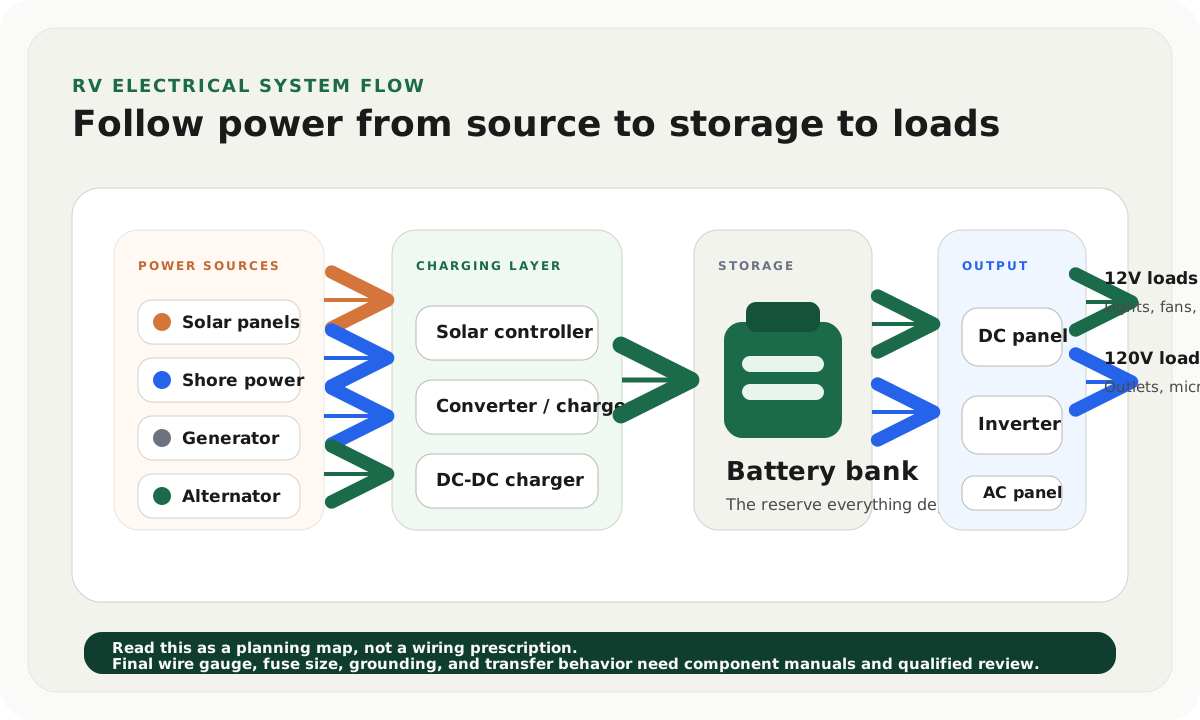
The better way is to follow power flow. Power comes from a source, passes through the right charging or transfer equipment, gets stored in the battery bank when appropriate, and then feeds either DC loads or AC loads.
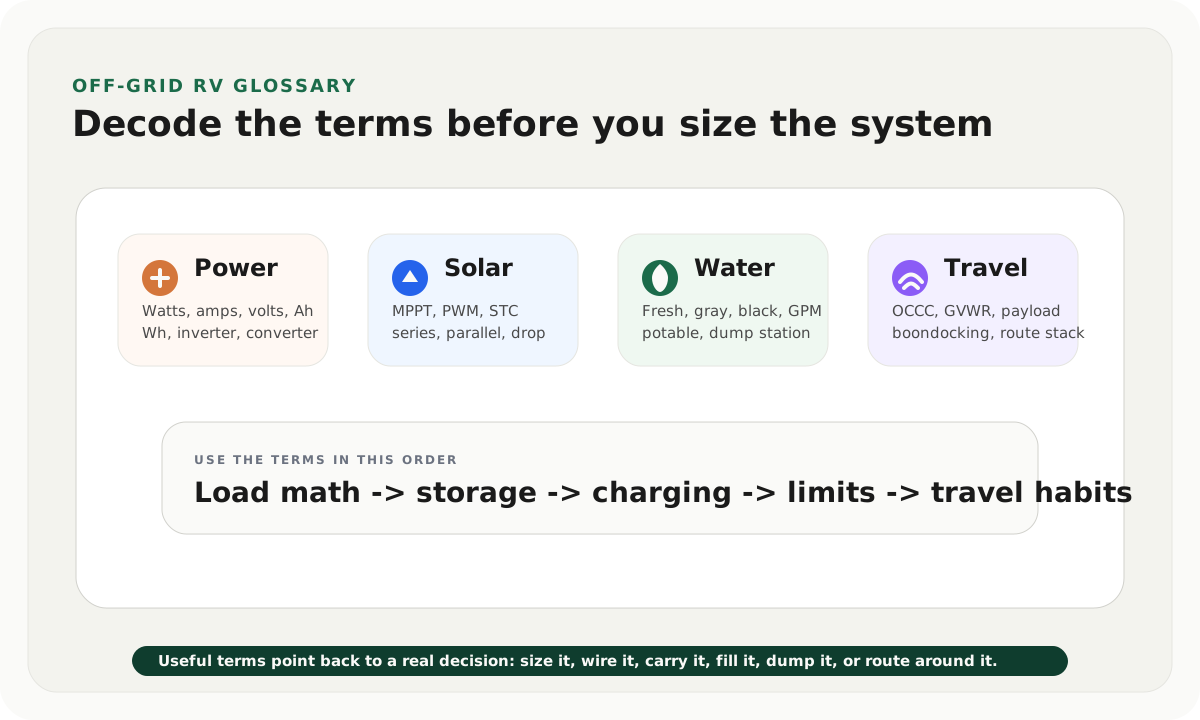
If you want the fuller visual map beside this primer, keep the RV electrical system diagram open. If the terms are still muddy, the RV off-grid glossary is the clean translator.
RV electrical system map at a glance
Use this as the first-pass diagram before comparing solar kits, lithium batteries, inverter chargers, or generator sizes.
Two power types
12V DC and 120V AC
DC keeps the coach alive. AC runs household-style loads when a source or inverter can support them.
Main buffer
House battery bank
The battery bank stores energy for DC loads and can feed AC loads through an inverter.
Charging layer
Converter, controller, DC-DC
Each source needs the right translator before it becomes useful battery charging.
High-risk connection
Battery to inverter
Large inverters can pull very high DC current, so cable, fuse, bank, and disconnect choices matter.
Beginner priority
Map, measure, then upgrade
A measured load plan beats buying parts from a generic internet diagram.
Professional boundary
Protection and AC work
Wire sizing, overcurrent protection, grounding, transfer behavior, and panel work deserve qualified review.
The two electrical worlds in one diagram
An RV usually has a 12V DC side and a 120V AC side.
The 12V DC side is the coach side. It runs many of the systems that make the RV livable even when you are not plugged in.
The 120V AC side is the household-style side. It runs outlets, microwave circuits, some kitchen appliances, air conditioning, and other loads that expect campground, generator, or inverter-supplied AC power.
Those two sides overlap, but they are not the same. The overlap is where converters, chargers, inverters, inverter chargers, and transfer switches enter the picture.
Compare
The two sides of a basic RV electrical system
Use one comparison matrix to scan the practical differences. Small screens stack each row; wider screens keep the first column pinned.
| Spec | 12V DC side | 120V AC side |
|---|---|---|
| Typical loads | Lights, fans, pump, furnace controls, detector circuits, fridge controls | Outlets, microwave, air conditioner, some kitchen appliances |
| Main source off-grid | House battery bank | Inverter fed by the house battery bank |
| Main source when plugged in | Converter or charger supports DC loads and battery charging | Shore power or generator feeds the AC panel |
| Common beginner mistake | Ignoring standby loads and weak charging | Assuming an inverter makes unlimited household power |
The 12V side keeps the coach alive
The 12V DC side is the practical heart of the RV.
It commonly supports lights, vent fans, the water pump, furnace controls, propane and carbon-monoxide detector circuits, slide or leveling controls, refrigerator control boards, USB charging, tank monitors, and other coach basics.
That is why a weak battery bank can make the whole rig feel unreliable even if you never plan to run a microwave from batteries. The core house systems depend on the DC side first.
Off-grid planning should start here. Before adding a bigger inverter, make sure the battery bank, fuse panel, battery monitor, converter or charger, and DC wiring are healthy enough to support the basic coach.
If the bank keeps draining when everything seems off, use the RV parasitic draw guide before blaming the battery chemistry. Detectors, control boards, stereo memory, antenna boosters, and aftermarket accessories can quietly pull down a small bank.
The 120V side is powerful but conditional
The 120V AC side is where familiar appliances can fool you.
A microwave, coffee maker, space heater, hair dryer, induction burner, or air conditioner may feel normal at home. In an RV, those loads are limited by the pedestal, generator, inverter, transfer equipment, battery bank, and wiring.
Shore power can feed the AC panel directly when the RV is plugged into a compatible pedestal. A generator can often feed the same path. An inverter can feed selected AC loads only by pulling energy from the battery bank and converting it to AC.
That last part matters. An inverter does not create power. It turns stored battery energy into AC power, and it does that with losses and current limits.
The 120V side is also where you should slow down around physical wire protection, grounding, GFCI behavior, transfer switching, and adapter use. RVIA has published standards training on protecting 120V wiring in RV storage areas, and its GMI updates keep pointing back to the same safety lesson: the AC side needs a reliable equipment-ground path and protected conductors, not creative improvisation.
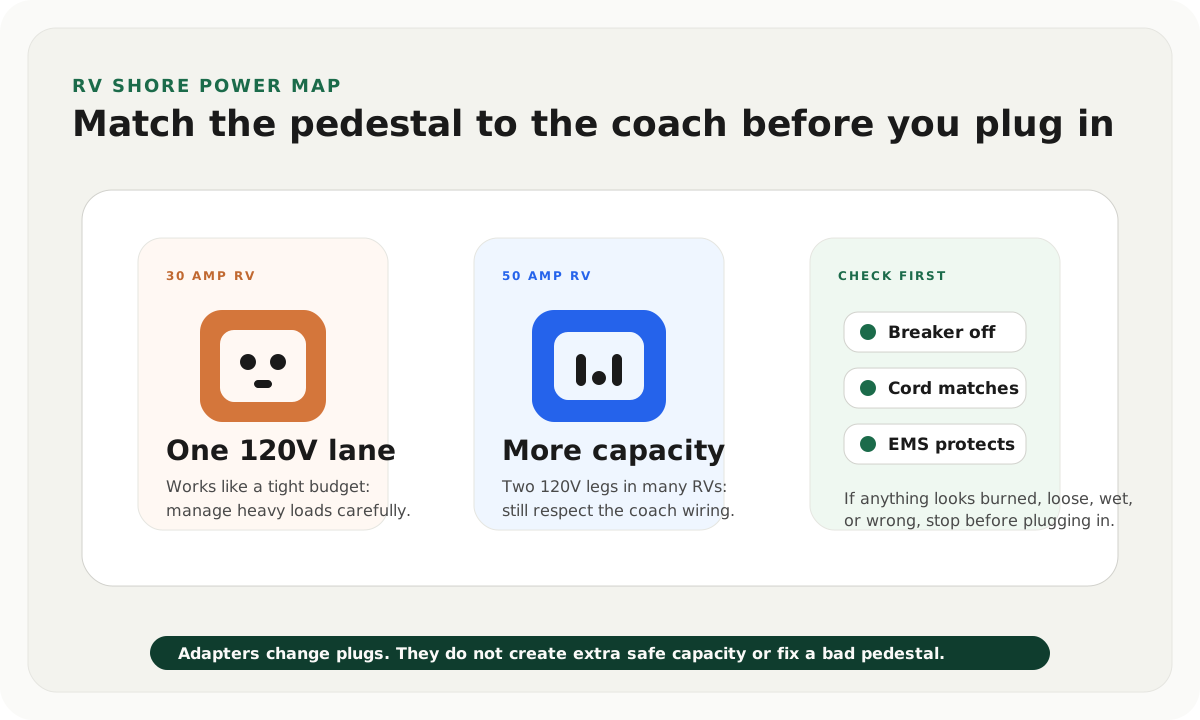
For pedestal, dogbone, and service-size decisions, read the RV shore power 30 amp vs 50 amp guide before treating adapters like extra capacity.
Charging sources are translators, not magic
Solar, shore power, generator power, and alternator charging can all help the battery bank, but each source needs the right equipment.
Solar panels feed a solar charge controller. The controller converts panel output into a charging profile the battery can accept. If you are planning panels, start with the solar calculator, then use the RV solar installation guide for roof layout, controller placement, wiring, and commissioning.
Shore power usually feeds a converter or battery charger. That device supports DC loads and recharges the battery bank while the RV is plugged in.
A generator often behaves like portable shore power. It feeds the AC side, which can then feed the converter or charger.
Alternator charging is different. Many modern lithium upgrades need a DC-to-DC charger instead of a simple direct alternator connection. Victron's Orion XS documentation explains the reason plainly: controlled charging matters with smart alternators and also helps protect alternators in lithium systems because lithium batteries can accept high current.
The beginner takeaway is simple: do not connect sources to batteries just because the voltage sounds close. The charging equipment is part of the safety and battery-health plan.
The battery bank is the buffer
The battery bank is not just a box of amp-hours. It is the buffer between generation and use.
On the input side, it has charge limits. Those limits depend on chemistry, temperature, battery management system behavior, charger settings, and cable voltage drop.
On the output side, it has discharge limits. Those limits matter most when you add inverter loads, large DC loads, or multiple devices running at once.
This is why lithium vs AGM is not just a chemistry debate. Lithium can usually provide more usable capacity and hold voltage better under load, but it also makes charger compatibility, cold-weather charging protection, BMS limits, and alternator charging more important.
If you are sizing the bank from scratch, use the battery bank sizing guide after you estimate daily watt-hours. A battery bank should be sized around the way the rig actually gets used, not around the biggest battery that fits the compartment.
The inverter is a bridge, not a fuel tank
An inverter converts DC battery power into 120V AC power. An inverter charger combines an inverter, battery charger, and transfer switching into one larger component.
Xantrex describes an inverter charger as a combined inverter, battery charger, and transfer switch. When AC power is available, it can recharge house batteries and pass surplus AC power to downstream loads. When AC power is disconnected, it can invert DC battery power into AC electricity.
That is useful, but it is also where beginners overbuild.
A 2,000W or 3,000W inverter can pull a lot of current from a 12V bank. The exact current depends on load and efficiency, but the system-level point is stable: inverter size must match the battery bank, BMS discharge limit, cable size, fuse or breaker, disconnect, ventilation, and the AC circuits being fed.
Do not buy the inverter first. Decide which AC loads actually need to run off-grid, then size the bank and inverter together. If the load is air conditioning, read the solar and battery guide for RV air conditioners before assuming the inverter is the hard part.
Converter and charger compatibility matters
The converter is the part many owners forget because it often hides behind a panel.
When shore power or generator power is available, the converter or charger feeds the DC system and recharges the house battery. Older units may be fine for lead-acid batteries but may not fully charge lithium batteries or may use a profile that does not match the new bank.
Progressive Dynamics' PD9300 installation manual is a useful reminder that converter swaps are model-specific installation work, not generic box swaps. Use the manual for the exact mounting, wiring, operating mode, and charge-mode instructions before assuming a newer converter will behave like the old one.
If the new charger can output more current than the original wiring was built for, the wiring, fusing, heat, compartment access, and battery acceptance limits all need review.
A realistic beginner scenario
Here is the clean way to think through a common upgrade.
You have a travel trailer with a small lead-acid battery, basic converter, no inverter, and a modest solar port. You want lithium, more solar, and maybe AC outlets from the battery.
Do not start with the inverter.
Start by listing the DC loads that already run from the house battery. Then estimate daily watt-hours. Then decide whether lithium fits your camping pattern, temperature exposure, and charger options.
Next, check the converter model. If it cannot charge lithium correctly, the battery upgrade may work poorly even if the new battery is good.
Then size solar around the load target and roof reality. The RV solar wiring diagram helps once panel layout and controller limits enter the plan.
Only after that should you add inverter loads. A few outlets for laptop charging and a small appliance are one design. Microwave use is another. Air conditioning is a different system class entirely.
Common beginner mistakes
Mistake: treating 12V and 120V as interchangeable
They are connected by equipment, but they are not the same system. DC loads, AC loads, chargers, and inverters each have different current, protection, and wiring consequences.
Mistake: buying solar before knowing daily load
Panel wattage feels concrete, but daily watt-hours are the useful starting point. If you do not know what the rig uses, the solar system is being guessed from the wrong end.
Mistake: assuming a lithium battery fixes an old charger
Lithium can make the system better, but charger settings, temperature protection, BMS behavior, alternator charging, and wire sizing still matter. The battery cannot fix every weak part around it.
Mistake: running big AC loads from a small 12V bank
Large AC loads become large DC current on the battery side of the inverter. That is where cables, fuses, disconnects, BMS limits, and heat become more important than the appliance nameplate.
Mistake: copying a diagram without matching the real rig
A diagram explains the system shape. It does not know your wire length, converter model, roof entry, battery compartment, transfer switch, chassis bonding, or local requirements.
Official electrical-system references
These are the April 11, 2026 source pages used for the safety-sensitive parts of this primer. Use the exact manuals for your installed components before doing wiring work.
Pre-arrival checks
Use the exact manual
Do not transfer fuse, wire, or setting values from a generic article to a different product.
Separate concept from installation
This guide explains system shape. Final wiring should match component manuals, code requirements, and qualified review.
Protect conductors
Fuses and breakers protect wiring from fault current. Their placement and rating are not decoration.
Final thought
An RV electrical system gets much less intimidating when you stop memorizing parts and start following power. Identify the source, the charger or transfer path, the battery bank, the DC loads, the inverter bridge, and the AC loads. Once that map is clear, upgrades become slower in the best way: fewer guesses, fewer mismatched parts, and fewer expensive do-overs.
Frequently asked
Questions RVers usually ask next.
What is the difference between AC and DC power in an RV?
DC power usually runs the coach's core 12V systems, such as lights, fans, pumps, controls, and detector circuits. AC power runs household-style loads and outlets when shore power, generator power, or an inverter is available.
Does solar power RV outlets directly?
Usually no. Solar panels charge the battery bank through a solar controller. Outlets are powered by shore power, generator power, or an inverter that converts battery power into 120V AC.
What does a converter do in an RV?
A converter or charger turns shore or generator-supplied AC power into controlled DC charging for the battery bank and DC system. If you change battery chemistry or charger amperage, verify charger settings, wire size, fuse placement, and battery limits.
Can I add an inverter to any RV?
Not automatically. The inverter has to match the battery bank, BMS discharge limit, cable size, fuse or breaker, disconnect, ventilation, and the AC loads you intend to run.
What should I learn first before upgrading RV electrical?
Learn the power flow first: sources, chargers, battery bank, DC loads, inverter, and AC loads. Then measure daily use before buying solar, lithium batteries, or inverter capacity.
Freshness note
Last checked April 11, 2026
This topic can change when products, plans, prices, campsite rules, or fit guidance move. These notes show what was reviewed most recently.
This review included
- Checked beginner safety boundaries against RVIA, Victron, Progressive Dynamics, Xantrex, and Victron DC-DC charging references.
- Reviewed 12V DC, 120V AC, converter, inverter charger, solar controller, and alternator-charging explanations for system-level accuracy.
- Added clearer guidance on source-to-charger handoffs, battery-side protection, transfer behavior, lithium charger compatibility, and when to involve a qualified RV electrical professional.
Recent change log
April 11, 2026
Expanded the RV electrical primer into a diagram-led beginner guide with source-backed safety notes and stronger calculator handoffs.
Broader editorial corrections are tracked on the Corrections and Updates page.