Key takeaways
- Start with daily watt-hours and recharge reality before choosing battery chemistry or battery count.
- A 200Ah AGM bank and a 200Ah LiFePO4 bank do not give the same usable reserve, weight, or cycle-life profile.
- More battery helps only when charging, monitoring, wiring, temperature rules, and placement can support the larger bank.
Choose the battery guide by the job
Battery planning gets easier when you start with the decision in front of you. Size the bank if the trip length is fuzzy, compare chemistry if the purchase is close, troubleshoot first if the existing bank is acting wrong, and shop last.
What to size around
- Daily watt-hour use
- Desired autonomy days
- Available charging sources
- Seasonal temperature range
- Weight and space constraints
Compare
Compare fast
Use one comparison matrix to scan the practical differences. Small screens stack each row; wider screens keep the first column pinned.
| Battery question | Start with | Do not skip |
|---|---|---|
| How much bank do I need? | Battery calculator and sizing guide | Daily watt-hours and autonomy days |
| Lithium or AGM? | Lithium vs AGM comparison | Usable depth of discharge and charger profile |
| Why is the bank dying overnight? | Parasitic draw guide | Loads that stay on after the obvious switches are off |
| Why is it not recharging? | Battery-not-charging troubleshooting | Source-by-source checks before buying parts |
| Which battery should I buy? | Lithium buyer guides | Whole-bank math, cold-weather behavior, support, and monitoring |
Pick the next step
If you are actively shopping, the best place to continue is the buyer's guide below, followed by a battery sizing exercise based on your real appliance list.
If the appliance list is still fuzzy, start with the RV appliance wattage chart so the bank is sized around daily watt-hours instead of guesses.
If the bank keeps dropping when everything looks off, use the RV parasitic draw guide before buying more battery to feed a mystery drain.
If the bank is already installed but not recovering the way you expect, use the RV battery not charging troubleshooting guide before replacing parts.
If you are choosing between premium and value lithium brands, use the Battle Born vs SOK battery comparison before multiplying one battery price across a 200Ah or 400Ah bank.
Official checks behind the battery hub
Battery decisions are expensive because chemistry, charging profile, wiring, and usable capacity all interact. These references anchor the hub's verification workflow.
Why the battery bank changes everything
If the solar array is the fuel intake, the battery bank is what makes the whole system feel calm. It carries you through the hours when solar production drops, and it determines how many mediocre weather days you can handle before the generator conversation starts.
Lithium batteries cost more upfront but usually deliver more usable capacity, lighter weight, and better long-term value for regular off-grid use. AGM still works for smaller or occasional setups where budget matters more than cycle life.
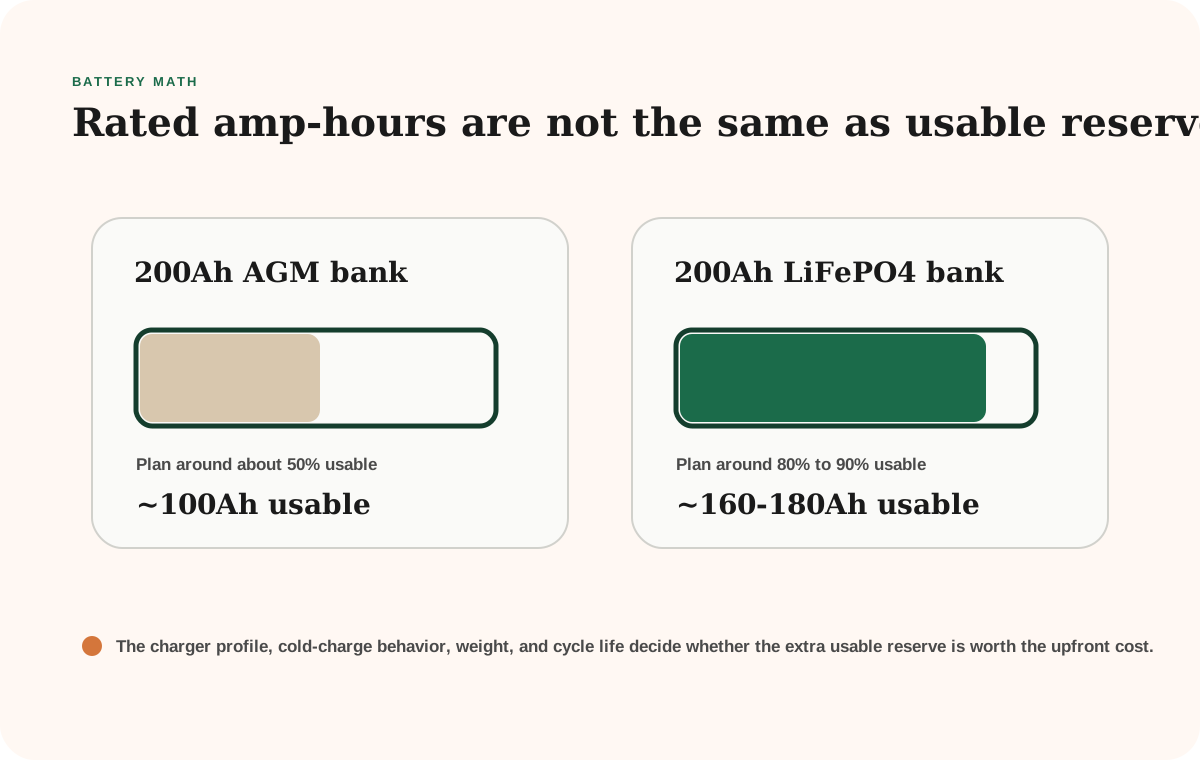
The expensive mistake is comparing only the label on the case. A 200Ah AGM bank is not the same practical reserve as a 200Ah lithium bank because usable depth of discharge is different. The charger profile, battery monitor, cable size, cold-weather behavior, and alternator charging path matter too.
Use the lithium vs AGM comparison when the decision is chemistry. Use the battery calculator when the decision is size. Use the battery-not-charging troubleshooting guide when the bank already exists but refuses to recover.
A simple bank-sizing example
Suppose a rig uses about 1,800Wh per day after the fridge, lights, fans, laptop, water pump, and internet gear are counted. A single 100Ah 12V battery stores about 1,280Wh on paper, but usable energy depends on chemistry and how hard you are willing to cycle it.
With AGM, many RVers plan around roughly half the rated capacity for regular use. Two 100Ah AGM batteries might provide about 100Ah of practical reserve, or roughly 1,200Wh at 12V. That does not cover a full 1,800Wh workday without help from solar, driving, shore power, or generator charging.
With LiFePO4, a 200Ah bank can often support a much deeper usable reserve, so the same label capacity feels very different in the field. It may cover that example day more comfortably, but only if the charger, monitor, fusing, and low-temperature rules match the battery. Chemistry is not a magic fix for a weak charging plan.
What makes a battery upgrade feel successful
A good upgrade is boring after the install. The monitor makes sense, the bank reaches full charge when expected, overnight loads are predictable, and bad weather does not turn every morning into a generator decision.
That usually means sizing the bank and the charging sources together. Solar has to replace normal use on decent days. Alternator charging has to be controlled if lithium is added. Shore-power converters need the right voltage profile. Cable and fuse choices need to match the current the system will actually carry.
If that sounds like more than a battery purchase, that is the point. The bank is the center of the off-grid system, not an isolated box.
Scenario-first battery buying
If you already know the job the bank needs to solve, jump straight to the matching scenario page:
- Best 200Ah starter lithium RV bank
- Best 300-400Ah value lithium RV bank
- Best cold-weather lithium RV battery
Frequently asked
Questions RVers usually ask next.
Should I choose lithium or AGM batteries for an RV?
Lithium is usually the better fit for regular off-grid camping because it gives more usable capacity, lower weight, and better cycle life. AGM can still make sense for occasional use, smaller budgets, or rigs that are not ready for lithium charging requirements.
How should I size an RV battery bank?
Start with daily watt-hours, then decide how many low-solar days you want the bank to cover. The battery calculator and sizing guide are better starting points than buying by headline amp-hours.
What should I check before buying more battery?
Check parasitic draw, charging sources, cold-weather limits, cable sizing, and whether solar or alternator charging can refill the bank. More battery does not fix a system that cannot recover.
Choose what you need next
Pick the path that matches the job.
Use these groups when you want the primer, the comparison, or the calculator without scanning every guide.
Learn the system
Foundational explainers and planning guides that make the rest of the topic easier to understand.
Compare options
Buyer guides and tradeoff-focused reads for choosing between approaches, products, or upgrade paths.
Run the numbers
Use the related calculator first, then jump into the guide that explains the result.
Fast comparisons
Get the battery tradeoffs clear before you compare brand names.
These are the decisions that usually shape price, weight, runtime confidence, and the charging plan more than the battery label does.
Chemistry
Lithium vs AGM
- Best when
- You need to weigh recharge speed, usable capacity, weight, and cold-weather behavior in one practical decision.
- Watch for
- Choosing on sticker price alone usually hides the bigger system costs and day-to-day compromises.
System voltage
12V vs 24V bank
- Best when
- The bank is getting large enough that cable size, inverter behavior, and future expansion deserve more thought.
- Watch for
- Higher voltage can simplify some parts of the build, but only if the rest of the system is heading there too.
Replace or stretch
When to replace aging AGMs
- Best when
- You are unsure whether the real problem is the battery itself or a bigger mismatch between daily demand and reserve.
- Watch for
- Dragging a weak bank too long makes every other electrical decision feel noisier than it really is.
