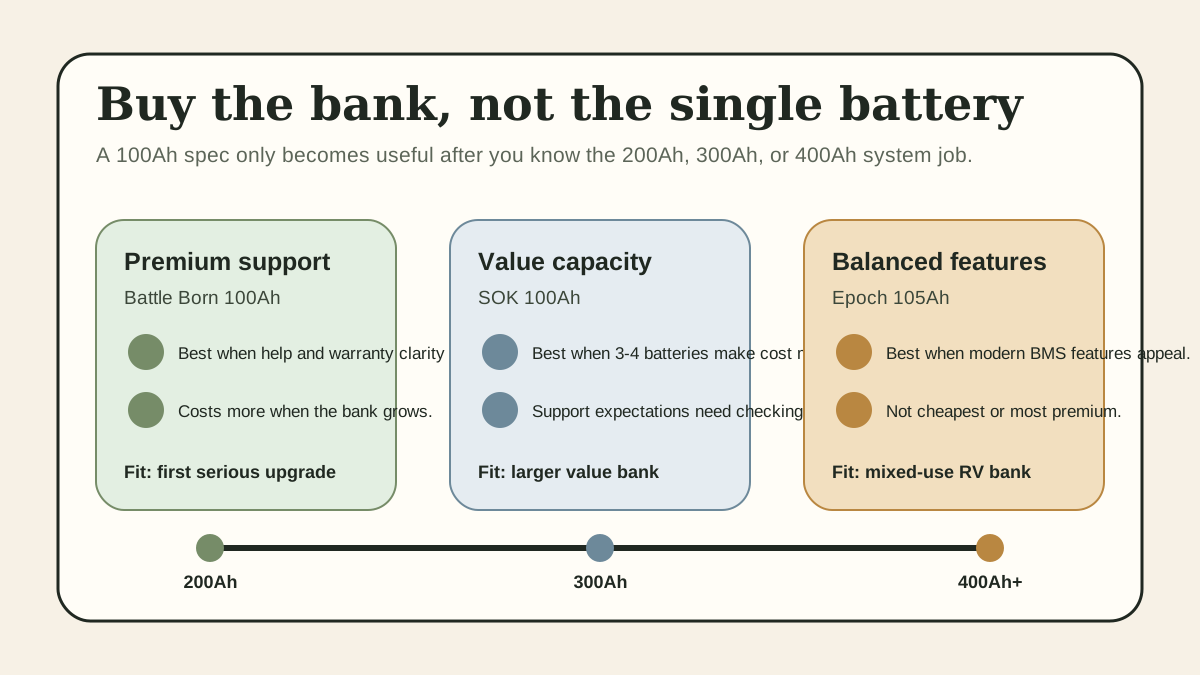
Shortlist first
Use this to find the winner first, then compare the alternates only if their tradeoffs fit your rig better.
Shortlist labels are editorial recommendations, not popularity rankings. Fit score still matters, but the label tells you why each pick made this guide.
How fit scores work
Scores are editorial fit scores, not user-review averages. The rubric weighs stated RV-use fit, verified specs and limits, whole-rig friction, visible downsides or support risk, and value for the specific job in this guide. Read the full scoring rubric.
If you need one baseline option before reading the full guide, start with Battle Born 100Ah for premium support.
The first option to evaluate if you want the strongest all-around fit for this guide. Check the other cards only if their award label matches your constraint better.
| Product | Why shortlisted | Fit score | Key spec | Best for | Actions |
|---|---|---|---|---|---|
| Battle Born 100Ah Links to: Battle Born 100Ah 12V LiFePO4 Deep Cycle Battery | Best overall The first option to evaluate if you want the strongest all-around fit for this guide. | 4.8 / 5 fit scoreScore rubric | 100Ah LiFePO4 with heated options | Premium support | Read Battle Born 100Ah notesCheck listing at Battle BornMerchant link - direct listing. Verify price and specs at Battle Born. |
| SOK 100Ah Links to: SOK SK12V100P 12V 100Ah LiFePO4 Battery | Best value The pick that balances capability and cost pressure best for this decision. | 4.7 / 5 fit score | Serviceable case and strong cycle value | Value-focused builds | Read SOK 100Ah notesCheck listing at SOKMerchant link - direct listing. Verify price and specs at SOK. |
| Epoch 105Ah Essentials Links to: Epoch 12V 105Ah Essential Series Battery | Also great A strong alternate when its specific tradeoffs fit your rig better than the winner. | 4.6 / 5 fit score | 105Ah capacity with modern BMS features | Balanced performance | Read Epoch 105Ah Essentials notesCheck listing at EpochMerchant link - direct listing. Verify price and specs at Epoch. |
Official product checks
Product pages can change, and exact fit depends on the full RV system. Use these pages for current model positioning, then verify charger settings, battery compartment fit, and warranty terms before ordering.
Pre-arrival checks
Verify the exact model
Battery names, heating options, Bluetooth features, BMS limits, and warranty terms can differ across similar-looking SKUs.
Check every charger
Solar controller, converter, inverter/charger, DC-DC charger, and portable charger should all match lithium charging requirements.
Plan the bank hardware
A larger lithium bank needs a monitor, main fuse, disconnect, busbars, correct cable sizing, and serviceable placement.
Filter the shortlist by the bank you are actually trying to build
Scenario filters
Pick the battery bank by scenario first.
Choose the use case, then compare products as full-bank decisions with the accessory stack already in view.
Selected scenario
Best 200Ah starter bank
This is the common first serious lithium step for a rig that wants a calmer fridge, fans, device charging, and light inverter use without jumping straight into a large full-timer bank.
Bank target
2 x 100Ah-class batteries at 12V, about 2.5 to 2.7kWh nominal
Best fit
Weekend boondockers, lighter remote work, and first real lithium upgrades
Read first
Usually the right lane when daily use lands around 1,200 to 1,800Wh
Exact accessory stack for this scenario
Victron SmartShunt 500A
Use a real shunt-based monitor from day one so the first bank upgrade teaches you how the rig actually behaves.
Open supporting guideVictron Orion XS 50A DC-DC charger
A clean alternator-charging match for travel days when a 200Ah bank needs meaningful refill support.
Open supporting guideMain disconnect, Class T fuse, and short busbar layout
Keep isolation and overcurrent protection obvious before the inverter side gets more complex.
Open supporting guideWhole-bank math
Compare the batteries as complete banks instead of single-battery sticker prices.
| Product | Count | Total bank | Cost category | Why it fits |
|---|---|---|---|---|
| Battle Born 100Ah | 2 batteries | 200Ah / about 2.56kWh | Premium | Best when support and fewer unknowns matter more than shaving every dollar. |
| SOK 100Ah | 2 batteries | 200Ah / about 2.56kWh | Value | Strong fit when you want the starter bank to stay affordable and expandable. |
| Epoch 105Ah | 2 batteries | 210Ah / about 2.69kWh | Balanced | Good middle lane when you want a little more nominal reserve without going fully premium. |
What matters most when buying a lithium RV battery
The best battery is not simply the one with the highest amp-hour number on the label. For RV travel, the meaningful questions are:
- How much usable capacity do you get?
- How confident are you in the BMS and support?
- How does the battery behave in cold weather?
- Is the price still reasonable after you factor in cycle life and weight savings?
Lithium batteries changed off-grid RVing because they turned battery banks from a fragile compromise into something you can actually use aggressively. You can discharge deeper, recharge faster, and carry less weight for the same practical reserve. That does not make every lithium option equally good, though. Build quality, warranty support, low-temperature charging protections, and internal balancing still separate the serious options from the forgettable ones.
The important part is that a lithium purchase is rarely just a battery purchase. It usually changes the charger settings, alternator charging plan, monitoring, fuse protection, cable sizing, inverter expectations, and storage-bay layout. A good battery in a sloppy system still creates a sloppy system.
That is why this guide starts with bank size. A weekend camper building a 200Ah starter bank and a remote worker building a 400Ah work bank are not really making the same purchase, even if both are comparing 100Ah batteries.
How we evaluate lithium batteries for RV use
We care less about marketing superlatives and more about system fit. The evaluation framework for this guide focuses on:
- Usable capacity for real off-grid nights
- Long-term value relative to price
- Support reputation and warranty clarity
- Fit for solar-heavy charging cycles
- Cold-weather practicality
- Ease of wiring multiple batteries in a clean system
Reasons to buy
- Lithium delivers far more usable capacity than AGM for the same rated amp-hours.
- Weight savings matter when your battery bank lives in a storage compartment or pass-through.
- Fast charging and deeper cycling make lithium far easier to live with off-grid.
Watch-outs
- Upfront cost is still higher than AGM for many entry-level rigs.
- Not every battery handles sub-freezing charging well without built-in protections.
- Cheap lithium can create expensive trust issues if support or BMS quality is weak.
The battery is only one part of the bank
Before comparing brands, write down the bank job.
For a light weekend rig, 200Ah of lithium often covers fridge, lights, fans, water pump, devices, and some modest inverter time. For remote work or frequent boondocking, 300Ah to 400Ah is often the calmer lane because weather, Starlink, laptops, inverter idle draw, and longer stays all add margin pressure. For air conditioning, induction cooking, or heavy inverter use, the battery bank becomes part of a much larger inverter and charging conversation.
The math is straightforward enough to keep the decision honest:
- 100Ah at 12.8V is about 1,280Wh nominal.
- 200Ah is about 2,560Wh nominal.
- 300Ah is about 3,840Wh nominal.
- 400Ah is about 5,120Wh nominal.
Lithium lets you use more of that reserve than AGM in normal RV use, but you still need a reserve. A battery that can technically discharge deeply should not be treated like a license to plan every day at zero margin.
If a workday uses 1,500Wh and the rig also needs overnight fridge, fan, lights, and device charging, a 200Ah bank may feel fine in sun and tight in weak weather. A 400Ah bank may feel calm, but only if the solar, alternator, shore charger, or generator plan can refill it.
Use the battery calculator and how to size an RV battery bank before choosing the brand. Capacity without recharge is just a bigger countdown timer.
Charger compatibility decides whether lithium feels easy
Lithium batteries need compatible charging. That includes:
- the existing converter or charger from shore power
- the solar charge controller
- the alternator charging path
- the inverter/charger if the rig has one
- any portable charger used at home or in storage
Older RV converters often charge lead-acid acceptably but do not hold the right lithium profile. Some lithium batteries tolerate a range of charging behavior, but "it seems to charge" is not the same as a good long-term setup. If the charger never reaches the right voltage, the bank may not fill fully. If the charger ignores temperature limits, cold-weather charging can become a problem.
This is where a value battery can stop being a value if the rest of the system is not planned. Add the cost of a lithium-capable converter, DC-DC charger, shunt monitor, busbars, fusing, and possible inverter changes before declaring one battery the cheaper answer.
The DC-to-DC charger guide and battery monitor guide belong in this purchase. A lithium bank without proper charging and monitoring is like a large fuel tank without a gauge.
Cold weather is a system problem
Lithium batteries can discharge in cold conditions more easily than they can safely charge in freezing conditions. The exact behavior depends on the battery, BMS, heater option, compartment temperature, and charger controls.
A heated battery can help, but it still consumes energy to warm itself. An interior battery compartment can avoid some cold problems, but it may raise service and ventilation questions. An exterior compartment may be convenient but needs a more deliberate low-temperature plan.
Before buying for winter use, ask:
- Where will the battery live?
- How cold does that compartment get at dawn?
- Does the BMS block charging below freezing?
- Does the battery include heat, or is the compartment heated separately?
- Do all chargers respect the low-temperature charging boundary?
If winter or shoulder-season camping is part of the plan, read the cold-weather lithium guide before treating any spec sheet as the full answer.
What price does not show
A battery price does not show the full bank cost.
For a 200Ah starter bank, the accessory cost may be modest: two batteries, a monitor, proper fusing, a disconnect, and charger settings. For a 400Ah bank, the supporting system often gets more serious: heavier cabling, busbars, a larger inverter/charger, better alternator charging, cleaner ventilation and access, and more careful overcurrent protection.
That is why the "best value" battery can change by bank size. One battery that looks expensive at 100Ah may feel justified if support prevents an installation mistake. Another that looks like the value winner at 100Ah may become the obvious choice when four batteries make the price gap large enough to fund better charging hardware.
The right move is to price the finished system:
- batteries
- monitor or shunt
- main fuse and disconnect
- busbars and cable
- charger upgrades
- inverter changes if needed
- battery box, tie-downs, or compartment changes
If the finished system breaks the budget, reduce the bank size or simplify the load plan before buying a cheaper battery to force the number.
Quick comparison
Compare
Compare fast
Use one comparison matrix to scan the practical differences. Small screens stack each row; wider screens keep the first column pinned.
| Spec | Battle Born 100Ah | SOK 100Ah | Epoch 105Ah |
|---|---|---|---|
| Best for | Premium support | Maximum value | Balanced all-around use |
| Usable capacity | High | High | High |
| Cold-weather confidence | Strong | Good | Good |
| Budget friendliness | Moderate | Strong | Good |
| Best bank lane | 200Ah premium starter | 300-400Ah value build | Balanced 210-420Ah builds |
| Main caution | Premium support costs more as the bank grows | Verify support, model options, and availability before building around it | Confirm exact SKU features and cold-weather behavior |
Our top picks
- Latest product check
- Specs, fit notes, and current listing context were reviewed April 21, 2026.
- Evidence label
- Spec-verified: Score is based on current published specs, official documentation, pricing context, compatibility, and RV-use fit analysis.
- Price context
- Pricing and availability can change, so confirm the merchant listing before buying.
Product facts last checked April 21, 2026
Battle Born 100Ah
Editorial fit score
Battle Born remains a premium option because it pairs solid build quality with support that new solar upgraders actually use.
Review verdict
- Short verdict
- A strong pick for RVers who want support, consistency, and less second-guessing.
- Evidence used
- Spec-verified
- Score is based on current published specs, official documentation, pricing context, compatibility, and RV-use fit analysis.
- Why it made the shortlist
- Best overall
- The first option to evaluate if you want the strongest all-around fit for this guide.
- Best if
- Premium support
- Why not this product?
- Usually not the cheapest path to a large bank
- Product check date
- Specs, fit notes, and current listing context were last checked April 21, 2026.
Key specs
- Capacity
- 100Ah
- Chemistry
- LiFePO4
- Best fit
- Frequent boondocking and first serious upgrades
- Style
- Dependable premium buy
Score basis
Score is based on current published specs, official documentation, pricing context, compatibility, and RV-use fit analysis. These are editorial fit scores, not customer-review averages. Read the scoring rubric.
- RV-use fit
- 30% weight
- Verified specs and limits
- 25% weight
- Whole-rig friction
- 20% weight
- Downsides and support risk
- 15% weight
- Value for the job
- 10% weight
How directly the product solves the specific off-grid RV job in this guide.
Capacity, dimensions, electrical limits, protection claims, and compatibility constraints we can verify from current sources.
Install effort, storage, wiring, service access, weight, refill workflow, or daily-use hassle.
Known tradeoffs, unclear claims, warranty coverage, support risk, and wrong-buyer failure modes.
Whether the price makes sense after fit, specs, and tradeoffs still hold.
Testing limits
- This is not a hands-on endurance or lab test unless the review explicitly says so.
- Specs, pricing, bundles, and availability can change, so confirm the current listing and manual before buying.
Reasons to buy
- Strong support reputation for first-time lithium upgraders
- Good ecosystem fit for larger system builds
- Trusted brand recognition in the RV space
Watch-outs
- Usually not the cheapest path to a large bank
- Premium price may be overkill for casual campers
- Value-minded buyers can often get more raw capacity elsewhere
Whole-bank math
Starter bank
2 batteries = 200Ah / about 2.56kWh
A common premium starter bank for RVers who want support and fewer unknowns.
Balanced bank
3 batteries = 300Ah / about 3.84kWh
Good when the rig carries more workday loads or wants an extra weather buffer.
Longer-reserve bank
4 batteries = 400Ah / about 5.12kWh
This is where premium support becomes the expensive but calmer choice.
Related parts and setup checks
Victron SmartShunt 500A
Pairs cleanly with a premium bank when you want real current tracking instead of vague voltage guesses.
Open Victron SmartShunt 500AVictron Orion XS 50A DC-DC charger
A strong alternator-charging companion for travel-day recovery in a 200Ah to 300Ah bank.
Open Victron Orion XS 50A DC-DC chargerVictron MultiPlus 3000 + clear Class T protection
Usually the cleaner pairing once the bank grows into a heavier inverter-driven system.
Open Victron MultiPlus 3000 + clear Class T protectionCheck current listing
Battle Born 100Ah 12V LiFePO4 Deep Cycle Battery
Use the listing after the fit notes make sense for your rig. Pricing and availability can change, so verify the merchant page before buying.
- Latest product check
- Specs, fit notes, and current listing context were reviewed April 21, 2026.
- Evidence label
- Spec-verified: Score is based on current published specs, official documentation, pricing context, compatibility, and RV-use fit analysis.
- Price context
- Pricing and availability can change, so confirm the merchant listing before buying.
Product facts last checked April 21, 2026
SOK 100Ah
Editorial fit score
SOK often earns attention because it delivers strong value without feeling like a throwaway budget compromise.
Review verdict
- Short verdict
- One of the easiest value picks for RVers who care about usable capacity per dollar.
- Evidence used
- Spec-verified
- Score is based on current published specs, official documentation, pricing context, compatibility, and RV-use fit analysis.
- Why it made the shortlist
- Best value
- The pick that balances capability and cost pressure best for this decision.
- Best if
- Value-focused builds
- Why not this product?
- Brand familiarity is lower for some first-time buyers
- Product check date
- Specs, fit notes, and current listing context were last checked April 21, 2026.
Key specs
- Capacity
- 100Ah
- Chemistry
- LiFePO4
- Best fit
- DIY-friendly mid-budget systems
- Style
- Cost-efficient performance
Score basis
Score is based on current published specs, official documentation, pricing context, compatibility, and RV-use fit analysis. These are editorial fit scores, not customer-review averages. Read the scoring rubric.
- RV-use fit
- 30% weight
- Verified specs and limits
- 25% weight
- Whole-rig friction
- 20% weight
- Downsides and support risk
- 15% weight
- Value for the job
- 10% weight
How directly the product solves the specific off-grid RV job in this guide.
Capacity, dimensions, electrical limits, protection claims, and compatibility constraints we can verify from current sources.
Install effort, storage, wiring, service access, weight, refill workflow, or daily-use hassle.
Known tradeoffs, unclear claims, warranty coverage, support risk, and wrong-buyer failure modes.
Whether the price makes sense after fit, specs, and tradeoffs still hold.
Testing limits
- This is not a hands-on endurance or lab test unless the review explicitly says so.
- Specs, pricing, bundles, and availability can change, so confirm the current listing and manual before buying.
Reasons to buy
- Excellent usable capacity for the money
- Appealing for larger banks on a tighter budget
- DIY buyers appreciate the serviceable reputation
Watch-outs
- Brand familiarity is lower for some first-time buyers
- Support experience may feel less polished than premium brands
- Availability can vary depending on demand
Whole-bank math
Starter bank
2 batteries = 200Ah / about 2.56kWh
One of the most compelling value starter-bank lanes if price discipline matters.
Value sweet spot
3 batteries = 300Ah / about 3.84kWh
Often the cleanest value point for rigs that need real reserve without going fully large-bank premium.
Full value bank
4 batteries = 400Ah / about 5.12kWh
This is where SOK usually earns its reputation for strong capacity per dollar.
Related parts and setup checks
Victron SmartShunt 500A
Helps value-focused banks stay honest once the load list starts growing.
Open Victron SmartShunt 500ABusbar and main-fuse layout planned before the fourth battery
A larger value bank is only a value if the wiring still stays clean and serviceable.
Open Busbar and main-fuse layout planned before the fourth batteryVictron MultiPlus 3000 or similar 3000W inverter/charger lane
A common match when a 300Ah to 400Ah bank starts supporting heavier inverter use.
Open Victron MultiPlus 3000 or similar 3000W inverter/charger laneCheck current listing
SOK SK12V100P 12V 100Ah LiFePO4 Battery
Use the listing after the fit notes make sense for your rig. Pricing and availability can change, so verify the merchant page before buying.
- Latest product check
- Specs, fit notes, and current listing context were reviewed April 21, 2026.
- Evidence label
- Spec-verified: Score is based on current published specs, official documentation, pricing context, compatibility, and RV-use fit analysis.
- Price context
- Pricing and availability can change, so confirm the merchant listing before buying.
Product facts last checked April 21, 2026
Epoch 105Ah Essentials
Editorial fit score
Epoch tends to fit buyers who want a confident middle ground between top-shelf reassurance and strict budget shopping.
Review verdict
- Short verdict
- A balanced choice when you want modern features without drifting all the way into premium pricing.
- Evidence used
- Spec-verified
- Score is based on current published specs, official documentation, pricing context, compatibility, and RV-use fit analysis.
- Why it made the shortlist
- Also great
- A strong alternate when its specific tradeoffs fit your rig better than the winner.
- Best if
- Balanced performance
- Why not this product?
- Not always the cheapest or the most premium
- Product check date
- Specs, fit notes, and current listing context were last checked April 21, 2026.
Key specs
- Capacity
- 105Ah
- Chemistry
- LiFePO4
- Best fit
- General off-grid travel
- Style
- Balanced feature set
Score basis
Score is based on current published specs, official documentation, pricing context, compatibility, and RV-use fit analysis. These are editorial fit scores, not customer-review averages. Read the scoring rubric.
- RV-use fit
- 30% weight
- Verified specs and limits
- 25% weight
- Whole-rig friction
- 20% weight
- Downsides and support risk
- 15% weight
- Value for the job
- 10% weight
How directly the product solves the specific off-grid RV job in this guide.
Capacity, dimensions, electrical limits, protection claims, and compatibility constraints we can verify from current sources.
Install effort, storage, wiring, service access, weight, refill workflow, or daily-use hassle.
Known tradeoffs, unclear claims, warranty coverage, support risk, and wrong-buyer failure modes.
Whether the price makes sense after fit, specs, and tradeoffs still hold.
Testing limits
- This is not a hands-on endurance or lab test unless the review explicitly says so.
- Specs, pricing, bundles, and availability can change, so confirm the current listing and manual before buying.
Reasons to buy
- Modern lithium feature set with practical capacity
- Good fit for mixed-use RV lifestyles
- Strong option for buyers comparing mid-tier brands
Watch-outs
- Not always the cheapest or the most premium
- Support expectations should still be vetted before buying
- Feature differences matter more as systems get larger
Whole-bank math
Starter bank
2 batteries = 210Ah / about 2.69kWh
A little more nominal reserve than a strict 2 x 100Ah starter layout.
Balanced mid-bank
3 batteries = 315Ah / about 4.03kWh
A strong middle lane when you want more reserve without jumping straight to four batteries.
Full reserve bank
4 batteries = 420Ah / about 5.38kWh
The balanced answer when a larger bank still needs to avoid premium-only pricing.
Related parts and setup checks
Victron SmartShunt 500A
Useful when the balanced path still needs honest usage data and reserve tracking.
Open Victron SmartShunt 500ATemperature-aware charging setup
Especially important if this bank lives in a shoulder-season or mixed-climate travel pattern.
Open Temperature-aware charging setup3000W-class inverter/charger and clean distribution layout
A common pairing once the bank is expected to support real inverter time and fast charging.
Open 3000W-class inverter/charger and clean distribution layoutCheck current listing
Epoch 12V 105Ah Essential Series Battery
Use the listing after the fit notes make sense for your rig. Pricing and availability can change, so verify the merchant page before buying.
Which battery should you choose?
Choose Battle Born if you want fewer unknowns and are willing to pay for that confidence.
Choose SOK if you are building a larger bank and want strong value without stepping down to a throwaway product.
Choose Epoch if you want a balanced middle lane with modern features and enough confidence for frequent off-grid use.
Scenario pages for the most common battery-bank jobs
- Best 200Ah starter lithium RV bank
- Best 300-400Ah value lithium RV bank
- Best cold-weather lithium RV battery
These pages are the faster route if you are shopping by use case instead of by brand name.
They also prevent a common mistake: overbuying the battery and underbuying the charging system. A 400Ah bank with weak recharge can still feel stressful. A 200Ah bank with a good DC-DC charger, realistic solar, and honest load control can feel calmer than its size suggests.
Buying advice that matters more than brand loyalty
Buy for the whole bank, not one battery
Many RVers start by comparing a single battery price. The more useful comparison is the full bank price for the reserve you actually need. If your usage points to 300Ah or 400Ah of lithium, your decision should reflect the whole system cost, not one battery sitting alone in a spec sheet.
Think about charging behavior
If you spend winters in the desert and chase sun aggressively, the battery will live a different life than a shoulder-season traveler in cold mornings and tree cover. Charging environment matters. Battery choice should follow that reality.
Leave room for future expansion
If there is even a decent chance you will add another battery in the next year, pick a brand and form factor that will still make sense when you double the bank.
Expansion only works cleanly when the original install leaves room. Plan for cable length, battery spacing, ventilation or temperature management, tiedowns, access to terminals, and the main fuse location. A beautiful two-battery install that blocks the future third battery may force a full rework later.
The cleanest buying workflow
Use this order:
- List daily watt-hours, not just appliances.
- Pick the usable reserve target.
- Decide whether the bank is 200Ah, 300Ah, 400Ah, or larger.
- Confirm where the batteries physically fit.
- Check every charger for lithium compatibility.
- Add a shunt monitor before relying on the bank.
- Price the finished system, not the first battery.
- Choose the battery brand only after the system shape is clear.
That workflow keeps the purchase grounded. It also makes the three picks in this guide easier to understand. Battle Born is the support-first answer, SOK is the value-bank answer, and Epoch is the balanced feature answer. The best choice depends on which tradeoff you want to own.
Final verdict
The best lithium RV battery is the one that aligns with your camping rhythm and budget without forcing you into the cheapest corner of the market. Premium support matters. Value matters too. The winning move is choosing a battery you will still trust on day four of weak weather, not just on the day the box arrives.
Frequently asked
Questions RVers usually ask next.
How much lithium battery capacity do most boondockers need?
A lot of moderate-use rigs feel comfortable between 200Ah and 300Ah of lithium, but full-time travel, Starlink, and higher-draw cooking appliances can push that number higher quickly.
Is lithium worth it over AGM for RVs?
For regular off-grid camping, lithium is often worth it because the usable capacity, faster charging, and weight savings change the day-to-day experience in a way AGM usually cannot match.
Can I mix lithium and AGM batteries in the same bank?
No. Mixed chemistry banks charge and discharge differently, which creates reliability and longevity problems. Pick one chemistry for the bank.
Freshness note
Last checked April 21, 2026
This topic can change when products, plans, prices, campsite rules, or fit guidance move. These notes show what was reviewed most recently.
This review included
- Checked current official Battle Born, SOK, and Epoch product pages for 100Ah-class lithium battery positioning, capacity details, and support context.
- Reviewed whole-bank math for 200Ah, 300Ah, and 400Ah builds so the fit advice matches realistic RV upgrade paths.
- Expanded charging, monitoring, cold-weather, and accessory-pairing guidance that readers use before buying a lithium bank.
Recent change log
April 21, 2026
Expanded the lithium battery buyer guide with official product sources, a custom shortlist visual, deeper bank math, charger compatibility checks, and system-fit buying guidance.
April 10, 2026
Added exact product-link labels in the shortlist and review cards so price clicks point at the intended battery target.
April 9, 2026
Expanded the guide around whole-bank scenarios, cold-weather tradeoffs, and compatible accessory planning.
Broader editorial corrections are tracked on the Corrections and Updates page.

