Official checks before your first trip
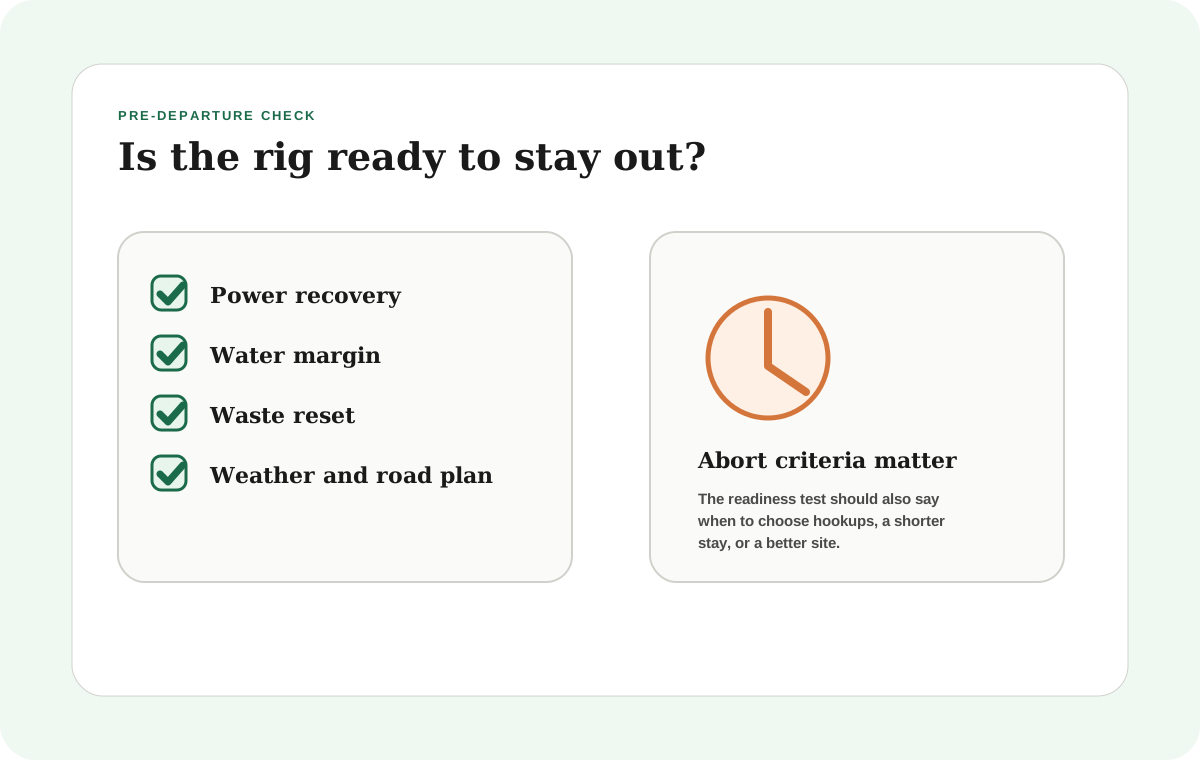
Apps and campground reviews are useful, but land-manager rules still decide what is legal. Check the official page before you commit to a dispersed site.
Pre-arrival checks
Before leaving cell service
Confirm the land manager, road status, fire restrictions, stay limit, and whether your rig can turn around before the road gets worse.
What is boondocking?
Boondocking means camping without hookups. Your RV carries its own power, water, waste capacity, heat or cooling plan, and communications. You are not plugged into a pedestal, connected to a water spigot, or draining into a sewer connection.
That can happen on BLM land, in national forests, in some state trust or state land areas, at certain overnight stops, or on private land with permission. The exact rules depend on the land manager. A campsite that looks empty is not automatically legal.
The appeal is real: more space, quieter camps, better views, and less reservation pressure. The tradeoff is equally real. Every habit you ignore at a hookup site becomes visible when the rig is self-contained.
If you want the shortest prep path, run the off-grid RV readiness checklist and then use the first-time boondocking packing list. This guide explains the judgment behind those checklists.
Your first goal is not to stay out longest
New boondockers often plan trip one like a proof-of-competence test. That is the wrong standard.
The first trip should answer practical questions:
- How much battery do we use overnight?
- How much water do we really use per day?
- Which tank fills first?
- Did the campsite match the map?
- Did the road feel reasonable for this rig?
- What gear did we need but not pack?
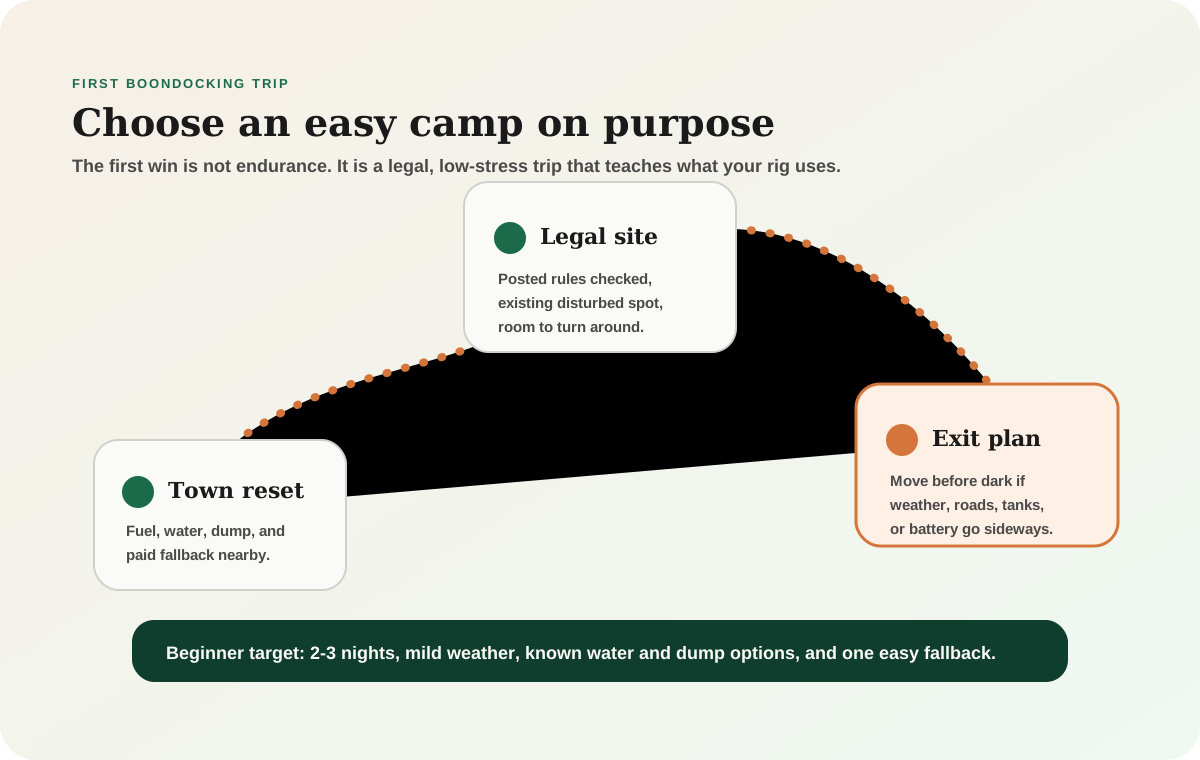
Two or three nights is enough to learn all of that without turning every surprise into a recovery project. A short trip close to a town is not less authentic. It is how you build confidence without gambling the whole weekend.
Beginner trip target
Use this as a first-trip design, then stretch the stay after the rig has proven its numbers.
Stay length
2-3 nights
Long enough to learn power, water, and tank behavior without forcing a hard recovery.
Best season
Mild weather
Avoid learning battery, heat, AC, mud, and road recovery all on the same trip.
Site style
Legal and easy exit
Existing disturbed sites with clear turnarounds beat scenic mystery roads.
Fallback
Town or paid camp nearby
Have a water, dump, fuel, and safe overnight option before you lose signal.
Compare beginner site choices
The best first site is usually not the most dramatic one. It is the one that gives you room to learn.
Compare
First boondocking site comparison
Use one comparison matrix to scan the practical differences. Small screens stack each row; wider screens keep the first column pinned.
| Spec | Good first trip | Risky first trip | Why it matters |
|---|---|---|---|
| Stay length | 2-3 nights | 7+ nights with no reset plan | Short trips reveal real usage before resources become stressful |
| Road access | Graded road with known turnaround | Unknown two-track, late arrival, no exit visibility | Turning around is part of site safety, not a bonus |
| Weather | Mild highs and lows | Heat wave, hard freeze, high wind, or wet clay roads | Weather can become a power, water, and mobility problem at once |
| Legality | Official rules checked before arrival | Only a pin from an app or old forum post | Reviews can be stale; closures and local orders change |
| Fallback | Water, dump, fuel, and paid camp within reach | No reset plan until something runs out | A fallback keeps a small mistake from becoming a bad night |
The four resources that decide the trip
Power
Power is not just solar. It is battery reserve, charging recovery, inverter behavior, weather, shade, and what you run after dark.
A beginner setup does not need to power every comfort. It needs to protect essentials: fridge controls, lights, water pump, phone charging, fans or heat controls, and any work gear that cannot fail.
If you do not know your daily electrical use, start with the solar calculator or the battery calculator. Even a rough number is better than trusting the battery icon.
Water
Water limits more first trips than people expect. Drinking, cooking, dishes, handwashing, showers, pets, and cleanup all pull from the same starting tank unless you separate drinking water into jugs.
A disciplined two-person routine can often stay near 5-8 gallons per day. A loose routine with running-water dishes and normal showers can double that. Use the water conservation guide before buying extra containers because habit changes may add more stay length than hardware.
Waste tanks
Fresh water is only half the story. If every indoor gallon lands in the gray tank, gray capacity can end the stay before the fresh tank is empty.
Before your first trip, know:
- fresh tank capacity
- gray tank capacity
- black tank capacity or toilet strategy
- nearest legal dump station
- whether dishwater, showers, and handwashing all share one gray tank
Do not dump gray water on the ground unless the land manager explicitly allows it. In many places, it is not allowed, and it is poor etiquette even where rules are vague.
Propane, heat, and weather
If the RV uses propane for heat, cooking, water heating, or fridge operation, check the cylinder level before departure. Cold nights can turn propane from an afterthought into the main comfort system.
Heat and AC are where beginners learn that off-grid RVing is not just camping without hookups. Furnace fans use battery. Air conditioners are heavy electrical loads. Shade may help comfort but hurt solar. Wind can make a pretty campsite unpleasant or unsafe.
A worked first-trip example
Assume two people are planning a two-night beginner trip.
They start with:
- 200Ah of usable-ish battery planning if lithium, or much less usable reserve if older lead-acid
- 40 gallons fresh water
- 32 gallons gray capacity
- 30 gallons black capacity
- full propane
- mild weather
- a town with water and dump access 25 minutes away
Their conservative target:
- 7 gallons of water per day
- no daily showers
- laptop and phone charging only during daylight
- fridge, lights, water pump, and fan as normal
- no microwave or electric heat from the battery bank
That trip is not trying to prove the rig can survive ten days. It is trying to learn whether the 7-gallon water target is real, whether the battery recovers enough by afternoon, and whether gray capacity or battery reserve is the first limiter.
After the trip, they can make one smart change. Maybe they need a dish basin. Maybe they need more solar exposure. Maybe the issue was not power at all, but the road was too rough for the trailer. That is useful data.
How to pick a first boondocking site
Look for a site with:
- clear legality and posted stay limits
- an existing disturbed campsite rather than untouched ground
- road access that matches your rig size and clearance
- room to turn around before the road gets worse
- enough sun if you depend on solar
- enough distance from other campers
- no obvious drainage path through camp
- a backup plan if the spot is occupied
Arrive before dark. Night arrival hides the two things you most need to see: ground condition and exit options.
A pretty pin is not a campsite plan
A map pin, app review, or social-media photo should start your research, not end it. Check the land manager, road conditions, fire restrictions, and whether the site still exists before you tow into it.
Etiquette is part of the skill set
Boondocking works because enough people use shared places responsibly.
Beginner etiquette is simple:
- camp on durable, already disturbed surfaces
- pack out trash, food scraps, and micro-trash
- keep generators and music reasonable
- do not crowd another rig when space exists
- respect stay limits and closures
- keep pets controlled
- do not create new roads, fire rings, or campsite scars
- handle human waste and wastewater legally
The fastest way to lose access is to treat public land like a disposable campground.
Common beginner mistakes
Arriving late
Late arrival turns every decision harder: road judgment, leveling, neighbor spacing, solar exposure, and whether the site is actually legal.
Trusting tank sensors too much
RV tank sensors are famous for being approximate. Track daily use and fill patterns instead of waiting for a questionable gauge to panic you.
Picking shade without thinking about solar
Shade may be wonderful in summer. It can also crush solar recovery. Decide whether comfort or charging matters more for that stay.
Stretching the stay before learning the rig
Endurance should come after data. First learn what runs out, what fills up, and what feels annoying.
Final thought
Boondocking is not a contest to stay out longest. It is a way of camping that rewards awareness.
For your first trip, choose a legal, easy site. Stay two or three nights. Track battery, water, waste, weather, and road comfort. Leave cleaner than you arrived. Then make one improvement before the next trip.
That is how boondocking becomes calm instead of performative.
Frequently asked
Questions RVers usually ask next.
How long can a beginner usually boondock comfortably?
For many beginners, two to three nights is the right first target. It is long enough to learn battery, water, waste, road, and setup habits without turning every surprise into a forced recovery.
Do I need solar before I try boondocking?
Not always. A short mild-weather trip can work with charged batteries and conservative loads. Solar becomes more important as stays get longer, weather gets less predictable, or work and fridge loads become harder to pause.
What runs out first when boondocking?
For many RVers, fresh water, gray tank capacity, or usable battery reserve becomes the first limiter. The answer depends on shower habits, dishwashing, weather, battery chemistry, and whether you depend on powered work gear.
How do I know if a boondocking site is legal?
Start with the land manager, not just an app. Check BLM, USFS, state land, park, or local rules for stay limits, closures, fire restrictions, road access, and whether dispersed camping is allowed in that specific area.
Freshness note
Last checked April 21, 2026
This topic can change when products, plans, prices, campsite rules, or fit guidance move. These notes show what was reviewed most recently.
This review included
- Checked BLM camping guidance, National Park Service Leave No Trace principles, and public-land planning reminders for beginner boondocking.
- Expanded the beginner guide with a first-camp decision map, legal-site checklist, first-trip comparison table, and worked resource example.
Recent change log
April 21, 2026
Added official-source routing, a beginner first-camp visual, concrete resource math, and a clearer first-trip plan.
April 17, 2026
Published beginner's boondocking guide with verified land-use rules and current app recommendations.
Broader editorial corrections are tracked on the Corrections and Updates page.