I am new and overwhelmed
Start with the readiness checklist
Get power, water, waste, recovery, navigation, and fallback decisions into one pass before the trip.
Open the readiness checklistFoundational RV tutorials for learning electrical, shore power, generator sizing, winterization, trip prep, and off-grid setup in the order those decisions usually show up.
Guide finder
The guides library is broad on purpose, but it should not feel like a drawer full of mystery cables. Start with the current bottleneck, then move to the next step only after that guide answers the immediate question.
Suggested order
I am new and overwhelmed
Get power, water, waste, recovery, navigation, and fallback decisions into one pass before the trip.
Open the readiness checklistI do not understand RV power
Learn the system flow before jumping into batteries, solar, inverters, generators, or shore-power limits.
Learn the basicsA trip is coming soon
Pack for the actual constraints that end a dry-camping stay: water, waste, power, weather, and recovery.
Pack the rigI am planning upgrades
Sequence upgrades so one purchase does not create a wiring, charging, payload, or budget problem later.
Plan upgradesI am comparing campground power and generators
Use shore-power, generator-vs-solar, and generator sizing guides as one decision path.
Compare power pathsI need places, apps, or definitions
Use camping apps and the glossary when the blocker is finding legal places or decoding the terms.
Find resourcesIn this topic
Use the grouped index below when you want the whole guides library without losing the decision path.
New owner and first trip
Use these when the immediate job is getting ready, packing, or planning a simple first off-grid setup.
What changed May 5, 2026: Added a faster first-screen readiness triage and stronger no-go triggers before the full interactive checklist.
What changed April 10, 2026: Published a first-time boondocking packing list organized around the systems that most often end a dry-camping trip early.
What changed May 4, 2026: Added a first-upgrade triage grid and refreshed official safety-source proof for weight, load security, and generator CO guidance.
What changed April 21, 2026: Expanded the weekend setup guide with official safety references, trip-lane comparisons, a visual setup stack, and practical sizing examples.
Electrical and power basics
Use these when shore power, generators, solar, batteries, or wiring terms are the thing slowing you down.
What changed April 11, 2026: Expanded the RV electrical primer into a diagram-led beginner guide with source-backed safety notes and stronger calculator handoffs.
What changed April 10, 2026: Published a diagram-first RV electrical guide for readers who need to see the whole system before buying parts.
What changed April 11, 2026: Added source-backed capacity math, official shore-power references, and clearer adapter/EMS safety boundaries.
What changed April 21, 2026: Expanded the comparison with solar production math, generator runtime examples, travel-style tables, and clearer first-dollar guidance.
What changed April 11, 2026: Rebuilt the guide with official generator model examples, current pricing, safety references, fuel/noise tradeoffs, and a clearer generator-solar workflow.
Setup, upgrades, and ownership planning
Use these when the rig is moving from basic travel to a more deliberate off-grid or full-time setup.
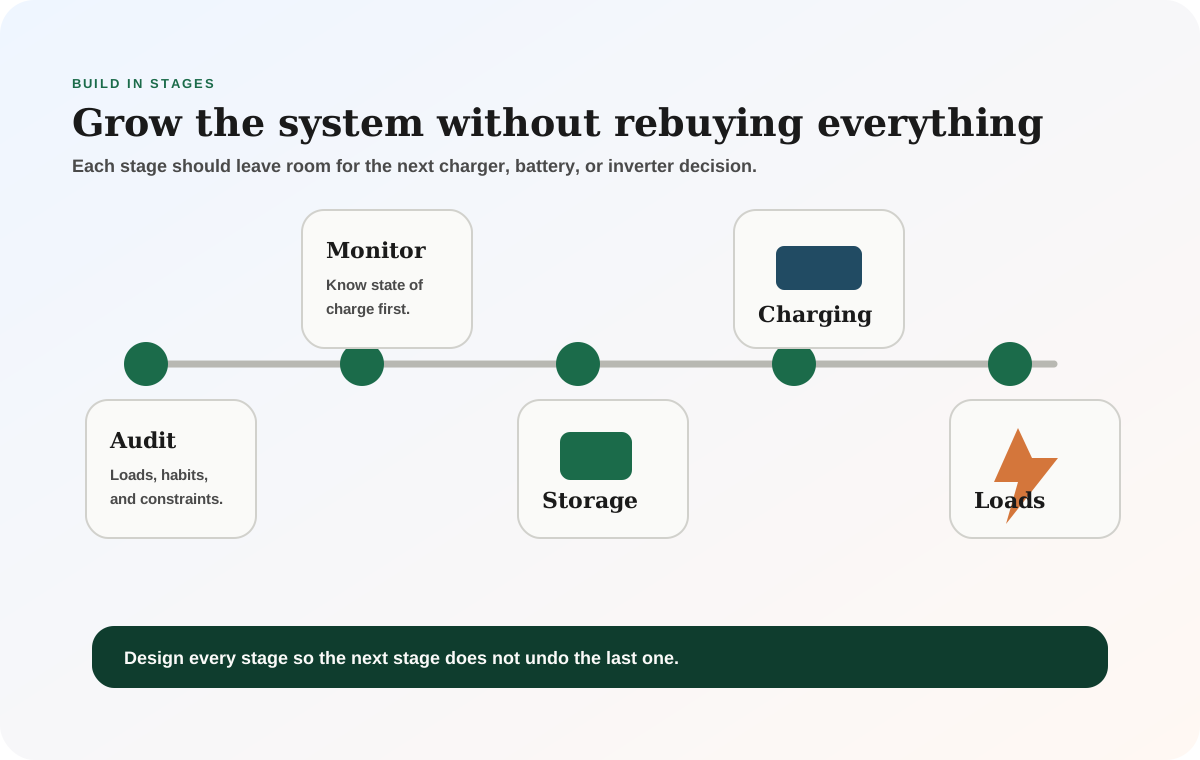
What changed April 21, 2026: Added official-source routing, staged-build visual, concrete stage table, and more specific upgrade sequencing guidance.
What changed April 21, 2026: Expanded the checklist with source checks, retrofit-stage decisions, inspection examples, and upgrade-risk handoffs.
What changed April 17, 2026: Published off-grid RV budget planning guide with current component pricing and cost estimates.
What changed April 21, 2026: Expanded the full-time setup guide with official source routing, a custom system-rhythm visual, weekly operating tables, and stronger calculator handoffs.
Reference, route prep, and seasonal chores
Use these when the blocker is finding places, decoding terms, or protecting the rig between trips.
What changed April 11, 2026: Published a free and low-cost camping app comparison with current official pricing checks, app-status notes, and a legal-verification workflow for boondocking pins.
What changed April 15, 2026: Tightened the opening guidance around hidden water paths and winterization-specific pre-checks.
What changed April 21, 2026: Expanded the glossary with official source references, real planning examples, and clearer explanations for how terms change buying, sizing, wiring, and boondocking decisions.
Key takeaways
The guides hub covers the foundational topics that make every other RV decision easier, especially when electrical, towing, and setup terminology starts to pile up.
Start here when you need the basic order of operations: terminology, readiness, electrical flow, system sizing, upgrade sequencing, and the tradeoffs that shape every later purchase.
This section is not trying to replace the deeper topic hubs. Think of it as the place where the common rules live before a reader gets specialized. If the question is "what does this term mean," "what order should I do this in," or "what could make this trip unsafe," it probably belongs here first.
Once the basic decision is clear, move into the system-specific hub. Solar questions go to RV solar power, battery reserve questions go to RV batteries, campsite-duration questions go to boondocking, and workday-connectivity questions go to remote work. That keeps the guide library from becoming a maze of nearly identical starting points.
If the next trip is your first dry-camping attempt, use the first-time boondocking packing list after the readiness checklist so the gear list is tied to power, water, waste, recovery, navigation, and weather instead of generic camp clutter.
If the rig is headed into freezing weather or storage, use the RV winterization guide before you trust the plumbing to a cold night.
If the open question is where to sleep next, the free camping apps guide compares iOverlander, Campendium/Roadtrippers, The Dyrt, Harvest Hosts, Boondockers Welcome, Hipcamp, and legacy app options without pretending an app pin is the same thing as legal permission.
Official checks behind the foundational guides
These links are not a substitute for the individual guides, but they show the safety and verification lanes that shape the Guides section.
Pre-arrival checks
Before a first trip
Check recalls, tires, generator placement, shore-power behavior, and weather before the packing list becomes the whole plan.
Compare
Compare fast
Use one comparison matrix to scan the practical differences. Small screens stack each row; wider screens keep the first column pinned.
| If the system question is | Start with | Then use |
|---|---|---|
| I do not know what matters first | Off-grid readiness checklist | First-time boondocking packing list |
| Electrical terms are confusing | RV electrical 101 | RV electrical system diagram |
| I need backup power | Generator sizing guide | Generator vs solar comparison |
| Campground power is unclear | 30A vs 50A shore-power guide | Surge protector buyer guide |
| Cold weather is coming | RV winterization guide | Cold and heat hub |
| I need legal places to stay | Free camping apps guide | State boondocking guides |
If you are new, read in the order the trip will fail: safety, power, water, weather, route, then gear. That keeps the foundation practical.
Start with the off-grid readiness checklist to find the weak point. If that weak point is electrical, go to RV electrical 101. If the weak point is campground hookup behavior, go to 30 amp vs 50 amp shore power. If the weak point is backup charging, use what size generator for an RV.
Do not read every guide just because it exists. Read the one that removes the next bad assumption from the trip.
For a first dry-camping weekend, the cleanest path is usually four pages, not twenty. Start with the readiness checklist, pack from the boondocking list, confirm the shore-power or generator plan, then skim the glossary when a term slows you down.
For a new owner doing upgrades, the path is different. Read the electrical primer, study the system diagram, then compare generator, solar, and battery options before buying anything. That sequence keeps a reader from installing a part that solves one problem while creating another one in wiring, charging, weight, or campground compatibility.
For a used-rig shopper, start outside the pretty interior. Check recall status, tire age, roof condition, electrical behavior, and whether the rig's real capacity matches the kind of travel planned. Then bring in the used RV inspection checklist before treating any seller walkthrough as enough proof.
If a page needs exact product models, current prices, or install-specific specs, it belongs in a buyer guide or system guide. The guides hub should teach the durable decision pattern: how to think about power, safety, setup, winter storage, shore power, generator use, and basic terms.
That separation matters for search quality too. A reader landing here should see the map quickly, then move to the page that answers the specific decision. The hub should reduce tabs, not add one more vague overview to the pile.
Frequently asked
Start with the readiness checklist if a trip is coming soon. If the confusion is technical, start with RV electrical 101 and then move into the diagram or generator guide.
No. They are written for off-grid decisions, but the same basics help with campground power, winter storage, shore-power safety, trip prep, and used-rig inspection.
Start with the system you are about to touch: readiness, electrical flow, shore power, generator sizing, winterization, route planning, or setup. Read one guide, check the safety boundary, then move to the deeper hub when the question gets specific.
Freshness note
Last checked April 21, 2026
This topic can change when products, plans, prices, campsite rules, or fit guidance move. These notes show what was reviewed most recently.
This review included
Recent change log
April 21, 2026
Expanded the Guides hub with a decision table, official safety source checks, and clearer beginner routing.
April 17, 2026
Added a visible FAQ section for where beginners should start and how to use foundational guides.
April 15, 2026
Moved the RV winterization guide into Guides and linked it from this hub as an ownership how-to.
April 11, 2026
Added a free camping apps guide for readers comparing iOverlander, Campendium/Roadtrippers, The Dyrt, Harvest Hosts, Boondockers Welcome, Hipcamp, and legacy app options.
April 11, 2026
Rebuilt the generator sizing guide with official model examples, fuel/noise tradeoffs, soft-start guidance, and generator-solar workflow.
April 10, 2026
Added a generator sizing guide for battery recovery, one-air-conditioner use, and larger RV load planning.
April 10, 2026
Added a shore-power safety guide for 30 amp service, 50 amp service, adapters, and pedestal checks.
April 10, 2026
Added a glossary reference page for recurring off-grid RV terms and acronyms.
April 10, 2026
Added a dedicated RV electrical system diagram guide for readers who need a visual system map.
April 10, 2026
Updated the hub's related guide list so electrical planning has both a beginner primer and a diagram-first path.
Broader editorial corrections are tracked on the Corrections and Updates page.