What size generator do you need for an RV?
Most RVs need a 2,000W-class inverter generator for light charging and small loads, 3,000-3,500W or more for one air conditioner, and a strict load plan for 30A or 50A comfort use. Generator size depends on running watts, startup surge, altitude, charger draw, and load overlap. Compare this with your solar calculator result before buying.
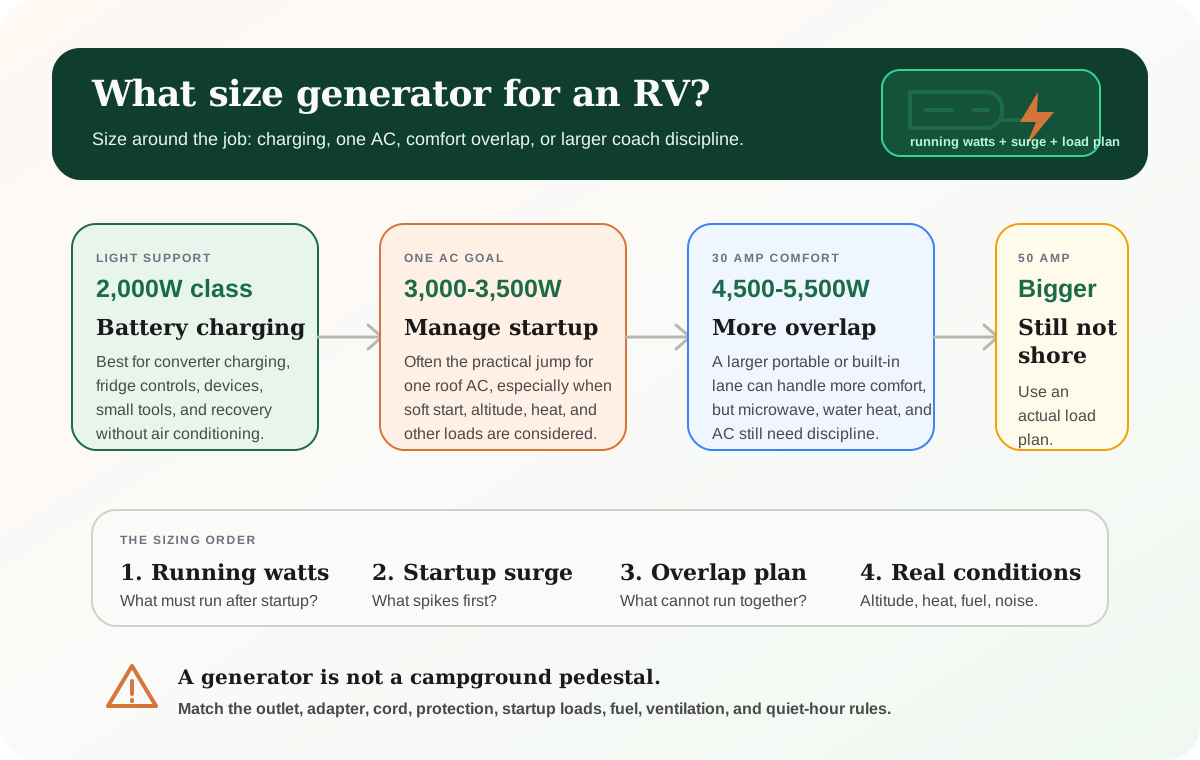
RV generator sizing at a glance
Use these as planning bands before you compare exact models, outlets, fuel types, noise ratings, and the loads inside your own rig.
Light support
2,000W class
Good for converter charging, electronics, fans, lights, and smaller loads one at a time. Do not treat it as normal AC confidence.
One AC target
3,000-3,500W+
A more realistic starting lane for one roof air conditioner after startup surge, heat, altitude, and charger draw enter the picture.
30A comfort band
4,500-5,500W
More room for one AC plus selected overlap, but still not permission to run every electric load indefinitely.
50A coach
Load plan first
A portable generator can support selected loads, but it usually will not recreate a full 50A pedestal.
Hidden variable
Startup surge
Compressors, pumps, microwaves, and chargers can demand more for startup or bulk charging than their steady number suggests.
Use next
Solar calculator
Solar and batteries decide how often the generator has to run, not just how many watts it can make when it is running.
Official generator sizing references
Official generator sizing references
These are the April 11, 2026 source pages used for the model examples and safety-sensitive guidance in this guide. Use the manual for your exact generator, RV, transfer switch, shore cord, adapter, charger, and air conditioner before changing equipment.
Pre-arrival checks
Use model examples as references
A real generator's rated watts, receptacles, fuel tank, noise rating, and weight matter more than a vague wattage class.
Verify price at purchase time
Honda publishes MSRP on these examples; Champion routes buyers through local retailers, so actual street pricing can vary.
Respect safety distance
Carbon monoxide risk is not solved by a quiet inverter label or auto-shutoff feature. Placement and exhaust direction still matter.
Start with the generator's job
Most bad generator decisions start with "How many watts should I buy?"
The better first question is: what job does the generator need to do on the trip?
That job might be:
- recover the house batteries after shade, clouds, or heavy inverter use
- run one roof air conditioner during hot afternoons
- support short kitchen loads like a microwave, coffee maker, or induction burner
- back up a solar system when the weather does not cooperate
- provide emergency power when shore power is not available
- reduce generator runtime by pairing with a larger battery bank
Those are different jobs. A quiet 2,000W-class inverter may be a smart battery-recovery tool and a poor air-conditioning plan. A 4,500W inverter may make a 30A RV feel more relaxed and still be too much weight, fuel, and campsite noise for a person who only needs to bulk-charge batteries twice a week.
If you are still deciding whether the generator should be the first power upgrade, pair this guide with RV Generator vs. Solar. The sizing answer changes when the generator is your primary off-grid power source versus your backup recovery layer.
The three numbers that matter
Generator sizing comes down to three numbers: running watts, startup surge, and overlap.
Running watts are what a load needs after it is already operating. Startup surge is the short burst that motors and compressors may need when they first start. Overlap is the question that actually trips breakers: what are you trying to run at the same time?
A generator that can run the air conditioner by itself may still be unhappy if the converter is bulk-charging the batteries, the microwave starts, and the electric water heater is on. The load stack matters more than the largest number printed on the generator box.
The safest sizing worksheet starts with labels
Use appliance labels, RV manuals, generator manuals, charger settings, and controller displays whenever possible. Generic wattage charts are useful for a first pass, but the equipment in your actual rig gets the final vote.
Quick generator size ranges for common RV jobs
Compare
RV generator sizing bands by use case
Use one comparison matrix to scan the practical differences. Small screens stack each row; wider screens keep the first column pinned.
| Spec | Typical planning band | What it can usually support | What to watch |
|---|---|---|---|
| Battery recovery and light loads | 2,000W class | Converter charging, lights, fans, devices, small tools, and modest kitchen loads one at a time | Usually not enough for normal roof AC confidence without unusually favorable conditions |
| One roof air conditioner | 3,000-3,500W+ | One AC with more realistic startup margin, especially with soft-start hardware and disciplined overlap | Heat, altitude, compressor startup, and battery charger draw can still push the setup |
| 30 amp RV comfort loads | 4,500-5,500W | More room for one AC plus selected additional loads, depending on the RV and generator outlet path | Do not assume every 30A habit can overlap indefinitely |
| Large 50 amp coach | Load plan first | Selected loads, battery charging, or partial comfort support | A portable generator usually does not recreate full 50A pedestal capacity |
These are planning bands, not promises. The final answer depends on the appliance labels, generator rating, outlet type, altitude, temperature, fuel, soft-start hardware, cord path, and what else is running.
Current generator model examples
These examples are not a ranked buying list. They show how real model specs map to common RV jobs.
Compare
Generator examples checked against official sources on April 11, 2026
Use one comparison matrix to scan the practical differences. Small screens stack each row; wider screens keep the first column pinned.
| Spec | Official output and price details | Fuel, noise, and weight | Best sizing lesson |
|---|---|---|---|
| Honda EU2200i | 2,200W max, 1,800W rated, 120V; Honda MSRP $1,199 | 0.95 gal gasoline tank; 3.2 hr at rated load, 8.1 hr at 1/4 load; 57 dB(A) rated load / 48 dB(A) 1/4 load; 47.4 lb dry | A strong light-support and battery-recovery option, but not a comfortable generic answer for roof AC. |
| Honda EU3200i | 3,200W max, 2,600W rated, 120V; Honda MSRP $2,799 IAN / $2,899 IAC | 1.2 gal gasoline tank; 3.3 hr at rated load, 8.6 hr at 1/4 load; 58 dB(A) rated load / 54 dB(A) 1/4 load; 59.1 lb dry | This is the lane where one-AC planning becomes more realistic, but load overlap still decides whether it feels calm. |
| Champion 201318 4500W Inverter with CO Shield | 4,500 starting watts, 3,500 running watts; retailer-variable pricing; 120V 29.2A RV outlet plus 120V 20A duplex | 2.3 gal gasoline tank; up to 14 hr at 25% load; 61 dBA from 23 ft; CO Shield auto shutoff language on official page | This is a better 30A-comfort option, but it carries more weight, fuel, storage, and noise than a smaller inverter. |
The important move is not copying one of these models. The move is noticing how output, rated watts, outlet amperage, fuel tank size, runtime, noise, and weight change the real campsite decision.
Battery charging is usually the easiest generator job
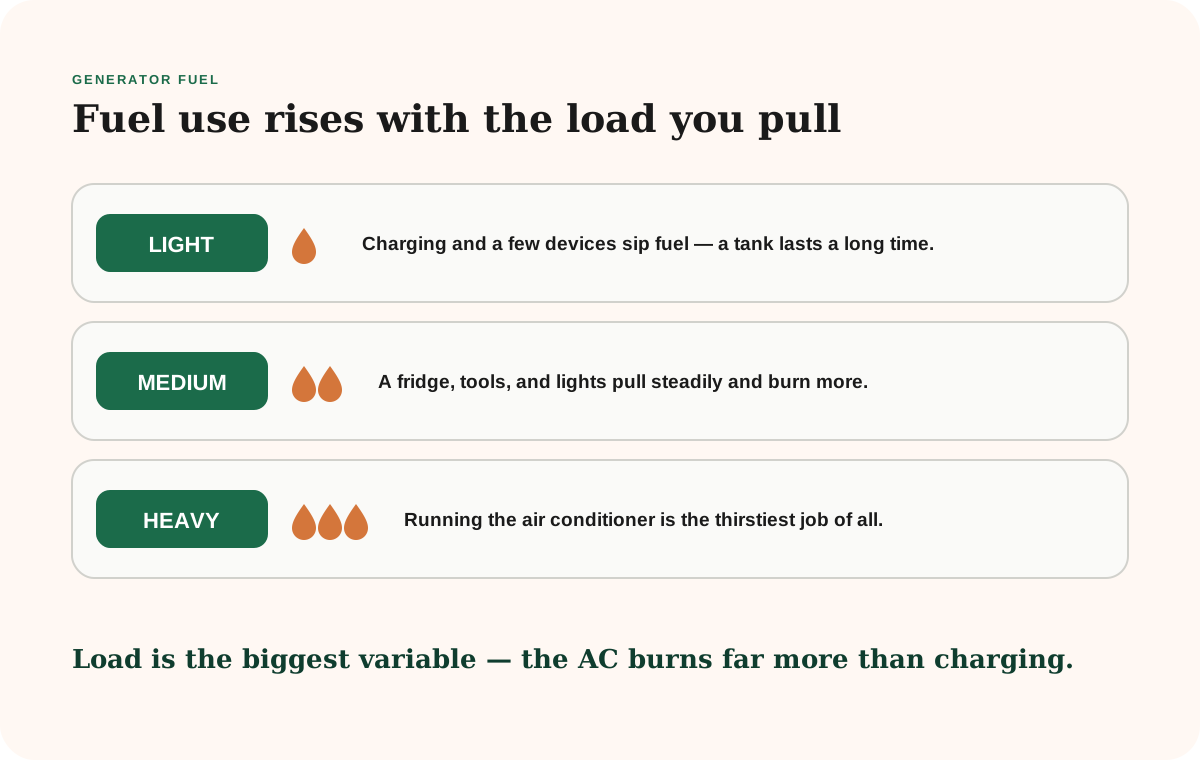
Battery charging is usually easier than air conditioning because the generator is not directly charging the battery. It is powering the converter or inverter charger, and that charger decides how much charging current the battery bank actually sees.
That means a small converter may not use all the generator capacity. A large inverter charger may pull enough current to matter. A lithium bank may accept high charging current if the charger is designed and configured for it. A lead-acid bank may slow down sharply near the top of charge.
If the generator's main job is battery recovery, compare:
- generator rated output
- charger amperage
- battery chemistry
- battery state of charge
- charger configuration
- active loads while charging
- how often solar fails to recover the bank
Use the battery charging guide if you need to trace how shore power, solar, alternator charging, and generator input fit together. If you are still sizing the solar side, run your daily loads through the RV solar calculator so the generator is sized around the gap, not around guesswork.
Air conditioners change the generator conversation
Air conditioning is the load that makes generator sizing feel messy.
An RV air conditioner has a running draw and a startup event. The startup event is where marginal generator setups usually struggle first. A soft-start device can reduce that startup shock, but it does not erase running watts, heat, altitude, charger draw, dirty coils, cord voltage drop, or everything else happening inside the rig.
Ask these questions before assuming a generator can run the AC:
- Is this one air conditioner or multiple air conditioners?
- Is a soft start installed, configured, and proven?
- What else will run while the compressor starts?
- Is the converter bulk-charging batteries at the same time?
- Are you at elevation or in extreme heat?
- Does the generator have the right continuous rating and outlet path?
If your actual goal is off-grid cooling, read How Much Solar Do You Need to Run an RV Air Conditioner? too. Even if you plan to use a generator, that guide explains why AC is a whole-system load, not just an appliance.
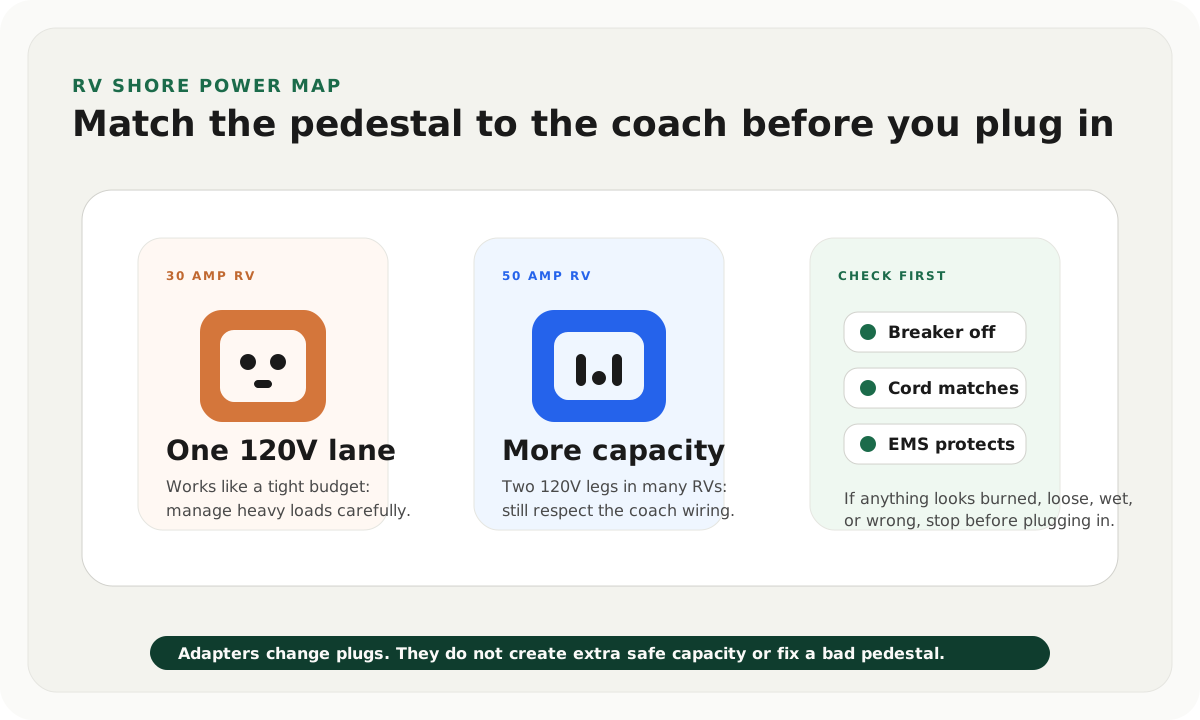
A generator is not a campground pedestal
A 30 amp RV plugged into a generator does not automatically behave like it is on a strong campground pedestal. A 50 amp RV plugged into a portable generator definitely should not be treated like full 50A service.
The plain rule is simple: A generator is not a campground pedestal. It is a limited supply with its own outlet rating, continuous output, startup behavior, fuel limits, heat behavior, exhaust risk, and connection rules.
Use the same discipline you would use on marginal shore power:
- match the outlet, cord, adapter, and RV inlet
- know what the generator can actually supply continuously
- avoid running heavy loads just because the plug fits
- watch for hot plugs, low voltage, overload, and repeated breaker trips
- reduce demand before blaming the equipment
If adapters, 30A service, 50A service, EMS protection, or pedestal limits are still fuzzy, read the RV shore power guide before you buy a generator or adapter bundle.
Portable vs built-in generators
Portable generators are flexible. You can choose the size, move them away from the rig, store them separately, service them independently, and leave them home when the trip does not need one.
The tradeoff is handling. You need safe storage, fuel storage, lifting ability, theft prevention, weather protection, cord routing, and a setup routine that does not put exhaust near doors, windows, vents, awnings, pets, or neighbors.
Built-in RV generators are convenient when the coach is designed for them. They can use the rig's fuel supply, start from inside, and integrate cleanly with the electrical system.
The tradeoff is cost, service access, noise location, fixed exhaust routing, and maintenance. A neglected built-in generator can be expensive to revive, and a built-in unit does not remove the need for load discipline.
For used rigs, this is inspection-critical. A coach advertised with a built-in generator still needs cold-start proof, load-test proof, hour-meter context, maintenance records, exhaust inspection, and transfer-switch confidence.
Inverter vs conventional generators
For most RV buyers, an inverter generator is the calmer fit. It usually runs quieter at partial load, provides cleaner power for electronics, and adjusts engine speed as demand changes.
The downside is cost. Inverter generators usually cost more per watt than conventional open-frame generators, and repairs can be more specialized.
Conventional generators can make a lot of power for less money. They can be fine for construction-style work or emergency backup where noise and weight matter less.
The downside is campsite friction. Open-frame conventional generators are often louder, less pleasant near other campers, and not the direction I would start for normal boondocking unless the use case is very specific.
Fuel type changes the real answer
Gasoline is common, energy-dense, and easy to find. The tradeoff is storage smell, stale fuel management, carburetor maintenance, and carrying a separate fuel supply if your RV does not already use gasoline.
Propane stores cleanly and may use the RV's existing fuel system. The tradeoff is lower available output on many dual-fuel portables, faster propane consumption than people expect, and competition with heating, cooking, and water heating.
Diesel makes sense for some motorhomes because the rig already carries diesel and built-in generators can integrate well. The tradeoff is purchase cost, service complexity, and noise/odor depending on the installation.
Dual-fuel generators look flexible on paper. They can be a good fit, but you need to size them from the fuel you will actually use. Do not buy a dual-fuel generator based on its gasoline rating if you plan to run it mostly on propane.
Altitude, heat, cords, and maintenance shrink margin
Generator ratings are not always what the rig feels in the field.
Real output and startup confidence can be affected by:
- elevation
- high heat
- fuel type
- air filter condition
- spark plug condition
- old fuel
- extension cord length and gauge
- charger settings
- compressor startup behavior
- load timing
This is why a generator that feels fine near sea level can feel marginal in mountain heat. It is also why a setup that barely starts an AC at home may be frustrating at camp.
Build margin into the plan. A generator that runs at the edge tends to be louder, hotter, less efficient, and less forgiving.
Generator-solar hybrid camping is usually cleaner
The best generator strategy for many boondockers is not all-day generator use. It is solar for the daily baseline, batteries for quiet hours, and generator time for recovery when weather, shade, air conditioning, or heavy inverter use outruns the plan.
That workflow usually looks like this:
- solar carries lights, fans, devices, fridge controls, routers, and daily low-draw loads
- batteries cover evening and quiet-hour loads
- the generator runs during allowed hours to bulk-charge the bank or support a heavy short-term load
- high-draw tasks are batched while the generator is already running
- electric water heat, microwave use, and AC startup are managed deliberately
This is where the RV solar calculator helps. If solar can cover most of the daily watt-hours, the generator can be sized and used for recovery. If your load sheet shows AC, electric cooking, Starlink, laptops, and poor sun all happening together, the generator may need to be part of the primary plan.
Never trade comfort for exhaust risk
Generator sizing is not only electrical. It is also safety, storage, and campsite behavior.
The CDC guidance is blunt: keep generators outside and at least 20 feet from doors, windows, and vents. Auto-shutoff systems are useful safety layers, but they are not permission to place a generator under the RV, in a compartment not designed for it, under an awning, inside a screened room, near a neighbor's window, or anywhere exhaust can collect.
Never trade comfort for exhaust risk
Keep generators outside, away from openings, and follow the generator and RV manuals for exhaust clearance, ventilation, fueling, grounding, transfer switching, and connection requirements. Carbon monoxide risk is not a theoretical footnote.
Noise and etiquette matter too. If you camp near other people, pair this page with the generator etiquette guide before relying on generator time as part of the daily routine.
Common generator sizing mistakes
The first mistake is sizing from peak watts only. Rated watts, outlet amperage, and continuous use matter more than the biggest advertised number.
The second mistake is forgetting the charger. If the converter or inverter charger is pulling hard, it can steal margin from the air conditioner, microwave, or other heavy loads.
The third mistake is treating soft-start hardware like a permission slip. A soft start can help a compressor start, but it does not make a small generator into a full pedestal.
The fourth mistake is buying for the rarest day. If you need AC for one emergency afternoon per year, the answer may be a campground, a different route, or a short generator rental. If you need AC every summer afternoon, size the whole system around that reality.
The fifth mistake is ignoring handling. A generator you hate lifting, fueling, storing, securing, and listening to will not feel like the right size even if the math works.
Final thought
The right RV generator size is the smallest setup that does the real job with safe margin. Start with the loads, decide which heavy loads are allowed to overlap, account for startup surge and charger draw, then decide whether solar and batteries can carry enough of the day to keep generator time short. That process beats buying the largest portable you can tolerate and hoping the campsite, fuel can, cord path, and air conditioner all cooperate.
Where to go next
Use RV Generator vs. Solar if you are deciding whether generator capacity or solar capacity should get the next dollar.
Use the RV solar calculator if you need to estimate the daily watt-hour gap the generator has to recover.
Use the RV shore power guide if the outlet, adapter, cord, EMS, or service-size side of the setup still feels fuzzy.
Frequently asked
Questions RVers usually ask next.
What size generator do I need for a 30 amp RV?
It depends on what you want to run at the same time. Many light-use 30A rigs can use a 2,000W-class inverter generator for battery charging and small loads, while one-air-conditioner goals often move toward 3,000W to 3,500W or more. More load overlap pushes the conversation into the 4,500W to 5,500W comfort band.
Can a 2,000 watt generator run an RV air conditioner?
Sometimes, but it is not the safe generic assumption. A smaller AC, soft-start hardware, low overlap, low elevation, moderate temperature, and a generator in good condition all help. Most RVers should treat 2,000W as light support and battery recovery, not normal roof-AC confidence.
Do I need a soft start for an RV air conditioner on a generator?
A soft start can reduce compressor startup stress and may make a one-AC setup easier on a generator. It does not erase running watts, charger draw, heat, altitude, cord voltage drop, or generator limits. Size the system as if the soft start is a helpful margin tool, not magic.
Can a portable generator power a 50 amp RV?
It can power selected loads with the right outlet, cord, adapter, and load plan, but a portable generator usually does not recreate full 50A campground-pedestal capacity. Treat the setup as a limited supply and manage air conditioners, electric water heat, microwave use, and battery charging deliberately.
Is an inverter generator worth it for an RV?
For most RV camping, yes, because the quieter partial-load behavior and cleaner power are useful around people and electronics. The tradeoff is price per watt. If your main use is noisy worksite-style backup far from other campers, a conventional generator can still make sense.
Freshness note
Last checked April 11, 2026
This topic can change when products, plans, prices, campsite rules, or fit guidance move. These notes show what was reviewed most recently.
This review included
- Checked current Honda EU2200i and EU3200i specs, listed MSRP, fuel capacity, runtime, noise range, output ratings, receptacles, weight, and warranty language against official Honda pages.
- Checked current Champion 201318 4500W inverter generator specs, RV outlet, fuel capacity, runtime, noise rating, CO Shield language, and pricing against Champion's official product page.
- Checked generator carbon-monoxide placement guidance against the CDC's public safety guidance, including the 20-foot distance from doors, windows, and vents.
- Rebuilt the guide around generator job selection, load overlap, model examples, soft-start implications, fuel tradeoffs, and generator-solar hybrid workflow.
Recent change log
April 11, 2026
Rebuilt the guide with official generator model examples, current pricing, safety references, fuel/noise tradeoffs, and a clearer generator-solar workflow.
April 10, 2026
Published an RV generator sizing guide covering battery charging, one-air-conditioner use, 30 amp comfort loads, and 50 amp load discipline.
Broader editorial corrections are tracked on the Corrections and Updates page.