Source checks for solar-supported AC planning
Use these official resources to separate solar harvest, cooling demand, and generator safety before treating an AC runtime claim as a buying plan.
Pre-arrival checks
Before buying hardware
Confirm the air conditioner model, startup behavior, inverter surge rating, battery current limits, wiring, and whether a soft-start device changes the plan.
Can solar run an RV air conditioner?
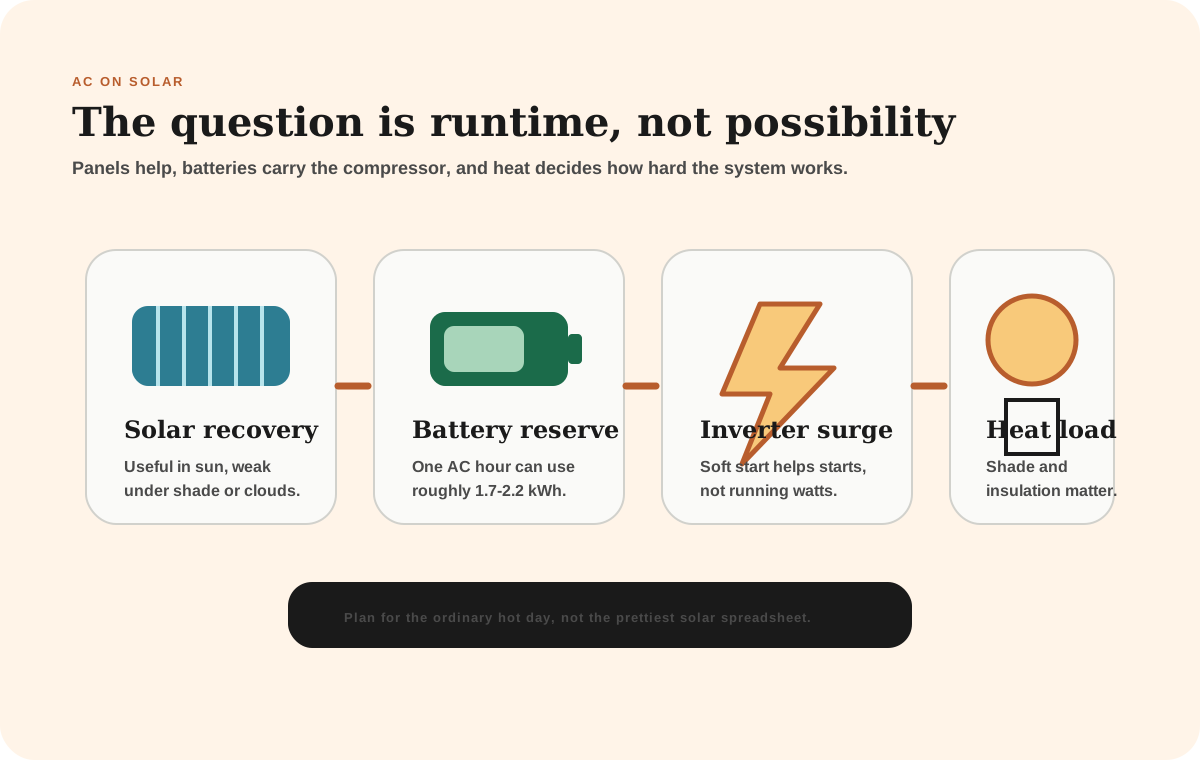
Solar can run an RV air conditioner, but only when the panels, battery bank, inverter, startup surge control, and runtime target all line up. A brief midday cooling window is realistic for some large systems; all-day shore-power-style cooling is a much bigger build. Start with the solar calculator and inverter guide.
The short answer is almost always: more than people expect
Air conditioning is where off-grid RV electrical dreams meet electrical reality.
It is easy to find rough claims that a certain number of panels or a certain battery bank will "run AC on solar." Those claims are not always false, but they are usually missing context. Running an air conditioner for a few midday cooling cycles is not the same thing as treating it like shore-power climate control.
That distinction matters because air conditioning is one of the heaviest regular loads most RVers will ever ask their battery and solar system to support.
Start with what you mean by "run the AC"
Before thinking about solar, answer the real goal.
Do you want to:
- briefly cool the rig during the hottest part of the afternoon?
- help reduce generator time?
- run the AC while driving or while parked in strong sun?
- maintain cabin cooling for long evening stretches?
- support remote work comfort for a few afternoon hours?
Each of those is a different electrical problem.
Light-support goal
You want some cooling help during strong solar conditions, but you are not trying to replace hookups entirely.
Hybrid goal
You want solar and battery to carry some AC runtime, but you still accept generator help or limited windows of use.
Full off-grid AC goal
You want air conditioning to behave like a normal expected comfort load for long blocks of time.
The further you move down that list, the larger and more expensive the system becomes.
Compare
Solar-supported RV air-conditioning goals
Use one comparison matrix to scan the practical differences. Small screens stack each row; wider screens keep the first column pinned.
| Spec | Light support | Hybrid support | Shore-power-style expectation |
|---|---|---|---|
| Realistic use case | Short midday cooling bursts or lunch-stop relief | A few planned cooling blocks with backup charging available | Long hot-weather runtime with minimal behavior change |
| Solar setup | Often 400-800W plus excellent sun and modest expectations | Often 800-1200W+ with roof-space and shade discipline | Usually beyond a normal roof-only build without major backup charging |
| Battery setup | Often 200-400Ah lithium equivalent for limited use | Often 400-800Ah lithium equivalent depending on runtime | Often 800Ah+ or a custom high-capacity system |
| Inverter setup | Usually 2000-3000W pure sine with surge and soft-start checked | Usually 3000W-class inverter/charger planning | Custom design, current limits, and installer review become non-negotiable |
| Best fit | Comfort relief, not climate control | Generator reduction and controlled work blocks | Large budgets, large systems, and very clear expectations |
Air conditioners are heavy loads because they stack several demands
Air conditioning stresses an RV electrical system in multiple ways at once:
- meaningful running power draw
- startup surge
- long run durations in hot weather
- overlap with other daytime loads
- pressure on battery recovery if cooling continues into late day
That is why air conditioning changes the whole design. It is not just another appliance.
Solar panels alone are not the answer
When people ask how much solar they need for AC, they often focus on the roof first. That is understandable because panel wattage is visible and easy to compare.
But panels only solve one part of the problem.
To support air conditioning well, the system also needs:
- enough battery reserve to absorb heavy draw without feeling fragile
- an inverter that can handle startup and sustained load
- wiring that does not create voltage-drop problems under demand
- realistic recovery based on the sunlight you actually get
If any one of those pieces is undersized, the whole AC plan feels weak no matter how good the roof array looks.
Battery reserve is usually the real bottleneck
Many RVers imagine solar directly powering the air conditioner in real time. Sometimes that is partly true during excellent sunlight. In practice, the battery bank still does a lot of the hard work because:
- cloud movement changes production
- AC compressors cycle
- other loads continue in the background
- late-afternoon heat can outlast peak solar production
That is why air-conditioning-capable systems usually need more battery than beginners expect. A roof array may help carry part of the load, but the battery bank still needs to feel stable under a demanding appliance.
If you have not already worked through the storage side, start with How to Size an RV Battery Bank before you trust any AC-focused solar math.
The inverter matters as much as the battery
An AC plan can also fail at the inverter level.
Even when the battery and solar bank look reasonably sized, the inverter still has to tolerate:
- compressor startup behavior
- sustained cooling draw
- any overlapping AC household-style loads
That means air-conditioning plans should be treated as full-system design questions, not just panel-count conversations.
If you are ready to price hardware, compare exact surge and transfer specs in the best inverter for an RV air conditioner guide before treating any 2000W or 3000W label as enough.
Do not size only to the running watt number
A system that looks fine against the air conditioner's steady-state draw can still struggle if startup behavior, wiring quality, or battery-side stability were ignored.
Duty cycle changes everything
One of the biggest reasons paper sizing fails is that people think in terms of "an air conditioner uses X watts" as if the load is constant all day. In real use, air conditioners cycle on and off depending on outside temperature, insulation, humidity, sun exposure, and cabin setpoint.
That cycling behavior matters because:
- a moderate-duty cooling day may be partially manageable
- an extreme-heat day can push runtime dramatically higher
- shaded campsites and ventilation habits can reduce the burden
- poorly shaded rigs in direct sun can make the system feel much smaller
In other words, your climate and camping behavior matter almost as much as your roof hardware.
The realistic question is often how much AC support you want
For many RVers, the best goal is not "air conditioning from solar all the time." It is:
how much cooling relief do we want, and when does it matter most?
Some examples:
- Cool the rig for lunch stops or afternoon work blocks
- Knock the cabin temperature down before sunset
- Reduce generator time during the hottest window
- Keep pets or people more comfortable while parked for shorter stretches
These are all far more practical goals than expecting a moderate roof array to behave like a campground pedestal in July.
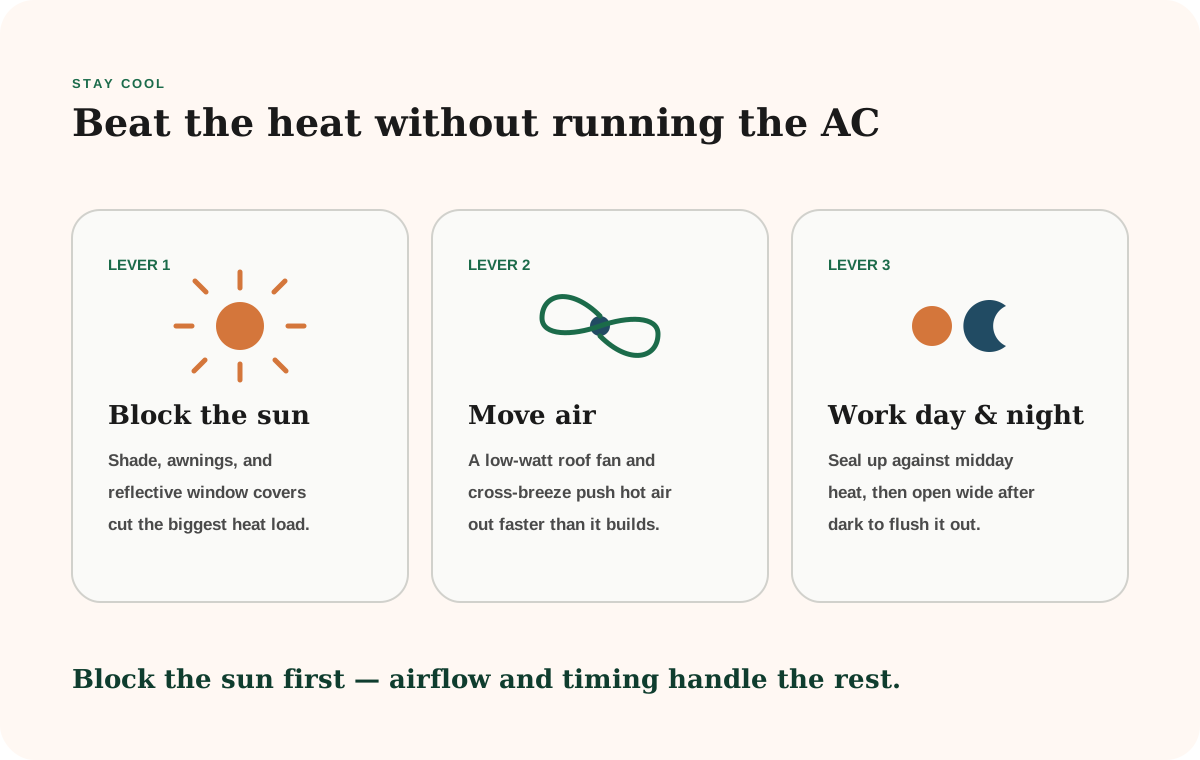
Heat strategy can reduce how much solar you need
The cheapest air-conditioning upgrade is often not electrical at all.
If you want to support AC better from solar, also look at:
- parking orientation
- shade strategy
- reflective insulation or window management
- roof ventilation before the hottest hours
- using the coolest part of the day to reset cabin temperature
This matters because every degree of heat you prevent is load the electrical system no longer has to fight.
Use the calculators as a reality check, not a guarantee
The solar calculator is useful because it helps frame the battery and charging problem in real numbers, not wishful thinking. But AC planning still needs judgment layered on top of the tool.
When evaluating an AC goal, ask:
- how many hours of meaningful cooling do we actually want?
- is the goal midday-only, or does it extend into evening?
- what else is running while the AC runs?
- how often are we camping in the conditions that make AC essential?
Those answers tell you whether you need a modest support system, a serious hybrid setup, or whether the project is drifting toward a much larger and more expensive build.
When solar-supported AC makes sense
It often makes sense when:
- you need selective cooling relief, not all-day climate control
- the rig already has a fairly capable battery system
- roof space is usable and sun exposure is strong
- you understand the limitations and are not expecting hookups-level performance
It becomes harder to justify when:
- the rig has limited roof space
- the battery bank is modest
- the inverter is not suited to the job
- campsites are often shaded
- the goal is hours of cooling after solar production fades
The most honest framework
Instead of asking, "Can solar run my RV air conditioner?" ask:
- for how long?
- in what weather?
- at what time of day?
- with what battery reserve?
- alongside what other loads?
That framework leads to much better decisions because it turns the project from a fantasy headline into a real use case.
The best answer is usually a layered one
For many RVers, the winning solution is not pure solar or pure generator or pure hookups thinking. It is layered:
- stronger battery reserve
- enough solar to improve daytime recovery
- realistic AC expectations
- better heat-management habits
- backup options for brutal conditions
That kind of setup often feels dramatically better on the road even if it never claims to run the AC endlessly off-grid.
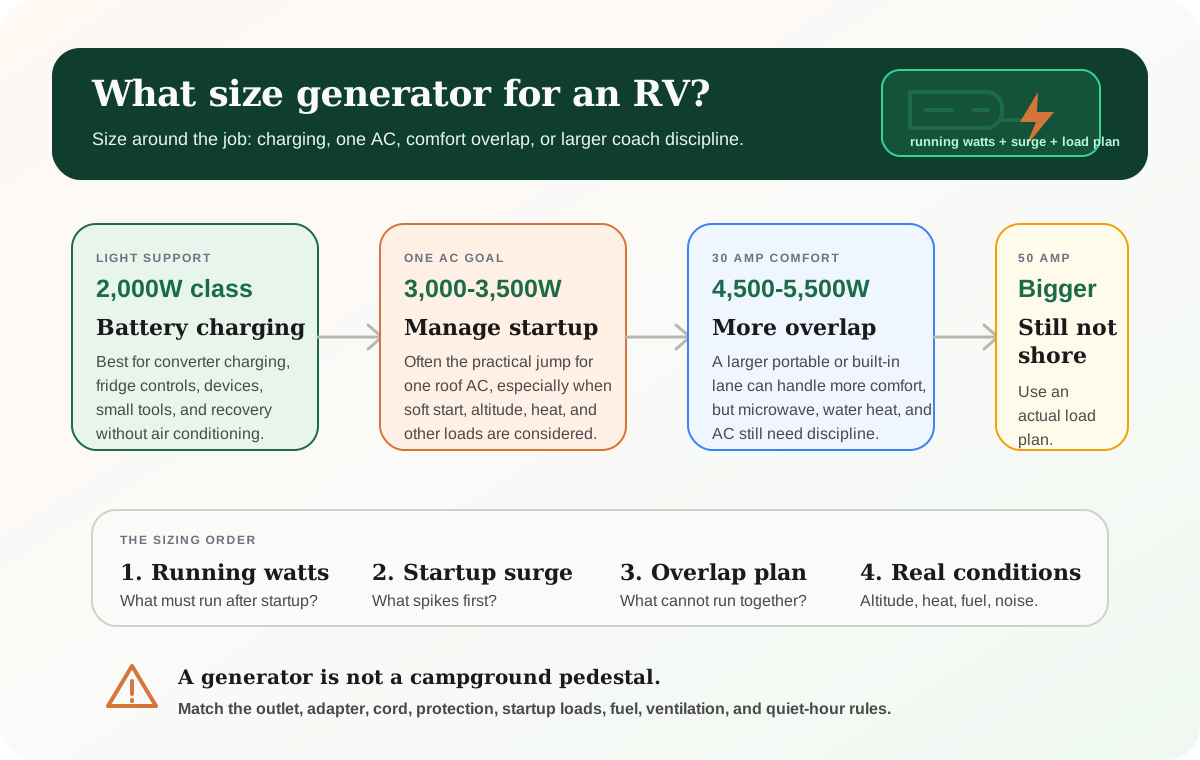
If the backup option is a portable or built-in generator, use the RV generator sizing guide to think through startup surge, soft-start assumptions, battery-charger overlap, altitude, fuel, and quiet-hour limits.
Frequently asked
Questions RVers usually ask next.
Can you run an RV air conditioner on solar?
Yes, but the real answer depends on how long you want to run it, what type of conditions you camp in, and how much battery and inverter support the system has. Short midday cooling windows are much more realistic than treating solar like full-time hookups.
Is panel wattage the main thing that determines whether AC works?
No. Battery reserve, inverter capacity, wiring quality, and the actual duty cycle of the air conditioner matter just as much as roof wattage.
Why do people underestimate the solar needed for AC?
Because they often size from ideal paper numbers instead of real heat, startup demand, cycling behavior, and the fact that late-day cooling can outlast strong solar production.
What is the most realistic solar AC goal for many RVers?
For many rigs, the most practical goal is selective cooling support during strong sun or limited time blocks rather than all-day air-conditioning independence.
Freshness note
Last checked April 17, 2026
This topic can change when products, plans, prices, campsite rules, or fit guidance move. These notes show what was reviewed most recently.
This review included
- Verified air conditioner wattage and start-surge figures from Dometic and Coleman product specs.
- Checked solar panel output and battery sizing recommendations against current component pricing.
Recent change log
April 17, 2026
Published solar-for-AC guide with verified air conditioner wattage data and system sizing.
Broader editorial corrections are tracked on the Corrections and Updates page.