Shore power decisions at a glance
Use this as the quick check before plugging into campground, driveway, garage, or generator-fed power.
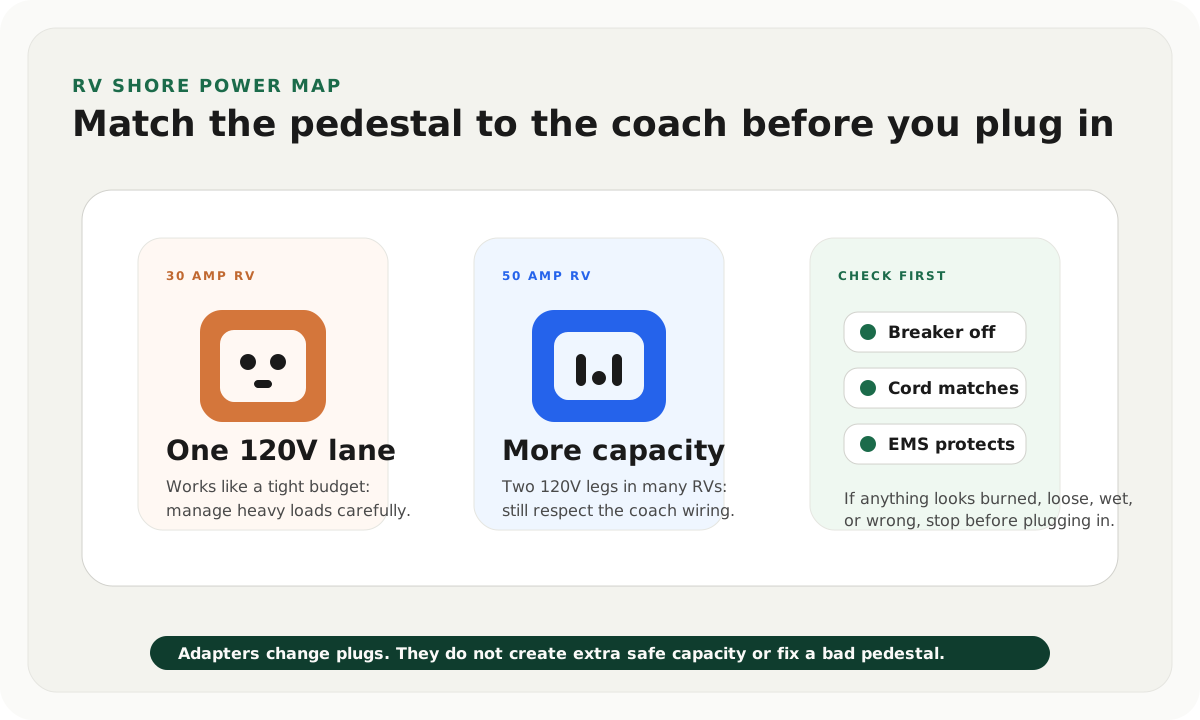
30 amp RV service
Manage heavy loads
A 30A coach usually needs more attention around air conditioning, microwave, electric water heat, and space heaters.
50 amp RV service
More capacity, still bounded
A 50A coach can support more simultaneous loads, but only when connected through the correct cord, pedestal, and protection path.
Adapters
Plug shape, not extra power
A dogbone can make a physical connection, but it cannot turn a smaller outlet into a larger safe supply.
Protection
EMS beats guessing
A good EMS or surge protector helps catch wiring faults, low voltage, high voltage, and surge events before they reach the coach.
Stop signs
Heat, burn marks, loose fit
Damaged pedestals, hot plugs, repeated breaker trips, or arcing sounds are not normal inconveniences.
Best habit
Breaker off first
Turn the pedestal breaker off before plugging in or unplugging so the connection is not made under load.
What shore power actually does
Shore power is the outside AC power source your RV uses when it is plugged into a campground pedestal, home outlet, generator outlet, or other external supply.
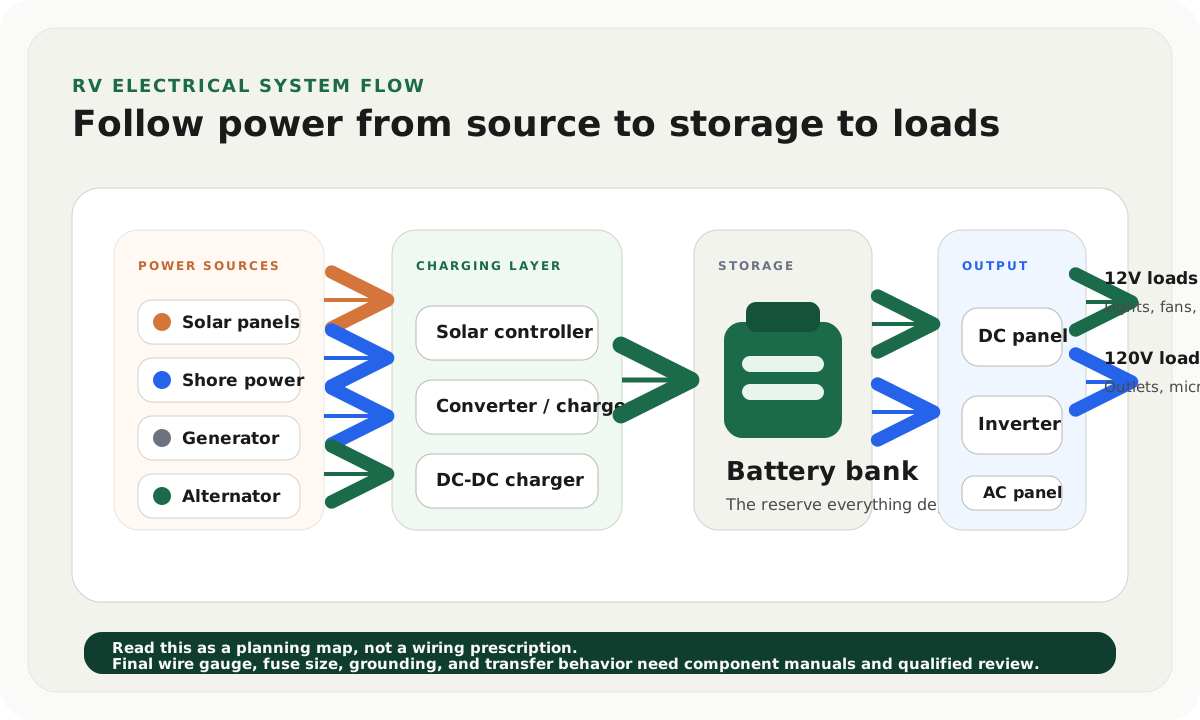
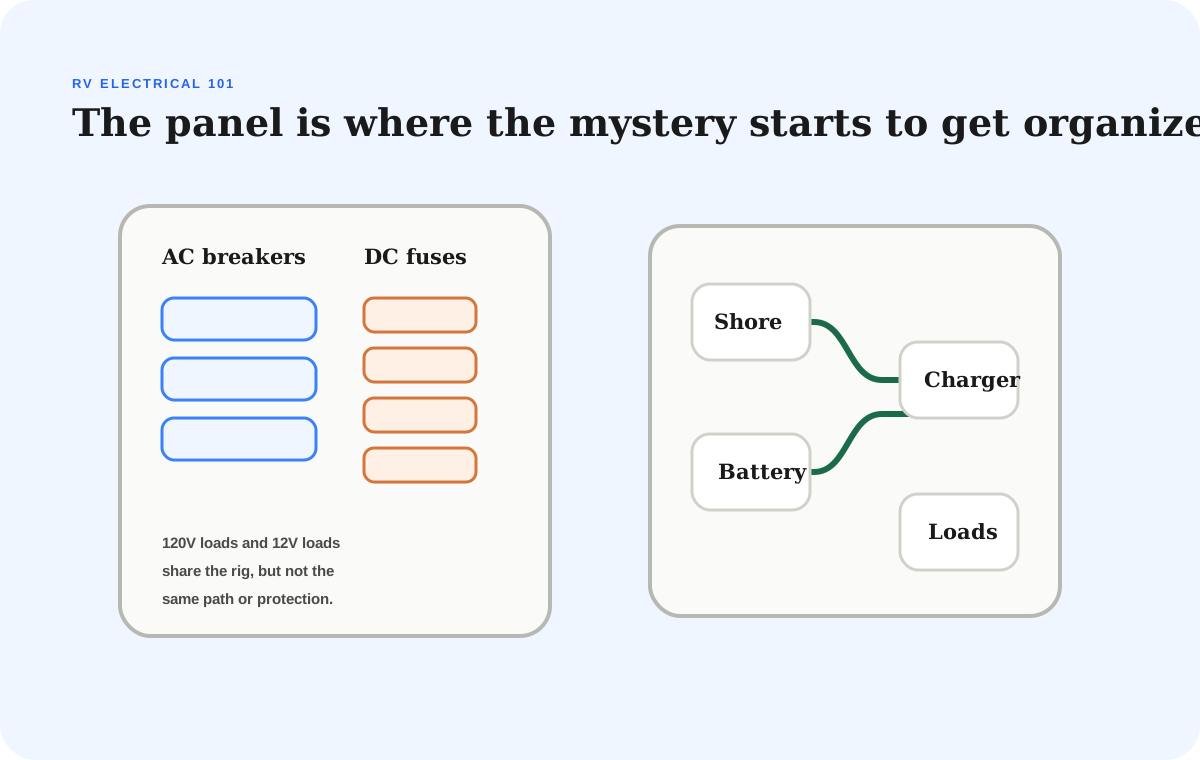
Inside the RV, that power usually feeds the AC distribution panel. It can run outlets and AC appliances, and it can also feed the converter or charger that replenishes the house battery bank.
That is the key point: shore power is not just "free battery charging." It is the main outside AC lane into the coach, so bad pedestal power can affect expensive systems quickly.
If you are still learning the overall system shape, keep the RV electrical system diagram open beside this guide.
30 amp versus 50 amp RV service
The plain-English difference is capacity, but the math matters because it changes your habits.
A 30 amp RV service is commonly 120V at 30A, which gives a theoretical ceiling of about 3,600W before real-world losses, breaker behavior, pedestal condition, and load startup are considered.
A 50 amp RV service is commonly a 120/240V split-phase supply with two 50A legs. Southwire's 30A Surge Guard page lists a 30A, 120V device, while the 50A Surge Guard page lists a 50A, 120/240V device. That is why a true 50A coach is not just "20 amps more" than a 30A coach.
Compare
30 amp versus 50 amp RV shore power comparison
Use one comparison matrix to scan the practical differences. Small screens stack each row; wider screens keep the first column pinned.
| Spec | 30 amp RV service | 50 amp RV service | What to remember |
|---|---|---|---|
| Common coach fit | Smaller travel trailers, Class C rigs, smaller fifth wheels, many simpler coaches | Larger fifth wheels, Class A rigs, larger toy haulers, higher-load coaches | The RV inlet and main breaker tell you what the coach is designed around |
| Load behavior | Usually requires careful load management | Can support more simultaneous heavy loads when both legs are supplied correctly | Do not run heavy loads just because the plug fits |
| Common issue | Breaker trips when too many heavy loads overlap | Adapter confusion when connected to a smaller pedestal outlet | The weak point may be pedestal, adapter, cord, breaker, or coach load |
| Best habit | Run one major heat/cooling load at a time when capacity is tight | Still watch voltage and pedestal quality | Use protection and verify the actual supply before trusting it |
A 30 amp RV normally has a tighter power budget. The coach can still be very usable, but you need to think about what overlaps. Air conditioning, microwave use, electric water heating, electric space heating, hair dryers, and battery charging can stack up faster than new owners expect.
A 50 amp RV normally has more available capacity and is often wired to support larger coaches with more appliances, more air conditioning, or more simultaneous loads.
The mistake is assuming that a bigger plug or an adapter makes every situation safe. The whole chain matters: pedestal, breaker, receptacle, adapter, cord, protection device, transfer equipment, coach wiring, and the loads currently running.
What adapters can and cannot do
Adapters are useful. They are also easy to misunderstand.
A dogbone adapter can let a 30 amp RV connect to a 50 amp pedestal outlet or let a 50 amp RV connect to a 30 amp pedestal outlet. Smaller adapters can let an RV connect to a household-style outlet for very light use.
But the adapter does not upgrade the available power.
If a 50 amp coach is adapted down to a 30 amp outlet, the coach needs to behave like it is on a smaller supply. If a 30 amp coach is adapted to a 50 amp pedestal outlet, the coach is still limited by its own 30 amp inlet, cord, and main breaker path.
Adapters are where the math gets practical. A heavy-duty dogbone may be correctly built for its stated purpose, but it still cannot make the smaller side of the connection carry a larger load safely. That is the practical point to remember at the pedestal.
Adapters do not create safe capacity
Treat adapters as compatibility tools, not power upgrades. If the smaller side of the connection cannot safely support the load, the larger plug on the other side does not rescue the setup.
The first-plug-in workflow
Use the same simple routine every time:
- look at the pedestal before touching the cord
- check for burn marks, cracks, loose receptacles, missing covers, water intrusion, insect nests, or obvious damage
- confirm the outlet type matches the RV or the adapter plan
- turn the pedestal breaker off
- connect the surge protector or EMS
- let the protection device evaluate the pedestal if it has a delay or diagnostic sequence
- connect the RV cord only after the setup looks correct
- turn the breaker on
- watch for error codes, low voltage, high voltage, heat, buzzing, or repeated trips
This habit sounds fussy until the day it keeps bad pedestal power out of the coach.
What an EMS or surge protector is doing
People often say "surge protector" when they really mean a broader electrical management system.
A basic surge protector is mostly about surge events.
A more complete EMS-style unit may monitor for low voltage, high voltage, open ground, reverse polarity, open neutral, miswired pedestal behavior, and other faults depending on the model. Some units simply warn. Others can disconnect power automatically when conditions are unsafe.
That automatic disconnect behavior matters because many RV damage stories are not dramatic lightning-strike stories. They are low-voltage, miswired-pedestal, or bad-connection stories.
Southwire's Surge Guard documentation lists fault protection for open ground, reverse polarity, open neutral, elevated ground voltage, high and low voltage, overcurrent, and overheating depending on model. The exact thresholds vary by device, but the theme is stable: a good protection device is watching for more than lightning.
If you want product-specific options, use the RV surge protector buyer guide after you understand whether your coach needs 30 amp or 50 amp protection.
Common shore power mistakes
The first mistake is using the wrong cord or an undersized household extension cord for high loads.
The second mistake is adapting down without reducing the loads inside the RV.
The third mistake is ignoring heat. A warm connection deserves attention. A hot plug, soft cord end, discoloration, melting smell, or visible arcing is a stop sign.
The fourth mistake is repeatedly resetting a breaker without solving the cause. A breaker that trips once may be a load-management lesson. A breaker that keeps tripping is telling you to stop and inspect the system.
The fifth mistake is treating the campground pedestal as automatically trustworthy. Pedestals live outdoors, get used hard, and vary widely in condition.
Driveway and household outlet use
A household outlet can be useful for storage, battery maintenance, refrigerator pre-cooling, or very light work.
It is not the same thing as a campground pedestal.
If you are plugged into a standard household circuit, avoid heavy overlap. Do not assume you can run air conditioning, electric heat, water heating, battery charging, and kitchen loads just because the RV is connected.
Use the lightest useful load plan, avoid questionable extension cords, and stop if cords or plugs get warm. For dedicated home RV power, get the outlet and circuit installed correctly instead of improvising.
Generator shore power
Some generators feed the RV through the shore cord path. The same broad thinking applies: match the outlet, adapter, cord, protection path, and expected loads.
Do not assume a generator outlet can support every RV load. Generator wattage, startup surge, voltage behavior, neutral/ground behavior, transfer equipment, and appliance startup loads can all matter.
Use the RV generator sizing guide if you are deciding whether the generator should support battery charging only, one air conditioner, or a larger 30 amp/50 amp load plan.
If the generator path behaves oddly, stop and check the manual or get qualified help. Shore-power habits are still electrical habits, even when the pedestal is portable.
The converter is part of the shore-power load
Shore power often feeds the converter or charger, and that charger can draw meaningful AC power when the battery bank is low.
That is why a rig can trip a breaker even when the air conditioner is not the only obvious load. Battery charging, electric water heat, a microwave, a space heater, and an air conditioner can overlap in ways that surprise new owners.
If you recently upgraded to lithium or a higher-output charger, use the RV electrical system 101 guide to trace where the converter sits in the larger system. Charger output, battery acceptance, wiring, and heat all matter before you assume shore power is the problem.
What to do when something feels wrong
Stop using the connection if:
- the pedestal is visibly damaged
- the receptacle is loose
- the plug does not seat firmly
- the breaker trips repeatedly
- the cord or adapter gets hot
- the EMS shows a fault
- voltage is outside the safe range for your equipment
- you smell melting plastic or hear arcing
- the campground power behaves differently when large neighboring loads turn on
Ask the campground to inspect or move you to a different pedestal. If the issue may be inside the RV, get the coach inspected before trying to work around the problem.
The safest fix is often less load
When shore power is marginal, the first move is usually to reduce demand. Turn off electric water heat, space heaters, extra air conditioners, or other heavy loads before assuming the pedestal, cord, or breaker is the only problem.
Official shore-power references
These are the April 11, 2026 source pages used for the safety-sensitive claims in this guide. Use the manuals for your exact cord, adapter, EMS, transfer switch, and coach before changing wiring.
Pre-arrival checks
Use exact ratings
Match the coach, pedestal, cord, adapter, EMS, and breaker ratings before loading the circuit.
Do not normalize heat
Hot plugs, soft cord ends, discoloration, arcing, and repeated trips are stop-now signals.
Treat adapters as temporary compromises
Adapting down means reducing load. Adapting up does not change the RV's inlet, cord, or main breaker limits.
Where to go next
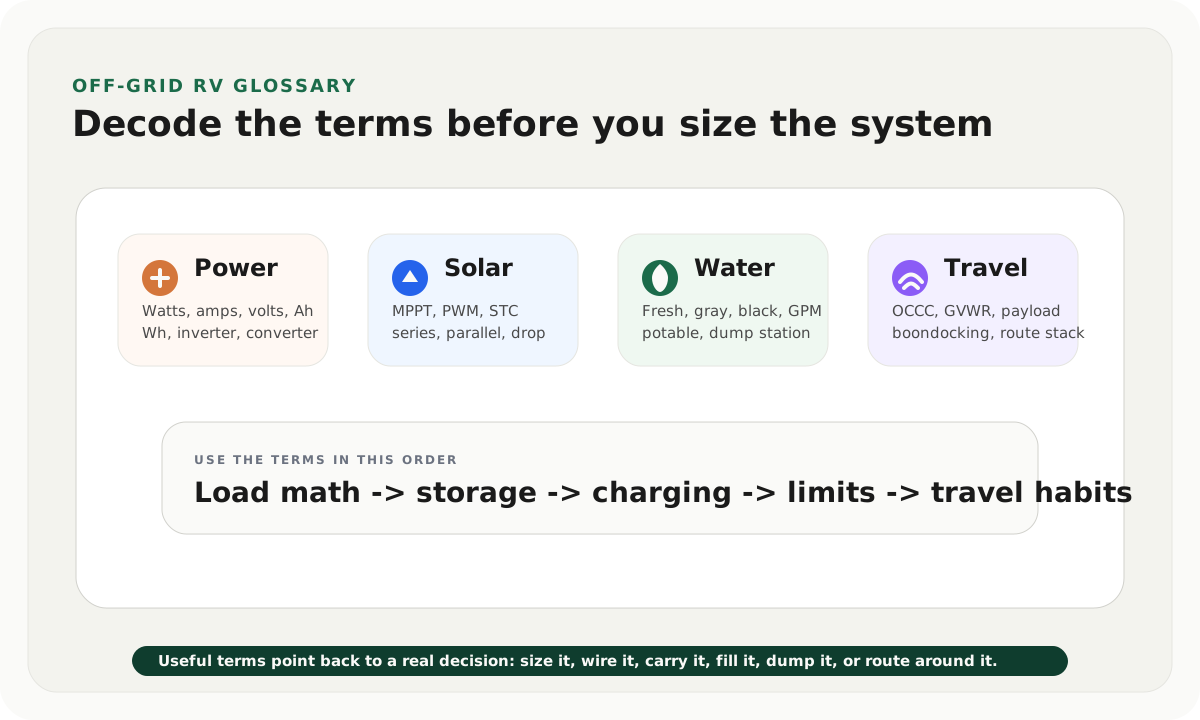
Use the RV off-grid glossary if terms like voltage, amps, inverter, converter, or EMS are still fuzzy.
Use the RV electrical system diagram to see where shore power enters the broader coach system.
Use the surge protector guide when you are ready to compare exact 30 amp protection models.
Use the shore, solar, and alternator charging guide if your real question is how shore power fits with battery charging.
Frequently asked
Questions RVers usually ask next.
Can I plug a 50 amp RV into a 30 amp pedestal?
Often yes with the correct adapter, but the RV must behave like it is on the smaller supply. The adapter does not create 50 amp capacity, so heavy loads need to be managed carefully.
Can I plug a 30 amp RV into a 50 amp pedestal?
Often yes with the correct adapter, but the RV is still limited by its 30 amp inlet, cord, main breaker, and internal wiring path. The larger pedestal outlet does not make the coach a 50 amp RV.
Do I need a surge protector or EMS for RV shore power?
It is one of the smartest protection purchases for campground power. A better EMS-style unit can help catch low voltage, high voltage, wiring faults, and surge events before they reach the coach.
Why does my RV breaker trip on shore power?
Common causes include too many heavy loads running at once, a weak or damaged pedestal, a bad adapter or cord, low voltage, or a problem inside the RV. Repeated trips mean stop and inspect rather than keep resetting.
Freshness note
Last checked April 11, 2026
This topic can change when products, plans, prices, campsite rules, or fit guidance move. These notes show what was reviewed most recently.
This review included
- Rechecked 30A and 50A RV capacity math against Southwire Surge Guard technical specifications.
- Verified EMS/surge-protection fault language against Southwire device documentation.
- Reviewed adapter, open-ground, open-neutral, reverse-polarity, over/under-voltage, overheating, and 120V wire-protection cautions against manufacturer and RVIA references.
Recent change log
April 11, 2026
Added source-backed capacity math, official shore-power references, and clearer adapter/EMS safety boundaries.
April 10, 2026
Published a shore-power safety guide covering 30 amp service, 50 amp service, adapter limits, and pedestal checks.
April 10, 2026
Added a pedestal map visual, comparison tables, first-plug-in workflow, and EMS/surge-protection handoffs.
Broader editorial corrections are tracked on the Corrections and Updates page.