Source checks used for this guide
Use the official product pages to re-check price, voltage cutoffs, connectivity, dimensions, and 30A/50A availability before buying.
Pre-arrival checks
Before you buy
Confirm your coach service size first. A 50A coach needs 50A protection even if the 30A feature logic looks right.
Shortlist first
Use this to find the winner first, then compare the alternates only if their tradeoffs fit your rig better.
Shortlist labels are editorial recommendations, not popularity rankings. Fit score still matters, but the label tells you why each pick made this guide.
How fit scores work
Scores are editorial fit scores, not user-review averages. The rubric weighs stated RV-use fit, verified specs and limits, whole-rig friction, visible downsides or support risk, and value for the specific job in this guide. Read the full scoring rubric.
If you need one baseline option before reading the full guide, start with Power Watchdog Gen I 30A Portable with EPO for balanced portable protection.
The first option to evaluate if you want the strongest all-around fit for this guide. Check the other cards only if their award label matches your constraint better.
| Product | Why shortlisted | Fit score | Key spec | Best for | Actions |
|---|---|---|---|---|---|
| Power Watchdog Gen I 30A Portable Links to: Hughes Power Watchdog Gen I 30 Amp Portable Surge Protector | Budget pick The lower-cost route to check when the premium option is more than the job needs. | 4.5 / 5 fit score | $159.99 | 3,000 joules | Bluetooth | no auto shutoff | Budget-friendly monitoring | Read Power Watchdog Gen I 30A Portable notesCheck listing at HughesMerchant link - direct listing. Verify price and specs at Hughes. |
| Power Watchdog Gen I 30A Portable with EPO Links to: Hughes Power Watchdog Gen I 30 Amp Portable Surge Protector with Auto Shutoff | Best overall The first option to evaluate if you want the strongest all-around fit for this guide. | 4.8 / 5 fit scoreScore rubric | $349.99 | 3,000 joules | auto shutoff | low/high voltage trip | Balanced portable protection | Read Power Watchdog Gen I 30A Portable with EPO notesCheck listing at HughesMerchant link - direct listing. Verify price and specs at Hughes. |
| Power Watchdog Gen II 30A Hardwired Links to: Hughes Power Watchdog Gen II 30 Amp WiFi Surge Protector with Auto Shutoff Hardwired | Upgrade pick The higher-end option to justify only when its extra capability matters in your build. | 4.8 / 5 fit score | $359.99 | WiFi + Bluetooth | hardwired | auto shutoff | Built-in always-on protection | Read Power Watchdog Gen II 30A Hardwired notesCheck listing at HughesMerchant link - direct listing. Verify price and specs at Hughes. |
These are exact protection models, not generic protection styles
Most RVers start with the word "surge" and then end up buying around the wrong question.
The real question is usually:
- do you only want to see power conditions, or do you want the unit to disconnect the RV automatically?
- do you want portable pedestal-side protection or hardwired built-in protection?
- is the RV 30 amp or 50 amp?
- how much electrical value is sitting behind that shore-power cord?
That is why this guide compares exact current Power Watchdog 30A models instead of loosely describing "portable EMS" versus "hardwired EMS."
Price note
Prices below were checked against current official Power Watchdog product listings on April 21, 2026. Sale pricing and retailer discounts move quickly, so treat these as a same-day comparison point instead of a guaranteed checkout price.
Why pedestal protection matters
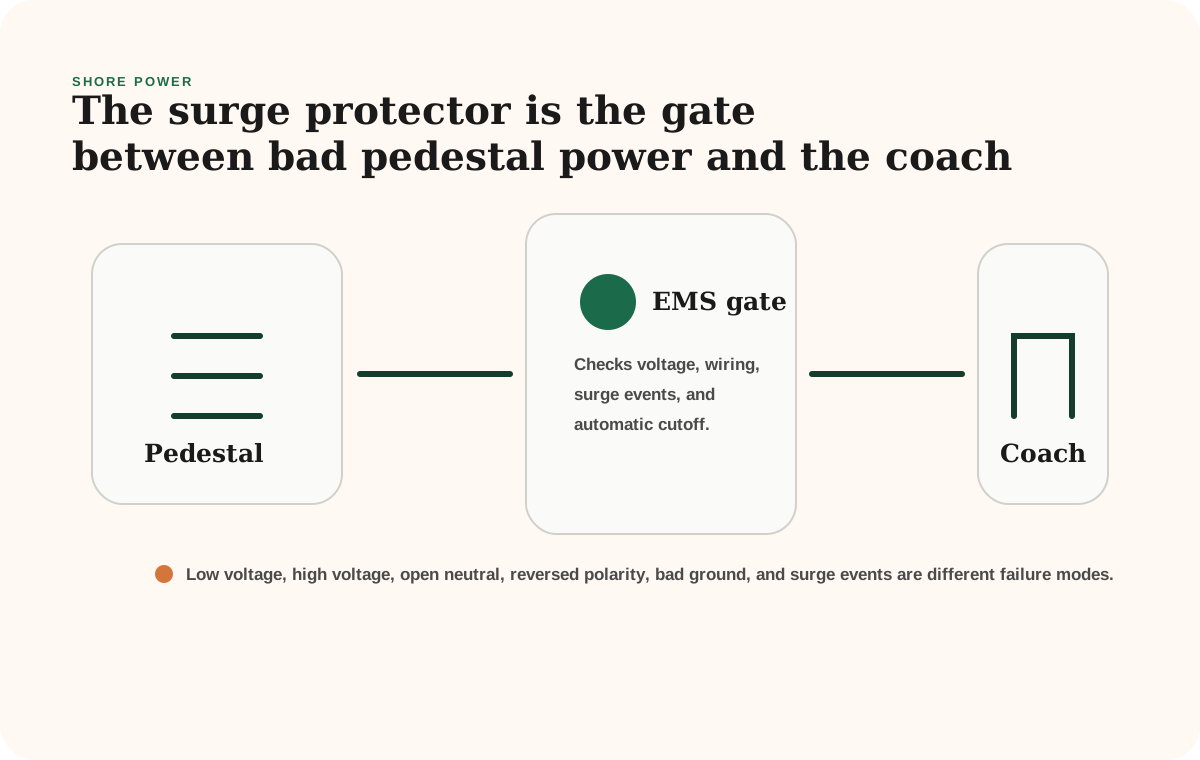
The expensive failure is not always a dramatic lightning-style surge. Campground and park power can also create quieter problems:
- low voltage during high-demand heat waves
- high voltage or unstable voltage
- reversed polarity
- open ground
- open neutral
- pedestal wiring damage
- weather exposure at the connection
- overloaded loops in older parks
Low voltage is especially easy to underestimate. Air conditioners, converters, residential fridges, and inverter-chargers can all be stressed when the pedestal is weak. A basic surge-only device may help with spike events, but it will not necessarily remove the coach from unsafe sustained voltage. That is where Emergency Power Off or EMS-style behavior becomes more valuable.
If you still need the electrical basics, read RV electrical 101 and the 30 amp vs 50 amp shore-power guide before buying.
Match the service size first
Every product in this guide is a 30A model. That is deliberate because these exact affiliate targets are the current 30A shortlist. If your coach is 50A, use this guide for feature logic, not as the product list.
Compare
Compare fast
Use one comparison matrix to scan the practical differences. Small screens stack each row; wider screens keep the first column pinned.
| Spec | 30A coach | 50A coach | Adapter-heavy setup |
|---|---|---|---|
| Buy around | 30A protector | 50A protector | The highest-risk real connection you use often |
| Do not do | Buy 50A just because bigger sounds better | Protect a 50A rig with a 30A unit as the normal setup | Assume adapters make bad pedestal power safe |
| Why it matters | Cord, breaker, and coach service all agree | Two hot legs change the protection problem | Adapters add another connection point and can hide poor assumptions |
The protection behavior ladder
Joule ratings matter, but they are not the whole decision. RV pedestal protection is usually about fault detection and disconnect behavior as much as surge absorption.
Compare
Compare fast
Use one comparison matrix to scan the practical differences. Small screens stack each row; wider screens keep the first column pinned.
| Protection tier | What it does | Who it fits |
|---|---|---|
| Basic surge monitoring | Absorbs surge events and shows basic conditions | Occasional hookup owners who want lower-cost visibility |
| EPO portable | Adds automatic shutoff for unsafe voltage behavior | Most 30A owners with valuable coach electronics |
| Hardwired EPO/EMS | Permanently protects the coach with no pedestal handling | Long-term rigs and owners who plug in often |
The specs that matter most
Auto shutoff matters more than the product name
A basic surge protector can tell you what is happening. An Emergency Power Off model can actually remove unsafe pedestal power from the coach when voltage goes outside safe thresholds.
For the EPO models in this guide, the published trip points are below 104V or above 132V. That is the behavior many RVers think they are buying when they hear "surge protector," but it is not included on every model.
That distinction matters most when nobody is standing at the pedestal. If the voltage sags during a hot afternoon while the air conditioner is running, a monitoring-only model may show the problem, but it is still asking you to notice and respond. An EPO model is there to make the boring protective decision faster than you can.
Portable versus hardwired changes the daily experience
Portable units are easier to add, easier to move between rigs, and easier to avoid if you sell the RV soon. Hardwired units make more sense when you want the protection permanently inside the coach and never hanging outdoors.
Portable protection is still the right answer for many owners. It takes no permanent install, it can move to the next trailer, and it keeps the decision simple. The downsides are handling, weather exposure, theft concern, and one more step every time you plug in.
Hardwired protection flips that tradeoff. It asks for a real install and becomes part of the coach. After that, it is always present. That is why hardwired protection makes more sense on long-term keeper rigs than on a trailer you might sell next season.
Connectivity is useful, but not the core protection
Bluetooth or WiFi monitoring can help you see what is happening at the pedestal. It does not replace automatic disconnect behavior. Treat connectivity as visibility, not protection by itself.
Compare
Compare fast
Use one comparison matrix to scan the practical differences. Small screens stack each row; wider screens keep the first column pinned.
| Spec | Gen I 30A Portable | Gen I 30A Portable with EPO | Gen II 30A Hardwired |
|---|---|---|---|
| Price checked | $159.99 | $349.99 | $359.99 |
| Connection style | Portable | Portable | Hardwired |
| Surge rating | 3,000 joules | 3,000 joules | 3,000 joules |
| Auto shutoff | No | Yes | Yes |
| Voltage cutoffs | Monitoring only | Below 104V / above 132V | Below 104V / above 132V |
| Connectivity | Bluetooth | Bluetooth | WiFi + Bluetooth |
| Dimensions | 8.5 x 3.75 x 2.75 in | 11.5 x 5.5 x 3.75 in | 11.5 x 6.5 x 4 in |
| Warranty | Limited lifetime | Limited lifetime | Limited lifetime |
What each model looks like in a real campsite
The base Gen I portable is the campground-awareness model. It is a good fit for a 30A travel trailer that plugs in occasionally, has modest electronics, and needs a budget-first way to see basic power conditions. It is not the model I would choose for a rig with a costly inverter-charger, residential fridge, or lithium system that spends a lot of time on questionable pedestal power.
The Gen I portable with EPO is the stronger default because it changes the job from "tell me something is wrong" to "remove the RV from unsafe voltage." That is the feature jump that matters. If you camp in older parks, summer heat, crowded loops, fairgrounds, or mixed-quality private campgrounds, automatic cutoff is usually worth more than the cheaper price tag.
The Gen II hardwired model is the long-term-owner answer. It is not meaningfully cheaper than the portable EPO model, but it removes pedestal handling, reduces theft worry, and makes protection part of the coach instead of part of your setup checklist. The tradeoff is install commitment.
How bad pedestal power usually shows up
The obvious problem is a surge event, but the more common worry is weak or unstable voltage under load. You plug into a pedestal, the park fills up, air conditioners start across the loop, and voltage sags. That is when a protector with automatic shutoff becomes more useful than a basic surge-only layer.
Another problem is wiring quality. A reversed polarity or open-ground warning can keep you from connecting to a pedestal that should not be trusted. A protector is not a license to ignore electrical problems, but it gives you a clear first line of defense before the coach becomes the test equipment.
Adapter-heavy camping adds another layer. Dogbones and adapters are sometimes necessary, but every connection is another place to make a bad assumption. If you regularly adapt between 30A and 50A pedestals, read the shore-power guide and make sure the protector strategy matches the actual service the coach uses.
When the EPO price jump is worth it
The move from the base portable model to the EPO portable model is not just a feature upgrade. It is a behavior upgrade.
Pay for EPO sooner when:
- the RV has expensive inverter, converter, lithium, or residential-style electronics
- you plug into unfamiliar pedestals often
- summer air-conditioning loads are common
- you leave the RV connected while away from camp
- you want the unit to act without waiting for you to check an app
Stay with the base portable model when the rig is simpler, the budget is tight, hookup use is occasional, and monitoring is enough for the risk you are trying to reduce.
Three 30A buying examples
For a simple weekend trailer with one air conditioner, a basic converter, and occasional campground hookups, the base portable model can be a reasonable first protection layer. It gives visibility and basic surge protection without making a small electrical system feel overbuilt.
For a 30A travel trailer with lithium batteries, an inverter, a better converter, or a compressor fridge, the portable EPO model is the safer starting point. The extra cost is easier to defend because the hardware behind the cord is more expensive and more sensitive to bad shore-power behavior.
For a long-term 30A motorhome or trailer that plugs in often, the hardwired Gen II is the cleanest answer. You avoid leaving a device at the pedestal, you do not have to remember one more setup step, and the protection follows the coach every time shore power is connected.
Those examples are intentionally plain because the decision should be plain. The more the RV depends on shore power to protect costly onboard systems, the less sense it makes to stop at monitoring-only protection.
The shortlist
- Latest product check
- Specs, fit notes, and current listing context were reviewed April 21, 2026.
- Evidence label
- Spec-verified: Score is based on current published specs, official documentation, pricing context, compatibility, and RV-use fit analysis.
- Price context
- Pricing and availability can change, so confirm the merchant listing before buying.
Product facts last checked April 21, 2026
Power Watchdog Gen I 30 Amp Surge Protector - Portable
Editorial fit score
The base Gen I 30A portable is the lowest-cost real Power Watchdog entry point. The official product listing shows 3,000 joules of surge protection, Bluetooth monitoring, limited lifetime warranty, IP65 ingress protection, and a replaceable surge module. The tradeoff is the big one: it monitors but does not provide emergency shutoff.
Review verdict
- Short verdict
- The simplest recommendation when you want live pedestal awareness and replaceable-surge-module value without paying for automatic disconnect behavior.
- Evidence used
- Spec-verified
- Score is based on current published specs, official documentation, pricing context, compatibility, and RV-use fit analysis.
- Why it made the shortlist
- Budget pick
- The lower-cost route to check when the premium option is more than the job needs.
- Best if
- Budget-friendly monitoring
- Why not this product?
- At that point, automatic shutoff is easier to justify than saving the upfront difference.
- Watch for
- No automatic disconnect when pedestal voltage goes unsafe
- Product check date
- Specs, fit notes, and current listing context were last checked April 21, 2026.
Key specs
- Price checked
- $159.99
- Surge rating
- 3,000 joules
- Connectivity
- Bluetooth
- Dimensions
- 8.5 x 3.75 x 2.75 in
Score basis
Score is based on current published specs, official documentation, pricing context, compatibility, and RV-use fit analysis. These are editorial fit scores, not customer-review averages. Read the scoring rubric.
- RV-use fit
- 30% weight
- Verified specs and limits
- 25% weight
- Whole-rig friction
- 20% weight
- Downsides and support risk
- 15% weight
- Value for the job
- 10% weight
How directly the product solves the specific off-grid RV job in this guide.
Capacity, dimensions, electrical limits, protection claims, and compatibility constraints we can verify from current sources.
Install effort, storage, wiring, service access, weight, refill workflow, or daily-use hassle.
Known tradeoffs, unclear claims, warranty coverage, support risk, and wrong-buyer failure modes.
Whether the price makes sense after fit, specs, and tradeoffs still hold.
Testing limits
- This is not a hands-on endurance or lab test unless the review explicitly says so.
- Specs, pricing, bundles, and availability can change, so confirm the current listing and manual before buying.
Reasons to buy
- Best cost of entry for real pedestal monitoring
- Smaller and easier to live with than the heavier EPO model
- Replaceable surge module and limited lifetime warranty are strong value points
Watch-outs
- No automatic disconnect when pedestal voltage goes unsafe
- Best for monitoring-minded owners, not for people wanting the unit to act on its own
- Still only fits 30-amp rigs
Whole-bank math
Best buyer type
Budget-first owner
Good when you want visibility and basic protection before paying for full shutoff behavior.
Main tradeoff
See it, then respond yourself
This model is strongest when you are comfortable watching the power conditions instead of forcing an automatic cutoff.
Skip it when
The RV has expensive AC gear or lithium charging hardware
At that point, automatic shutoff is easier to justify than saving the upfront difference.
Related parts and setup checks
RV electrical system guide
Read this first if you still need to understand what low voltage and pedestal wiring faults actually do to the rig.
Open RV electrical system guideInverter protection context
A better inverter and lithium setup only increases the value of stronger pedestal protection.
Open Inverter protection contextCharging-source guide
Helpful if the RV is juggling alternator, solar, and shore power and you need the whole charging picture in view.
Open Charging-source guideCheck current listing
Hughes Power Watchdog Gen I 30 Amp Portable Surge Protector
Use the listing after the fit notes make sense for your rig. Pricing and availability can change, so verify the merchant page before buying.
- Latest product check
- Specs, fit notes, and current listing context were reviewed April 21, 2026.
- Evidence label
- Spec-verified: Score is based on current published specs, official documentation, pricing context, compatibility, and RV-use fit analysis.
- Price context
- Pricing and availability can change, so confirm the merchant listing before buying.
Product facts last checked April 21, 2026
Power Watchdog Gen I 30 Amp Surge Protector with Emergency Power Off - Portable
Editorial fit score
This is the portable Power Watchdog most 30A RVers should buy around first. The official listing keeps the behavior simple: 3,000 joules, Bluetooth monitoring, automatic shutoff below 104 volts or above 132 volts, IP65 weather protection, and a limited lifetime warranty. It is bulkier and pricier than the base unit, but it solves the more important problem.
Review verdict
- Short verdict
- The best balanced portable RV surge protector when you want smart pedestal protection that can actually disconnect the coach automatically.
- Evidence used
- Spec-verified
- Score is based on current published specs, official documentation, pricing context, compatibility, and RV-use fit analysis.
- Why it made the shortlist
- Best overall
- The first option to evaluate if you want the strongest all-around fit for this guide.
- Best if
- Balanced portable protection
- Why not this product?
- Long-term owners may prefer spending once on the installed Gen II instead of managing a pedestal-side device.
- Watch for
- Heavier and bulkier than the base monitoring-only model
- Product check date
- Specs, fit notes, and current listing context were last checked April 21, 2026.
Key specs
- Price checked
- $349.99
- Surge rating
- 3,000 joules
- Auto shutoff
- Below 104V / above 132V
- Connectivity
- Bluetooth
Score basis
Score is based on current published specs, official documentation, pricing context, compatibility, and RV-use fit analysis. These are editorial fit scores, not customer-review averages. Read the scoring rubric.
- RV-use fit
- 30% weight
- Verified specs and limits
- 25% weight
- Whole-rig friction
- 20% weight
- Downsides and support risk
- 15% weight
- Value for the job
- 10% weight
How directly the product solves the specific off-grid RV job in this guide.
Capacity, dimensions, electrical limits, protection claims, and compatibility constraints we can verify from current sources.
Install effort, storage, wiring, service access, weight, refill workflow, or daily-use hassle.
Known tradeoffs, unclear claims, warranty coverage, support risk, and wrong-buyer failure modes.
Whether the price makes sense after fit, specs, and tradeoffs still hold.
Testing limits
- This is not a hands-on endurance or lab test unless the review explicitly says so.
- Specs, pricing, bundles, and availability can change, so confirm the current listing and manual before buying.
Reasons to buy
- Best portable mix of monitoring plus real protective action
- Published voltage cutoffs make the behavior easy to evaluate
- Still a no-install upgrade compared with hardwired protection
Watch-outs
- Heavier and bulkier than the base monitoring-only model
- Much higher cost of entry than the base unit
- Still lives outside at the pedestal
Whole-bank math
Why it is the sweet spot
Portable plus automatic action
This is the model that best balances meaningful protection with no-install simplicity.
Who should buy it first
30A owners who care about the whole system
Especially attractive when the rig has expensive electronics, inverter gear, or battery charging hardware to protect.
Skip it when
You know you want permanent hardwired protection
Long-term owners may prefer spending once on the installed Gen II instead of managing a pedestal-side device.
Related parts and setup checks
RV electrical guide
Use this if you need the full context for why low voltage is often the real enemy of campground power.
Open RV electrical guideBest RV inverters
This is the natural next read if the coach also runs expensive AC gear you do not want bad pedestal power to stress.
Open Best RV invertersBattery charging strategy
Pedestal protection matters even more when shore charging is feeding a larger lithium system.
Open Battery charging strategyCheck current listing
Hughes Power Watchdog Gen I 30 Amp Portable Surge Protector with Auto Shutoff
Use the listing after the fit notes make sense for your rig. Pricing and availability can change, so verify the merchant page before buying.
- Latest product check
- Specs, fit notes, and current listing context were reviewed April 21, 2026.
- Evidence label
- Spec-verified: Score is based on current published specs, official documentation, pricing context, compatibility, and RV-use fit analysis.
- Price context
- Pricing and availability can change, so confirm the merchant listing before buying.
Product facts last checked April 21, 2026
Power Watchdog Gen II 30 Amp WiFi Surge Protector with Auto Shutoff - Hardwired
Editorial fit score
The Gen II 30A hardwired unit is the 'install it once and stop thinking about the pedestal hangout' answer. The official listing shows WiFi plus Bluetooth visibility, 3,000 joules of protection, auto shutoff below 104 volts and above 132 volts, limited lifetime warranty, and larger hardwired dimensions built around permanent install.
Review verdict
- Short verdict
- The best fit when you want always-there protection inside the coach and are willing to do the install once.
- Evidence used
- Spec-verified
- Score is based on current published specs, official documentation, pricing context, compatibility, and RV-use fit analysis.
- Why it made the shortlist
- Upgrade pick
- The higher-end option to justify only when its extra capability matters in your build.
- Best if
- Built-in always-on protection
- Why not this product?
- A portable EPO model is easier to move and avoids a permanent install decision.
- Watch for
- Requires install effort
- Product check date
- Specs, fit notes, and current listing context were last checked April 21, 2026.
Key specs
- Price checked
- $359.99
- Surge rating
- 3,000 joules
- Auto shutoff
- Below 104V / above 132V
- Connectivity
- WiFi + Bluetooth
Score basis
Score is based on current published specs, official documentation, pricing context, compatibility, and RV-use fit analysis. These are editorial fit scores, not customer-review averages. Read the scoring rubric.
- RV-use fit
- 30% weight
- Verified specs and limits
- 25% weight
- Whole-rig friction
- 20% weight
- Downsides and support risk
- 15% weight
- Value for the job
- 10% weight
How directly the product solves the specific off-grid RV job in this guide.
Capacity, dimensions, electrical limits, protection claims, and compatibility constraints we can verify from current sources.
Install effort, storage, wiring, service access, weight, refill workflow, or daily-use hassle.
Known tradeoffs, unclear claims, warranty coverage, support risk, and wrong-buyer failure modes.
Whether the price makes sense after fit, specs, and tradeoffs still hold.
Testing limits
- This is not a hands-on endurance or lab test unless the review explicitly says so.
- Specs, pricing, bundles, and availability can change, so confirm the current listing and manual before buying.
Reasons to buy
- Always part of the rig with no outdoor handling at hookup time
- WiFi plus Bluetooth gives the richest monitoring path in this comparison
- Best long-term answer for owners keeping the RV for a while
Watch-outs
- Requires install effort
- Hardwired commitment makes it less portable between rigs
- Not as attractive if you are still unsure whether the current RV is a long-term keeper
Whole-bank math
Best owner profile
Long-term keeper rig
This is the right fit when you are building the electrical bay around a durable, always-there protection layer.
Convenience win
No pedestal handling
That becomes more valuable over time than many buyers realize at first.
Skip it when
You rent, sell soon, or avoid electrical installs
A portable EPO model is easier to move and avoids a permanent install decision.
Related parts and setup checks
Electrical-bay planning
Use this if the next step is deciding where other charging, inverter, and distribution hardware should live around the protection gear.
Open Electrical-bay planningInverter-charger guide
Hardwired protection is especially logical on rigs already treating the electrical bay like a real system center.
Open Inverter-charger guideOff-grid readiness checklist
Use the checklist to keep pedestal protection tied into the larger trip-prep routine.
Open Off-grid readiness checklistCheck current listing
Hughes Power Watchdog Gen II 30 Amp WiFi Surge Protector with Auto Shutoff Hardwired
Use the listing after the fit notes make sense for your rig. Pricing and availability can change, so verify the merchant page before buying.
How to choose between them quickly
Buy the base portable model when the budget is the main constraint and you mainly want live pedestal awareness.
Buy the EPO portable when protection behavior matters more than the cheapest ticket. This is the easiest portable choice to recommend broadly because it can actually cut power automatically when the pedestal gets ugly.
Buy the hardwired Gen II when the RV is staying in your life for a while and you want the protection to live inside the coach full time.
Quick no-buy checks
Do not buy any of these 30A models if the coach is a 50A RV. Start with a 50A protector.
Do not buy the base portable model if your goal is automatic low-voltage shutdown. It does not do that job.
Do not buy hardwired protection if you are not comfortable with the install path or the RV is likely to be sold soon.
Do not buy around price alone if the coach already has expensive inverter, lithium, converter, or residential fridge hardware behind the shore-power cord.
The mistake most RVers make
The common mistake is buying around price alone without deciding whether the unit should only monitor or actually disconnect the RV automatically.
That choice changes everything. Once you care about low-voltage shutdown, the base monitoring-only unit is no longer the same class of purchase.
Match the service size before anything else
Every product in this guide is a 30-amp model. If the coach is 50 amp, stop here and buy around the correct service before comparing any other feature.
Final thought
The best RV surge protector is the exact model whose protection behavior matches the value of the rig and the way you actually connect to shore power. Monitoring-only can be enough at the right price. Automatic shutoff becomes worth it quickly once the coach has enough electrical value to protect. Hardwired protection makes the most sense when the RV is a long-term keeper and you want protection built into the coach instead of hanging at the pedestal.
Frequently asked
Questions RVers usually ask next.
Do RVers need automatic shutdown or just surge monitoring?
For many RVers, automatic shutdown is the more valuable feature because it protects against low and high voltage conditions without relying on the owner to catch the problem manually. Monitoring-only can still be reasonable for budget-first or occasional hookup use.
Is a hardwired RV surge protector better than a portable one?
It is better when you want always-installed protection and less outdoor handling. Portable units still win when you want no-install simplicity or the ability to move the protection between rigs.
Is the cheap Power Watchdog portable enough?
It can be enough when the goal is lower-cost monitoring and basic surge protection. It becomes a thinner value proposition when you know you want the unit to disconnect unsafe pedestal power automatically.
What matters most when buying an RV surge protector?
Service-size match comes first, then whether you want monitoring only or automatic shutoff, then whether portable or hardwired protection fits the way you use the RV.
Freshness note
Last checked April 21, 2026
This topic can change when products, plans, prices, campsite rules, or fit guidance move. These notes show what was reviewed most recently.
This review included
- Rechecked the current Hughes Power Watchdog 30A lineup, including Gen I portable, Gen I EPO portable, and Gen II WiFi hardwired models.
- Verified current official pricing context, 3,000-joule surge rating, auto-shutoff behavior, 104V low-voltage and 132V high-voltage cutoff points, connectivity, and portable-versus-hardwired fit.
- Expanded the buying guidance with pedestal-risk context, service-size fit, protection behavior tiers, and clearer skip-if logic for each model.
Recent change log
April 21, 2026
Expanded the buyer guide with a pedestal-risk visual, 30A service warnings, protection-tier comparison, and stronger no-buy conditions.
April 9, 2026
Refreshed Hughes Power Watchdog model comparison, pricing context, and protection-behavior guidance.
Broader editorial corrections are tracked on the Corrections and Updates page.