If you are still choosing the broad category, read solar generator vs. RV solar system before comparing the exact products below. The category decision should come before the cart decision.
Official product pages to re-check before buying
Prices, bundle contents, battery chemistry, panel options, and promos change. Re-check these pages before treating any comparison as a current quote.
Shortlist first
Use this to find the winner first, then compare the alternates only if their tradeoffs fit your rig better.
Shortlist labels are editorial recommendations, not popularity rankings. Fit score still matters, but the label tells you why each pick made this guide.
How fit scores work
Scores are editorial fit scores, not user-review averages. The rubric weighs stated RV-use fit, verified specs and limits, whole-rig friction, visible downsides or support risk, and value for the specific job in this guide. Read the full scoring rubric.
If you need one baseline option before reading the full guide, start with Renogy 400W Premium Kit for roof-first starter solar build.
The first option to evaluate if you want the strongest all-around fit for this guide. Check the other cards only if their award label matches your constraint better.
| Product | Why shortlisted | Fit score | Key spec | Best for | Actions |
|---|---|---|---|---|---|
| Jackery Explorer 1000 v2 + SolarSaga 200W Links to: Jackery Explorer 1000 v2 + SolarSaga 200W | Specialized pick A narrower recommendation that wins only for a specific use case. | 4.6 / 5 fit score | $1,299.00 list (often discounted) | 1070Wh | 1500W output | 1-hour emergency recharge | Fast portable starter power | Read Jackery Explorer 1000 v2 + SolarSaga 200W notesCheck listing at JackeryMerchant link - direct listing. Verify price and specs at Jackery. |
| Renogy 400W Premium Kit Links to: Renogy 400W 12V Solar Premium Kit | Best overall The first option to evaluate if you want the strongest all-around fit for this guide. | 4.7 / 5 fit scoreScore rubric | $639.99 | 4 x 100W panels | Rover 40A MPPT | no batteries included | Roof-first starter solar build | Read Renogy 400W Premium Kit notesCheck listing at RenogyMerchant link - direct listing. Verify price and specs at Renogy. |
| Renogy 400W Complete Kit Links to: Renogy 400W 12V Complete Solar Kit with 2.4kWh Batteries | Also great A strong alternate when its specific tradeoffs fit your rig better than the winner. | 4.7 / 5 fit score | From $1,899.99 | 400W + 2 x 100Ah batteries | complete kit path | Battery-backed built-in solar | Read Renogy 400W Complete Kit notesCheck listing at RenogyMerchant link - direct listing. Verify price and specs at Renogy. |
Must read before you buy built-in solar
If you are leaning toward the Renogy roof-kit path, read the RV solar installation guide before checkout. The install guide helps confirm roof fit, cable entry, controller placement, protection, sealant, and commissioning before the product bundle locks in the design.
These are exact upgrade paths, not generic categories
A lot of buyers ask the right question in the wrong way:
- portable power station or built-in solar?
That framing is still too broad.
The real comparison is between exact paths:
- a self-contained power box with a portable panel
- a roof-first starter solar kit
- a more complete built-in kit with panel plus battery capacity
Those solve different problems, cost different amounts, and age into the rest of the rig very differently.
Price note
Specs were re-verified and prices spot-checked against the current Jackery and Renogy pages on June 5, 2026. Jackery and Renogy run frequent sales and intermittent backorders, so treat these as live comparison points, not permanent quotes — the official pages linked above carry the current number.
Field note
Field fit note
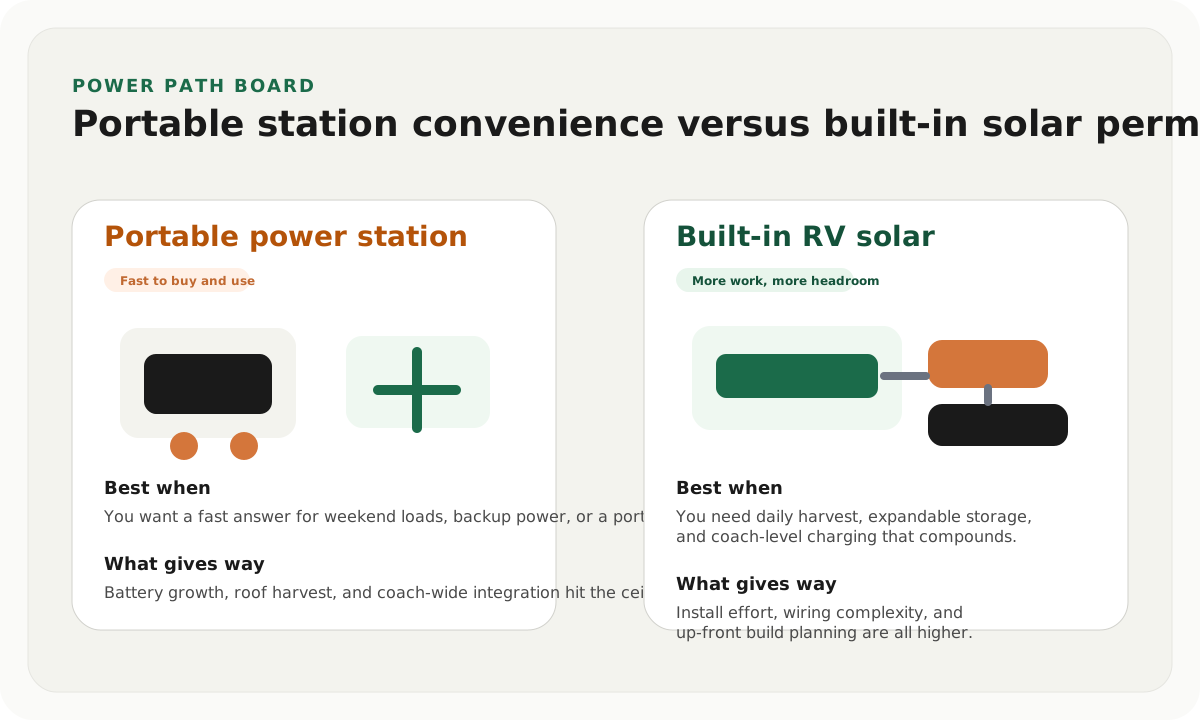
Portable power stations usually feel best when the real need is speed and flexibility. Built-in solar usually feels better once the rig is asked to behave like a repeatable off-grid home instead of a weekend gadget platform.
What matters before you compare these paths
Where the power lives
If the power needs to leave the rig, a station wins. If the RV itself needs to behave like an off-grid machine, built-in solar wins.
Whether batteries are already part of the plan
A kit without batteries is not the same thing as a battery-backed solar system. That distinction matters a lot.
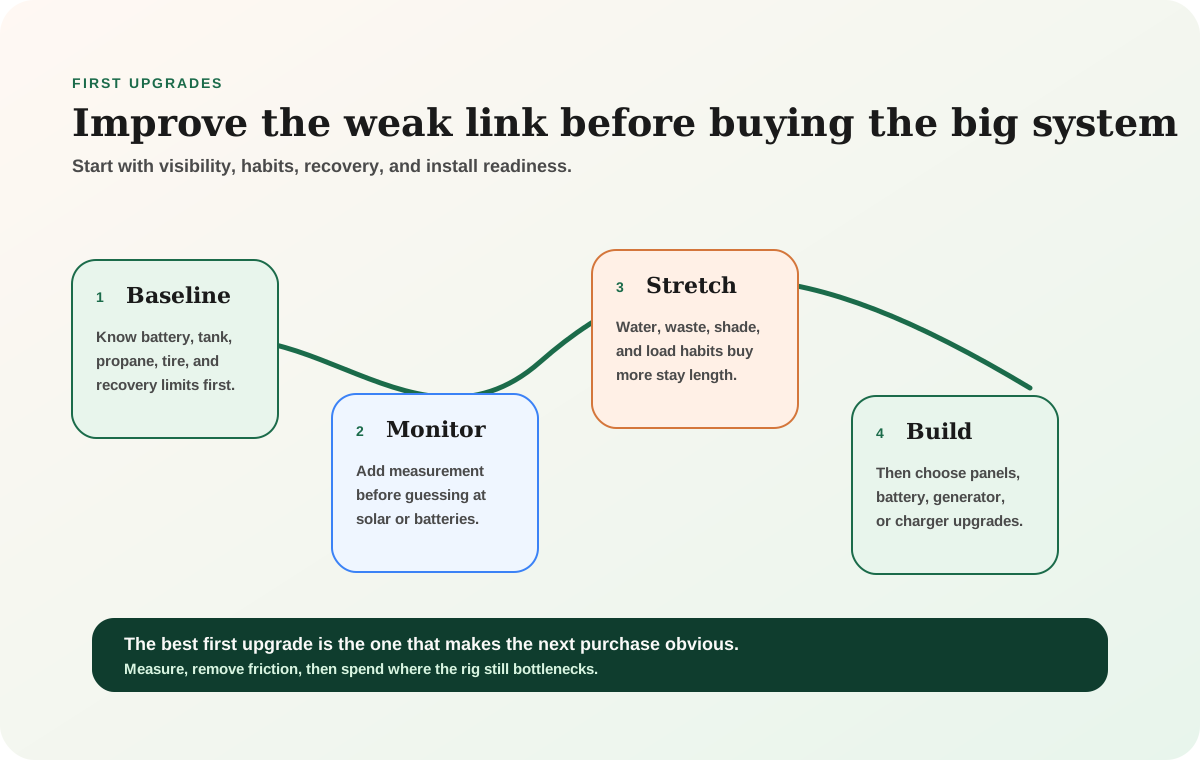
Use the battery calculator and solar calculator to decide whether the portable path has enough reserve or whether the coach battery bank needs to become the main platform. If this is a first upgrade, the first off-grid upgrades guide helps keep the purchase in sequence.
Upgrade depth versus speed
Portable power is faster. Built-in solar gets better with time.
Compare
Compare fast
Use one comparison matrix to scan the practical differences. Small screens stack each row; wider screens keep the first column pinned.
| Spec | Jackery Explorer 1000 v2 + SolarSaga 200W | Renogy 400W Premium Kit | Renogy 400W Complete Kit |
|---|---|---|---|
| Price checked | $1,299.00 | $639.99 | From $1,899.99 |
| Core spec | 1070Wh + 1500W output | 400W roof-first solar kit | 400W + 2 x 100Ah battery kit |
| What is included | Portable station + portable panel bundle | Panels + Rover 40A MPPT kit path | Panels + battery-backed complete kit path |
| Best role | Fast portable power | Roof-first starter solar | Battery-backed built-in solar |
| Upgrade personality | Use-it-today convenience | Build-the-roof first | Invest in the coach system |
The decision is about commitment, not only capacity
A portable power station is attractive because it works quickly. You charge it, carry it, plug in the load, and learn what your real habits look like. That is valuable for a renter, a weekend camper, a new RV owner, or anyone who is not ready to drill holes, route cable, mount a controller, or redesign the coach battery bank.
Built-in solar is attractive for the opposite reason. It turns the RV itself into the platform. The panels are always with the rig, the controller is part of the charging system, the battery bank becomes the shared reserve, and the daily routine gets more repeatable. That makes more sense once the owner knows the rig will be kept for a while and the off-grid pattern is not just an experiment.
The wrong move is comparing only advertised watts. A 200W portable panel feeding a station is not the same product as 400W fixed to the roof and feeding the coach bank. The portable setup wins on speed, flexibility, and low install risk. The built-in setup wins on repeatability, automatic daily charging, and long-term system value.
Worked example: the same weekend, three different answers
Picture a two-night desert weekend with lights, phone charging, a small fan, a laptop, a water pump, and a compressor fridge.
The portable-station answer is simple. The Jackery-style path can carry the small AC and USB loads, recharge from a portable panel, and avoid touching the RV electrical system. If the fridge is already on the coach battery and the owner mainly needs a laptop, camera, Starlink Mini, or device-charging lane, this can feel excellent. It is also easy to take outside, move into shade, or use away from the RV.
The roof-first answer feels different. The Renogy Premium Kit path starts improving the RV's daily charging rhythm. It does not provide a new battery bank by itself, but it helps the existing coach battery recover whenever the rig is parked in useful sun. That is the better direction if the owner is already tired of managing portable gear and wants the RV to wake up each morning with a more predictable charging plan.
The complete-kit answer is deeper still. A battery-backed Renogy kit moves the project closer to a true coach system because storage and solar are being considered together. That can be the best value when the current battery bank is weak or when the owner wants one bundled path into panels plus storage. The tradeoff is commitment. Once batteries, controller, cabling, mounting, and protection enter the picture, the project deserves more planning than a quick cart decision.
Where portable power stations disappoint
Portable stations are often oversold as if they replace a built-in RV system. They can be excellent, but they usually disappoint when the buyer expects them to solve whole-coach behavior.
Watch for these limits:
- The RV's original battery may still be weak.
- Roof solar still may not exist, so the coach does not recover automatically.
- High-draw AC loads drain a station quickly.
- The station may live inside while the panel wants sun outside.
- Cables, theft risk, weather exposure, and setup friction can make daily use less pleasant than the ad makes it look.
- Some RV loads are wired into the coach and cannot simply be moved to a portable box.
That does not make the portable path wrong. It means the portable path is best when the load is truly portable, the trip is short, or the owner is buying learning time before committing to the rig.
Where built-in solar disappoints
Built-in solar disappoints for the opposite reason: people underestimate the install.
A roof kit is not only panels. It is roof measurement, shade planning, cable entry, controller placement, battery-side protection, disconnects, fusing, sealant compatibility, commissioning, and future service access. A 400W kit can be a smart purchase and still be frustrating if the roof is crowded, the wire path is ugly, or the current battery bank cannot store the harvest well.
Before buying built-in solar, check three things:
- Can the roof actually fit the panel layout with service paths and shade zones?
- Can the battery bank accept and store the daily harvest?
- Is the controller and protection plan sized for the current system and likely expansion?
If any of those are unknown, run the RV solar calculator, use the roof solar fit calculator, and read the RV solar installation guide before ordering hardware.
Which path should you choose?
Choose the Jackery Explorer 1000 v2 + SolarSaga 200W path when the real need is portable, reversible, and low-friction. It is the best fit for learning your loads, supporting small work or comfort devices, and avoiding a permanent install while the rig plan is still changing.
Choose the Renogy 400W Premium Kit path when the roof is ready to become part of the RV's daily charging system. It is the cleanest direction when you already have or plan to choose the battery bank separately and want fixed solar to carry more of the normal camping day.
Choose the Renogy 400W Complete Kit path when the existing battery bank is part of the problem and you want a bundled route into panels plus storage. It is the most committed choice here, so it should be backed by roof measurements, battery-placement checks, and a clear install plan before checkout.
The shortlist
- Latest product check
- Specs, fit notes, and current listing context were reviewed June 5, 2026.
- Evidence label
- Spec-verified: Score is based on current published specs, official documentation, pricing context, compatibility, and RV-use fit analysis.
- Price context
- Pricing and availability can change, so confirm the merchant listing before buying.
Product facts last checked June 5, 2026
Jackery Explorer 1000 v2 + SolarSaga 200W
Editorial fit score
This bundle wins on speed and simplicity. Jackery's current product page publishes a 1070Wh capacity, 1500W output, 0-100% emergency recharge in one hour, LiFePO4 chemistry with 4,000 cycles, and a 5-year warranty. That does not make it the best long-term coach system, but it does make it the cleanest low-friction power purchase in this comparison.
Review verdict
- Short verdict
- The best first portable-power answer when you want real usable power quickly and you are not ready to redesign the coach electrical system yet.
- Evidence used
- Spec-verified
- Score is based on current published specs, official documentation, pricing context, compatibility, and RV-use fit analysis.
- Why it made the shortlist
- Specialized pick
- A narrower recommendation that wins only for a specific use case.
- Best if
- Fast portable starter power
- Why not this product?
- If the real goal is to make the RV function as an off-grid home base, move toward built-in solar instead of stopping here.
- Watch for
- Does not make the RV itself a fully integrated off-grid system
- Product check date
- Specs, fit notes, and current listing context were last checked June 5, 2026.
Key specs
- Price checked
- $1,299.00
- Capacity
- 1070Wh
- AC output
- 1500W
- Charge speed
- 0-100% in 1 hour (emergency super charge)
Score basis
Score is based on current published specs, official documentation, pricing context, compatibility, and RV-use fit analysis. These are editorial fit scores, not customer-review averages. Read the scoring rubric.
- RV-use fit
- 30% weight
- Verified specs and limits
- 25% weight
- Whole-rig friction
- 20% weight
- Downsides and support risk
- 15% weight
- Value for the job
- 10% weight
How directly the product solves the specific off-grid RV job in this guide.
Capacity, dimensions, electrical limits, protection claims, and compatibility constraints we can verify from current sources.
Install effort, storage, wiring, service access, weight, refill workflow, or daily-use hassle.
Known tradeoffs, unclear claims, warranty coverage, support risk, and wrong-buyer failure modes.
Whether the price makes sense after fit, specs, and tradeoffs still hold.
Testing limits
- This is not a hands-on endurance or lab test unless the review explicitly says so.
- Specs, pricing, bundles, and availability can change, so confirm the current listing and manual before buying.
Reasons to buy
- Fastest useful power path in this comparison
- All-in-one simplicity is genuinely valuable for many RVers
- Portable system can work outside the rig too
Watch-outs
- Does not make the RV itself a fully integrated off-grid system
- More expensive than a roof kit if you only compare panel wattage
- Best when expectations stay in the small-to-medium portable-power lane
Whole-bank math
Why it wins
Friction-free first move
This is the right buy when you need usable power quickly and do not yet want to commit to roof work, controller planning, or battery-bank redesign.
Best buyer
Cautious upgrader
Especially good for renters, borrowed rigs, weekenders, or owners still learning their real load pattern.
When to skip it
Want the coach itself powered
If the real goal is to make the RV function as an off-grid home base, move toward built-in solar instead of stopping here.
Related parts and setup checks
Solar generator vs RV solar guide
Read this next if you want the broader strategy conversation before you lock the rig into a deeper built-in system.
Open Solar generator vs RV solar guideFirst off-grid upgrades guide
Helpful if this bundle is one piece of a staged first-year upgrade plan rather than the final destination.
Open First off-grid upgrades guideHow much solar for RV air conditioner?
Useful if your expectations are drifting toward heavier AC loads that a station like this is not meant to solve all day long.
Open How much solar for RV air conditioner?Check current listing
Jackery Explorer 1000 v2 + SolarSaga 200W
Use the listing after the fit notes make sense for your rig. Pricing and availability can change, so verify the merchant page before buying.
- Latest product check
- Specs, fit notes, and current listing context were reviewed June 5, 2026.
- Evidence label
- Spec-verified: Score is based on current published specs, official documentation, pricing context, compatibility, and RV-use fit analysis.
- Price context
- Pricing and availability can change, so confirm the merchant listing before buying.
Product facts last checked June 5, 2026
Renogy 400W 12V Complete Solar Kit with 2.4kWh Batteries
Editorial fit score
This is the built-in-solar answer that most clearly moves beyond 'panel kit' territory. Renogy's current product page lists a complete 400W kit with two 12V 100Ah batteries, starting at $1,899.99 for AGM and reaching $2,599.99 for the lithium self-heating variant. That makes it the best bridge between a starter roof kit and a more serious off-grid-ready coach system.
Review verdict
- Short verdict
- The best comparison pick when you want to see what battery-backed built-in solar looks like before you jump all the way into a custom coach system.
- Evidence used
- Spec-verified
- Score is based on current published specs, official documentation, pricing context, compatibility, and RV-use fit analysis.
- Why it made the shortlist
- Also great
- A strong alternate when its specific tradeoffs fit your rig better than the winner.
- Best if
- Battery-backed built-in solar
- Why not this product?
- If you are not yet sure how serious your off-grid power goals really are, a portable station or a smaller starter kit is safer.
- Watch for
- Much bigger spend than a simple starter kit
- Product check date
- Specs, fit notes, and current listing context were last checked June 5, 2026.
Key specs
- Price checked
- From $1,899.99 AGM / $2,599.99 lithium
- Panel set
- 400W total solar
- Battery bank
- 2 x 12V 100Ah batteries
- AGM SKU
- RKIT400DAP2-US
Score basis
Score is based on current published specs, official documentation, pricing context, compatibility, and RV-use fit analysis. These are editorial fit scores, not customer-review averages. Read the scoring rubric.
- RV-use fit
- 30% weight
- Verified specs and limits
- 25% weight
- Whole-rig friction
- 20% weight
- Downsides and support risk
- 15% weight
- Value for the job
- 10% weight
How directly the product solves the specific off-grid RV job in this guide.
Capacity, dimensions, electrical limits, protection claims, and compatibility constraints we can verify from current sources.
Install effort, storage, wiring, service access, weight, refill workflow, or daily-use hassle.
Known tradeoffs, unclear claims, warranty coverage, support risk, and wrong-buyer failure modes.
Whether the price makes sense after fit, specs, and tradeoffs still hold.
Testing limits
- This is not a hands-on endurance or lab test unless the review explicitly says so.
- Specs, pricing, bundles, and availability can change, so confirm the current listing and manual before buying.
Reasons to buy
- Most coach-system-like option in this comparison
- Battery-backed from the start instead of only panel-first
- Best bridge between beginner convenience and real integrated power
Watch-outs
- Much bigger spend than a simple starter kit
- Still needs honest load planning to avoid disappointment
- Not as friction-free as buying a portable power station bundle
Whole-bank math
Why it wins
Closer to a real off-grid coach system
It is the best option here when you want the upgrade money to start living inside the RV instead of beside it.
Best buyer
RVer committed to built-in power
Especially good if the real goal is daily RV autonomy and you already know you want a battery-backed solar foundation.
When to skip it
Still uncertain about the whole direction
If you are not yet sure how serious your off-grid power goals really are, a portable station or a smaller starter kit is safer.
Related parts and setup checks
Battery-bank sizing guide
Use this to decide whether a 2 x 100Ah starting bank actually matches the loads you want the coach to support.
Open Battery-bank sizing guideSolar calculator
Helpful for pressure-testing whether the 400W + 200Ah class is a fit or only a starting point for your real daily use.
Open Solar calculatorFirst off-grid upgrades guide
Read this if you are trying to decide whether this kind of kit is enough, or whether the coach also needs inverter, charging, or distribution upgrades soon after.
Open First off-grid upgrades guideCheck current listing
Renogy 400W 12V Complete Solar Kit with 2.4kWh Batteries
Use the listing after the fit notes make sense for your rig. Pricing and availability can change, so verify the merchant page before buying.
The main tradeoff
The biggest tradeoff is not "portable versus solar." It is whether you are buying convenience, coach integration, or a more complete built-in system.
The best first move is not always the final system
A portable power station can be a good decision even when built-in solar is the better long-term answer. The mistake is confusing a low-friction starting point with a full replacement for a real off-grid coach system.
Final thought
Portable power stations are best when fast simplicity is the goal. Built-in RV solar is best when the coach itself needs to become more independent. Once you compare exact upgrade paths instead of vague categories, the right answer usually gets clearer very quickly.
Frequently asked
Questions RVers usually ask next.
Is a portable power station enough for RV living?
It can be enough for lighter travel and smaller-load use, especially if the goal is convenience. It is usually less satisfying when the RV needs to function as a serious off-grid home base day after day.
Is the Jackery bundle or the Renogy premium kit a better first buy?
The Jackery bundle is better when you need fast portable power with almost no install work. The Renogy premium kit is better when you already know the RV itself needs a real roof-first solar build.
What does the complete Renogy kit add that the premium kit does not?
The complete kit adds the battery-backed piece of the system. That is the difference between starting roof solar and starting a more coach-integrated solar-and-storage path.
What is the biggest difference between these two options?
Portable power stations prioritize convenience and speed. Built-in RV solar prioritizes integration, scalability, and long-term coach usability. The better choice depends on where you want the power to live and how committed you are to building around the RV itself.
Freshness note
Last checked June 5, 2026
This topic can change when products, plans, prices, campsite rules, or fit guidance move. These notes show what was reviewed most recently.
This review included
- Rechecked the current Jackery and Renogy product pages for pricing, bundle configuration, and key capacity/output specs.
- Updated the comparison around exact upgrade paths instead of generic 'power station versus solar' categories.
- Reviewed which path solves quick portable power, roof-first charging, and battery-backed built-in solar most cleanly.
Recent change log
June 5, 2026
Freshness re-verify against official sources. Confirmed current: Jackery Explorer 1000 v2 specs (1070Wh, 1500W output, 0-100% in ~1 hour, LiFePO4) and the Solar Generator 1000 v2 bundle (Explorer 1000 v2 + SolarSaga 200W); Renogy 400W Premium Kit ($639.99, four 100W panels, Rover 40A MPPT, no batteries — currently backordered); and Renogy 400W Complete Kit contents (400W + two 100Ah AGM/LiFePO4 batteries). Clarified the Jackery figure to '$1,299.00 list (often discounted)' since jackery.com currently shows a large promo and retailers price the bundle below list; Jackery/Renogy prices move with frequent sales and backorders, so the linked official pages carry the live number.
April 21, 2026
Added pre-purchase routing to the RV solar installation guide for readers leaning toward built-in roof solar.
April 10, 2026
Refreshed exact portable-power and built-in-solar upgrade paths with current product framing.
Broader editorial corrections are tracked on the Corrections and Updates page.