Official example checks
These examples were checked on April 21, 2026. Product bundles, kit contents, and sale pricing can move, so use the official page before buying.
Pre-arrival checks
Do not compare only watts
A 200W portable-panel bundle and a 400W roof kit are different systems because storage, inverter, charging routine, and integration are different.
Solar generator or built-in RV solar: the short answer
Choose a solar generator when you want a self-contained power box, fast setup, no roof work, and portability between the RV, truck, house, tent, or emergency kit. Choose a built-in RV solar system when the coach itself needs to recharge every day, support the house battery bank, power an inverter, and grow with the rig.
The mistake is treating those two paths as interchangeable.
A portable solar generator is a product. A built-in RV solar system is infrastructure. The first one is easier to buy. The second one is easier to live with once off-grid power becomes part of ordinary travel.
If you are comparing exact products, use the portable power station vs built-in RV solar guide. This page is the higher-level decision: should power live in a box, or should it become part of the RV?
Decision snapshot
The better path depends on how permanent, automatic, and expandable the power system needs to be.
Fastest useful path
Solar generator
Best when the goal is usable power this week without drilling, routing cable, or redesigning the battery bay.
Best long-term path
Built-in RV solar
Best when the RV will boondock often and the house battery bank needs automatic daily charging.
Most common regret
Buying for day one only
A station that feels easy on the first trip can feel clumsy when every camp day requires moving, charging, and managing the box.
Best next step
Run watt-hours
Use daily loads and recharge windows before letting the product category make the decision.
These two options solve different problems
A solar generator is usually a self-contained package: battery, inverter, charge controller, display, outlets, and sometimes a portable panel bundle. It is easy to understand because it behaves like one device. Charge it, carry it, plug into it, and keep the loads modest enough that it makes sense.
A built-in RV solar system spreads those jobs across the coach. The panels live on the roof or deploy outside. The controller charges the house battery bank. The inverter may feed selected AC loads. Fuses, busbars, disconnects, and cable runs make the system safe and serviceable. It is more work up front, but it becomes part of the RV's daily rhythm.
That difference matters because RVers do not only buy watt-hours. They buy habits.
Portable power asks you to manage a box. Built-in solar asks you to manage an install. The better answer depends on which kind of friction you would rather own.
The math: capacity and recovery are separate
Capacity answers "how much can I store?"
Solar answers "how much can I recover?"
A 1,070Wh portable station can look large until the daily use is a 700Wh fridge day plus a 300Wh laptop day plus a 200Wh router and lights day. That is already about 1,200Wh before inverter losses and entertainment.
A 400W roof system can look large until shade, low winter sun, roof angle, and system losses reduce the harvest. A practical planning formula is:
solar watts x usable sun hours x 0.70-0.80 = daily watt-hours recovered
So a 400W roof array in 4 usable sun hours at a 0.75 planning factor is roughly:
400 x 4 x 0.75 = 1,200Wh/day
That is useful, but it is not unlimited. A built-in system still needs a battery bank large enough to bridge evenings, weather, and load spikes. A portable station still needs a recharge routine that works when the panel is shaded, packed away, or being moved around camp.
Use the solar calculator and battery calculator before deciding whether the system should be portable, built in, or a hybrid.
Portable versus built-in solar tradeoffs
Compare
Portable solar generator versus built-in RV solar.
Use one comparison matrix to scan the practical differences. Small screens stack each row; wider screens keep the first column pinned.
| Spec | Solar generator | Built-in RV solar system |
|---|---|---|
| Best role | Fast, self-contained power for light-to-moderate loads | Coach-integrated charging and storage for repeat off-grid use |
| Setup friction | Low at purchase; more daily handling | Higher at install; less daily handling after commissioning |
| Storage behavior | Battery is inside the station | Battery bank is part of the RV electrical system |
| Solar recovery | Depends on portable panel setup, angle, shade, and time deployed | Happens automatically when roof sun is available |
| Expansion | Often limited by the station's input/output architecture | Usually more flexible if designed with room for growth |
| Best buyer | Beginner, renter, weekend traveler, or mixed home/RV user | Frequent boondocker, remote worker, full-timer, or system builder |
When a solar generator is the better answer
A solar generator is usually the better answer when the trip pattern is still forming.
It is a good fit when:
- you are new to off-grid RVing
- the RV is rented, borrowed, or not ready for permanent work
- the loads are mostly phones, laptops, cameras, fans, and small appliances
- the power needs to move between the RV, truck, house, tent, or worksite
- you want to learn real watt-hour use before redesigning the coach
That last point is important. A portable station can be a useful teacher. It shows whether your "small" loads are actually small, whether portable panels annoy you, and whether the real bottleneck is storage, charging, or habits.
The downside is that the station can become a second electrical system living beside the RV's real electrical system. At first, that feels flexible. Later, it can feel fragmented.
When built-in RV solar is the better answer
Built-in solar is usually the better answer when the RV is expected to act like a repeatable off-grid home.
It is a good fit when:
- the house battery bank needs daily solar support
- the rig boondocks often
- the refrigerator, furnace controls, water pump, router, lights, and inverter loads are part of normal life
- the owner wants charging to happen without setting up a panel every time
- the system is likely to grow into more panels, more battery, or a larger inverter
The downside is that a built-in system demands design discipline. Roof layout, cable entry, controller placement, fusing, disconnects, battery chemistry, inverter size, wire gauge, and commissioning all matter. Before buying a roof kit, read the RV solar installation guide so the install drives the cart, not the other way around.
A hybrid setup can be the cleanest answer
Some RVers should not choose one forever.
A smart hybrid setup might use:
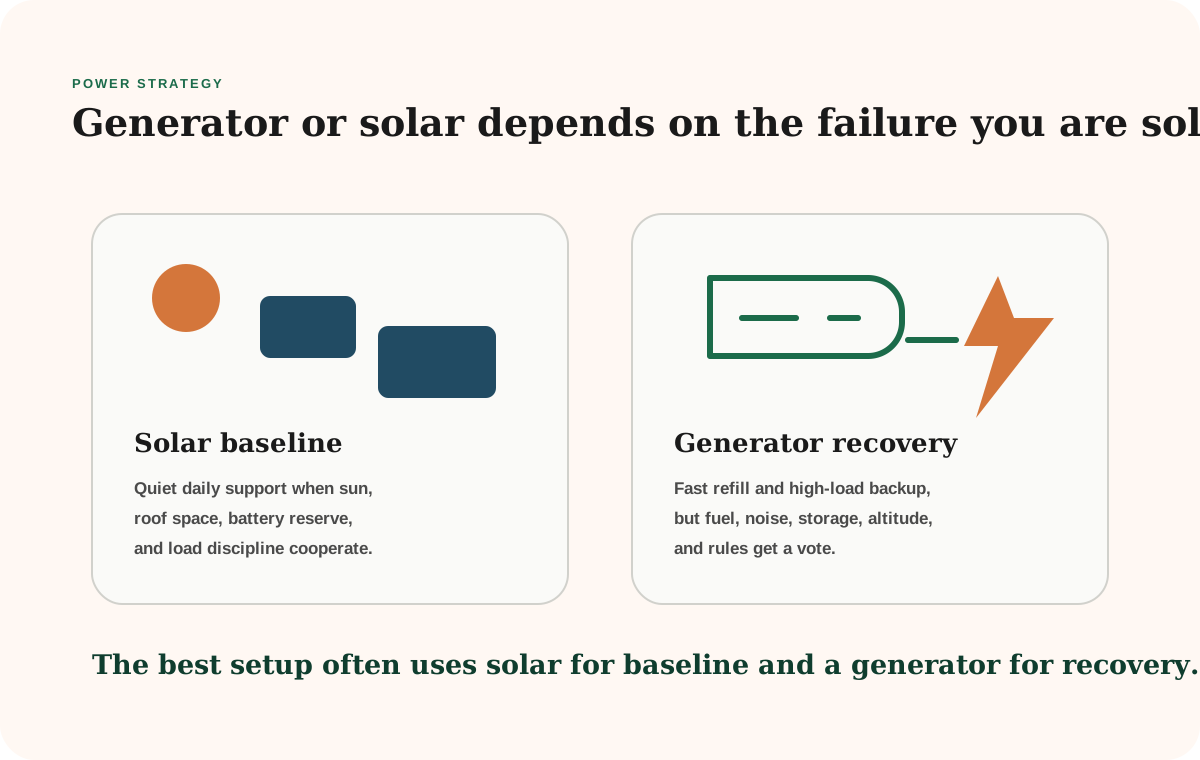
- built-in roof solar for the house battery bank
- a portable panel for shade camping or low winter sun
- a small power station for laptops, cameras, tent use, or emergency backup
- alternator or generator charging for bad-weather recovery
That can sound redundant, but it can be very practical when each piece has a clear job. The problem is when every piece is bought to solve the same vague anxiety. Then the rig ends up with duplicated batteries, duplicated inverters, and no clean charging plan.
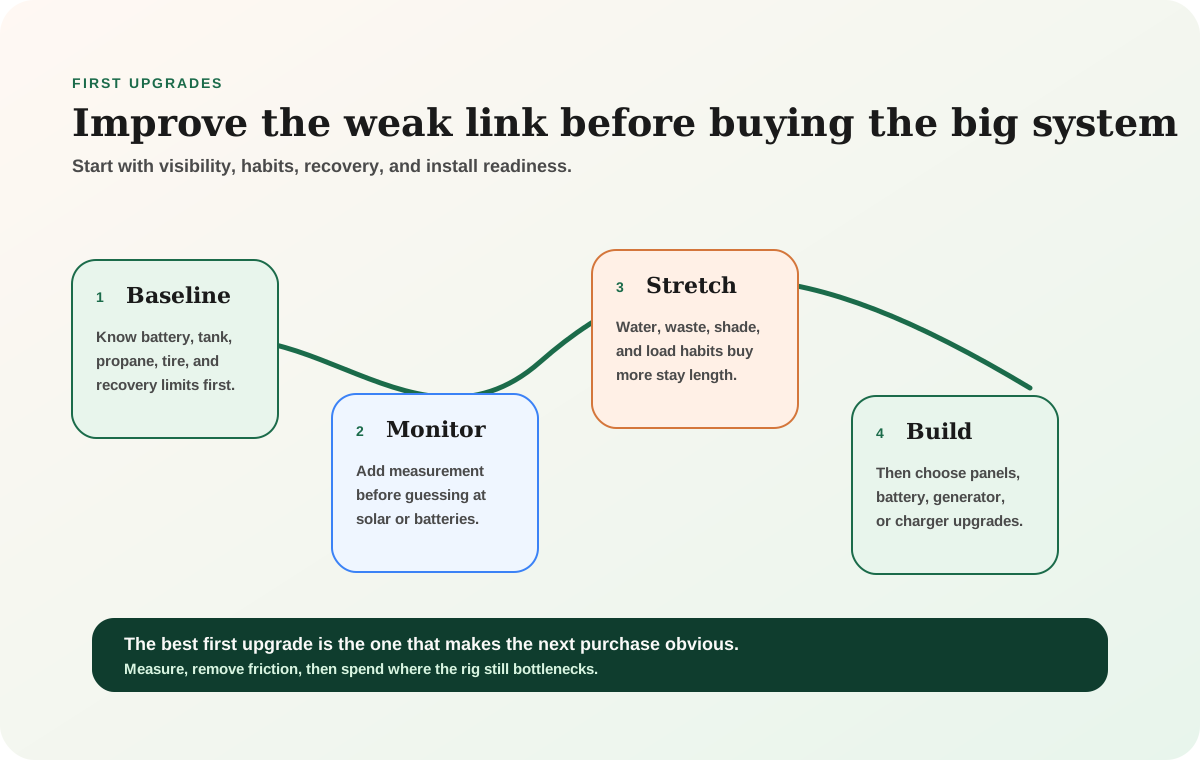
Use the first off-grid upgrades guide if you are unsure whether the next dollar should go to monitoring, battery capacity, solar collection, alternator charging, or a portable fallback.
The second-season test
Before buying, imagine the second season with the system.
If you buy a solar generator, will you still enjoy carrying it, placing panels, chasing sun, and routing extension cords after the novelty wears off? Will the station still be enough if your trips get longer or your loads grow?
If you buy built-in solar, are you ready for roof work, wiring, controller placement, battery decisions, and troubleshooting? Will you still own the RV long enough for the install to pay back in convenience?
This is the real decision. Solar generators are often better first moves. Built-in systems are often better final systems.
Choose for the second season, not just the first trip
If you already suspect the RV will spend real time off-grid, choose the path that will still make sense after daily routine matters more than easy unboxing. If the pattern is still uncertain, a portable station can be a useful first draft.
Common mistakes
The first mistake is comparing only wattage. A 400W roof kit and a 200W portable panel bundle are not just different watt numbers. They have different storage, deployment, and integration behavior.
The second mistake is ignoring battery size. Solar panels do not power the night. Batteries do. A built-in solar system with a tiny battery bank can still feel weak after sunset.
The third mistake is expecting a portable station to power the whole coach. It may run specific loads beautifully, but it usually does not become the RV's native electrical system without awkward workarounds.
The fourth mistake is buying built-in hardware before confirming roof layout. Air conditioners, vents, skylights, antennas, roof curvature, and shade zones can all shrink the practical array.
Final perspective
The best choice is not the one that wins the internet argument. It is the one that fits the travel pattern.
A solar generator is often the right short runway to more confident off-grid travel. A built-in RV solar system is often the right long runway to make the rig genuinely capable.
Start with watt-hours, recharge windows, campsite style, and how permanent the RV needs to become. The product category should follow that answer.
Frequently asked
Questions RVers usually ask next.
Is a solar generator enough for RV boondocking?
It can be enough for lighter loads, shorter trips, renters, and beginners. It becomes less ideal when the RV needs daily house-battery charging, larger inverter support, or a system that grows with frequent off-grid use.
Is built-in RV solar better than a portable power station?
Built-in solar is usually better for frequent boondocking because it integrates with the coach and charges automatically from the roof. A portable station is better for fast setup, portability, and lower-commitment learning.
Can I use both built-in solar and a solar generator?
Yes. A hybrid setup can work well if each part has a clear job, such as roof solar for the house bank and a portable station for laptops, cameras, tent use, or emergency backup.
What should I calculate before choosing?
Calculate daily watt-hours, overnight reserve, solar recovery, inverter loads, and how often the system must work without shore power. Those numbers matter more than the product category label.
Freshness note
Last checked April 21, 2026
This topic can change when products, plans, prices, campsite rules, or fit guidance move. These notes show what was reviewed most recently.
This review included
- Checked current official Jackery Explorer 1000 v2, Renogy 400W Premium Kit, and Renogy 400W Complete Kit product pages as representative portable and built-in upgrade paths.
- Checked NREL PVWatts and Victron MPPT calculator references for solar harvest and controller-sizing context.
- Rebuilt the comparison with a custom visual, official source grid, exact watt-hour examples, and a clearer first-season versus second-season buying framework.
Recent change log
April 21, 2026
Expanded the solar generator versus built-in RV solar comparison with official product examples, harvest math, install tradeoffs, source checks, and stronger internal handoffs.
April 17, 2026
Published solar generator versus RV solar system comparison with initial current pricing and capacity framing.
Broader editorial corrections are tracked on the Corrections and Updates page.