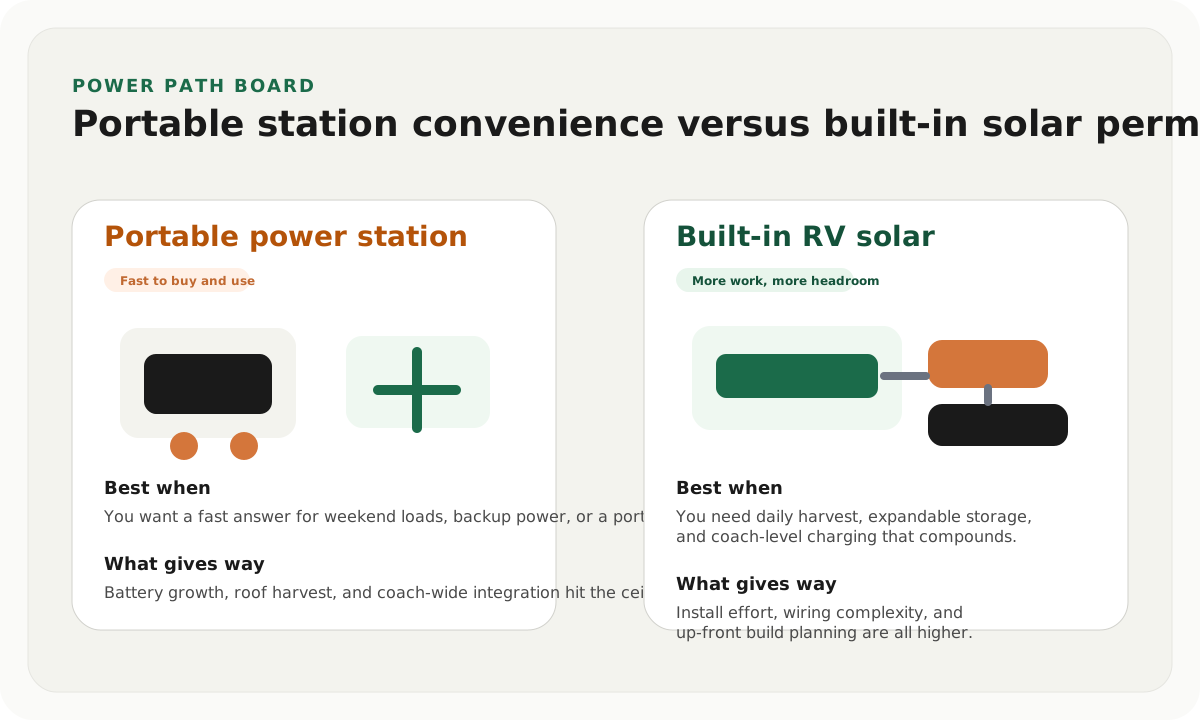
Source checks for portable and roof solar planning
Use official solar-production and product references before deciding whether the issue is array format, panel wattage, shade, or install commitment.
Pre-arrival checks
Before choosing a format
Confirm roof space, shade pattern, controller path, storage space, theft risk, daily setup tolerance, and whether a hybrid system would solve the actual camping problem.
This decision is mostly about campsite behavior
Portable versus roof solar sounds like a hardware question, but it is really a lifestyle question. The right answer changes depending on whether you:
- Move every day or settle into camp for a week
- Seek trees and shade or prioritize full sun
- Need low-effort charging or do not mind setup chores
- Worry about theft and weather exposure
- Have enough roof space for a useful array
That is why one RVer can say portable solar is the obvious winner while another thinks it is a constant hassle. Both can be right.
If you are trying to size the system first, use how many solar watts your RV needs and the solar calculator before choosing the mounting style. The best format cannot rescue an array that was sized around hope.
The two systems solve different problems
Roof solar solves the "always on" problem. It works in transit, in parking lots, during lunch stops, and on quick overnight stays. Once installed, it asks very little from you beyond normal monitoring and cleaning.
Portable solar solves the "my roof is shaded" problem. It allows the panel to sit away from the rig in better light, which can be a major advantage in wooded camps or shoulder-season travel where sun angle matters.
If you compare them only by panel wattage, you miss the real difference: one trades convenience for flexibility, and the other trades flexibility for frictionless daily use.
For product-level examples, compare the best RV solar panels with the best portable solar panels for RVs. The tradeoff gets clearer when exact roof panels and exact portable kits are sitting side by side.
Compare
Compare fast
Use one comparison matrix to scan the practical differences. Small screens stack each row; wider screens keep the first column pinned.
| Spec | Roof-mounted | Portable | Hybrid |
|---|---|---|---|
| Daily setup | Almost none | Required | Low to moderate |
| Shade flexibility | Limited | Strong | Strong |
| Theft risk | Low | Higher | Moderate |
| Charging in transit | Yes | No | Yes for roof portion |
| Best fit | Frequent movers | Longer shaded stays | Mixed camping styles |
Where roof-mounted solar clearly wins
Convenience
This is the biggest advantage and the one that matters most in real use. Roof solar works when you are tired, when the weather is bad, when you stop late, and when you forget about it entirely. That has more value than many people expect.
For RVers who move often, roof solar is almost always easier to live with. The charging starts as soon as the sun hits the panels. There is no carrying gear out, no cable management, and no need to secure the panel every time the wind picks up.
Better "background charging"
Even modest roof solar can contribute during travel days, parking-lot lunches, fuel stops, and quick overnight camps. Portable solar cannot do that. If your camping pattern includes many short stops, roof solar earns its keep quickly.
Lower mental overhead
This is not a technical metric, but it matters. A system that charges automatically reduces friction. That means you are more likely to get consistent value from it over time.
Where portable solar clearly wins
Shade management
If you regularly camp where the rig sits in shade but there is sun twenty feet away, portable solar can outperform a roof array dramatically. That is the core reason portable panels remain compelling.
Useful for smaller systems
Portable solar also works well when the goal is not to build a complete roof system but to supplement a simple weekend setup. Some RVers only need enough additional charging to keep up with lights, fans, and device charging in decent weather. A portable panel can make sense there.
Good for renters or temporary setups
Not everyone wants to mount hardware permanently to the roof. If you are testing your real energy habits first, portable solar can be a lower-commitment way to learn.
The hidden cost of portable solar is effort
Portable systems look flexible on paper. In reality, they require a lot of small, repeated actions:
- Carry the panel out
- Aim it
- Secure it
- Protect it from wind
- Route the cable safely
- Move it when the sun shifts
- Bring it in before travel or bad weather
If you are willing to do those things consistently, portable solar can be excellent. If you are not, the real-world performance can be disappointing even when the panel itself is capable.
Buy the system you will actually use well
Many RVers overestimate their willingness to deploy portable gear day after day. If you know you prefer low-effort camp routines, roof solar usually delivers more value because it gets used fully every time.
Theft, wind, and storage are not side notes
Portable panels create operational concerns that roof arrays mostly avoid.
Theft and tampering
A roof array is hard to steal casually. A portable panel is not. That does not mean portable solar is a bad choice, but it does mean campsite type and risk tolerance matter.
Wind and weather
Portable panels can be awkward in gusty conditions. A panel that tips, slides, or catches wind at the wrong time can turn from "flexible" to "annoying" very quickly.
Storage footprint
Portable gear has to live somewhere in the rig. That matters more in smaller trailers, vans, or already crowded storage bays.
Roof solar has its own real limits
It is easy to overcorrect and treat roof solar as the universal answer. It is not.
Roof systems can struggle when:
- The roof is crowded or awkwardly shaped
- You camp in trees most of the time
- Shade from air conditioners or racks reduces output
- Cleaning access is poor
- You do not have enough roof area for the array size you really need
Roof solar also tends to require a more committed install path, with mounts, penetrations, wiring routes, and controller placement decisions that are harder to undo than a portable panel purchase.
That install commitment is why the RV solar installation guide is worth reading before ordering roof hardware. Wiring choices in the series-vs-parallel guide can also change how clean the final system feels.
Hybrid is often the most forgiving setup
For many off-grid RVers, hybrid is the least glamorous but most practical answer.
The roof handles:
- Background charging
- Travel days
- Quick overnights
- Everyday base loads
The portable panel handles:
- Shaded camps
- Longer stays
- Shoulder-season conditions
- Extra charging margin when your base system is stretched
This can work especially well when the roof system is sized for the loads you use most consistently and the portable panel is treated as an optional booster instead of the whole plan.
Use case by camping style
Frequent movers
If you move often, roof solar usually wins. The convenience advantage is hard to overstate. You will collect more usable charging over time because the system is active more often.
Public-land campers who stay longer
If you stay several days in one place and often prioritize beautiful campsites over perfect sun exposure, portable or hybrid often makes more sense.
Weekend travelers
For simple weekend use, either can work. The better fit depends on whether you value low effort more than shade flexibility.
Remote workers
Remote workers usually benefit from the most consistency possible. In practice, that often points to roof solar or hybrid, because work loads care less about theoretical flexibility and more about dependable charging.
Cost is only part of the story
People sometimes compare only initial hardware cost and ignore use friction. The cheaper option is not automatically the better value.
The better question is:
- Which system gives you the most dependable watt-hours for the way you camp?
- Which one are you likely to deploy correctly and consistently?
- Which one fits your roof, storage, and security tolerance?
If a portable setup saves money but spends most of its life folded in a compartment, it was not cheaper in any meaningful sense.
Decision framework
Choose roof solar if most of these are true:
- You move often
- You want the lowest-effort routine
- You can dedicate useful roof space
- You want charging during travel and quick stops
- You prefer a system that disappears into the background
Choose portable solar if most of these are true:
- You often camp in shade
- You stay long enough to justify setup
- You do not mind moving and managing the panel
- You have secure camps and storage space
- You want lower-commitment experimentation first
Choose hybrid if most of these are true:
- Your camping style changes often
- You want dependable everyday charging plus shade flexibility
- You already know your base loads and want an extra margin tool
- You expect some trips in full sun and some in trees
Final thought
Portable and roof solar are both good tools. Problems start when people expect one tool to solve a problem it is not built for. Roof solar is best when you value consistency and low effort. Portable solar is best when campsite flexibility matters enough to justify daily involvement. Hybrid is best when your travel pattern makes both tradeoffs real.
The right decision is the one that still feels right after ten ordinary camps, not just the one that sounded smartest during shopping.
Frequently asked
Questions RVers usually ask next.
Is portable solar better than roof solar for RVs?
Not universally. Portable solar is better in shade and for flexible placement. Roof solar is better for convenience, security, and charging whenever the rig is parked or moving.
Can portable solar run an RV full time?
It can support a full-time setup, but only if the system is large enough and you are willing to manage deployment, aiming, and security consistently. For most full-timers, roof or hybrid systems are easier to live with.
What is the best solar setup for boondocking?
For many boondockers, a hybrid setup works best: enough roof solar to cover base loads plus a portable panel for extra production during longer or shadier stays.
Freshness note
Last checked April 17, 2026
This topic can change when products, plans, prices, campsite rules, or fit guidance move. These notes show what was reviewed most recently.
This review included
- Checked current pricing for portable and roof-mounted solar panel options from Renogy, Jackery, and EcoFlow.
- Verified installation cost estimates and portability trade-offs.
Recent change log
April 17, 2026
Published portable vs roof solar comparison with current pricing and verified trade-off analysis.
Broader editorial corrections are tracked on the Corrections and Updates page.

