Official charging references
Use your own battery and charger manuals first. These official references are planning anchors for solar controllers, DC-DC charging, and lithium charge-profile expectations.
Pre-arrival checks
Before mixing sources
Confirm every charger profile, voltage limit, temperature behavior, fuse size, and cable path against the battery manual and charger manual.
Battery charging makes more sense when you stop looking for one hero source
Many RV owners want the battery system to feel simple. That often leads to one big question: "What is the best way to charge RV batteries?"
The practical answer is less tidy. The best charging source depends on what the rig is doing.
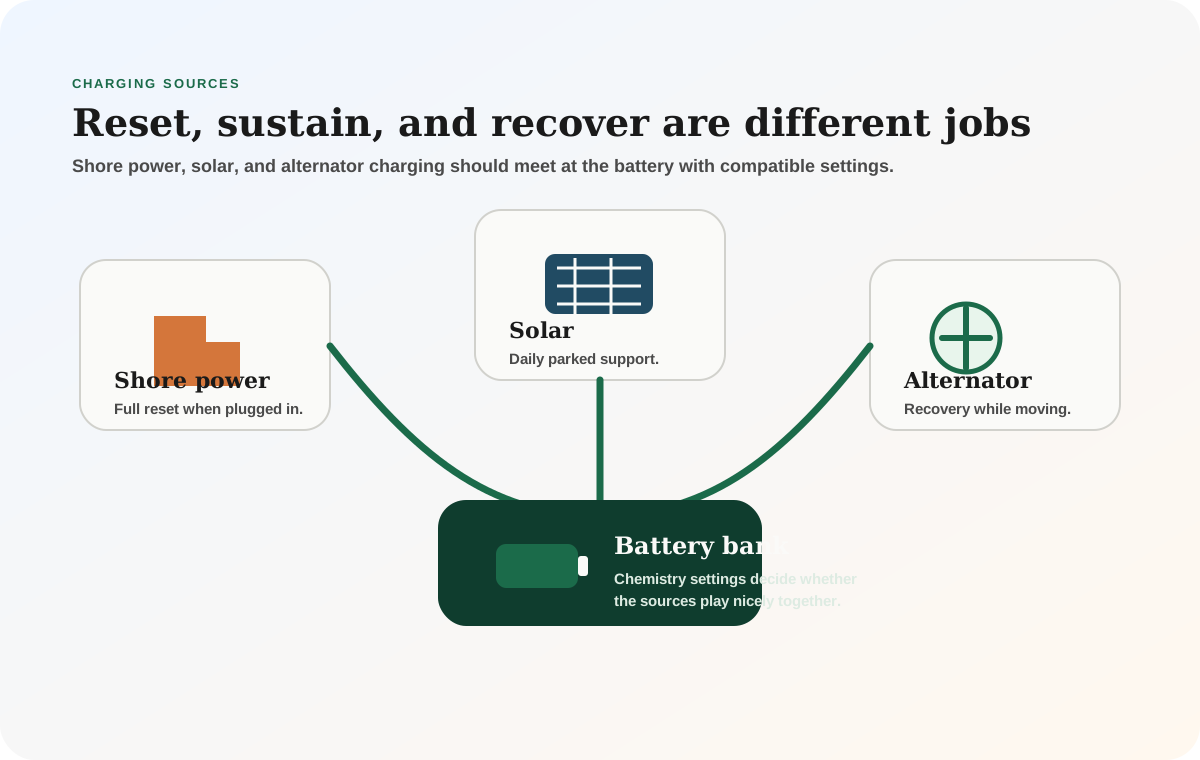
Shore power is the reset source. Solar is the daily parked support source. Alternator charging is the movement-day recovery source. A generator often feeds the shore-power path as a portable reset source, with fuel, noise, and safety limits.
The system gets easier to understand when each source has a job instead of every source being expected to save every situation.
If the bank is not charging at all, use the RV battery not charging troubleshooting guide before replacing parts. This guide is about designing the charging plan, not diagnosing one dead circuit.
Compare the three charging sources
Compare
RV battery charging source comparison
Use one comparison matrix to scan the practical differences. Small screens stack each row; wider screens keep the first column pinned.
| Spec | Shore power | Solar | Alternator / DC-DC |
|---|---|---|---|
| Best job | Full reset when plugged in at home, campground, or generator | Daily parked support while camping | Recovery while driving between stops |
| Common hardware | Converter, inverter-charger, or standalone charger | Panels plus MPPT or PWM charge controller | DC-DC charger, isolator, or factory charge path |
| Main limit | Only helps when a plug or generator is available | Sun, shade, weather, roof area, and controller size | Drive time, alternator capacity, wiring, heat, and current limits |
| Planning math | Charger amps x battery voltage x hours, minus taper and losses | Array watts x usable sun hours x real-world losses | 30A is about 360W; 50A is about 600W before losses |
| Mismatch risk | Old converter profile may undercharge lithium or overwork lead-acid | Controller settings may not match chemistry | 7-pin trickle or undersized wiring may not recover a large bank |
The table is simple, but it prevents a lot of bad purchases. If you stay parked for ten days, alternator charging will not save you unless you move. If you drive every other day, a DC-DC charger may matter more than another small panel. If you return home between trips, shore power may be the cheapest way to start each trip full.
Shore power is the reset lane
Shore power is the easiest way to bring a battery bank back to a known starting point. When the RV is plugged in at home, at a campground, or through a safe generator setup, the charger can work without depending on sun or drive time.
Shore power is best for:
- pre-trip charging
- recovery after cloudy weather
- resetting the bank between off-grid stays
- keeping a storage routine if the charger and battery manual support it
- testing whether the battery accepts charge normally
The common weakness is charger profile. Many older converters were designed around lead-acid behavior. They may not hold the correct lithium profile, may never fully charge a LiFePO4 bank, or may apply charging stages that do not match the battery. The answer is not always a new converter, but the profile has to be checked.
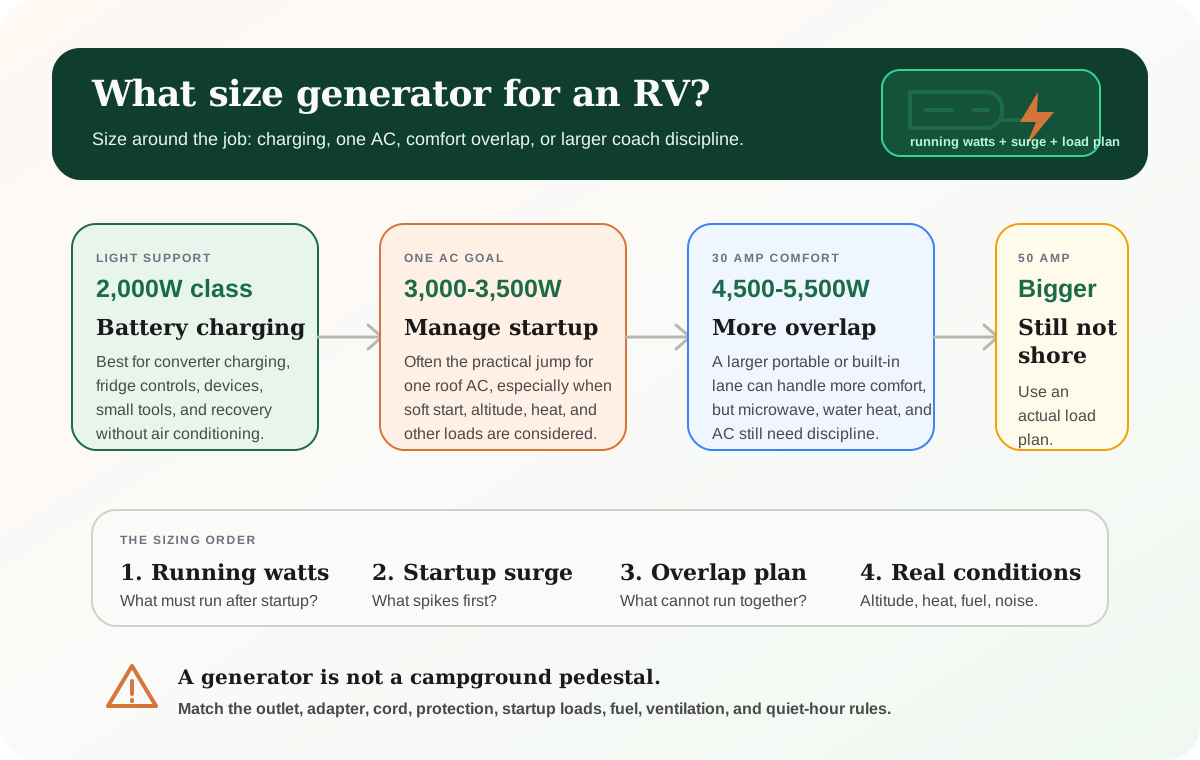
If the RV plugs into a generator through the shore cord, treat that as shore-path charging with generator limits. Use the generator sizing guide before assuming the generator can run the converter, air conditioner, water heater, microwave, and charger at the same time.
Solar is the sustain lane
Solar is valuable because it works where the rig is parked. It can cover daytime loads, replace overnight battery use, and reduce generator or hookup dependence.
Solar is best for:
- longer parked stays
- daily fridge, fan, pump, laptop, lighting, and device loads
- reducing battery depth of discharge
- keeping a modest system from slipping behind
- making sunny camps feel low-maintenance
The common mistake is treating panel wattage as a daily guarantee. A 400W array does not give 400W every hour. Shade, panel temperature, sun angle, dirty panels, wiring loss, controller limits, and battery acceptance all reduce real output.
For rough planning:
- 400W of solar x 5 strong sun hours = 2,000Wh before losses
- after ordinary real-world losses, a planning range around 1,200-1,600Wh may be more honest
- shade on one panel can drag the day down hard depending on wiring and controller setup
Use the solar calculator and the solar charge controller guide before buying panels without checking controller voltage, current, and expansion room.
Alternator charging is the travel-day recovery lane
Alternator charging is most useful when moving is part of the trip rhythm. If you relocate every few days, drive time can become real recovery time. If you sit in one place for two weeks, it does not matter how nice the DC-DC charger is.
Alternator charging is best for:
- travel days between off-grid stops
- cloudy routes where solar is inconsistent
- work rigs that need a stronger recovery story
- lithium banks that should not rely on a weak 7-pin trickle path
- travelers who want less generator time
The math is simple but sobering. A 30A DC-DC charger at a nominal 12V is about 360W before losses. Two hours of driving might deliver roughly 600-700Wh after real-world factors. A 50A charger is roughly 600W before losses, so the same two hours might recover closer to 1,000Wh if the battery can accept it and the installation is healthy.
That is helpful. It is not magic. If your workday uses 1,500Wh and the fridge, fan, lights, and inverter use more overnight, a short drive may not erase the deficit.
Battery chemistry decides the settings
Charging sources are only half the story. Battery chemistry decides how those sources should behave.
Lead-acid and AGM batteries usually want multi-stage charging and should not be treated like lithium. LiFePO4 batteries usually accept charge differently, have different voltage targets, and may have cold-temperature charging limits managed by the battery management system or external controls.
Typical planning sequence:
- flooded and AGM lead-acid: more sensitive to depth of discharge, longer absorption behavior, and full-charge maintenance
- LiFePO4: deeper usable capacity, faster acceptance, different charger profile, and cold-charge protection concerns
- mixed banks: usually a bad idea unless a manufacturer-approved design isolates or controls the banks properly
If you are deciding between chemistries, read lithium vs AGM before designing the charging stack. If you already own the bank, the battery manual wins over generic advice.
Do not let three chargers disagree quietly
A converter, solar controller, and DC-DC charger can all feed the same battery bank. That only works well when each one is set for the same battery chemistry and protected by the right fusing, wire size, and temperature logic.
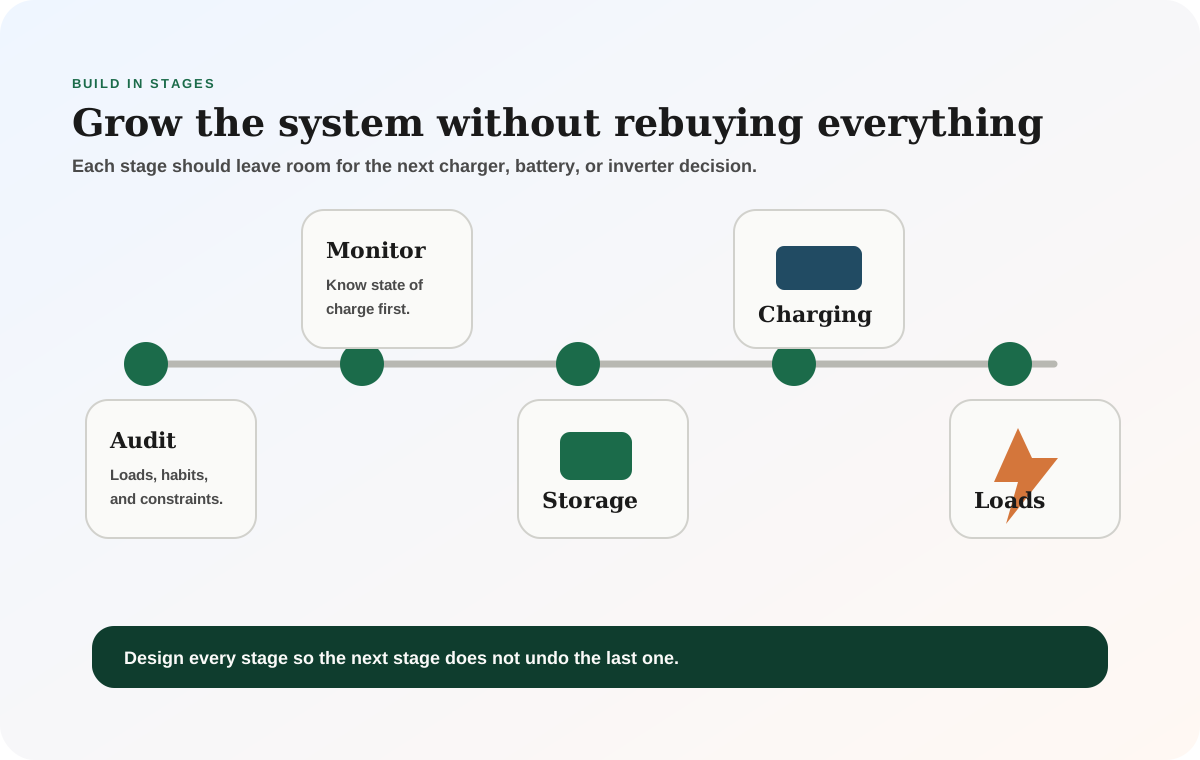
A practical charging plan by travel style
Weekend traveler
The weekend traveler often needs a strong reset path more than a huge off-grid charging system. Plug in before departure, arrive full, camp conservatively, then reset at home.
Best emphasis:
- shore power charger profile
- battery monitor
- modest solar if the fridge, fans, or devices are meaningful
- generator only if rules, safety, and noise allow
Stationary boondocker
The stationary boondocker needs daily sustain. Solar and water discipline often matter more than alternator charging.
Best emphasis:
- enough solar for daily loads
- controller sized for expansion
- battery bank sized for weak weather
- generator or shore reset fallback when clouds stack up
Frequent mover
The frequent mover can turn drive days into recovery days. Alternator charging becomes more valuable because movement is already part of the route.
Best emphasis:
- DC-DC charger sized to alternator and battery bank
- safe cable routing and fusing
- battery monitor to confirm recovery
- solar as parked support rather than the only recovery lane
Remote-work rig
The remote-work rig needs predictable recovery, not just impressive hardware. If the laptop, internet, and inverter use 1,000Wh per workday, the charging system has to replace that with margin.
Best emphasis:
- daily work load audit
- battery monitor
- solar for parked workdays
- alternator or shore reset when weather or workload wins
- backup internet power plan
Common charging mistakes
Assuming the 7-pin charge line will refill a lithium bank
The trailer connector may maintain or trickle in some setups, but voltage drop and current limits usually make it a poor recovery source for a large off-grid bank.
Buying panels before checking controller headroom
Panel watts are only useful if the controller voltage and current limits fit the array design and future expansion.
Upgrading the battery without upgrading the charger profile
A lithium battery on an old lead-acid converter may work poorly, charge incompletely, or depend too much on solar to finish the job.
Forgetting that charge rate tapers
The last part of charging can slow down depending on chemistry and charger behavior. Do not assume max charger amps continue all the way to 100 percent.
Final thought
A good RV charging plan is not one heroic source. It is a set of jobs.
Shore power resets. Solar sustains. Alternator charging recovers while moving. The battery manual decides the charging profile. The monitor tells you whether the system is doing what you think.
Once those roles are clear, charging stops feeling mysterious and starts looking like infrastructure.
Frequently asked
Questions RVers usually ask next.
What is the best way to charge RV batteries?
There is not one universal best source. Shore power is best for reset, solar is best for parked daily support, and alternator or DC-DC charging is best for recovery while driving. The right mix depends on how you travel.
Can solar fully charge my RV batteries?
Yes, if the array, controller, sun exposure, weather, and daily loads are matched well. A solar system that works in full sun may still fall behind in shade, short winter days, heavy smoke, or cloudy weather.
Do I need a DC-DC charger for alternator charging?
Many modern lithium or larger off-grid systems benefit from a DC-DC charger because it limits current, controls charging behavior, and reduces reliance on weak or undersized factory charge paths. Confirm alternator capacity and wiring before installing one.
Can shore power, solar, and alternator charging all connect to one battery bank?
Yes, but only when each charger is configured for the battery chemistry and installed with proper fusing, wire sizing, disconnects, and temperature behavior. Three sources should not mean three conflicting charge profiles.
Freshness note
Last checked April 21, 2026
This topic can change when products, plans, prices, campsite rules, or fit guidance move. These notes show what was reviewed most recently.
This review included
- Checked current Victron SmartSolar and Orion XS DC-DC charger documentation, plus LiFePO4 charging behavior from Battle Born support materials.
- Expanded the guide with a charging-source visual, comparison table, current-to-watt math, and chemistry mismatch warnings.
Recent change log
April 21, 2026
Added official-source routing, a source coordination visual, charging-source comparison table, and worked alternator/solar recovery examples.
April 17, 2026
Published RV battery charging guide covering shore power, solar, and alternator charging with verified specs.
Broader editorial corrections are tracked on the Corrections and Updates page.