System planning references
Use your installer, manuals, and applicable electrical codes for final design. These manufacturer references are useful starting points for staged solar, DC-DC charging, and wiring decisions.
Pre-arrival checks
Before buying phase two
Confirm the likely final battery chemistry, charging sources, roof space, inverter loads, and service-access path so stage two does not block stage three.
Staged builds win when the roadmap is honest
Most RV owners do not want or need a complete off-grid build on day one. Budgets are real. Experience levels vary. Travel patterns change after the first few trips. Building in stages can be the smartest way to move forward.
But staged builds only save money when the stages connect.
If each phase is chosen without any view of the next one, the owner often replaces parts that technically worked but never fit the long-term system. That is how a cheap controller becomes expensive, a temporary battery becomes a stranded purchase, and a neat wiring job turns into a teardown.
The first step is not buying gear. The first step is deciding where the rig is likely heading.
If the direction is still fuzzy, start with the off-grid readiness checklist and the off-grid RV budget planning guide. Those two pages help separate a real trip-ending bottleneck from the upgrade that only feels exciting today.
Define the likely end state before phase one
You do not need a perfect blueprint, but you do need a direction.
Answer these before spending serious money:
- Is this a weekend rig, extended-stay rig, or full-time platform?
- Will remote work matter?
- Will air conditioning, microwave use, induction, or large AC loads be expected off-grid?
- Is the likely battery bank staying lead-acid/AGM, moving to lithium, or already lithium?
- How much solar can the roof actually fit after vents, AC units, antennas, shade, and walk paths?
- Will alternator charging matter because the rig moves often?
- Where will bus bars, fuses, disconnects, and chargers remain serviceable?
Those answers shape which "temporary" choices are safe and which ones are really dead ends.
The staged-build rule
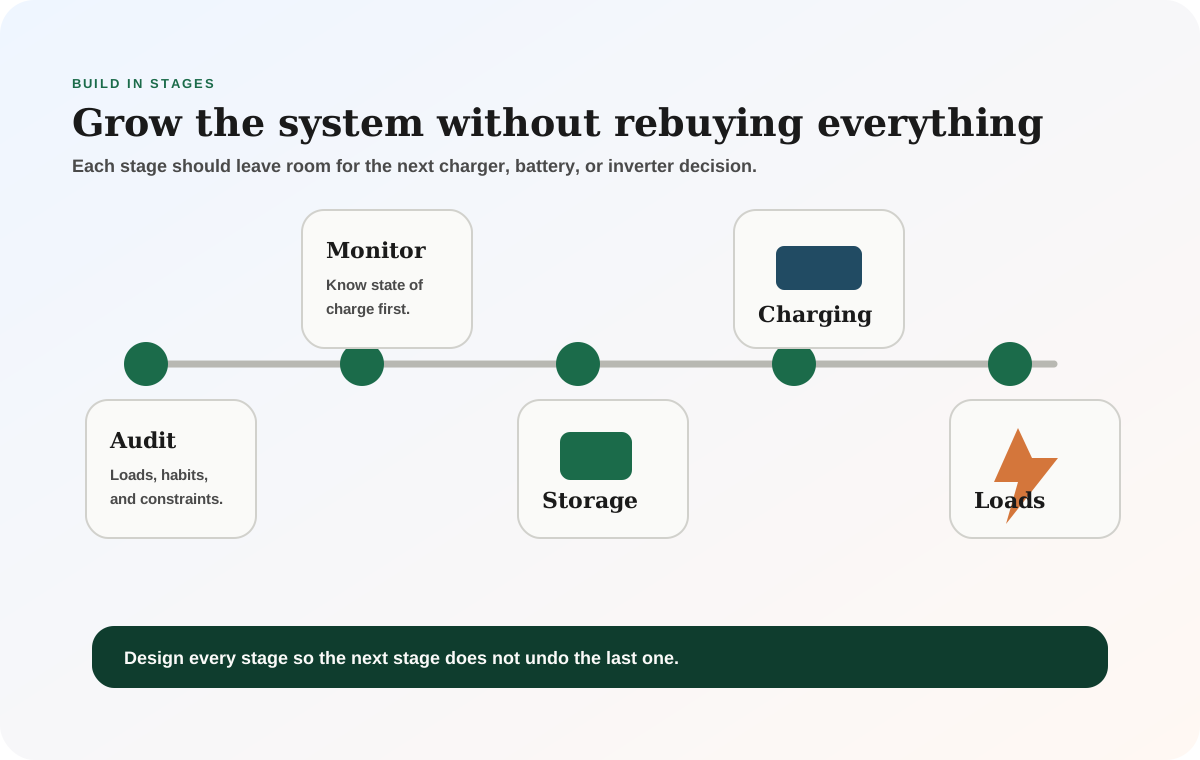
Each stage should either produce better data, remove a repeated bottleneck, or make the next stage cleaner.
Stage 1
Measure
Battery monitor, load audit, checklist discipline, and known baseline.
Stage 2
Fix the limiter
Target the resource that actually ends trips: battery, water, charging, signal, or heat.
Stage 3
Integrate
Clean wiring, compatible chargers, controller headroom, and service access.
Stage 4
Add resilience
Backups, redundancy, weather margin, and quality-of-life polish.
Compare the stages before you buy
Compare
Off-grid RV staged build roadmap
Use one comparison matrix to scan the practical differences. Small screens stack each row; wider screens keep the first column pinned.
| Spec | Main job | Good purchases | Avoid buying yet |
|---|---|---|---|
| Stage 1: visibility | Stop guessing and find the real bottleneck | Battery monitor, plug-in watt meter, checklist, small repair kit, water routine | Large inverter, permanent roof work, oversized battery bank |
| Stage 2: bottleneck fix | Solve the first repeated trip limiter | Battery capacity, modest solar, water containers, charging improvement, signal backup | Anything that solves a problem you have not measured twice |
| Stage 3: integration | Make the system coherent and serviceable | Bus bars, fusing, disconnects, controller upgrade, DC-DC charger, clean cable routing | Random add-ons that make troubleshooting harder |
| Stage 4: resilience | Survive imperfect weather, workdays, and route changes | Backup charging, spare parts, redundant internet, better monitoring, weather-specific upgrades | Luxury loads that erase margin before core systems are stable |
| Stage 5: polish | Make the rig easier to live with | Labeling, storage, quieter mounts, better controls, documented settings | New hardware that restarts the system design from scratch |
Stage 1: measure before you modernize
Stage 1 should make the rig understandable.
That usually means:
- battery monitor or better state-of-charge visibility
- load inventory for fridge, fans, furnace, work gear, inverter, and charging
- water and gray-tank tracking
- tire and payload review if you are adding hardware
- a real pre-trip and arrival checklist
- one or two short trips designed to expose the limiter
This stage can feel unglamorous, but it prevents the most expensive mistake: upgrading the wrong system.
For example, a weekend traveler may think they need lithium because the battery looks low by morning. The real issue may be an inverter left on for no reason, an old fridge mode, or a furnace fan during cold nights. A monitor and one measured trip can prevent a $1,000 answer to a $0 habit problem.
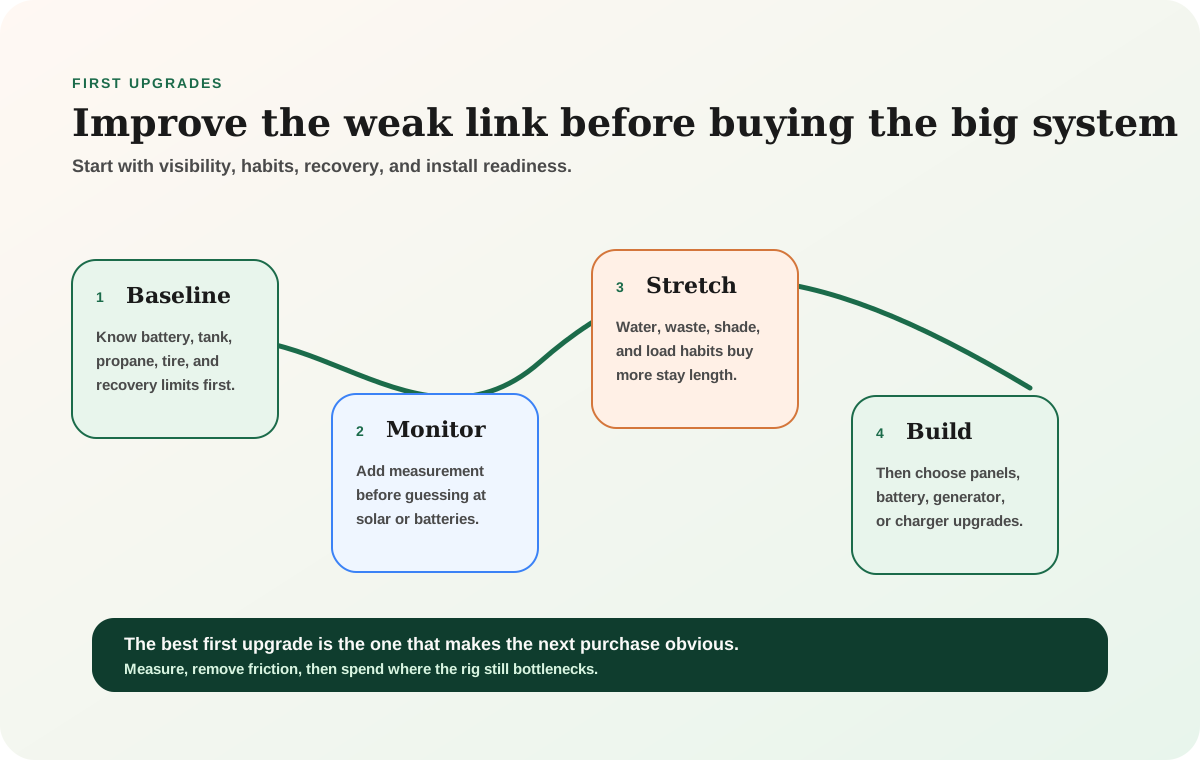
Use the first off-grid upgrades guide if you want a practical stage-one shopping order.
Stage 2: fix the repeated bottleneck
Once stage 1 reveals the pattern, stage 2 should solve the limitation that shows up repeatedly.
Common stage-two moves:
- battery capacity if overnight reserve is the limiter
- solar if daytime recovery is the limiter
- water containers or conservation routine if fresh water is the limiter
- better charging if the bank cannot recover between stops
- internet backup if remote work forces moves
- heat or insulation improvements if cold weather is ending trips
The key word is repeated. Do not build around one weird weekend unless that weekend represents the way you actually travel.
For power-heavy bottlenecks, use the battery calculator and solar calculator before buying hardware. For water-limited trips, the water calculator may point to a cheaper second stage than another electrical upgrade.
Stage 3: make the electrical system coherent
By stage 3, the risk of rebuying things rises sharply because the parts start depending on one another.
This is where a staged build becomes a system:
- solar controller sized for the array and likely expansion
- battery chemistry matched to charger profiles
- bus bars, fuses, and disconnects placed where they can be serviced
- inverter loads sized around real use, not wishful thinking
- DC-DC charging considered if travel days are part of recovery
- cable runs routed so future service is possible
- labels and diagrams created before memory fades
If this stage includes roof work, read the RV solar installation guide before drilling holes or committing panel placement. Roof layout decisions are hard to undo cleanly.
Temporary is fine. Incompatible is expensive.
A temporary part is not a bad purchase if it still fits the future direction or teaches you something useful. A part that blocks the next stage or has to be discarded entirely is where staged builds become costly.
Stage 4: add resilience instead of just size
After the core system works, the best upgrades often add resilience rather than just bigger numbers.
Examples:
- alternator charging for routes with frequent movement
- portable solar for shaded roof camps
- generator plan for long storms where allowed and safe
- spare fuses, lugs, cables, sealant, and tools
- redundant internet for work trips
- better battery monitoring and trend notes
- water reset routine and dump planning
Resilience is not the same as excess. A system with two realistic recovery paths often feels better than a system with one oversized component and no fallback.
Budget by decision, not by shopping cart
A staged budget should answer, "What decision does this phase unlock?"
A healthy rhythm often looks like:
- Stage 1: low-cost clarity, measurement, checklist, and small fixes
- Stage 2: highest-value repeated bottleneck
- Stage 3: integration and compatibility
- Stage 4: backup paths and weather margin
- Stage 5: polish, convenience, labeling, and storage
Planning ranges vary by rig and quality level, but the order matters more than the exact dollar number. Spending $200 on monitoring before spending $2,000 on batteries may be the cheapest move in the entire build.
The wrong rhythm looks like:
- buying a large inverter before knowing AC loads
- adding panels before checking roof layout and controller headroom
- buying one lithium battery while keeping charger settings unknown
- mounting components where future service requires disassembly
- turning every weekend frustration into a permanent hardware purchase
Dead-end purchases to avoid
A controller sized only for the first tiny array
If expansion is likely, a controller sized only for the first panel can become a forced replacement. Sometimes that is acceptable. It is not acceptable if you thought it was your long-term controller.
A large inverter before the load plan is clear
A large inverter can be useful, but it also creates idle draw, wiring requirements, fuse requirements, and battery-size expectations. Buy it when you know what AC loads you actually intend to support.
Permanent wiring without a service plan
Neat wiring is good. Wiring that cannot be inspected, fused, labeled, or expanded safely is not good. Stage-three work should make troubleshooting easier, not prettier in a photo and worse in real life.
Battery chemistry drift
If the plan is to move to lithium, be careful about spending heavily on lead-acid-specific charging or battery expansion that will be abandoned. If the plan is to stay AGM, do not buy lithium-specific accessories that do not solve your system.
Example staged paths
Beginner weekend traveler
Stage 1: battery monitor, load awareness, checklist, water routine, tire and payload check.
Stage 2: modest battery reserve or portable solar if short trips regularly end tight.
Stage 3: cleaner charging profile, serviceable wiring, and small inverter use only if the travel pattern justifies it.
Extended-stay boondocker
Stage 1: measure daily power and water use over two trips.
Stage 2: meaningful solar, battery correction, or water reset improvement based on the first limiter.
Stage 3: integrated charge controller, bus bars, fusing, battery monitor, and backup charging.
Stage 4: weather margin, spare parts, portable solar, generator plan where legal, and better route reset rhythm.
Remote-work rig
Stage 1: workday load audit, signal test, laptop and internet power measurement.
Stage 2: battery and charging stability sized around actual workdays.
Stage 3: solar, alternator charging, and inverter layout that protects meeting windows.
Stage 4: backup internet, town-day strategy, redundant charging, and workspace comfort.
Remote-work builds should stay connected to the RV remote-work power budget and the internet for RVers guide. Downtime changes the upgrade order because work failure costs more than mild campsite inconvenience.
Final thought
Building in stages does not mean building randomly. It means sequencing well.
Define the likely destination. Measure the current rig. Fix the repeated limiter. Make the system coherent. Add resilience. Then polish.
Do that, and a modest staged build can feel more professional than a big system assembled from disconnected purchases.
Frequently asked
Questions RVers usually ask next.
Can I build an off-grid RV system a little at a time?
Yes, and for many RVers that is the smartest path. The key is having a rough long-term direction so early purchases do not block the next stage or force unnecessary replacement.
What should I buy first for a staged off-grid build?
Start with visibility and the trip-ending bottleneck: battery monitoring, load measurement, checklist discipline, water tracking, and basic repair readiness. Buy larger hardware after the same problem shows up more than once.
How do I avoid rebuying everything later?
Choose early parts and layouts with the future in mind. That includes controller capacity, battery chemistry, cable routing, service access, fuse locations, and whether the rig is likely to grow into a bigger electrical system.
Is it okay if the first stage is small?
Absolutely. A small first stage is often better because it produces real data and shows where the next upgrade will create the most value. Small is fine; incompatible is expensive.
Freshness note
Last checked April 21, 2026
This topic can change when products, plans, prices, campsite rules, or fit guidance move. These notes show what was reviewed most recently.
This review included
- Checked current Victron controller, DC-DC charger, and wiring guidance references for staged electrical-system planning.
- Expanded the staged-build guide with a visual roadmap, stage-by-stage comparison table, budget sequencing, and dead-end purchase examples.
Recent change log
April 21, 2026
Added official-source routing, staged-build visual, concrete stage table, and more specific upgrade sequencing guidance.
April 17, 2026
Published staged off-grid system build guide with current component pricing and verified compatibility notes.
Broader editorial corrections are tracked on the Corrections and Updates page.