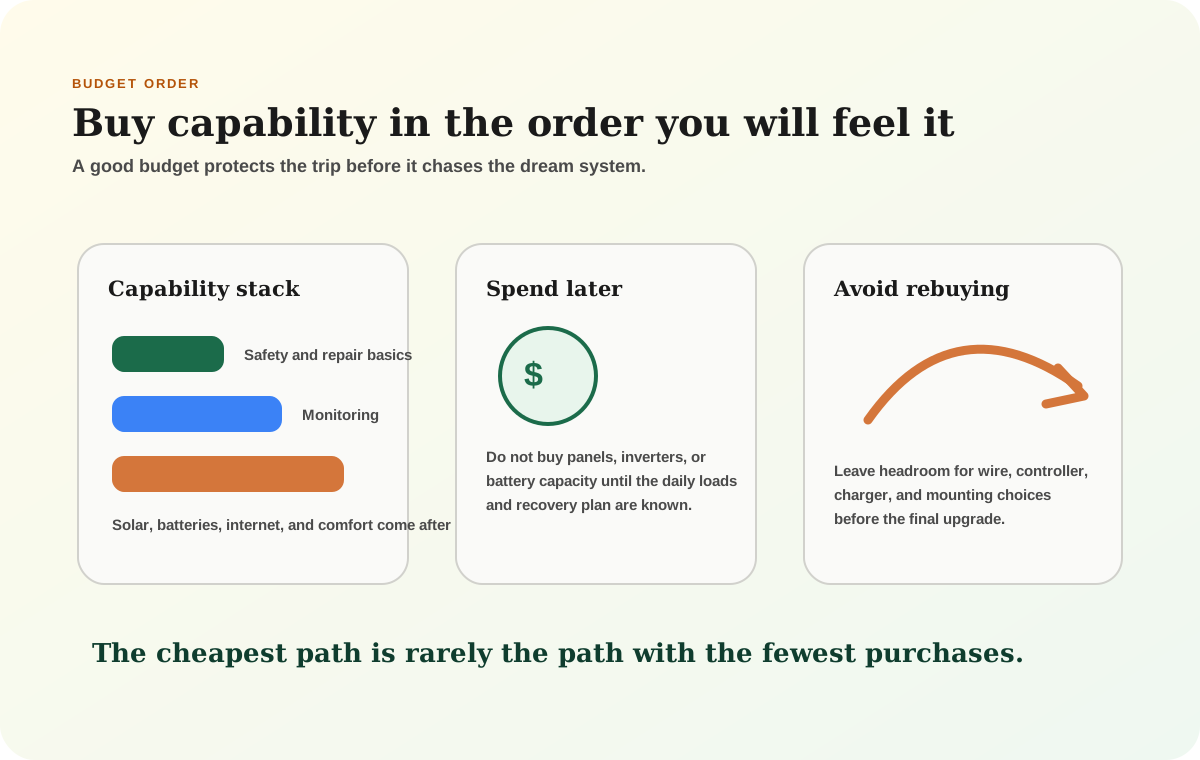
Budget planning at a glance
Use this like a quick budgeting filter before you start comparing upgrades.
Best first question
What ends the trip first?
Power, water, weather, or work reliability usually deserves the first dollar.
Stage 1 focus
Measurement and clarity
Battery visibility, load math, and water habits usually pay back before bigger hardware.
Stage 2 focus
Fix the main bottleneck
This is where battery, solar, charging, or internet money usually belongs.
Stage 3 focus
Margin and comfort
Once the weak point is solved, spend on resilience and quality-of-life upgrades.
Most common mistake
Buying out of order
The expensive path is usually solving the wrong problem with the biggest part.
Best-fit traveler
Anyone staging an off-grid build
Especially useful if the rig has to improve in phases instead of one giant purchase.
Official checks before spending upgrade money
Budget planning is not only price shopping. Use official safety, solar, and recall checks so the first dollars solve the right problem.
Pre-arrival checks
Before checkout
Know the limiter, confirm the safety baseline, check roof and battery fit, and identify which purchase would be expensive to redo later.
Budgeting goes wrong when every purchase feels urgent
Off-grid RV upgrades have a way of making every product seem essential. Bigger batteries feel important. More solar looks prudent. A new inverter sounds like future-proofing. Better internet hardware feels mandatory if you work remotely.
But most rigs are not limited by everything at once. They are limited by one or two specific constraints:
- battery reserve runs short
- solar never catches up
- water disappears faster than expected
- cold weather exposes weak assumptions
- internet breaks the workday
Budget planning works much better when you identify the actual limiter first.
If that limiter is not obvious yet, use the off-grid readiness checklist as the first filter. It is cheaper to find the weak system on paper than after buying the upgrade that happened to be on sale.
Compare
A staged off-grid RV budget
Use one comparison matrix to scan the practical differences. Small screens stack each row; wider screens keep the first column pinned.
| Spec | Stage 1: measure | Stage 2: fix the limiter | Stage 3: add margin |
|---|---|---|---|
| Best spend | Battery monitor, load audit, tank routine, inspection basics | Battery, solar, charging, water, or internet upgrade tied to the proven weak link | Redundancy, comfort, weather margin, and cleaner installation details |
| Proof you are ready | You can describe daily Wh, water gallons, reset plan, and current failure point | The purchase directly changes the thing that ends trips first | The main bottleneck is already solved and the next risk is clear |
| What to avoid | Buying big parts because the rig feels vaguely underbuilt | Fixing solar when battery reserve, water, or charging speed is the real limit | Future-proofing so aggressively that weight, space, or cash becomes the new limiter |
| Good next action | Run a calculator and collect real measurements | Buy the smallest upgrade that meaningfully changes the trip | Document settings, labels, manuals, and maintenance rhythm |
Start with the reason the current setup feels inadequate
Ask which statement sounds most true:
- We run out of battery before we run out of daylight
- We make it through the day, but cloudy weather crushes us
- Water, not power, ends the trip
- We can camp off-grid, but remote work feels fragile
- The system works for weekends, but not for longer stays
That answer tells you which category deserves money first.
Build around trip goals, not abstract independence
People say they want an "off-grid RV setup" as if there is one endpoint. In reality, there are several:
Weekend independence
Goal: leave hookups comfortably for short trips without stress.
Extended-stay comfort
Goal: hold a site longer without turning every day into a resource-management exercise.
Full-time resilience
Goal: reduce dependency on hookups across changing conditions and seasons.
Remote-work capability
Goal: support a dependable workday from the road without constant compromise.
Each of those goals can justify a different budget and upgrade order.
Weekend travelers should compare this against the weekend off-grid setup guide, while full-time travelers should sanity-check the budget against the full-time off-grid setup guide. The same $2,000 can mean very different things in those two rigs.
The best first purchases usually are not glamorous
The strongest early spending often goes toward clarity:
- battery monitor or better system visibility
- realistic load inventory
- calculator-based sizing
- wiring cleanup or obvious failure-point fixes
- water-use discipline tools and containers
These purchases do not always look exciting on social media, but they prevent expensive misreads later.
Measure before you scale
If you cannot describe your normal daily power use, water pattern, and charging reality, you are still guessing. Better measurement often saves more money than the next hardware jump.
Budget in stages, not one giant leap
The easiest way to overspend is to treat the whole off-grid build as one all-or-nothing project. Staged planning works better because every upgrade can be tested in the real world before the next one is chosen.
Stage 1: Basic confidence
Typical focus:
- trip-readiness checklist
- honest power audit
- basic battery visibility
- simple water-use improvements
- small campsite gear gaps
Goal:
make short off-grid trips calmer and more informative
Stage 2: Main bottleneck upgrade
Typical focus:
- battery expansion
- solar sizing correction
- improved charging support
- water-carry strategy
- better internet fit for actual travel
Goal:
solve the biggest recurring limitation
Stage 3: Quality-of-life and resilience
Typical focus:
- extra autonomy
- seasonal margin
- more polished work setup
- better monitoring and layout refinement
Goal:
make the system easier and less fragile over time
Power is where most money goes first
For many RVers, electrical upgrades absorb the first serious budget because power touches almost everything else.
That does not mean "buy the largest battery you can afford." It means understanding the relationship between:
- daily watt-hours
- usable battery capacity
- solar input
- inverter needs
- charging speed and reliability
If you misread those relationships, even a large spend can feel disappointing.
This is where the battery calculator, solar calculator, and how many solar watts guide are worth using before a purchase. They make the budget argue with the load list instead of with wishful thinking.
Water can be the smarter upgrade target
Many people assume power is the main off-grid limiter because electrical gear is more visible and more discussed. But on a lot of trips, water ends the stay first.
That can make these upgrades surprisingly valuable:
- water containers for extra capacity
- better refill planning
- efficient fixtures or habits
- clearer tank monitoring
- simple systems that reduce waste
A rig that can stay powered but not stay watered is still leaving early.
Use the water calculator and the water-saving upgrades guide before assuming the next dollar belongs in batteries. Some rigs gain more useful autonomy from better water logistics than from another panel.
Remote work changes the budget hierarchy
Once work enters the picture, the upgrade order often shifts.
Remote workers may need to prioritize:
- stronger battery reserve
- more dependable solar recovery
- better workspace ergonomics
- layered internet planning
- redundant charging habits
That is why generic "best off-grid RV budget" advice often fails remote workers. Their comfort threshold and downtime tolerance are different.
For work rigs, the internet backup planner and RV remote-work power budget should sit beside the electrical budget. Internet redundancy and workday reserve are not bonus luxuries when they protect income.
Sample budget logic by traveler type
Weekend RVer
Best spending often goes to:
- small battery improvements
- modest solar support
- simple trip-readiness and water upgrades
The goal is comfort, not maximum system complexity.
Extended-stay traveler
Best spending often goes to:
- more usable battery
- stronger solar support
- water strategy
- campsite selection discipline
The goal is staying longer without daily stress.
Remote worker
Best spending often goes to:
- stable power reserve
- dependable charging recovery
- internet that fits destination reality
- desk and workflow comfort
The goal is keeping the workday intact, not merely keeping the lights on.
Common budget mistakes
Buying premium gear before solving the sequence
High-end components do not fix bad priorities.
Treating one category as the whole answer
Big batteries do not replace weak charging. More solar does not replace unrealistic loads. Better internet does not fix a power budget that cannot support it.
Skipping the unglamorous supporting pieces
Cable upgrades, monitoring, mounting, layout cleanup, and quality-of-life campsite gear often deliver more daily value than a flashier product swap.
Overbuilding for a future that may never come
It is wise to leave room for growth. It is not always wise to pay for the full imagined future on day one.
Questions to ask before each purchase
Before you buy anything, ask:
- What exact problem does this solve?
- How often does that problem happen?
- Is this the first or second-order fix?
- What has to change around it for the purchase to work well?
- How will I know it was worth the money after three trips?
Those questions slow down bad spending.
A useful "first dollars" checklist
- Know your daily power use
- Know whether water or power ends the trip first
- Know whether your camping style is sun-rich or shade-heavy
- Know whether you actually need remote-work-grade internet
- Know whether the current layout is serviceable
Without those answers, budgeting stays reactive.
Final thought
The strongest off-grid RV budget is not the biggest one. It is the one that improves your actual travel experience in the right order. Solve the real bottleneck first, verify the result, then spend on the next constraint.
That rhythm is slower than impulse shopping, but it usually produces a better rig and far less regret.
Frequently asked
Questions RVers usually ask next.
What should I upgrade first for off-grid RV travel?
Start with the resource that actually limits your trips now. For many RVers that is power, but for others it is water, trip planning, or internet reliability. Fix the real bottleneck first.
How much should I budget for an off-grid RV setup?
There is no universal number because weekend, extended-stay, and remote-work rigs have very different demands. Build the budget around your trip style and the next problem you need to solve, not a one-size-fits-all package.
Is it better to buy a full system at once or upgrade in stages?
Stages are usually smarter. They let you test assumptions, reduce waste, and make sure each purchase improves the rig before the next expense gets added.
Freshness note
Last checked April 17, 2026
This topic can change when products, plans, prices, campsite rules, or fit guidance move. These notes show what was reviewed most recently.
This review included
- Verified current pricing ranges for major off-grid components including solar panels, batteries, inverters, and charge controllers.
- Checked installation cost estimates against current market rates.
Recent change log
April 17, 2026
Published off-grid RV budget planning guide with current component pricing and cost estimates.
Broader editorial corrections are tracked on the Corrections and Updates page.

