Official checks that matter for full-time rigs
A full-time setup still has to obey site rules, road conditions, fire restrictions, and safety boundaries. Hardware does not replace land-manager or safety checks.
What does a full-time off-grid RV setup need?
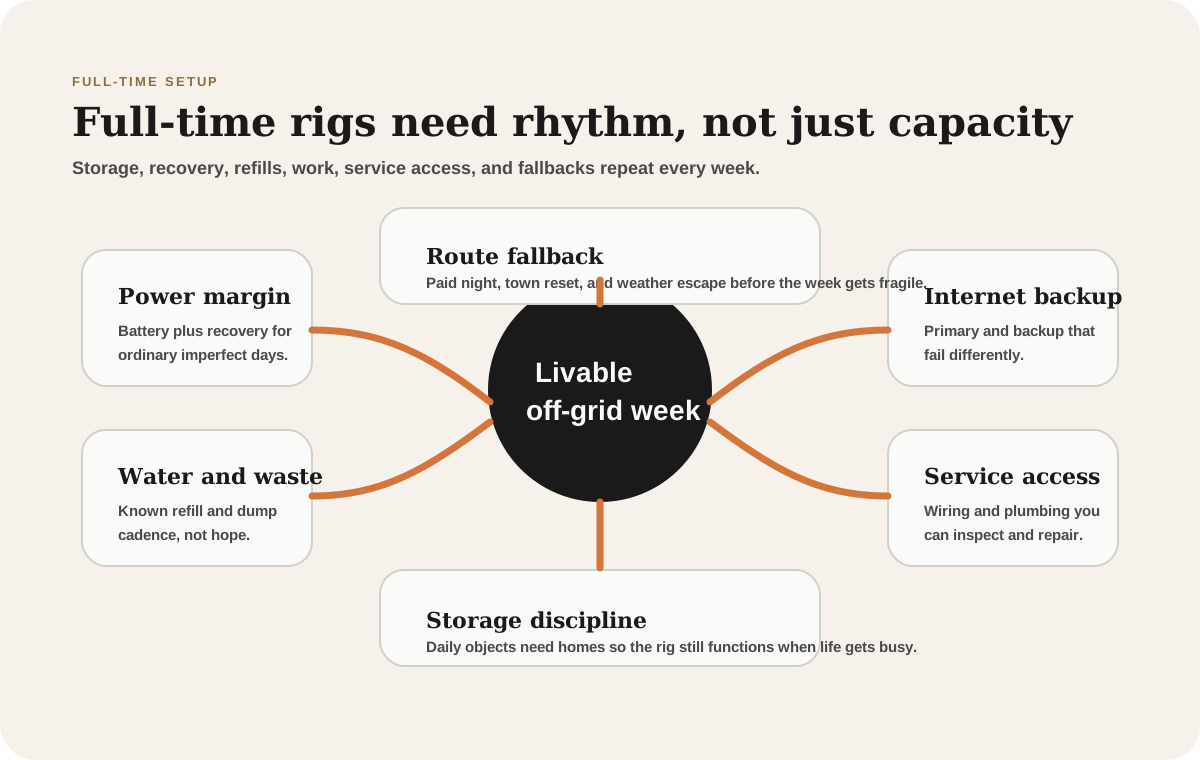
A full-time off-grid RV setup needs enough margin and serviceability to repeat the same week again and again. Battery, solar, water, waste, internet, storage, and maintenance all have to work as an operating system, not as separate weekend accessories.
The core question is not "Can this rig survive three nights?"
The question is: can this rig support normal life when the weather is imperfect, the tanks are partly full, work still has to happen, and the next reset is not instant?
Use the full-time RV logistics calculator before you finalize upgrades. It forces the conversation beyond watts and gallons into route rhythm, errands, resets, and work needs.
Full-time is a different standard than weekend travel
Weekend systems can run tight because home is close. Full-time systems need breathing room because the RV is home.
That changes the standard for:
- power reserve
- charging recovery
- water and waste cadence
- internet redundancy
- storage access
- maintenance visibility
- weather fallback
- route flexibility
If you are still deciding whether your use case is occasional or full-time, compare this page with the weekend off-grid setup guide. The difference is not ego. It is how many repeated imperfect days the rig has to absorb.
Compare
Compare fast
Use one comparison matrix to scan the practical differences. Small screens stack each row; wider screens keep the first column pinned.
| Spec | Weekend setup | Full-time setup | Why it changes |
|---|---|---|---|
| Power | Enough for a short stay | Enough storage plus repeatable recovery | There may be no Sunday reset at home |
| Water | Full tank before departure | Known refill, dump, and conservation cadence | Fresh, gray, and black capacity repeat every week |
| Internet | Nice if it works | Primary plus backup if work depends on it | Connectivity failure can cost money or force a move |
| Storage | Trip bins and temporary clutter | Daily homes for tools, food, work gear, parts, and weather gear | Clutter blocks maintenance and makes small rigs feel smaller |
| Maintenance | Fix it after the trip | Inspect, isolate, and repair while living in it | The rig cannot be unusable every time something needs attention |
Power margin is storage plus recovery
Full-time power planning fails when the battery bank is treated like the whole answer.
A good full-time setup asks:
- How much battery do we lose overnight?
- How much solar do we actually recover by late afternoon?
- How much alternator or generator backup exists when weather is weak?
- Which loads are essential and which are lifestyle extras?
- What happens after two cloudy days, not one sunny day?
For a light full-time rig, 200Ah of lithium can be a starter bank. For a remote worker, winter traveler, Starlink user, or inverter-heavy cook, 300Ah to 600Ah may feel more appropriate. The right answer depends on daily loads and recovery, not a brag number.
Run the battery calculator, then check the solar calculator. If the numbers only work in full sun, the setup is not full-time calm yet.
Water and waste need a weekly cadence
Full-time water planning is less about one heroic conservation trick and more about a repeatable reset.
Name the cadence:
- how many gallons the crew uses per day
- how fast gray and black tanks fill
- where potable water comes from
- where legal dump access fits the route
- how often laundry and showers move the plan
- whether extra containers solve the real bottleneck or just add weight
Use the water calculator, water conservation guide, and bathroom and waste strategy guide together. Fresh water, gray tank, black tank, and legal disposal are one system.
Full-time water planning should name the next reset
A large tank feels reassuring until the dump station is closed, the refill spigot is seasonal, or the route asks you to move a heavy rig just to solve one chore.
A sample full-time week
A workable full-time week might look like this:
- two or three nights on public land
- one town reset for water, trash, groceries, laundry, and dump
- one workday parked where internet is proven
- one weather-flex day that can move earlier if roads, heat, smoke, or cold change
- one paid night when showers, power, dump, or rest are worth the money
That pattern is not a failure of off-grid living. It is how many full-time rigs stay sustainable.
The trouble starts when every reset feels like an emergency. If the battery is low, the gray tank is full, groceries are gone, work calls are unstable, and laundry is overdue at the same time, the system did not fail in one place. The weekly rhythm was too tight.
Good full-time planning spreads chores out before they stack into one bad day.
Internet has to fail differently
Many full-time travelers work from the road or depend on internet for banking, navigation, medical portals, family calls, and weather. That pushes connectivity from convenience into infrastructure.
A serious full-time setup usually has:
- one primary connection
- one backup that fails for a different reason
- enough power to run the network gear
- a known town or paid-campground fallback
- a way to test the connection before the workday
Starlink and cellular are not interchangeable. Starlink likes open sky and uses meaningful power. Cellular likes tower coverage and can struggle in remote canyons, forests, and crowded events. Campground Wi-Fi is a bonus, not a plan.
Start with internet for RVers, then use the internet backup planner and remote-work power budget so internet and electricity are planned together.
Serviceability becomes part of livability
In a full-time RV, service access is not a luxury.
The system should make it reasonable to:
- inspect batteries and busbars
- reach fuses and breakers
- identify wire runs
- isolate a failed charger
- clean filters
- winterize or de-winterize
- access water pump, valves, and leak-prone fittings
- remove a component without dismantling half the home
Messy installs are annoying on a weekend rig. In a full-time rig, they become lifestyle drag.
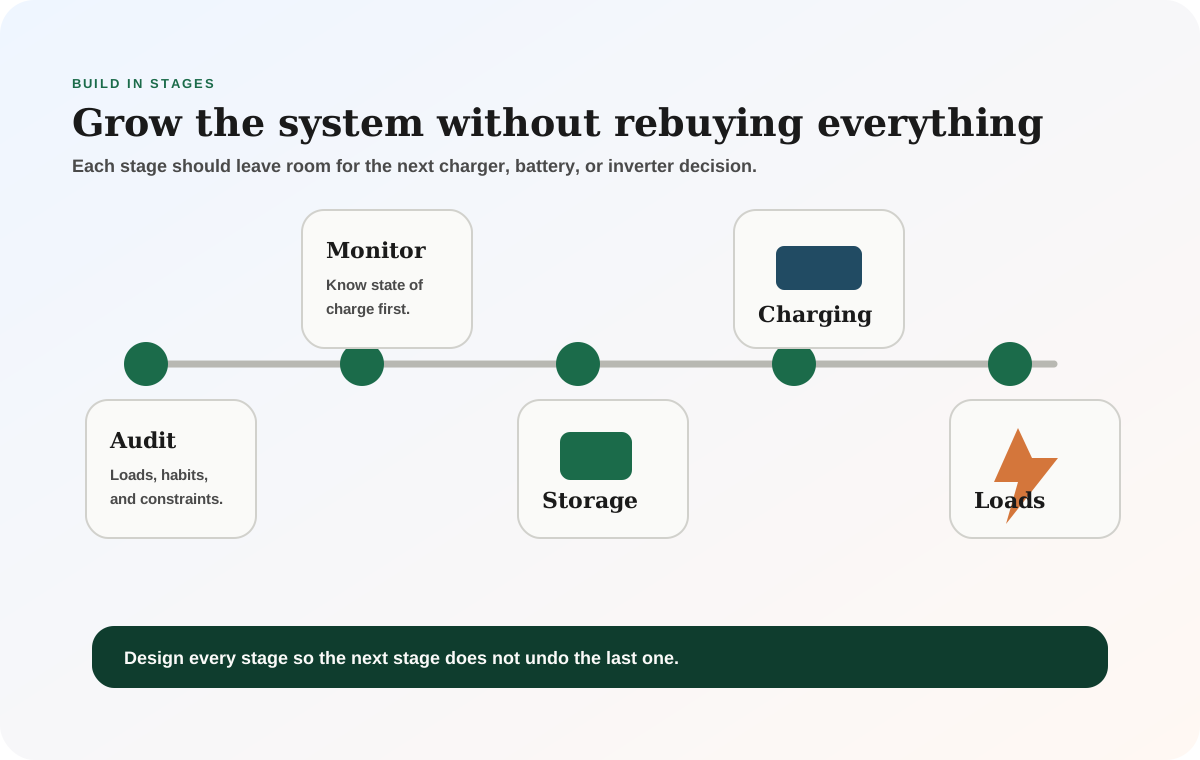
If you are building in stages, use how to build an off-grid RV system in stages so each upgrade leaves the next one easier, not harder.
Storage discipline is a system upgrade
Full-time RV storage is not just about neatness. It affects safety, maintenance, payload, workdays, and sanity.
Every daily object needs a home:
- laptops and work gear
- charging cables
- tools and spares
- water hoses and filters
- dump supplies
- weather layers
- recovery gear
- food overflow
- pet supplies
The test is simple: can you find and use the service items when camp is messy and the weather is bad?
If the answer is no, storage is now a systems problem.
Build the first full-time version in stages
Compare
Compare fast
Use one comparison matrix to scan the practical differences. Small screens stack each row; wider screens keep the first column pinned.
| Spec | Stage 1: visibility | Stage 2: margin | Stage 3: resilience |
|---|---|---|---|
| Power | Battery monitor, load list, safe charging profile | Bigger bank or more solar where the data proves it | Backup charging that works in weak weather |
| Water and waste | Track daily gallons and tank fill | Improve conservation and refill/dump cadence | Add carry capacity or toilet strategy only if it solves the limiter |
| Internet | Test primary route coverage | Add backup that fails differently | Create workday fallback towns and paid-site options |
| Maintenance | Label, inspect, and document systems | Improve access and spares | Make common failures isolatable |
Do not skip Stage 1. Visibility prevents expensive guessing.
Common full-time setup mistakes
The first mistake is treating full-time living like an uninterrupted vacation. Vacation rigs can tolerate clutter, tight margins, and awkward chores because the trip ends soon. Full-time rigs cannot.
The second mistake is overbuilding one system while ignoring another. A huge battery bank does not fix a tiny gray tank. Starlink does not fix a weak power budget. Extra water does not fix a missing dump route.
The third mistake is hiding the systems behind beautiful finishes. A clean interior is nice, but full-time service access matters more than a flawless storage-bay photo. If the fuse, shunt, pump, valve, or filter cannot be reached quickly, maintenance becomes stressful.
The fourth mistake is refusing paid resets. A paid night, dump station, laundromat, or campground can be part of a resilient off-grid lifestyle. The goal is not purity. The goal is staying healthy, productive, and calm enough to keep going.
Final thought
An off-grid setup for full-time travel should still feel trustworthy after months of real use.
The best full-time rigs are not the ones that look most impressive on install day. They are the ones that keep working when life is ordinary, weather is imperfect, and the next reset has to be planned rather than assumed.
Frequently asked
Questions RVers usually ask next.
What does a full-time off-grid RV setup need that a weekend setup often does not?
It needs more margin, better service access, repeatable water and waste resets, stronger internet planning, and systems that can handle repeated imperfect days without an easy home reset.
Is a bigger battery bank enough to make a rig full-time ready?
No. Bigger storage helps, but full-time readiness also depends on daily recovery, water and waste cadence, internet reliability, storage discipline, and whether the system can be serviced while living in it.
How should I build a full-time off-grid setup in stages?
Start with visibility: battery monitoring, load tracking, water tracking, and route testing. Then add margin where the data proves the weak point. Add resilience last through backup charging, backup internet, spares, and fallback routes.
Why is serviceability so important for full-time RVs?
Because the RV is being used constantly. If wiring, plumbing, filters, batteries, or chargers are hard to inspect and isolate, every small issue becomes more disruptive than it would be on a weekend rig.
Freshness note
Last checked April 21, 2026
This topic can change when products, plans, prices, campsite rules, or fit guidance move. These notes show what was reviewed most recently.
This review included
- Checked official safety and public-land planning references for generator carbon monoxide risk, route rules, and long-stay reset planning.
- Checked current internal calculator and guide handoffs for full-time power, water, internet, and staged off-grid system planning.
- Expanded the guide with full-time system lanes, weekly examples, serviceability guidance, and route-fallback planning.
Recent change log
April 21, 2026
Expanded the full-time setup guide with official source routing, a custom system-rhythm visual, weekly operating tables, and stronger calculator handoffs.
Broader editorial corrections are tracked on the Corrections and Updates page.