Source checks used for this guide
Generator output and solar yield should be translated into usable battery recovery, not compared as marketing watt numbers.
Pre-arrival checks
Before buying either
Check the real load, charger limit, battery chemistry, campsite rules, and whether the problem is daily baseline charging or emergency recovery.
RV generator vs solar: which is better?
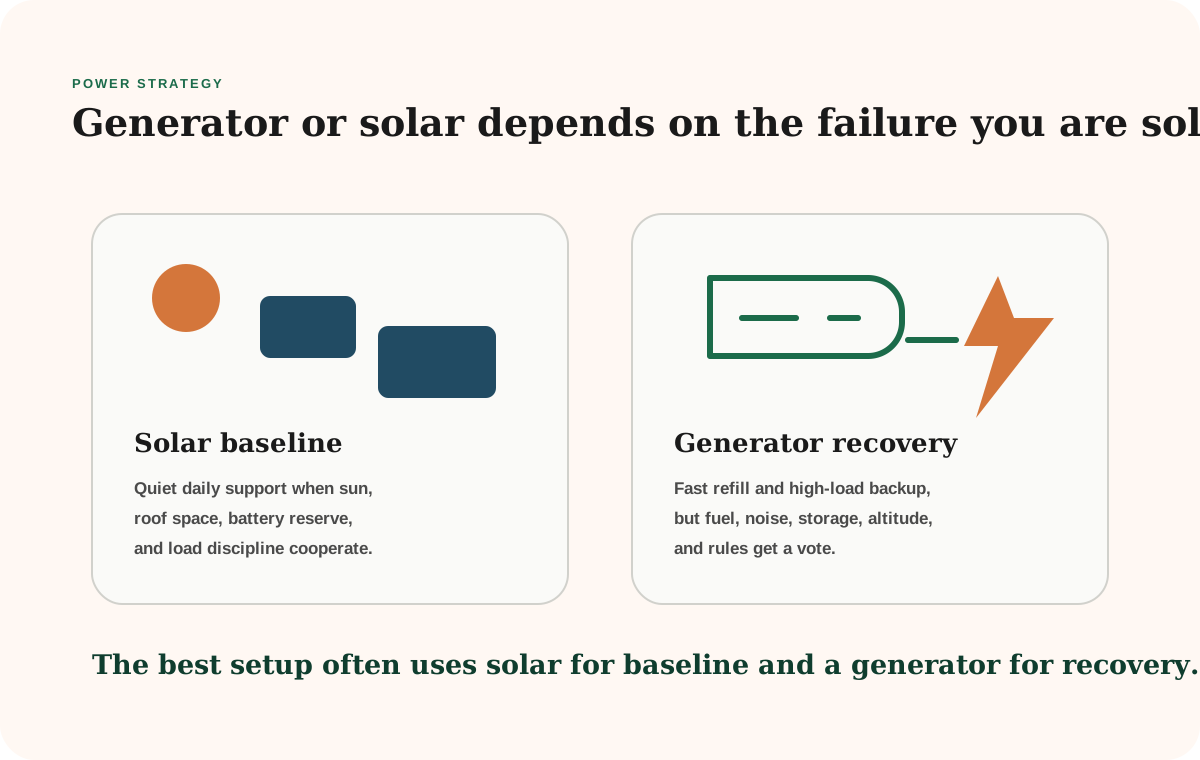
Solar is usually better for quiet daily support when you have enough roof space, sun, battery reserve, and moderate loads. A generator is better for direct recovery when the weather is poor, the batteries are low, or the load is too large for solar to handle that day.
That is why RV generator vs solar discussions get messy. People compare a silent daily charging layer against a noisy recovery machine and then act like one has to be morally superior.
The better question is:
which power strategy reduces the most friction for the way you actually camp?
The practical difference in one table
Compare
Compare fast
Use one comparison matrix to scan the practical differences. Small screens stack each row; wider screens keep the first column pinned.
| Spec | Solar-first setup | Generator-first setup | Hybrid setup |
|---|---|---|---|
| Best at | Quiet daily charging while parked | On-demand recovery regardless of sun | Quiet baseline plus emergency recovery |
| Typical daily feel | Automatic and low-drama | Deliberate and hands-on | Mostly quiet, with backup when needed |
| Main weakness | Shade, weather, roof space, winter sun | Noise, fuel, storage, rules, maintenance | Costs more and needs a real charging plan |
| Best fit | Frequent boondocking with moderate loads | Short trips, high recovery needs, variable weather | Full-time, remote work, shoulder seasons, and high consequence trips |
Solar is strongest when the rig wants quiet continuity
Solar shines when you want the system working in the background all day without managing fuel, noise, or run windows.
A simple production example helps:
- 600W of roof solar
- 5 peak sun hours
- 75-85% real-world system efficiency after heat, controller, wiring, battery, and angle losses
- practical output: roughly 2.25-2.55kWh on a good day
That can be a lot of power for lights, water pump, fans, fridge controls, device charging, laptops, router, and a modest inverter routine. It is not automatically enough for air conditioning, electric heat, or a large residential-style appliance day.
Solar is especially strong for:
- normal everyday loads
- repeated daylight support
- quiet camps
- people who dislike constant power rituals
- rigs that sit for several days instead of moving every night
Its biggest advantages are lifestyle advantages as much as technical ones. The campsite stays quiet, fuel does not need to be managed daily, and the system can recover in the background while you are hiking, working, or doing camp chores.
If solar is the likely first spend, use the solar calculator and the how many solar watts guide before buying panels.
Generators are strongest when recovery needs to happen now
Generators matter because they do not wait for the sun. Honda's EU2200i, as a representative 2200W-class inverter generator, is rated at 1,800W running output, 2,200W maximum output, about 48-57 dB(A), a 0.95-gallon fuel tank, and roughly 3.2 to 8.1 hours of runtime depending on load.
That does not mean every RV should buy that exact generator. It does show why generators remain useful. They create a direct path to power when:
- weather has been weak
- the battery reserve needs a reset
- solar is shaded
- the trip happens in short winter days
- a charger needs to run at a predictable time
- an air conditioner, microwave, or high-load event needs support
Their weakness is just as real: noise, smell, fuel dependence, storage, maintenance, theft risk, and campsite etiquette. A generator can solve the battery problem and create a neighbor problem if it is used carelessly.
If the generator is the likely next purchase, use the RV generator sizing guide before comparing models. The right size depends on charging goals, air-conditioning startup, load overlap, outlet path, altitude, and noise/fuel constraints.
Generator watts are not the same as battery recharge watts
A generator may be capable of 1,800W running output, but the actual battery recharge rate is limited by the converter, inverter-charger, DC wiring, battery chemistry, and charge stage. A weak charger can waste the generator's potential.
Match the strategy to the travel pattern
Frequent stationary boondocker
Solar usually makes more sense as the foundation because it supports daily life where the rig actually spends time. If the rig stays parked for three to seven days, quiet charging becomes more valuable than a tool that only runs when you decide to start it.
Frequent mover
A generator may feel more useful if off-grid stays are short, the weather varies a lot, or you do not want solar to carry the whole planning burden. Alternator charging and campground hookups may also change the math for travelers who move every day.
Weather-variable or winter traveler
Generators become more attractive because they reduce dependence on perfect sun. Solar output falls in clouds, shade, low winter angles, and short days. A generator is not elegant, but it is predictable when the battery bank needs a reset.
Quiet-seeking camper
Solar is usually the better emotional fit because it protects the atmosphere of camp. If your favorite camps are quiet public-land sites, a generator can feel like a compromise even when it works technically.
Remote worker
Remote work pushes many rigs toward a hybrid system. Solar can carry daytime baseline loads, but a generator or other backup charging path protects the trip when weather or shade takes away the solar day.
What should you buy first?
Compare
Compare fast
Use one comparison matrix to scan the practical differences. Small screens stack each row; wider screens keep the first column pinned.
| Spec | Buy solar first when | Buy a generator first when |
|---|---|---|
| Main problem | Daily loads slowly drain the battery during normal sun | The bank needs a fast reset during bad weather or high loads |
| Campsite style | Quiet public-land stays matter | Generator hours and neighbor impact are manageable |
| Load type | Fridge controls, fans, laptops, router, lights, small inverter use | Air-conditioner assist, big charger, microwave, emergency recovery |
| Trip rhythm | Several days parked in sun | Shorter stays, moving often, winter, trees, clouds |
| Risk tolerance | You can wait for sun or reduce loads | You need power recovery on demand |
If you cannot afford to build everything at once, solve the limiting problem first. A 600W solar build is frustrating if the real issue is three rainy days and a weak converter. A generator is frustrating if the real issue is a daily 800Wh work stack that could have been quietly covered by panels.
Two examples that make the decision less abstract
The quiet desert week
The rig has 400-600W of roof solar, 200Ah of lithium, a compressor fridge, laptops, fans, lights, and no plan to run the air conditioner from batteries. It parks in open desert for four or five days at a time. In that setup, solar should probably get the first serious money because the daily power problem is predictable and quiet charging matters every day.
The generator can still be useful, but it is not the main comfort tool. It is the recovery layer for storms, unexpected shade, or a battery bank that starts the stay lower than planned.
The shaded summer campground
The rig camps under trees, runs the air conditioner from shore or generator when allowed, and only boondocks for a night or two between developed stops. A large roof solar build may disappoint because the panels rarely see clean sun. A generator or stronger shore-power charging plan may solve the real problem faster.
That owner may still add portable solar later, but the first dollar should go toward the tool that fixes the actual trip friction.
Why many rigs are happiest with both
This is the least dramatic answer, but it is often the most honest one.
A strong off-grid system often uses:
- solar for the base layer
- alternator charging while driving
- shore power when available
- generator for backup and recovery
- battery capacity large enough to bridge bad days
That combination gives you quieter normal days, less panic when conditions turn poor, and more resilience without asking one tool to do every job.
The hybrid approach also lets you size each tool more sanely. Solar does not need to solve every storm. The generator does not need to run every afternoon. The battery bank does not need to be infinite.
Common mistakes
The first mistake is treating solar like a generator replacement. Solar is a daily collection system. A generator is an on-demand production tool. They overlap, but they are not identical.
The second mistake is buying a generator without checking the charger. If the RV converter only charges slowly, the generator may run longer than expected for less battery recovery than the owner imagined.
The third mistake is sizing solar from panel watts alone. Roof space, shade, controller choice, battery chemistry, wire loss, and daily load all matter.
The fourth mistake is ignoring etiquette. Generator use can be legal and still be rude if it dominates a quiet camp. Read the generator etiquette guide before treating run time as only a technical issue.
Final thought
If you want the campsite to feel easy and quiet, solar usually deserves the first serious look. If you want stronger direct recovery regardless of sunlight, a generator earns its place fast. The smartest choice is the one that makes your actual trips calmer, and for many rigs that eventually means solar for the baseline and generator power for the hard days.
Frequently asked
Questions RVers usually ask next.
Is solar better than a generator for RVs?
Not universally. Solar is usually better for quiet daily support and lower campsite friction, while generators are better for on-demand recovery, bad weather, and some high-load situations. The best fit depends on how you travel.
How much power can RV solar make in a day?
A 600W roof array in good sun might produce roughly 2.0-2.5kWh after real-world losses. Shade, heat, flat mounting, winter sun, and battery charge stage can push that number down.
Should I buy solar or a generator first?
Buy the one that solves your current limiting problem first. If quiet daily support is the issue, solar is often the better first move. If weak weather, high loads, or recovery speed are the main problem, a generator may create faster relief.
Do serious off-grid RVers use both solar and a generator?
Many do. Solar often becomes the quiet daily foundation while a generator stays available as a backup or recovery tool for harder conditions, storms, shade, winter, or high-demand loads.
Freshness note
Last checked April 21, 2026
This topic can change when products, plans, prices, campsite rules, or fit guidance move. These notes show what was reviewed most recently.
This review included
- Checked Honda EU2200i official output, noise, runtime, and fuel-tank specs for generator recovery examples.
- Refreshed solar production examples around realistic 600W roof-array output after system losses.
- Expanded the comparison with buy-first scenarios, kWh math, campground-friction context, and hybrid-system guidance.
Recent change log
April 21, 2026
Expanded the comparison with solar production math, generator runtime examples, travel-style tables, and clearer first-dollar guidance.
April 17, 2026
Published RV generator vs solar comparison with verified cost and performance data.
Broader editorial corrections are tracked on the Corrections and Updates page.