Official checks before running a generator
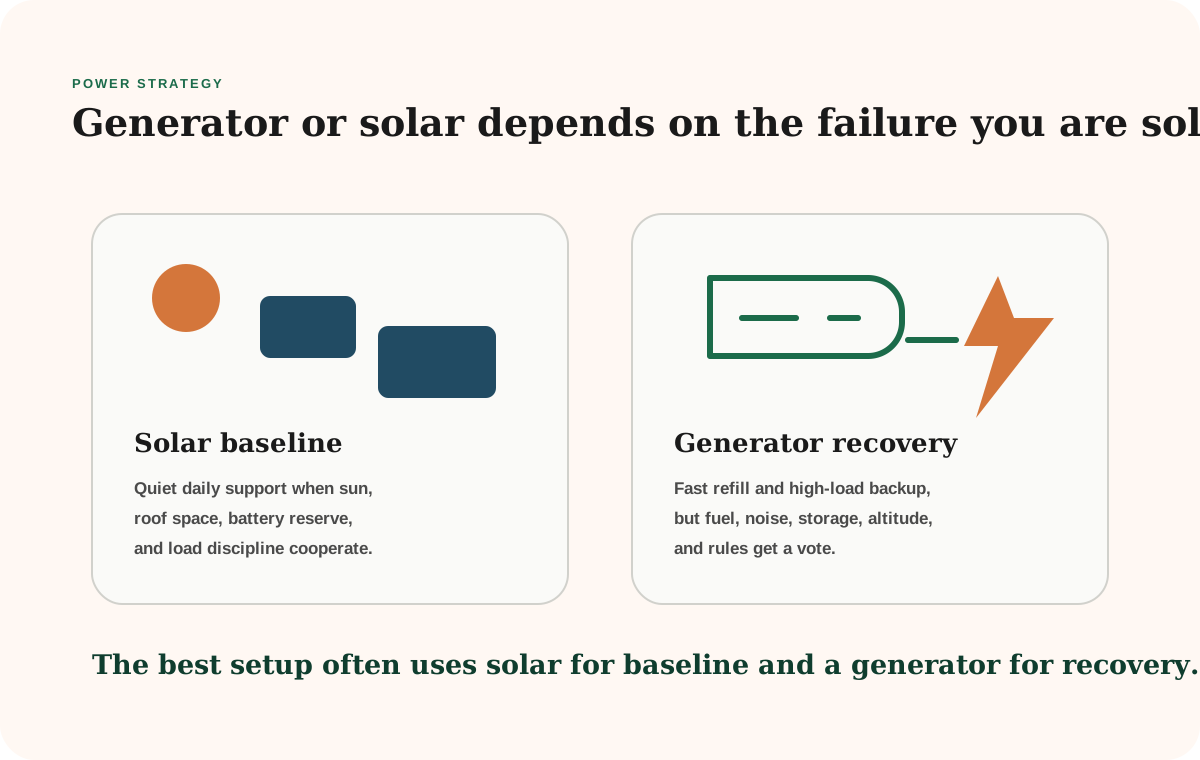
Generator etiquette changes by land manager, campground, fire status, and site spacing. These sources anchor the safety and permission checks before campsite norms take over.
Generators are tools, not moral failures
There is a version of boondocking culture that treats generator use as embarrassing by definition. That is not helpful.
Generators have valid uses:
- battery recovery in poor solar conditions
- heat or weather-driven power needs
- short support windows for higher-demand tasks
The real issue is not whether a generator exists. It is whether it is being used in a way that ignores the shared nature of public-land camping.
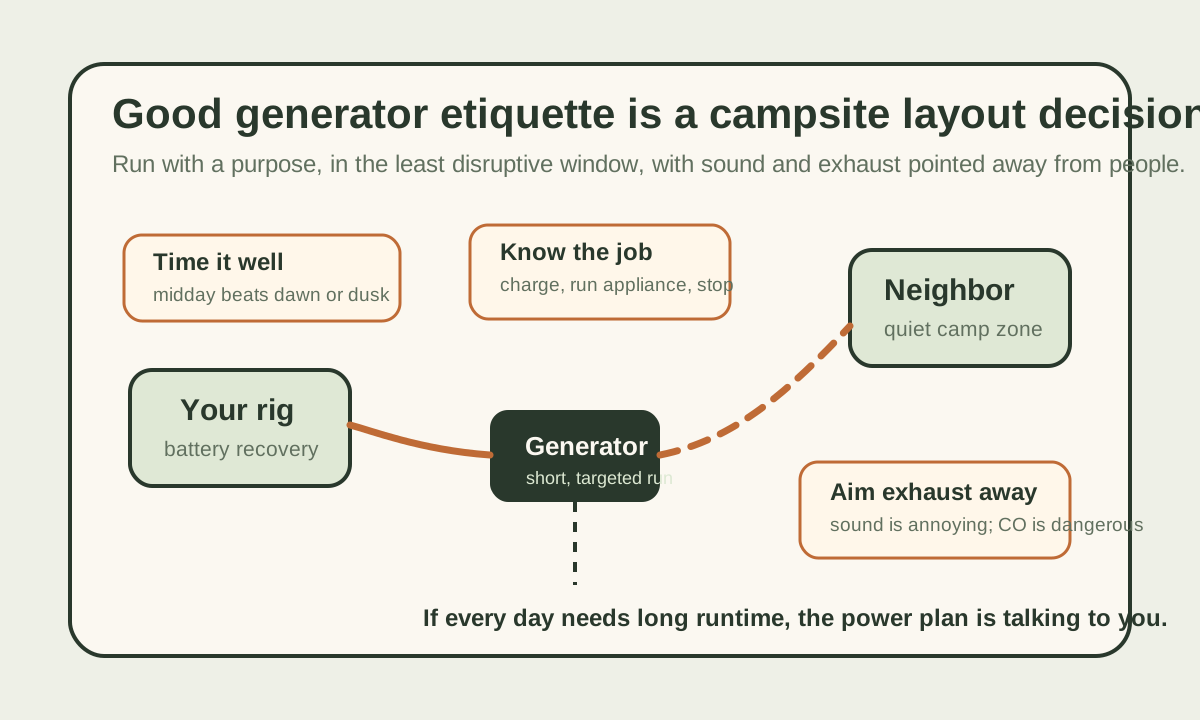
There is also a safety side. A generator is a combustion device. Sound may be the thing neighbors notice first, but exhaust placement, wind, windows, awnings, and neighboring campsites matter too. Good etiquette is partly about being quiet and partly about not creating a carbon-monoxide problem for yourself or anyone nearby.
Quiet places change how power choices feel
What feels like moderate sound in a busy campground can feel much louder in dispersed camping. That is because boondocking often comes with:
- wider open space
- lower ambient noise
- campers specifically seeking quiet
That means generator etiquette starts with understanding the setting, not just your own tolerance.
Compare
Compare fast
Use one comparison matrix to scan the practical differences. Small screens stack each row; wider screens keep the first column pinned.
| Generator situation | Better etiquette | Why it works |
|---|---|---|
| Battery recovery after cloudy weather | Run in a clear daytime window and stop when the charging goal is met | The use feels purposeful instead of like background noise |
| Air-conditioner emergency in heat | Move if possible, warn close neighbors if practical, and keep the run targeted | Heat safety can be real, but the site choice may need to change |
| Morning coffee or microwave habit | Use quieter alternatives or batch the task with necessary charging | Short convenience runs can feel more annoying than useful to nearby campers |
| Close dispersed camping cluster | Use shorter runs, stricter timing, and more distance from tents and open windows | The tighter the spacing, the more generator impact concentrates |
Timing matters more than many people realize
Even a reasonable generator becomes much more irritating when the timing feels selfish or thoughtless.
Better etiquette usually means:
- daytime or mid-morning use over early-morning or late-evening use
- shorter targeted runs instead of long casual sessions
- avoiding predictable rest windows if neighbors are nearby
The exact hours may vary by place and by how dispersed the camps are, but the principle is the same: run it when people are most likely to tolerate it, not when it is merely most convenient for you.
When posted quiet hours exist, follow them. When there are no posted hours, act as if the early morning and evening still belong to the whole area. If people are cooking dinner, settling kids, listening for wildlife, or trying to sleep with windows open, the generator run is more likely to feel like a choice made at their expense.
How long is reasonable?
There is no universal minute count because the site, spacing, noise level, and need all matter. A short charging run in the middle of the day can be reasonable. A similar run near dusk in a tight camp cluster can feel careless.
A practical rule is to decide the job before starting the machine. Are you trying to put a known number of amp-hours back into the bank, run one high-draw appliance, or recover after bad weather? If the generator is running because "we might as well top everything off," the etiquette case gets weaker.
This is where a battery monitor helps. If you know the bank only needs a modest recovery window, you can run the generator with a clear stop point. Without monitoring, generator time tends to stretch because nobody knows when the useful part ended.
Placement changes the experience
Sound and exhaust behavior matter.
Think about:
- where neighboring camps are actually positioned
- how terrain reflects or channels sound
- whether the generator is pointed or placed in a way that makes the impact worse
This is why generator etiquette is not just about "how long." It is also about how much thought you gave to how the machine affects the space around you.
Do not point exhaust toward tents, open windows, or the natural hangout space of the next camp. Do not tuck a portable generator under an RV, inside a storage bay, or near a partially enclosed area to make it seem quieter. Quiet is not worth unsafe exhaust behavior.
Good etiquette begins before you pull the starter
If you know you may need generator time, think about placement and timing as part of campsite setup, not as an afterthought once the battery already feels stressed.
Short, purposeful runs are easier on everyone
People are usually more tolerant of generator use when it feels:
- limited
- purposeful
- clearly tied to a real need
They are much less tolerant when it feels like the site is being run as if it still had hookups.
That is why good generator users often:
- know what they are trying to accomplish
- run the generator for that task
- shut it down when the job is done
This approach also tends to reveal weaknesses in the broader power plan, which can help you improve the whole system later.
Repeated generator dependence is usually a planning clue
If you find yourself needing a generator constantly, the etiquette issue may be part social and part systems-related.
It may point to:
- undersized battery reserve
- weak solar recovery
- heavy loads at the wrong times
- a travel pattern that does not fit the current electrical setup
That does not mean you should stop using the generator blindly. It means the generator is giving you information about the rest of the system.
If you are still shopping, the RV generator sizing guide can help you avoid buying more noise, weight, and fuel handling than your actual load plan needs.
If the generator is doing daily battery recovery, compare the pattern against generator vs solar, the battery calculator, and the solar calculator. The answer may not be "never run the generator." It may be a smaller daily load, more solar harvest, more battery reserve, or a different campsite schedule.
If air conditioning is the reason for frequent runtime, be honest about the campsite. Battery-powered or generator-backed AC can be a safety tool in heat, but a hot exposed site may still be the wrong place to stay. In that case, the respectful move may be shade, elevation, hookups, a town reset, or a different season rather than hours of engine noise in a quiet dispersed area.
Three generator habits that prevent most conflict
First, announce with behavior rather than speeches. Set up far enough away, run during a reasonable window, keep the run purposeful, and shut it down when the charging or appliance job is done. People notice restraint.
Second, avoid the "just a little longer" trap. A generator that was reasonable for 45 minutes can become the reason everyone remembers the camp if it drifts through the afternoon.
Third, treat frequent generator use as feedback. If every campsite requires long runtime, either the power system, the travel season, or the campsite choice may not match the way the rig is being used.
Be more conservative when camps are closer than you hoped
Dispersed camping is not always as dispersed as it looks online.
If camps are closer together, generator etiquette should get stricter:
- shorter runs
- more careful timing
- more awareness of how noise carries
A setup that feels perfectly acceptable in a wide-open solo area can feel obnoxious quickly once several camps are within earshot.
The standard is simple: would this seem reasonable if roles were reversed?
That is a useful filter because generator etiquette rarely needs heroic complexity.
Ask:
- would I feel like this was fair if I were the next camp over?
- does this sound necessary or careless?
- have I chosen the least disruptive reasonable option?
If the answer is no, the situation probably deserves an adjustment.
Final thought
Boondocking works because enough people use shared public spaces with restraint. Generators can absolutely be part of a smart off-grid plan, but only if they are used with the awareness that quiet is often part of why everyone came there in the first place.
Good generator etiquette is really just this: solve your power problem without creating a new one for the rest of the canyon.
Frequently asked
Questions RVers usually ask next.
Is it rude to use a generator while boondocking?
Not automatically. Generators are valid tools. The issue is whether they are used thoughtfully, with reasonable timing, duration, and placement that respects the quieter nature of dispersed camping.
What is the biggest generator etiquette mistake?
One of the biggest mistakes is running a generator casually for long stretches or at poor times, especially in areas where camps are closer together than expected.
Should generator use change based on how close neighboring camps are?
Yes. The closer the camps, the more conservative your timing and duration should be. What feels fine in a wide-open solo spot can feel much more disruptive in a tighter cluster of campers.
What if I need the generator often?
That may be a signal that the broader power plan needs attention. Frequent generator dependence often points to a mismatch in battery reserve, solar recovery, or daily load timing.
Freshness note
Last checked April 21, 2026
This topic can change when products, plans, prices, campsite rules, or fit guidance move. These notes show what was reviewed most recently.
This review included
- Expanded the guide with official BLM, Forest Service, and CPSC source routing, generator-use scenarios, a comparison table, and system-planning handoffs.
- Reviewed generator etiquette against public-land camping context, campground quiet-hour variability, and carbon-monoxide safety guidance.
Recent change log
April 21, 2026
Expanded the generator etiquette guide with official source checks, scenario guidance, and power-planning handoffs.
April 17, 2026
Published generator etiquette guide with verified quiet-hours policies from land management agencies.
Broader editorial corrections are tracked on the Corrections and Updates page.