Source checks used for this guide
The gallon examples below use official WaterSense flow-rate references as conservative planning anchors, then translate them into RV routines.
Pre-arrival checks
Before a long stay
Confirm potable water, legal dump access, water-source seasonality, and whether your gray tank or fresh tank is the actual limiter.
How do you make RV water last longer while boondocking?
Make RV water last longer by controlling repeated small losses: shorter water-on shower time, basin dishwashing, low-cleanup meals, separate drinking water, and a refill plan before camp. The real limit is often fresh water plus gray-tank capacity, not fresh water alone. Run the water calculator before adding more containers.
The goal is not to make camp miserable. The goal is to remove the accidental gallons.
Start with a daily gallon budget
Tank capacity does not tell you stay length until you divide it by daily use. A 40-gallon fresh tank can feel generous for one person with disciplined routines or small for two people who let the faucet run during dishes and shower like they are on hookups.
Use this as a planning baseline, then adjust it to your habits:
Compare
Compare fast
Use one comparison matrix to scan the practical differences. Small screens stack each row; wider screens keep the first column pinned.
| Spec | Loose routine | Disciplined routine | What changes it |
|---|---|---|---|
| Drinking and cooking | 1.5-3 gal/day for two people | 1.5-2.5 gal/day | Heat, altitude, pets, and meal style |
| Dishes and handwashing | 3-6 gal/day | 1-3 gal/day | Basin use, wipe-first cleanup, meal planning |
| Showers | 5-10+ gal per person | 2-5 gal per person | Water-on time matters more than shower length |
| Bathroom and cleanup extras | 1-3 gal/day | 0.5-2 gal/day | Toilet style, pets, mud, and gear cleanup |
| Two-person total | 12-20+ gal/day is easy to hit | 5-8 gal/day is realistic with discipline | Whether showers happen daily or every other day |
If your rig carries 40 gallons of fresh water, a loose 16-gallon-per-day routine is a two-to-three-day stay. A disciplined 7-gallon-per-day routine can stretch close to five or six days before reserve. Same tank, different habits.
For a seven-night target, the math gets sharper. Two people using 8 gallons per day need about 56 gallons before reserve, so a 40-gallon tank needs help from jugs, a mid-stay refill, or tighter shower timing. Two people using 5.5 gallons per day need about 39 gallons, which means the same tank can work if gray capacity and drinking-water backup are handled carefully.
That is why "How big is your tank?" is only the first question. The better question is "What daily routine makes this tank predictable?" Once you know the daily number, you can decide whether to conserve harder, carry containers, shorten the stay, or camp closer to a refill.
The habits that actually move the needle
Use a dish basin and wipe before washing
Dishwashing is where many RVers leak gallons without noticing. Wipe grease and crumbs into the trash first, wash in a small basin, rinse intentionally, and avoid cooking meals that turn every pan into a scrub job.
The difference is not subtle. A faucet running for two minutes at 1.5 gallons per minute uses about 3 gallons before the dish routine even feels long.
Treat showers as water-on time
A navy shower does not mean standing around cold for ten minutes. It means counting the water-on time:
- wet down
- water off while lathering
- rinse deliberately
- stop before "just one more minute"
EPA WaterSense-labeled showerheads are capped at 2.0 gallons per minute. Older or higher-flow heads can use more. At 2.0 gpm, three minutes of water-on time is 6 gallons. Ninety seconds is 3 gallons. That difference matters over a week.
Separate drinking water from house-tank anxiety
Carrying drinking water in dedicated jugs can make the fresh tank easier to manage. It also protects the reserve in hot weather, on dusty travel days, and when the water source at camp is uncertain.
Just remember the weight. Water is heavy enough that extra containers should be part of the payload plan, not an automatic "more is better" answer.
This is where many beginners accidentally trade one problem for another. Five extra gallons is useful. Twenty extra gallons can be a meaningful payload decision, especially in smaller trailers, vans, and half-ton tow setups. If weight is already tight, conservation and a closer reset point may be safer than hauling every possible gallon.
Cook for low cleanup
The best water-saving meal is not always the one with the fewest ingredients. It is the one with the least sticky cookware, fewer cutting boards, and less grease in the sink.
Good boondocking meals often use:
- foil, parchment, or one-pan prep where appropriate
- pre-chopped ingredients before leaving town
- dry-wipe cleanup before water touches the dish
- drinking cups and bottles that do not need constant washing
Conservation is easier when the routine is calm
Water lasts longer when meals, cleanup, dishes, and showers are designed around low-friction habits. Last-minute rationing is harder on everyone and usually saves less than a routine that started on day one.
Gray tank capacity can end the stay first
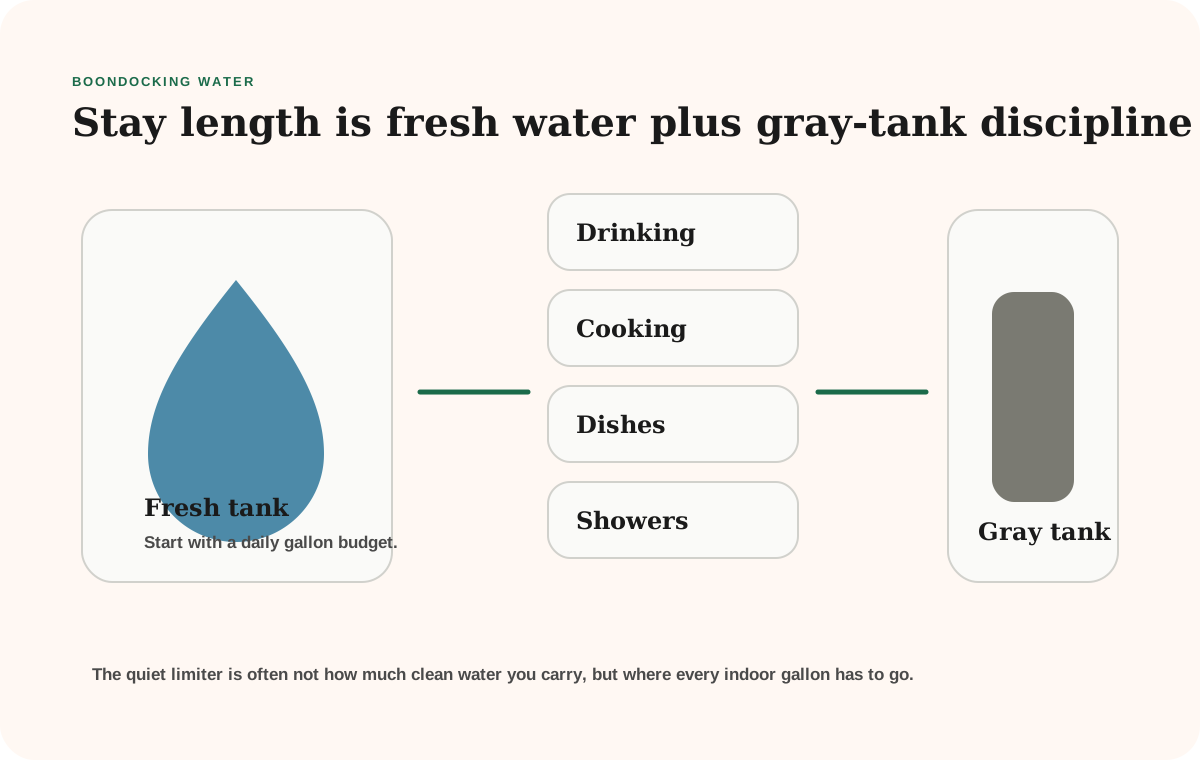
Fresh water gets all the attention because the gauge is obvious. Gray water is often the quieter limit.
Every indoor gallon used at the sink or shower usually has to land in the gray tank. If your gray tank is 30 gallons and your dish/shower routine sends 8 gallons per day into it, the gray tank is the real three-to-four-day limit even if the fresh tank still has water.
Compare
Compare fast
Use one comparison matrix to scan the practical differences. Small screens stack each row; wider screens keep the first column pinned.
| Spec | Fresh-tank view | Whole-water-system view |
|---|---|---|
| Question | How many gallons can I carry? | How many gallons can I use indoors before gray fills? |
| Common false fix | Add more jugs | Add more fresh water without protecting gray capacity |
| Better fix | Set a daily budget | Reduce sink and shower gallons before they enter gray |
| Best next tool | Use the water calculator | Track fresh and gray together for one trip |
Outdoor dish routines can help only where legal, appropriate, and low-impact. In many places the right answer is not dumping dishwater outside. It is using less water indoors, wiping food waste first, and dumping gray properly at the next reset.
Build a reset-day plan before camp
Water conservation is partly about habits and partly about logistics. A five-day stay is much easier when the refill and dump plan is known before you settle in.
Before camp, answer:
- Where is the nearest potable water source?
- Can you fill the RV directly, or do you need containers?
- Where is the nearest legal dump station?
- How far is the drive if the stay ends early?
- Is the water source reliable in the season you are visiting?
- Do you need filtration because the source quality is uncertain?
If water quality is the weak link, pair this routine with the RV water filter guide. If the limiting issue is total stay length, compare this routine with how long you can boondock in an RV.
A simple three-part water routine
Before leaving town
Fill the fresh tank only as much as the route, payload, and road conditions justify. Top off drinking containers. Prep meals that reduce cleanup. Confirm the dump and refill options on both sides of the stay.
During camp
Track water by routine, not just by gauge. If showers are the main draw, adjust shower timing. If dishes are the leak, simplify meals. If gray is filling first, protect the sink and shower drains before carrying more fresh water.
On reset day
Dump gray legally, refill fresh, clean or rotate filters as needed, and write down what ended the stay. The useful note is not "we ran low." It is "gray tank hit 75% on day four because dishes were too wet" or "fresh was fine but drinking jugs ran out in the heat."
Those notes make the next trip better without turning every camp into a spreadsheet.
Common mistakes
The first mistake is trusting tank gauges too much. RV tank sensors can be vague, dirty, or slow to reflect reality. A daily gallon budget is usually more useful than staring at a questionable gauge.
The second mistake is adding containers before changing habits. Extra water helps when refill friction is high, but it also adds weight and does nothing for gray capacity.
The third mistake is saving water only after the tank is low. The easiest gallons to save are the ones you never waste on day one.
Final thought
Boondocking water conservation works best as a calm, repeatable routine. Once fresh use, gray capacity, refill friction, and cleanup habits are all part of the same plan, longer stays stop feeling like a water-anxiety math problem.
Frequently asked
Questions RVers usually ask next.
What saves the most water when boondocking?
Usually the repeated basics: basin dishwashing, wipe-first cleanup, shorter water-on shower time, low-cleanup meals, and separate drinking water. These save more than one dramatic sacrifice at the end of the stay.
How much water do two people need per day while boondocking?
A disciplined two-person routine can often land around 5-8 gallons per day before unusual heat, pets, laundry, or daily showers. A loose routine can easily double that, especially if dishes and showers are not controlled.
Why does the gray tank matter for water conservation?
Because most indoor water use becomes gray water. If the gray tank fills first, carrying more fresh water may not extend the stay unless you also reduce sink and shower use or reset the gray tank legally.
Should I carry extra water containers for boondocking?
Extra containers can help when refill points are far away, but they add weight and do not fix wasteful routines or gray-tank limits. Use the water calculator first, then add containers only if the route actually needs them.
Freshness note
Last checked April 21, 2026
This topic can change when products, plans, prices, campsite rules, or fit guidance move. These notes show what was reviewed most recently.
This review included
- Checked EPA WaterSense flow-rate references for showerheads and faucets so water-use examples use realistic gallons-per-minute assumptions.
- Rebuilt the guide around daily gallon budgets, gray-tank limits, refill friction, and repeatable camp routines instead of generic conservation tips.
- Checked internal water-planning links and connected the article to the water calculator, water filters guide, and stay-length planning flow.
Recent change log
April 21, 2026
Expanded the guide with a water-budget visual, daily-use tables, gray-tank math, reset-day workflow, and realistic shower/dish examples.
April 17, 2026
Published boondocking water conservation guide with verified tank capacity data and conservation techniques.
Broader editorial corrections are tracked on the Corrections and Updates page.
