Official checks before planning a long stay
Rig capability is only half the answer. Land managers can set stay limits, waste rules, fire restrictions, road closures, and site-specific camping boundaries.
How long can an RV boondock?
Most RVs can boondock comfortably for a weekend. Many can stretch to four to seven days with disciplined water, waste, and power habits. Longer stays are possible, but they depend on the limiting resource, legal stay rules, weather, and whether the route has a clean reset.
The honest answer is not "three days" or "two weeks."
The honest answer is: your RV can boondock until the first limiter says no.
Use the stay length calculator after you know your fresh tank, gray tank, black tank, battery bank, solar recovery, and crew size. The calculator is most useful when you feed it real trip habits instead of optimistic estimates.
The four main rig limits
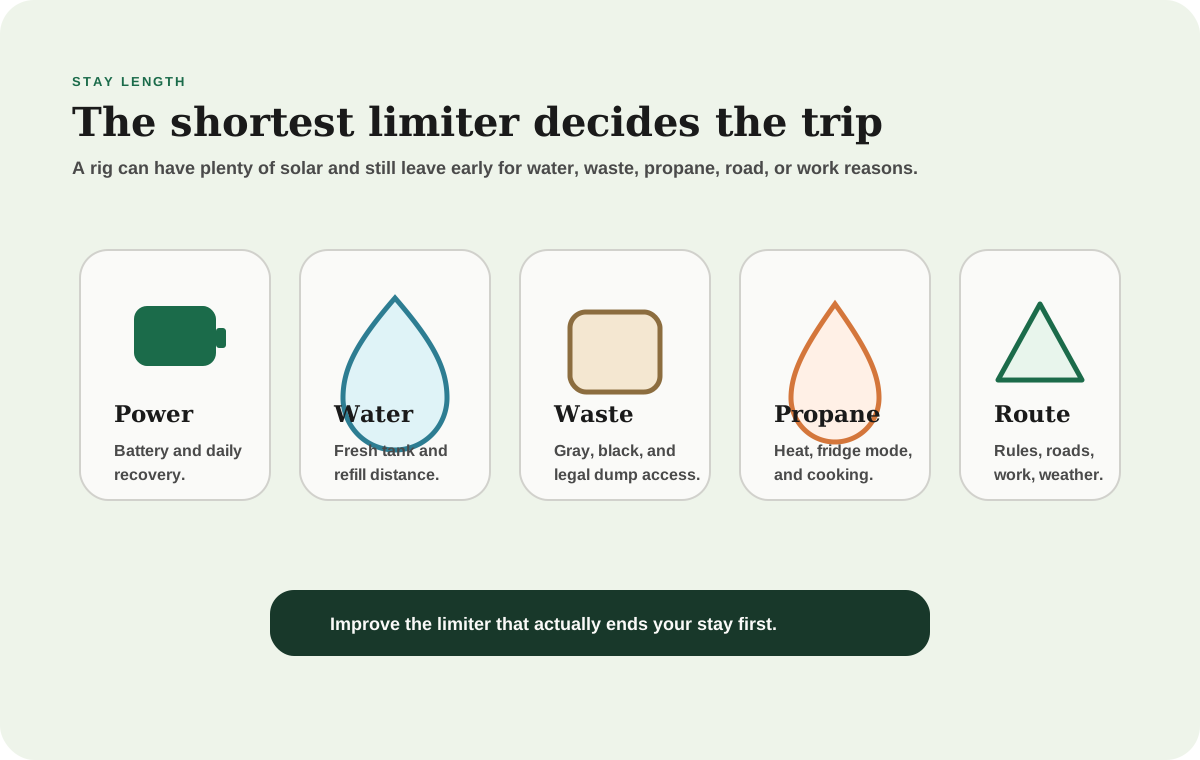
The stay-length governors
Track these separately. Treating them as one vague off-grid capability hides the actual bottleneck.
Power
Battery + recovery
The bank has to survive the night, and the charging plan has to recover enough for the next one.
Water
Fresh tank + refill
Daily gallons matter more than the sticker tank size once showers, dishes, heat, and pets enter the plan.
Waste
Gray + black
Indoor water use becomes gray capacity, and toilet use needs a legal dump plan.
Location
Rules + logistics
Stay limits, road conditions, fire restrictions, work needs, laundry, groceries, and weather can end a stay before tanks do.
Power gets the most attention because solar panels and batteries are visible. Water and waste often decide the trip anyway.
A rig with 800W of solar can still leave early because the gray tank is full. A rig with a big fresh tank can still leave because the battery never recovers after two cloudy days. A rig with strong tanks and power can still leave because the site has a stay limit, road weather is changing, or work connectivity failed.
That is why stay-length planning should be layered, not single-number.
Common duration lanes
Compare
Compare fast
Use one comparison matrix to scan the practical differences. Small screens stack each row; wider screens keep the first column pinned.
| Spec | Weekend | Four to seven days | Longer stay |
|---|---|---|---|
| What usually works | Charged battery, full water, empty waste tanks, simple habits | Daily tracking, water-off routines, legal dump/refill plan | Known reset route, source checks, weather margin, and backup charging |
| First thing to check | Forgetting a basic prep item | Gray tank, fresh water, or weak solar recovery | Legal stay limit, dump access, weather, work, or accumulated shortfall |
| Best first improvement | Use a checklist | Identify the real trip-stopper after each trip | Build a repeatable reset cadence |
| Overbuild trap | Buying serious gear before learning the rig | Adding solar when water ends the stay | Trying to solve public-land rules with hardware |
For new boondockers, the best first target is not a heroic two-week stay. It is a clean two-night trip where you learn which number moves fastest.
That learning compounds quickly.
Worked example: a couple with a 40-gallon fresh tank
Imagine two adults with:
- 40 gallons fresh water
- 35 gallons gray
- 30 gallons black
- 200Ah lithium battery
- 400W solar
- propane cooking and heat
- normal lights, pump, phones, fans, and a compressor fridge
If they use 8 gallons per day indoors, fresh water looks like a five-day resource. But gray may be the real limit because most of those gallons become gray water. If they use 10 gallons per day indoors, gray capacity could be tight by day three or four.
If the solar system recovers well, power may not be the limiter at all. If the site is shaded or cloudy, battery recovery may become the limiter before water.
Now change only the shower routine. Two long showers can erase a full day of gray margin. That is why the water conservation guide and bathroom and waste strategy guide often extend a stay faster than another panel.
Three common stay-length profiles
A solo traveler with a modest rig may stay longer than a family in a larger RV because the daily demand is lower. One person using 4 to 6 gallons of water per day, charging a phone and laptop, and cooking simply can make a small tank feel surprisingly capable.
A couple with normal showers, real cooking, pets, and a compressor fridge may need a more balanced plan. The limiting factor can shift from water to gray tank to power depending on weather and site choice. This is the group that benefits most from tracking every trip because one or two changed habits can add days.
A remote worker has a different floor. The rig may be comfortable from a camping perspective and still not be work-ready if the battery, internet, or town fallback is fragile. In that case, stay length is not just "how long can the RV camp?" It is "how long can the RV support the workweek without gambling?"
Those profiles explain why internet advice about stay length can sound contradictory. People are often describing different rigs, different crews, and different consequences.
Power is a rhythm, not a pile of amp-hours
Battery capacity matters, but recovery decides the mood.
A 200Ah lithium bank can feel calm for light weekend loads and tight for remote work, furnace-heavy nights, or inverter cooking. A 400Ah bank can still fall behind if the solar array is shaded, weather is weak, or the rig keeps adding loads after sunset.
Track two numbers:
- how much battery you lose overnight
- how much battery you recover by late afternoon
If every day ends lower than the previous day, the stay length is counting down even if the first day felt fine.
Use the battery calculator for the storage side and the solar calculator for recovery. For remote workers, also use the RV remote-work power budget, because internet gear and laptops can quietly become the main daily load.
Water is usually more honest than people want
Fresh tank math gets humbling fast.
Water weighs about 8.34 pounds per gallon, so carrying much more has payload consequences. Once aboard, every indoor gallon usually becomes gray or black tank pressure. That means "bring more water" only helps if the rig can carry it safely and if waste capacity or legal dump access does not become the next wall.
The highest-leverage habits are boring:
- water-off showers
- basin dishwashing
- wipe-first cooking cleanup
- separate drinking water when useful
- refill timing before the tank is urgent
If water ends your trips first, run the water calculator before buying power gear. You may gain more usable time from better shower and dish routines than from a larger battery.
Waste capacity can be the hidden stop sign
Waste is less fun to plan, which is exactly why it surprises people.
Gray capacity fills from showers, dishes, handwashing, and cleanup. Black capacity fills from toilet use, flush water, and crew size. Both are shaped by habit and by the next legal dump option.
The mistake is treating waste tanks as a departure-day detail. For longer stays, they are part of the route.
Ask:
- Where is the next legal dump?
- What does it cost?
- Is it open when we expect to use it?
- Does the route require moving the whole rig?
- Are local rules different from the generic advice we read online?
A portable container or composting toilet only helps when it fits the legal disposal workflow. It is not a loophole.
Location can overrule the rig
Even if the RV can physically stay longer, the location may not.
BLM guidance commonly uses a 14-day stay-limit framework on public lands, but field offices, developed sites, long-term visitor areas, national forests, state lands, wildlife refuges, and local jurisdictions can all have different rules. Fire restrictions, road closures, seasonal gates, wildlife closures, storm damage, and high-use area limits can change the plan.
There are also ordinary life reasons to reset:
- laundry
- groceries
- repairs
- propane
- paid shower or dump access
- internet
- medical or pet needs
- weather escape
Long stays are calmer when the reset is planned before the campsite is selected.
The best long-stay plan names the exit
A campsite is not fully chosen until you know how you will leave, where you will dump, where you will refill, and what you will do if weather or rules change.
Improve stay length in the right order
Do not start with the upgrade you most want to buy. Start with the limiter.
Compare
Compare fast
Use one comparison matrix to scan the practical differences. Small screens stack each row; wider screens keep the first column pinned.
| If this ends the stay | Best first move | Do not start with |
|---|---|---|
| Battery fades first | Measure overnight loss and daytime recovery | More water containers |
| Fresh water runs out | Reduce daily use and plan refill access | More solar panels |
| Gray tank fills first | Fix shower and dish routines | Bigger battery bank |
| Black tank fills first | Align toilet routine and dump timing | Portable water upgrades |
| Location stops working | Plan legal stay limit, fallback, and reset towns | More hardware |
This is the simple habit that keeps people from overbuilding the wrong system.
Common mistakes that make stays shorter
The first mistake is counting tank capacity but not daily use. A 50-gallon fresh tank sounds large until two people shower casually, cook messy meals, and rinse everything under running water.
The second mistake is counting solar watts but not recovery conditions. A roof array that works beautifully in open desert may underperform in trees, smoke, storm cycles, or short winter days.
The third mistake is forgetting that every resource is tied to route. A dump station that is 30 minutes away changes the waste plan. A water refill that requires moving the whole trailer changes the fresh-water plan. A town with groceries but no propane does not solve a cold-weather heat plan.
The fourth mistake is using the best trip as the estimate. If one perfect weekend lasted five days on paper, that does not mean the rig has a dependable five-day system. Use the ordinary trip, not the lucky one.
Final thought
How long can you boondock in an RV?
Long enough for the shortest limiter to stay comfortable, legal, and recoverable.
The rigs that last longer are not always the ones with the most impressive gear. They are the ones where power, water, waste, propane, route, and habits all agree on the same trip.
Frequently asked
Questions RVers usually ask next.
How long can most RVs boondock?
Many RVs can handle a weekend with basic preparation. Four to seven days usually requires better water, waste, and charging habits. Longer stays depend on legal stay limits, refill and dump access, weather, and the rig's first limiter.
What usually runs out first while boondocking?
It varies, but water and waste often surprise people before power does. In other rigs, battery recovery, propane, weather, or internet can be the limiter.
Does more solar automatically mean longer boondocking?
No. More solar helps only when power is the real limiter. If fresh water, gray tank capacity, black tank capacity, or local stay rules end the trip first, solar does not solve the actual problem.
How do I know my own realistic stay length?
Track overnight battery drop, daytime recovery, daily fresh-water use, gray and black tank fill, propane use, and the reason you actually left. After a few trips, your first limiter becomes obvious.
Freshness note
Last checked April 21, 2026
This topic can change when products, plans, prices, campsite rules, or fit guidance move. These notes show what was reviewed most recently.
This review included
- Checked official BLM camping and Leave No Trace guidance, including public-land stay-limit and waste-disposal planning context.
- Checked current internal calculator handoffs for stay length, water, battery, and solar planning.
- Expanded the guide with a first-limiter model, sample trip scenarios, location ceilings, and a stay-length improvement workflow.
Recent change log
April 21, 2026
Expanded the stay-length guide with official source routing, a custom limiter visual, scenario tables, and concrete water, waste, power, and location examples.
Broader editorial corrections are tracked on the Corrections and Updates page.

