Source checks used for this guide
The exact product is less important than matching the upgrade to the bottleneck. These references anchor the flow-rate, container, and filter examples below.
Water-saving upgrades work best when they support behavior
Boondocking water conversations often drift into gadget lists. That is backwards.
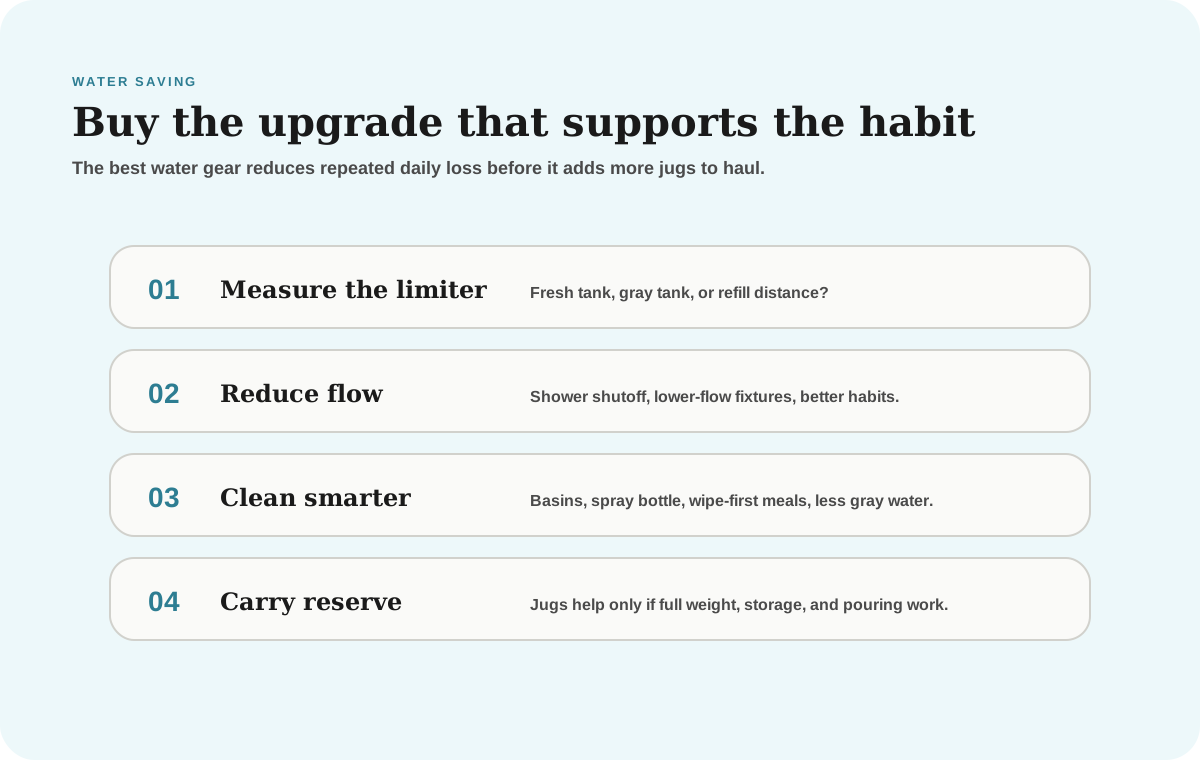
Water conservation is a routine first and a shopping list second. The best upgrade is the one that makes a better habit easier:
- less water running during showers
- less water used during dishes
- clearer tank awareness
- easier refill runs
- safer drinking-water handling
- fewer gray-tank surprises
If an upgrade looks clever but does not fit the actual trip, it becomes clutter. The goal is not to own more water gear. The goal is to make the tank last longer without making the RV annoying to live in.
Start with the water calculator, then compare the result with the water conservation guide. If waste capacity is the limiter, use the bathroom and waste strategy guide before buying more fresh-water gear.
Match the upgrade to the limiter
Compare
Compare fast
Use one comparison matrix to scan the practical differences. Small screens stack each row; wider screens keep the first column pinned.
| Spec | Fresh water runs out | Gray tank fills first | Refill trips are hard | Water quality is uncertain |
|---|---|---|---|---|
| Best upgrade lane | Lower-flow shower, dish routine, extra carried reserve | Basin dishes, shower shutoff, wipe-first cooking | Better containers and transfer method | Inlet filter, drinking-water backup, source judgment |
| What it improves | Daily gallons used | How much indoor water becomes waste | The physical refill workflow | Confidence in the water you keep |
| What it does not solve | A full gray tank | An empty fresh tank if nobody refills | A bad daily water habit | Legal dump or refill access |
| Best next check | Measure gallons per day | Track gray fill rate | Lift and store the full container safely | Verify source and filter limits |
This table is the buying filter. If you do not know which column you are in, do not buy yet.
Upgrade 1: low-flow shower control
Showers are one of the easiest places to save water because the flow rate is high and the habit repeats.
EPA WaterSense uses 2.0 gallons per minute as the efficient showerhead benchmark. At that flow rate, four minutes of water-on time is about 8 gallons. Two people doing that once each can put roughly 16 gallons into the gray tank before dishes or handwashing enter the picture.
A good shower upgrade may be:
- a lower-flow RV-friendly showerhead
- a showerhead with a usable pause valve
- a clearer water-on routine
- a small timer only if the crew accepts it
The hardware matters less than the water-on time. A fancy showerhead used casually can waste more than a basic one used intentionally.
Upgrade 2: dish and cleanup workflow
Kitchen water use is sneaky because it happens in small moments.
Good cleanup upgrades include:
- a wash basin
- a rinse basin
- a scraper or wipe-first routine
- a spray bottle for pre-rinse control
- low-mess meal planning
- a dedicated gray-aware dish system
This lane is cheap, but it can be powerful. A few sticky pans and a running faucet can do more damage to a gray tank than one disciplined shower.
The best kitchen upgrade may be a habit
Wiping pans before washing, using a basin, and cooking fewer sticky meals can save more water than buying another container.
Upgrade 3: portable water containers
Extra containers help when the fresh tank is the limiter and the refill route is manageable.
They do not help much when:
- the gray tank is already filling first
- the rig is payload-limited
- full containers are too heavy to lift safely
- there is no good way to pour into the RV
- the next legal dump is still the actual bottleneck
Water weighs about 8.34 pounds per gallon. A 7-gallon container is about 58 pounds of water before the container weight. That is useful reserve, but only if the crew can haul, store, and pour it without turning refill day into a circus.
Use the portable water container guide for exact container comparisons after you know that carried reserve solves your real problem.
Upgrade 4: tank and usage awareness
Some rigs do not need more hardware first. They need better feedback.
Tank sensors can be imprecise, but awareness still matters. A better routine may include:
- tracking how many gallons you add
- noting daily water use by trip type
- watching gray fill after showers and dishes
- using the same containers so refill amounts are obvious
- recording what changed when the trip ended early
This is not glamorous. It is how you stop guessing.
If you learn that the rig uses 8 gallons per day indoors with disciplined habits and 14 gallons per day with loose habits, that is more valuable than another product review.
Upgrade 5: filtration and drinking-water separation
A filter does not usually save water. It protects the water plan.
That distinction matters. A basic hose-end filter can improve taste and sediment handling from known sources. A stronger RV inlet system or portable drinking-water filter may make sense when refill sources vary. But no filter turns every unknown source into a good idea.
For many boondockers, the cleanest water setup is layered:
- fresh tank for general RV use
- separate drinking-water reserve when useful
- basic inlet filter for known fill points
- portable backup filter for emergency or uncertain drinking-water needs
- source judgment before any filter gets involved
Use the RV water filter guide if water quality is the real concern. Use this page if water quantity is the problem.
Example: the seven-day water squeeze
Imagine two people with a 40-gallon fresh tank and a 35-gallon gray tank trying to stay out for a week.
At 10 gallons per day indoors, fresh water is gone around day four and gray capacity is also under pressure. Adding a 7-gallon jug helps, but it may only add part of a day if habits stay loose.
Now change the routine. Showers become water-off rinses. Dishes move to a basin. Pans get wiped before washing. Drinking water is carried separately so the fresh tank is not doing every job. Daily indoor use drops closer to 6 gallons.
That same 40-gallon tank now has a much better chance of supporting the week, and the extra jug becomes useful margin instead of a desperate patch.
The point is not the exact number. The point is that gear works better after demand is under control.
A practical buying order
Compare
Compare fast
Use one comparison matrix to scan the practical differences. Small screens stack each row; wider screens keep the first column pinned.
| Spec | First dollars | Second dollars | Only if the data supports it |
|---|---|---|---|
| Shower-heavy crew | Pause valve or lower-flow shower routine | Better showerhead and timer | Larger carried reserve |
| Cook-heavy crew | Basin, scraper, spray bottle, wipe-first plan | Low-cleanup meal kit | Bigger gray-water strategy |
| Fresh-water-limited rig | Track actual gallons per day | Portable containers that fit storage and lifting limits | Tank or plumbing changes |
| Uncertain refill sources | Source judgment and known fill stops | Basic inlet filter | Stronger drinking-water backup |
What to avoid
Avoid upgrades that:
- save water only in theory
- create more setup friction than they remove
- add clutter to a small rig
- solve fresh-water capacity when gray tank is the limiter
- require lifting more weight than the crew can safely handle
- encourage filling from questionable sources without a quality plan
The best upgrade disappears into the routine. The worst one creates a new chore.
Which upgrade should you try first?
Try the shower lane first if water seems to disappear on days when everyone cleans up. Even a small reduction in water-on time can reduce both fresh use and gray pressure.
Try the kitchen lane first if meals create the mess. The pattern is easy to spot: the tank does fine until a few real dinners, then the gray gauge jumps.
Try the container lane first if the rig is fresh-water-limited but waste capacity is still comfortable. This is common for short desert stays where refill access is not far away but moving the whole RV is annoying.
Try the filter lane first only when the source changes often or taste/sediment is causing people to avoid using the onboard supply. A filter is not a conservation tool by itself, but it can make the water you already carry easier to trust.
Final thought
The best water-saving upgrades are not the ones that make you think about water all day. They are the ones that quietly support better habits.
Measure the limiter, choose the upgrade lane, then buy the smallest tool that makes the better routine easier to repeat.
Frequently asked
Questions RVers usually ask next.
What is the best water-saving upgrade for most boondockers?
For many RVers, the best first upgrade is shower and dish control: a lower-flow shower routine, pause valve, basin dishwashing, and wipe-first cleanup. If fresh water is truly the limiter, portable containers may be the better next move.
Are water-saving upgrades more important than solar upgrades sometimes?
Yes. If water or gray-tank capacity ends your stays before battery reserve does, water-saving upgrades can add more real trip length than another solar panel.
Should I buy extra water containers first?
Only if fresh water is the limiter and the full containers are safe to lift, store, and pour. If gray tank capacity or legal dump access is the real problem, extra fresh water may not extend the stay much.
Does a water filter save water?
Not usually. A filter protects the quality side of the water plan. It can make refills more usable from known sources, but it does not reduce daily gallons by itself.
Freshness note
Last checked April 21, 2026
This topic can change when products, plans, prices, campsite rules, or fit guidance move. These notes show what was reviewed most recently.
This review included
- Checked EPA WaterSense flow-rate guidance and current water-container/filter product references used as upgrade examples.
- Reframed the page as a decision guide because the highest-value water-saving upgrades are categories matched to bottlenecks, not one universal product ranking.
Recent change log
April 21, 2026
Expanded the water-saving upgrades guide with a custom upgrade ladder, official source checks, bottleneck tables, and concrete upgrade examples.
Broader editorial corrections are tracked on the Corrections and Updates page.