Shortlist first
Use this to find the winner first, then compare the alternates only if their tradeoffs fit your rig better.
Shortlist labels are editorial recommendations, not popularity rankings. Fit score still matters, but the label tells you why each pick made this guide.
How fit scores work
Scores are editorial fit scores, not user-review averages. The rubric weighs stated RV-use fit, verified specs and limits, whole-rig friction, visible downsides or support risk, and value for the specific job in this guide. Read the full scoring rubric.
If you need one baseline option before reading the full guide, start with Jayco Jay Feather Air SL 17BHSL for compact bunkhouse benchmark.
The first option to evaluate if you want the strongest all-around fit for this guide. Check the other cards only if their award label matches your constraint better.
| Product | Why shortlisted | Fit score | Key spec | Best for | Skip if | Actions |
|---|---|---|---|---|---|---|
| Jayco Jay Feather Air SL 17BHSL Links to: Jayco Jay Feather Air SL 17BHSL | Best overall The first option to evaluate if you want the strongest all-around fit for this guide. | 4.5 / 5 fit scoreScore rubric | Use as a lightweight family lane; verify GVWR, CCC, tanks, roof, tire dates, and loaded tongue weight | Compact bunkhouse benchmark | The family cargo load already crowds the tow vehicle payload rating. | Read Jayco Jay Feather Air SL 17BHSL notesCheck listing at JaycoMerchant link - direct listing. Verify price and specs at Jayco. |
| Coachmen Apex Nano 187RB Links to: Coachmen Apex Nano 187RB | Also great A strong alternate when its specific tradeoffs fit your rig better than the winner. | 4.4 / 5 fit score | Use as a mainstream couples lane; verify cargo sticker, tanks, slide/seal condition, solar gear, and axle margin | Couples rear-bath benchmark | You need bunk sleeping or enough storage for a family gear list. | Read Coachmen Apex Nano 187RB notesCheck listing at Coachmen RVMerchant link - direct listing. Verify price and specs at Coachmen RV. |
| Rockwood Geo Pro G19FBS Links to: Forest River Rockwood Geo Pro G19FBS | Best value The pick that balances capability and cost pressure best for this decision. | 4.4 / 5 fit score | Use as a small solar-ready lane; verify roof equipment, tanks, cargo margin, tires, and small-trailer storage limits | Small solar-ready benchmark | Small tanks, single-axle margin, or compact storage would end your trips early. | Read Rockwood Geo Pro G19FBS notesCheck listing at Forest RiverMerchant link - direct listing. Verify price and specs at Forest River. |
Used travel trailer shortlist at a glance
Treat these as shopping lanes, not guaranteed recommendations. A clean, well-kept lower-hype unit often beats a famous badge with leaks, weak tires, or no cargo margin.
Best first filter
Tow margin and tongue weight
Dry weight is not enough. The trailer has to fit your tow vehicle after batteries, water, tools, camp gear, and food are loaded.
Best boondocking filter
Fresh, gray, black, and storage
A pretty trailer with tiny tanks or awkward storage becomes a campground trailer fast.
Best used-unit filter
Roof, floor, tires, frame, service access
The inspection decides whether the good floorplan is a usable platform or your first repair season.
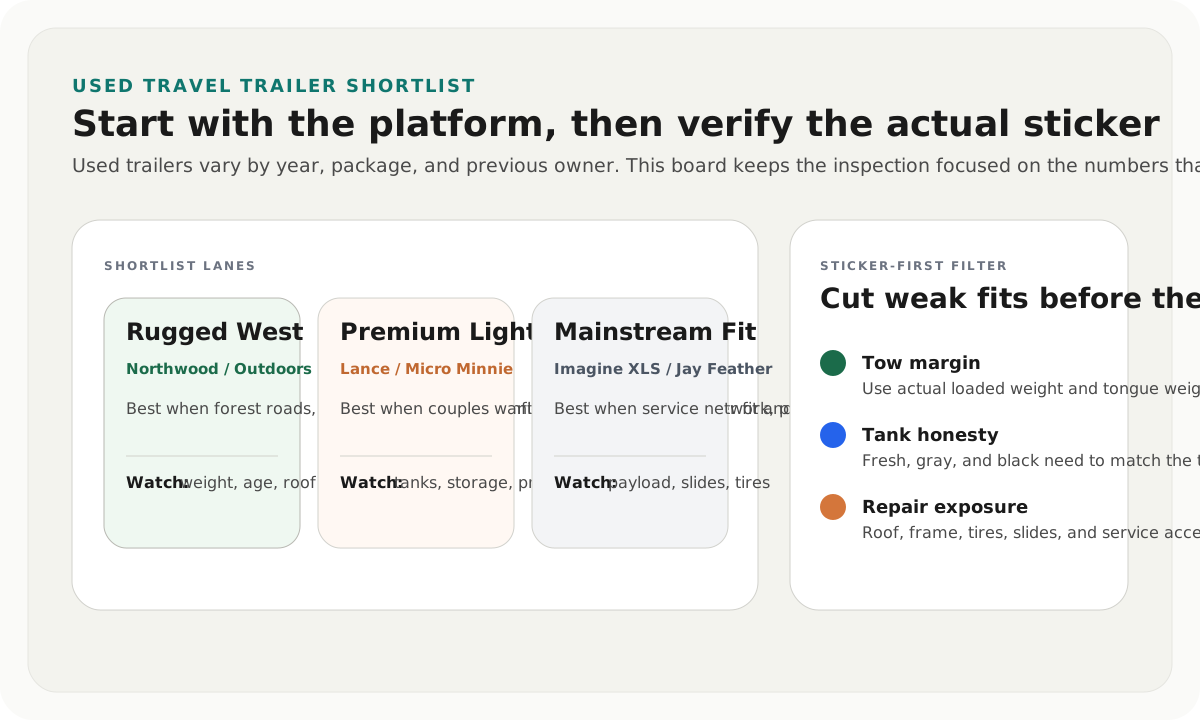
Start with used trailer lanes, not a single winner
Used travel trailer shopping gets messy because every used unit has two stories.
One story is the model family: the brand, floorplan, construction style, and intended market.
The other story is the actual unit sitting in front of you: its roof, seals, axle alignment, tire age, cargo sticker, battery work, water history, and previous-owner modifications.
The second story matters more.
Still, the model family helps you narrow the search. It tells you whether the trailer was generally built for lightweight weekend towing, rougher western travel, mainstream family camping, premium compact touring, or solar-ready small-rig use.
Use the shortlist below to decide which lane deserves inspection time. Then use the actual sticker and condition to decide whether that individual trailer deserves money.
The used travel trailer shortlist lanes
Compare
Used travel trailer model-family lanes for boondocking shoppers
Use one comparison matrix to scan the practical differences. Small screens stack each row; wider screens keep the first column pinned.
| Spec | Rugged western trailers | Premium lightweight trailers | Mainstream couples trailers | Compact family bunkhouses | Small solar-ready trailers |
|---|---|---|---|---|---|
| Examples to inspect | Northwood Nash and Arctic Fox; Outdoors RV Creek Side, Back Country, or Trail Series | Lance 1985, 1995, 2185-style layouts; Winnebago Micro Minnie 2108 or 2225-style layouts | Grand Design Imagine XLS 17MKE, 22MLE, 23LDE-style layouts; Rockwood Mini Lite-style couples floorplans | Jayco Jay Feather Micro bunk layouts; smaller Passport, Apex, or Micro Minnie bunkhouse layouts | Rockwood Geo Pro and Flagstaff E-Pro couples or small bunk layouts |
| Best fit | Western public-land campers who value stronger frames, better cold-weather manners, and more self-contained confidence | Couples or small families wanting easier towing with better construction details and compact livability | Shoppers who want common parts, familiar dealers, resale confidence, and comfortable everyday layouts | Families who need real beds without jumping into a large fifth wheel or long trailer | Solo travelers or couples who want small-site access, lighter towing, and simpler solar or portable-panel routines |
| Boondocking upside | Often stronger tanks, insulation, and chassis setup for rougher roads and shoulder-season use | Good balance of manageable size, finish quality, and efficient living space | Useful floorplans, broader service familiarity, and easier resale research | Sleeping efficiency keeps the trailer shorter while still supporting kids, guests, or gear | Small footprint makes site fit and tow stress easier while keeping upgrades modest |
| Watch first | Heavier weights, older roof seams, frame rust, tire age, and tow-vehicle mismatch | Higher used prices, limited storage, tank size, and whether the floorplan works without slides open | Cargo capacity, slide maintenance, axle/tire condition, and whether the factory solar prep is meaningful | Payload after bunks, bikes, water, food, and family cargo are loaded | Small tanks, single-axle cargo margin, storage limits, and whether the small size still fits your real trip |
Representative used travel trailer benchmarks
Use these current model names as inspection anchors, not as promises that any used unit with the badge is ready for public-land camping. The exact trailer still has to pass GVWR, cargo sticker, loaded tongue weight, tire age, roof condition, tank labels, axle/suspension health, and water-intrusion checks.
- Latest product check
- Specs, fit notes, and current listing context were reviewed June 6, 2026.
- Evidence label
- Research-only: Score is based on documented research and fit analysis where direct testing or verified current specs are limited.
- Price context
- Pricing and availability can change, so confirm the merchant listing before buying.
Product facts last checked June 6, 2026
Jayco Jay Feather Air SL 17BHSL
Editorial fit score
Use the Jay Feather Air SL 17BHSL lane when family sleeping space matters but tow size still has to stay disciplined. On a used listing, the buy depends on cargo capacity, tire dates, roof condition, tank labels, loaded tongue weight, and whether the bunkhouse storage actually handles the family gear list.
Review verdict
- Short verdict
- The compact bunkhouse benchmark for families who need sleeping efficiency without jumping into a much larger trailer.
- Evidence used
- Research-only
- Official Jayco model materials are useful as a lightweight bunkhouse benchmark; used listings still require exact-year sticker and condition checks.
- Why it made the shortlist
- Best overall
- The first option to evaluate if you want the strongest all-around fit for this guide.
- Best if
- Compact bunkhouse benchmark
- Why not this product?
- Your tow vehicle payload is already tight after people, hitch weight, cargo, and water are honest.
- Watch for
- Family gear can consume cargo capacity quickly.
- Product check date
- Specs, fit notes, and current listing context were last checked June 6, 2026.
Key specs
- Shopping lane
- Lightweight compact bunkhouse
- Main inspection
- GVWR, CCC, tongue weight, tires, roof, tanks
- Boondocking fit
- Sleeping efficiency with tight cargo discipline
- Used-unit rule
- Family cargo must fit the real sticker
Score basis
Official Jayco model materials are useful as a lightweight bunkhouse benchmark; used listings still require exact-year sticker and condition checks. These are editorial fit scores, not customer-review averages. Read the scoring rubric.
- RV-use fit
- 30% weight
- Verified specs and limits
- 25% weight
- Whole-rig friction
- 20% weight
- Downsides and support risk
- 15% weight
- Value for the job
- 10% weight
How directly the product solves the specific off-grid RV job in this guide.
Capacity, dimensions, electrical limits, protection claims, and compatibility constraints we can verify from current sources.
Install effort, storage, wiring, service access, weight, refill workflow, or daily-use hassle.
Known tradeoffs, unclear claims, warranty coverage, support risk, and wrong-buyer failure modes.
Whether the price makes sense after fit, specs, and tradeoffs still hold.
Testing limits
- Treat this as an editorial screen, not a final buy signal.
- Verify the latest manufacturer specs, owner documentation, and retailer listing before relying on this option.
Reasons to buy
- Bunkhouse layout can solve sleeping needs without a long trailer.
- Useful benchmark for families trying to stay under a lighter tow ceiling.
- Good reminder to compare cargo margin before buying the floorplan.
Watch-outs
- Family gear can consume cargo capacity quickly.
- Small-trailer tanks and storage can limit longer stays.
- Used roof and tire condition still decide the first-year budget.
Check current listing
Jayco Jay Feather Air SL 17BHSL
Use the listing after the fit notes make sense for your rig. Pricing and availability can change, so verify the merchant page before buying.
- Latest product check
- Specs, fit notes, and current listing context were reviewed June 6, 2026.
- Evidence label
- Research-only: Score is based on documented research and fit analysis where direct testing or verified current specs are limited.
- Price context
- Pricing and availability can change, so confirm the merchant listing before buying.
Product facts last checked June 6, 2026
Coachmen Apex Nano 187RB
Editorial fit score
Use the Apex Nano 187RB lane when a couple wants a manageable trailer with a more normal living routine than the tiniest campers provide. The used buy still turns on cargo sticker, tire age, roof seams, axle condition, tank labels, and whether any factory solar gear is a real system or just prep.
Review verdict
- Short verdict
- The couples rear-bath benchmark for shoppers who want a mainstream small trailer with enough daily comfort to justify repeat dry-camping trips.
- Evidence used
- Research-only
- Official Coachmen model materials are useful as a couples-trailer benchmark; used examples still vary by options, storage history, and upkeep.
- Why it made the shortlist
- Also great
- A strong alternate when its specific tradeoffs fit your rig better than the winner.
- Best if
- Couples rear-bath benchmark
- Why not this product?
- You need bunks, rugged western-road bias, or enough storage for a family gear load.
- Watch for
- Tank and cargo details can vary enough to change the use case.
- Product check date
- Specs, fit notes, and current listing context were last checked June 6, 2026.
Key specs
- Shopping lane
- Mainstream compact couples trailer
- Main inspection
- Cargo sticker, roof, tires, axle, tanks, solar gear
- Boondocking fit
- Good if tanks and storage match the actual habits
- Used-unit rule
- Solar prep is not the same as solar capability
Score basis
Official Coachmen model materials are useful as a couples-trailer benchmark; used examples still vary by options, storage history, and upkeep. These are editorial fit scores, not customer-review averages. Read the scoring rubric.
- RV-use fit
- 30% weight
- Verified specs and limits
- 25% weight
- Whole-rig friction
- 20% weight
- Downsides and support risk
- 15% weight
- Value for the job
- 10% weight
How directly the product solves the specific off-grid RV job in this guide.
Capacity, dimensions, electrical limits, protection claims, and compatibility constraints we can verify from current sources.
Install effort, storage, wiring, service access, weight, refill workflow, or daily-use hassle.
Known tradeoffs, unclear claims, warranty coverage, support risk, and wrong-buyer failure modes.
Whether the price makes sense after fit, specs, and tradeoffs still hold.
Testing limits
- Treat this as an editorial screen, not a final buy signal.
- Verify the latest manufacturer specs, owner documentation, and retailer listing before relying on this option.
Reasons to buy
- Mainstream profile makes comparison shopping and service conversations easier.
- Couples floorplan can be more comfortable than tiny adventure trailers.
- Useful benchmark for balancing tow size and everyday livability.
Watch-outs
- Tank and cargo details can vary enough to change the use case.
- A nice rear-bath layout does not prove off-grid readiness.
- Used slide, seal, tire, and axle condition must be checked carefully.
Check current listing
Coachmen Apex Nano 187RB
Use the listing after the fit notes make sense for your rig. Pricing and availability can change, so verify the merchant page before buying.
- Latest product check
- Specs, fit notes, and current listing context were reviewed June 6, 2026.
- Evidence label
- Research-only: Score is based on documented research and fit analysis where direct testing or verified current specs are limited.
- Price context
- Pricing and availability can change, so confirm the merchant listing before buying.
Product facts last checked June 6, 2026
Forest River Rockwood Geo Pro G19FBS
Editorial fit score
Use the Geo Pro G19FBS lane when small-site access, modest towing, and simple solar support are attractive. It can be a strong used-shopping category, but the compact footprint means water, gray capacity, storage, roof space, and cargo margin need to match real trips.
Review verdict
- Short verdict
- The small solar-ready benchmark for solo travelers or couples who want a compact public-land trailer and understand the tank, storage, and payload limits.
- Evidence used
- Research-only
- Official Forest River model materials are useful as a small solar-ready benchmark; verify the exact used trailer's options, sticker, and roof equipment.
- Why it made the shortlist
- Best value
- The pick that balances capability and cost pressure best for this decision.
- Best if
- Small solar-ready benchmark
- Why not this product?
- You need longer water stays, large storage, or enough cargo margin for family gear and heavy upgrades.
- Watch for
- Small tanks and storage can end longer stays early.
- Product check date
- Specs, fit notes, and current listing context were last checked June 6, 2026.
Key specs
- Shopping lane
- Small solar-ready trailer
- Main inspection
- Roof equipment, tanks, cargo margin, tires, seals
- Boondocking fit
- Best for disciplined habits and compact gear
- Used-unit rule
- Off-road styling does not cancel small-tank math
Score basis
Official Forest River model materials are useful as a small solar-ready benchmark; verify the exact used trailer's options, sticker, and roof equipment. These are editorial fit scores, not customer-review averages. Read the scoring rubric.
- RV-use fit
- 30% weight
- Verified specs and limits
- 25% weight
- Whole-rig friction
- 20% weight
- Downsides and support risk
- 15% weight
- Value for the job
- 10% weight
How directly the product solves the specific off-grid RV job in this guide.
Capacity, dimensions, electrical limits, protection claims, and compatibility constraints we can verify from current sources.
Install effort, storage, wiring, service access, weight, refill workflow, or daily-use hassle.
Known tradeoffs, unclear claims, warranty coverage, support risk, and wrong-buyer failure modes.
Whether the price makes sense after fit, specs, and tradeoffs still hold.
Testing limits
- Treat this as an editorial screen, not a final buy signal.
- Verify the latest manufacturer specs, owner documentation, and retailer listing before relying on this option.
Reasons to buy
- Compact size can make campsite fit and towing calmer.
- Solar-ready category gives a useful starting point for modest electrical upgrades.
- Good benchmark for shoppers who value simplicity over maximum room.
Watch-outs
- Small tanks and storage can end longer stays early.
- Single-axle and cargo margin deserve careful loaded-weight checks.
- Marketing can make the trailer sound more off-grid complete than the actual unit is.
Check current listing
Forest River Rockwood Geo Pro G19FBS
Use the listing after the fit notes make sense for your rig. Pricing and availability can change, so verify the merchant page before buying.
Official checks before inspecting a used travel trailer
Use these official and manufacturer resources as starting points, then verify the exact model year, floorplan, axles, tires, recalls, manuals, and service records for the trailer in front of you.
Pre-arrival checks
Before making an offer
Match the VIN, axle and tire date codes, brakes and bearings, roof and seal condition, recalls, manuals, GVWR and cargo-capacity sticker, and a real water-leak inspection to the exact trailer.
The numbers to verify before the walkthrough gets emotional
The model name is only the beginning. Before you spend a full afternoon falling for the interior, find these numbers on the actual trailer.
GVWR and loaded weight
The gross vehicle weight rating tells you the trailer's maximum rated weight. It is not the same thing as what it weighs empty.
For boondocking, assume the trailer will gain weight quickly:
- fresh water
- batteries
- propane
- food
- leveling gear
- tools
- hoses
- chairs
- portable panels or generator
- spare parts
- clothes and kitchen gear
If the trailer only works on paper when empty, it does not work.
Cargo carrying capacity
Cargo carrying capacity is one of the most important used-trailer numbers.
A trailer with a beautiful layout and weak cargo margin can become a constant compromise. You may have to choose between water, bikes, batteries, tools, or normal camping gear.
For boondocking, a higher cargo margin gives you more room to travel normally without loading the rig at its limit.
Tongue weight
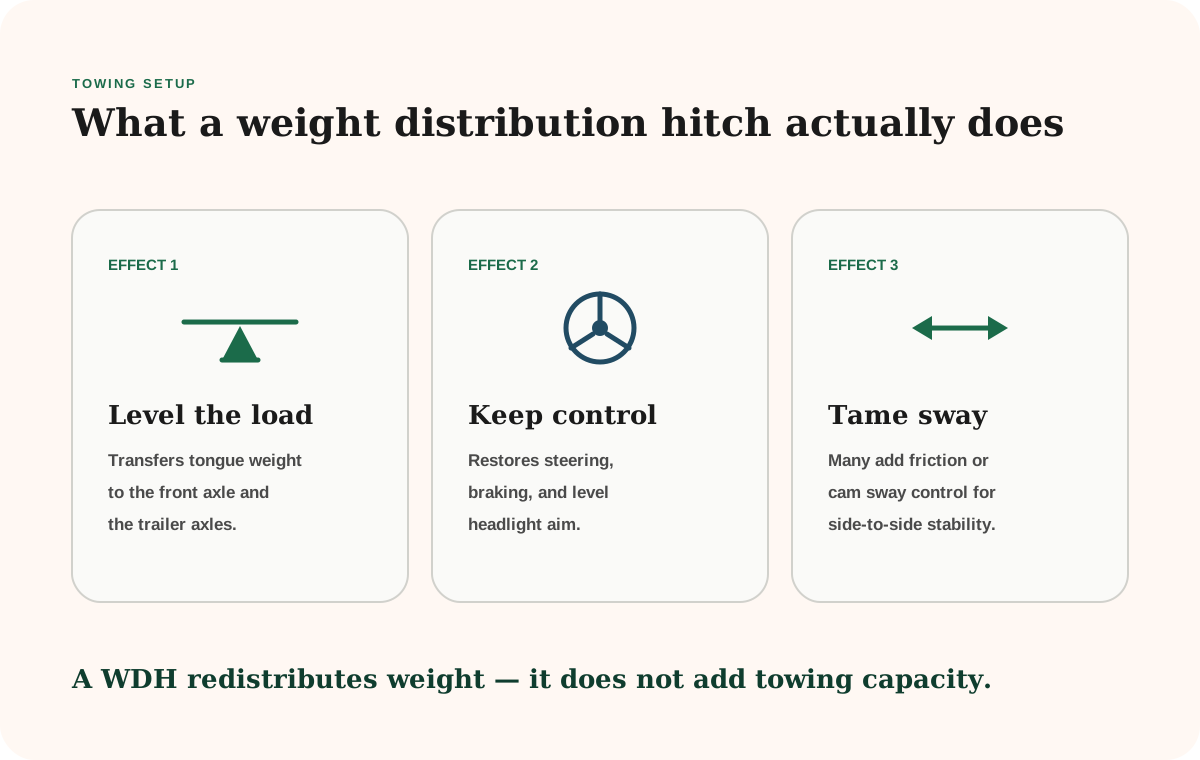
Tongue weight usually rises after batteries, propane, storage-bin cargo, and water are loaded.
That matters because tow vehicles run out of payload before they run out of marketing tow rating. The truck or SUV still has to carry passengers, hitch weight, cargo, and accessories.
If the trailer's real loaded tongue weight crowds the tow vehicle's payload rating, the used trailer is not a bargain.
Tank capacity
Fresh water gets all the attention, but gray water often ends the stay first.
Look at:
- fresh tank
- gray tank
- black tank
- water heater volume
- whether low-point drains and valves are reachable
- where the tanks sit relative to axle loading and cold exposure
Tiny tanks can be fine for weekend state parks. They are less fine when the whole point is camping farther from hookups.
Tire age and running gear
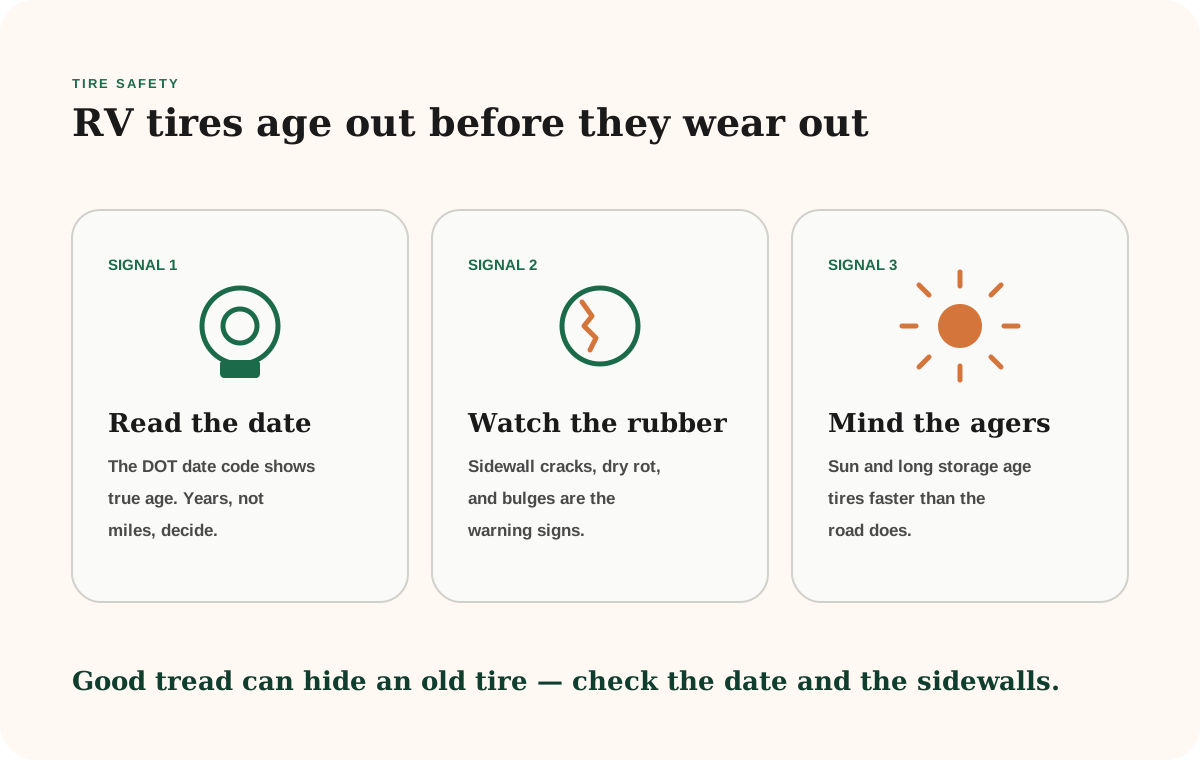
Used trailers can look clean while the tires are already aged out.
Check date codes, sidewall cracking, uneven wear, shackle condition, equalizers, brake wiring, and evidence of axle misalignment. A trailer that has been dragged hard over rough roads may need tires, bearings, brakes, suspension work, or all of the above before the first real trip.
Dry weight is a sales number, not a camping plan
A used trailer that looks towable at dry weight may become the wrong trailer after water, batteries, cargo, and tongue weight are honest. Build the decision around loaded reality.
Which lane should you inspect first?
Inspect rugged western trailers first if roads and seasons matter
Northwood and Outdoors RV style trailers are popular with boondockers for a reason: they often target heavier-duty use than the lightest mainstream trailers.
That can be valuable if your trips include western public land, colder nights, unimproved access roads, and longer self-contained stays.
The tradeoff is weight.
These trailers can demand more tow vehicle, more fuel, more storage space, and a more careful used inspection. Roof seams, frame condition, suspension health, and water history still matter. A rugged brand does not make a neglected used unit safe.
Best fit:
- truck owners with real payload margin
- western public-land campers
- shoulder-season boondockers
- buyers who value tank and structure confidence over lowest weight
Skip or be careful if:
- your tow vehicle is already close to payload limits
- the trailer has old tires, roof patchwork, or underbelly damage
- you mainly camp in tight older parks where length and height matter more than ruggedness
Inspect premium lightweight trailers first if you want compact quality
Lance and Winnebago Micro Minnie style trailers can make sense for couples who want a smaller trailer without feeling like every surface is temporary.
The right used unit can be a strong fit for shorter trips, state parks, mixed campground and boondocking travel, and shoppers who care about towing confidence.
The watchout is that premium compact trailers can carry premium used prices. Some also have smaller tanks or less bulky storage than larger trailers.
Best fit:
- couples or small families
- shorter trips with occasional longer dry-camping stretches
- buyers who want manageable towing and cleaner finish details
- people who can inspect patiently instead of chasing the cheapest listing
Skip or be careful if:
- storage is already tight during normal trips
- tank capacity is too small for your water habits
- the floorplan depends on a slide you cannot use at quick stops
Inspect mainstream couples trailers first if serviceability and resale matter
Grand Design Imagine XLS, Rockwood Mini Lite, and similar mainstream couples trailers are popular because they sit in a useful middle ground.
They usually offer comfortable layouts, broad owner communities, easier comparison shopping, and familiar dealer service pathways.
For boondocking, the trick is to avoid being lulled by decor. You still need cargo capacity, roof space, battery placement, storage, tire health, and tank numbers that match your use.
Best fit:
- couples who want a livable floorplan without going huge
- shoppers who want more listings to compare
- buyers who care about resale and parts familiarity
- people who split time between campgrounds and boondocking
Skip or be careful if:
- the cargo sticker is weak after options
- slide seals show age or leaks
- the factory solar label is mostly marketing and not a real system plan
Inspect compact bunkhouses first if the sleeping problem is real
Families often overbuy trailer length because they are trying to solve sleeping space.
Compact bunkhouses can solve that problem more efficiently. The right one keeps the trailer short enough to tow and park while giving kids or guests a real place to sleep.
The trap is payload. Family cargo is not theoretical. Clothes, bikes, food, outdoor gear, water, and bedding all add up.
Best fit:
- families with younger kids
- occasional guests
- buyers who need sleeping efficiency more than lounge space
- shorter trips where tank limits are understood
Skip or be careful if:
- the trailer has low cargo capacity
- the bunks steal the only useful storage
- the dinette is the only workspace, meal space, and bad-weather hangout
Inspect small solar-ready trailers first if simplicity matters most
Rockwood Geo Pro and Flagstaff E-Pro style trailers can be tempting because they feel ready for a simple off-grid setup.
They can work well for solo travelers, couples, and smaller tow vehicles when the camping style is modest and the buyer understands the limits.
The important word is limits.
Small trailers usually have less tank, less cargo margin, less storage, and less roof real estate. A small trailer can be excellent when your habits match it. It can be frustrating when the marketing says "off-grid" but the tank and storage story says "weekend."
Best fit:
- solo travelers or couples
- smaller campsites
- lighter gear lists
- modest solar and battery expectations
- people who value low setup friction
Skip or be careful if:
- you want long stays without resupply
- the trailer has very small gray capacity
- the axle, tires, or cargo sticker leaves little margin
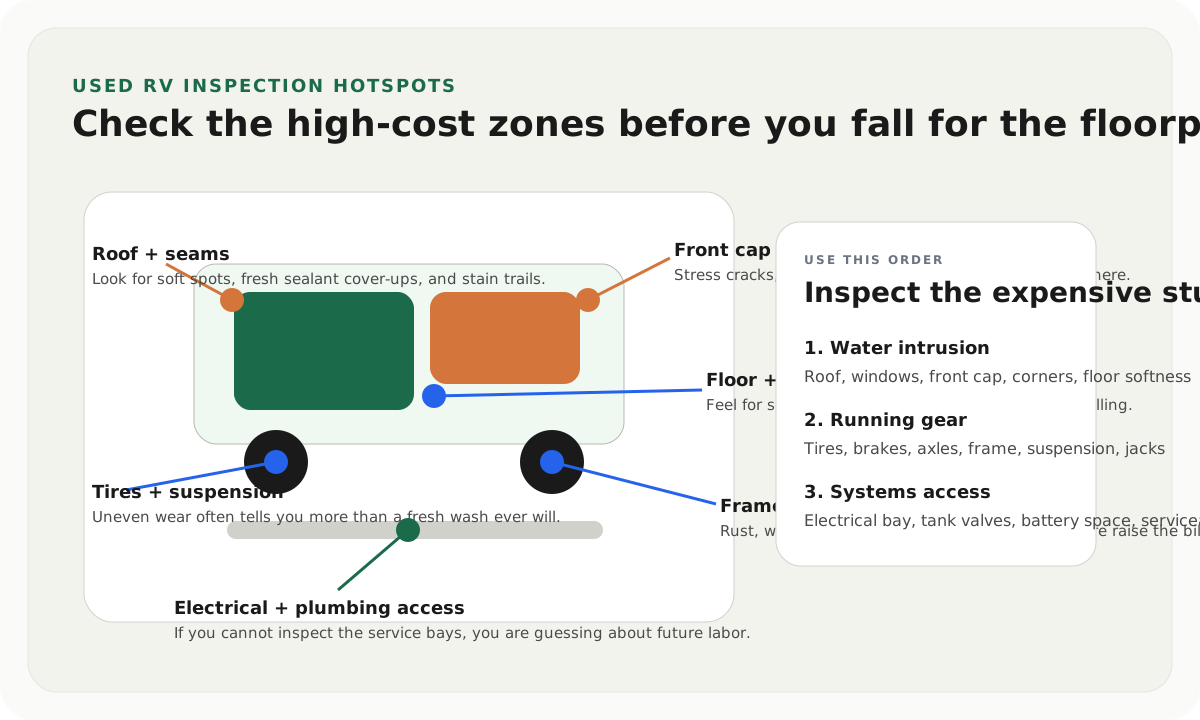
The inspection order for a used boondocking trailer
Once a trailer fits the basic lane, inspect in this order.
- Roof, seams, front wall, windows, and slide corners.
- Floor softness, wall ripples, ceiling stains, and delamination.
- Tires, bearings, brakes, shackles, equalizers, springs, and frame.
- Cargo sticker, tank labels, propane, battery location, and tongue weight.
- Converter, battery wiring, solar prep, shore inlet, and service access.
- Plumbing access, tank valves, low-point drains, water pump, and water heater.
- Interior layout only after the expensive zones pass.
The order matters because a great floorplan cannot rescue a leaking roof, a bent axle, or a trailer that overloads your tow vehicle.
For a deeper rig-by-rig inspection sequence, open the used RV inspection checklist by rig type.
What makes a used trailer specifically better for boondocking?
It can carry water without ruining the weight plan
Fresh water is heavy. So are batteries, tools, spare parts, and food.
A good used boondocking trailer has enough margin to carry normal resources without turning every trip into a scale anxiety session.
It has storage that still works when dirty gear shows up
Boondocking gear is not all neat cabinet gear.
You need places for hoses, leveling blocks, tools, chocks, cords, chairs, mats, water containers, and sometimes portable panels or a generator.
Exterior storage shape matters as much as total storage claims.
It leaves room for clean upgrades
Look for:
- roof space that is not consumed by vents, antennas, and air conditioners
- battery placement that can accept a realistic upgrade
- service bays that can be inspected without disassembling half the trailer
- a clean path for solar, monitoring, or inverter work if you add it later
If the trailer needs a full rebuild to become useful off-grid, compare that cost against buying a better platform.
What I would avoid on a used boondocking trailer
Avoid listings where the problems are already visible but explained away casually.
Common red flags:
- "just needs sealant" around obvious water staining
- fresh roof coating with no repair documentation
- mismatched or very old tires
- tire wear that suggests alignment or suspension issues
- soft spots near walls, entry door, tub, or slide
- low cargo capacity after options
- battery wiring that looks improvised
- missing tank labels or unclear waste capacity
- seller cannot demonstrate appliances, water pump, converter, and charging behavior
- tow vehicle fit only works when using dry weight
Field note
Field fit note
Used trailer shopping is one place where boring is beautiful. A dry roof, boring tire wear, clean service access, honest stickers, and ordinary maintenance records beat flashy upholstery every time.
The best next step after a promising listing
If the listing still looks good after the first pass, do three things before negotiating seriously.
First, confirm tow fit with loaded numbers, not dry weight.
Second, run the inspection order above while the trailer is connected to power and water if possible.
Third, estimate the first-year catch-up budget. Tires, batteries, roof sealing, brakes, bearings, propane checks, mattresses, monitors, and small repairs often arrive before the fun upgrades.
If the platform still makes sense after those three checks, then the floorplan gets a vote.
If not, walk away before the sunk-cost brain starts defending the wrong trailer.
Where to go next
If you are still deciding whether a lighter trailer is the right rig type, use the under-5,000-pound travel trailer guide first.
If you already found a used candidate, use the used RV inspection checklist before you negotiate.
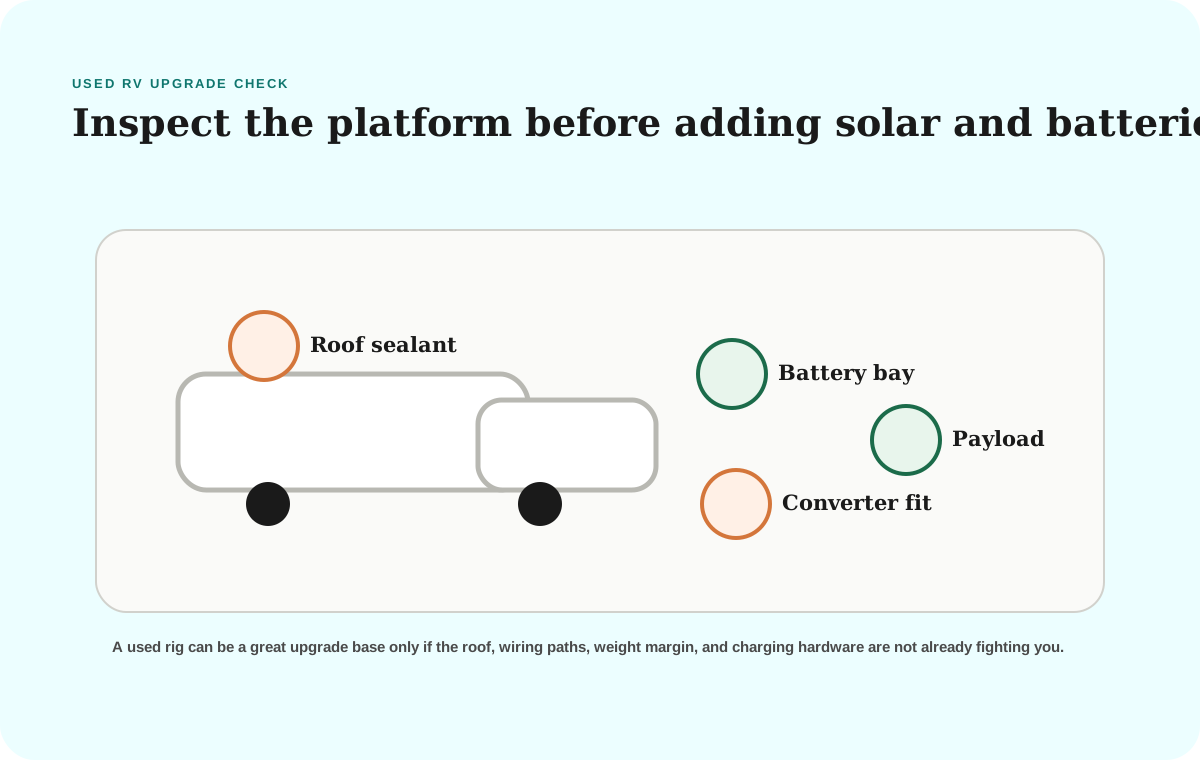
If you bought a used trailer and want to upgrade it carefully, open the used RV off-grid upgrade checklist.
Frequently asked
Questions RVers usually ask next.
What is the best used travel trailer brand for boondocking?
There is no single universal winner. Northwood, Outdoors RV, Lance, Winnebago Micro Minnie, Grand Design Imagine XLS, Rockwood, Flagstaff, Jayco, and similar model families can all make sense in the right use case. The actual used unit's sticker numbers, water history, tires, roof, frame, and service access matter more than the badge.
Should I buy a used off-road or rugged travel trailer for boondocking?
Only if the weight, tow vehicle, storage, and real routes justify it. Rugged trailers can be excellent for western public-land travel and rougher roads, but they can also be heavier and more expensive to tow, store, and maintain.
What tank size should I look for in a used boondocking trailer?
The right tank size depends on people, water habits, and stay length, but tiny gray or fresh tanks limit boondocking quickly. Verify fresh, gray, and black tank labels on the actual trailer and compare them to your expected trip length before buying.
Freshness note
Last checked June 6, 2026
This topic can change when products, plans, prices, campsite rules, or fit guidance move. These notes show what was reviewed most recently.
This review included
- Reviewed the used travel trailer shortlist against the rig-review framework for tow margin, tanks, storage, inspection risk, and off-grid upgrade headroom.
- Kept model-family guidance sticker-first because used trailer specifications vary by model year, trim package, options, and previous-owner modifications.
- Linked the guide into the beginner trailer, used-RV inspection, and used-upgrade planning paths so shoppers can move from shortlist to inspection.
Recent change log
June 6, 2026
Added an OfficialResourceGrid of trust + crawl links (matching the Class A and Class C rig-reviews): NHTSA recalls + tire safety, plus current manufacturer benchmarks — Jayco travel trailers (Jay Feather Air SL family), Coachmen Apex Nano, and Forest River Rockwood Geo Pro. Jayco category page verified 200; Coachmen and Forest River WAF-block automated fetchers, so their canonical model URLs were confirmed via search-engine index. Used durable year-less canonical/category URLs so the links will not rot as model years roll over.
June 5, 2026
Freshness re-verify: confirmed all three benchmark trailer floorplans are current on manufacturer sites — Jayco Jay Feather Air SL 17BHSL (2026), Coachmen Apex Nano 187RB (2026), and Forest River Rockwood Geo Pro G19FBS. No external official links in this guide to rot, and no hard prices/specs to drift (intentionally inspection-first).
April 10, 2026
Published a used travel trailer shortlist for boondocking shoppers with model-family lanes and sticker-first inspection filters.
April 10, 2026
Added a custom used-trailer shortlist board and linked the page into the rig-review cluster.
Broader editorial corrections are tracked on the Corrections and Updates page.