Official checks before pricing upgrades
A used RV retrofit starts with the base vehicle or trailer. Recalls, tires, labels, and electrical safety issues can change the budget before solar parts enter the cart.
Off-grid upgrades are easier when the RV wants to be upgraded
Some used RVs are naturally cooperative upgrade platforms. Others fight every good idea.
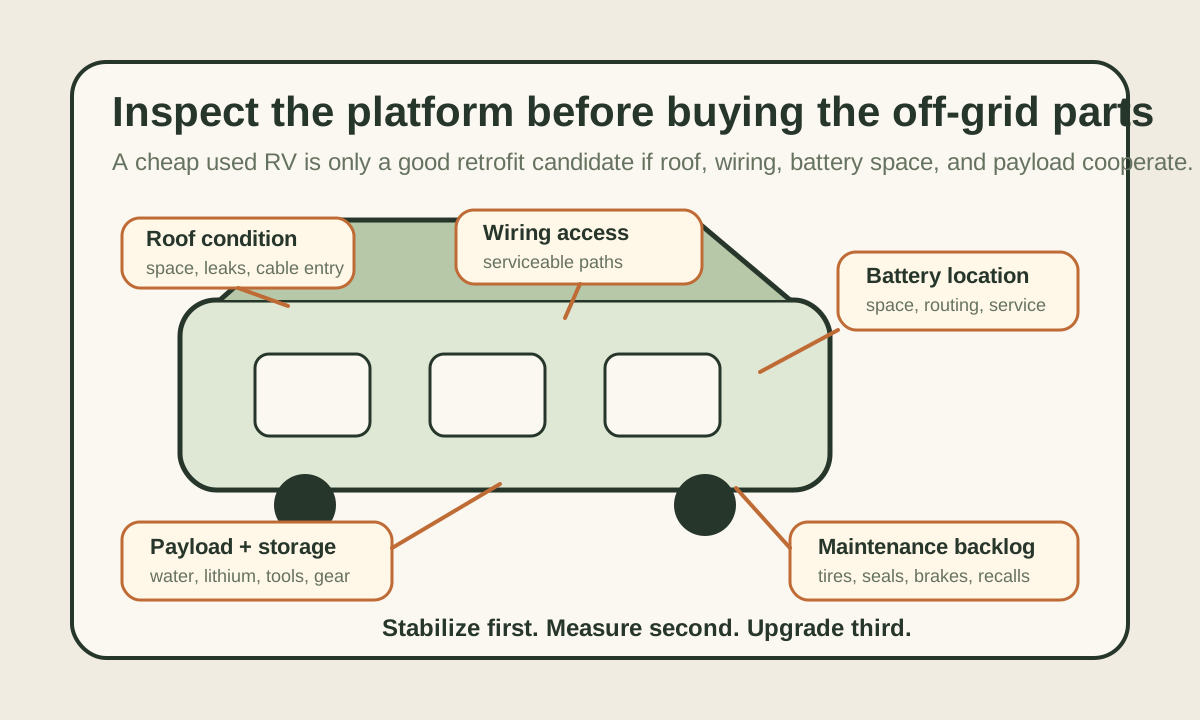
That difference rarely shows up in the sales photos. It shows up in:
- roof layout
- wiring access
- storage geometry
- battery compartment reality
- maintenance history
That is why a retrofit-minded inspection should look beyond surface condition and ask whether the rig will make good upgrades easier or harder.
If you are still shopping for a used towable, start with the used travel trailer shortlist for boondocking so the platform, tow margin, tanks, and inspection risk are clear before you start pricing solar and batteries.
If the rig type is still undecided, use the used RV inspection checklist by rig type before falling in love with one layout. A motorhome, fifth wheel, travel trailer, and toy hauler each hide retrofit risk in different places.
Start with the roof
Solar planning begins with roof reality.
Useful questions:
- how much usable panel space actually exists?
- what obstructions are already there?
- does the roof condition support a serious install?
- does the layout suggest clean cable entry options?
Even a decent-looking roof can be awkward for solar if every open zone is fragmented or if access for clean wiring paths looks poor.
Measure usable zones before you assume panel wattage. Air conditioners, vents, skylights, antennas, roof rails, curvature, shade from taller objects, and required walking or service paths can break one big imaginary array into several small awkward zones. The RV solar installation guide is the better planning page once the roof looks promising.
Compare
Compare fast
Use one comparison matrix to scan the practical differences. Small screens stack each row; wider screens keep the first column pinned.
| Inspection stage | Green flag | Pause before upgrading |
|---|---|---|
| Roof | Clean structure, usable panel zones, sane cable-entry options | Soft spots, old sealant failures, crowded roof, unclear leak history |
| Battery area | Serviceable compartment, short cable paths, room for safe expansion | Tiny exterior box, awkward interior location, no ventilation or access plan |
| Electrical routing | Accessible chase paths between roof, controller, bank, and inverter | Every route requires destructive cabinet or wall work |
| Payload and storage | Enough capacity and compartments remain after upgrades | Solar, lithium, inverter, tools, and water erase the usable cargo margin |
| Maintenance backlog | Repairs are known, contained, and budgeted | Roof, tires, brakes, plumbing, and electrical all need catch-up work first |
Battery location matters more than beginners expect
A used RV may have battery space, but not necessarily battery space that suits the bank you actually want.
Look for:
- usable compartment size
- access for future maintenance
- reasonable cable paths
- whether the location supports the chemistry and system style you have in mind
If the future battery bank would require an awkward location, the rest of the system may become awkward too.
Lithium batteries often move the conversation indoors or into a protected compartment, especially when cold weather is part of the plan. That can be a great upgrade, but only if cable routing, service access, fastening, and storage loss make sense. If the bank size is still fuzzy, run the battery calculator before deciding whether the compartment is actually large enough.
Wiring access can make or break the whole retrofit
This is one of the biggest hidden differences between easy upgrade rigs and frustrating ones.
Ask:
- can cables be routed cleanly?
- are there sane paths between roof, controller, battery area, and inverter area?
- does the furniture layout make service access impossible?
A used RV that hides every path behind hard-to-reach structure may still be upgradeable, but the cost in time, complexity, and irritation goes up fast.
Use the RV electrical system diagram as the mental map while you inspect. You are looking for a clean path from roof or portable solar input to controller, from controller to battery, from battery to inverter, and from chargers back into the bank. If every path looks like a mystery, the retrofit may still be possible, but it should be priced like a project.
Do not buy only for the open floor plan
A beautiful interior does not tell you whether solar, battery, and inverter upgrades will be easy to route, service, and understand later. Retrofit friendliness usually lives behind the cabinets, under the bed, and on the roof.
Think about how the rig is already aging
A used RV ready for off-grid upgrades should not be so busy catching up on deferred maintenance that every upgrade dollar gets crowded out by basic repair.
That does not mean you need perfection. It means you should be honest about:
- sealing and water-intrusion history
- electrical condition
- compartment cleanliness and organization
- whether the rig already feels like a project in too many directions at once
Because if it does, the off-grid plan may need to start with stabilization, not expansion.
This is where a cheap rig can get expensive quietly. Tires, brakes, sealant, suspension, batteries, converter problems, water leaks, and appliance repairs may all be more urgent than solar. If those basics are unresolved, the first off-grid upgrade may be a safer, drier, more reliable RV.
Storage and daily livability still matter
A retrofit that consumes the best storage spaces or creates constant access problems can make the RV less usable even while it becomes more electrically capable.
That is why the checklist should include:
- where the upgrade hardware will actually live
- what storage it may displace
- whether the daily living pattern still makes sense afterward
This is especially important in smaller used rigs where every compartment already has a job.
Do a pretend pack before buying major components. Where do hoses, leveling blocks, tools, camp chairs, outdoor mats, recovery gear, spare parts, portable panels, and water containers go after the batteries and inverter take their space? If the answer is "we will figure it out," the rig may be smaller than the floorplan makes it feel.
A practical used-RV retrofit checklist
Roof and exterior
- roof condition
- usable panel space
- likely cable-entry path
- seal and weather history
Electrical access
- battery compartment reality
- controller and inverter location possibilities
- wiring routes that still make maintenance possible
Interior livability
- whether upgrade hardware steals too much storage
- whether service access remains reasonable
- whether the layout still works for the way you travel
General health
- existing maintenance backlog
- signs the rig already needs major non-upgrade spending first
When the answer should be "not this rig"
Walk away or renegotiate hard when the inspection shows water intrusion, soft roof areas, serious tire or running-gear neglect, mystery electrical modifications, or a cargo margin that is already nearly gone. Those issues do not make off-grid upgrades impossible, but they shift the project from "add capability" to "rescue the platform."
Also pause when the upgrade plan depends on too many perfect assumptions. If the roof barely fits the array, the battery area barely fits the bank, and the inverter location barely fits the cable run, the build has no margin. A cleaner used platform may cost more upfront and less overall.
The best upgrade order for a used RV
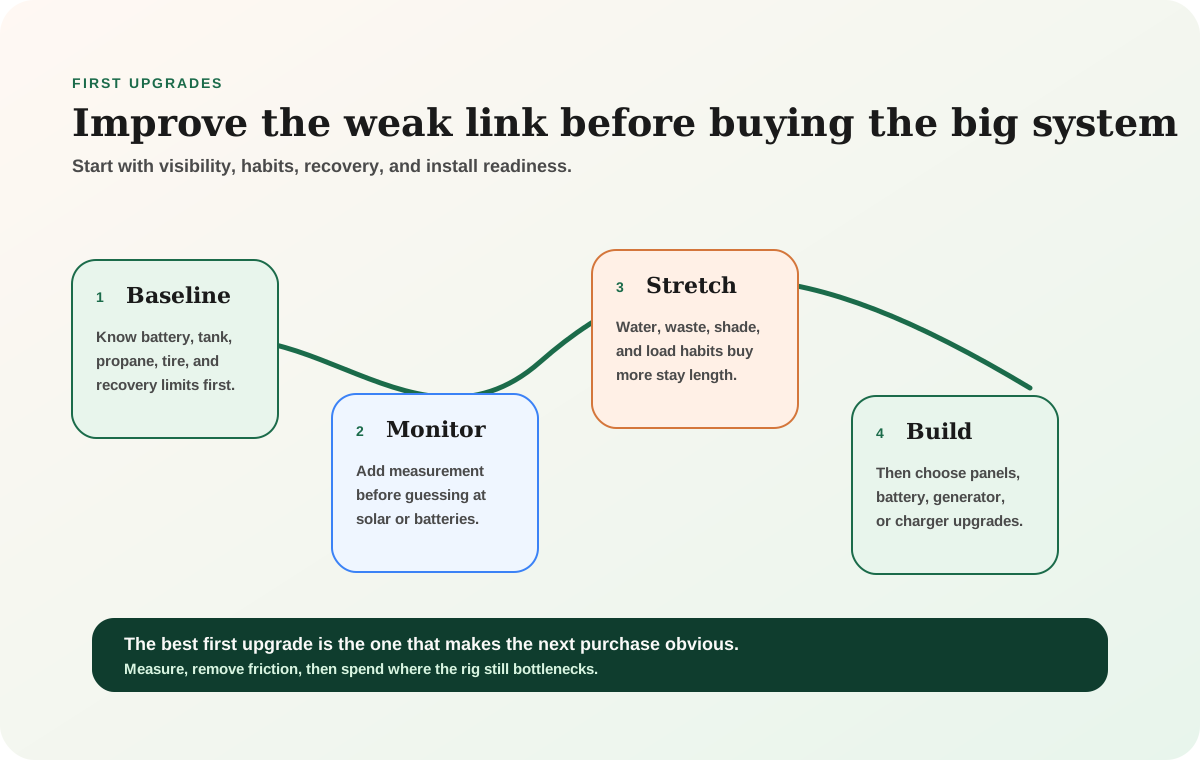
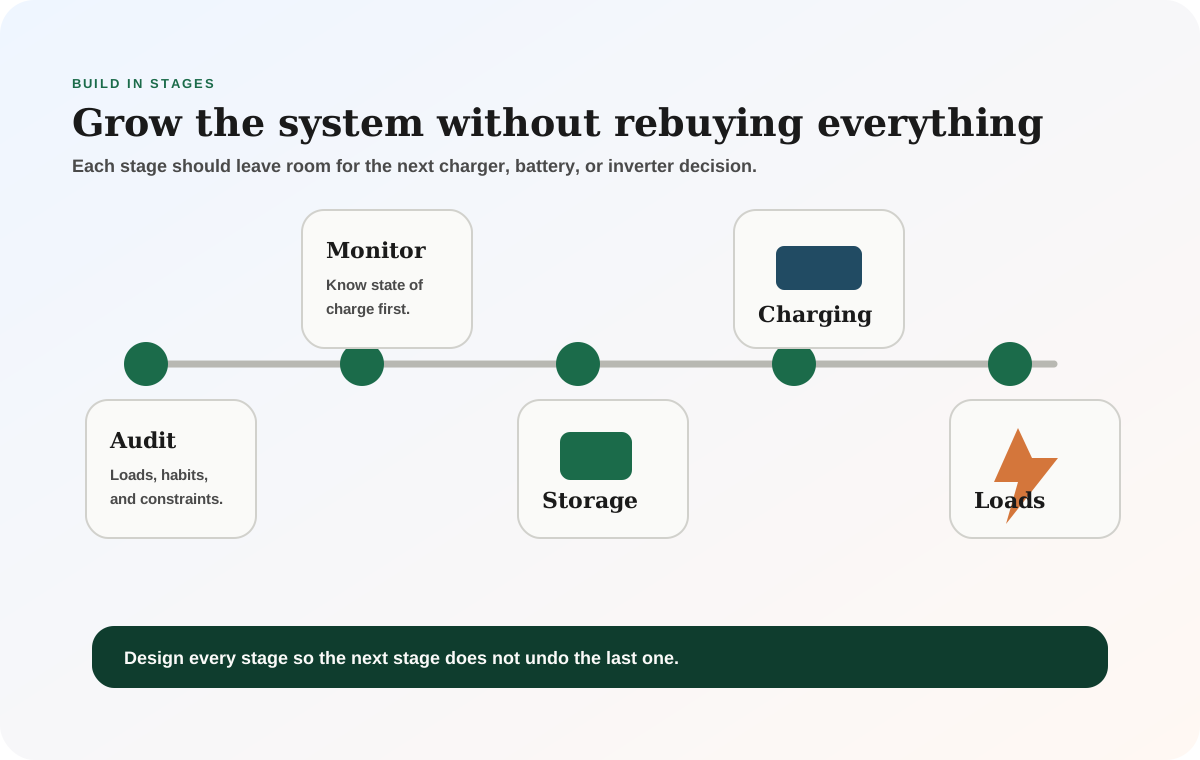
Stabilize first, measure second, upgrade third.
That usually means fixing leaks, tires, brakes, recalls, unsafe wiring, and basic 12V behavior before installing shiny parts. Then measure daily loads, roof fit, battery space, and water habits. Only then does it make sense to follow the staged off-grid system guide or compare first off-grid upgrades.
Final thought
A used RV is not a bargain off-grid platform just because the purchase price looks good. It becomes a good platform when the rig’s physical layout, condition, and access patterns support the upgrades you actually want to add.
That is what this checklist is for: seeing the retrofit, not just the RV.
Frequently asked
Questions RVers usually ask next.
What is the most important thing to inspect on a used RV before adding solar?
Roof condition and usable layout are near the top of the list, because solar potential depends on more than just open square footage. Cable-entry options and overall roof health matter too.
Why is battery location such a big deal in a used RV?
Because the size, access, and routing options around the battery area shape how cleanly the rest of the off-grid system can be built. A bad battery location can make the whole retrofit harder.
Can a very cheap used RV still be a bad off-grid project?
Absolutely. If the rig has awkward wiring access, poor roof condition, heavy maintenance backlog, or storage conflicts, the low purchase price can disappear quickly once the off-grid build begins.
Should retrofit friendliness matter as much as floor plan?
If off-grid upgrades are a major goal, yes. A great floor plan is valuable, but a rig that resists clean solar, battery, and wiring upgrades can become much more expensive and frustrating to build out.
Freshness note
Last checked April 21, 2026
This topic can change when products, plans, prices, campsite rules, or fit guidance move. These notes show what was reviewed most recently.
This review included
- Expanded the checklist with official recall and tire source routing, retrofit-stage comparison, roof/battery/wiring inspection detail, and internal handoffs to inspection, solar, and electrical planning guides.
- Added a used travel trailer shopping path so retrofit planning starts with the right used platform before upgrade pricing.
Recent change log
April 21, 2026
Expanded the checklist with source checks, retrofit-stage decisions, inspection examples, and upgrade-risk handoffs.
April 10, 2026
Linked the retrofit checklist to the used travel trailer shortlist for shoppers comparing boondocking platforms.
Broader editorial corrections are tracked on the Corrections and Updates page.