What is the best travel trailer for boondocking under 5,000 pounds?
The best boondocking travel trailer under 5,000 pounds is the one that still has payload, tank capacity, solar room, storage, and tow-vehicle margin after it is loaded for camp. Start with GVWR and cargo capacity, not dry weight. Then check water range with the water calculator and power needs with the solar calculator.
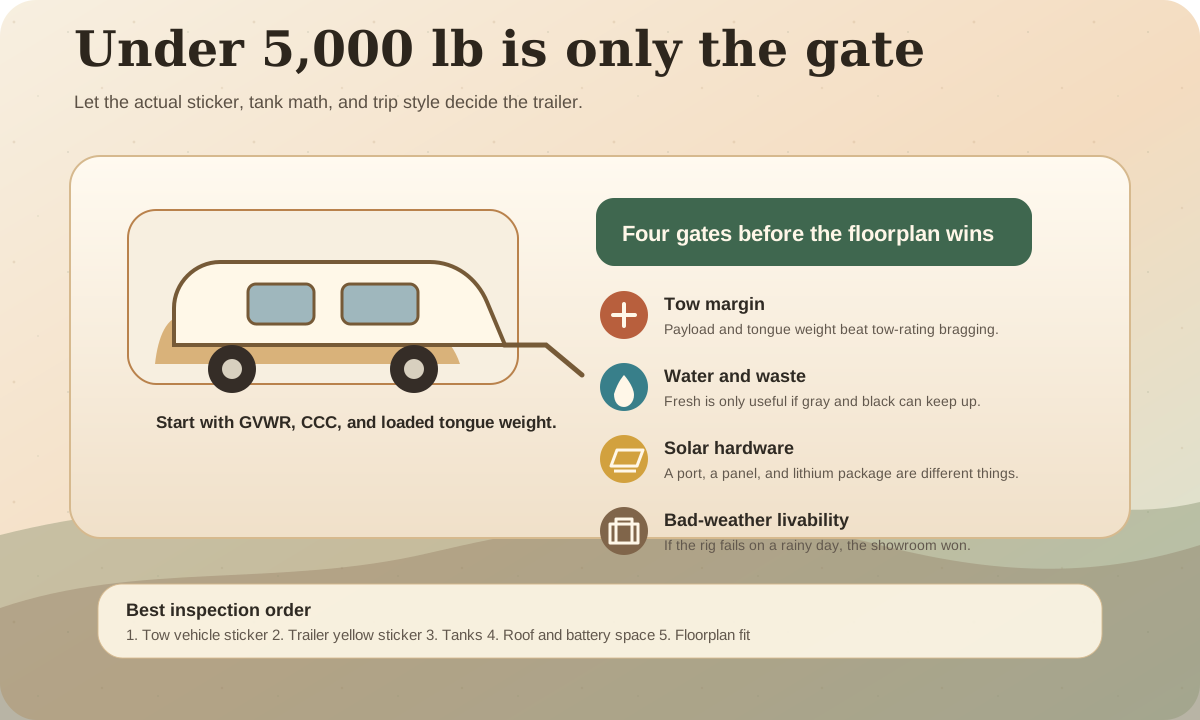
Sub-5,000-pound boondocking trailer snapshot
Treat these as inspection filters. A trailer can pass the brochure search and still fail on the actual unit sticker.
Best first filter
GVWR, not dry weight
Dry weight does not include your real camp load. GVWR tells you the maximum loaded trailer the tow vehicle has to manage.
Useful CCC target
1,000 lb or more feels calmer
Fresh water alone can eat 165 to 435 lb on the trailers in this guide before food, tools, batteries, chairs, and hoses show up.
Total water target
30+ fresh is easier, 20 fresh is disciplined
Small premium trailers can be great, but a 20-gallon fresh tank changes your shower, dish, and hand-washing habits fast.
Power target
Prep is not the same as a system
Factory solar may be a port, a 200W panel, a 400W system, or a real lithium package. Verify the actual equipment.
Official spec checks
Use these manufacturer pages as starting points, then verify the exact dealer unit. Options, model years, regional builds, and running changes can move the real sticker.
Pre-arrival checks
Confirm the yellow cargo sticker
Manufacturer CCC is useful for shopping, but the actual unit sticker includes factory options and some installed equipment.
Confirm loaded tongue weight
Small trailers can still overload the tow vehicle payload once batteries, propane, water, storage-bin gear, and hitch hardware are counted.
Confirm the solar hardware, not the phrase
Solar prep, sidewall solar port, 200W roof panel, 400W roof system, inverter prep, and lithium package are not interchangeable.
Start with loaded weight, not the sales-lot number
Under 5,000 pounds is a useful shopping filter, but it can trick you if you treat it like the decision.
The brochure dry weight is only the trailer before your trip shows up. It does not represent the full water tank, batteries, propane, food, tools, outdoor gear, hitch hardware, sewer gear, leveling blocks, portable panels, camp chairs, and the quiet little pile of things that somehow becomes 400 pounds.
For boondocking, start with GVWR and cargo carrying capacity. Then check the tow vehicle payload, receiver rating, tire rating, and real loaded tongue weight. A trailer that is technically below 5,000 pounds can still be a bad match if the tow vehicle runs out of payload before it runs out of tow rating.
If you are still roughing out the whole trip system, use the solar calculator and water calculator before getting attached to a floorplan. The trailer's roof and tanks only matter if they match your actual power and water rhythm.
Dry weight is not your camping weight
A 3,500 lb dry trailer with a 4,500 lb GVWR can be a calmer tow than a 3,000 lb dry trailer with only 600 lb of remaining cargo capacity. For off-grid use, the available cargo after water matters more than the lightest brochure number.
Current under-5,000-pound examples worth comparing
These are representative current model-family examples, not universal winners.
RV model years, options, regional packages, and dealer-installed equipment can change the actual sticker. Use this table to understand the fit, then inspect the exact unit before deciding.
Compare
Representative sub-5,000-pound travel trailer examples checked against official manufacturer pages on April 11, 2026.
Use one comparison matrix to scan the practical differences. Small screens stack each row; wider screens keep the first column pinned.
| Spec | Jayco Jay Feather Air SL 17BHSL | Coachmen Apex Nano 187RB | Rockwood Geo Pro G19FBS | Lance 1475 | inTech Sol Dawn | Airstream Basecamp 20X |
|---|---|---|---|---|---|---|
| Verified weight range | 3,750 lb GVWR; 2,885 lb UVW; 865 lb CCC | 4,700 lb GVWR; 3,420 lb UVW; 1,280 lb CCC | 3,590 lb UVW; 850 lb CCC; GVWR implied near 4,440 lb from UVW plus CCC, but verify the label | 4,500 lb GVWR; 2,905 lb gross dry weight; 1,519 lb CCC | 3,500 lb GVWR; 2,682 to 2,952 lb dry range; 805 to 910 lb net carrying capacity | 4,300 lb GVWR; 3,500 lb UBW with LP and batteries; 800 lb NCC |
| Tanks | 30 fresh; 20 gray; 20 black | 52 fresh; 27 gray; 27 black | 31 fresh; 27 gray; 27 black | 26 fresh; 26 gray; 26 black | 20 fresh; 28 listed black or holding capacity; verify gray and wet-bath handling | 23 fresh; 28 gray; 21 waste |
| Length and layout | 21 ft 3 in family bunkhouse | 22 ft 5 in couples rear-bath | 20 ft 2 in couples slide trailer | 19 ft 8 in premium compact couples trailer | 16 ft compact wet-bath trailer | 20 ft 2 in premium adventure trailer |
| Solar setup | Overlander I Solar Package listed; verify whether the dealer unit has panel, prep, or both | 400W solar system with 30A charge controller, inverter prep, and Starlink prep | 200W solar panel, 1800W inverter, 30A charge controller, and additional solar prep | Optional 200W, 400W, 600W, lithium, and Easy Off Grid packages | Sidewall solar prep, optional 200W solar, or optional 300W lithium package | Solar prewire on standard Basecamp 20X; Basecamp 20Xe is the higher-power electric-capable version |
| Best fit | Families who need bunks and want low tow weight more than long tank range | Couples who value fresh-water capacity and factory solar in a normal trailer shape | Couples who want a compact, solar-forward trailer with a useful inverter from the factory | Couples who want build quality, cargo headroom, and a simple premium layout | Solo travelers or couples who want compact towing and a strong factory lithium option | Premium adventure shoppers who value rugged packaging and large-gear loading more than low cost |
| Watch for | Cargo gets tight after water and family gear. The 20-gallon waste tanks require discipline. | Still a 22 ft trailer with real tongue weight. Verify tow-vehicle payload, not just tow rating. | CCC is not generous once water, batteries, and outside gear are aboard. Confirm the actual GVWR label. | Tank capacity is balanced but not large. Pricing and options can climb quickly. | Small fresh tank and wet-bath compromise. Great discipline trailer, not a long-shower trailer. | NCC is limited for an expensive trailer. The Basecamp shape is useful, but the payload math still applies. |
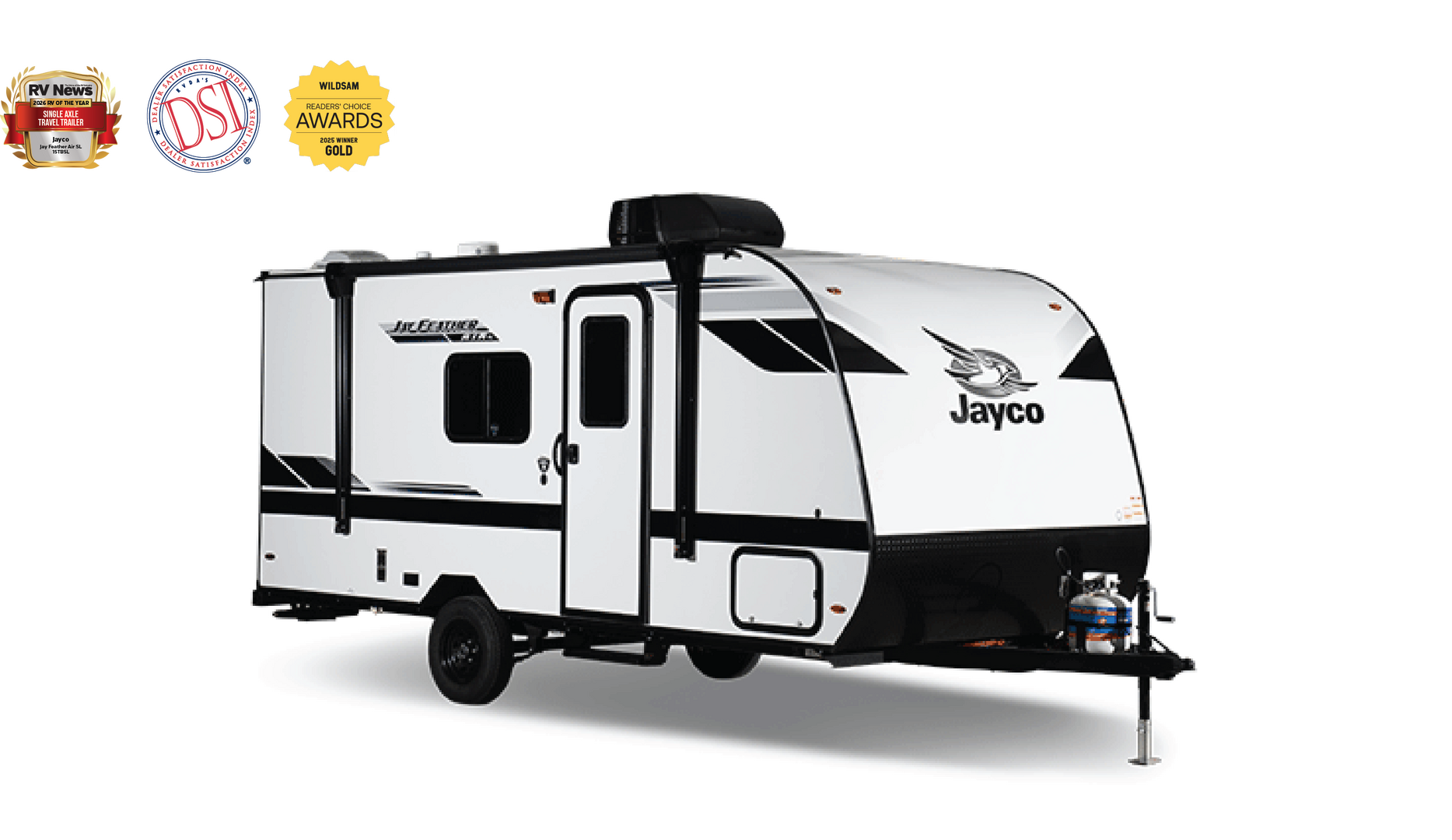
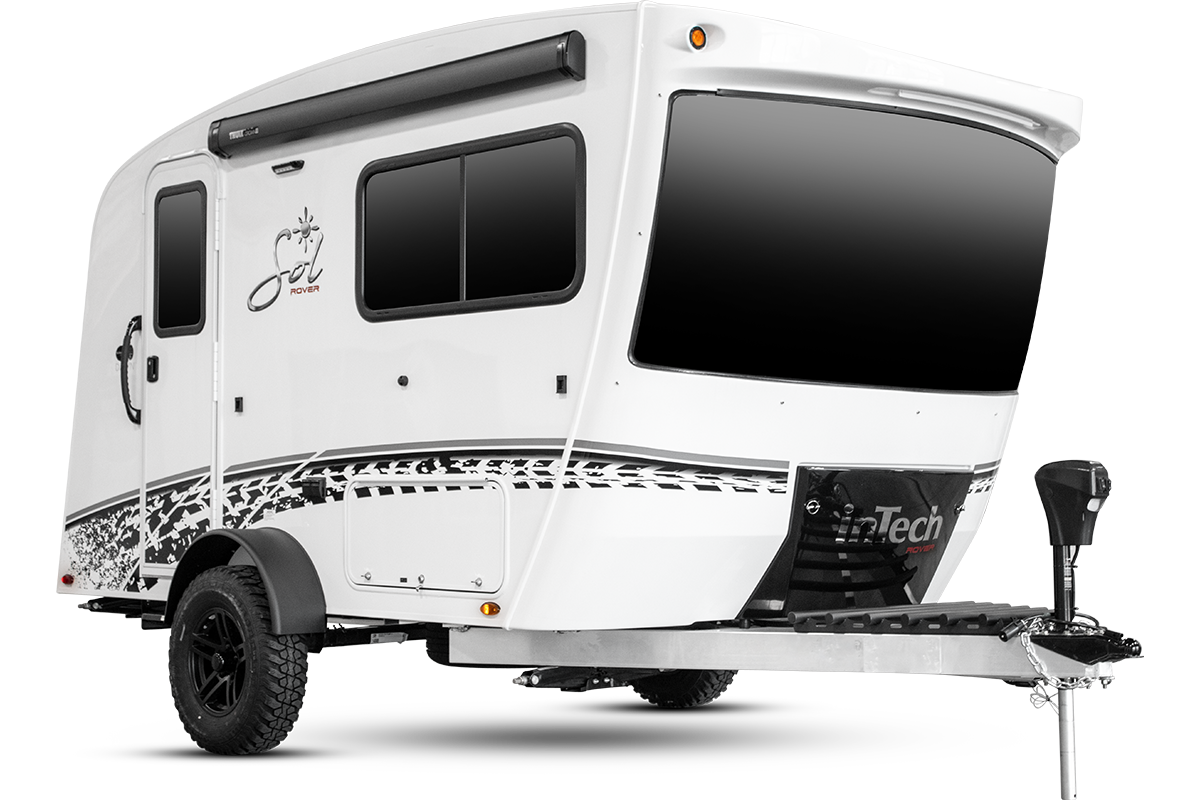
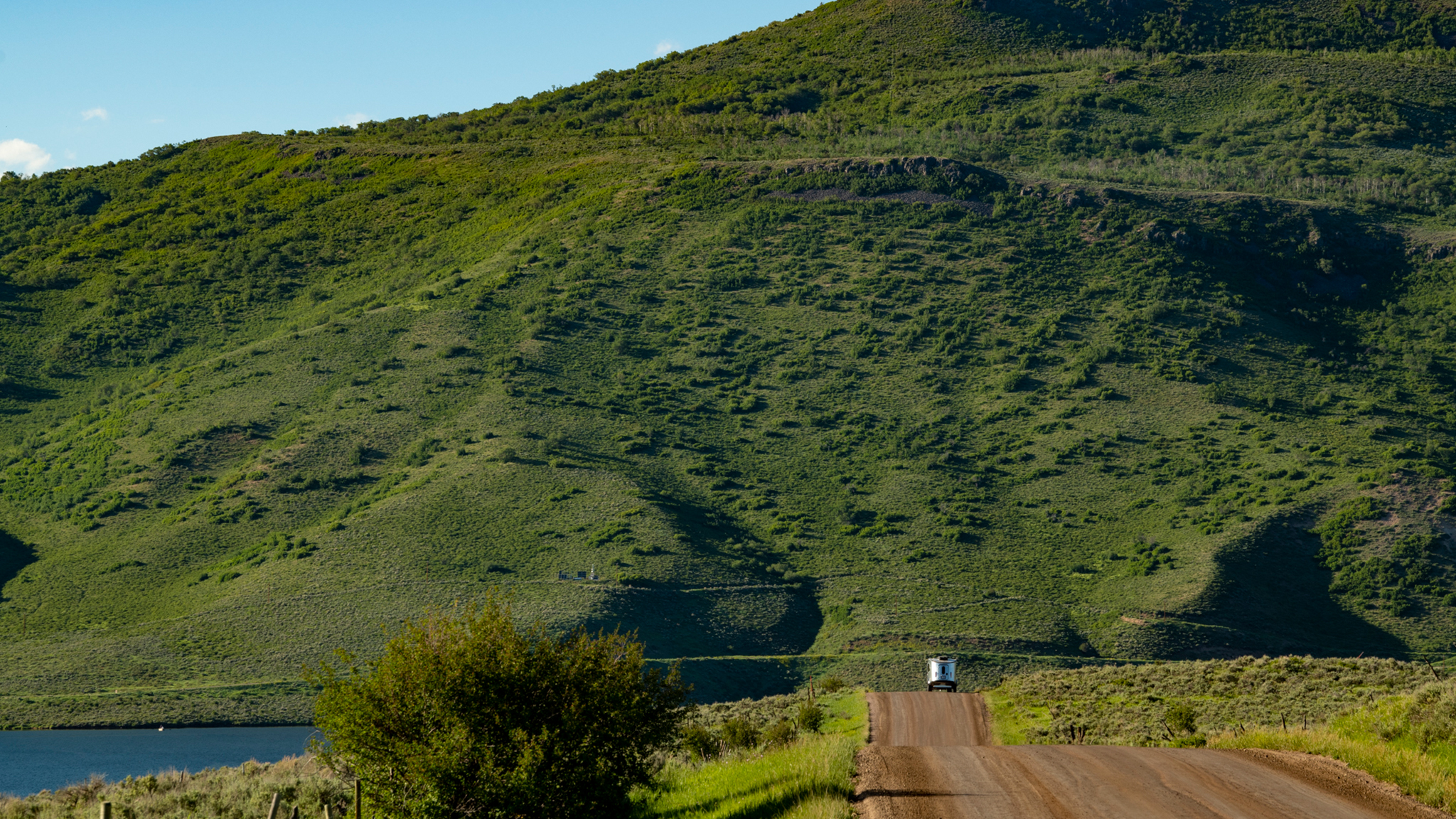
Before the individual profiles, look at the physical shapes as well as the stickers. A 16-foot wet-bath trailer, a 22-foot rear-bath trailer, and a rear-hatch adventure trailer solve very different campsite and storage problems even when they all pass the same weight filter.


The clean shortlist by camping style
If you are shopping under 5,000 pounds, start with the trip style, not the brand.
Families needing beds in the smallest reasonable package
The Jayco Jay Feather Air SL 17BHSL is the light-family profile. It keeps the GVWR low at 3,750 pounds and gives you bunks in a small footprint.
The tradeoff is capacity. A 30-gallon fresh tank weighs about 250 pounds when full, leaving roughly 615 pounds of the listed CCC before the rest of the trip load. That can still work for short weekends, but it is not the trailer for bringing every outdoor toy, extra battery, cast-iron setup, and backup water jug without doing the math.
This profile is strongest when the family wants simple weekend trips, short campsite approaches, and a tow vehicle that should not be pushed into a heavier trailer.
Couples wanting normal-trailer comfort and better tank range
The Coachmen Apex Nano 187RB is the practical couples profile. The 52-gallon fresh tank is the number that changes the use case, because it gives you more water confidence than most small trailers in this weight class.
That water weighs about 434 pounds when full. Even after that, the published CCC leaves more room than the lighter bunkhouse option, but you still have to count batteries, propane, food, tools, and the hitch setup.
The watchout is size and tongue reality. A 4,700-pound GVWR trailer can still fit the under-5,000-pound brief, but it needs a tow vehicle with enough payload for real loaded tongue weight.
Couples wanting factory solar already doing useful work
The Rockwood Geo Pro G19FBS is the solar-forward compact option. The official page lists a 200W solar panel, 1800W inverter, 30A charge controller, and additional solar prep, which is more useful than a simple sidewall port.
The catch is carrying capacity. With 850 pounds of listed CCC and a 31-gallon fresh tank, you can burn about 259 pounds before any camp gear. That does not make it a bad trailer, but it does make the packing list matter.
This option fits couples who want a compact trailer with factory electrical usefulness and are willing to keep the cargo list honest.
Premium couples wanting build quality and cargo headroom
The Lance 1475 is the premium compact couples profile. It is not the cheapest way to camp under 5,000 pounds, but the published numbers are unusually useful for this class: 4,500 pounds GVWR, 2,905 pounds gross dry weight, and 1,519 pounds cargo carrying capacity.
The tanks are balanced at 26 fresh, 26 gray, and 26 black. That is enough for careful weekends, but it is not a desert water hauler. The draw is the combination of compact size, lower dry weight, and cargo headroom.
This profile makes sense when two people want a smaller trailer that can stay calm after upgrades, not just a low purchase price.
Compact adventure shoppers who value short length above everything
The inTech Sol Dawn is the short-trailer option. It is only 16 feet overall, with a 3,500-pound GVWR and an optional solar or lithium package that can be useful for a small electrical footprint.
The tradeoff is water and interior compromise. A 20-gallon fresh tank is not a casual boondocking number, and the wet bath is a fit question, not a spec-sheet detail.
This option fits solo travelers or couples who want easy towing, smaller campsites, and a disciplined water routine more than a separated bedroom, big tanks, or residential storage.
Premium adventure shoppers carrying bikes, boards, or bulky gear
The Airstream Basecamp 20X is the premium gear-loading profile. The rear hatch, rugged build, 20-foot length, and 4,300-pound GVWR make it attractive for people who travel with bikes, boards, camera cases, fly-fishing gear, or wet outdoor equipment.
The limitation is net carrying capacity. The 2026 Basecamp 20X owner manual lists 800 pounds of NCC. Fill 23 gallons of fresh water and you have used about 192 pounds before the gear that made you want the hatch in the first place.
This is a good example of why premium and practical are not the same thing. The Basecamp can be a smart fit, but the math is not optional.
Tank capacity decides the trip length faster than floorplan charm
Water is the quiet limit in small boondocking trailers.
A 52-gallon fresh tank gives a couple more breathing room for dishes, hand washing, and short Navy showers. A 20-gallon fresh tank forces a different style: basin washing, outdoor rinse discipline, fewer showers, and a backup water plan.
The waste tanks matter just as much. A large fresh tank paired with small gray capacity can still send you home early. If the gray tank is only 20 to 27 gallons, dishwashing and showers need a plan even when the fresh tank looks acceptable.
Use the water calculator with conservative habits before buying. If your normal weekend needs 35 gallons of water and the trailer only carries 20, the answer is not optimism. It is a different trailer, a portable water strategy, or shorter stays.
Solar prep is useful only when you know what is installed
The phrase "solar ready" can mean almost anything.
On one trailer, it may mean a sidewall port wired near the battery. On another, it may mean a roof panel, charge controller, inverter, battery monitor, and lithium-compatible charging. Those are not close to the same system.
For under-5,000-pound trailers, the solar decision usually breaks into three setup levels:
- A simple sidewall port is fine if you plan to use portable panels and camp in shade.
- A 200W roof panel can help with lights, fans, controls, and modest device charging, but it is not a full off-grid power system.
- A 400W or lithium-backed package can be useful, but only if the battery bank, converter, inverter, and monitoring match the way you actually use power.
Before you pay for a factory package, run your loads through the solar calculator. A 12V fridge, furnace fan, Starlink, laptop, inverter losses, and cloudy days can make a factory panel look smaller than it sounded at the dealership.
If you expect to upgrade later, inspect the roof. A small trailer can run out of clean panel space quickly because vents, A/C, antennas, curved roof sections, and skylights get a vote.
Floorplans that work best below 5,000 pounds
Small trailers do not have room for fake flexibility.
The floorplan has to match the job:
- Bunkhouse trailers work when sleeping efficiency matters more than lounge space.
- Rear-bath couples trailers work when two adults want a normal bed, decent kitchen flow, and fewer bed-conversion chores.
- Compact wet-bath trailers work when towability and site fit matter more than separated bathroom comfort.
- Gear-hatch trailers work when bulky outdoor equipment is central to the trip.
- Premium compact couples trailers work when quality, storage shape, and cargo headroom matter more than the lowest purchase price.
Walk the trailer like it is raining outside. Where do wet jackets go? Where do shoes land? Can you reach the bathroom with the bed made? Where do water jugs ride? Can the dinette support a laptop, map, or meal without tearing down the bed?
That unglamorous walk-through will tell you more than the staged dealer photos.
Which one should you inspect first?
Inspect the Jayco Air SL first if you need bunks and want the lightest family-friendly answer. Skip it if your family packs heavy or you expect long water stays.
Inspect the Apex Nano first if you are a couple and fresh-water capacity is your main frustration with small trailers. Skip it if your tow vehicle payload is already tight.
Inspect the Geo Pro first if factory solar and compact size matter. Skip it if you are a heavy packer or expect the inverter to solve every off-grid power problem.
Inspect the Lance first if you want a premium compact platform with better cargo headroom. Skip it if price, a larger lounge, or bigger tanks matter more.
Inspect the inTech Sol Dawn first if you want short length, compact towing, and a simple two-person routine. Skip it if a wet bath or 20-gallon fresh tank will irritate you every trip.
Inspect the Basecamp 20X first if outdoor gear loading is the reason you are buying a trailer. Skip it if you need high cargo capacity for the money.
If you are shopping used instead of new, use the used travel trailer shortlist and the used RV inspection checklist before falling in love with a clean-looking floorplan.
Common mistakes
Treating 5,000 pounds like a tow-vehicle guarantee
Tow rating is only one limit. Payload, receiver rating, tongue weight, rear axle capacity, tire rating, and braking confidence are the real gatekeepers.
Forgetting water weight
Water weighs about 8.34 pounds per gallon. A 52-gallon fresh tank adds roughly 434 pounds before gray or black tanks, gear, food, and batteries.
Paying for solar language instead of solar hardware
Ask exactly what is installed: panel wattage, controller type, battery chemistry, inverter size, converter compatibility, monitoring, and whether the solar port is regulated or raw.
Buying the smallest trailer without checking storage
Small trailers can tow beautifully and still be miserable if hoses, chocks, chairs, tools, outdoor cooking gear, and extra water have nowhere safe to ride.
Ignoring the actual unit sticker
The specific trailer on the dealer lot may weigh more than the brochure after options. The yellow sticker is not paperwork clutter. It is the decision.
Final thought
The best under-5,000-pound boondocking trailer is the one that still works after the romance leaves the lot: tow vehicle payload still has margin, the tanks match your habits, the cargo sticker survives real gear, the roof can support the power plan, and the floorplan is easy on a bad-weather day. Start with the shortlist, but let the loaded math make the final call.
Frequently asked
Questions RVers usually ask next.
What is the best travel trailer for boondocking under 5,000 pounds?
There is no single winner because the right trailer depends on your tow vehicle, water habits, cargo load, and sleeping needs. For families, a compact bunkhouse can make sense. For couples, a rear-bath trailer with better tanks or a premium compact trailer with more cargo capacity is often easier to live with.
Should I use dry weight or GVWR when shopping?
Use GVWR as the safer shopping number because it represents the trailer's maximum loaded weight. Dry weight is useful for comparison, but it does not include your real off-grid load. Also check loaded tongue weight against tow-vehicle payload.
How much fresh water should a small boondocking trailer have?
For short weekends, 20 to 30 gallons can work if you are disciplined. For a couple wanting showers, dishes, and more margin, 30 to 50 gallons feels calmer. Gray and black tank sizes still have to match the fresh tank, or waste capacity becomes the limiting factor.
Is factory solar enough for boondocking?
Sometimes, but it depends on the actual hardware and your loads. A 200W panel can help with light electrical use, while a 12V fridge, laptops, furnace fan, and internet gear may need more solar and battery. Verify the controller, battery chemistry, inverter, and monitoring before paying extra.
Can a midsize SUV tow these trailers?
Some midsize SUVs can tow some of these trailers on paper, but payload and tongue weight usually decide the real answer. A trailer under 5,000 pounds loaded can still put 500 to 700 pounds or more on the hitch once cargo and batteries are counted. Check the exact tow vehicle sticker, receiver rating, and loaded setup.
Freshness note
Last checked April 20, 2026
This topic can change when products, plans, prices, campsite rules, or fit guidance move. These notes show what was reviewed most recently.
This review included
- Checked current official manufacturer pages for Jayco Jay Feather Air SL 17BHSL, Coachmen Apex Nano 187RB, Forest River Rockwood Geo Pro G19FBS, Lance 1475, inTech Sol Dawn, Airstream Basecamp 20X, and Winnebago Micro Minnie 1700BH reference data.
- Verified representative GVWR, UVW or dry weight, cargo capacity, tank capacities, length, and solar-prep or factory-solar details where official pages published them.
- Added representative official manufacturer imagery for each current trailer profile so readers can compare the physical shapes alongside the specs.
- Rebuilt the previous beginner travel trailer guide into a sticker-first under-5,000-pound boondocking guide with required solar, water, and used-trailer links.
Recent change log
April 20, 2026
Added official-source product imagery for the six current trailer profiles and collapsed the article navigation to primary sections only.
April 11, 2026
Rebuilt the guide around current sub-5,000-pound trailer examples, official spec checks, loaded-weight math, tank limits, solar prep, and practical floorplan profiles.
April 14, 2026
Reworded repeated planning-language labels so the shortlist reads more like buyer guidance and less like internal taxonomy.
April 9, 2026
Published the initial beginner travel trailer guide.
Broader editorial corrections are tracked on the Corrections and Updates page.