Key takeaways
- The best first boondocking trailer size is usually the smallest one that still honestly supports your sleeping needs, gear storage, and tank expectations.
- Beginners often regret buying too much trailer sooner than they regret buying a trailer that is a little shorter and easier to tow, back, store, and fit into more campsites.
- The right size depends on your tow vehicle, who is sleeping in the rig, how often you move, and whether the trailer needs to feel like a weekend test bed or a longer-stay basecamp.
Official checks before trailer size
Trailer length is only useful after the tow vehicle, tires, loading labels, and recall status are checked.
Beginner trailer-size snapshot
Use these as planning lanes, not hard rules. The sticker, tow vehicle, and campsite style still decide the final answer.
Easy test trips
Under 20 ft
Lowest campsite and backing stress, but storage and tanks may get tight quickly.
Common sweet spot
20-24 ft
Often enough bed, tank, and storage utility without jumping into large-trailer friction.
More room
25-30+ ft
Can work for families, but tow margin, campsite access, and payload discipline matter more.
Why this question matters so much
A first trailer should make off-grid camping easier to repeat.
That means it should help with:
- towing confidence
- campsite fit
- setup speed
- tank usefulness
- gear storage
When the trailer is too large for the real trip style, it starts creating stress before the camping even begins.
For many first boondocking trips, the practical sweet spot is less about a perfect foot number and more about staying inside a calm towing envelope. A 20- to 24-foot tandem-axle trailer often gives couples and small families enough bed, kitchen, storage, and tank usefulness without jumping into the campsite and tow-stress of a much longer rig. That is a pattern, not a universal rule.
The right answer can still be smaller or larger. A solo traveler with simple habits may be happier under 20 feet. A family may need more bed space. The mistake is letting the showroom floorplan choose before the tow vehicle, cargo capacity, tank plan, and campsite style get a vote.
If you want model-specific examples, start with the beginner boondocking travel trailer guide. If you are still deciding whether a trailer is the right rig type at all, compare it against the Class C beginner guide.
The three size lanes most beginners face
Compare
Compare fast
Use one comparison matrix to scan the practical differences. Small screens stack each row; wider screens keep the first column pinned.
| Spec | Compact single- or light tandem-axle | Short tandem-axle sweet spot | Large family-size trailer |
|---|---|---|---|
| Main upside | Lowest towing stress | Best beginner balance | Most interior room |
| Main watchout | Can run out of storage and tank confidence fast | Still needs honest tow planning | Creates campsite and towing friction sooner |
| Best for | Solo or very light couple travel | Most beginner couples and smaller families | People who already know they need the space and can support it |
| Boondocking fit | Good for short test trips | Best all-around first answer | Works only when the whole tow and tank plan is ready for it |
Why the middle lane wins so often
The short tandem-axle sweet spot keeps showing up because it balances:
- easier towing
- better storage
- saner tank options
- more campsite flexibility
- enough living room to make repeated trips comfortable
That does not mean every 30-foot trailer is wrong.
It means beginners usually benefit from a trailer that still feels easy to use before they chase more room.
What size alone does not tell you
Length matters, but it is not everything.
You still need to check:
- tongue weight
- cargo carrying capacity
- tank size
- storage-bay shape
- bed and dinette usability
- how much roof space is left for later solar
That is why "buy the shortest trailer possible" is not the answer either.
The right trailer is the one whose total package fits the trip.
The most important hidden number is cargo carrying capacity. A trailer that looks light enough empty may have very little room left after water, propane, batteries, food, camp chairs, tools, leveling blocks, recovery gear, and personal cargo are added. A 30-gallon fresh tank adds about 250 pounds before the water heater and containers enter the conversation.
Tank size is the second hidden number. A tiny trailer with tiny tanks can be easy to tow and still frustrating off-grid if every weekend revolves around water and dump logistics. Use the water calculator and the stay-length calculator before assuming the smallest trailer is automatically the easiest boondocker.
Finally, check where upgrades would go. Roof space, battery location, and exterior storage decide whether solar, lithium batteries, or a portable water setup can grow with you. The used RV inspection checklist is useful even if the trailer is not used, because it trains you to look beyond decor.
Towability is a feature
Many first-time buyers treat towability like a sacrifice. In practice, a trailer that feels calmer to tow usually gets used more often and creates fewer low-grade stressful travel days.
A practical beginner filter
Before choosing a size, run the trailer through five yes-or-no checks.
First, can the tow vehicle handle the loaded trailer with margin, not just the brochure dry weight? Second, can the trailer carry water, batteries, food, tools, and people-related cargo without crowding its sticker? Third, are the fresh and gray tanks large enough for the way you actually camp? Fourth, can you picture backing it into tighter forest roads or dispersed sites without dreading the day? Fifth, does the floorplan still work on a rainy evening when everyone is inside?
If any answer is no, the trailer size may be wrong even if the layout looks perfect.
Best next move
Use the beginner trailer guide, then compare the trailer size against:
- the real tow vehicle
- the real number of sleepers
- the real gear load
- the real kind of campsites you want to use
That will get you much closer to the right answer than showroom intuition alone.
Frequently asked
Questions RVers usually ask next.
Is a 30-foot travel trailer too big for beginner boondocking?
Not always, but it raises the bar. A longer trailer needs more towing confidence, better route filtering, more campsite room, and stronger payload discipline than a shorter beginner-friendly trailer.
Should a first boondocking trailer have tandem axles?
Many beginners prefer the stability and payload margin of a short tandem-axle trailer, but axle count is not the whole decision. Loaded weight, cargo capacity, tire condition, and tow-vehicle match still matter.
What matters more than trailer length?
Loaded tow weight, tongue weight, cargo carrying capacity, tank size, ground clearance, roof space, and whether the floorplan works after real gear is loaded often matter more than the length number by itself.
Related guides
Keep moving with the most relevant guides.
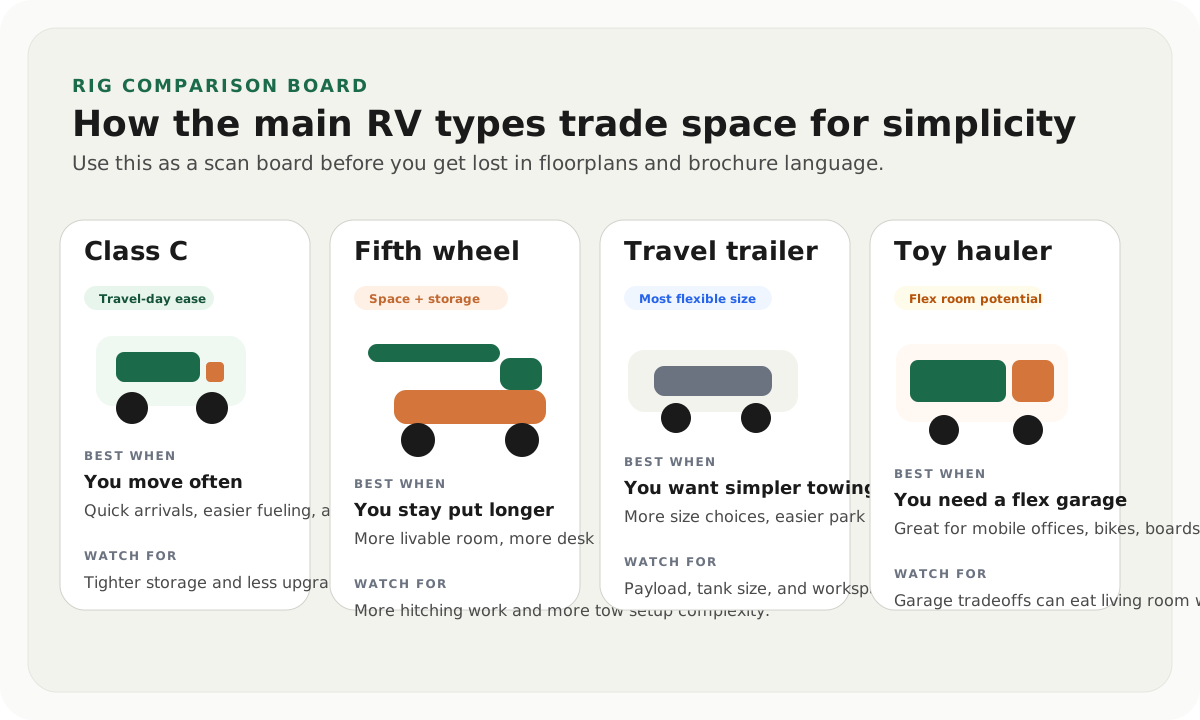
Best Class C Motorhome Profiles for Boondocking Beginners
A practical guide to Class C motorhome profiles that work best for first boondocking trips, including length, tanks, OCCC, storage, solar headroom, and service tradeoffs.
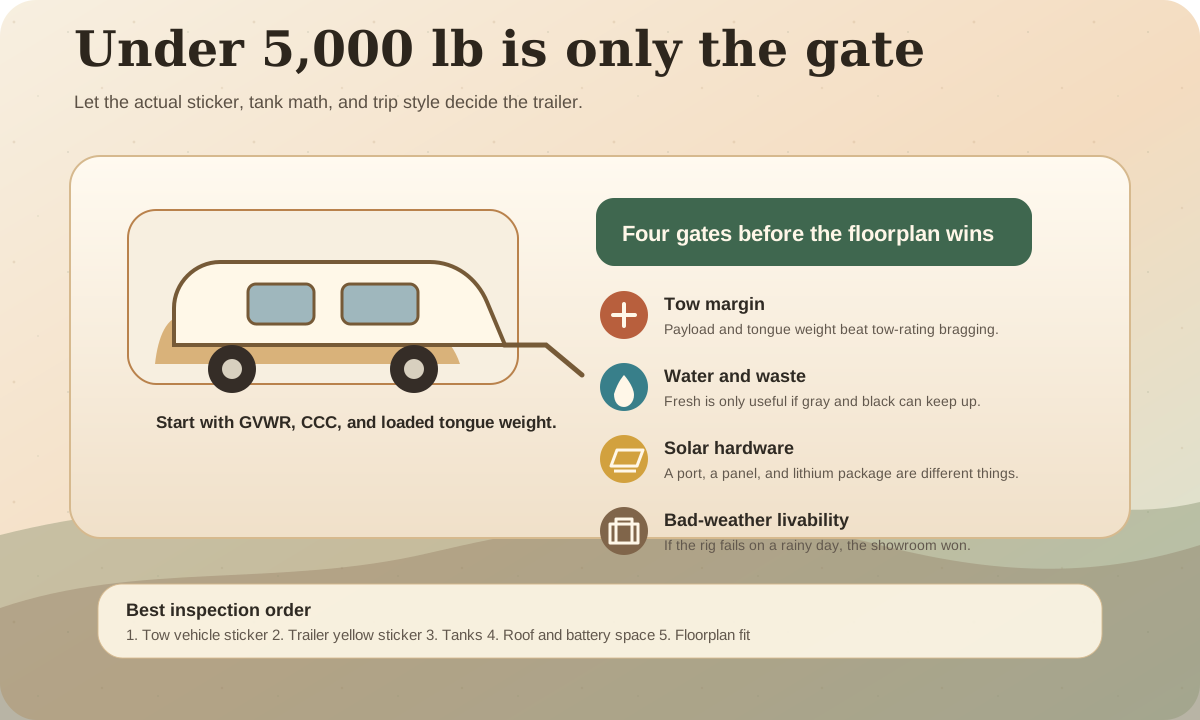
Best Boondocking Travel Trailers Under 5,000 lb
Seven sub-5,000-lb trailers compared on whether your truck can actually tow them loaded, plus tanks, solar room, and floorplan fit for a week off-grid.

Boondocking 101: A Beginner's Guide for RVers
A grounded beginner's guide to boondocking in an RV, including planning, etiquette, water use, power, legal site choice, and what catches people off guard.
How Long Can You Boondock in an RV? The Real Answer Depends on These Four Limits
A practical guide to how long you can boondock in an RV based on battery, solar, water, waste, propane, location rules, and the habits that end stays first.