Shortlist first
Use this to find the winner first, then compare the alternates only if their tradeoffs fit your rig better.
Shortlist labels are editorial recommendations, not popularity rankings. Fit score still matters, but the label tells you why each pick made this guide.
How fit scores work
Scores are editorial fit scores, not user-review averages. The rubric weighs stated RV-use fit, verified specs and limits, whole-rig friction, visible downsides or support risk, and value for the specific job in this guide. Read the full scoring rubric.
If you need one baseline option before reading the full guide, start with Winnebago Minnie Winnie 25B for compact starter class c.
The first option to evaluate if you want the strongest all-around fit for this guide. Check the other cards only if their award label matches your constraint better.
| Product | Why shortlisted | Fit score | Key spec | Best for | Skip if | Actions |
|---|---|---|---|---|---|---|
| Winnebago Minnie Winnie 25B Links to: Winnebago Minnie Winnie 25B | Best overall The first option to evaluate if you want the strongest all-around fit for this guide. | 4.6 / 5 fit scoreScore rubric | About 26 ft, Ford E-Series chassis, 14,500 lb GVWR, 40 gal fresh on recent official spec materials | Compact starter Class C | You need a permanent rear bedroom, large exterior storage, or a family layout with more separation. | Read Winnebago Minnie Winnie 25B notesCheck listing at WinnebagoMerchant link - direct listing. Verify price and specs at Winnebago. |
| Jayco Redhawk 26XD Links to: Jayco Redhawk 26XD | Also great A strong alternate when its specific tradeoffs fit your rig better than the winner. | 4.4 / 5 fit score | 28' 8", 14,500 lb GVWR, roughly mid-40 gal fresh and around 40/31 gal waste tanks in official Redhawk materials | Balanced couple or small-family lane | You want the shortest possible coach or dislike slide-room complexity in a used unit. | Read Jayco Redhawk 26XD notesCheck listing at JaycoMerchant link - direct listing. Verify price and specs at Jayco. |
| Coachmen Freelander 26DS Links to: Coachmen Freelander 26DS | Best value The pick that balances capability and cost pressure best for this decision. | 4.3 / 5 fit score | 27' 5" listed length, 14,500 lb GVWR, 50/31/31 gal tanks on current dealer/spec materials | Value-focused 27 ft used-Class-C shopping | You need premium cabinetry, the newest power package, or a no-compromise full-time interior. | Read Coachmen Freelander 26DS notesCheck listing at Coachmen RVMerchant link - direct listing. Verify price and specs at Coachmen RV. |
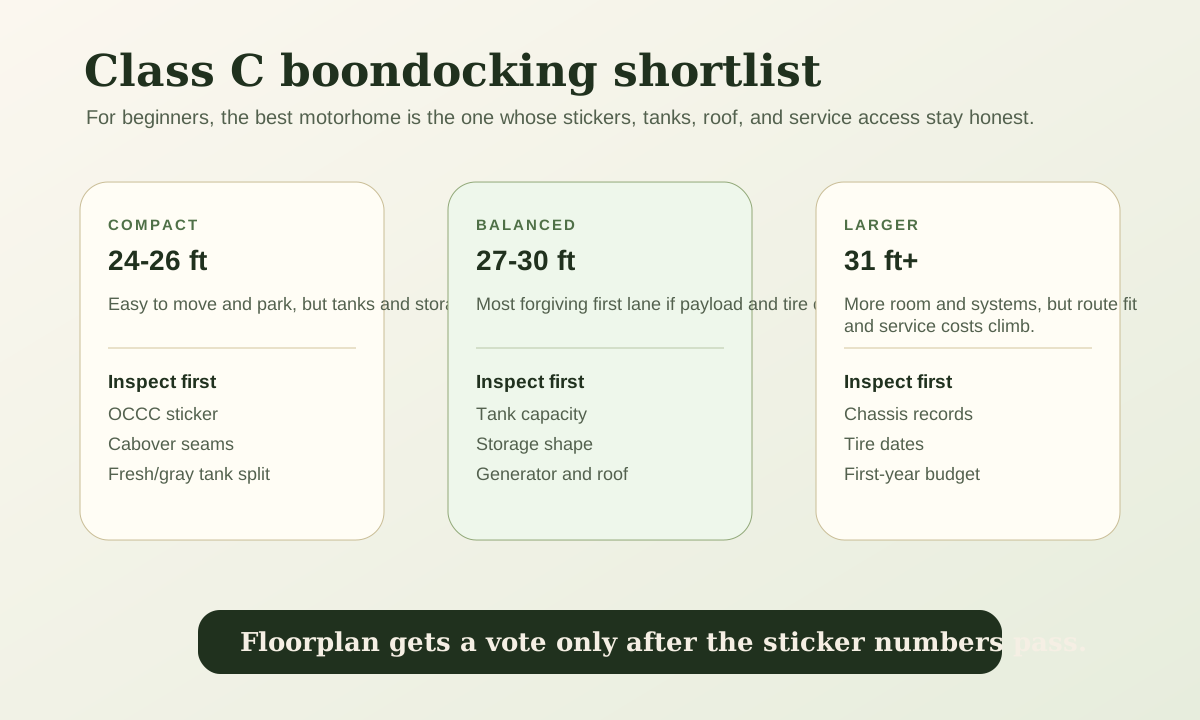
Class C motorhome profile matrix
Treat these as shopping lanes, not exact model promises. Always verify the individual unit's yellow OCCC sticker, tire dates, tank labels, and actual scale weight.
Easiest beginner lane
24-26 ft compact Class C
Best when driving confidence, campsite fit, and quick arrival routines matter more than big interior separation.
Best balanced lane
27-30 ft couple or family coach
Often the most forgiving middle ground when tanks, storage, bed access, and livability all need to stay usable.
Most commonly overbought
Heavy super-C-style profile
Can be excellent, but only when payload, service cost, fuel budget, and storage discipline are already realistic.
Official checks before shortlisting a Class C
Model pages and brochures are useful for narrowing the field. The actual used unit still needs its own OCCC sticker, tire date codes, VIN recall check, tank labels, and scale-weight reality check.
Pre-arrival checks
Read the actual OCCC sticker
Brochure GVWR does not tell you how much payload remains after options, passengers, water, food, tools, batteries, and camping gear.
Check tires before decor
Tire age, load range, sidewall condition, inflation history, and axle weights matter more than upholstery on a used Class C.
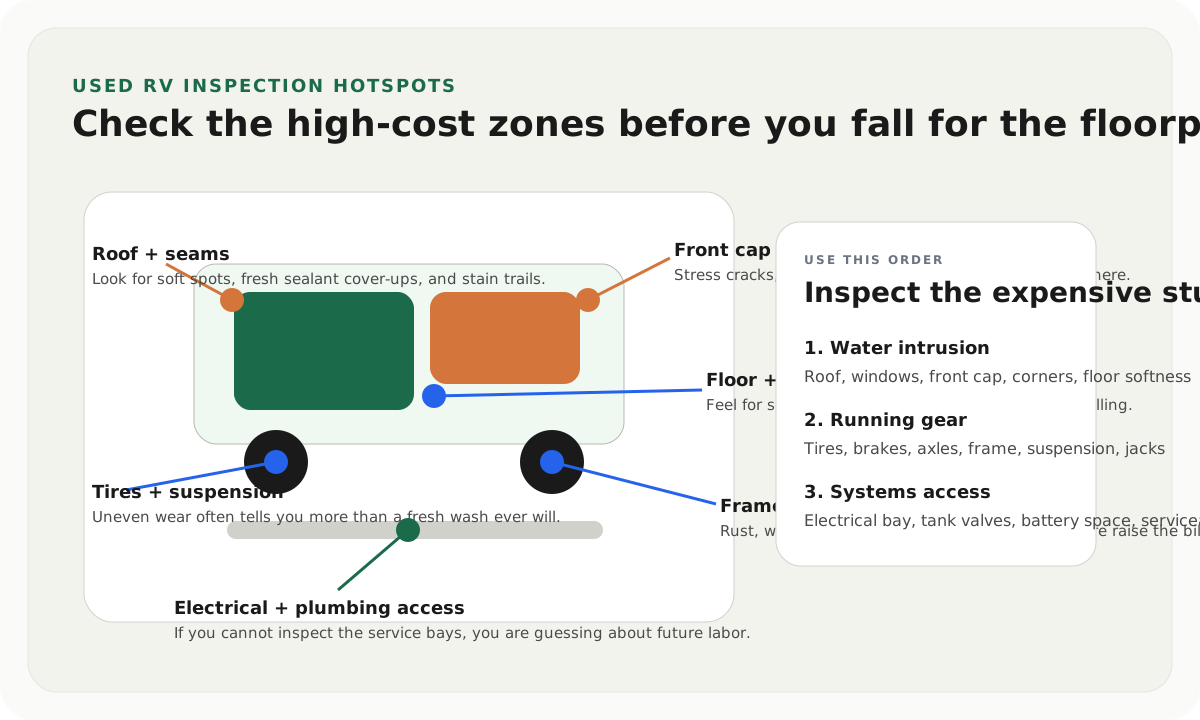
Inspect cab-over seams first
Water intrusion around the cab-over, roof, windows, and slide corners can turn an otherwise good floorplan into a repair project.
Why Class C motorhomes are attractive for first boondocking trips
Class C motorhomes are popular with newer boondockers because they reduce some of the friction that makes early trips stressful.
You do not have to hitch a trailer.
You do not have to manage truck-and-trailer length at every fuel stop.
You can often pull into camp, level, and settle faster than a towable setup.
That simplicity matters. A rig that is easy to move, park, and reset usually gets used more often, especially while you are still learning how water, power, waste, and campsite selection work in real life.
But a Class C is not automatically beginner-friendly. Some are payload-limited. Some have tiny tanks. Some have awkward exterior storage. Some look clean inside while the roof, cab-over seam, or generator compartment is quietly telling a different story.
The right question is not, "What is the best Class C?"
The better question is, "Which Class C profile gives me the least friction while still carrying the resources I actually need?"
If you are shopping used instead of new, carry these profile lanes into the used Class C motorhome shortlist so chassis condition, house condition, OCCC, tires, generator behavior, and cabover water risk get inspected before the floorplan wins.
Compare the three beginner-friendly Class C lanes
Compare
Class C motorhome profile comparison for beginner boondocking
Use one comparison matrix to scan the practical differences. Small screens stack each row; wider screens keep the first column pinned.
| Spec | 24-26 ft compact Class C | 27-30 ft balanced Class C | Super-C-style heavier profile |
|---|---|---|---|
| Best fit | Solo travelers, couples, and short beginner trips | Couples or small families wanting more tank and storage confidence | Heavier gear loads, towing needs, and longer self-contained trips |
| Typical planning range | Shorter wheelbase, easier parking, less storage | More livability without becoming huge | More truck-like chassis, more cost, more service complexity |
| Fresh-water target to verify | 30-40 gal can work for short trips | 40-55 gal feels calmer for repeat boondocking | 50+ gal is useful only if payload and waste capacity also support it |
| Payload sticker risk | Can be tight once people, water, and gear are loaded | Still needs careful OCCC math | Usually better capacity, but never assume without the actual sticker |
| Common beginner mistake | Buying too small for tanks and storage | Ignoring loaded weight and tire age | Buying capability you do not want to pay to maintain |
Shortlist notes for three Class C lanes
These are not universal "buy this exact unit" commands. They are representative Class C lanes that help a beginner compare real listings without getting lost in brochure language. A clean used Minnie Winnie 25B, Redhawk 26XD, or Freelander 26DS can still be a bad buy if the actual sticker, tires, roof, generator, or service history fail inspection.
The reason to start with named models is focus. A shopper can compare one compact lane, one balanced slide-room lane, and one value-focused lane, then reject any listing that does not survive the boring checks.
- Latest product check
- Specs, fit notes, and current listing context were reviewed April 21, 2026.
- Evidence label
- Research-only: Score is based on documented research and fit analysis where direct testing or verified current specs are limited.
- Price context
- Pricing and availability can change, so confirm the merchant listing before buying.
Product facts last checked April 21, 2026
Winnebago Minnie Winnie 25B
Editorial fit score
The Minnie Winnie 25B represents the compact Class C lane well: short enough to feel less intimidating, still built on a familiar E-Series Class C platform, and large enough for short boondocking trips when the actual OCCC and tank labels check out. It is not the roomiest choice, which is part of the appeal for first trips.
Review verdict
- Short verdict
- The cleanest first stop for beginners who want a manageable Class C before they know whether bigger-rig life is worth the extra friction.
- Evidence used
- Research-only
- Published specs checked against official Winnebago model materials on April 21, 2026; exact used-unit stickers and model-year changes still need verification.
- Why it made the shortlist
- Best overall
- The first option to evaluate if you want the strongest all-around fit for this guide.
- Best if
- Solo travelers or couples who want the least intimidating Class C starter lane
- Why not this product?
- You need a permanent rear bedroom, a large family sleeping plan, or enough storage for long full-time stretches.
- Watch for
- The smaller body can feel tight during bad weather or multi-person trips.
- Product check date
- Specs, fit notes, and current listing context were last checked April 21, 2026.
Key specs
- Length lane
- About 26 ft compact Class C
- GVWR context
- 14,500 lb Ford E-Series class in recent official materials
- Fresh-water capacity
- Recent official spec materials list about 40 gal fresh
- Best inspection focus
- OCCC sticker, cab-over seams, tires, generator, roof
Score basis
Published specs checked against official Winnebago model materials on April 21, 2026; exact used-unit stickers and model-year changes still need verification. These are editorial fit scores, not customer-review averages. Read the scoring rubric.
- RV-use fit
- 30% weight
- Verified specs and limits
- 25% weight
- Whole-rig friction
- 20% weight
- Downsides and support risk
- 15% weight
- Value for the job
- 10% weight
How directly the product solves the specific off-grid RV job in this guide.
Capacity, dimensions, electrical limits, protection claims, and compatibility constraints we can verify from current sources.
Install effort, storage, wiring, service access, weight, refill workflow, or daily-use hassle.
Known tradeoffs, unclear claims, warranty coverage, support risk, and wrong-buyer failure modes.
Whether the price makes sense after fit, specs, and tradeoffs still hold.
Testing limits
- Treat this as an editorial screen, not a final buy signal.
- Verify the latest manufacturer specs, owner documentation, and retailer listing before relying on this option.
Reasons to buy
- Compact length makes fuel stops, campsites, errands, and first travel days less stressful.
- The simple Class C format is easier to understand than a large towable setup for many beginners.
- A shorter coach makes it easier to learn water, power, waste, and campsite judgment without buying too much rig.
Watch-outs
- The smaller body can feel tight during bad weather or multi-person trips.
- Tank capacity and exterior storage must be checked carefully before planning longer stays.
- Cab-over water intrusion and roof condition deserve early inspection on used examples.
Check current listing
Winnebago Minnie Winnie 25B
Use the listing after the fit notes make sense for your rig. Pricing and availability can change, so verify the merchant page before buying.
- Latest product check
- Specs, fit notes, and current listing context were reviewed April 21, 2026.
- Evidence label
- Research-only: Score is based on documented research and fit analysis where direct testing or verified current specs are limited.
- Price context
- Pricing and availability can change, so confirm the merchant listing before buying.
Product facts last checked April 21, 2026
Jayco Redhawk 26XD
Editorial fit score
The Redhawk 26XD-style lane is useful because it sits in the middle: more room and separation than the most compact Class C coaches, but still manageable enough for a first motorhome shopper. The slide and extra room can help on rainy days, but they also add inspection points.
Review verdict
- Short verdict
- The balanced lane for shoppers who want more living function than the shortest Class C without jumping straight into a long coach.
- Evidence used
- Research-only
- Representative specs checked against official Jayco Redhawk materials on April 21, 2026; confirm exact model year, options, sticker weights, and current used-unit condition.
- Why it made the shortlist
- Also great
- A strong alternate when its specific tradeoffs fit your rig better than the winner.
- Best if
- Couples or small families who want one balanced Class C lane before shopping used
- Why not this product?
- You want the shortest possible rig or you do not want slide-room inspection risk.
- Watch for
- Slides add leak, mechanism, and floor inspection points on used examples.
- Product check date
- Specs, fit notes, and current listing context were last checked April 21, 2026.
Key specs
- Length lane
- 28' 8" in official Redhawk 26XD materials
- GVWR context
- 14,500 lb E-Series class in official spec tables
- Tank capacity
- Mid-40 gal fresh with roughly 40/31 gal gray/black in official materials
- Best inspection focus
- Slide operation, OCCC, tires, roof, generator load test
Score basis
Representative specs checked against official Jayco Redhawk materials on April 21, 2026; confirm exact model year, options, sticker weights, and current used-unit condition. These are editorial fit scores, not customer-review averages. Read the scoring rubric.
- RV-use fit
- 30% weight
- Verified specs and limits
- 25% weight
- Whole-rig friction
- 20% weight
- Downsides and support risk
- 15% weight
- Value for the job
- 10% weight
How directly the product solves the specific off-grid RV job in this guide.
Capacity, dimensions, electrical limits, protection claims, and compatibility constraints we can verify from current sources.
Install effort, storage, wiring, service access, weight, refill workflow, or daily-use hassle.
Known tradeoffs, unclear claims, warranty coverage, support risk, and wrong-buyer failure modes.
Whether the price makes sense after fit, specs, and tradeoffs still hold.
Testing limits
- Treat this as an editorial screen, not a final buy signal.
- Verify the latest manufacturer specs, owner documentation, and retailer listing before relying on this option.
Reasons to buy
- More interior breathing room makes bad-weather days and family trips easier.
- The length still stays in a manageable Class C range for many newer drivers.
- The middle-lane layout can support a modest solar, battery, and storage upgrade path if the sticker has margin.
Watch-outs
- Slides add leak, mechanism, and floor inspection points on used examples.
- More livability can hide payload pressure once people, water, and camping gear are loaded.
- It is not as nimble as a shorter coach for tight public-land spurs or city errands.
Related parts and setup checks
Check current listing
Jayco Redhawk 26XD
Use the listing after the fit notes make sense for your rig. Pricing and availability can change, so verify the merchant page before buying.
- Latest product check
- Specs, fit notes, and current listing context were reviewed April 21, 2026.
- Evidence label
- Research-only: Score is based on documented research and fit analysis where direct testing or verified current specs are limited.
- Price context
- Pricing and availability can change, so confirm the merchant listing before buying.
Product facts last checked April 21, 2026
Coachmen Freelander 26DS
Editorial fit score
The Freelander 26DS represents the practical used-Class-C lane: common enough to compare listings, long enough to feel usable, and straightforward enough that the inspection can focus on condition, stickers, systems, and roof health. It is not the fanciest answer. That is exactly why it can make sense as a first boondocking coach.
Review verdict
- Short verdict
- The value-focused lane for shoppers who want a common Class C platform and enough space to learn boondocking without paying premium-brand prices.
- Evidence used
- Research-only
- Published specs checked against official Coachmen Freelander materials on April 21, 2026; used-unit condition, dealer options, and actual stickers remain decisive.
- Why it made the shortlist
- Best value
- The pick that balances capability and cost pressure best for this decision.
- Best if
- Budget-aware shoppers comparing common used Class C listings
- Why not this product?
- You want a premium full-time interior, large basement storage, or a factory power package that is already off-grid complete.
- Watch for
- Used examples vary widely by rental history, maintenance, roof care, and generator service.
- Product check date
- Specs, fit notes, and current listing context were last checked April 21, 2026.
Key specs
- Length lane
- 27' 5" in current 26DS spec materials
- GVWR context
- 14,500 lb Ford E-450 class in current materials
- Tank capacity
- 50 fresh / 31 gray / 31 black gal in current spec materials
- Best inspection focus
- Generator, roof, slide, tires, OCCC, service records
Score basis
Published specs checked against official Coachmen Freelander materials on April 21, 2026; used-unit condition, dealer options, and actual stickers remain decisive. These are editorial fit scores, not customer-review averages. Read the scoring rubric.
- RV-use fit
- 30% weight
- Verified specs and limits
- 25% weight
- Whole-rig friction
- 20% weight
- Downsides and support risk
- 15% weight
- Value for the job
- 10% weight
How directly the product solves the specific off-grid RV job in this guide.
Capacity, dimensions, electrical limits, protection claims, and compatibility constraints we can verify from current sources.
Install effort, storage, wiring, service access, weight, refill workflow, or daily-use hassle.
Known tradeoffs, unclear claims, warranty coverage, support risk, and wrong-buyer failure modes.
Whether the price makes sense after fit, specs, and tradeoffs still hold.
Testing limits
- Treat this as an editorial screen, not a final buy signal.
- Verify the latest manufacturer specs, owner documentation, and retailer listing before relying on this option.
Reasons to buy
- Common used-market profile makes it easier to compare condition and price across listings.
- The 50-gallon fresh-water capacity is useful if gray and black capacity still match your habits.
- A practical interior can be a better first teacher than a premium coach that makes every scrape feel expensive.
Watch-outs
- Used examples vary widely by rental history, maintenance, roof care, and generator service.
- The gray and black tanks can still limit stay length before fresh water is gone.
- It needs the same serious tire, roof, cab-over, slide, and OCCC inspection as more expensive Class C coaches.
Related parts and setup checks
Water calculator
Model the 50/31/31 gal tank capacity against showers, dishes, and toilet habits before assuming stay length.
Open Water calculatorUsed RV inspection checklist
Walk the coach by roof, tires, generator, water intrusion, electrical bay, and chassis evidence before negotiating.
Open Used RV inspection checklistCheck current listing
Coachmen Freelander 26DS
Use the listing after the fit notes make sense for your rig. Pricing and availability can change, so verify the merchant page before buying.
The sticker checks matter more than the brochure
Class C shopping gets clearer when you check the boring labels before the pretty furniture.
Start with:
- OCCC or cargo-carrying sticker
- gross vehicle weight rating and axle ratings
- tire date codes and load rating
- fresh, gray, and black tank capacity
- generator hours and service behavior
- roof seams, cab-over seams, and slide corners
- battery bay size and inverter/solar upgrade access
OCCC is especially important. It tells you how much payload remains for people, water, food, tools, pets, bikes, office gear, spare parts, and every upgrade you add later.
A Class C with a charming floorplan but weak OCCC can become frustrating quickly. Water is heavy. People are heavy. Tools and camping gear are heavier than shoppers imagine. If the sticker is already tight before the first solar panel, the rig may not be a good boondocking starter even if it looks perfect on the lot.
Do not estimate payload from the model name
Two Class C motorhomes with similar length and floorplan can have very different real carrying capacity once options, slides, generators, leveling gear, and chassis differences are included. Use the actual sticker on the actual unit.
What makes a Class C better off-grid
A beginner-friendly boondocking Class C usually has a few practical traits.
First, it has a simple camp routine. You can arrive, level, set the parking brake, check power, and settle without turning setup into a production.
Second, it has enough tank capacity for the trip style. A tiny fresh tank or tiny gray tank can end a stay faster than the battery bank.
Third, it has storage that is easy to reach. Exterior bays, hose storage, leveling blocks, water jugs, and tool access all matter more after the first few trips.
Fourth, it has upgrade headroom. That does not mean you need a giant electrical rebuild immediately. It means the roof, battery compartment, converter location, and wiring path should not make every future improvement painful.
Finally, it should be easy enough to drive that you will actually use it. If fuel stops, backing, narrow roads, or city errands make every trip feel intimidating, the rig is probably not a great first boondocking teacher.
Who should choose a compact Class C
A compact Class C makes the most sense when:
- you travel solo or as a couple
- you move often
- you want to fit more campsites and parking areas
- you are learning boondocking in shorter trips
- you would rather carry less gear than manage a larger rig
The watchout is resource capacity. Compact coaches can have smaller tanks, tighter storage, and less room for batteries or solar gear. That is not automatically bad. It just means you should match the rig to shorter stays, simpler meals, lighter office needs, and a realistic refill rhythm.
Who should choose the balanced middle lane
The 27-30 foot Class C lane is often the most useful first serious answer because it gives more room for:
- a real bed plus usable seating
- better exterior storage
- more practical tank capacity
- a small family or dog setup
- a modest solar and lithium upgrade path
This is also where shoppers can get careless. More length feels more comfortable, but the sticker still matters. Slides, large refrigerators, bigger generators, and fancy options can eat payload before the first trip starts.
The balanced lane works when the actual unit still has enough OCCC, tire capacity, and storage shape to support your real travel load.
Who should be cautious with heavier Class C and super-C profiles
Heavier Class C and super-C-style rigs can be excellent for the right buyer. They may offer stronger chassis capability, better towing confidence, more robust storage, and more comfortable long-distance travel.
They also bring higher purchase cost, higher service cost, more fuel use, and a bigger footprint.
For beginners, the question is whether that extra capability solves a real problem or simply makes the first rig more expensive to learn with.
Choose this lane only when:
- you have a clear towing or cargo reason
- the service budget is realistic
- the route style supports the size
- you have verified the actual weights
- you are not using "more capable" as a substitute for learning the basics
The simplest buying workflow
Use this order before you fall in love with any specific Class C:
- Pick the size lane that matches how often you move.
- Read the actual OCCC sticker.
- Confirm fresh, gray, and black tank capacity.
- Check roof, cab-over, slide, and wall seams for water clues.
- Look at tire age, suspension condition, and service records.
- Decide whether the battery, solar, and storage paths are upgrade-friendly.
- Run a realistic weekend packing list against the available storage.
If a rig survives that workflow, then the floorplan gets to matter.
If it fails early, the prettiest interior in the world does not rescue it.
Worked beginner boondocking example
Imagine a couple shopping a 27-foot Class C for three-night public-land trips.
They bring two adults, one dog, 35 gallons of fresh water, food, a small tool kit, camp chairs, leveling blocks, hoses, a portable solar panel, laptops, a hotspot, and normal clothes. The water alone weighs about 292 pounds at 8.34 pounds per gallon. Add people, pets, tools, food, and gear, and the trip load can easily move past 900 pounds before any lithium battery upgrade, bike rack, spare fuel, or hitch cargo carrier is included.
That is why the OCCC sticker cannot be treated as a formality. A Class C with 2,000 pounds of real remaining carrying capacity gives that beginner trip breathing room. A similar-looking coach with 1,100 pounds left after options can feel tight before the first upgrade.
Now run the same example through tanks. If the coach has 40 gallons of fresh water but only 25-30 gallons of gray capacity, the fresh tank is not the whole stay-length answer. Dishes, handwashing, and showers may fill gray before fresh is gone. If the coach has 50 gallons fresh and 31/31 gray/black, the stay may feel calmer, but only if payload still supports carrying that water and the dump plan is realistic.
Power is similar. A beginner Class C can start with modest solar and a healthy battery if the loads stay disciplined. Lights, pump, fans, device charging, and fridge control are manageable. Inverter coffee, electric heat, long Starlink sessions, and induction cooking are different conversations. Use the solar calculator after you know roof space, then compare the result with the real daily routine.
The point is not that one model wins every number. The point is that a beginner rig should survive normal camping without needing perfect behavior. If the rig only works when the water is half full, the gear is minimal, the weather is mild, and nobody brings extra food or tools, it is not a forgiving first boondocking platform.
How to compare two listings that both look good
When two Class C listings both seem promising, compare them in this order.
First, choose the one with better evidence. A slightly less exciting floorplan with maintenance records, fresh tires, a dry roof, clean generator behavior, and a readable OCCC sticker beats a prettier coach with vague answers.
Second, choose the one with better margin. More usable payload, balanced tanks, accessible storage, and an easier battery/solar path matter more than one extra cabinet. A beginner should buy room for mistakes.
Third, choose the one with the calmer travel day. Sit in the driver's seat, look at mirrors, imagine fuel stops, and check where passengers, pets, snacks, and overnight gear ride. The coach that feels manageable is more likely to get used.
Fourth, choose the one with the cleaner first-year budget. Used Class C ownership often starts with tires, batteries, roof sealant, fluids, generator service, hoses, filters, and small repairs. If the purchase price leaves no room for catch-up work, the "deal" may not be a deal.
Finally, choose the listing that gives you a clear first trip. You should be able to name the first campground or dispersed site, water source, dump point, power plan, and bail-out option. If the rig requires a major retrofit before one simple weekend, it may be better as a future project than a first boondocking teacher.
What I would buy first
For a first boondocking Class C, I would usually start in the balanced 27-30 foot lane unless the buyer has a strong reason to go compact.
That middle profile is big enough to support normal camping gear, a modest power upgrade, and more comfortable interior use, but it can still stay manageable if the driver practices and the route choices stay realistic.
The compact lane is better for frequent movers and minimalist travelers.
The heavier lane is better for people who already know they need cargo, towing, or chassis margin and are ready for the cost that comes with it.
The best beginner rig is the one you can repeat
The right first Class C should make the second trip easier than the first. If the rig only works when packing, weather, campsite access, and payload all go perfectly, it is probably too fragile as a beginner boondocking platform.
Frequently asked
Questions RVers usually ask next.
What size Class C is best for beginner boondocking?
For many beginners, the easiest starting point is either a compact 24-26 foot Class C for short trips or a balanced 27-30 foot coach when tanks, storage, and livability need more breathing room. The actual OCCC sticker matters more than length alone.
Are Class C motorhomes good for boondocking?
Yes, when the rig has enough payload, tanks, storage, and upgrade access for the way you camp. Class C motorhomes can be excellent for simple travel days, but some are limited by cargo capacity or small tanks.
What should I inspect first on a used Class C?
Start with water intrusion around the roof, cab-over area, windows, and slide corners. Then check OCCC, tire age, generator behavior, service records, tank capacity, and battery or electrical access.
Is a super C better for boondocking?
Sometimes, but not automatically. A super-C-style rig can offer more chassis and towing capability, but it also adds cost, size, and service complexity. It is best when you have a real cargo, towing, or long-distance reason for the heavier platform.
Freshness note
Last checked April 21, 2026
This topic can change when products, plans, prices, campsite rules, or fit guidance move. These notes show what was reviewed most recently.
This review included
- Checked official Winnebago Minnie Winnie 25B, Jayco Redhawk 26XD, and Coachmen Freelander 26DS spec materials for representative Class C length, GVWR, tank, and chassis context.
- Checked NHTSA recall and tire-safety routing so used-Class-C shoppers verify VIN, tire date codes, and safety recalls before treating a floorplan as ready.
- Expanded the page from a profile guide into a model-based shortlist with quick picks, product cards, official resources, and sticker-first inspection math.
Recent change log
April 21, 2026
Expanded the Class C beginner boondocking guide with official-source checks, a shortlist table, product cards, and a custom Class C decision visual.
April 10, 2026
Published the first dedicated Class C motorhome planning guide for beginner boondockers.
April 10, 2026
Added Class C profile ranges, sticker checks, and a beginner-friendly decision matrix to the rig-review cluster.
Broader editorial corrections are tracked on the Corrections and Updates page.