Shortlist first
Use this to find the winner first, then compare the alternates only if their tradeoffs fit your rig better.
Shortlist labels are editorial recommendations, not popularity rankings. Fit score still matters, but the label tells you why each pick made this guide.
How fit scores work
Scores are editorial fit scores, not user-review averages. The rubric weighs stated RV-use fit, verified specs and limits, whole-rig friction, visible downsides or support risk, and value for the specific job in this guide. Read the full scoring rubric.
If you need one baseline option before reading the full guide, start with Winnebago Minnie Winnie 25B for compact used class c benchmark.
The first option to evaluate if you want the strongest all-around fit for this guide. Check the other cards only if their award label matches your constraint better.
| Product | Why shortlisted | Fit score | Key spec | Best for | Skip if | Actions |
|---|---|---|---|---|---|---|
| Winnebago Minnie Winnie 25B Links to: Winnebago Minnie Winnie 25B | Best overall The first option to evaluate if you want the strongest all-around fit for this guide. | 4.6 / 5 fit scoreScore rubric | About 26 ft in recent official materials; verify OCCC, tires, cabover seams, roof, generator, and tank labels | Compact used Class C benchmark | You need a permanent rear bedroom, large exterior storage, or long full-time comfort. | Read Winnebago Minnie Winnie 25B notesCheck listing at WinnebagoMerchant link - direct listing. Verify price and specs at Winnebago. |
| Jayco Redhawk 26XD Links to: Jayco Redhawk 26XD | Also great A strong alternate when its specific tradeoffs fit your rig better than the winner. | 4.4 / 5 fit score | Mid-size Class C lane; verify slide behavior, OCCC, tires, roof, generator, and service records | Balanced couple or family benchmark | You want the shortest possible coach or want to avoid used slide-room risk. | Read Jayco Redhawk 26XD notesCheck listing at JaycoMerchant link - direct listing. Verify price and specs at Jayco. |
| Coachmen Freelander 26DS Links to: Coachmen Freelander 26DS | Best value The pick that balances capability and cost pressure best for this decision. | 4.3 / 5 fit score | Value-oriented Class C lane; verify rental history, roof, generator, OCCC, tires, and water intrusion | Common used-market value benchmark | You want a premium interior or a coach that is already built as a serious off-grid platform. | Read Coachmen Freelander 26DS notesCheck listing at Coachmen RVMerchant link - direct listing. Verify price and specs at Coachmen RV. |
Used Class C shortlist at a glance
Treat these as inspection lanes, not promises. The individual coach, maintenance history, water history, tires, OCCC sticker, and generator behavior decide the buy.
Best first filter
OCCC and tire age
A used Class C can look perfect and still have too little cargo margin or tires that need replacing before the first real trip.
Best Class C-specific filter
Cabover and roof water history
Cabover seams, front cap transitions, roof penetrations, and windows are high-cost inspection zones.
Best boondocking filter
Tanks, generator, battery bay, storage
The coach needs enough resource capacity and service access to support the way you actually camp.
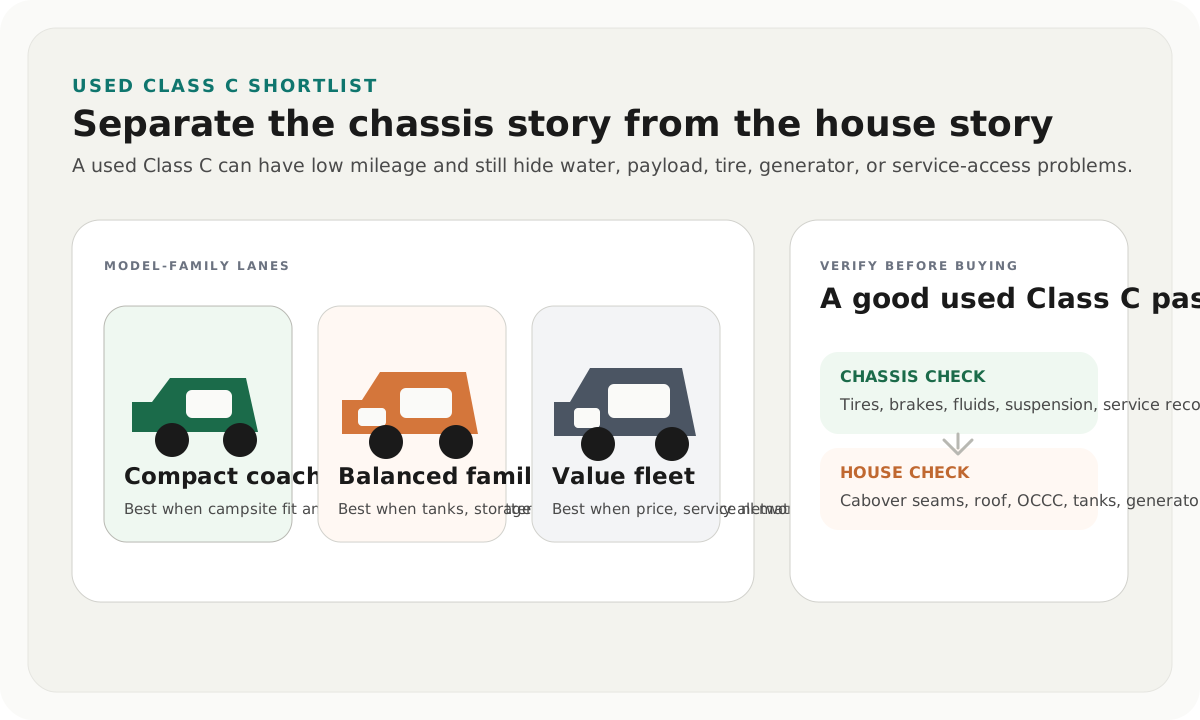
A used Class C has two stories
Used Class C shopping is tricky because the motorhome is both a vehicle and a small house.
The vehicle story includes:
- engine and transmission service
- tires
- brakes
- suspension
- steering
- fluids
- chassis battery
- mileage and idle history
The house story includes:
- roof seams
- cabover structure
- windows
- tanks
- generator
- converter and battery charging
- plumbing
- appliances
- storage
- water intrusion
Most bad used-Class-C decisions happen when the buyer overweights one story and ignores the other.
A low-mile coach can still be a bad house.
A beautiful house can still sit on tired tires, neglected brakes, weak suspension, or missing service records.
The cleanest decision is to shortlist by model-family lane, then inspect the exact coach like both a vehicle and an RV.
The used Class C shortlist lanes
Compare
Used Class C motorhome model-family lanes for boondocking shoppers
Use one comparison matrix to scan the practical differences. Small screens stack each row; wider screens keep the first column pinned.
| Spec | Compact touring coaches | Balanced family coaches | Value fleet coaches | Premium compact coaches | Heavier super-C-style coaches |
|---|---|---|---|---|---|
| Examples to inspect | Winnebago Minnie Winnie or Spirit 22-25 ft style layouts; Coachmen Freelander compact layouts | Jayco Redhawk or Greyhawk 26-31 ft style layouts; Forest River Sunseeker or Forester mid-size layouts | Thor Four Winds and Chateau; Coachmen Leprechaun; former rental or fleet-style coaches only if records are strong | Phoenix Cruiser, Coach House, Leisure-style compact coaches, or other higher-finish small Class C/B+ style platforms | Dynamax Isata, Jayco Seneca, Entegra Accolade, or similar heavier chassis profiles when cargo and towing needs justify them |
| Best fit | Solo travelers, couples, and frequent movers who value easy driving and small-site access | Couples or families who need more bed, tank, and storage confidence without jumping to a huge coach | Budget shoppers who can inspect carefully and reserve money for catch-up maintenance | Couples who want better fit, finish, and road manners in a smaller coach | Heavier gear loads, towing a vehicle or trailer, and longer self-contained travel |
| Boondocking upside | Easy arrival routine, better campsite fit, lower intimidation, simpler travel days | More livability, better storage odds, and more useful tanks for repeat dry camping | Lower purchase price can leave budget for tires, batteries, sealing, and system upgrades | Small footprint with better road comfort and often cleaner construction details | More payload, towing confidence, storage, and longer-route comfort when the budget is ready |
| Watch first | OCCC, small tanks, cabover seams, limited exterior storage, and cramped battery access | Payload after slides/options, old tires, generator neglect, roof seams, and slide corners | Deferred maintenance, rental wear, roof patchwork, soft floors, and cheap fixes hiding bigger bills | High used prices, specialized parts, smaller tanks, and service familiarity outside major cities | Fuel cost, service cost, size, insurance, tire cost, and whether the route actually needs the capability |
Representative used Class C benchmarks
Use these current model names as shopping anchors, not guarantees. The exact used coach still has to pass the OCCC sticker, tire dates, cabover seams, generator load test, roof inspection, tank labels, chassis records, and service-budget check.
- Latest product check
- Specs, fit notes, and current listing context were reviewed June 6, 2026.
- Evidence label
- Research-only: Score is based on documented research and fit analysis where direct testing or verified current specs are limited.
- Price context
- Pricing and availability can change, so confirm the merchant listing before buying.
Product facts last checked June 6, 2026
Winnebago Minnie Winnie 25B
Editorial fit score
Use the Minnie Winnie 25B lane when a shorter coach, simpler driving, and manageable campsite fit matter more than maximum room. The used-unit decision still depends on OCCC, tire dates, water history, generator behavior, and whether the smaller interior works after normal camping gear is loaded.
Review verdict
- Short verdict
- The compact Class C benchmark for shoppers who want a manageable first motorhome and are willing to inspect cabover, roof, tire, and generator condition carefully.
- Evidence used
- Research-only
- Official Winnebago model materials are useful as a benchmark, but every used unit needs exact-year sticker and condition verification.
- Why it made the shortlist
- Best overall
- The first option to evaluate if you want the strongest all-around fit for this guide.
- Best if
- Compact used Class C benchmark
- Why not this product?
- You need a permanent rear bedroom, large exterior storage, or family separation for bad-weather days.
- Watch for
- Less storage and separation than larger Class C coaches.
- Product check date
- Specs, fit notes, and current listing context were last checked June 6, 2026.
Key specs
- Shopping lane
- Compact Class C
- Main inspection
- OCCC, cabover seams, roof, tires, generator
- Boondocking fit
- Short trips and modest gear lists
- Used-unit rule
- The yellow sticker beats the brochure
Score basis
Official Winnebago model materials are useful as a benchmark, but every used unit needs exact-year sticker and condition verification. These are editorial fit scores, not customer-review averages. Read the scoring rubric.
- RV-use fit
- 30% weight
- Verified specs and limits
- 25% weight
- Whole-rig friction
- 20% weight
- Downsides and support risk
- 15% weight
- Value for the job
- 10% weight
How directly the product solves the specific off-grid RV job in this guide.
Capacity, dimensions, electrical limits, protection claims, and compatibility constraints we can verify from current sources.
Install effort, storage, wiring, service access, weight, refill workflow, or daily-use hassle.
Known tradeoffs, unclear claims, warranty coverage, support risk, and wrong-buyer failure modes.
Whether the price makes sense after fit, specs, and tradeoffs still hold.
Testing limits
- Treat this as an editorial screen, not a final buy signal.
- Verify the latest manufacturer specs, owner documentation, and retailer listing before relying on this option.
Reasons to buy
- Compact size makes first travel days and campsite fit less intimidating.
- A good benchmark for shoppers who do not want to overbuy rig size.
- Simpler lane for learning water, power, waste, and arrival routines.
Watch-outs
- Less storage and separation than larger Class C coaches.
- Cabover and roof water history must be inspected early.
- Tank and cargo limits can show up quickly on longer stays.
Check current listing
Winnebago Minnie Winnie 25B
Use the listing after the fit notes make sense for your rig. Pricing and availability can change, so verify the merchant page before buying.
- Latest product check
- Specs, fit notes, and current listing context were reviewed June 6, 2026.
- Evidence label
- Research-only: Score is based on documented research and fit analysis where direct testing or verified current specs are limited.
- Price context
- Pricing and availability can change, so confirm the merchant listing before buying.
Product facts last checked June 6, 2026
Jayco Redhawk 26XD
Editorial fit score
Use the Redhawk 26XD lane when a small family, couple, or guest-friendly layout matters. The extra room can be useful, but the slide, roof, tires, OCCC, and generator all need stronger inspection before the floorplan gets a vote.
Review verdict
- Short verdict
- The balanced used Class C benchmark for shoppers who need more living function than a compact coach without jumping to a long, heavy motorhome.
- Evidence used
- Research-only
- Official Jayco materials are useful for model-family context; used units still vary by year, options, stickers, storage, and care.
- Why it made the shortlist
- Also great
- A strong alternate when its specific tradeoffs fit your rig better than the winner.
- Best if
- Balanced used Class C benchmark
- Why not this product?
- You want the shortest possible coach or do not want to inspect and maintain a slide room.
- Watch for
- Slide rooms add leak, mechanism, and floor checks.
- Product check date
- Specs, fit notes, and current listing context were last checked June 6, 2026.
Key specs
- Shopping lane
- Mid-size Class C
- Main inspection
- Slide, roof, OCCC, tires, generator
- Boondocking fit
- More living space with more inspection points
- Used-unit rule
- A slide is livability plus maintenance risk
Score basis
Official Jayco materials are useful for model-family context; used units still vary by year, options, stickers, storage, and care. These are editorial fit scores, not customer-review averages. Read the scoring rubric.
- RV-use fit
- 30% weight
- Verified specs and limits
- 25% weight
- Whole-rig friction
- 20% weight
- Downsides and support risk
- 15% weight
- Value for the job
- 10% weight
How directly the product solves the specific off-grid RV job in this guide.
Capacity, dimensions, electrical limits, protection claims, and compatibility constraints we can verify from current sources.
Install effort, storage, wiring, service access, weight, refill workflow, or daily-use hassle.
Known tradeoffs, unclear claims, warranty coverage, support risk, and wrong-buyer failure modes.
Whether the price makes sense after fit, specs, and tradeoffs still hold.
Testing limits
- Treat this as an editorial screen, not a final buy signal.
- Verify the latest manufacturer specs, owner documentation, and retailer listing before relying on this option.
Reasons to buy
- More interior breathing room than the most compact Class C lane.
- Useful middle ground before shoppers commit to a much larger coach.
- Can work well when the actual cargo sticker and tank labels support the trip.
Watch-outs
- Slide rooms add leak, mechanism, and floor checks.
- More room can hide payload pressure after water and family cargo.
- Not as nimble as shorter Class C coaches on tight public-land spurs.
Check current listing
Jayco Redhawk 26XD
Use the listing after the fit notes make sense for your rig. Pricing and availability can change, so verify the merchant page before buying.
- Latest product check
- Specs, fit notes, and current listing context were reviewed June 6, 2026.
- Evidence label
- Research-only: Score is based on documented research and fit analysis where direct testing or verified current specs are limited.
- Price context
- Pricing and availability can change, so confirm the merchant listing before buying.
Product facts last checked June 6, 2026
Coachmen Freelander 26DS
Editorial fit score
Use the Freelander 26DS lane when price, availability, and straightforward comparison shopping matter. It can be a practical starter coach if the roof, tires, generator, OCCC, cabover, and water system survive inspection.
Review verdict
- Short verdict
- The common used-market benchmark for budget-aware shoppers who want enough Class C function to learn boondocking without paying premium-coach prices.
- Evidence used
- Research-only
- Official Coachmen materials are useful for benchmark context; used examples still vary heavily by rental history, care, and dealer options.
- Why it made the shortlist
- Best value
- The pick that balances capability and cost pressure best for this decision.
- Best if
- Used Class C value benchmark
- Why not this product?
- You want premium construction, a large storage platform, or a coach with an already mature off-grid electrical system.
- Watch for
- Used examples can vary widely by rental and maintenance history.
- Product check date
- Specs, fit notes, and current listing context were last checked June 6, 2026.
Key specs
- Shopping lane
- Value-focused Class C
- Main inspection
- Rental wear, roof, tires, generator, OCCC
- Boondocking fit
- Good first platform if the condition is clean
- Used-unit rule
- Cheap only helps if catch-up work is priced honestly
Score basis
Official Coachmen materials are useful for benchmark context; used examples still vary heavily by rental history, care, and dealer options. These are editorial fit scores, not customer-review averages. Read the scoring rubric.
- RV-use fit
- 30% weight
- Verified specs and limits
- 25% weight
- Whole-rig friction
- 20% weight
- Downsides and support risk
- 15% weight
- Value for the job
- 10% weight
How directly the product solves the specific off-grid RV job in this guide.
Capacity, dimensions, electrical limits, protection claims, and compatibility constraints we can verify from current sources.
Install effort, storage, wiring, service access, weight, refill workflow, or daily-use hassle.
Known tradeoffs, unclear claims, warranty coverage, support risk, and wrong-buyer failure modes.
Whether the price makes sense after fit, specs, and tradeoffs still hold.
Testing limits
- Treat this as an editorial screen, not a final buy signal.
- Verify the latest manufacturer specs, owner documentation, and retailer listing before relying on this option.
Reasons to buy
- Common profile makes it easier to compare listings and pricing.
- Practical first-coach lane for learning actual off-grid habits.
- Lower purchase price can leave room for tires, batteries, sealing, or repairs.
Watch-outs
- Used examples can vary widely by rental and maintenance history.
- Value pricing can hide deferred roof, generator, or chassis work.
- Finish and storage may not satisfy long full-time expectations.
Check current listing
Coachmen Freelander 26DS
Use the listing after the fit notes make sense for your rig. Pricing and availability can change, so verify the merchant page before buying.
Official checks before inspecting a used Class C
Use these official and manufacturer resources as starting points, then verify the exact model year, floorplan, chassis, recalls, manuals, and service records for the coach in front of you.
Pre-arrival checks
Before making an offer
Match the VIN, chassis records, tire date codes, generator load test, roof and slide inspection, recalls, manuals, OCCC sticker, and first-year service budget to the exact coach.
The numbers to verify before the floorplan gets a vote
OCCC
OCCC stands for occupant and cargo carrying capacity. It is one of the most important labels on a Class C.
It tells you how much capacity remains for people, water, food, tools, pets, bikes, office gear, spare parts, and upgrades after the coach is built.
For boondocking, weak OCCC is a serious problem because the trip naturally adds weight:
- fresh water
- propane
- lithium batteries
- solar or portable panels
- tools
- camp chairs and mats
- spare parts
- food
- laptops, monitors, and connectivity gear
- bikes, kayaks, or outdoor equipment
If the coach only works when empty, it does not work.
Tire age and load rating
Used Class C tires can age out before they wear out.
Check date codes on every tire, including the spare if equipped. Also check sidewall cracking, uneven wear, valve stems, and whether the tires match the load requirements.
Tires are not a cosmetic expense on a motorhome. They are a safety and budget item.
Tank capacity
Class C tank capacity varies widely.
Fresh water gets the attention, but gray water often ends a stay first. Check fresh, gray, and black tank labels on the actual coach. Then compare those numbers against your trip length and habits.
If you are planning longer stays, use the water usage calculator before assuming the tank numbers are enough.
Generator condition
Many used Class C coaches include an onboard generator.
That generator can be a huge boondocking advantage, but only if it starts reliably, carries realistic loads, has been exercised, and has maintenance records.
Ask to start it cold. Then run meaningful loads while watching for surging, shutdowns, smell, warning lights, or unstable output.
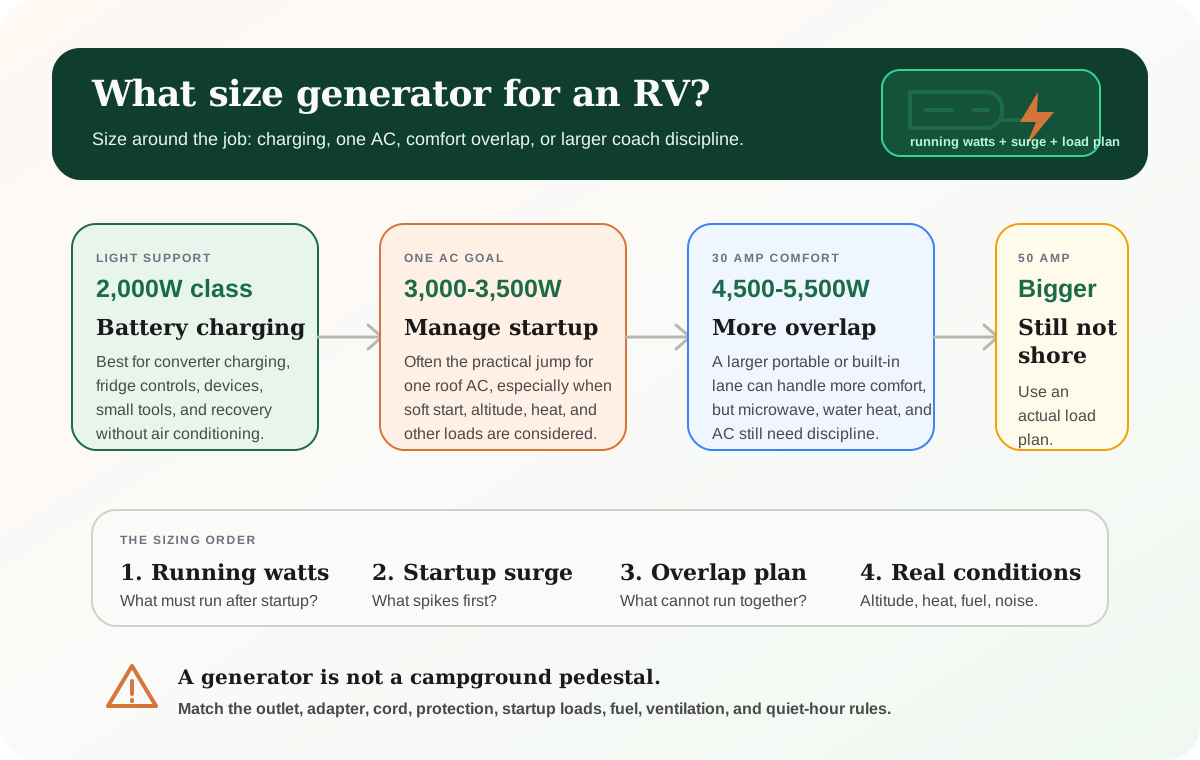
If the generator is central to your plan, pair this guide with the RV generator sizing guide.
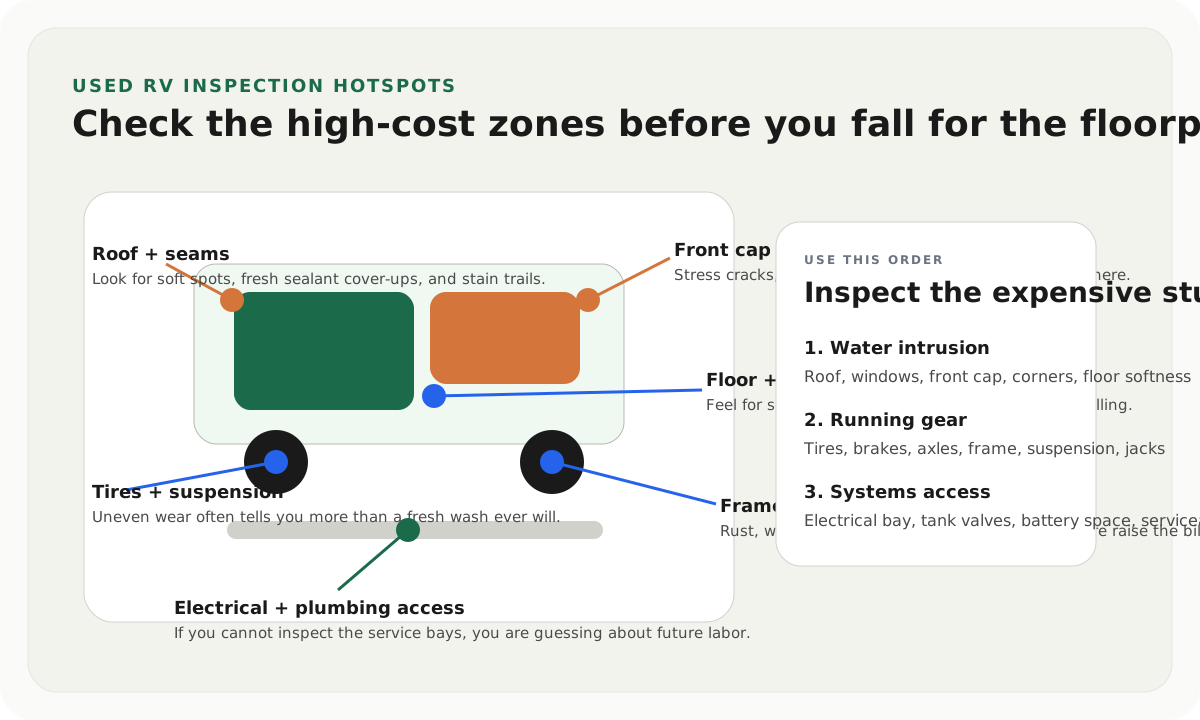
Roof and cabover condition
Cabover leaks are one of the classic used Class C traps.
Inspect:
- front cabover seams
- sidewall-to-roof transitions
- clearance lights
- windows
- roof vents
- ladder mounts
- antenna and solar entry points
- ceiling stains
- mattress platform and cabover floor softness
If the seller says it "just needs sealant," slow down. Water has a way of traveling farther than the visible stain.
A low-mile coach can still be a bad house
Mileage tells you part of the chassis story. It does not prove the roof is dry, the cabover is sound, the generator is healthy, or the OCCC sticker supports your actual load.
Which used Class C lane should you inspect first?
Inspect compact touring coaches first if you move often
Compact Class C coaches make sense when you want a motorhome that feels approachable.
This lane usually works best for:
- solo travelers
- couples
- frequent movers
- state park and public-land campers
- people who value fuel-stop and parking simplicity
The tradeoff is capacity.
Compact coaches can have smaller tanks, less exterior storage, tighter battery access, and less payload margin after options. That does not make them bad. It means the coach should match a lighter travel rhythm.
Inspect compact coaches carefully around the cabover, roof, tires, tank labels, and storage shape. A small coach with a dry structure and honest sticker can be a fantastic beginner boondocking platform. A small coach with leaks and low OCCC is just a compact project.
Inspect balanced family coaches first if you need tanks and beds
The 26-31 foot Class C lane is often the practical middle.
This is where many shoppers find:
- better sleeping flexibility
- more usable dinette or sofa space
- larger tanks
- more exterior storage
- a generator that fits normal RV expectations
- more room for pets, kids, guests, or office gear
The risk is that options can eat payload.
Slides, leveling gear, larger refrigerators, bigger generators, and entertainment packages all add weight. A coach can look family-ready and still have a weak remaining carrying capacity.
Inspect the actual sticker before deciding the extra room is worth it.
Inspect value fleet coaches first if budget discipline is the priority
Thor Four Winds, Chateau, Coachmen Leprechaun, Freelander, and similar high-volume coaches show up often on used lots.
That can be good.
More listings mean more price comparison, more owner discussion, more parts familiarity, and more chances to find a clean unit.
It can also mean more neglected units.
Former rentals and fleet-style coaches are not automatically bad, but they need extra inspection discipline. The right one can be a budget-friendly platform if maintenance records are real and the first-year catch-up budget is honest.
Best fit:
- buyers who can inspect patiently
- shoppers keeping purchase price controlled
- families who need common layouts
- owners willing to spend first on tires, sealing, batteries, and baseline maintenance
Skip or be careful if:
- records are vague
- the roof looks recently patched without documentation
- tires are old
- the generator cannot be demonstrated
- the interior shows water swelling, odor, or soft flooring
Inspect premium compact coaches first if quality and road feel matter
Premium compact Class C or B+ style coaches can be appealing because they often feel tighter, quieter, and more thoughtfully built.
They can be strong choices for couples who want a smaller coach without stepping down into a bare-bones feel.
The tradeoff is price and parts specificity.
Some premium compact coaches hold value well, which means the used discount may be smaller than expected. Some have smaller tanks than the price suggests. Some require more specialized service or parts sourcing.
Inspect them with the same discipline as any other coach. Premium trim does not cancel roof, tire, generator, OCCC, or tank reality.
Inspect heavier super-C-style coaches only when the job earns it
Heavier Class C and super-C-style coaches can be excellent for serious travel.
They may offer:
- stronger chassis capability
- better towing confidence
- more cargo capacity
- larger tanks
- better ride confidence under load
- stronger storage options
They also bring more cost.
Fuel, tires, service, insurance, storage, and purchase price all climb. The coach may also limit campsite access compared with smaller Class C options.
This lane makes sense when the route, load, towing need, and budget all justify it. It is not the best default beginner answer just because it looks capable.
The used Class C inspection order
Use this order before negotiating seriously.
- Read the OCCC sticker and compare it to people, water, gear, and upgrades.
- Check all tire date codes, sidewalls, and wear patterns.
- Inspect the cabover, roof seams, windows, clearance lights, and ceiling for water clues.
- Start the generator cold and run meaningful loads.
- Test shore power, converter charging, outlets, water pump, water heater, furnace, refrigerator, and air conditioner.
- Verify fresh, gray, and black tank labels and valve access.
- Inspect batteries, wiring, converter location, and inverter or solar upgrade access.
- Review chassis service records, fluids, brakes, suspension, steering, and alignment clues.
- Drive it long enough to feel tracking, braking, vibration, heat, noise, and rattles.
- Price first-year catch-up maintenance before pricing fun upgrades.
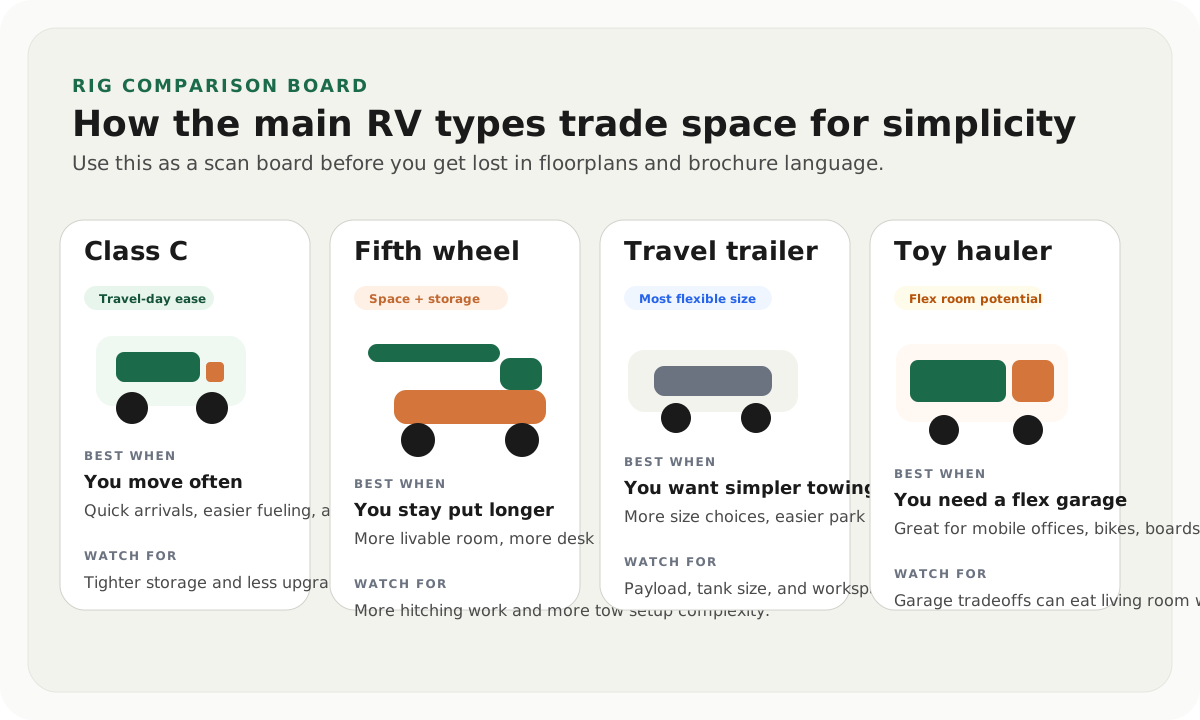
For a broader checklist across towables, fifth wheels, motorhomes, and toy haulers, use the used RV inspection checklist by rig type.
What I would avoid on a used boondocking Class C
Avoid any coach where the seller asks you to accept vague explanations for expensive clues.
Common red flags:
- soft cabover floor or mattress platform
- staining near cabover seams, front windows, or clearance lights
- roof patchwork with no repair records
- old or mismatched tires
- generator that will not start cold
- generator that starts but fails under load
- very low OCCC after options
- seller cannot demonstrate appliances and charging
- water pump runs constantly or will not hold pressure
- musty smell, swollen trim, or soft spots near walls
- service records are missing or inconsistent
- coach pulls, vibrates, overheats, or brakes poorly on the test drive
Field note
Field fit note
Used Class C shopping gets calmer when you refuse to let mileage dominate the whole decision. A boring dry house, clean service records, healthy tires, honest OCCC, and a generator that behaves under load are worth more than a shiny low-mile listing with unanswered questions.
The best next step after a promising used Class C
If a coach still looks good after the first inspection, slow down rather than speed up.
Get a professional inspection if the purchase price is meaningful or if you are not comfortable evaluating roof, chassis, generator, and electrical systems yourself.
Ask for a cold start, a real test drive, a generator load test, and enough time connected to water and shore power to verify systems.
Then build a first-year budget before upgrades:
- tires if aged out
- fluids and chassis service
- generator service
- roof sealing and inspection
- house battery replacement if needed
- smoke, propane, and CO detector replacement
- water pump or plumbing fixes
- brake and bearing work where applicable
- mattress, upholstery, and small comfort updates
If the coach still fits after that boring list, then it may be a real candidate.
That is how a used Class C becomes a boondocking platform instead of a repair hobby wearing good photos.
Where to go next
If you are still deciding whether a Class C fits your travel style, start with the Class C beginner boondocking guide.
If you are cross-shopping a motorhome against a towable, read Class C vs fifth wheel for full-time RV living.
If you are tempted by a larger motorhome instead, read the used Class A motorhome shortlist before you compare listings by windshield view or living-room space alone.
If the listing is already in front of you, use the used RV inspection checklist by rig type before money changes hands.
Frequently asked
Questions RVers usually ask next.
What is the best used Class C motorhome for boondocking?
There is no single universal winner. Winnebago, Jayco, Forest River, Coachmen, Thor, Phoenix Cruiser, and heavier super-C-style coaches can all make sense in the right use case. The exact coach's OCCC sticker, tires, roof, cabover seams, generator, tanks, service records, and chassis condition matter more than the badge.
Is low mileage good on a used Class C motorhome?
Low mileage can be good, but it is not enough. A low-mile coach can still have roof leaks, old tires, generator neglect, stale fluids, weak batteries, or poor OCCC. Inspect the vehicle and the house separately.
What is the biggest used Class C red flag?
Water intrusion around the cabover, roof, windows, or clearance lights is one of the biggest red flags because hidden structure repairs can get expensive quickly. Weak OCCC and old tires are also serious concerns for boondocking use.
Freshness note
Last checked June 6, 2026
This topic can change when products, plans, prices, campsite rules, or fit guidance move. These notes show what was reviewed most recently.
This review included
- Reviewed the used Class C shortlist against the rig-review framework for OCCC, tank capacity, generator condition, tire age, cabover water risk, and service access.
- Kept model-family guidance sticker-first because used motorhome condition varies heavily by model year, trim, chassis, options, storage history, and maintenance records.
- Linked the guide into the Class C beginner, Class C versus fifth wheel, and used-RV inspection paths so motorhome shoppers can move from rig type to listing inspection.
Recent change log
June 6, 2026
Added an OfficialResourceGrid of trust + crawl links (matching the Class A guide): NHTSA recalls + tire safety, plus current manufacturer benchmarks — Winnebago Minnie Winnie, Jayco Class C (Redhawk family), and Coachmen Freelander. Manufacturer URLs verified current (Winnebago + Jayco category pages return 200; Coachmen's WAF blocks automated fetchers, so its canonical model URL was confirmed via search-engine index). Used durable, year-less canonical/category URLs so the links will not rot as model years roll over.
June 5, 2026
Freshness re-verify: confirmed all three benchmark Class C model families are current 2026 floorplans on manufacturer sites — Winnebago Minnie Winnie 25B, Jayco Redhawk 26XD, and Coachmen Freelander 26DS (Ford E-450 chassis). No external official links in this guide to rot, and no hard prices/specs to drift (intentionally inspection-first).
April 10, 2026
Published a used Class C motorhome shortlist for boondocking shoppers with model-family lanes and dual chassis/house inspection filters.
April 10, 2026
Added a custom used Class C shortlist board and linked the page into the rig-review cluster.
Broader editorial corrections are tracked on the Corrections and Updates page.