Shortlist first
Use this to find the winner first, then compare the alternates only if their tradeoffs fit your rig better.
Shortlist labels are editorial recommendations, not popularity rankings. Fit score still matters, but the label tells you why each pick made this guide.
How fit scores work
Scores are editorial fit scores, not user-review averages. The rubric weighs stated RV-use fit, verified specs and limits, whole-rig friction, visible downsides or support risk, and value for the specific job in this guide. Read the full scoring rubric.
If you need one baseline option before reading the full guide, start with Tiffin Open Road Allegro for gas class a benchmark.
The first option to evaluate if you want the strongest all-around fit for this guide. Check the other cards only if their award label matches your constraint better.
| Product | Why shortlisted | Fit score | Key spec | Best for | Skip if | Actions |
|---|---|---|---|---|---|---|
| Tiffin Open Road Allegro Links to: Tiffin Open Road Allegro | Best overall The first option to evaluate if you want the strongest all-around fit for this guide. | 4.6 / 5 fit scoreScore rubric | Use as a gas coach lane; verify exact year, chassis, tires, OCCC, roof, slides, and generator records | Gas Class A benchmark | You need diesel-pusher ride comfort, basement storage, or the service records are thin. | Read Tiffin Open Road Allegro notesCheck listing at Tiffin MotorhomesMerchant link - direct listing. Verify price and specs at Tiffin Motorhomes. |
| Winnebago Forza Links to: Winnebago Forza | Also great A strong alternate when its specific tradeoffs fit your rig better than the winner. | 4.5 / 5 fit score | Use as an entry diesel lane; verify chassis service, air system, generator, inverter, batteries, and tire age | Entry diesel pusher benchmark | The first-year diesel catch-up budget would consume your travel money. | Read Winnebago Forza notesCheck listing at WinnebagoMerchant link - direct listing. Verify price and specs at Winnebago. |
| Newmar Dutch Star Links to: Newmar Dutch Star | Upgrade pick The higher-end option to justify only when its extra capability matters in your build. | 4.7 / 5 fit score | Use as a premium diesel lane; verify tag-axle, chassis, hydronic, multiplex, slide, and service access risk | Premium diesel benchmark | You want simpler ownership, smaller-site flexibility, or a lower service ceiling. | Read Newmar Dutch Star notesCheck listing at NewmarMerchant link - direct listing. Verify price and specs at Newmar. |
Used Class A shortlist at a glance
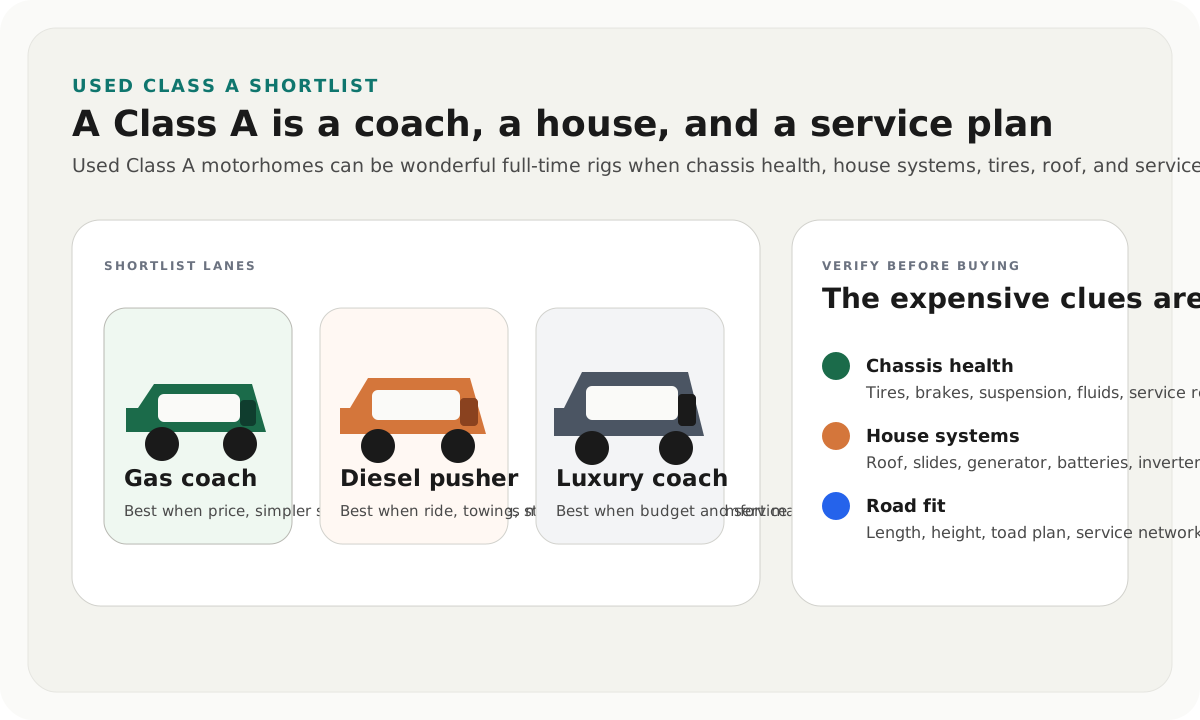
Treat these as used-shopping lanes, not fixed recommendations. The exact coach, chassis service history, tire date codes, slides, roof, generator, and owner records matter more than the model badge.
Best first filter
Chassis health and tire age
A beautiful coach with aged-out tires, weak brakes, ignored fluids, air-system leaks, or vague records can become expensive before the first trip.
Best full-time filter
House systems under load
Slides, generator, inverter or charger, batteries, water pump, refrigerator, HVAC, leveling, and plumbing have to work like a home, not just turn on for a walkthrough.
Best reality filter
Road fit and service budget
Length, height, fuel, toad setup, storage, service access, campsite limits, insurance, and first-year catch-up work decide whether the coach is livable.
Official checks before inspecting a used Class A
Use these official and manufacturer resources as starting points, then verify the exact model year, floorplan, chassis, recalls, manuals, and service records for the coach in front of you.
Pre-arrival checks
Before making an offer
Match the VIN, chassis records, tire date codes, generator load test, roof and slide inspection, recalls, manuals, and first-year service budget to the exact coach.
A used Class A is a coach, a chassis, and a house
Class A shopping can get emotional fast.
The windshield is huge. The living room feels residential. Diesel pushers look calm and substantial. A washer and dryer, big refrigerator, tile floor, hydronic heat, and basement storage can make a used coach feel like the obvious full-time answer.
Slow down.
A used Class A has three stories:
- the chassis story
- the house-system story
- the travel-fit story
The chassis story includes tires, brakes, suspension, steering, air systems, fluids, engine, transmission, cooling, frame, alignment, and service records.
The house-system story includes roof seams, sidewalls, slides, generator, inverter or charger, batteries, transfer switch, appliances, plumbing, tanks, leveling, HVAC, and wiring.
The travel-fit story includes length, height, towed vehicle plan, fuel cost, storage, service access, campground fit, and whether the coach can be lived in when the slides are in.
Most bad Class A purchases happen when one story overwhelms the others.
A diesel pusher can have a great ride and still need a painful first-year service budget.
A gas coach can be affordable and familiar to service, but still be too loud, too underloaded, or too tiring for the travel pattern.
A luxury coach can feel like a condo, but if it limits where you can camp or requires specialty service you cannot reach, the polish does not solve the ownership problem.
The used Class A shortlist lanes
Compare
Used Class A motorhome model-family lanes for full-time shoppers
Use one comparison matrix to scan the practical differences. Small screens stack each row; wider screens keep the first column pinned.
| Spec | Gas Class A coaches | Entry diesel pushers | Premium diesel pushers | Shorter luxury coaches | Tag-axle and high-end coaches |
|---|---|---|---|---|---|
| Examples to inspect | Winnebago Vista, Sunstar, and Adventurer-style coaches; Fleetwood Bounder, Flair, Fortis, or Southwind-style coaches; Thor Hurricane, Windsport, Challenger, or similar gas layouts; Tiffin Open Road Allegro | Winnebago Forza; Tiffin Allegro RED or Allegro Breeze; Fleetwood Pace Arrow, Frontier, or Discovery entry lanes; Thor Palazzo or Riviera; Newmar Kountry Star or Ventana-style coaches | Tiffin Phaeton or Allegro Bus; Newmar Dutch Star or Ventana; Winnebago Journey; Fleetwood Discovery or Discovery LXE; Entegra Aspire-style coaches | Shorter Tiffin Open Road or Allegro Breeze-style coaches; shorter Newmar Bay Star or Ventana-style layouts; smaller Winnebago gas coaches; compact higher-finish gas or diesel floorplans | Newmar Dutch Star and higher lines; Tiffin Allegro Bus or Zephyr-style coaches; Entegra Anthem or Cornerstone-style coaches; American Coach, Monaco, or high-end used diesel lanes |
| Best fit | Full-time shoppers who want lower purchase price, more familiar gas service, and simpler systems than a high-end diesel coach | Travelers who want the diesel-pusher ride, basement storage, and rear-engine quiet without jumping straight into top-tier coach complexity | Full-timers who value ride comfort, storage, insulation, appliances, stronger chassis capability, and longer-route comfort | Couples who want Class A visibility and livability without committing to the longest coach on the market | Buyers with a serious service budget, larger storage needs, heavy toad plans, and routes that fit longer, taller, heavier coaches |
| Full-time upside | Lower entry cost, broad dealer familiarity, simpler drivetrain conversations, and plenty of livable floorplans | Better ride potential, more basement storage, quieter cockpit, larger tanks in many layouts, and better long-haul comfort | More livability, better storage, stronger climate systems, higher-end interiors, and more comfortable travel days | Easier campsite fit, simpler fuel stops, less intimidating travel days, and still enough coach feel for many couples | Maximum storage, ride confidence, towing margin, interior space, and long-stay comfort when the owner can support it |
| Watch first | Tire age, chassis ride, engine heat, brake condition, weight sticker, doghouse noise, roof seams, slides, and generator behavior | Diesel service records, air suspension, air brakes, coolant age, tires, generator, inverter, batteries, and deferred maintenance | Hydronic heat, inverter and charger, house batteries, slide systems, roof condition, multiplex controls, service access, and specialty parts | Cargo capacity, tank size, exterior storage, whether slides block daily use, and whether the shorter floorplan really supports full-time living | Tire cost, tag-axle service, air systems, hydronic heat, large-slide repairs, storage cost, insurance, fuel, and finding qualified service |
The numbers to verify before the sofa gets a vote
Tire date codes and load range
Class A tires often age out before they wear out.
Check every tire date code, including inside duals and the spare if equipped. Look for sidewall cracking, uneven wear, valve-stem condition, matching tire sizes, correct load range, and whether the owner has records for rotation, balancing, alignment, and pressure monitoring.
Tires on a large Class A are not a small line item. If the coach needs six or eight tires immediately, price that before negotiating the coach.
Chassis service records
Ask for records before the walkthrough gets too charming.
For gas coaches, look for oil changes, brake work, coolant service, transmission service, front-end work, recalls, and alignment notes.
For diesel pushers, look for engine and transmission service, coolant testing or replacement, air dryer service, fuel filters, brake checks, air-system leaks, chassis lubrication, generator service, and any work on radiator or charge-air-cooler access.
If the seller cannot explain the maintenance history, assume the first-year budget needs room.
Generator hours and load test
An onboard generator is one of the big Class A advantages for full-time travel.
But generator hours can be misleading in both directions.
Very high hours need maintenance records. Very low hours may mean the generator sat unused, which can be hard on fuel systems and seals.
Start it cold, let it stabilize, then run real loads:
- air conditioner
- microwave
- battery charger or inverter-charger load
- refrigerator mode where relevant
- outlets under normal use
Watch for shutdowns, surging, fuel smell, unstable voltage, fault codes, or the seller trying to avoid a meaningful test.
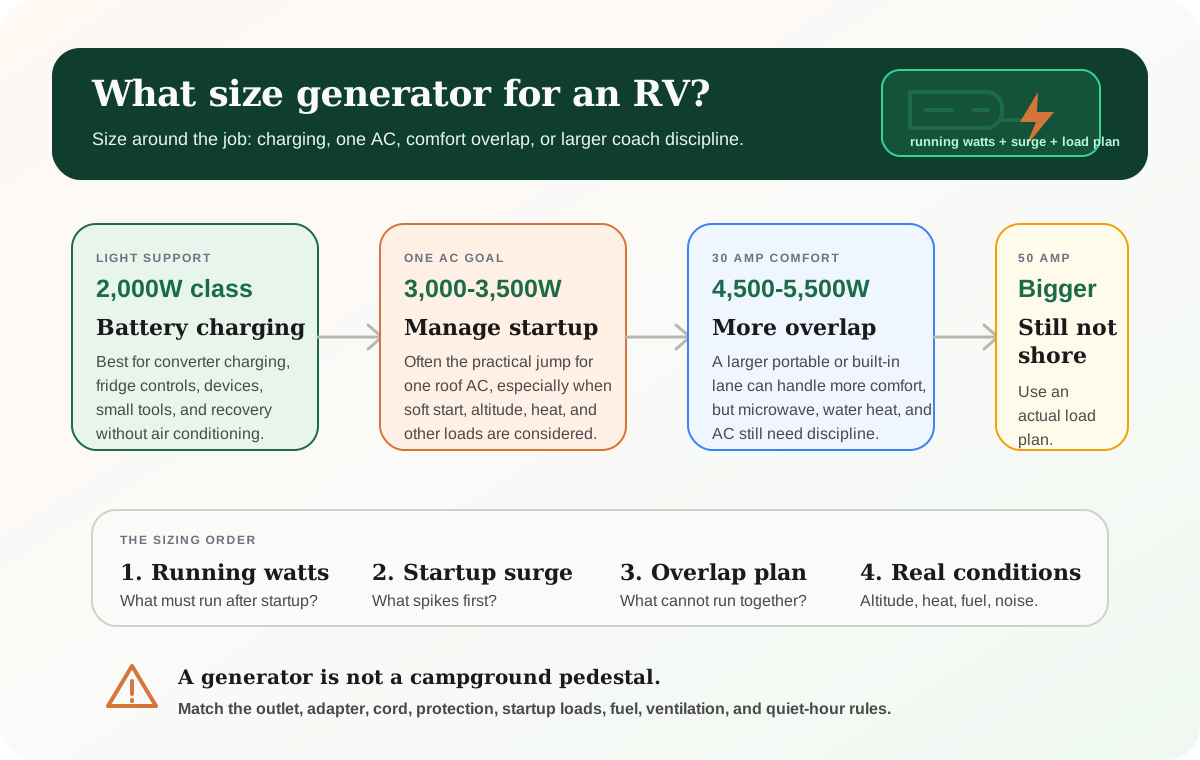
If generator sizing is part of your plan, pair this guide with the RV generator sizing guide.
Slides, roof, and sidewalls
Class A coaches often make their livability with slides.
That means slides are not optional inspection zones.
Inspect:
- slide roofs
- slide floors
- rollers
- seals
- sidewall corners
- topper fabric
- motor or hydraulic behavior
- alignment
- water staining around slide openings
- whether the coach can be used with slides in
Then inspect the main roof, front cap, rear cap, windows, clearance lights, roof penetrations, ladder mounts, satellite or solar mounts, and any recently patched sealant.
House batteries, inverter, and charger
Many used Class A coaches have been modified.
Some modifications are excellent. Some are mysteries wearing red and black wires.
Check:
- battery age
- battery chemistry
- battery compartment ventilation and restraint
- inverter or inverter-charger model
- shore-power charging output
- transfer switch function
- battery monitor accuracy
- fuse and disconnect labeling
- wire protection and strain relief
- solar controller installation if solar was added
If the coach is already upgraded to lithium, confirm the charging profile, low-temperature protection, alternator charging path, and whether the install was documented.
Low mileage does not prove coach health
Mileage matters, but it does not prove the tires are young, the generator was exercised, the coolant is healthy, the slides are dry, the batteries are strong, or the roof is sound.
Representative Class A benchmarks
The following current model-family names are useful comparison anchors while shopping used. Treat them as benchmarks, not blanket recommendations. A clean older coach with records can beat a prettier badge with old tires, vague chassis history, or undocumented house-system work.
- Latest product check
- Specs, fit notes, and current listing context were reviewed June 5, 2026.
- Evidence label
- Research-only: Score is based on documented research and fit analysis where direct testing or verified current specs are limited.
- Price context
- Pricing and availability can change, so confirm the merchant listing before buying.
Product facts last checked June 5, 2026
Tiffin Open Road Allegro
Editorial fit score
Use the Open Road Allegro as a reference point for the gas Class A lane: broad livability, familiar service conversations, and enough coach feel for many full-time shoppers. The used-unit decision still comes down to tires, chassis records, slides, roof, generator, batteries, and cargo reality.
Review verdict
- Short verdict
- The gas Class A benchmark for shoppers who want residential coach feel without jumping straight into diesel-pusher complexity.
- Evidence used
- Research-only
- Used as a gas Class A benchmark with official Tiffin manual routing; inspect the exact model year, chassis, tires, roof, slides, and generator before relying on the badge.
- Why it made the shortlist
- Best overall
- The first option to evaluate if you want the strongest all-around fit for this guide.
- Best if
- Gas Class A benchmark
- Why not this product?
- You need diesel-pusher ride comfort, heavy towing, or the seller cannot prove tire age and chassis maintenance.
- Watch for
- Road noise, doghouse heat, and ride quality can be weaker than diesel pushers.
- Product check date
- Specs, fit notes, and current listing context were last checked June 5, 2026.
Key specs
- Shopping lane
- Gas Class A coach
- Primary inspection
- Tires, chassis records, roof, slides, generator
- Full-time question
- OCCC, tanks, storage, noise, heat, and road feel
- Used-listing rule
- Exact year and floorplan matter more than family name
Score basis
Used as a gas Class A benchmark with official Tiffin manual routing; inspect the exact model year, chassis, tires, roof, slides, and generator before relying on the badge. These are editorial fit scores, not customer-review averages. Read the scoring rubric.
- RV-use fit
- 30% weight
- Verified specs and limits
- 25% weight
- Whole-rig friction
- 20% weight
- Downsides and support risk
- 15% weight
- Value for the job
- 10% weight
How directly the product solves the specific off-grid RV job in this guide.
Capacity, dimensions, electrical limits, protection claims, and compatibility constraints we can verify from current sources.
Install effort, storage, wiring, service access, weight, refill workflow, or daily-use hassle.
Known tradeoffs, unclear claims, warranty coverage, support risk, and wrong-buyer failure modes.
Whether the price makes sense after fit, specs, and tradeoffs still hold.
Testing limits
- Treat this as an editorial screen, not a final buy signal.
- Verify the latest manufacturer specs, owner documentation, and retailer listing before relying on this option.
Reasons to buy
- Useful benchmark for lower-complexity Class A full-time shopping.
- Gas service path can be easier to understand than a neglected diesel coach.
- Often gives the Class A living-room feel without top-tier coach complexity.
Watch-outs
- Road noise, doghouse heat, and ride quality can be weaker than diesel pushers.
- Aged tires or weak chassis records can erase the apparent savings quickly.
- The exact cargo sticker and loaded weight still decide whether it fits full-time travel.
Check current listing
Tiffin Open Road Allegro
Use the listing after the fit notes make sense for your rig. Pricing and availability can change, so verify the merchant page before buying.
- Latest product check
- Specs, fit notes, and current listing context were reviewed June 5, 2026.
- Evidence label
- Research-only: Score is based on documented research and fit analysis where direct testing or verified current specs are limited.
- Price context
- Pricing and availability can change, so confirm the merchant listing before buying.
Product facts last checked June 5, 2026
Winnebago Forza
Editorial fit score
Use the Forza lane to evaluate whether diesel-pusher comfort, storage, and ride quality actually fit the budget. It can be a smart full-time step up, but deferred diesel service, tires, air systems, generator work, and inverter or battery corrections can dominate the first year.
Review verdict
- Short verdict
- The entry diesel-pusher benchmark for shoppers who want rear-engine travel comfort and basement storage without starting at the highest luxury tier.
- Evidence used
- Research-only
- Used as an entry diesel-pusher benchmark with official Winnebago model-family routing; verify exact-year chassis, tanks, generator, batteries, inverter, tires, and service history.
- Why it made the shortlist
- Also great
- A strong alternate when its specific tradeoffs fit your rig better than the winner.
- Best if
- Entry diesel benchmark
- Why not this product?
- The diesel service records are vague or the first-year catch-up budget would keep you from traveling.
- Watch for
- Deferred diesel maintenance can be expensive fast.
- Product check date
- Specs, fit notes, and current listing context were last checked June 5, 2026.
Key specs
- Shopping lane
- Entry diesel pusher
- Primary inspection
- Diesel records, air system, tires, generator, inverter
- Full-time question
- Storage, tank labels, service access, and first-year budget
- Used-listing rule
- Do not buy the rear-engine ride without records
Score basis
Used as an entry diesel-pusher benchmark with official Winnebago model-family routing; verify exact-year chassis, tanks, generator, batteries, inverter, tires, and service history. These are editorial fit scores, not customer-review averages. Read the scoring rubric.
- RV-use fit
- 30% weight
- Verified specs and limits
- 25% weight
- Whole-rig friction
- 20% weight
- Downsides and support risk
- 15% weight
- Value for the job
- 10% weight
How directly the product solves the specific off-grid RV job in this guide.
Capacity, dimensions, electrical limits, protection claims, and compatibility constraints we can verify from current sources.
Install effort, storage, wiring, service access, weight, refill workflow, or daily-use hassle.
Known tradeoffs, unclear claims, warranty coverage, support risk, and wrong-buyer failure modes.
Whether the price makes sense after fit, specs, and tradeoffs still hold.
Testing limits
- Treat this as an editorial screen, not a final buy signal.
- Verify the latest manufacturer specs, owner documentation, and retailer listing before relying on this option.
Reasons to buy
- Rear-engine layout and basement storage can improve full-time travel days.
- Good benchmark for the step between gas Class A and premium diesel.
- Useful lane when cockpit noise and long-route comfort matter.
Watch-outs
- Deferred diesel maintenance can be expensive fast.
- Air, coolant, generator, tire, and inverter issues need serious inspection.
- Entry diesel does not automatically mean premium house construction.
Check current listing
Winnebago Forza
Use the listing after the fit notes make sense for your rig. Pricing and availability can change, so verify the merchant page before buying.
- Latest product check
- Specs, fit notes, and current listing context were reviewed June 5, 2026.
- Evidence label
- Research-only: Score is based on documented research and fit analysis where direct testing or verified current specs are limited.
- Price context
- Pricing and availability can change, so confirm the merchant listing before buying.
Product facts last checked June 5, 2026
Newmar Dutch Star
Editorial fit score
Use Dutch Star as the reminder that luxury diesel comfort is only an upgrade when the support plan is real. The lane can deliver excellent ride, storage, climate control, and living space, but it also raises the stakes on tires, air systems, hydronic heat, slides, controls, service access, and qualified shops.
Review verdict
- Short verdict
- The premium diesel benchmark for buyers who want serious full-time comfort and have the budget to inspect, maintain, store, and service a larger coach correctly.
- Evidence used
- Research-only
- Used as a premium diesel-pusher benchmark with official Newmar model-family routing; verify exact-year chassis, tag-axle, hydronic, slide, multiplex, and service records.
- Why it made the shortlist
- Upgrade pick
- The higher-end option to justify only when its extra capability matters in your build.
- Best if
- Premium diesel benchmark
- Why not this product?
- You want a simpler ownership lane or cannot support premium diesel service, storage, and inspection costs.
- Watch for
- Maintenance, storage, tires, insurance, and specialty service can be substantial.
- Product check date
- Specs, fit notes, and current listing context were last checked June 5, 2026.
Key specs
- Shopping lane
- Premium diesel pusher
- Primary inspection
- Chassis, tag axle, tires, slides, hydronic, multiplex
- Full-time question
- Service budget, route fit, storage, insurance, and qualified shops
- Used-listing rule
- Luxury trim never excuses weak records
Score basis
Used as a premium diesel-pusher benchmark with official Newmar model-family routing; verify exact-year chassis, tag-axle, hydronic, slide, multiplex, and service records. These are editorial fit scores, not customer-review averages. Read the scoring rubric.
- RV-use fit
- 30% weight
- Verified specs and limits
- 25% weight
- Whole-rig friction
- 20% weight
- Downsides and support risk
- 15% weight
- Value for the job
- 10% weight
How directly the product solves the specific off-grid RV job in this guide.
Capacity, dimensions, electrical limits, protection claims, and compatibility constraints we can verify from current sources.
Install effort, storage, wiring, service access, weight, refill workflow, or daily-use hassle.
Known tradeoffs, unclear claims, warranty coverage, support risk, and wrong-buyer failure modes.
Whether the price makes sense after fit, specs, and tradeoffs still hold.
Testing limits
- Treat this as an editorial screen, not a final buy signal.
- Verify the latest manufacturer specs, owner documentation, and retailer listing before relying on this option.
Reasons to buy
- Strong benchmark for serious full-time comfort and long-route travel.
- Helps shoppers price the support budget behind premium diesel ownership.
- Useful comparison point when a listing claims luxury-coach value.
Watch-outs
- Maintenance, storage, tires, insurance, and specialty service can be substantial.
- Large coach size can limit routes, campsites, and casual service options.
- Complex house systems demand a more rigorous inspection.
Check current listing
Newmar Dutch Star
Use the listing after the fit notes make sense for your rig. Pricing and availability can change, so verify the merchant page before buying.
Which used Class A lane should you inspect first?
Inspect gas Class A coaches first if budget and service simplicity matter
Gas Class A coaches can be the most practical first Class A lane.
They usually cost less to buy than comparable diesel pushers, use familiar gas chassis service networks, and often deliver enough living space for couples or small families.
This lane makes sense when you want:
- Class A visibility and living space
- a lower purchase price
- simpler drivetrain service
- moderate full-time travel
- shorter ownership runway before deciding whether a larger coach is worth it
The tradeoff is road feel and noise.
Gas Class A coaches can feel busier on rough highways. The engine is up front, climbs can be louder, and some floorplans may feel near their limits when fully loaded.
Inspect tire dates, front-end condition, brake feel, transmission behavior, engine cooling, doghouse heat, generator, roof, slides, and the actual weight sticker.
Inspect entry diesel pushers first if driving comfort and storage matter
Entry diesel pushers are tempting because they can feel like the "real" Class A jump without the highest luxury-coach price.
Rear-engine layout, air suspension, basement storage, larger tanks, and quieter cockpit travel can make long-route days more relaxed.
This lane often fits:
- full-timers moving often
- couples towing a small car
- shoppers who want basement storage
- people who value quiet cockpit travel
- buyers ready for diesel service costs
The warning is deferred maintenance.
Diesel coaches can hide expensive catch-up work. Tires, air-system service, coolant, generator work, batteries, inverter service, air conditioners, and slide repairs can arrive quickly if the prior owner deferred the boring work.
Do not buy the diesel badge. Buy the records.
Inspect premium diesel pushers first if full-time comfort is the real job
Premium diesel pushers can be excellent full-time platforms.
They often deliver:
- better ride and handling
- more basement storage
- stronger climate systems
- residential appliances
- larger tanks
- better insulation
- quieter living
- improved towing confidence
- better long-stay comfort
They also carry more complexity.
Hydronic heat, multiplex wiring, inverter-chargers, large slides, air systems, automatic leveling, residential refrigerators, and specialty controls make inspection more important, not less.
If this lane fits your budget, hire a qualified inspection and budget for a serious chassis review. A beautiful premium coach can still be the wrong buy if the owner history is thin.
Inspect shorter luxury coaches first if campsite flexibility matters
Not every full-time Class A buyer needs the longest coach.
A shorter gas or diesel Class A can make sense when you want:
- easier fuel stops
- more state-park and public-campground flexibility
- less travel-day intimidation
- enough living space without maxing out size
- simpler parking and storage
The tradeoff is capacity.
Shorter coaches may give up basement storage, tank size, bedroom space, desk options, washer and dryer location, or kitchen counter space.
Walk the coach with the slides in. Ask where laundry, work gear, tools, hoses, chairs, pet gear, spare parts, and outdoor equipment will live.
If the coach only feels full-time friendly when empty, keep shopping.
Inspect tag-axle and high-end coaches only when the support budget is real
High-end Class A coaches can be wonderful.
They can also be expensive in a way that is not obvious during the walkthrough.
This lane makes sense when:
- you have a real service budget
- you can store and service a larger coach
- your routes fit the size
- you understand tire, brake, air-system, and hydronic costs
- you plan to tow a vehicle
- you want maximum interior and basement capacity
Do not use luxury trim to excuse weak records.
The higher the coach tier, the more important it is to verify service history, systems, parts availability, inspection access, and whether qualified shops near your route will work on it.
The used Class A inspection order
Use this order before negotiating seriously.
- Read the weight stickers and confirm cargo, axle, tire, and hitch realities.
- Check every tire date code, sidewall, valve stem, and wear pattern.
- Review chassis service records before treating mileage as meaningful.
- Inspect roof, front cap, rear cap, sidewalls, windows, clearance lights, and slide openings.
- Run every slide in and out while listening for binding, hesitation, leaks, and alignment problems.
- Start the generator cold and run air conditioning plus normal house loads.
- Test shore power, transfer switch, inverter or charger, batteries, outlets, refrigerator, HVAC, water heater, furnace, and leveling.
- Verify fresh, gray, black, propane, and fuel capacity labels on the actual coach.
- Inspect house batteries, inverter wiring, solar additions, fuses, disconnects, and service access.
- Drive long enough to feel tracking, braking, heat, noise, suspension behavior, and rattles.
- Confirm the towed-vehicle plan, hitch rating, braking system, and whether the coach can handle the real route.
- Price first-year catch-up work before pricing cosmetic upgrades.
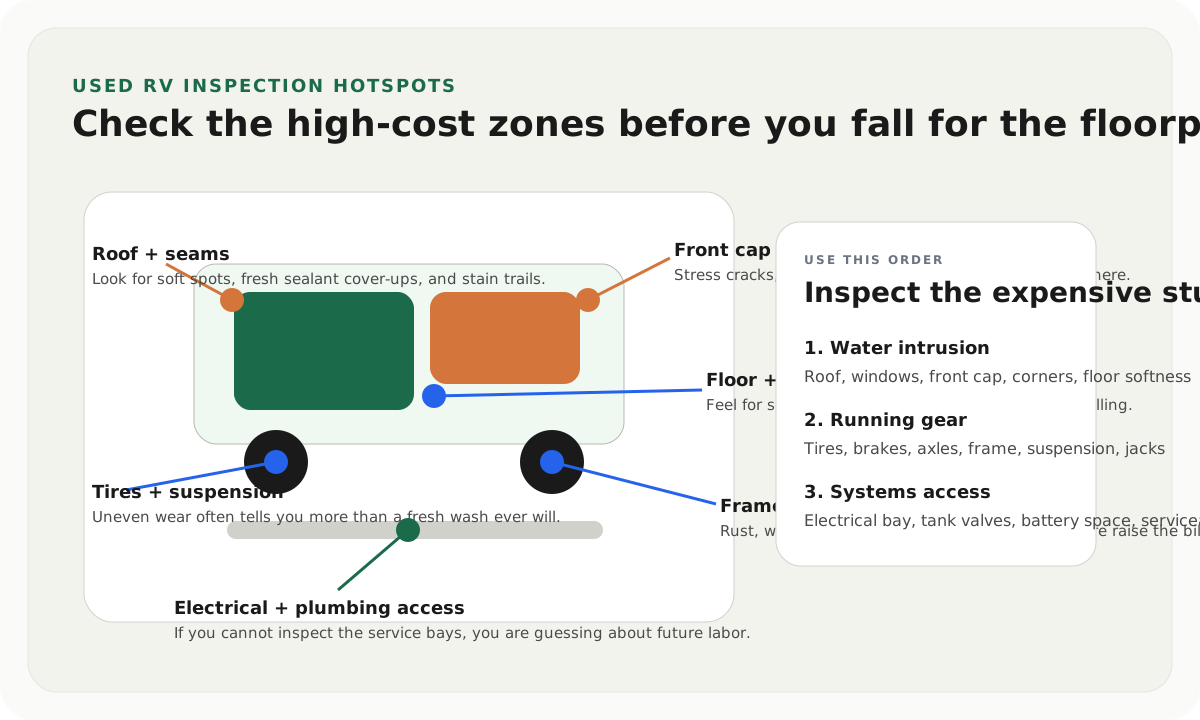
For a broader inspection workflow across trailers, fifth wheels, motorhomes, and toy haulers, use the used RV inspection checklist by rig type.
What I would avoid on a used Class A
Avoid any coach where the seller asks you to ignore expensive uncertainty.
Common red flags:
- tire date codes are old, missing, mismatched, or hard to inspect
- no meaningful chassis maintenance records
- seller avoids a cold start or long test drive
- generator cannot be load tested
- roof patchwork has no documentation
- slide rooms hesitate, bind, leak, or leave stains
- sidewalls show delamination, bubbling, or suspicious waviness
- air system loses pressure too quickly on diesel coaches
- hydronic heat or hot water systems cannot be demonstrated
- leveling system faults or refuses to retract cleanly
- house batteries are old, swollen, unlabeled, or poorly wired
- inverter, charger, solar, or lithium work has no documentation
- water pump cycles constantly or plumbing cannot hold pressure
- HVAC cannot keep up during a reasonable test
- the coach is too long, tall, or heavy for the routes you actually want
- the first-year service budget would consume the money needed to travel
Field note
Field fit note
Used Class A shopping gets easier when the floorplan is not allowed to vote first. A boring coach with records, young tires, dry slides, working systems, honest weight labels, and a service budget is more valuable than a glamorous coach with unanswered maintenance history.
The best next step after a promising used Class A
If the coach still looks strong after your first pass, slow down.
A serious used Class A purchase deserves a professional inspection unless you are genuinely comfortable evaluating both vehicle and house systems.
For diesel pushers, consider a chassis shop inspection in addition to the RV inspection. The RV inspector may understand slides, roof, appliances, and plumbing. A chassis shop is better positioned to evaluate engine, transmission, air system, brakes, suspension, cooling, and service history.
Build a first-year budget before upgrades:
- tires if aged out
- fluids, filters, belts, hoses, and coolant service
- brake or air-system service
- generator service
- roof and slide sealing
- house battery replacement if needed
- inverter or charger correction if needed
- smoke, propane, and CO detector replacement
- leveling-system service
- HVAC maintenance
- plumbing and water-pump repairs
- tow-bar, baseplate, and supplemental-braking setup if towing
Then ask whether the coach still fits the travel plan.
If the answer is yes after the boring list, you may have a real full-time platform.
Where to go next
If you are cross-shopping a smaller motorhome, read the used Class C motorhome shortlist so cabover water risk, OCCC, generator behavior, and chassis condition are weighted correctly.
If you are still deciding between a motorhome and a towable, read Class C vs fifth wheel for full-time RV living. The same tradeoff applies at a larger scale: one vehicle versus separated truck-and-house flexibility.
If the listing is already in front of you, use the used RV inspection checklist by rig type before money changes hands.
Frequently asked
Questions RVers usually ask next.
What is the best used Class A motorhome for full-time living?
There is no single universal winner. Winnebago, Tiffin, Newmar, Thor Motor Coach, Fleetwood, Entegra, and other Class A families can all make sense in the right use case. The exact coach's chassis records, tire age, roof, slides, generator, batteries, inverter or charger, tanks, service access, and first-year budget matter more than the badge.
Is a used diesel pusher better than a used gas Class A?
A diesel pusher can offer better ride comfort, rear-engine quiet, basement storage, towing confidence, and long-route comfort. A gas Class A can cost less to buy and may be simpler to service. The better choice depends on budget, maintenance history, route, size tolerance, and how often you move.
What is the biggest red flag on a used Class A?
Old tires, weak service records, roof or slide water intrusion, generator problems, air-system issues on diesel coaches, and undocumented electrical modifications are all serious red flags. Any one of them can turn a good-looking coach into an expensive first-year project.
Freshness note
Last checked June 5, 2026
This topic can change when products, plans, prices, campsite rules, or fit guidance move. These notes show what was reviewed most recently.
This review included
- Reviewed current official Class A model-family names from Winnebago, Tiffin, Newmar, Thor Motor Coach, and Fleetwood, then kept the guide used-unit and inspection-first because years, floorplans, chassis, options, and prior-owner care vary widely.
- Checked the shortlist against the rig-review framework for chassis health, house-system risk, tire age, slide condition, tank capacity, generator behavior, service access, towing needs, and first-year catch-up budget.
- Linked the guide into the Class C, used-RV inspection, generator-sizing, and rig-review hub paths so motorhome shoppers can move from coach type to listing-level inspection.
Recent change log
June 5, 2026
Freshness re-verify: confirmed the benchmark model families are current (Newmar Dutch Star 2027 model year live, Winnebago Forza site live, Tiffin Open Road Allegro manual hub live). Fixed a broken official link — the Newmar Dutch Star resource now uses the durable year-less canonical (the old 2025-model URL had started returning 404) — and updated the Tiffin manual-hub URL to its current path. No prices or specs to change; this guide is intentionally inspection-first.
April 10, 2026
Published a used Class A motorhome shortlist for full-time shoppers with gas, entry-diesel, premium-diesel, shorter-luxury, and tag-axle coach lanes.
April 10, 2026
Added a custom used Class A shortlist board and linked the page into the rig-review cluster.
Broader editorial corrections are tracked on the Corrections and Updates page.