What wattage do RV appliances use?
RV appliance wattage ranges from tiny 12V loads to 1,000W-plus kitchen and comfort loads, but daily watt-hours matter more than peak watts for solar and battery sizing. Multiply watts by hours used, then include inverter losses when AC appliances are involved. Use this chart with the solar calculator and battery calculator.
This is a maintained reference, not a one-time list. Every range below is a planning band derived from a documented method (see Methodology), re-checked on a published date, and offered as machine-readable JSON and CSV so you, a forum, or another site can quote it accurately. The whole dataset covers the 30-plus loads that actually decide an off-grid build, organized so you can separate always-on draws from short bursts before you size anything.
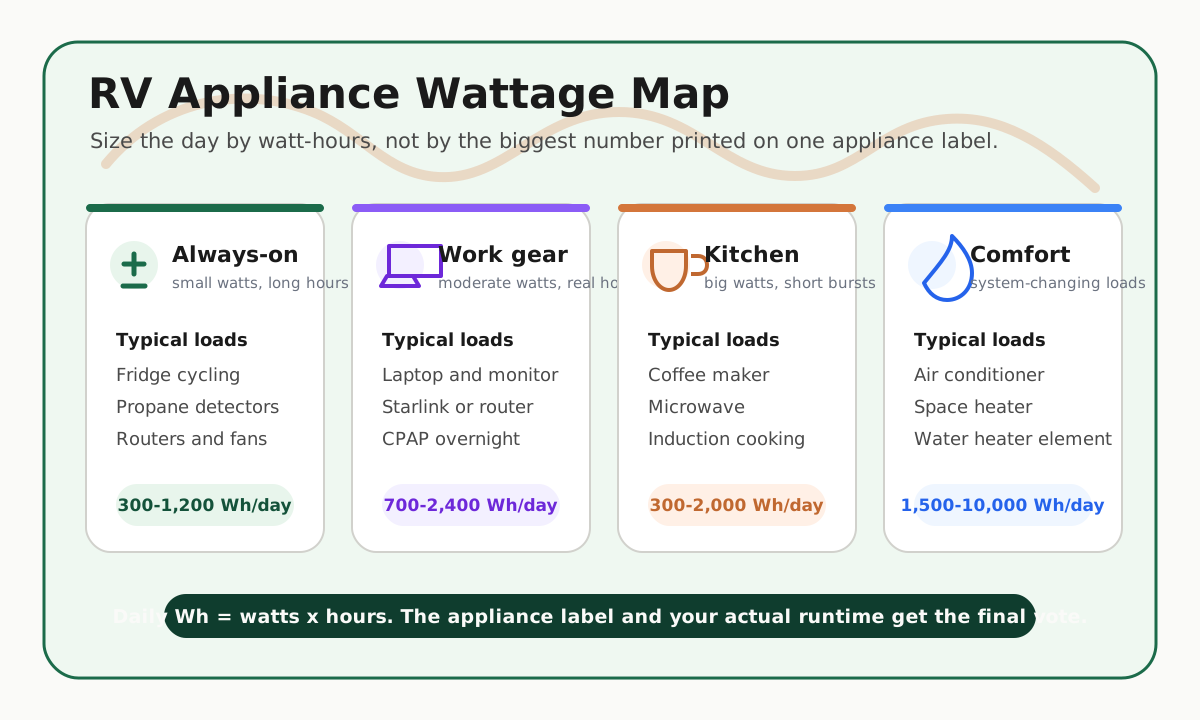
RV appliance wattage chart at a glance
These are planning ranges. The label on your exact appliance, the setting you use, the runtime, inverter losses, ambient temperature, and battery voltage all change the final number.
Formula
Watts x hours = Wh
A 90W laptop for five hours is 450Wh before charging losses. That is the number your battery and solar system feel.
Most underestimated loads
Fridge, Starlink, CPAP, furnace
Moderate watts can become large daily loads when they run overnight or through the workday.
Most misleading loads
Microwave, kettle, hair dryer
These pull big watts, but short runtime may make the daily Wh smaller than beginners expect. They still matter for inverter sizing.
Why RV appliance wattage charts are easy to misuse
Most wattage charts make one number look more important than it is.
The coffee maker may say 1,200W. The microwave may say 1,500W. The air conditioner may look scary on the label. Those numbers matter for inverter and generator sizing, but they do not tell you the daily energy budget by themselves.
The battery bank does not care how dramatic one appliance looks for five minutes.
The battery bank cares about watt-hours.
That is why a 40W Starlink Mini running for ten hours can use more energy than a 1,200W coffee maker running for eight minutes. It is also why a CPAP, furnace blower, refrigerator, and router can quietly dominate a night even though none of them looks impressive on a spec sheet.
Use this page as a planning reference. Then use the solar calculator or battery calculator with your actual appliances before you buy hardware.
Do not size a system from someone else's fridge
Refrigerator power use changes with compressor type, ambient temperature, door openings, ventilation, set point, and whether the rig is level. A chart gives you a starting range. Your model label or meter reading gets the final vote.
The math is simple, but the inputs matter
The basic formula is:
watts x hours used per day = watt-hours per day
If a device lists amps instead of watts, multiply amps by volts:
amps x volts = watts
A 12V water pump that can draw about 7.5A at full load is roughly a 90W load while it runs. That does not mean it uses 2,160Wh per day. It usually runs in short bursts, so the daily number may be closer to 10-40Wh unless there is a leak, pressure problem, or heavy water use.
That distinction is the whole point.
Some loads are high watts and short runtime.
Some loads are low watts and long runtime.
Some cycle on and off all day, which makes the label misleading unless you estimate duty cycle.
The RV appliance wattage chart
Use these ranges for first-pass planning. If your exact label, manual, battery monitor, or plug-in meter says something different, trust the actual measurement.
12V baseline and always-on loads
Compare
Common 12V RV baseline loads and daily watt-hour ranges
Use one comparison matrix to scan the practical differences. Small screens stack each row; wider screens keep the first column pinned.
| Spec | Typical watts | Typical daily runtime | Planning Wh/day | What changes the number |
|---|---|---|---|---|
| 12V compressor refrigerator | 45-80W while running | 8-12 equivalent hours | 400-900Wh | Outside heat, cabinet ventilation, door openings, set point, and fridge size |
| Propane absorption fridge controls | 5-36W | 12-24 hours | 100-850Wh | Control board, interior fans, climate switch, and model age |
| Residential refrigerator | 80-200W while running | 8-14 equivalent hours | 800-1,800Wh | Ambient heat, defrost cycles, inverter losses, and insulation |
| LED lights | 2-6W per fixture | 2-6 hours | 20-150Wh | Fixture count and whether older bulbs have been converted to LED |
| Water pump | 60-120W while running | 5-20 minutes | 10-40Wh | Pump size, pressure setting, leaks, shower habits, and accumulator use |
| Vent fan or roof fan | 5-35W | 4-12 hours | 40-300Wh | Fan speed, lid position, temperature, and whether it runs overnight |
| Furnace blower | 60-140W | 2-8 equivalent hours | 150-800Wh | Night temperature, insulation, thermostat setting, and furnace size |
| Propane or CO detector | 1-5W | 24 hours | 25-120Wh | Detector model and whether other standby safety devices share the circuit |
| Antenna booster or TV plate | 2-8W | 4-24 hours | 10-190Wh | Whether it gets left on after TV use |
| Phone or tablet charging | 5-30W | 1-3 hours | 10-90Wh | Device count, charger type, and whether charging is direct DC or through an inverter |
The baseline loads are where small mistakes compound.
A water pump is usually not a major energy load because it runs briefly. A furnace blower can be a serious overnight load because it cycles repeatedly. A fridge can look modest while running but still become one of the largest daily loads because it never really leaves the energy budget.
If your battery monitor shows a mystery overnight drop, do not start with the microwave. Start with the fridge, furnace, router, detectors, inverter idle draw, and anything that stays on while you sleep.
If the fridge is the specific load you are trying to size around, use the RV refrigerator solar sizing guide and the RV fridge solar calculator after this table so the daily Wh estimate turns into panel and battery reserve targets.
Remote work, internet, and medical loads
Compare
Remote-work and overnight loads for RV power planning
Use one comparison matrix to scan the practical differences. Small screens stack each row; wider screens keep the first column pinned.
| Spec | Typical watts | Typical daily runtime | Planning Wh/day | What changes the number |
|---|---|---|---|---|
| Laptop | 45-140W | 3-8 hours | 150-800Wh | Charger size, screen brightness, CPU load, battery state, and external monitor use |
| External monitor | 15-45W | 3-8 hours | 60-300Wh | Screen size, brightness, USB-C power, and number of monitors |
| Cellular router or hotspot | 8-20W | 8-24 hours | 100-400Wh | Signal quality, external antennas, Wi-Fi load, and whether it runs overnight |
| Wi-Fi router or mesh node | 6-15W | 8-24 hours | 70-300Wh | Router model, mesh nodes, and always-on habits |
| Starlink Mini | 25-40W average | 4-10 hours | 100-400Wh | Obstructions, weather, DC conversion, and whether it stays on all day |
| Starlink Standard | 75-100W average | 4-10 hours | 300-1,000Wh | Router use, heating/snow behavior, weather, and AC inverter losses |
| CPAP without heated humidity | 20-45W | 7-9 hours | 150-400Wh | Pressure setting, leaks, DC adapter use, and machine model |
| CPAP with heated humidifier or heated tube | 50-90W | 7-9 hours | 350-800Wh | Humidity setting, room temperature, tube heat, and water chamber behavior |
| Small printer or office accessory | 20-60W active | 5-30 minutes | 5-30Wh | Standby draw matters more than occasional active use |
Remote-work loads are easy to undercount because they look normal in a house.
A laptop, monitor, router, and Starlink Standard can push a workday into 1,000-2,000Wh before you count the fridge, fans, lights, or cooking. That is not a problem if you planned for it. It is a problem when the solar system was sized around weekend camping and then asked to support office hours.
If work continuity matters, use the internet backup planner alongside the power calculators. Internet gear is not just a plan decision. It is also a battery decision.
Kitchen and short-burst inverter loads
Compare
Kitchen appliance planning loads for RV solar and inverter sizing
Use one comparison matrix to scan the practical differences. Small screens stack each row; wider screens keep the first column pinned.
| Spec | Typical watts | Typical daily runtime | Planning Wh/day | What changes the number |
|---|---|---|---|---|
| Coffee maker | 800-1,500W | 5-15 minutes | 100-350Wh | Brew size, warming plate, and whether you turn it off after brewing |
| Electric kettle | 1,000-1,500W | 4-10 minutes | 75-250Wh | Water volume and starting water temperature |
| Microwave | 1,000-1,600W input | 3-12 minutes | 75-300Wh | Input wattage, not cooking wattage, is what the inverter sees |
| Induction cooktop | 700-1,800W | 10-45 minutes | 200-900Wh | Heat setting, pan size, cooking style, and whether other loads overlap |
| Pressure cooker or multicooker | 700-1,200W heating | 15-60 minutes cycling | 200-700Wh | Warm-up time, recipe, pressure hold, and keep-warm use |
| Toaster | 800-1,500W | 3-8 minutes | 50-150Wh | Toast cycles and inverter surge behavior |
| Blender | 300-1,000W | 1-5 minutes | 10-50Wh | Motor load, ice, frozen fruit, and inverter surge |
| Portable ice maker | 100-200W | 2-8 hours cycling | 250-900Wh | Ambient heat, production target, and whether you leave it running |
Kitchen loads split the sizing conversation in two.
Daily watt-hours decide battery and solar size.
Peak watts and surge decide inverter size.
That is why a microwave can be a small daily energy load and still require a serious inverter. If the inverter cannot support the input wattage and startup behavior, the fact that you only use it for six minutes does not help.
If your cooking plan includes induction, microwave, electric kettle, toaster, or coffee maker use, compare the daily energy in the solar sizing guide and then check inverter fit with the RV electrical system diagram.
Comfort and seasonal loads
Compare
Comfort loads that can change the whole RV power system
Use one comparison matrix to scan the practical differences. Small screens stack each row; wider screens keep the first column pinned.
| Spec | Typical watts | Typical daily runtime | Planning Wh/day | What changes the number |
|---|---|---|---|---|
| Roof air conditioner | 1,200-1,800W running | 1-8 equivalent hours | 1,200-12,000Wh | Heat, humidity, insulation, shade, soft start, and duty cycle |
| Electric space heater | 750-1,500W | 1-4 hours | 750-6,000Wh | Thermostat setting, insulation, outside temperature, and shore/generator access |
| Electric water heater element | 1,200-1,500W | 30-120 minutes | 600-3,000Wh | Tank size, starting water temperature, and how often it reheats |
| Hair dryer | 1,000-1,875W | 3-10 minutes | 75-300Wh | Heat setting and inverter capacity |
| Television | 30-100W | 2-4 hours | 60-400Wh | Screen size, brightness, soundbar, and antenna booster habits |
| Game console | 60-220W | 1-4 hours | 100-800Wh | Console generation, game load, display size, and standby behavior |
| 120V fan | 30-75W | 4-12 hours | 120-900Wh | Fan speed and inverter losses if not using a DC fan |
| Dehumidifier | 250-700W | 2-8 hours | 500-5,000Wh | Humidity, compressor size, set point, and whether shore power is available |
Comfort loads are where off-grid systems stop being casual.
Air conditioning, electric heat, electric water heating, and dehumidifiers can use more energy than the rest of the rig combined. They are not impossible loads, but they change the whole design.
If air conditioning is the goal, read How Much Solar Do You Need to Run an RV Air Conditioner? before assuming a wattage chart and a big inverter are enough.
For many RVers, the cleanest strategy is hybrid:
- solar and lithium for baseline daily living
- propane for heat and water heating when practical
- generator or shore power for heavy seasonal comfort loads
- DC devices where possible to avoid unnecessary inverter losses
Sample daily power profiles
These profiles are not rules. They are sanity checks.
Compare
Example RV daily power profiles before charging losses
Use one comparison matrix to scan the practical differences. Small screens stack each row; wider screens keep the first column pinned.
| Spec | Typical appliance mix | Likely daily use | System pressure point |
|---|---|---|---|
| Light weekend camping | LED lights, water pump, phone charging, vent fan, propane fridge controls, occasional TV | 700-1,500Wh/day | Battery reserve matters more than a large inverter |
| Balanced boondocking | 12V fridge, fans, lights, water pump, laptop, router, short coffee or microwave use | 1,500-3,000Wh/day | Solar recovery and battery bank size need to be planned together |
| Remote-work rig | 12V fridge, laptop, monitor, router, Starlink or hotspot, CPAP, fans, kitchen bursts | 3,000-5,000Wh/day | Always-on work and overnight loads dominate the battery conversation |
| Electric-comfort heavy | Air conditioner, induction cooking, electric water heating, dehumidifier, or space heat | 5,000-12,000Wh+/day | Generator, shore power, large lithium, or major solar becomes part of the answer |
Once your profile is in the right lane, run the numbers instead of guessing.
The solar calculator turns daily watt-hours into panel, battery, and inverter targets. The battery calculator helps you build the appliance list and see how runtime changes the bank size.
Methodology
These numbers are planning bands, not single specs, and they are built the same way every time so you can trust and quote them.
Running watts versus surge watts
Each row lists the running watts an appliance draws while it operates normally. Motor- and compressor-driven loads (refrigerators, air conditioners, ice makers, blenders, pressure cookers) also pull a brief surge at startup that can be two to several times the running figure for a fraction of a second. Surge does not change daily energy use, so it is not added into the watt-hour columns. It matters only for inverter and generator sizing, which is why the kitchen and comfort sections repeatedly separate "decides battery size" from "decides inverter size."
Daily watt-hours = watts × hours
The planning Wh/day column is running watts × realistic hours of operation per day, expressed as a low-to-high range. For loads that cycle on and off (fridges, furnace blowers, ice makers, air conditioners), we use equivalent full-power hours — the runtime is the duty cycle, not the wall-clock time the appliance is switched on. A fridge that is "on" for 24 hours but whose compressor runs roughly 40 percent of the time in mild weather is modeled around 8 to 12 equivalent hours, which is where its 400 to 900 Wh band comes from.
Measured behavior versus nameplate labels
Where an appliance has a published electrical spec from the manufacturer (Starlink Standard and Mini, ResMed CPAP units, Shurflo pumps), the band is anchored to that figure. Where the load varies too much for a single label to be meaningful (refrigerators, induction cooktops, space heaters), the band reflects representative real-world draw across common models and settings rather than a single nameplate maximum. Microwaves are listed by input wattage (what the inverter and battery actually see), not the lower "cooking" wattage printed on the front, because the cooking number understates the real electrical load.
Why the ranges exist
A single number would be wrong for almost every reader. The "what changes the number" column on each table names the specific variables — ambient heat, ventilation, set point, runtime, pressure setting, inverter losses, model age — that move a given appliance within its band. The low end assumes favorable conditions and efficient habits; the high end assumes heat, heavy use, or losses. Your own label, manual, battery monitor, or plug-in watt meter always overrides the band for your exact rig.
What is excluded
To keep the figures honest and comparable, the watt-hour columns exclude: inverter conversion losses (add roughly 10 to 15 percent for AC loads run from the battery, covered under Common mistakes), battery charging and round-trip losses, charge-controller and wiring losses, and propane-sourced heat. In other words, these are the watt-hours an appliance delivers, measured at the appliance — not the larger number your solar array must harvest to replace them. The calculators below add the loss and reserve layers on top.
Use or cite this data
This chart is meant to be referenced, not just read. If a number here saves someone an expensive sizing mistake, that is the point.
Citation and reuse
You may cite, quote, or reference this chart and its ranges with attribution to OffGridRVHub (offgridrvhub.com), linking back to this page. The full dataset is published in machine-readable form so other sites, spreadsheets, and tools can use it accurately rather than retyping numbers by hand.
Machine-readable downloads and source
Both exports carry the same ranges shown on this page, plus the category, what-changes-it notes, and a source URL on every row. They refresh on the same schedule as this reference.
JSON dataset
/tools/appliance-wattage.json
Structured records for all 30-plus loads, grouped by category, with a numeric Wh low and high on every row for programmatic use.
CSV dataset
/tools/appliance-wattage.csv
One row per appliance with category, typical watts, runtime, planning Wh range, what changes it, and the source URL. Opens directly in any spreadsheet.
Human-readable data page
/tools/appliance-wattage-data
The same dataset rendered as a plain table with the methodology and caveat, for readers who want the raw figures without the surrounding guide.
Numbers are only the first half of a build. To turn them into a real system:
- The solar sizing calculator converts your daily watt-hour total into panel wattage, battery capacity, and inverter targets, including the loss and reserve layers this chart deliberately leaves out.
- The battery sizing calculator lets you assemble the appliance list, adjust runtimes, and watch how each change moves the required bank size.
- If the fridge, internet gear, or air conditioning is your specific constraint, the RV refrigerator solar sizing guide, the internet backup planner, and the air conditioner solar guide take the relevant rows further.
Treat the export as the dataset and the calculators as the engine. Together they turn a wattage chart into a system you can actually trust on the road.
Common mistakes when using appliance wattage charts
Using running watts as daily energy
A 1,500W microwave is not a 1,500Wh daily load unless it runs for a full hour. A 75W Starlink Standard can become 750Wh if it runs ten hours.
Runtime decides the daily number.
Forgetting inverter losses
AC loads pulled from batteries usually pass through an inverter. That conversion is not free.
For planning, add roughly 10-15% to AC appliance energy use unless you have measured your exact inverter and load behavior.
Ignoring standby and phantom loads
TVs, stereos, routers, chargers, and inverter idle draw can keep sipping power after the obvious use is over. The Department of Energy calls out standby or phantom loads for common electronics, and RVs feel those small loads faster because the battery bank is finite.
Treating the fridge like a fixed number
Fridges cycle. They also respond to heat, cabinet ventilation, and door openings.
A fridge that behaves well in spring shade can become a much larger daily load in a desert site with poor ventilation.
Assuming AC and electric heat are normal battery loads
They can be battery loads, but they are not casual ones. Air conditioning and electric heat can reshape the entire system around themselves.
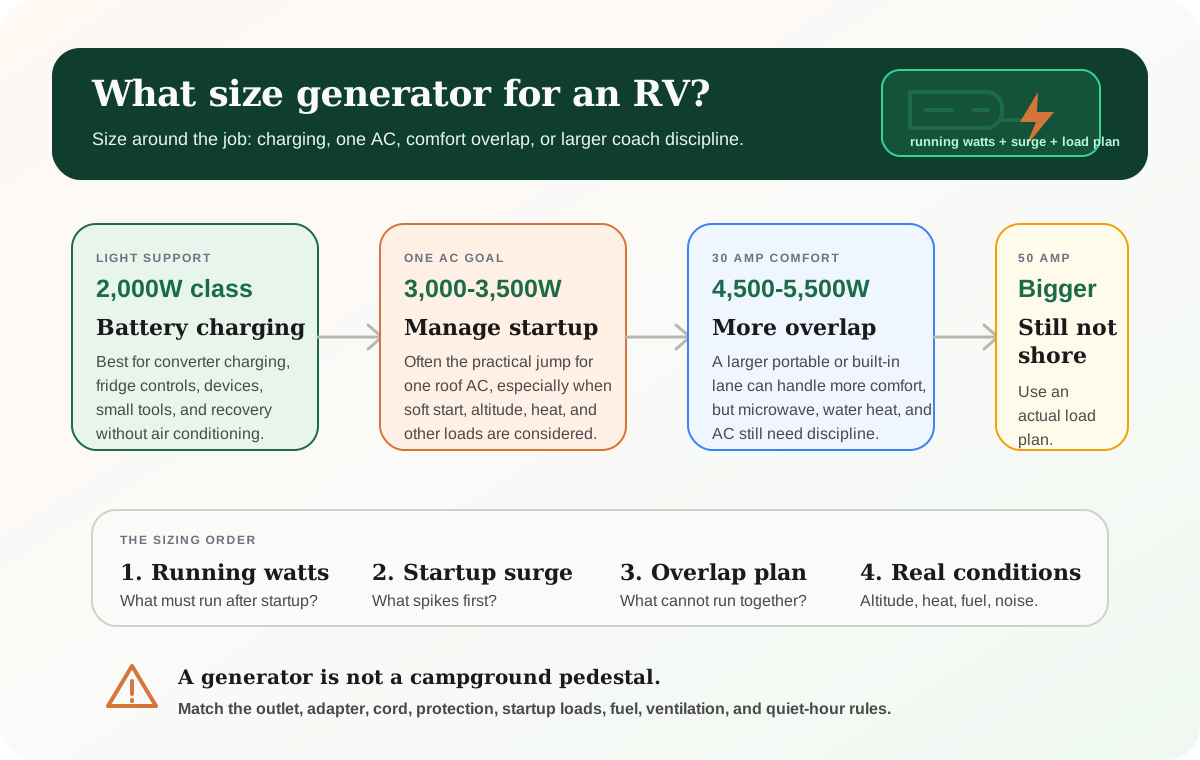
If those loads are central to your plan, also read the RV generator sizing guide so the backup plan is sized honestly.
Final thought
A good wattage chart should make you slower to buy, not faster. Once you separate watts from watt-hours, the system starts to show its real bottleneck: sometimes it is solar, sometimes it is battery reserve, sometimes it is inverter capacity, and sometimes it is simply a habit that needs a better off-grid substitute.
Frequently asked
Questions RVers usually ask next.
What is the most important number in an RV appliance wattage chart?
Daily watt-hours are the most useful number for solar and battery sizing. Watts tell you how hard an appliance pulls while it is running, but watt-hours tell you how much energy it uses over the day.
How do I estimate watts if an appliance only lists amps?
Multiply amps by volts. A 12V device drawing 5A is about 60W, while a 120V device drawing 5A is about 600W. Use the actual label or manual whenever possible.
Should I include inverter losses in my appliance list?
Yes, for AC loads running from the battery bank. A 10-15% planning buffer is a reasonable starting point unless you have measured your exact inverter and appliance combination.
Why does Starlink matter so much in RV power planning?
Starlink is not usually a huge instant load, but it can run for many hours. A 75-100W Standard kit used through a full workday can become one of the largest daily loads in a remote-work RV.
Can I use this chart instead of a calculator?
Use the chart to build your first appliance list, then run the numbers through a calculator. The calculator helps translate daily Wh into panel wattage, battery capacity, and inverter targets.
Freshness note
Last checked May 30, 2026
This topic can change when products, plans, prices, campsite rules, or fit guidance move. These notes show what was reviewed most recently.
This review included
- Re-checked the appliance math against Department of Energy guidance for using nameplate watts, amp times voltage, runtime logs, and wattage times hours to estimate daily energy use.
- Re-checked RV-specific 12V loads against representative RV owner manual tables and Pentair Shurflo pump specifications for water pump amp draw.
- Re-checked remote-work and medical-device loads against current Starlink Standard, Starlink Mini, and ResMed AirSense 11 published power specifications.
- Confirmed the machine-readable JSON and CSV exports of this dataset still resolve and match the on-page ranges.
Recent change log
May 30, 2026
Added a Methodology section and a Use-or-cite-this-data section with machine-readable JSON and CSV downloads, attribution terms, and calculator handoffs so the chart is a citable reference.
April 21, 2026
Refined the search summary and freshness signal so the page leads with daily watt-hour ranges and calculator handoffs.
April 10, 2026
Published an RV appliance wattage reference with 30+ load ranges, daily Wh estimates, sample profiles, and calculator handoffs.
April 10, 2026
Added a custom appliance wattage map so readers can separate always-on, work, kitchen, and comfort loads before sizing solar or batteries.
Broader editorial corrections are tracked on the Corrections and Updates page.