Shortlist first
Use this to find the winner first, then compare the alternates only if their tradeoffs fit your rig better.
Shortlist labels are editorial recommendations, not popularity rankings. Fit score still matters, but the label tells you why each pick made this guide.
How fit scores work
Scores are editorial fit scores, not user-review averages. The rubric weighs stated RV-use fit, verified specs and limits, whole-rig friction, visible downsides or support risk, and value for the specific job in this guide. Read the full scoring rubric.
If you need one baseline option before reading the full guide, start with Brinkley Model Z 3100 for premium mid-size benchmark.
The first option to evaluate if you want the strongest all-around fit for this guide. Check the other cards only if their award label matches your constraint better.
| Product | Why shortlisted | Fit score | Key spec | Best for | Skip if | Actions |
|---|---|---|---|---|---|---|
| Brinkley Model Z 3100 Links to: Brinkley Model Z 3100 | Best overall The first option to evaluate if you want the strongest all-around fit for this guide. | 4.8 / 5 fit scoreScore rubric | 34' 11" | 75/90/45 gal tanks | current page lists 12,276 lb UVW and 15,495 lb GVWR | Premium mid-size benchmark | You are shopping older budget units or need the largest fresh tank first. | Read Brinkley Model Z 3100 notesCheck listing at Brinkley RVMerchant link - direct listing. Verify price and specs at Brinkley RV. |
| Grand Design Reflection 337RLS Links to: Grand Design Reflection 337RLS | Also great A strong alternate when its specific tradeoffs fit your rig better than the winner. | 4.6 / 5 fit score | 36' 8" | 74/79/39 gal tanks | 11,475 lb UVW and 13,995 lb GVWR | Mainstream rear-living benchmark | The used listing's cargo sticker, slide floors, or roof history are weak. | Read Grand Design Reflection 337RLS notesCheck listing at Grand Design RVMerchant link - direct listing. Verify price and specs at Grand Design RV. |
| Keystone Montana High Country 311RD Links to: Keystone Montana High Country 311RD | Specialized pick A narrower recommendation that wins only for a specific use case. | 4.5 / 5 fit score | 35' 0" | 75/87/48 gal tanks | 11,770 lb shipping weight and 3,830 lb carrying capacity | Rear-den and office-flex benchmark | You do not need the rear-den room enough to accept extra slide and furniture complexity. | Read Keystone Montana High Country 311RD notesCheck listing at Keystone RVMerchant link - direct listing. Verify price and specs at Keystone RV. |
| Alliance Paradigm 310RL Links to: Alliance Paradigm 310RL | Upgrade pick The higher-end option to justify only when its extra capability matters in your build. | 4.7 / 5 fit score | 34' 11" | 98/106/53 gal tanks | 13,525 lb dry weight and 16,000 lb GVWR | Large-tank full-time benchmark | Truck payload margin is tight or the used unit's maintenance history is thin. | Read Alliance Paradigm 310RL notesCheck listing at Alliance RVMerchant link - direct listing. Verify price and specs at Alliance RV. |
Current model-family benchmarks
Used fifth-wheel listings vary by year, trim, options, owner modifications, and condition. These official pages are benchmarks for floorplan lanes, not a substitute for inspecting the exact used unit's sticker and maintenance records.
Pre-arrival checks
Use current specs as a benchmark
A used Reflection, Montana, Paradigm, or similar model may differ by year. Compare the exact sticker, not just the family name.
Inspect condition before badge
A clean mid-profile unit can beat a famous luxury badge with tired slides, old tires, roof history, or thin service records.
Keep the truck math first
Loaded pin weight, payload, rear axle rating, tire rating, hitch weight, and bed cargo decide whether the listing belongs on the shortlist.
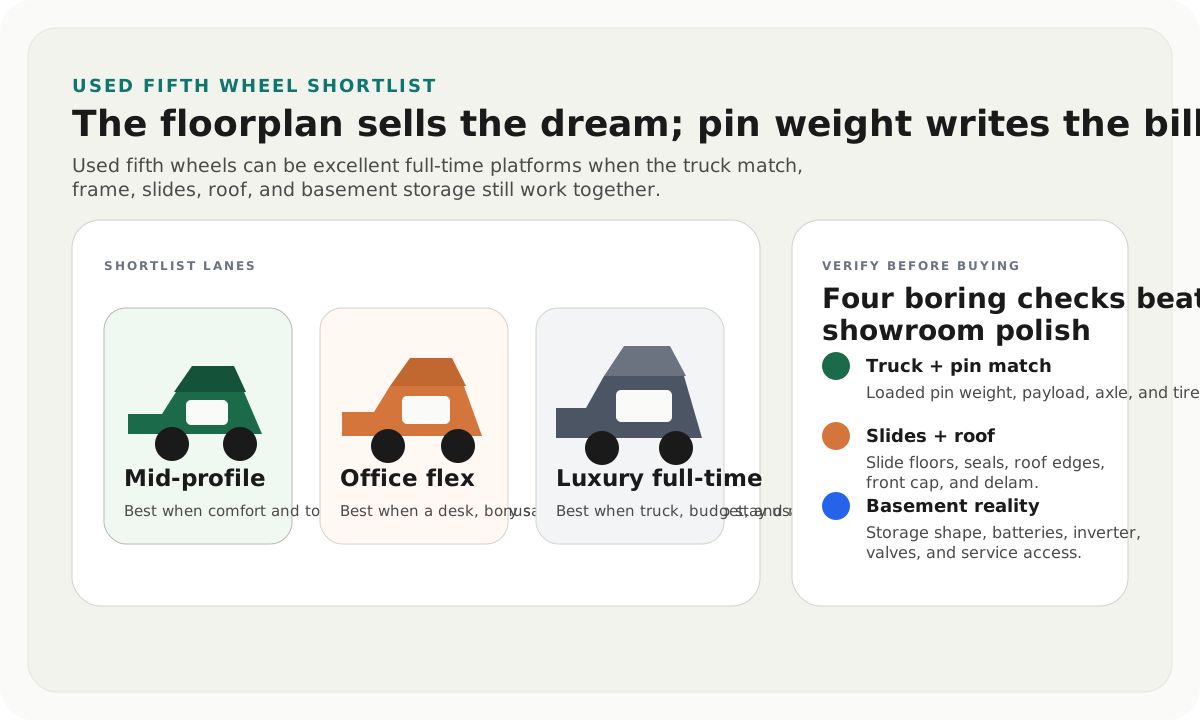
Used fifth wheel shortlist at a glance
Think in ownership lanes before exact brands. A clean mid-profile rig with margin often beats a famous luxury badge with tired slides, weak roof history, or the wrong truck match.
Best first filter
Truck match and loaded pin weight
Fifth wheels usually fail the plan through payload and pin weight before they fail through tow rating.
Best used-unit filter
Roof, front cap, slides, frame
Water paths, slide floors, roof edges, pin-box stress, and suspension wear decide the repair risk.
Best full-time filter
Storage, desk, tanks, service access
The rig has to work on workdays, bad-weather days, and repair days, not only on walkthrough day.
Used fifth wheels are easy to overbuy
Used fifth wheels are seductive because they show well.
The ceiling height feels residential.
The living room feels comfortable.
The basement storage looks enormous while empty.
The kitchen often feels more like a small apartment than a camper.
That comfort is real, and it is why fifth wheels can be excellent full-time RVs. But used fifth wheels also hide expensive problems behind the very features that make them appealing: slides, larger roofs, hydraulic or electric systems, complex underbellies, heavier frames, large tires, and more furniture mechanisms.
The right question is not, "Which used fifth wheel looks nicest?"
The better question is, "Which used fifth wheel still fits my truck, storage habits, work pattern, repair budget, and off-grid plan after the honeymoon ends?"
How to use current model pages when buying used
Current manufacturer pages are useful, but they are not the final answer for a used fifth wheel.
Use them as a benchmark for the lane. A current Grand Design Reflection 337RLS tells you what a mainstream rear-living fifth wheel is trying to be. A current Montana High Country 311RD shows what the rear-den lane is trying to solve. A current Alliance Paradigm 310RL shows how a large-tank full-time floorplan changes the truck and payload conversation.
Then put the brochure away and inspect the used unit.
Model years change. Options change. Dealers add packages. Owners add batteries, washer/dryers, solar, generators, tool storage, suspension parts, furniture, and sometimes questionable wiring. A used fifth wheel's real story is the yellow cargo sticker, tire date codes, roof condition, slide floors, maintenance records, water history, and the way the coach sits after years of travel.
That is why the quick picks above are called benchmarks, not guarantees. They give you lanes to compare against. The actual listing still has to pass the condition and truck-match checks.
The used fifth wheel shortlist lanes
Compare
Used fifth wheel model-family lanes for full-time and longer-stay shoppers
Use one comparison matrix to scan the practical differences. Small screens stack each row; wider screens keep the first column pinned.
| Spec | Mid-profile rear living | Bonus-room or office flex | Lighter full-time fifth wheels | Luxury full-time fifth wheels | Toy-hauler-hybrid fifth wheels |
|---|---|---|---|---|---|
| Examples to inspect | Grand Design Reflection, Keystone Cougar, Jayco Eagle, Forest River Rockwood Signature, and similar mid-profile rear-living floorplans | Grand Design Reflection or Solitude mid-bunk layouts, Keystone Cougar or Montana office/bunk layouts, Jayco Eagle or North Point flex-room layouts | Alliance Avenue, Grand Design Reflection, Jayco Eagle, Keystone Cougar, and similar rigs where livability and towability both matter | Keystone Montana, Grand Design Solitude, Jayco North Point, Alliance Paradigm, Forest River Cedar Creek, RiverStone, and similar full-time-focused profiles | Grand Design Momentum G-Class, Keystone Fuzion or Raptor, Alliance Valor, Jayco Seismic, and similar fifth-wheel toy-hauler profiles used as offices or gear bases |
| Best fit | Couples wanting a balanced full-time platform without jumping straight to the heaviest luxury tier | Remote workers, couples needing call separation, or families that need a room with a door | Buyers who want full-time comfort but still care about easier campsite fit, serviceability, and truck realism | Long-stay or full-time buyers who have the truck, budget, and service plan to support larger systems | Gear-heavy travelers, remote workers who want a flex room, riders, or people who need a utility room more than a polished rear living room |
| Full-time upside | Strong comfort-to-complexity balance, useful storage, and broad used availability | A workstation can stay set up instead of fighting the dining table every day | Often a good compromise between full-time comfort and easier ownership | Best bad-weather comfort, storage, furniture, appliance, and residential feel | Most flexible second-room use for offices, gear, pets, bikes, or creative work |
| Watch first | Desk compromise, basement access, roof seams, and whether storage stays organized once full | Payload after office gear, slide condition, HVAC reach, and whether the flex room is truly usable | Cargo sticker, smaller tanks, lighter furniture, and whether the truck still has margin | Pin weight, tire cost, roof and slide complexity, hydraulic systems, and campsite size limits | Ramp/rear-wall condition, cargo math, fuel/generator systems, and garage comfort conversion |
The four numbers to verify before you love the floorplan
Loaded pin weight
Pin weight is where fifth-wheel shopping gets real.
The truck still has to carry people, hitch weight, tools, fuel, cargo, bed cover, auxiliary tanks if equipped, and whatever lives in the truck while traveling. A fifth wheel can be under the truck's tow rating and still overload payload or rear axle ratings.
Do not shop by dry pin weight alone.
For used rigs, look for the actual weight stickers, scale records if available, and realistic owner load. Then leave margin for full-time life because full-time cargo grows quietly.
Cargo carrying capacity
Cargo carrying capacity matters because fifth wheels invite people to bring home-sized belongings.
Full-timers add:
- tools
- hoses
- spare parts
- office gear
- extra clothing
- pantry stock
- outdoor furniture
- batteries
- solar gear
- pet supplies
- seasonal equipment
The rig should still have margin after normal life is inside it.
Tank capacity
Fifth wheels can feel large enough that shoppers assume the tanks are generous.
Do not assume.
Check fresh, gray, and black tank labels on the actual unit. If the floorplan has washer/dryer prep, extra bathroom fixtures, a kitchen island, or multiple lavatories, look closely at gray-water capacity and valve layout.
Longer stays are often limited by gray water before fresh water.
Tire and axle reality
Used fifth wheels are heavy, and tire decisions matter.
Check tire date codes, load ratings, sidewall cracking, uneven wear, axle labels, spring hangers, shackles, equalizers, brake wiring, and evidence of repeated overloaded travel.
If the suspension looks tired, the price has not told the whole story yet.
Tow rating is not the whole truck match
Fifth wheels usually stress payload, rear axle rating, tire rating, and loaded pin weight before they stress the headline tow rating. A used rig that only works on brochure numbers is not a good full-time platform.
Which used fifth wheel lane should you inspect first?
Inspect mid-profile rear-living rigs first if you want balance
This is the safest starting lane for many full-time or near-full-time couples.
Mid-profile rear-living fifth wheels usually offer:
- comfortable seating
- usable kitchen flow
- decent pantry storage
- manageable length compared with luxury giants
- broad used-market availability
- simpler ownership than the largest full-time rigs
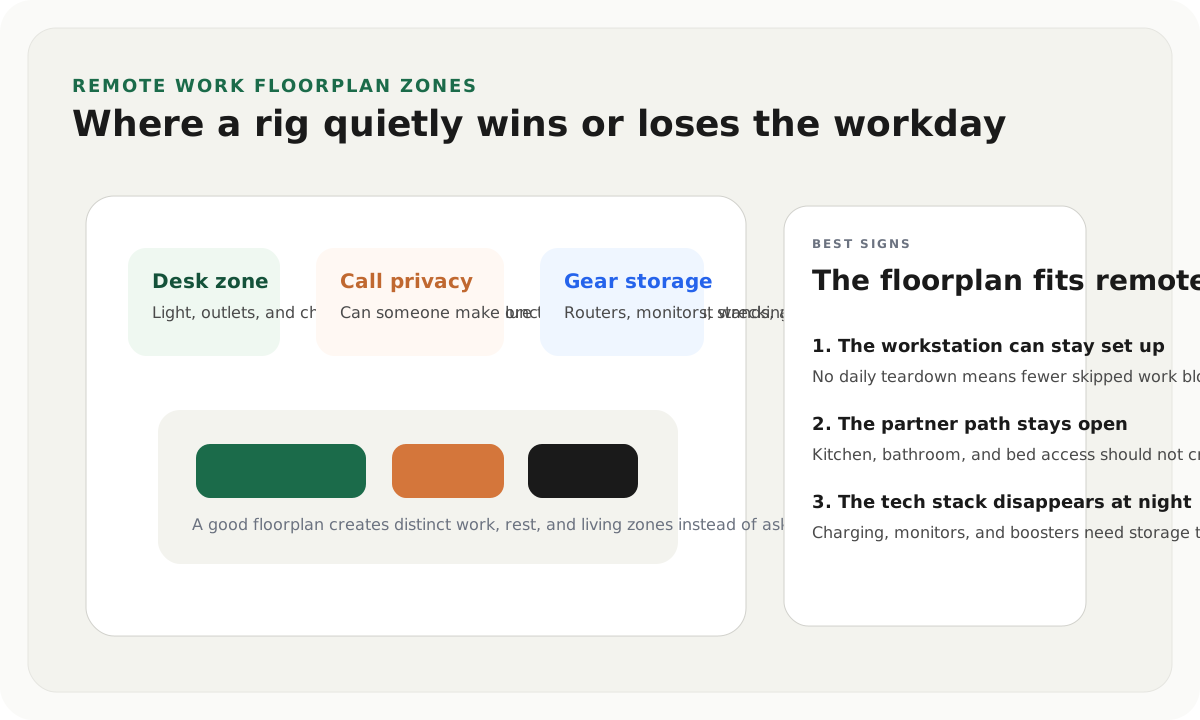
The biggest watchout is work space. A rear-living rig can be comfortable but still leave the desk problem unresolved.
If you work from the road, decide exactly where the desk, monitor, chair, printer, router, and camera background will live before calling the layout good.
Inspect bonus-room or office-flex rigs first if work is part of life
If someone works regularly from the RV, a room with a door can matter more than a prettier living room.
Bonus-room, mid-bunk, and office-flex fifth wheels can give you:
- call separation
- monitor space
- storage for work gear
- a guest zone
- better partner flow during work hours
- a place to leave the desk set up
The watchout is that flex rooms are often small, and small rooms get overwhelmed quickly. Check HVAC reach, outlets, chair clearance, wall space, and whether the room still works when storage bins or guest bedding show up.
For more floorplan-specific thinking, pair this with the RV floorplan guide for remote-work couples.
Inspect lighter full-time fifth wheels first if truck margin matters
Some buyers need a fifth wheel that feels livable without pushing every truck and campsite limit.
This is where lighter full-time or upper-mid-profile rigs can make sense.
They may not have the most residential feel, but they can be easier to tow, fit, store, maintain, and upgrade in stages.
The risk is underbuilding your actual life. If the tanks, furniture, storage, or office setup are too compromised, the lighter rig may become the wrong kind of frugal.
Inspect luxury full-time fifth wheels first only when the support system is real
Luxury fifth wheels can be excellent full-time homes.
They often bring:
- better furniture
- larger kitchens
- bigger bedrooms
- stronger storage
- better appliance packages
- more residential feel
- more weather-day comfort
They also bring more expensive problems:
- heavier pin weight
- larger tires
- more slides
- hydraulic or leveling complexity
- more roof and seal surface
- higher service bills
- narrower campsite fit
The luxury lane works when the truck, budget, route, and maintenance plan are already honest.
It is risky when shoppers use the big living room to ignore the weight and repair story.
Inspect toy-hauler-hybrid fifth wheels first if the second room has a job
Toy-hauler fifth wheels are not just for toys.
They can work beautifully for:
- remote offices
- bikes
- tools
- dog space
- gear storage
- gym setups
- creative studios
- guest space
But the garage has to earn its size. It adds ramp, rear-wall, fuel, generator, cargo, and climate-control questions to the already big fifth-wheel inspection list.
If this is your lane, read the used toy hauler shortlist before you compare listings by garage length alone.
Representative model-family benchmarks
The following current model pages are useful examples of the lanes above. Treat them as reference points while shopping used, not as proof that any older unit with the same badge is automatically a good buy.
- Latest product check
- Specs, fit notes, and current listing context were reviewed April 21, 2026.
- Evidence label
- Research-only: Score is based on documented research and fit analysis where direct testing or verified current specs are limited.
- Price context
- Pricing and availability can change, so confirm the merchant listing before buying.
Product facts last checked April 21, 2026
Brinkley Model Z 3100
Editorial fit score
Use the Model Z 3100 as the benchmark for newer premium mid-size used listings. It is not the cheapest lane, but the current model's storage and service-access design is exactly the kind of thinking you want to see echoed in a used rig.
Review verdict
- Short verdict
- The cleanest premium mid-size benchmark because it shows how a full-time fifth wheel can balance livability, storage thinking, service access, and manageable length.
- Evidence used
- Research-only
- Spec-checked against the official Brinkley model page on April 21, 2026; use as a benchmark for used listings, not as hands-on test evidence.
- Why it made the shortlist
- Best overall
- The first option to evaluate if you want the strongest all-around fit for this guide.
- Best if
- Premium mid-size benchmark
- Why not this product?
- You are shopping older budget units or cannot verify the used unit's roof and slide history.
- Watch for
- Premium lane may price above many used shoppers' target.
- Product check date
- Specs, fit notes, and current listing context were last checked April 21, 2026.
Key specs
- Length
- 34' 11"
- Tanks
- 75 / 90 / 45 gal
- Current page weights
- 12,276 lb UVW; 15,495 lb GVWR
- Used-listing check
- Sticker, roof, slides, utility access, and records
Score basis
Spec-checked against the official Brinkley model page on April 21, 2026; use as a benchmark for used listings, not as hands-on test evidence. These are editorial fit scores, not customer-review averages. Read the scoring rubric.
- RV-use fit
- 30% weight
- Verified specs and limits
- 25% weight
- Whole-rig friction
- 20% weight
- Downsides and support risk
- 15% weight
- Value for the job
- 10% weight
How directly the product solves the specific off-grid RV job in this guide.
Capacity, dimensions, electrical limits, protection claims, and compatibility constraints we can verify from current sources.
Install effort, storage, wiring, service access, weight, refill workflow, or daily-use hassle.
Known tradeoffs, unclear claims, warranty coverage, support risk, and wrong-buyer failure modes.
Whether the price makes sense after fit, specs, and tradeoffs still hold.
Testing limits
- Treat this as an editorial screen, not a final buy signal.
- Verify the latest manufacturer specs, owner documentation, and retailer listing before relying on this option.
Reasons to buy
- Useful benchmark for a premium but still manageable full-time layout.
- Service-access thinking is relevant to used ownership.
- A good comparison point when a listing claims full-time quality.
Watch-outs
- Premium lane may price above many used shoppers' target.
- Fresh tank is not the largest in the benchmark set.
- Current specs do not prove an older or modified used unit is clean.
Check current listing
Brinkley Model Z 3100
Use the listing after the fit notes make sense for your rig. Pricing and availability can change, so verify the merchant page before buying.
- Latest product check
- Specs, fit notes, and current listing context were reviewed April 21, 2026.
- Evidence label
- Research-only: Score is based on documented research and fit analysis where direct testing or verified current specs are limited.
- Price context
- Pricing and availability can change, so confirm the merchant listing before buying.
Product facts last checked April 21, 2026
Grand Design Reflection 337RLS
Editorial fit score
Reflection-style rear-living fifth wheels are common enough that used shoppers can compare condition, price, and layout without chasing one rare model. The catch is that common does not mean safe; slides, roof, pin weight, and cargo sticker still decide the buy.
Review verdict
- Short verdict
- The mainstream rear-living benchmark for couples who want broad availability, familiar dealer support, and a floorplan category that is easy to compare across years.
- Evidence used
- Research-only
- Spec-checked against the official Grand Design model page on April 21, 2026; use as a mainstream rear-living benchmark for used listings.
- Why it made the shortlist
- Also great
- A strong alternate when its specific tradeoffs fit your rig better than the winner.
- Best if
- Mainstream rear-living benchmark
- Why not this product?
- The used listing has weak cargo margin, old tires, roof staining, or vague slide-history answers.
- Watch for
- Waste capacity can become the stay-length limiter.
- Product check date
- Specs, fit notes, and current listing context were last checked April 21, 2026.
Key specs
- Length
- 36' 8"
- Tanks
- 74 / 79 / 39 gal
- Current page weights
- 11,475 lb UVW; 13,995 lb GVWR
- Used-listing check
- Black tank, slide floors, roof seams, and loaded pin weight
Score basis
Spec-checked against the official Grand Design model page on April 21, 2026; use as a mainstream rear-living benchmark for used listings. These are editorial fit scores, not customer-review averages. Read the scoring rubric.
- RV-use fit
- 30% weight
- Verified specs and limits
- 25% weight
- Whole-rig friction
- 20% weight
- Downsides and support risk
- 15% weight
- Value for the job
- 10% weight
How directly the product solves the specific off-grid RV job in this guide.
Capacity, dimensions, electrical limits, protection claims, and compatibility constraints we can verify from current sources.
Install effort, storage, wiring, service access, weight, refill workflow, or daily-use hassle.
Known tradeoffs, unclear claims, warranty coverage, support risk, and wrong-buyer failure modes.
Whether the price makes sense after fit, specs, and tradeoffs still hold.
Testing limits
- Treat this as an editorial screen, not a final buy signal.
- Verify the latest manufacturer specs, owner documentation, and retailer listing before relying on this option.
Reasons to buy
- Broad model-family familiarity helps used comparison shopping.
- Rear-living layout works for many full-time couples.
- Good benchmark for balancing comfort and truck realism.
Watch-outs
- Waste capacity can become the stay-length limiter.
- Used examples vary heavily by year, options, and owner upkeep.
- The floorplan can still leave remote-work desk placement unresolved.
Check current listing
Grand Design Reflection 337RLS
Use the listing after the fit notes make sense for your rig. Pricing and availability can change, so verify the merchant page before buying.
- Latest product check
- Specs, fit notes, and current listing context were reviewed April 21, 2026.
- Evidence label
- Research-only: Score is based on documented research and fit analysis where direct testing or verified current specs are limited.
- Price context
- Pricing and availability can change, so confirm the merchant listing before buying.
Product facts last checked April 21, 2026
Keystone Montana High Country 311RD
Editorial fit score
A rear-den fifth wheel can be excellent for full-time life when the second room has a real job. It can also add furniture, slide, and cargo complexity that only pays off if the room is used every week.
Review verdict
- Short verdict
- The rear-den benchmark for shoppers who need a second living zone, office-flex space, or better bad-weather separation more than they need the simplest rear-living layout.
- Evidence used
- Research-only
- Spec-checked against the official Keystone model page on April 21, 2026; use as a rear-den/flex-room benchmark for used listings.
- Why it made the shortlist
- Specialized pick
- A narrower recommendation that wins only for a specific use case.
- Best if
- Rear-den and office-flex benchmark
- Why not this product?
- You do not need a second room enough to inspect and maintain the added complexity.
- Watch for
- Added furniture and slides bring more inspection risk.
- Product check date
- Specs, fit notes, and current listing context were last checked April 21, 2026.
Key specs
- Length
- 35' 0"
- Tanks
- 75 / 87 / 48 gal
- Current page weights
- 11,770 lb shipping weight; 3,830 lb carrying capacity
- Used-listing check
- Slide count, rear-room floor, HVAC reach, and cargo after office gear
Score basis
Spec-checked against the official Keystone model page on April 21, 2026; use as a rear-den/flex-room benchmark for used listings. These are editorial fit scores, not customer-review averages. Read the scoring rubric.
- RV-use fit
- 30% weight
- Verified specs and limits
- 25% weight
- Whole-rig friction
- 20% weight
- Downsides and support risk
- 15% weight
- Value for the job
- 10% weight
How directly the product solves the specific off-grid RV job in this guide.
Capacity, dimensions, electrical limits, protection claims, and compatibility constraints we can verify from current sources.
Install effort, storage, wiring, service access, weight, refill workflow, or daily-use hassle.
Known tradeoffs, unclear claims, warranty coverage, support risk, and wrong-buyer failure modes.
Whether the price makes sense after fit, specs, and tradeoffs still hold.
Testing limits
- Treat this as an editorial screen, not a final buy signal.
- Verify the latest manufacturer specs, owner documentation, and retailer listing before relying on this option.
Reasons to buy
- Second-room structure can solve real full-time and remote-work problems.
- Rear-den lane gives more weather-day flexibility than a simple open living room.
- Useful benchmark for judging office-flex used listings.
Watch-outs
- Added furniture and slides bring more inspection risk.
- The room has to earn its weight and complexity.
- Not the right lane if truck margin is already tight.
Check current listing
Keystone Montana High Country 311RD
Use the listing after the fit notes make sense for your rig. Pricing and availability can change, so verify the merchant page before buying.
- Latest product check
- Specs, fit notes, and current listing context were reviewed April 21, 2026.
- Evidence label
- Research-only: Score is based on documented research and fit analysis where direct testing or verified current specs are limited.
- Price context
- Pricing and availability can change, so confirm the merchant listing before buying.
Product facts last checked April 21, 2026
Alliance Paradigm 310RL
Editorial fit score
The Paradigm 310RL is useful in a used-shopping article because it shows what a serious tank package does to the rest of the conversation. Big tanks are valuable only when the truck, cargo sticker, tires, and service history support the loaded reality.
Review verdict
- Short verdict
- The large-tank benchmark for full-time couples who want longer stay potential and have the truck, payload margin, and maintenance budget to support the rig.
- Evidence used
- Research-only
- Spec-checked against the official Alliance model page on April 21, 2026; use as a large-tank full-time benchmark for used listings.
- Why it made the shortlist
- Upgrade pick
- The higher-end option to justify only when its extra capability matters in your build.
- Best if
- Large-tank full-time benchmark
- Why not this product?
- Your truck payload margin is tight or the seller cannot document maintenance and weight reality.
- Watch for
- Weight and hitch load are not casual.
- Product check date
- Specs, fit notes, and current listing context were last checked April 21, 2026.
Key specs
- Length
- 34' 11"
- Tanks
- 98 / 106 / 53 gal
- Current page weights
- 13,525 lb dry weight; 16,000 lb GVWR
- Used-listing check
- Truck payload, pin load, tires, suspension, and tank-valve access
Score basis
Spec-checked against the official Alliance model page on April 21, 2026; use as a large-tank full-time benchmark for used listings. These are editorial fit scores, not customer-review averages. Read the scoring rubric.
- RV-use fit
- 30% weight
- Verified specs and limits
- 25% weight
- Whole-rig friction
- 20% weight
- Downsides and support risk
- 15% weight
- Value for the job
- 10% weight
How directly the product solves the specific off-grid RV job in this guide.
Capacity, dimensions, electrical limits, protection claims, and compatibility constraints we can verify from current sources.
Install effort, storage, wiring, service access, weight, refill workflow, or daily-use hassle.
Known tradeoffs, unclear claims, warranty coverage, support risk, and wrong-buyer failure modes.
Whether the price makes sense after fit, specs, and tradeoffs still hold.
Testing limits
- Treat this as an editorial screen, not a final buy signal.
- Verify the latest manufacturer specs, owner documentation, and retailer listing before relying on this option.
Reasons to buy
- Large tanks provide a strong benchmark for longer off-grid stays.
- Good reference point for full-time buyers who prioritize water and waste capacity.
- Shows why tank size and truck math must be evaluated together.
Watch-outs
- Weight and hitch load are not casual.
- A large-tank used rig can be expensive to correct if neglected.
- Payload margin must be verified before the interior wins you over.
Check current listing
Alliance Paradigm 310RL
Use the listing after the fit notes make sense for your rig. Pricing and availability can change, so verify the merchant page before buying.
The used fifth wheel inspection order
Use this sequence before negotiating seriously.
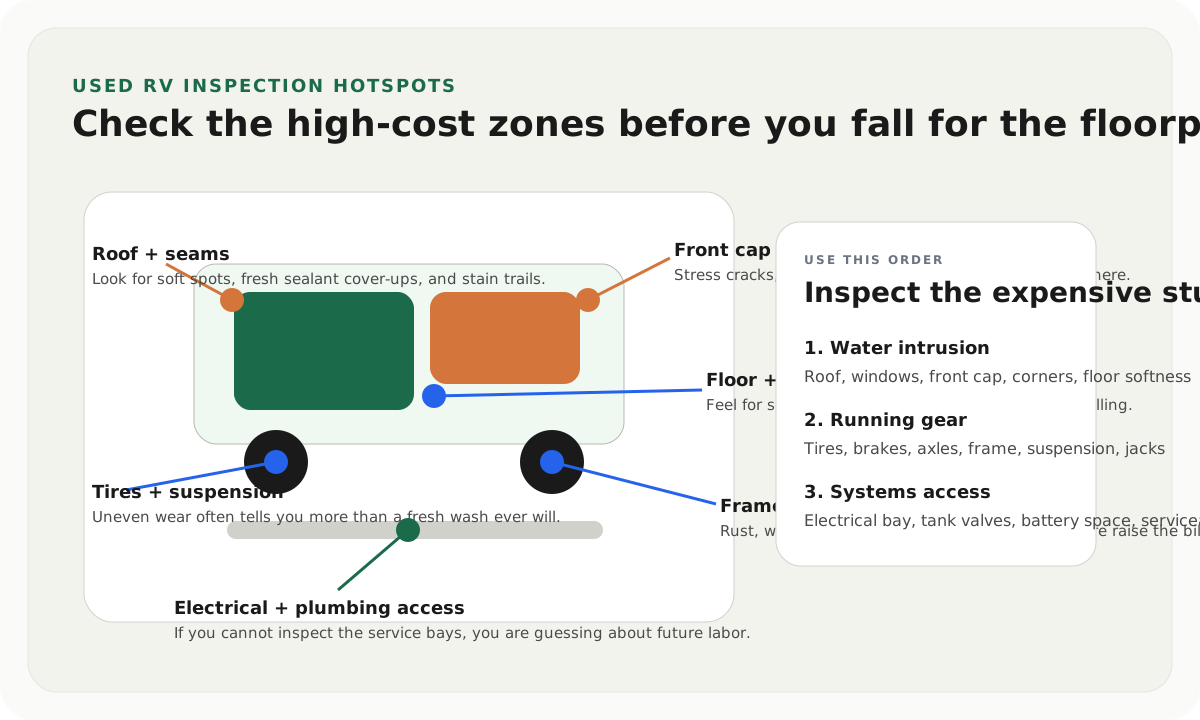
- Confirm truck payload, rear axle rating, tire rating, hitch weight, and realistic loaded pin weight.
- Check the fifth wheel's cargo sticker, GVWR, axle ratings, tire date codes, and suspension condition.
- Inspect roof edges, front cap, upper bedroom nose, slide roofs, windows, and sealant history.
- Check slide floors, slide seals, slide operation, roller marks, and water staining around every opening.
- Inspect pin box, frame clues, spring hangers, equalizers, shackles, brakes, and underbelly condition.
- Open basement storage and trace battery, converter, inverter, valves, plumbing, and electrical access.
- Verify fresh, gray, and black tank labels plus dump-valve access.
- Test shore power, converter charging, water pump, water heater, furnace, air conditioners, refrigerator, and outlets.
- Evaluate desk, seating, storage, and bedroom flow as if it is a rainy workday.
- Build the first-year catch-up budget before pricing solar, lithium, or decor upgrades.
For a broader used-rig checklist, use the used RV inspection checklist by rig type.
What I would avoid on a used fifth wheel
Avoid listings where the seller asks you to accept vague answers on expensive systems.
Common red flags:
- soft slide floors
- water staining near slides, front cap, bedroom nose, or roof edges
- delamination or wall waves
- tire wear suggesting axle or suspension issues
- cracked spring hangers or frame repair clues
- old or mismatched tires
- hydraulic leveling or slide problems
- basement storage that hides inaccessible valves or hacked wiring
- roof coating or sealant work with no documentation
- low cargo capacity after options
- pin weight that crowds the truck before the rig is loaded
- seller cannot demonstrate appliances, charging, slides, water pump, and HVAC
- the only desk is a dinette that must be reset every meal
Field note
Field fit note
Used fifth wheels tend to disappoint buyers less when the truck match, slide health, roof history, and basement access are boring. Boring is good here. Boring means fewer surprises between the first trip and the first repair day.
Official lineup examples I checked
Used fifth-wheel shopping changes by model year, but current official lineups are useful for understanding how manufacturers position their families.
Examples I checked while refreshing this guide include Grand Design Reflection, Grand Design Solitude, Keystone Montana, Jayco North Point, Alliance Paradigm, and Forest River Cedar Creek.
Do not treat those names as automatic recommendations. Treat them as model-family examples to inspect with the actual used unit's sticker, condition, records, and truck match in front of you.
The best next step after a promising used fifth wheel
If a used fifth wheel still looks good after the first pass, slow down.
Write down:
- actual truck payload and rear axle rating
- likely loaded pin weight
- cargo capacity remaining after normal life is loaded
- first-year tire, suspension, seal, and battery budget
- tank capacity compared with your stay length
- where a desk can stay set up
- where batteries, inverter, monitor, and solar wiring would actually live
If the rig still looks good after those boring checks, it may be a serious full-time platform.
If not, the floorplan is probably selling a version of ownership the numbers cannot support.
Where to go next
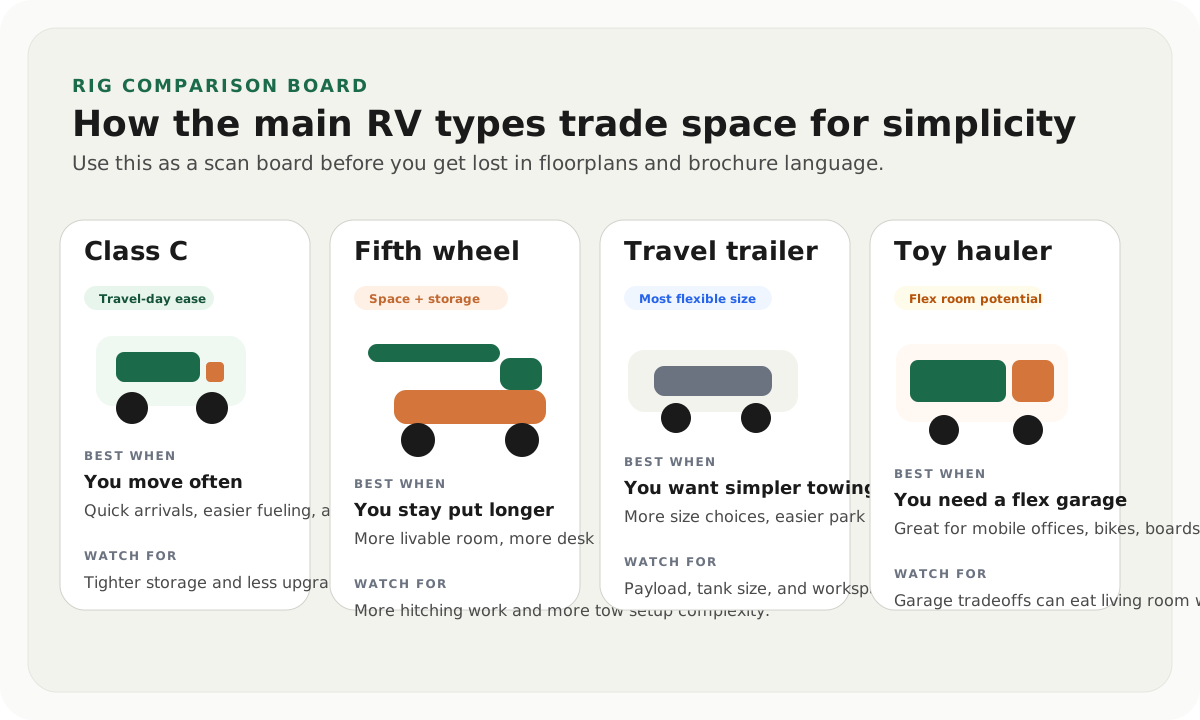
If you are still comparing fifth wheels against motorhomes, start with Class C vs fifth wheel for full-time RV living.
If you want the broader new-rig fifth-wheel framework, read best fifth wheels for full-time off-grid living.
If you already have a listing in front of you, use the used RV inspection checklist by rig type.
Frequently asked
Questions RVers usually ask next.
What is the best used fifth wheel for full-time living?
There is no single universal winner. Mid-profile rear-living, bonus-room office, lighter full-time, luxury full-time, and toy-hauler-hybrid fifth wheels can all work. The actual unit's truck match, pin weight, roof, slides, tanks, storage, and service records matter more than the badge.
Are older luxury fifth wheels worth buying used?
Sometimes, but only if the truck match, roof condition, slide health, frame clues, tire age, hydraulic systems, and service access all check out. Luxury fifth wheels are easiest to overbuy because the parked comfort is so persuasive.
What should I inspect first on a used fifth wheel?
Start with truck and pin-weight reality, then inspect roof edges, front cap, slide floors, tires, suspension, frame clues, basement access, tanks, and charging systems before the decor gets much weight.
Freshness note
Last checked April 21, 2026
This topic can change when products, plans, prices, campsite rules, or fit guidance move. These notes show what was reviewed most recently.
This review included
- Reviewed current official fifth-wheel family names and representative model pages from major RV manufacturers, then kept the buying advice used-unit and sticker-first because years, trims, options, and previous-owner modifications vary widely.
- Expanded the guide with quick-pick model-family benchmarks, product cards for current representative fifth wheels, and clearer notes on using current specs to evaluate used listings.
- Checked the guide against the rig-review framework for truck match, pin weight, slide condition, roof seams, basement service access, tank capacity, and off-grid upgrade headroom.
Recent change log
April 21, 2026
Added model-family quick picks and product cards so used fifth-wheel shoppers can benchmark listings against current official fifth-wheel lanes without ignoring used-condition risk.
April 10, 2026
Rebuilt the used fifth wheel guide as a sticker-first shortlist with model-family lanes, inspection filters, and a custom visual.
April 10, 2026
Linked the page into the rig-review cluster and added deeper checks for pin weight, slides, roof, basement storage, and service access.
Broader editorial corrections are tracked on the Corrections and Updates page.