Shortlist first
Use this to find the winner first, then compare the alternates only if their tradeoffs fit your rig better.
Shortlist labels are editorial recommendations, not popularity rankings. Fit score still matters, but the label tells you why each pick made this guide.
How fit scores work
Scores are editorial fit scores, not user-review averages. The rubric weighs stated RV-use fit, verified specs and limits, whole-rig friction, visible downsides or support risk, and value for the specific job in this guide. Read the full scoring rubric.
If you need one baseline option before reading the full guide, start with Brinkley Model Z 3100 for premium mid-size full-time rig.
The first option to evaluate if you want the strongest all-around fit for this guide. Check the other cards only if their award label matches your constraint better.
| Product | Why shortlisted | Fit score | Key spec | Best for | Skip if | Actions |
|---|---|---|---|---|---|---|
| Brinkley Model Z 3100 Links to: Brinkley Model Z 3100 | Best overall The first option to evaluate if you want the strongest all-around fit for this guide. | 4.8 / 5 fit scoreScore rubric | 34' 11", 75/90/45 gal tanks, current page lists 12,276 lb UVW and 15,495 lb GVWR | Premium mid-size full-time rig | You need the lowest-cost entry point or a very large fresh tank. | Read Brinkley Model Z 3100 notesCheck listing at Brinkley RVMerchant link - direct listing. Verify price and specs at Brinkley RV. |
| Grand Design Reflection 337RLS Links to: Grand Design Reflection 337RLS | Also great A strong alternate when its specific tradeoffs fit your rig better than the winner. | 4.6 / 5 fit score | 36' 8", 74/79/39 gal tanks, 11,475 lb UVW, 13,995 lb GVWR, 370W solar listed | Mainstream rear-living couple | You need black-tank capacity to match longer fresh-water stays. | Read Grand Design Reflection 337RLS notesCheck listing at Grand Design RVMerchant link - direct listing. Verify price and specs at Grand Design RV. |
| Keystone Montana High Country 311RD Links to: Keystone Montana High Country 311RD | Specialized pick A narrower recommendation that wins only for a specific use case. | 4.5 / 5 fit score | 35' 0", 75/87/48 gal tanks, 11,770 lb shipping weight, 3,830 lb carrying capacity | Rear-den living space | You do not need the rear-den room enough to justify the added furniture and slide complexity. | Read Keystone Montana High Country 311RD notesCheck listing at Keystone RVMerchant link - direct listing. Verify price and specs at Keystone RV. |
| Alliance Paradigm 310RL Links to: Alliance Paradigm 310RL | Upgrade pick The higher-end option to justify only when its extra capability matters in your build. | 4.7 / 5 fit score | 34' 11", 98/106/53 gal tanks, 13,525 lb dry weight, 16,000 lb GVWR | Large-tank full-time couple | Your truck payload margin is tight or you want a lighter rear-living fifth wheel. | Read Alliance Paradigm 310RL notesCheck listing at Alliance RVMerchant link - direct listing. Verify price and specs at Alliance RV. |
What is the best fifth wheel for full-time off-grid living?
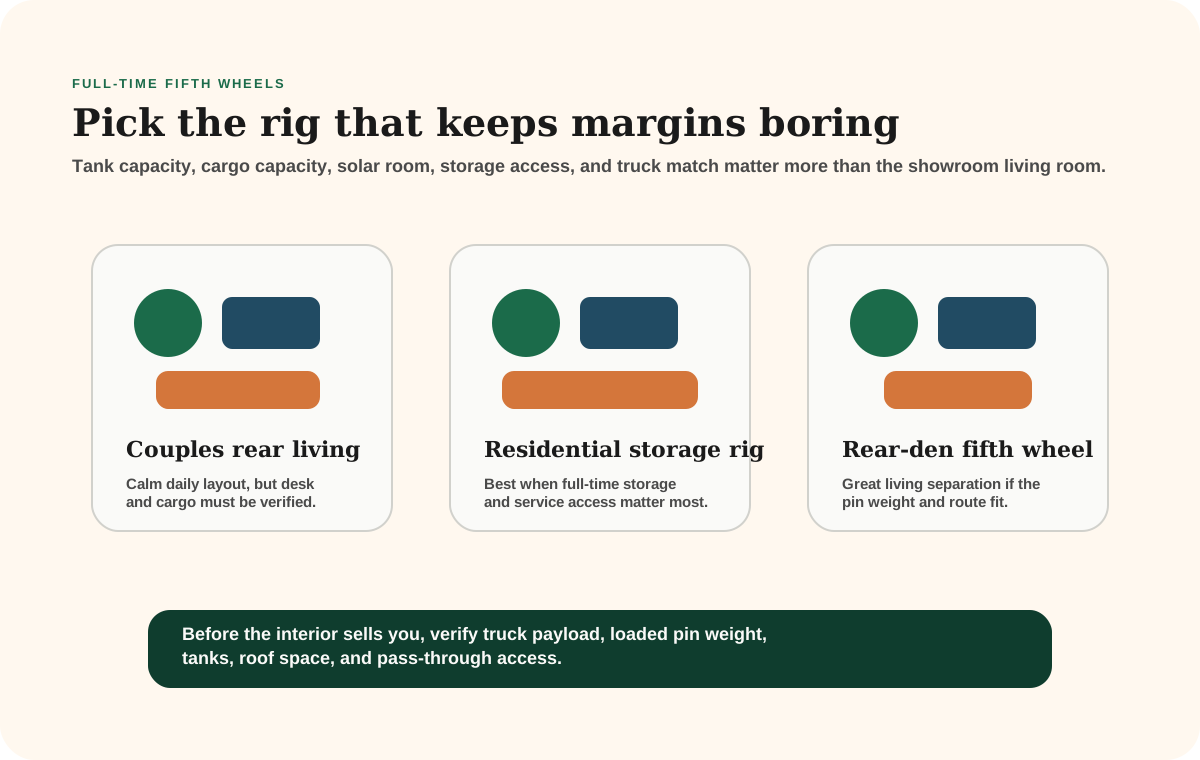
The best fifth wheel for full-time off-grid living is the one that balances livability with infrastructure: tanks, cargo capacity, loaded pin weight, roof solar room, battery and inverter access, storage, and a floorplan that still works on bad-weather days. The Brinkley Model Z 3100 is the strongest premium mid-size starting point, while the Reflection 337RLS, Montana High Country 311RD, and Alliance Paradigm 310RL fit different full-time lanes.
Full-time fifth-wheel snapshot
The winning fifth wheel usually balances livability and infrastructure, not just interior style.
First filter
Loaded pin weight
Dry hitch or pin weight is not the number your truck carries after batteries, water, gear, washer/dryer prep, and full-time cargo.
Second filter
Tank balance
Fresh water matters, but gray and black capacity often decide whether a stay ends early.
Third filter
Upgrade access
Solar, batteries, inverter, shunt, DC-to-DC charging, and generator prep are easier when bays and cable routes make sense.
Best fit
Couples who need storage and weather-day livability
A fifth wheel earns its size when it still feels livable after tools, office gear, hoses, chairs, spare parts, and seasonal clothing are aboard.
Official model checks
Use these manufacturer pages to build the shortlist, then verify the exact dealer unit. Model years, production changes, options, and stickers can move the real buying answer.
Pre-arrival checks
Verify the exact sticker
Manufacturer pages are useful for shortlisting, but the actual cargo carrying capacity and tire information live on the unit labels.
Run truck payload, not just tow rating
Loaded pin weight, passengers, hitch hardware, tools, and bed cargo can overload a truck before the trailer exceeds tow rating.
Check service access before decor
Battery bays, inverter space, plumbing access, roof paths, and storage-bay shape matter more off-grid than countertop color.
What makes a fifth wheel good off-grid?
A good full-time off-grid fifth wheel needs to do four things well:
- carry enough water and gear
- give people room to live on ordinary days
- stay workable when weather traps everyone inside
- leave room for upgrades that make longer stays easier
That means the winning layout is usually not the lightest or the fanciest.
It is the one that still works after the storage bays are full, the desk is set up, the battery bank is upgraded, the roof solar is installed, and the novelty wears off.
If you are shopping used, carry this framework into the used fifth wheel shortlist so truck match, loaded pin weight, slide floors, roof seams, tank labels, basement access, and service records get inspected before the living room sells you.
Shortlist comparison
Compare
Representative fifth-wheel models checked against official manufacturer pages on April 21, 2026.
Use one comparison matrix to scan the practical differences. Small screens stack each row; wider screens keep the first column pinned.
| Spec | Brinkley Model Z 3100 | Grand Design Reflection 337RLS | Montana High Country 311RD | Alliance Paradigm 310RL |
|---|---|---|---|---|
| Best role | Premium mid-size full-time rig | Mainstream rear-living couple | Rear-den living and storage feel | Large-tank full-time couple |
| Published size and weight | 34' 11"; current page lists 12,276 lb UVW and 15,495 lb GVWR; verify exact sticker | 36' 8"; 11,475 lb UVW; 13,995 lb GVWR | 35' 0"; 11,770 lb shipping weight; 3,830 lb carrying capacity | 34' 11"; 13,525 lb dry weight; 16,000 lb GVWR |
| Listed hitch or pin | 2,298 lb current page value | 2,475 lb | 2,350 lb | 2,674 lb |
| Tanks | 75 fresh; 90 gray; 45 black | 74 fresh; 79 gray; 39 waste | 75 fresh; 87 gray; 48 waste | 98 fresh; 106 gray; 53 black |
| Off-grid signal | Good service-access details, docking features, and upgrade conduit; verify current spec block because the page also retains older spec tables. | Factory 370W roof solar, 60A controller, and inverter prep listed; mainstream parts and dealer support. | High carrying-capacity listing and rear-den livability; optional generator prep listed by Keystone. | Strongest tank package in this shortlist; larger GVWR and hitch weight demand a serious truck match. |
| Main watchout | Premium price and fresh tank is not the largest here. | Black/waste tank is the stay-length limiter if fresh use is high. | Rear-den furniture adds weight and slide complexity; make sure you need that room. | Weight and pin load are not casual; payload margin must be verified early. |
How to inspect a fifth wheel for off-grid use
Inspect a full-time off-grid fifth wheel from the outside in before you fall in love with the living room.
Start with the truck match. Published dry weight is not enough. Use the actual cargo sticker, listed or measured pin weight, hitch hardware, passengers, tools, bed cargo, water, batteries, and full-time belongings. A fifth wheel can be under the truck's tow rating and still overload payload. That is the failure mode many shoppers miss because tow rating is advertised more loudly than payload.
Next, inspect the tanks as a system. Fresh water gets attention because it is easy to picture. Gray and black capacity decide whether the stay ends early. A 90-gallon fresh tank with a small waste tank may still push you toward a dump station before the fresh water is gone. For full-time off-grid living, balanced tanks are usually more useful than one impressive tank number.
Then look at the roof. Solar is not just a wattage wish. Roof vents, air conditioners, skylights, antennas, curves, service paths, and shade zones decide whether panels can be placed cleanly. If the roof cannot hold the solar array you need, the electrical plan may depend on portable panels, generator time, alternator charging, or fewer loads.
After that, open the basement and utility spaces. You are looking for battery location, inverter space, cable paths, plumbing access, shunt placement, charger access, and whether future service can be done without dismantling half the coach. Full-time off-grid living eventually becomes maintenance. A pretty fifth wheel with hostile service access can become expensive and frustrating.
Finally, test the floorplan during a bad-weather day. Where does the laptop go? Can two people move while one works? Can the kitchen function with slides open and with travel-day access limited? Is there room for winter clothes, tools, outdoor gear, spare parts, filters, hoses, chairs, and pantry stock? The answer matters more after month three than it does during a showroom tour.
Worked tank and payload example
Assume a couple uses 12 gallons of fresh water per day with careful habits. A 75-gallon fresh tank sounds like roughly six days before refill. But that estimate only works if gray and black capacity, food storage, battery recovery, weather, and dump access all agree.
Now add the weight side. Seventy-five gallons of fresh water weighs about 626 pounds at 8.34 pounds per gallon. A larger 98-gallon fresh tank weighs about 817 pounds when full. That weight is not theoretical. It becomes part of the loaded trailer, affects axle load, and can change pin weight depending on tank location.
This is why an off-grid fifth wheel cannot be judged by tank capacity alone. A big tank is valuable only when the trailer has cargo capacity, tire capacity, truck payload, and waste capacity to support it. If the yellow sticker is already tight after options, filling the tanks may erase the margin that made the rig look comfortable on paper.
Use the payload calculator before assuming a full-time fifth wheel can carry full water, lithium batteries, solar gear, tools, office equipment, spare parts, and seasonal belongings all at once.
Which full-time lane should you choose?
Choose the premium mid-size lane if you want a coach that feels intentionally built around maintenance, storage, and upgrade access. This is where the Brinkley Model Z 3100 makes sense. It does not win every single spec line, but the service-oriented details and manageable length make it a strong first inspection for full-time couples who value systems.
Choose the mainstream rear-living lane if you want a familiar floorplan, broad dealer familiarity, and a solar starting point without moving into the heaviest class. The Grand Design Reflection 337RLS fits that shopper. The tradeoff is that its waste-tank capacity and loaded pin weight deserve more attention than the living-room seating.
Choose the rear-den lane if weather-day living, hobbies, guest use, or separated lounge space matters. The Montana High Country 311RD has a useful rear-den structure and a strong carrying-capacity listing, but the added furniture and slide complexity only pay off if that room is genuinely used.
Choose the large-tank lane if stay length is the priority and the truck can handle the coach. The Alliance Paradigm 310RL has the strongest tank package in this shortlist, but it also asks for a serious truck and a serious payload conversation. Big tanks are not a shortcut around weight math.
Solar and electrical questions to ask on the lot
Do not ask only whether the rig "has solar." Ask what the solar actually does.
The useful questions are:
- How many watts are installed at delivery?
- What charge controller is installed, and where is it mounted?
- What battery chemistry is supported by the factory converter and controller?
- Is there inverter prep, a real inverter, or only a residential-fridge circuit?
- Where would additional batteries go, and how would they be ventilated or heated?
- Is there a roof-to-basement conduit, and where does it enter?
- Can the battery monitor shunt be installed in an accessible location?
- Is generator prep installed, optional, or absent?
Those answers determine whether the fifth wheel is ready for weekend unplugged use, a modest lithium upgrade, or a full electrical rebuild. A full-time off-grid rig needs a system that can support the refrigerator, furnace controls, water pump, internet gear, laptops, lighting, fans, and occasional inverter loads without turning every cloudy week into an emergency.
Best fifth wheels for full-time off-grid living
- Latest product check
- Specs, fit notes, and current listing context were reviewed April 21, 2026.
- Evidence label
- Research-only: Score is based on documented research and fit analysis where direct testing or verified current specs are limited.
- Price context
- Pricing and availability can change, so confirm the merchant listing before buying.
Product facts last checked April 21, 2026
Brinkley Model Z 3100
Editorial fit score
The Model Z 3100 is the fifth wheel in this shortlist that most clearly reads like it was designed by people who understand maintenance, storage, and upgrade access. It is not the cheapest or the biggest-tank option, but the overall full-time system design is strong.
Review verdict
- Short verdict
- The best premium mid-size starting point because it combines livability, storage thinking, service-access details, and off-grid upgrade access better than most showroom-first fifth wheels.
- Evidence used
- Research-only
- Spec-checked against the official Brinkley model page on April 21, 2026; not hands-on tested by OffGridRVHub.
- Why it made the shortlist
- Best overall
- The first option to evaluate if you want the strongest all-around fit for this guide.
- Best if
- Full-time couples who want a premium mid-size fifth wheel with upgrade headroom
- Why not this product?
- You need a budget pick, a bunk room, or the largest fresh-water tank possible.
- Watch for
- Premium pricing means it should be inspected hard, not admired passively.
- Product check date
- Specs, fit notes, and current listing context were last checked April 21, 2026.
Key specs
- Length
- 34' 11"
- Tanks
- 75 / 90 / 45 gal
- Current page weights
- 12,276 lb UVW; 15,495 lb GVWR
- Listed hitch
- 2,298 lb before loaded verification
Score basis
Spec-checked against the official Brinkley model page on April 21, 2026; not hands-on tested by OffGridRVHub. These are editorial fit scores, not customer-review averages. Read the scoring rubric.
- RV-use fit
- 30% weight
- Verified specs and limits
- 25% weight
- Whole-rig friction
- 20% weight
- Downsides and support risk
- 15% weight
- Value for the job
- 10% weight
How directly the product solves the specific off-grid RV job in this guide.
Capacity, dimensions, electrical limits, protection claims, and compatibility constraints we can verify from current sources.
Install effort, storage, wiring, service access, weight, refill workflow, or daily-use hassle.
Known tradeoffs, unclear claims, warranty coverage, support risk, and wrong-buyer failure modes.
Whether the price makes sense after fit, specs, and tradeoffs still hold.
Testing limits
- Treat this as an editorial screen, not a final buy signal.
- Verify the latest manufacturer specs, owner documentation, and retailer listing before relying on this option.
Reasons to buy
- Strong storage and service-access thinking for a full-time rig.
- Gray capacity is useful, and the 75/90/45 tank split is easier to live with than many luxury fifth wheels.
- Upgrade-focused details make solar, inverter, and maintenance planning less mysterious.
Watch-outs
- Premium pricing means it should be inspected hard, not admired passively.
- The fresh tank is not the largest in this shortlist.
- The official page currently includes more than one spec table, so the exact model-year sticker matters.
Related parts and setup checks
Check current listing
Brinkley Model Z 3100
Use the listing after the fit notes make sense for your rig. Pricing and availability can change, so verify the merchant page before buying.
- Latest product check
- Specs, fit notes, and current listing context were reviewed April 21, 2026.
- Evidence label
- Research-only: Score is based on documented research and fit analysis where direct testing or verified current specs are limited.
- Price context
- Pricing and availability can change, so confirm the merchant listing before buying.
Product facts last checked April 21, 2026
Grand Design Reflection 337RLS
Editorial fit score
The Reflection 337RLS belongs here because it is a recognizable rear-living fifth wheel with enough tank capacity and solar-prep setup to be a realistic off-grid platform. It is not the most extreme tank package, but it is a practical comparison point for couples who want livability without jumping straight to the heaviest luxury coaches.
Review verdict
- Short verdict
- A mainstream rear-living lane with factory solar hardware listed and a familiar full-time couple layout.
- Evidence used
- Research-only
- Spec-checked against the official Grand Design model page on April 21, 2026; not hands-on tested by OffGridRVHub.
- Why it made the shortlist
- Also great
- A strong alternate when its specific tradeoffs fit your rig better than the winner.
- Best if
- Couples who want a mainstream rear-living fifth wheel with a solar starting point
- Why not this product?
- You need big black-tank capacity, a dedicated office room, or a much lighter truck match.
- Watch for
- The 39-gallon waste tank can become the stay-length limiter.
- Product check date
- Specs, fit notes, and current listing context were last checked April 21, 2026.
Key specs
- Length
- 36' 8"
- Tanks
- 74 / 79 / 39 gal
- Published weights
- 11,475 lb UVW; 13,995 lb GVWR
- Listed hitch
- 2,475 lb before loaded verification
Score basis
Spec-checked against the official Grand Design model page on April 21, 2026; not hands-on tested by OffGridRVHub. These are editorial fit scores, not customer-review averages. Read the scoring rubric.
- RV-use fit
- 30% weight
- Verified specs and limits
- 25% weight
- Whole-rig friction
- 20% weight
- Downsides and support risk
- 15% weight
- Value for the job
- 10% weight
How directly the product solves the specific off-grid RV job in this guide.
Capacity, dimensions, electrical limits, protection claims, and compatibility constraints we can verify from current sources.
Install effort, storage, wiring, service access, weight, refill workflow, or daily-use hassle.
Known tradeoffs, unclear claims, warranty coverage, support risk, and wrong-buyer failure modes.
Whether the price makes sense after fit, specs, and tradeoffs still hold.
Testing limits
- Treat this as an editorial screen, not a final buy signal.
- Verify the latest manufacturer specs, owner documentation, and retailer listing before relying on this option.
Reasons to buy
- Rear-living layout is easy for couples to understand and live in.
- Factory-listed 370W solar, controller, and inverter prep reduce the first-upgrade gap.
- Mainstream brand support and parts familiarity can matter for full-time ownership.
Watch-outs
- The 39-gallon waste tank can become the stay-length limiter.
- The dry hitch number is already meaningful before full-time cargo is added.
- Rear-living comfort can hide storage and service-access compromises during a walkthrough.
Check current listing
Grand Design Reflection 337RLS
Use the listing after the fit notes make sense for your rig. Pricing and availability can change, so verify the merchant page before buying.
- Latest product check
- Specs, fit notes, and current listing context were reviewed April 21, 2026.
- Evidence label
- Research-only: Score is based on documented research and fit analysis where direct testing or verified current specs are limited.
- Price context
- Pricing and availability can change, so confirm the merchant listing before buying.
Product facts last checked April 21, 2026
Keystone Montana High Country 311RD
Editorial fit score
The 311RD is useful because the rear-den floorplan gives full-timers a room-like living zone that can be easier to use during weather days. The official 3,830-pound carrying-capacity listing is also a strong signal, but the actual sticker and loaded pin weight still decide the safe match.
Review verdict
- Short verdict
- The rear-den option for shoppers who want more separated living space without jumping into a very long floorplan.
- Evidence used
- Research-only
- Spec-checked against the official Keystone model page on April 21, 2026; not hands-on tested by OffGridRVHub.
- Why it made the shortlist
- Specialized pick
- A narrower recommendation that wins only for a specific use case.
- Best if
- Full-timers who want a rear-den living zone and solid cargo headroom
- Why not this product?
- You want the simplest couple layout, the fewest slides, or a dedicated office first.
- Watch for
- Rear-den furniture and slide complexity only pay off if you truly use the room.
- Product check date
- Specs, fit notes, and current listing context were last checked April 21, 2026.
Key specs
- Length
- 35' 0"
- Tanks
- 75 / 87 / 48 gal
- Shipping weight
- 11,770 lb
- Carrying capacity
- 3,830 lb listed
Score basis
Spec-checked against the official Keystone model page on April 21, 2026; not hands-on tested by OffGridRVHub. These are editorial fit scores, not customer-review averages. Read the scoring rubric.
- RV-use fit
- 30% weight
- Verified specs and limits
- 25% weight
- Whole-rig friction
- 20% weight
- Downsides and support risk
- 15% weight
- Value for the job
- 10% weight
How directly the product solves the specific off-grid RV job in this guide.
Capacity, dimensions, electrical limits, protection claims, and compatibility constraints we can verify from current sources.
Install effort, storage, wiring, service access, weight, refill workflow, or daily-use hassle.
Known tradeoffs, unclear claims, warranty coverage, support risk, and wrong-buyer failure modes.
Whether the price makes sense after fit, specs, and tradeoffs still hold.
Testing limits
- Treat this as an editorial screen, not a final buy signal.
- Verify the latest manufacturer specs, owner documentation, and retailer listing before relying on this option.
Reasons to buy
- Rear-den layout gives a more separated living feel than many open rear-living coaches.
- Official carrying-capacity listing is useful for full-time cargo planning.
- Tank split is more balanced than some luxury-leaning fifth wheels.
Watch-outs
- Rear-den furniture and slide complexity only pay off if you truly use the room.
- Generator prep is optional, not the same as a finished off-grid electrical system.
- The exact unit sticker and truck payload still matter more than the published carrying-capacity number.
Related parts and setup checks
Used RV inspection checklist
Rear-den fifth wheels deserve careful slide, floor, roof, and cargo-sticker inspection if shopping used.
Open Used RV inspection checklistGenerator sizing guide
If generator prep is part of the plan, size it around real charger and A/C loads before ordering options.
Open Generator sizing guideCheck current listing
Keystone Montana High Country 311RD
Use the listing after the fit notes make sense for your rig. Pricing and availability can change, so verify the merchant page before buying.
- Latest product check
- Specs, fit notes, and current listing context were reviewed April 21, 2026.
- Evidence label
- Research-only: Score is based on documented research and fit analysis where direct testing or verified current specs are limited.
- Price context
- Pricing and availability can change, so confirm the merchant listing before buying.
Product facts last checked April 21, 2026
Alliance Paradigm 310RL
Editorial fit score
The Paradigm 310RL is the tank-capacity standout in this shortlist: 98 gallons fresh, 106 gray, and 53 black. That makes it a serious full-time boondocking candidate, but it also carries the weight and hitch implications of a larger, heavier coach.
Review verdict
- Short verdict
- The large-tank upgrade lane for full-time couples whose truck can handle the heavier coach.
- Evidence used
- Research-only
- Spec-checked against the official Alliance RV model page on April 21, 2026; not hands-on tested by OffGridRVHub.
- Why it made the shortlist
- Upgrade pick
- The higher-end option to justify only when its extra capability matters in your build.
- Best if
- Full-time couples who prioritize tanks and have the truck for it
- Why not this product?
- You are trying to stay in a lighter fifth-wheel class or your truck payload is already close.
- Watch for
- The weight and listed hitch number demand a serious truck payload check.
- Product check date
- Specs, fit notes, and current listing context were last checked April 21, 2026.
Key specs
- Length
- 34' 11"
- Tanks
- 98 / 106 / 53 gal
- Published dry weight
- 13,525 lb
- GVWR
- 16,000 lb
Score basis
Spec-checked against the official Alliance RV model page on April 21, 2026; not hands-on tested by OffGridRVHub. These are editorial fit scores, not customer-review averages. Read the scoring rubric.
- RV-use fit
- 30% weight
- Verified specs and limits
- 25% weight
- Whole-rig friction
- 20% weight
- Downsides and support risk
- 15% weight
- Value for the job
- 10% weight
How directly the product solves the specific off-grid RV job in this guide.
Capacity, dimensions, electrical limits, protection claims, and compatibility constraints we can verify from current sources.
Install effort, storage, wiring, service access, weight, refill workflow, or daily-use hassle.
Known tradeoffs, unclear claims, warranty coverage, support risk, and wrong-buyer failure modes.
Whether the price makes sense after fit, specs, and tradeoffs still hold.
Testing limits
- Treat this as an editorial screen, not a final buy signal.
- Verify the latest manufacturer specs, owner documentation, and retailer listing before relying on this option.
Reasons to buy
- Tank capacity is the clearest off-grid strength here.
- Large gray capacity helps longer stays when showers and dishwashing are part of the routine.
- Fits full-time couples who want residential comfort and meaningful infrastructure headroom.
Watch-outs
- The weight and listed hitch number demand a serious truck payload check.
- Higher GVWR can mean higher tire, brake, maintenance, and storage consequences.
- The tank package only matters if power, payload, and site access also fit.
Check current listing
Alliance Paradigm 310RL
Use the listing after the fit notes make sense for your rig. Pricing and availability can change, so verify the merchant page before buying.
Which one should you inspect first?
Start with the Brinkley Model Z 3100 if you want the most systems-minded premium mid-size fifth wheel in this shortlist.
Start with the Grand Design Reflection 337RLS if you want a mainstream rear-living couple layout with factory solar hardware already listed.
Start with the Montana High Country 311RD if the rear-den room matters for weather days, guests, hobbies, or separated living space.
Start with the Alliance Paradigm 310RL if tank capacity is the strongest off-grid priority and the truck has payload margin.
Skip all of them if the truck match is marginal. A fifth wheel that is perfect on the lot becomes the wrong rig immediately if loaded pin weight consumes the truck's payload.
The must-have features are boring
The fifth-wheel features that keep paying off are not the showroom crowd-pleasers.
They are:
- larger pass-through storage
- easy battery and electrical access
- enough roof space that solar does not become a puzzle immediately
- tanks that match the number of people onboard
- a dining, desk, den, or living zone that does not collapse the whole floorplan
- slide access that still lets you reach essential spaces during travel stops
- service bays that a normal owner can actually inspect
Those features feel boring until the first week you try to work, cook, charge, dump, store, and live through mixed weather.
Field note
From the field
The fifth wheel that feels luxurious for a walkthrough can still feel frustrating once sewer gear, chairs, spare parts, chargers, tools, office equipment, weather layers, and repair supplies all need a repeatable home.
Common full-time fifth-wheel mistakes
The first mistake is buying around the prettiest room. The living room sells the rig. The storage, tanks, roof, and truck match keep it usable.
The second mistake is treating factory solar as a finished off-grid system. A roof panel and controller can be a helpful start, but full-time off-grid use may still need a larger lithium bank, inverter/charger, DC-to-DC charging, portable panels, or generator backup.
The third mistake is ignoring gray and black tanks. Fresh water is visible and exciting. Waste capacity is what often sends you back to a dump station.
The fourth mistake is underestimating full-time cargo. Tools, hoses, spare parts, chairs, outdoor gear, winter clothes, office gear, food, batteries, and hitch hardware add up fast.
Final thought
A full-time off-grid fifth wheel should be judged less like a showroom and more like a small mobile utility system.
The decor matters because you live there. But the rig stays useful because the tanks, payload, storage, truck match, roof, service access, and upgrade paths all work together.
Buy the coach that still makes sense after the first cold rain, the first muddy dump, the first cloudy workday, and the first storage bay cleanout.
Frequently asked
Questions RVers usually ask next.
What kind of fifth wheel is best for full-time off-grid living?
Usually one with honest tank capacity, strong cargo capacity, a safe truck match, workable storage, practical roof room for solar, and good access for batteries, inverter, plumbing, and service. Interior style matters, but infrastructure decides the stay.
Are luxury fifth wheels good for boondocking?
Some are, but luxury trim alone does not make a rig off-grid friendly. Tanks, storage, cargo carrying capacity, electrical access, roof space, and loaded pin weight matter more than finishes.
How much fresh water should a full-time fifth wheel have?
For longer off-grid stays, 70-100 gallons is much easier to live with than a small tank, but gray and black capacity must match the fresh tank. A large fresh tank with small waste tanks can still force early dump runs.
What is the biggest fifth-wheel buying mistake for full-timers?
Buying from brochure dry weight and showroom feel instead of checking actual cargo sticker, loaded pin weight, truck payload, tank labels, storage shape, roof obstacles, and service access.
Should I buy new or used for full-time off-grid fifth-wheel living?
New can give you current systems and warranty support, while used can save money for upgrades. Either way, inspect roof, slides, frame, tanks, electrical access, service records, and the actual cargo sticker before committing.
Freshness note
Last checked April 21, 2026
This topic can change when products, plans, prices, campsite rules, or fit guidance move. These notes show what was reviewed most recently.
This review included
- Checked current official manufacturer pages for Brinkley Model Z 3100, Grand Design Reflection 337RLS, Keystone Montana High Country 311RD, and Alliance Paradigm 310RL.
- Verified representative length, published dry or UVW weight, GVWR, hitch weight, tank capacities, factory solar or generator-prep details where official pages published them.
- Rebuilt the page from a layout-lane explainer into a model-based shortlist with quick picks, product cards, exact tank/payload comparison, and full-time off-grid skip conditions.
Recent change log
April 21, 2026
Expanded the fifth-wheel guide with official model specs, a custom shortlist visual, quick picks, product cards, and off-grid-specific inspection criteria.
April 10, 2026
Linked the fifth wheel full-time guide to the rebuilt used fifth wheel shortlist.
Broader editorial corrections are tracked on the Corrections and Updates page.