Shortlist first
Use this to find the winner first, then compare the alternates only if their tradeoffs fit your rig better.
Shortlist labels are editorial recommendations, not popularity rankings. Fit score still matters, but the label tells you why each pick made this guide.
How fit scores work
Scores are editorial fit scores, not user-review averages. The rubric weighs stated RV-use fit, verified specs and limits, whole-rig friction, visible downsides or support risk, and value for the specific job in this guide. Read the full scoring rubric.
If you need one baseline option before reading the full guide, start with Grand Design Momentum G-Class 25G for used garage-office target.
The first option to evaluate if you want the strongest all-around fit for this guide. Check the other cards only if their award label matches your constraint better.
| Product | Why shortlisted | Fit score | Key spec | Best for | Skip if | Actions |
|---|---|---|---|---|---|---|
| Grand Design Momentum G-Class 25G Links to: Grand Design Momentum G-Class 25G | Best overall The first option to evaluate if you want the strongest all-around fit for this guide. | 4.6 / 5 fit scoreScore rubric | 30' 11", 13' 6" garage, 90/78/39 gal tanks, 13,000 lb GVWR | Used garage-office target | The listing has ramp wear, roof neglect, weak tire records, or a tow-vehicle match based only on dry weight. | Read Grand Design Momentum G-Class 25G notesCheck listing at Grand Design RVMerchant link - direct listing. Verify price and specs at Grand Design RV. |
| Forest River XLR Boost 2114BX Links to: Forest River XLR Boost 2114BX | Best value The pick that balances capability and cost pressure best for this decision. | 4.4 / 5 fit score | 27' 6", 102 gal fresh, 64 gal gray, 32 gal black, 11,390 lb GVWR from official UVW plus CCC | Compact used cargo lane | You need a residential-feeling garage office or the used unit shows hard cargo damage. | Read Forest River XLR Boost 2114BX notesCheck listing at Forest RiverMerchant link - direct listing. Verify price and specs at Forest River. |
| Alliance Valor 32T13 Links to: Alliance Valor 32T13 | Upgrade pick The higher-end option to justify only when its extra capability matters in your build. | 4.5 / 5 fit score | 36' 5", 98/93/93 gal tanks, 13,000 lb GVWR, 1,947 lb listed hitch | Longer-stay used hauler | Your truck payload, route style, or first-year repair budget is already tight. | Read Alliance Valor 32T13 notesCheck listing at Alliance RVMerchant link - direct listing. Verify price and specs at Alliance RV. |
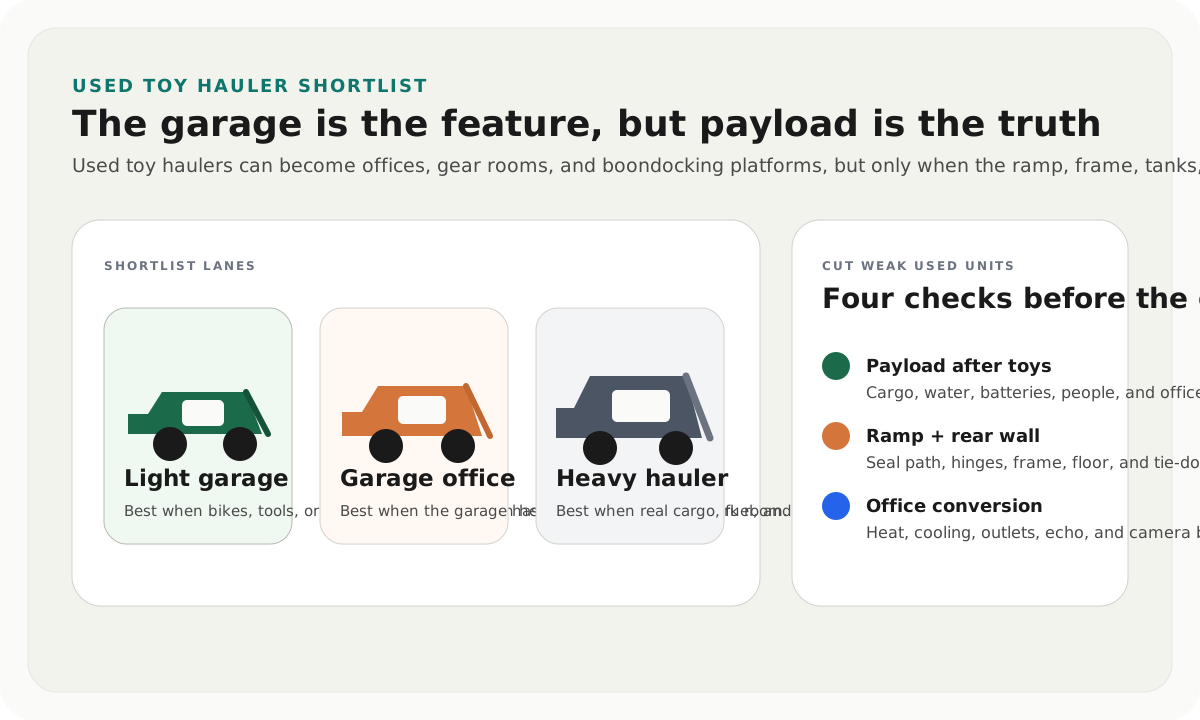
Used toy hauler shortlist at a glance
Treat these as inspection lanes, not fixed recommendations. Used toy haulers vary heavily by garage length, cargo history, options, previous-owner load habits, and maintenance records.
Best first filter
Payload after the real cargo
A toy hauler should be evaluated after toys, water, fuel, batteries, tools, office gear, people, pets, and normal camp cargo are included.
Best used-unit filter
Ramp, rear wall, floor, tie-downs
The garage gets worked hard. Ramp seals, hinges, floor structure, rear-wall water paths, and tie-down points deserve early inspection.
Best remote-work filter
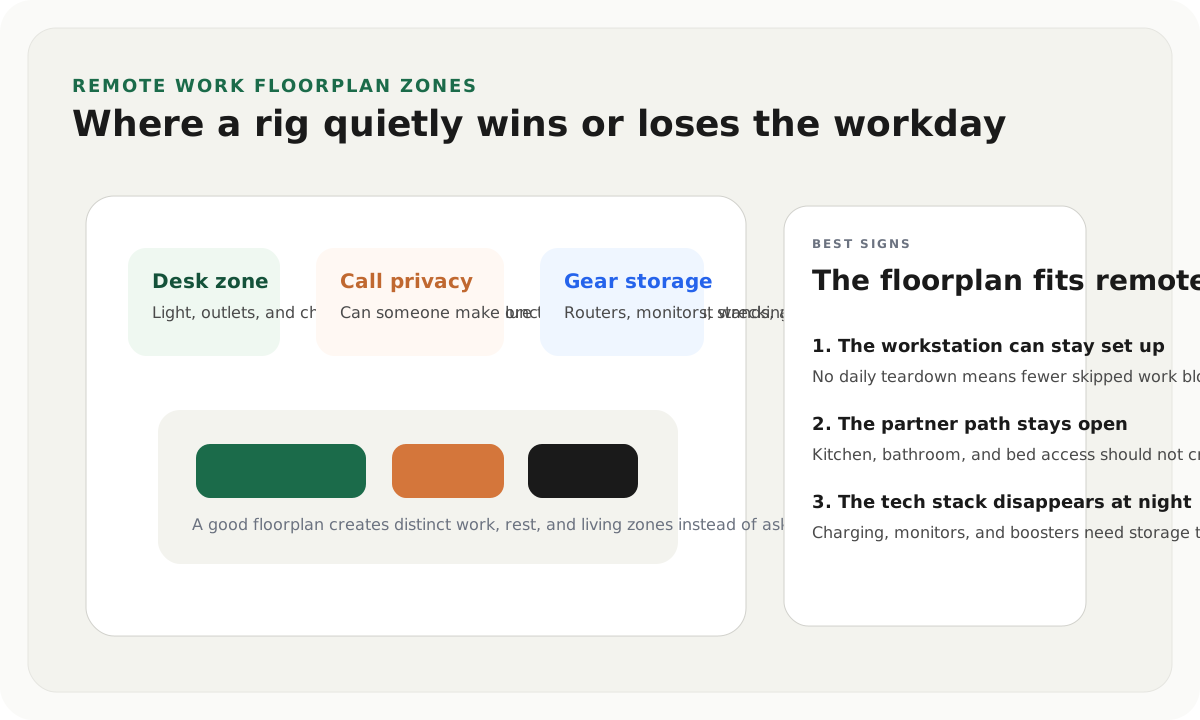
Can the garage become a room?
Climate control, outlets, echo, lighting, camera background, and storage discipline matter more than an empty garage photo.
Official checks for used toy hauler shortlisting
These current model pages anchor the comparison, but a used listing still rises or falls on its actual sticker, cargo history, ramp structure, tire dates, generator behavior, and maintenance records.
Pre-arrival checks
Current models are comparison anchors
A used 2021, 2022, or 2023 listing may have different specs, options, furniture, solar equipment, or cargo history.
Ramp condition is a go/no-go filter
Soft ramp decking, rear-wall staining, damaged seals, loose tie-downs, and floor flex should be priced like structural risk, not decor.
Truck payload decides before the garage does
Loaded tongue or pin weight, hitch hardware, people, tools, bed cargo, and water can overload a truck before the trailer hits GVWR.
A used toy hauler is not just a big trailer with a ramp
Toy haulers are tempting because they solve problems other RV layouts struggle with.
They can carry:
- motorcycles
- e-bikes
- tools
- kayaks
- recovery gear
- portable power gear
- a mobile office
- a gym setup
- a dog zone
- guest sleeping space
That flexibility is real.
But used toy haulers also get used hard. The garage, ramp, rear wall, suspension, tires, tie-downs, fuel system, and generator may have lived a harder life than the living room suggests.
The right shopping question is not, "Which toy hauler has the coolest garage?"
The better question is, "Which used toy hauler still has enough payload, structure, tanks, comfort, and service margin after the garage is actually used?"
The used toy hauler shortlist lanes
Compare
Used toy hauler model-family lanes for boondocking and remote-work shoppers
Use one comparison matrix to scan the practical differences. Small screens stack each row; wider screens keep the first column pinned.
| Spec | Light garage travel trailers | Garage-office fifth wheels | Family flex-room haulers | Heavy cargo fifth wheels | Premium full-time haulers |
|---|---|---|---|---|---|
| Examples to inspect | Forest River XLR Boost or Rogue-style travel trailers; Keystone Impact-style travel trailer toy haulers; smaller KZ Sportster-style layouts | Grand Design Momentum G-Class fifth wheel profiles; Alliance Valor mid-size profiles; Forest River XLR fifth-wheel layouts with usable garage separation | Jayco Seismic or Seismic Luxury Series layouts; Heartland Torque and Cyclone family-friendly garage plans; Dutchmen Voltage-style family layouts | Keystone Raptor, Carbon, and Fuzion-style fifth wheels; Heartland Road Warrior and larger Cyclone profiles; KZ Venom-style heavy cargo layouts | Alliance Valor, Grand Design Momentum, Jayco Seismic Luxury, and other higher-finish toy haulers where full-time comfort and garage function both matter |
| Best fit | Couples or solo travelers carrying lighter bikes, tools, or a compact desk setup | Remote workers who want the garage to become a real office without giving up fifth-wheel livability | Families that need bunks, guest space, pets, gear storage, and occasional office separation | Riders, gear-heavy travelers, and long-stay campers carrying real cargo weight | Full-timers who want better interior finish, larger systems, and a garage that works as a durable second room |
| Boondocking upside | Easier towing than huge fifth-wheel toy haulers and less campsite intimidation | Best balance of garage flexibility and livable main-room comfort | Sleeping flexibility and gear separation help trips stay organized | More tank, cargo, fuel, generator, and storage potential when the tow vehicle is ready | Most likely to support longer stays if payload, tanks, batteries, and service access are verified |
| Watch first | Small tanks, low cargo margin, single-room comfort, and limited garage climate control | Pin weight, roof height, garage heat/cool, ramp condition, and desk power placement | Payload after family cargo, garage clutter, sleeping conversion friction, and waste capacity | Truck match, pin weight, tire cost, frame stress, ramp wear, and whether the route justifies the size | High purchase price, complex systems, generator condition, slide health, and first-year catch-up maintenance |
Three used toy haulers to benchmark first
Use these as comparison anchors, not as a promise that every used listing is clean. A current Momentum G-Class 25G, XLR Boost 2114BX, or Valor 32T13 gives you a concrete model shape to evaluate: garage length, tanks, GVWR, hitch weight, and office potential. A used version still needs the actual model-year brochure, yellow sticker, tire dates, roof inspection, generator test, and ramp evaluation.
- Latest product check
- Specs, fit notes, and current listing context were reviewed April 21, 2026.
- Evidence label
- Research-only: Score is based on documented research and fit analysis where direct testing or verified current specs are limited.
- Price context
- Pricing and availability can change, so confirm the merchant listing before buying.
Product facts last checked April 21, 2026
Grand Design Momentum G-Class 25G
Editorial fit score
The Momentum G-Class 25G works as the used-shopping baseline because it is large enough to give the garage a real job but not so extreme that the conversation immediately becomes a giant fifth-wheel purchase. The 13' 6" garage, 90-gallon fresh tank, and balanced overall length make it a useful garage-office target when the actual listing is clean.
Review verdict
- Short verdict
- The best first benchmark for a used toy-hauler shopper who wants the garage to become a real room, not just cargo storage.
- Evidence used
- Research-only
- Current official model specs checked on April 21, 2026, then adapted as a used-shopping benchmark. Inspect exact model year, sticker, modifications, and condition.
- Why it made the shortlist
- Best overall
- The first option to evaluate if you want the strongest all-around fit for this guide.
- Best if
- Used shoppers who want a balanced garage office and boondocking platform
- Why not this product?
- The seller cannot demonstrate ramp, fuel station, generator, tire, roof, and water-system condition.
- Watch for
- A used unit with ramp wear or rear-wall staining can become expensive quickly.
- Product check date
- Specs, fit notes, and current listing context were last checked April 21, 2026.
Key specs
- Length
- 30' 11" current official listing
- Garage
- 13' 6" current official listing
- Tanks
- 90 fresh / 78 gray / 39 waste gal
- GVWR
- 13,000 lb current official listing
Score basis
Current official model specs checked on April 21, 2026, then adapted as a used-shopping benchmark. Inspect exact model year, sticker, modifications, and condition. These are editorial fit scores, not customer-review averages. Read the scoring rubric.
- RV-use fit
- 30% weight
- Verified specs and limits
- 25% weight
- Whole-rig friction
- 20% weight
- Downsides and support risk
- 15% weight
- Value for the job
- 10% weight
How directly the product solves the specific off-grid RV job in this guide.
Capacity, dimensions, electrical limits, protection claims, and compatibility constraints we can verify from current sources.
Install effort, storage, wiring, service access, weight, refill workflow, or daily-use hassle.
Known tradeoffs, unclear claims, warranty coverage, support risk, and wrong-buyer failure modes.
Whether the price makes sense after fit, specs, and tradeoffs still hold.
Testing limits
- Treat this as an editorial screen, not a final buy signal.
- Verify the latest manufacturer specs, owner documentation, and retailer listing before relying on this option.
Reasons to buy
- Garage length gives a used buyer enough space to plan a desk, bins, bikes, or gear without immediately needing the largest hauler.
- Fresh and gray tank capacity are strong enough to make longer boondocking workdays plausible.
- The current model is concrete enough to benchmark older listings against exact garage, tank, and weight expectations.
Watch-outs
- A used unit with ramp wear or rear-wall staining can become expensive quickly.
- Tow-vehicle payload and hitch weight still need to be verified with the actual loaded trailer.
- The garage needs climate, lighting, outlet, and sound treatment before it feels like a dependable work room.
Related parts and setup checks
Check current listing
Grand Design Momentum G-Class 25G
Use the listing after the fit notes make sense for your rig. Pricing and availability can change, so verify the merchant page before buying.
- Latest product check
- Specs, fit notes, and current listing context were reviewed April 21, 2026.
- Evidence label
- Research-only: Score is based on documented research and fit analysis where direct testing or verified current specs are limited.
- Price context
- Pricing and availability can change, so confirm the merchant listing before buying.
Product facts last checked April 21, 2026
Forest River XLR Boost 2114BX
Editorial fit score
The XLR Boost 2114BX-style lane is attractive because it keeps the body shorter while publishing a useful fresh-water number. For used shoppers, that makes it a good comparison point: is the smaller hauler actually clean, comfortable, and structurally sound enough to use as a cargo bay or work room?
Review verdict
- Short verdict
- The compact value benchmark when the buyer wants cargo flexibility and a big fresh-water number without shopping the biggest haulers.
- Evidence used
- Research-only
- Current official model specs checked on April 21, 2026, then used as a benchmark for compact used toy-hauler listings.
- Why it made the shortlist
- Best value
- The pick that balances capability and cost pressure best for this decision.
- Best if
- Value-focused shoppers who need a compact cargo bay more than a residential lounge
- Why not this product?
- The garage already feels battered, loud, hot, or too awkward to become the room you need.
- Watch for
- The smaller black tank can become the stay-length limiter before fresh water runs out.
- Product check date
- Specs, fit notes, and current listing context were last checked April 21, 2026.
Key specs
- Length
- 27' 6" current official listing
- Tanks
- 102 fresh / 64 gray / 32 black gal
- UVW and CCC
- 7,428 lb UVW; 3,962 lb CCC current official listing
- GVWR math
- 11,390 lb from UVW plus CCC
Score basis
Current official model specs checked on April 21, 2026, then used as a benchmark for compact used toy-hauler listings. These are editorial fit scores, not customer-review averages. Read the scoring rubric.
- RV-use fit
- 30% weight
- Verified specs and limits
- 25% weight
- Whole-rig friction
- 20% weight
- Downsides and support risk
- 15% weight
- Value for the job
- 10% weight
How directly the product solves the specific off-grid RV job in this guide.
Capacity, dimensions, electrical limits, protection claims, and compatibility constraints we can verify from current sources.
Install effort, storage, wiring, service access, weight, refill workflow, or daily-use hassle.
Known tradeoffs, unclear claims, warranty coverage, support risk, and wrong-buyer failure modes.
Whether the price makes sense after fit, specs, and tradeoffs still hold.
Testing limits
- Treat this as an editorial screen, not a final buy signal.
- Verify the latest manufacturer specs, owner documentation, and retailer listing before relying on this option.
Reasons to buy
- Shorter overall length can make routing, storage, and first toy-hauler ownership less intimidating.
- The fresh-water capacity is strong for the size if waste capacity and payload still support the trip.
- Cargo-forward packaging can be a practical blank slate for bikes, tools, dogs, or a compact desk.
Watch-outs
- The smaller black tank can become the stay-length limiter before fresh water runs out.
- A utilitarian garage may need more work to become quiet, climate-stable, and office-ready.
- Used examples that carried heavy cargo need careful floor, tie-down, ramp, tire, and suspension inspection.
Related parts and setup checks
Check current listing
Forest River XLR Boost 2114BX
Use the listing after the fit notes make sense for your rig. Pricing and availability can change, so verify the merchant page before buying.
- Latest product check
- Specs, fit notes, and current listing context were reviewed April 21, 2026.
- Evidence label
- Research-only: Score is based on documented research and fit analysis where direct testing or verified current specs are limited.
- Price context
- Pricing and availability can change, so confirm the merchant listing before buying.
Product facts last checked April 21, 2026
Alliance Valor 32T13
Editorial fit score
The Valor 32T13 is the heavyweight travel-trailer benchmark in this used shortlist. The reason to study it is the tank balance and larger garage-room promise. The reason to slow down is the listed hitch weight and the first-year maintenance reality of a larger used toy hauler.
Review verdict
- Short verdict
- The upgrade benchmark for truck-ready shoppers who want balanced tanks and a more serious long-stay garage room.
- Evidence used
- Research-only
- Current official model specs checked on April 21, 2026, then used as a larger used-shopping benchmark for tank and hitch-weight conversations.
- Why it made the shortlist
- Upgrade pick
- The higher-end option to justify only when its extra capability matters in your build.
- Best if
- Truck-ready shoppers who want a longer-stay garage room and balanced tanks
- Why not this product?
- Your tow vehicle payload, route access, storage plan, or first-year repair budget is already marginal.
- Watch for
- Listed hitch weight is serious before cargo, water, batteries, people, and hitch hardware are loaded.
- Product check date
- Specs, fit notes, and current listing context were last checked April 21, 2026.
Key specs
- Length
- 36' 5" current official listing
- Tanks
- 98 fresh / 93 gray / 93 black gal
- Published dry weight
- 9,713 lb current official listing
- GVWR
- 13,000 lb current official listing
Score basis
Current official model specs checked on April 21, 2026, then used as a larger used-shopping benchmark for tank and hitch-weight conversations. These are editorial fit scores, not customer-review averages. Read the scoring rubric.
- RV-use fit
- 30% weight
- Verified specs and limits
- 25% weight
- Whole-rig friction
- 20% weight
- Downsides and support risk
- 15% weight
- Value for the job
- 10% weight
How directly the product solves the specific off-grid RV job in this guide.
Capacity, dimensions, electrical limits, protection claims, and compatibility constraints we can verify from current sources.
Install effort, storage, wiring, service access, weight, refill workflow, or daily-use hassle.
Known tradeoffs, unclear claims, warranty coverage, support risk, and wrong-buyer failure modes.
Whether the price makes sense after fit, specs, and tradeoffs still hold.
Testing limits
- Treat this as an editorial screen, not a final buy signal.
- Verify the latest manufacturer specs, owner documentation, and retailer listing before relying on this option.
Reasons to buy
- Balanced fresh, gray, and black tanks make longer stays more believable than one-big-fresh-tank designs.
- Larger body and garage-room potential support a more serious remote-work or gear-basecamp routine.
- It helps used shoppers understand when the right answer is not just more garage, but more truck and more budget.
Watch-outs
- Listed hitch weight is serious before cargo, water, batteries, people, and hitch hardware are loaded.
- Length and size reduce campsite flexibility and can raise storage, tire, fuel, and service costs.
- A larger used unit with deferred maintenance can consume the upgrade budget before the office build starts.
Related parts and setup checks
Used RV inspection checklist
Run the large-trailer inspection sequence before treating a clean interior as proof of condition.
Open Used RV inspection checklistRemote-work power budget
Plan desk, internet, inverter, battery, and charging loads before relying on factory solar prep.
Open Remote-work power budgetCheck current listing
Alliance Valor 32T13
Use the listing after the fit notes make sense for your rig. Pricing and availability can change, so verify the merchant page before buying.
The numbers to verify before the garage sells you
Cargo carrying capacity
Toy haulers invite people to load heavy things.
That means cargo carrying capacity is not a footnote. It is the whole deal.
Before you get excited about the garage, write down the actual load:
- motorcycle, ATV, bikes, or tools
- fuel in the fuel station if equipped
- fresh water
- propane
- batteries
- generator or portable power gear
- desk, monitors, chair, and office bins
- food and kitchen gear
- clothes and bedding
- people and pets
- outdoor furniture and camp gear
Then compare that load to the actual trailer or fifth wheel sticker.
If the used toy hauler only works when the garage is empty, it is not solving the problem you are buying it to solve.
Garage length and usable garage shape
Garage length is not the same thing as usable garage.
Check:
- wheel-well intrusion
- bed lift hardware
- cabinets
- half-bath walls
- washer/dryer prep
- tie-down placement
- door swing
- desk placement
- whether the garage works with cargo loaded and unloaded
If the garage is meant to become an office, measure the desk zone, camera background, chair movement, outlet access, and where dirty gear will live when work starts.
Ramp and rear-wall condition
The ramp is one of the most important used-toy-hauler inspection zones.
Look for:
- soft ramp deck
- hinge wear
- cable or spring issues
- seal gaps
- water staining near the rear wall
- delamination around the ramp opening
- cracked trim
- loose tie-downs
- floor flex
- cargo damage
A weak ramp is not a cosmetic issue. It can affect safety, water intrusion, cargo loading, and resale.
Tanks and waste capacity
Toy haulers often look boondocking-ready because they are large and rugged-looking.
Do not assume the tanks match the attitude.
Verify:
- fresh-water capacity
- gray-water capacity
- black-water capacity
- garage half-bath plumbing if equipped
- valve access
- tank heat or exposure
- whether the garage shower, washer prep, or outdoor wash station changes waste use
For remote work and longer stays, gray water can become the quiet limiter.
Fuel station and generator bay
Some toy haulers include fuel stations and onboard generators.
Those systems can be useful. They can also be neglected.
Ask to see the generator start cold and run meaningful loads. Inspect the fuel station, pump behavior, fuel smell, lines, compartment condition, and service records.
If generator use is central to your plan, pair this page with the RV generator sizing guide.
The garage does not create free payload
Every toy, battery, tool, water gallon, office bin, fuel gallon, and spare part still counts. A used toy hauler with a huge garage and weak remaining cargo capacity can be a worse boondocking platform than a smaller rig with honest margin.
Once you estimate the loaded axle weight, confirm the tires are actually rated to carry it with the tire load calculator. A toy hauler loaded near its GVWR is exactly where an under-rated or aging tire becomes the first thing to cut a trip short.
Which used toy hauler lane should you inspect first?
Inspect light garage travel trailers first if the cargo is modest
Light garage travel trailers make sense when your "toy" is not actually a heavy machine.
This lane can work well for:
- e-bikes
- mountain bikes
- tools
- camera gear
- paddleboards
- compact office gear
- dog crates
- storage-heavy weekend trips
The upside is lower towing stress compared with large fifth-wheel toy haulers.
The watchout is that lighter toy haulers can run out of tanks, climate comfort, and cargo margin quickly. If you want the garage to be a real office, confirm heat, cooling, lighting, outlets, and noise before calling it a workspace.
Inspect garage-office fifth wheels first if work is the main reason
This is the sweet spot for many remote workers.
A mid-size fifth-wheel toy hauler can provide:
- a separated garage office
- more main-room comfort
- stronger storage
- better garage privacy
- better tank and battery upgrade room than many small travel trailers
The trap is pin weight.
Toy-hauler fifth wheels can ask a lot from the truck, especially after cargo, batteries, water, tools, and office gear are loaded. The garage may solve the work problem while the truck match becomes the real limiter.
If remote work is the core use case, also read the toy hauler remote-work guide.
Inspect family flex-room haulers first if the garage changes jobs
Family toy haulers can be excellent when the garage has to rotate through jobs:
- kids room
- guest room
- office
- gear room
- pet room
- mud room
- bike storage
The problem is transition friction.
If every workday requires moving bedding, toys, bins, bikes, or laundry before the desk can function, the garage may not feel like a real office.
Inspect the garage like a weekly routine, not a staged photo.
Inspect heavy cargo fifth wheels first if you carry real weight
If you carry motorcycles, side-by-sides, lots of tools, or heavy outdoor gear, a larger fifth-wheel toy hauler may be the honest answer.
But the honest answer comes with honest costs:
- larger truck requirement
- higher pin weight
- higher tire cost
- more fuel
- bigger campsite footprint
- more complex systems
- more expensive repairs
This lane is worthwhile when the cargo need is real and repeated. It is overkill when the garage is mostly aspirational.
Inspect premium full-time haulers first if comfort must last
Premium toy haulers can be compelling for full-timers because they try to combine residential comfort with garage flexibility.
That can make sense when the garage will be used every week as a work room, gear room, or studio.
The watchout is complexity.
More slides, appliances, generator systems, leveling gear, electronics, and furniture mechanisms mean more used-system inspection. A premium used toy hauler can be a fantastic platform, but it should earn that status through records and condition, not brochure confidence.
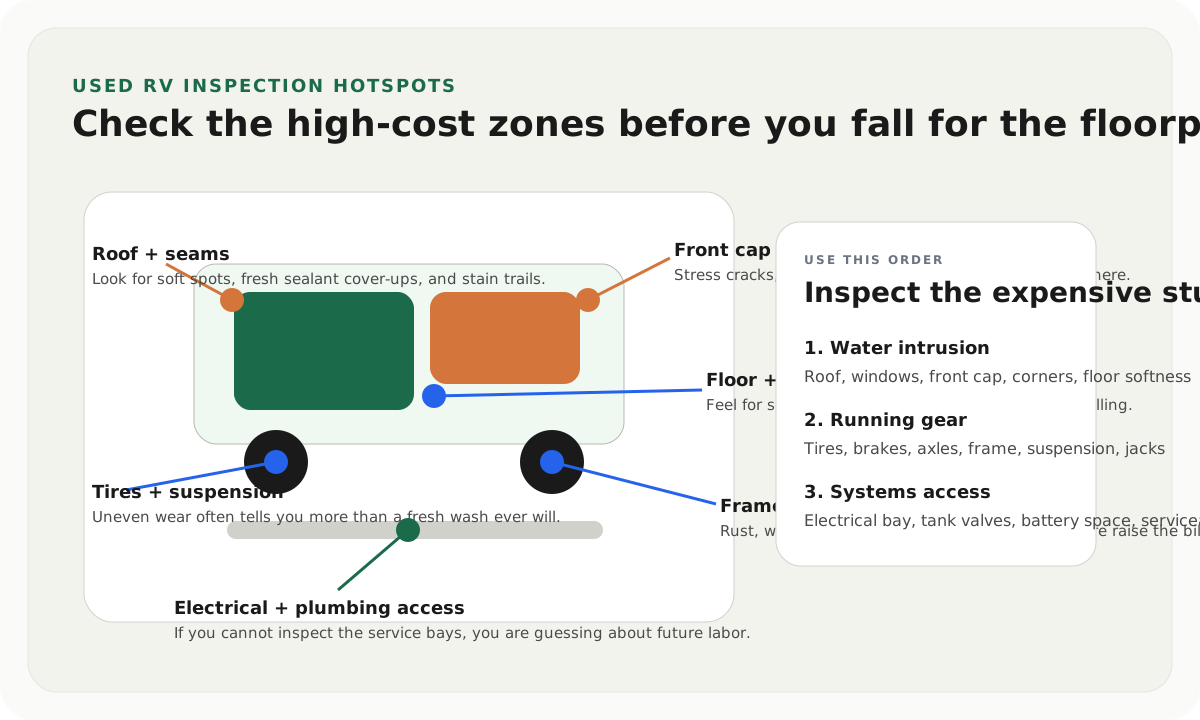
The used toy hauler inspection order
Use this order before negotiating seriously.
- Confirm tow vehicle match, loaded weight, pin or tongue weight, and cargo carrying capacity.
- Inspect the ramp, rear wall, garage floor, tie-downs, hinges, seals, and water paths.
- Check tires, suspension, frame, axles, brakes, shackles, and spring hangers.
- Verify fresh, gray, and black tank labels plus valve access.
- Test generator, fuel station, shore power, converter, inverter, and battery charging if equipped.
- Test garage heat, cooling, outlets, lighting, bed lift, patio rail, screens, and half bath.
- Inspect roof seams, slide roofs, front cap, sidewalls, and garage roof penetrations.
- Measure the actual office or cargo setup, not the empty garage.
- Price first-year catch-up costs before pricing upgrades.
For a broader inspection sequence by rig type, use the used RV inspection checklist.
What I would avoid on a used toy hauler
Avoid listings where the garage has clearly been worked hard but the seller treats every clue as cosmetic.
Common red flags:
- soft ramp deck
- ramp seal gaps or rear-wall water staining
- loose or damaged tie-downs
- fuel smell in compartments
- generator that will not start cold
- generator that fails under load
- tire wear suggesting axle or suspension issues
- cracked spring hangers or bent frame clues
- garage floor flex or swelling
- missing cargo sticker
- truck match only works on dry weight
- very low cargo capacity after options
- seller cannot demonstrate bed lift, patio setup, half bath, generator, water pump, and charging systems
- garage is too hot, cold, loud, or dark to become the office you imagine
Field note
Field fit note
Toy haulers are wonderful when the garage has a job every week. They are expensive square footage when the garage is only a fantasy room. Buy the unit whose payload, ramp, tanks, comfort, and routine match the real use.
The best next step after a promising used toy hauler
If a listing still looks good, run the boring math before you make the emotional offer.
Write down your actual loaded garage:
- each toy or bike
- tools
- fuel
- water
- office gear
- batteries
- outdoor gear
- people and pets
Then compare that load to the sticker, tow vehicle, tank plan, and first-year maintenance budget.
If the toy hauler still fits after that, it may be a serious candidate.
If not, the garage is only making the wrong rig look useful.
Where to go next
If the garage-office idea is the main draw, read the toy hauler guide for remote workers.
If you already have a specific used listing, run the used RV inspection checklist by rig type.
If your workday depends on the garage office, use the RV remote-work power budget guide so laptops, monitors, routers, fans, and Starlink-style loads are part of the plan.
Frequently asked
Questions RVers usually ask next.
What is the best used toy hauler for boondocking?
There is no single universal winner. Grand Design Momentum, Forest River XLR, Keystone Raptor, Carbon, Fuzion, Impact, Jayco Seismic, Heartland Torque or Cyclone, Alliance Valor, KZ Sportster or Venom, Dutchmen Voltage, and similar lines can all make sense in the right use case. The actual unit's payload, ramp, rear wall, tanks, generator, tires, and service records matter more than the badge.
Are toy haulers good for remote work?
They can be excellent because the garage can become a private office, studio, gear room, or mixed-use workspace. The garage only works as an office if climate control, outlets, lighting, sound, storage, and camera background are solved.
What is the biggest red flag on a used toy hauler?
Ramp and rear-wall problems are major red flags because they can point to water intrusion, structural stress, loading abuse, or expensive repairs. Weak payload, old tires, generator neglect, and garage comfort problems are also serious concerns.
Freshness note
Last checked April 21, 2026
This topic can change when products, plans, prices, campsite rules, or fit guidance move. These notes show what was reviewed most recently.
This review included
- Checked current official Grand Design Momentum G-Class 25G, Forest River XLR Boost 2114BX, and Alliance Valor 32T13 pages as representative toy-hauler lanes for used shoppers.
- Checked NHTSA recall and tire-safety routing so used toy-hauler shoppers verify VIN, tires, axle history, and safety issues before relying on a garage photo.
- Expanded the used-toy-hauler guide with a quick-pick shortlist, product cards, official-source checks, and listing-level inspection filters.
Recent change log
April 21, 2026
Expanded the used toy hauler shortlist with quick picks, product cards, official model resources, and stronger garage/payload inspection guidance.
April 10, 2026
Published a used toy hauler shortlist for boondocking and remote-work shoppers with garage, ramp, payload, and office-conversion filters.
April 10, 2026
Added a custom used toy hauler shortlist board and linked the page into the rig-review cluster.
Broader editorial corrections are tracked on the Corrections and Updates page.