Shortlist first
Use this to find the winner first, then compare the alternates only if their tradeoffs fit your rig better.
Shortlist labels are editorial recommendations, not popularity rankings. Fit score still matters, but the label tells you why each pick made this guide.
How fit scores work
Scores are editorial fit scores, not user-review averages. The rubric weighs stated RV-use fit, verified specs and limits, whole-rig friction, visible downsides or support risk, and value for the specific job in this guide. Read the full scoring rubric.
If you need one baseline option before reading the full guide, start with Grand Design Momentum G-Class 25G for balanced garage office.
The first option to evaluate if you want the strongest all-around fit for this guide. Check the other cards only if their award label matches your constraint better.
| Product | Why shortlisted | Fit score | Key spec | Best for | Skip if | Actions |
|---|---|---|---|---|---|---|
| Grand Design Momentum G-Class 25G Links to: Grand Design Momentum G-Class 25G | Best overall The first option to evaluate if you want the strongest all-around fit for this guide. | 4.7 / 5 fit scoreScore rubric | 30' 11", 13' 6" garage, 90/78/39 gal tanks, 13,000 lb GVWR | Balanced garage office | You need a light half-ton-friendly trailer or a separate permanent office door. | Read Grand Design Momentum G-Class 25G notesCheck listing at Grand Design RVMerchant link - direct listing. Verify price and specs at Grand Design RV. |
| Forest River XLR Boost 2114BX Links to: Forest River XLR Boost 2114BX | Best value The pick that balances capability and cost pressure best for this decision. | 4.4 / 5 fit score | 27' 6", 102 gal fresh, 64 gal gray, 32 gal black, 11,390 lb GVWR | Compact cargo-first office | You want a polished residential living room more than cargo flexibility. | Read Forest River XLR Boost 2114BX notesCheck listing at Forest RiverMerchant link - direct listing. Verify price and specs at Forest River. |
| Alliance Valor 32T13 Links to: Alliance Valor 32T13 | Upgrade pick The higher-end option to justify only when its extra capability matters in your build. | 4.6 / 5 fit score | 36' 5", 98/93/93 gal tanks, 13,000 lb GVWR, 1,947 lb listed hitch | Longer-stay garage office | Your tow vehicle cannot handle a very heavy travel-trailer tongue weight after people and cargo. | Read Alliance Valor 32T13 notesCheck listing at Alliance RVMerchant link - direct listing. Verify price and specs at Alliance RV. |
What is the best toy hauler for remote workers?
The best toy hauler for remote workers is a garage-office floorplan with enough climate control, outlets, tank capacity, cargo capacity, and tow-vehicle margin to support normal workdays. For many shoppers, the Grand Design Momentum G-Class 25G is the most balanced starting point. The Forest River XLR Boost 2114BX is the compact value lane, and the Alliance Valor 32T13 is the heavier longer-stay lane.
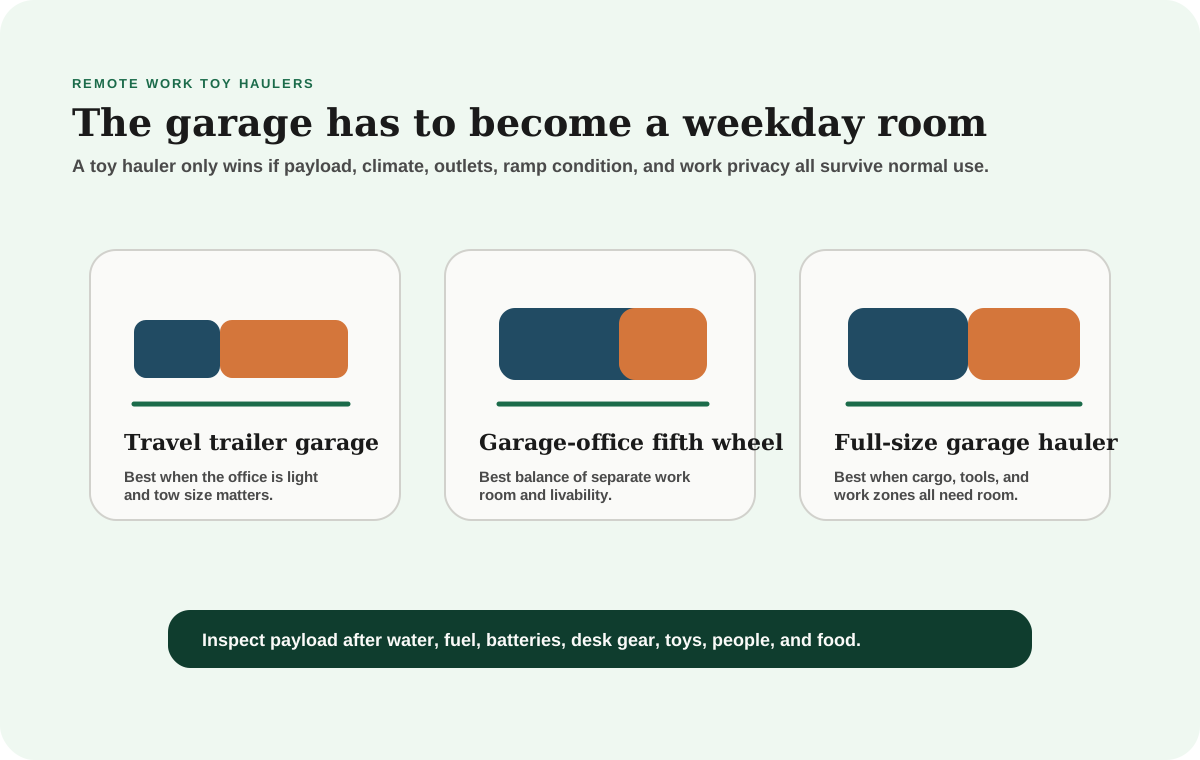
Toy-hauler remote-work snapshot
The garage is only useful as an office if it works on ordinary weekdays, not just on setup day.
First filter
Garage office fit
Check desk location, chair clearance, camera background, tie-down interference, window glare, and whether the work setup can stay partly assembled.
Second filter
Loaded hitch or pin weight
Toy haulers can have generous cargo capacity but heavy tongue or pin weight. Verify the truck payload before the garage sells you.
Third filter
Climate and noise
The office needs heat, cooling, insulation, fan control, and enough separation that calls do not fight the living room.
Best fit
Workers with gear or workspace sprawl
Toy haulers shine when the work life includes monitors, cameras, bikes, tools, dogs, shipped inventory, or a room that needs to change jobs.
Official model checks
Use these pages for shortlist research, then inspect the exact dealer unit. Options, model years, dealer-installed equipment, and actual sticker weights can change the buying answer.
Pre-arrival checks
Read the yellow cargo sticker
The official page is a starting point. The actual unit sticker reflects options and factory or dealer-installed equipment.
Measure the office, not just the garage
A 13-foot garage can still fail if the desk blocks a bed lift, ramp door, tiedown, furnace outlet, or travel path.
Verify the work-power plan
Factory solar prep is not the same as a complete lithium, inverter, and alternator charging system.
Why toy haulers make sense for remote work
Remote work in an RV gets easier when there is a room that can absorb the mess.
That room might need to hold:
- a real desk or folding standing desk
- monitor bins
- camera and audio gear
- printer or shipping supplies
- router, antenna, or Starlink storage
- bike tools or outdoor gear
- dog crates or guest sleeping
Standard RVs often make that a negotiation with the living room. Toy haulers make it a room assignment.
The tradeoff is that the garage is rarely a perfect office out of the box. It can be loud, echoey, warm, cold, awkwardly lit, or full of tiedowns. The best toy hauler is the one where those problems are solvable without ruining the rest of the rig.
If you are shopping used, take this framework into the used toy hauler shortlist for boondocking and remote work so ramp condition, generator hours, fuel station, garage flooring, tank labels, and cargo sticker math get inspected before a clean garage photo wins the day.
Shortlist comparison
Compare
Representative current toy hauler models checked against official manufacturer pages on April 21, 2026.
Use one comparison matrix to scan the practical differences. Small screens stack each row; wider screens keep the first column pinned.
| Spec | Momentum G-Class 25G | XLR Boost 2114BX | Alliance Valor 32T13 |
|---|---|---|---|
| Best role | Balanced travel-trailer garage office | Compact cargo-first work bay | Heavy longer-stay garage office |
| Published size and weight | 30' 11"; 8,600 lb UVW; 13,000 lb GVWR; 1,400 lb listed hitch | 27' 6"; 7,428 lb UVW; 11,390 lb GVWR from UVW plus CCC; 1,190 lb listed hitch | 36' 5"; 9,713 lb dry weight; 13,000 lb GVWR; 1,947 lb listed hitch |
| Tanks | 90 fresh; 78 gray; 39 waste | 102 fresh; 64 gray; 32 black | 98 fresh; 93 gray; 93 black |
| Garage-office signal | 13' 6" garage, no wheel wells, 30 gal fuel station, optional garage wall | Shorter overall footprint with big fresh tank and cargo-forward layout | Large-tank travel trailer lane with enough size for a more serious garage-office build |
| Main caution | Still needs a real tow vehicle and a deliberate office-climate build-out | More utilitarian; confirm actual office comfort, heating, and furniture plan | The listed hitch weight is serious before people, cargo, batteries, water, and hitch hardware |
What turns a garage into a real office
Climate control
If the garage is too hot, cold, loud, or echoey, it will not be a real office for long.
Look for ducted heat, A/C delivery, a way to move air quietly, insulated doors, a screen or three-season wall if you work with the ramp open, and a backup plan for weather days. A garage that is pleasant at 9 a.m. can become unusable by 2 p.m. in desert sun.
Power placement
You need outlets and charging zones where the desk actually sits, not where the factory imagined cargo would be strapped down.
For a remote worker, the office power plan may include:
- laptop and monitor power
- router or hotspot power
- camera light or microphone power
- battery charging for tools or camera gear
- a dedicated inverter outlet
- a clean cable path that does not cross the garage floor
Use the remote-work RV power budget before assuming the toy hauler's factory solar prep is enough.
Internet routing
The garage may be the office, but the best antenna or Starlink position may be outside, on the roof, or near a window. Check how cables will move from the office to the router, and whether the garage door or ramp opening changes signal quality.
The internet for RVers guide and internet backup planner help separate the device stack from the floorplan decision.
Travel-day storage
The best garage office has a repeatable shutdown routine.
If every moving day requires rebuilding the desk from zero, the office will eventually become a pile. Look for wall cabinets, tiedown points that can secure bins, a monitor storage location, and a desk surface that either folds cleanly or rides securely.
Treat the garage like a room, not an empty rectangle
Toy-hauler garages become excellent offices when they get intentional zones: desk, storage, charging, and a clean camera background. Without that, they often stay echoey catch-all spaces.
A garage-office inspection workflow
Walk the garage as if tomorrow is a normal Tuesday workday, not a delivery-day walkthrough.
First, stand where the desk would go. Look for window glare, ceiling height, camera background, chair travel, wall outlets, tiedowns, bed-lift rails, and whether the ramp or patio system changes the space. A desk that looks possible in a wide-angle listing photo can become awkward once a real chair, monitor, laptop stand, and power strip are in place.
Second, sit in the garage with the door closed. Listen for generator compartment noise, furnace fan noise, A/C delivery, road-side campground noise, and echo. Remote work is usually less tolerant of bad sound than bad decor. If you take calls, the room needs to be quiet enough that a microphone does not pick up every fan cycle and campground conversation.
Third, inspect the climate path. Many toy-hauler garages are usable in mild weather and miserable in heat or cold. Confirm whether the garage has ducted heat, A/C delivery, return-air behavior, insulation, roof vent placement, and a way to move air quietly. A ramp patio can be lovely after work but useless during a windy call if it turns the office into an outdoor room.
Fourth, simulate travel-day shutdown. Where do the monitors ride? Where does the chair lock down? Can the desk fold, latch, or stay installed? Do the cables need to be rebuilt every move? A garage office that takes 35 minutes to break down every travel day will eventually stop being an office and become a pile of bins.
Finally, check the uncomfortable numbers. Toy haulers invite cargo. Cargo adds tongue weight, axle load, tire load, and truck-payload pressure. A remote worker might add batteries, inverter gear, desk hardware, monitors, e-bikes, tools, camera gear, and water. That is why the payload calculator belongs in the toy-hauler shopping process before the garage layout wins emotionally.
Which toy-hauler lane fits which worker?
Choose the compact cargo-first lane if you are solo, carry gear, and want a shorter trailer that can still become a focused work bay. The XLR Boost 2114BX fits that mindset because the official page lists a shorter overall length and a large fresh tank, but it should be inspected carefully for comfort. It may need more work to become a polished office.
Choose the balanced garage-office lane if you want the garage to be a dependable weekday room while the main living area stays livable. The Momentum G-Class 25G is the easiest first look in this batch because the garage length, tank package, and overall size create a useful middle ground. It is still a real tow-vehicle conversation, but it does not jump straight to the longest travel-trailer haulers.
Choose the heavier longer-stay lane if the garage office is central to the lifestyle and the tow vehicle is ready. The Alliance Valor 32T13 has the tank balance that makes longer work stays more realistic, but it also brings the kind of listed hitch weight that should stop a casual shopping process. This is not a "maybe my truck can do it" rig.
Skip the toy-hauler category if the garage is mostly theoretical. If you do not carry large gear, do not need a flex room, and only want a quiet place for a laptop, a front-office fifth wheel, mid-bunk floorplan, or couples travel trailer may be calmer. Toy haulers are at their best when the garage solves a daily problem that a normal RV cannot solve.
The remote-work math to run before buying
A work-ready toy hauler is not just a floorplan. It is a small office system.
List the daily loads:
- laptop and monitor watt-hours
- router, hotspot, booster, or Starlink watt-hours
- lights and camera gear
- fan or climate support in the garage
- inverter idle draw if office outlets depend on AC power
- charging for tools, camera batteries, e-bikes, or accessories
Then compare that load with the factory battery and charging system. Solar prep does not mean the RV is ready for five hours of calls, a second monitor, Starlink, and a warm-weather fridge day. If the office consumes 600-1,200Wh during a workday, the trailer needs a real battery, charging, and monitoring plan.
The same is true for water. A big fresh tank helps, but it does not override smaller gray or black tanks. If the garage office lets you stay out longer but showers and dishwashing fill gray first, the limiting tank still ends the stay. Use the water calculator with the official tank numbers and your real habits before treating a big fresh tank as the whole answer.
Best toy haulers for remote workers
- Latest product check
- Specs, fit notes, and current listing context were reviewed April 21, 2026.
- Evidence label
- Research-only: Score is based on documented research and fit analysis where direct testing or verified current specs are limited.
- Price context
- Pricing and availability can change, so confirm the merchant listing before buying.
Product facts last checked April 21, 2026
Grand Design Momentum G-Class 25G
Editorial fit score
The 25G hits a useful middle lane: a 13' 6" garage, 90 gallons of fresh water, 78 gallons of gray, a 30-gallon fuel station, and a 30' 11" body that is still large but not extreme. For remote work, the garage is long enough to become a desk-and-storage room while the rest of the trailer remains livable.
Review verdict
- Short verdict
- The best first stop for most remote workers who want a real garage office without jumping into the longest toy-hauler class.
- Evidence used
- Research-only
- Spec-checked against the official Grand Design model page on April 21, 2026; not hands-on tested by OffGridRVHub.
- Why it made the shortlist
- Best overall
- The first option to evaluate if you want the strongest all-around fit for this guide.
- Best if
- Remote workers who want one balanced garage-office travel trailer
- Why not this product?
- You need a half-ton-friendly trailer, a permanently separated office door, or a residential living room first.
- Watch for
- It is still a heavy travel trailer, and the hitch-weight conversation must happen before buying.
- Product check date
- Specs, fit notes, and current listing context were last checked April 21, 2026.
Key specs
- Length
- 30' 11"
- Garage
- 13' 6"
- Tanks
- 90 / 78 / 39 gal
- Published weights
- 8,600 lb UVW; 13,000 lb GVWR
Score basis
Spec-checked against the official Grand Design model page on April 21, 2026; not hands-on tested by OffGridRVHub. These are editorial fit scores, not customer-review averages. Read the scoring rubric.
- RV-use fit
- 30% weight
- Verified specs and limits
- 25% weight
- Whole-rig friction
- 20% weight
- Downsides and support risk
- 15% weight
- Value for the job
- 10% weight
How directly the product solves the specific off-grid RV job in this guide.
Capacity, dimensions, electrical limits, protection claims, and compatibility constraints we can verify from current sources.
Install effort, storage, wiring, service access, weight, refill workflow, or daily-use hassle.
Known tradeoffs, unclear claims, warranty coverage, support risk, and wrong-buyer failure modes.
Whether the price makes sense after fit, specs, and tradeoffs still hold.
Testing limits
- Treat this as an editorial screen, not a final buy signal.
- Verify the latest manufacturer specs, owner documentation, and retailer listing before relying on this option.
Reasons to buy
- Strong garage length for a real desk, storage bins, and gear without turning the living room into the office.
- Fresh and gray tank capacity fit longer work stays better than many compact haulers.
- The 30-gallon fuel station can support generator or toy-hauler use cases when the work trip is more remote.
Watch-outs
- It is still a heavy travel trailer, and the hitch-weight conversation must happen before buying.
- Solar prep does not mean the battery, inverter, and charge system are finished for remote work.
- The garage needs a deliberate comfort build-out to feel like an office instead of a cargo bay.
Related parts and setup checks
Remote-work power budget
Estimate laptop, monitor, internet, and inverter loads before assuming the factory power package is enough.
Open Remote-work power budgetUsed toy hauler inspection
Use the used shortlist if you shop a prior model year with generator hours, ramp wear, or modified garage furniture.
Open Used toy hauler inspectionCheck current listing
Grand Design Momentum G-Class 25G
Use the listing after the fit notes make sense for your rig. Pricing and availability can change, so verify the merchant page before buying.
- Latest product check
- Specs, fit notes, and current listing context were reviewed April 21, 2026.
- Evidence label
- Research-only: Score is based on documented research and fit analysis where direct testing or verified current specs are limited.
- Price context
- Pricing and availability can change, so confirm the merchant listing before buying.
Product facts last checked April 21, 2026
Forest River XLR Boost 2114BX
Editorial fit score
The 2114BX is the pragmatic pick when you want a toy-hauler work bay but do not want a 35-foot-plus trailer. The 102-gallon fresh tank is the standout spec. The tradeoff is that the rig feels more cargo-first than residential, so the office comfort plan matters.
Review verdict
- Short verdict
- The compact value lane for remote workers who want cargo flexibility and big water capacity without the length of the larger haulers.
- Evidence used
- Research-only
- Spec-checked against the official Forest River model page on April 21, 2026; not hands-on tested by OffGridRVHub.
- Why it made the shortlist
- Best value
- The pick that balances capability and cost pressure best for this decision.
- Best if
- Remote workers who want a compact cargo-first work bay
- Why not this product?
- You want a polished living-room-first fifth wheel or a garage that already feels like a finished office.
- Watch for
- It may require more office-comfort work than a more residential toy hauler.
- Product check date
- Specs, fit notes, and current listing context were last checked April 21, 2026.
Key specs
- Length
- 27' 6"
- Tanks
- 102 / 64 / 32 gal
- Published weights
- 7,428 lb UVW; 3,962 lb CCC
- Calculated GVWR
- 11,390 lb from UVW plus CCC
Score basis
Spec-checked against the official Forest River model page on April 21, 2026; not hands-on tested by OffGridRVHub. These are editorial fit scores, not customer-review averages. Read the scoring rubric.
- RV-use fit
- 30% weight
- Verified specs and limits
- 25% weight
- Whole-rig friction
- 20% weight
- Downsides and support risk
- 15% weight
- Value for the job
- 10% weight
How directly the product solves the specific off-grid RV job in this guide.
Capacity, dimensions, electrical limits, protection claims, and compatibility constraints we can verify from current sources.
Install effort, storage, wiring, service access, weight, refill workflow, or daily-use hassle.
Known tradeoffs, unclear claims, warranty coverage, support risk, and wrong-buyer failure modes.
Whether the price makes sense after fit, specs, and tradeoffs still hold.
Testing limits
- Treat this as an editorial screen, not a final buy signal.
- Verify the latest manufacturer specs, owner documentation, and retailer listing before relying on this option.
Reasons to buy
- Shorter overall length makes it easier to route and store than the bigger garage-office haulers.
- The official 102-gallon fresh tank listing is unusually useful for remote work and boondocking.
- Cargo-first packaging can be easier to customize as a desk, storage, and gear room.
Watch-outs
- It may require more office-comfort work than a more residential toy hauler.
- The black tank is smaller than the fresh tank, so waste capacity can become the stay-length limiter.
- The shorter footprint means you need to confirm desk clearance and travel-day storage in person.
Related parts and setup checks
Water calculator
Model the 102-gallon fresh tank against real gray and black tank behavior before assuming long stays are automatic.
Open Water calculatorRV office setup
Use the office setup guide to plan desk height, chair storage, lighting, and a camera background inside the garage.
Open RV office setupCheck current listing
Forest River XLR Boost 2114BX
Use the listing after the fit notes make sense for your rig. Pricing and availability can change, so verify the merchant page before buying.
- Latest product check
- Specs, fit notes, and current listing context were reviewed April 21, 2026.
- Evidence label
- Research-only: Score is based on documented research and fit analysis where direct testing or verified current specs are limited.
- Price context
- Pricing and availability can change, so confirm the merchant listing before buying.
Product facts last checked April 21, 2026
Alliance Valor 32T13
Editorial fit score
The Valor 32T13 is not the easy-tow choice. It is the choice for someone who wants a more substantial toy-hauler office and has the truck to back it up. The 98/93/93 gallon tank split is the reason it belongs here, because remote-work stays are often limited by waste tanks as much as fresh water.
Review verdict
- Short verdict
- The bigger travel-trailer lane for remote workers who want stronger tank balance and a more serious garage-office basecamp.
- Evidence used
- Research-only
- Spec-checked against the official Alliance RV model page on April 21, 2026; not hands-on tested by OffGridRVHub.
- Why it made the shortlist
- Upgrade pick
- The higher-end option to justify only when its extra capability matters in your build.
- Best if
- Truck-ready remote workers building a longer-stay garage office
- Why not this product?
- Your tow vehicle payload is marginal or you mostly work from campgrounds where a standard office fifth wheel would be calmer.
- Watch for
- The listed hitch weight is already heavy before cargo, batteries, water, people, and hitch hardware.
- Product check date
- Specs, fit notes, and current listing context were last checked April 21, 2026.
Key specs
- Length
- 36' 5"
- Tanks
- 98 / 93 / 93 gal
- Published dry weight
- 9,713 lb
- GVWR
- 13,000 lb
Score basis
Spec-checked against the official Alliance RV model page on April 21, 2026; not hands-on tested by OffGridRVHub. These are editorial fit scores, not customer-review averages. Read the scoring rubric.
- RV-use fit
- 30% weight
- Verified specs and limits
- 25% weight
- Whole-rig friction
- 20% weight
- Downsides and support risk
- 15% weight
- Value for the job
- 10% weight
How directly the product solves the specific off-grid RV job in this guide.
Capacity, dimensions, electrical limits, protection claims, and compatibility constraints we can verify from current sources.
Install effort, storage, wiring, service access, weight, refill workflow, or daily-use hassle.
Known tradeoffs, unclear claims, warranty coverage, support risk, and wrong-buyer failure modes.
Whether the price makes sense after fit, specs, and tradeoffs still hold.
Testing limits
- Treat this as an editorial screen, not a final buy signal.
- Verify the latest manufacturer specs, owner documentation, and retailer listing before relying on this option.
Reasons to buy
- Fresh, gray, and black tanks are balanced enough that waste capacity is less likely to end the stay early.
- The larger body gives more room for a real desk, storage, guest use, and gear separation.
- The format fits remote workers who want the garage to be a basecamp room instead of a short-trip cargo bay.
Watch-outs
- The listed hitch weight is already heavy before cargo, batteries, water, people, and hitch hardware.
- The length reduces site flexibility compared with smaller toy haulers.
- The size and cost only make sense if the garage will be used constantly.
Related parts and setup checks
Payload calculator
Run the tow vehicle with people, hitch hardware, tongue weight, water, batteries, and garage cargo before treating this as a safe match.
Open Payload calculatorHow to choose a remote-work floorplan
Compare the garage-office lane against front-office and mid-bunk layouts before committing to the toy-hauler tradeoff.
Open How to choose a remote-work floorplanCheck current listing
Alliance Valor 32T13
Use the listing after the fit notes make sense for your rig. Pricing and availability can change, so verify the merchant page before buying.
Which one should you inspect first?
Start with the Momentum G-Class 25G if you want the cleanest middle ground: serious garage length, strong water capacity, and a size that still feels like a travel trailer rather than a rolling shop.
Start with the XLR Boost 2114BX if you want the shortest current lane in this shortlist and care more about a flexible cargo bay than a polished residential interior.
Start with the Alliance Valor 32T13 if your tow vehicle is ready for the weight and you want the garage office to support longer stays with balanced tanks.
Skip all three if you do not truly need the garage. A front-office fifth wheel, couples floorplan, or smaller trailer may be easier to live with if your only requirement is a quiet laptop spot.
What remote workers usually regret
They regret buying the garage without designing the office.
Common misses include:
- no comfortable chair travel plan
- no desk surface that can stay repeatable
- no clean camera background
- no quiet airflow during calls
- no cable route for internet gear
- no battery or inverter plan for long workdays
- no plan for where gear goes when the ramp is closed
They also regret ignoring truck payload. Toy haulers carry gear well, but heavy tongue or pin weight can consume the truck's remaining payload faster than the brochure makes obvious.
Garage size is not office quality
A long garage can still be a bad office if it is loud, hot, glare-heavy, short on outlets, or impossible to keep organized. Sit where the desk would go before you fall in love with the floorplan.
Final thought
A toy hauler can be one of the best remote-work RV formats because it gives you the thing most RVs cannot: a true flex room.
But the garage has to earn that role every weekday. If it can handle climate, power, internet, desk setup, storage, and travel-day shutdown, it can make RV work life much easier. If not, it is just a cargo bay with a chair in it.
Frequently asked
Questions RVers usually ask next.
Are toy haulers good for remote work?
Yes, often. The garage can become a true office, studio, gear room, or mixed-use workspace. The key is confirming climate control, outlets, desk placement, internet routing, and travel-day storage before buying.
Is a toy hauler better than a front-office fifth wheel for remote work?
Only if you need the garage flexibility. Front-office fifth wheels usually feel more finished as workspaces, while toy haulers win when you need cargo, gear, pets, guest space, or a room that can change jobs.
What should remote workers inspect in a toy hauler garage?
Check desk clearance, chair storage, outlets, lighting, glare, tiedown placement, heat and A/C delivery, ramp-door weather protection, router or antenna cable paths, and whether the office can be secured for travel.
Can a toy hauler garage stay set up as an office?
Sometimes. It depends on bed-lift hardware, tiedown points, desk design, cabinet storage, ramp use, and how much cargo travels in the same room. A fold-down or wall-secured desk often works better than loose furniture.
Freshness note
Last checked April 21, 2026
This topic can change when products, plans, prices, campsite rules, or fit guidance move. These notes show what was reviewed most recently.
This review included
- Checked current official manufacturer pages for Grand Design Momentum G-Class 25G, Forest River XLR Boost 2114BX, and Alliance Valor 32T13.
- Verified representative length, dry or UVW weight, GVWR, hitch weight, tank capacities, garage length, fuel-station or solar-prep details where official pages published them.
- Rebuilt the page from a generic toy-hauler lane guide into a model-based remote-work shortlist with quick picks, product cards, and office-conversion criteria.
Recent change log
April 21, 2026
Expanded the toy hauler remote-work guide with official model specs, a custom decision visual, a quick-pick shortlist, product cards, and model-specific skip conditions.
April 10, 2026
Linked the remote-work toy hauler guide to the used toy hauler shortlist.
Broader editorial corrections are tracked on the Corrections and Updates page.