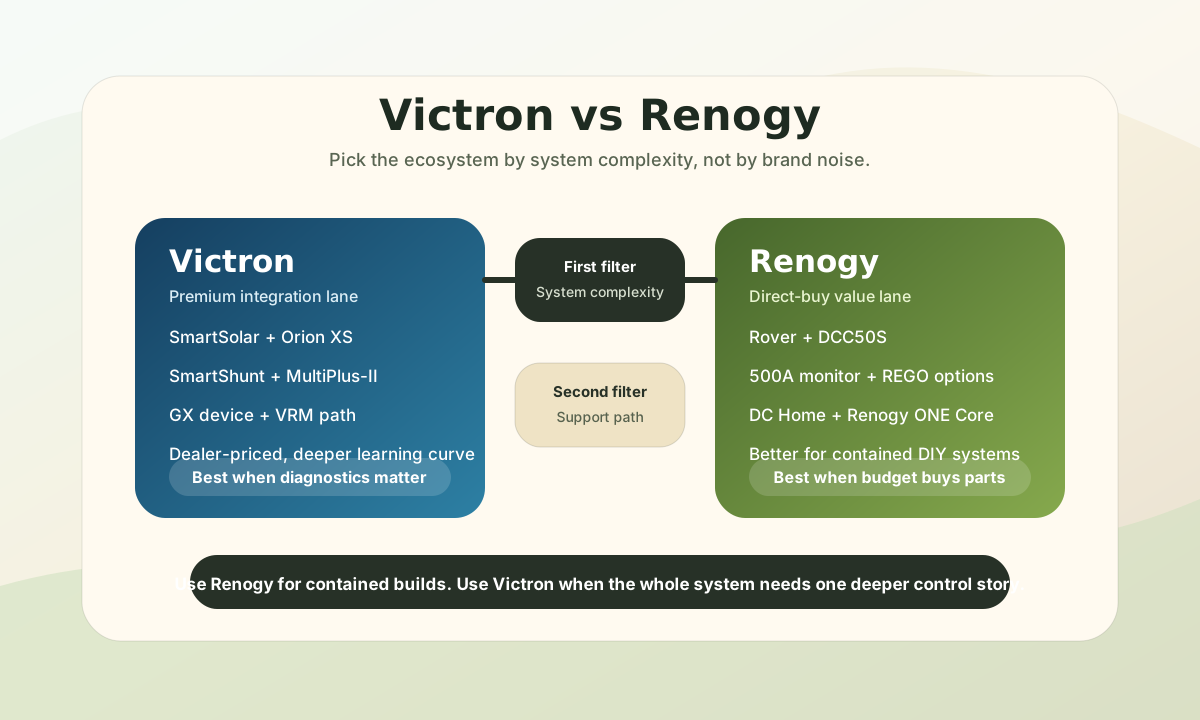
Victron vs Renogy at a glance
Use this as the first filter before comparing individual controllers, chargers, and monitors.
Best integrated ecosystem
Victron
Best fit for systems that need shunt data, solar harvest, inverter behavior, alternator charging, and remote monitoring to work as one control surface.
Best direct-buy value lane
Renogy
Best fit when the build is smaller, budget matters, and simple product-page pricing helps you move from plan to purchase.
Most important filter
System complexity
A 200W weekender array and a 3000W inverter-charger build do not need the same ecosystem depth.
Watch the hidden cost
Monitoring sprawl
Mixing brands can work electrically, but it can leave you checking several apps, displays, and manuals when something looks wrong.
Renogy sweet spot
Good enough DIY
Rover, DCC50S, and simple battery monitors can be perfectly reasonable in a 12V RV build that is not trying to become a yacht-grade power room.
Victron sweet spot
Future-proof control
SmartSolar, Orion XS, SmartShunt, MultiPlus-II, Cerbo GX, VictronConnect, and VRM make more sense as the system scales.
Must read before you buy the ecosystem
Before choosing the Victron or Renogy path for solar hardware, read the RV solar installation guide. The roof layout, cable-entry route, controller location, protection plan, and commissioning workflow can matter more than brand preference.
Why this comparison exists
Victron vs Renogy is usually framed like a brand loyalty argument. That is the wrong starting point.
The real question is how much system you are building. A small weekend solar setup can tolerate a cheaper, simpler, more isolated component stack. A full-time rig with lithium batteries, roof solar, alternator charging, inverter loads, generator backup, and remote monitoring benefits from a deeper ecosystem.
If you are still sizing the actual array, start with how many solar watts you need before picking either brand. If the battery bank is still fuzzy, use the battery calculator so the ecosystem choice is tied to real daily watt-hours instead of forum momentum.
This page compares representative RV-relevant products, but it is not trying to crown one brand for every rig. Victron and Renogy solve different buyer problems.
The short answer
Choose Victron when failure diagnosis, expansion, and monitoring are part of the value. The products are often dealer-priced, the learning curve is real, and the system can become more expensive than a casual camper needs. The upside is a mature ecosystem that can tie charge controllers, shunts, inverter chargers, GX devices, and VRM remote monitoring into a coherent system.
Choose Renogy when the job is more contained. Renogy is easier to shop directly, often cheaper at the component level, and good enough for many DIY 12V systems. The tradeoff is that the monitoring and documentation story is not as deep as Victron's, and complex systems can feel more patched together.
The cleanest rule: use Renogy when a single product or small stack solves the job cleanly. Use Victron when the whole electrical system needs to behave like one managed platform.
Price and availability note
Prices and availability were re-verified against official product pages on June 6, 2026. Victron is commonly dealer-priced through its "Where to buy" path, so this comparison treats Victron pricing as variable. Renogy publishes direct prices on the checked US product pages, but those prices can change with sales, bundles, backorders, and stock.
Representative hardware checked
Brand comparisons get vague fast, so this section uses specific parts RVers commonly compare.
These are not exact one-for-one substitutes in every case. For example, the Victron Orion XS is an alternator charger without built-in solar MPPT, while the Renogy DCC50S combines DC-to-DC charging and MPPT solar input in one box. That difference is the point: Victron often separates lanes into highly integrated components, while Renogy often tries to simplify the DIY purchase.
Compare
Representative RV solar ecosystem parts re-verified June 6, 2026
Use one comparison matrix to scan the practical differences. Small screens stack each row; wider screens keep the first column pinned.
| Spec | Victron lane | Renogy lane |
|---|---|---|
| MPPT solar controller | SmartSolar MPPT 100/30: 30A, 100V PV open-circuit limit, 440W nominal PV on 12V, 880W on 24V, 98% max efficiency, VE.Direct, and Bluetooth through VictronConnect. | Rover Li 40A: 40A, up to 100V solar input, up to 520W on 12V or 1040W on 24V, 98% peak conversion efficiency, RS232, and direct 40A controller-only price checked at $205.99. |
| DC-to-DC charging | Orion XS 12/12-50A: 1-50A adjustable current range, 700W continuous output up to 40C, 98.5% max efficiency, IP65, Bluetooth, VE.Direct, and no built-in solar input. | DCC50S: 50A combined alternator and solar charging, built-in MPPT, 50V max solar input, 660W max solar input power, 94% efficiency, and direct price checked at $307.99. |
| Battery monitor | SmartShunt 500A: 6.5-70V supply range, VE.Direct, Bluetooth, auxiliary input options, 500A/50mV shunt, and dealer-variable pricing. | 500A Battery Monitor with Shunt: 10-120V, up to 500A, wired LCD display, 20 ft shielded wire, 1% current and voltage accuracy, and direct price checked at $87.99. |
| Inverter charger | MultiPlus-II family: inverter/charger platform with PowerControl, PowerAssist, fast transfer behavior, GX/VRM integration, and dealer-variable pricing. | REGO 3000W 12V HF Pure Sine Wave Inverter Charger: 3000W continuous output, 9000VA 100ms surge, 150A adjustable charging, built-in Bluetooth, RV-C support, and direct price checked at $1,797.99 while backordered. |
| Monitoring ecosystem | VictronConnect handles local setup and monitoring. A GX device unlocks VRM remote monitoring and deeper system control. | Renogy DC Home and Renogy ONE Core support Renogy device monitoring, with RV-C support on the checked Renogy ONE Core G3 page and local storage noted at 30 days. |
| Buying fit | More dealer-oriented, more modular, stronger documentation, and easier to justify when serviceability and future expansion matter. | More direct-to-consumer, often simpler to price, stronger for budget planning, and easier to overfit if you expect yacht-grade integration from value components. |
Where Victron is worth the money
Victron earns its keep when the system has several charge sources and you need a clean diagnostic story.
That matters more than it sounds. If solar is producing less than expected, an alternator charger is limiting current, the inverter charger is changing behavior on shore power, and the battery monitor is drifting, you want the system to tell one story. Victron's stronger stack is built around that kind of problem.
Victron makes the most sense when:
- you are building a 400Ah-plus lithium bank with meaningful inverter loads
- you want separate high-quality lanes for solar, alternator charging, inverter charging, and battery monitoring
- you expect to add a Cerbo GX or another GX device later
- you want VRM remote monitoring for a rig that sits in storage, supports remote work, or runs expensive loads
- you may hire an installer or mobile tech who already supports Victron systems
- you care more about documentation and tuning depth than the cheapest direct cart total
The downside is cost and complexity. Victron can tempt you into buying a beautiful power room for a camping style that only needed a simple controller, a shunt, and honest load discipline.
If you are comparing exact alternator chargers, use the best DC-to-DC chargers for RVs after this page. The Orion XS is excellent, but it is not the same job as a dual-input Renogy charger.
Where Renogy is good enough
Renogy is good enough for many RVers because many RV electrical systems are not complex enough to justify a premium ecosystem.
A 200W to 600W solar setup, modest lithium bank, small inverter, and basic battery monitor can work well without remote dashboards, VE.Direct cabling, GX devices, or pro-level configuration. If you want to get a weekend rig away from generator dependence, Renogy's product line can be a sensible value lane.
Renogy makes the most sense when:
- the system is mostly 12V and modest in scale
- direct pricing and bundles help you stay on budget
- the DCC50S dual-input layout reduces wiring and parts count
- you are comfortable with a simpler monitoring story
- the saved money funds fuses, busbars, cabling, battery monitoring, or a larger battery bank
- you are not expecting one deep dashboard to manage every future upgrade
The downside is that Renogy's value can fade in a complex build. Once you add a bigger inverter charger, serious lithium bank, shore charging behavior, solar diagnostics, alternator charging, and remote monitoring, the lower component price can be offset by more fragmented setup and troubleshooting.
If your main concern is state of charge accuracy, compare the best RV battery monitors. A good shunt often improves a budget system more than another panel or another branded accessory.
App experience and documentation
The app story is where the two brands separate most clearly.
VictronConnect is not just a pretty display. It is a setup and diagnostic surface for compatible Victron products, and the VictronConnect manual documents local device access, history, trends, firmware handling, and remote access through VRM when a compatible GX device and internet connection are in place.
That is powerful, but it is not free in system design. Remote VictronConnect and VRM depend on the right communications hardware, wiring, account setup, and internet path. If you never plan to add a GX device, you may not benefit from the full ecosystem.
Renogy's DC Home and Renogy ONE Core path is more consumer-oriented. The checked Renogy ONE Core G3 page says it can monitor compatible Renogy batteries through Bluetooth modules or RS-485, supports RV-C communication, and stores data locally for 30 days. That is useful for an RV owner who wants a central Renogy screen without building a full Victron-style control network.
The practical difference is depth. Renogy's app and display approach can make a small system easier to live with. Victron's stack becomes more valuable when the system is large enough that configuration, remote access, data history, and third-party support matter.
Can you mix Victron and Renogy?
Yes, you can mix them electrically when the components are sized, fused, programmed, and wired correctly. A Renogy solar controller can charge a battery bank that also has a Victron shunt. A Victron DC-to-DC charger can live in a rig that has Renogy batteries or panels.
The problem is not basic compatibility. The problem is operational clarity.
Once you mix ecosystems, you may lose the clean single-dashboard story. A charging issue might require checking one brand's app, another brand's display, a separate inverter remote, and the battery BMS. That is manageable for a hands-on owner, but it is frustrating for someone who wants a supported system.
Mixing makes the most sense when one product clearly solves a job better than the matching ecosystem product. It makes the least sense when you are trying to save a few dollars while building a system you will later ask a professional to troubleshoot.
Which ecosystem should you build around?
Build around Victron if the RV is becoming a serious electrical platform. That includes full-time use, remote work, frequent boondocking, inverter cooking, high-value batteries, storage monitoring, or a system you expect to expand over several years.
Build around Renogy if the RV needs a practical, lower-cost off-grid upgrade and the system scope is clear. That includes weekend camping, modest roof solar, simple battery monitoring, basic lithium upgrades, and DIY installs where direct product pricing matters.
Use this split as a starting point:
- Small weekend system: Renogy is usually good enough if the specs match the battery and panel plan.
- Medium DIY system: Renogy can still make sense, but spend money on a real shunt and correct protection before adding more panels.
- Large lithium and inverter system: Victron becomes easier to justify because monitoring and setup quality protect the whole investment.
- Installer-supported system: ask which ecosystem the installer will support after installation, not just which one they can install.
- Mixed-brand system: fine for hands-on owners, weaker for anyone who wants one support path.
If you are unsure where your system lands, use the solar calculator and the RV electrical 101 guide before choosing an ecosystem. Brand choice should follow the load map, not replace it.
The mistake most RVers make
The common mistake is buying the brand before defining the job.
Victron is easy to overbuy if the rig only needs a modest solar controller and a clear state-of-charge display. Renogy is easy to underbuy if the rig is really becoming a multi-source power system that needs cleaner diagnostics and better long-term support.
The second mistake is treating "works with lithium" as the whole requirement. Lithium support is just one layer. You still need correct charge profiles, voltage limits, temperature behavior, wire sizing, fusing, battery monitoring, and enough solar wattage to recover from the way you actually camp.
For charge-controller specifics, read the best MPPT charge controller for RV guide. For inverter-charger decisions, compare the best RV inverter chargers before assuming the brand logo decides shore-power behavior.
Official pages checked
- Victron SmartSolar MPPT 100/30 and 100/50 technical specifications
- Victron Orion XS 12/12-50A technical data
- Victron SmartShunt manual technical data
- Victron MultiPlus-II product page
- VictronConnect manual
- Renogy Rover Li 20/30/40A MPPT product page
- Renogy DCC50S product page
- Renogy 500A Battery Monitor with Shunt product page
- Renogy REGO 3000W HF inverter charger product page
- Renogy ONE Core G3 product page
Final thought
Victron is the stronger ecosystem when the system needs to be monitored, expanded, diagnosed, and supported like a serious electrical platform. Renogy is the better value lane when the job is contained and the saved money improves the rest of the install. The right answer is not the brand with the louder fan base. It is the one that matches the complexity of the RV you are actually building.
Frequently asked
Questions RVers usually ask next.
Is Victron better than Renogy for RV solar?
Victron is usually better for complex RV systems because the monitoring, documentation, and expansion path are stronger. Renogy can still be a good choice for simpler DIY systems where direct pricing and value matter more than deep integration. The right answer depends on system complexity, not brand reputation alone.
Is Renogy good enough for boondocking?
Renogy can be good enough for many boondocking setups, especially modest 12V systems with clear loads and correct protection. It is less compelling when the rig needs a tightly integrated inverter charger, multiple charge sources, remote monitoring, and long-term professional support. Spend the savings on wiring, fusing, and a real monitor before adding extra accessories.
Can I use Victron and Renogy together?
Yes, mixed systems can work if the voltage, current, charge profile, fusing, and wiring are correct. The tradeoff is that monitoring and troubleshooting can get fragmented across different apps and displays. Mixing is best for hands-on owners who are comfortable diagnosing the system themselves.
Which brand has the better app?
Victron has the deeper app and remote-monitoring ecosystem when compatible devices, a GX device, and VRM are part of the system. Renogy's DC Home and Renogy ONE Core path is simpler and can work well for Renogy-heavy setups. For a small system, simpler may be enough. For a large system, depth matters.
Should I buy a full ecosystem from one brand?
A single ecosystem is cleaner when you want one support path and a clearer monitoring story. It is not mandatory if one component from another brand solves a specific job better. The more expensive and complex the system becomes, the more valuable a coherent ecosystem gets.
Freshness note
Last checked June 6, 2026
This topic can change when products, plans, prices, campsite rules, or fit guidance move. These notes show what was reviewed most recently.
This review included
- Checked Victron's current RV-relevant ecosystem pages and manuals for SmartSolar MPPT 100/30, Orion XS 12/12-50A, SmartShunt, MultiPlus-II, VictronConnect, VRM, dealer pricing, and integration features.
- Checked Renogy's current RV-relevant product pages for Rover Li 40A MPPT, DCC50S, 500A Battery Monitor, REGO 3000W inverter charger, Renogy ONE Core, DC Home app behavior, direct pricing, and availability notes.
- Compared ecosystem fit across monitoring depth, documentation, expandability, direct-purchase simplicity, and whole-system service risk.
Recent change log
June 6, 2026
Freshness re-verify against official sources. All four Renogy direct prices confirmed current: Rover Li 40A MPPT $205.99, DCC50S $307.99, 500A Battery Monitor $87.99, and REGO 3000W $1,797.99 (still backordered at Renogy-direct). All ten official Victron and Renogy product/manual links return HTTP 200 (no link rot). Victron specs (Orion XS 98.5% efficiency / IP65, SmartSolar MPPT 100/30) and Renogy specs re-confirmed. No spec, price, or link changes were needed.
April 21, 2026
Added pre-purchase routing to the RV solar installation guide before readers choose a Victron or Renogy solar hardware path.
April 11, 2026
Published a Victron vs Renogy ecosystem comparison with official product-line checks, representative specs, app notes, and buyer-fit guidance.
Broader editorial corrections are tracked on the Corrections and Updates page.


