Camping app quick picks
The right app depends on whether you need a free public-land site, a reviewed campground, a travel-day overnight, or a private-land fallback.
Best free discovery layer
iOverlander
Useful for crowd-sourced pins, services, informal camping notes, and international travel patterns. It still needs legal verification.
Best review database
Campendium/Roadtrippers
Campendium reviews and filters now live inside Roadtrippers, with the old Android app no longer available.
Best polished U.S. app
The Dyrt
The free search is useful, while PRO adds a paid free-camping collection, trip planning, and offline-style convenience features.
Best low-friction paid overnight
Harvest Hosts
Good for legal one-night travel stops when you are self-contained and want a safer fallback than a sketchy last-minute pin.
Best private-land fallback
Hipcamp
Useful when public land is closed, busy, muddy, smoky, or too far from your route. Costs vary by listing.
Do not rely on
One app alone
Crowd-sourced data, paid collections, and host listings can all be wrong for your exact rig, date, weather, and road condition.
Official app-status and pricing checks
These were the source pages checked on April 11, 2026. Prices and features can change quickly, so use this guide for fit and re-check the app before paying.
Why camping apps are useful and risky
Camping apps solve a real problem: you need to find somewhere legal, reachable, safe, and workable before daylight runs out. The mistake is assuming the app solved all four of those things because it dropped a pin on a map.
Most app data comes from a mix of user reviews, old campground records, business listings, paid partnerships, or public data overlays. That can be enough to build a shortlist, but it is not enough to prove that your 32-foot trailer can turn around, that dispersed camping is still allowed, or that a seasonal road has not been gated after rain.
Use apps for discovery. Use the legal boondocking site guide for verification. Use the boondocking beginner guide to keep the first trip simple enough that a bad app pin does not become the whole plan.
The best app stack for most RVers
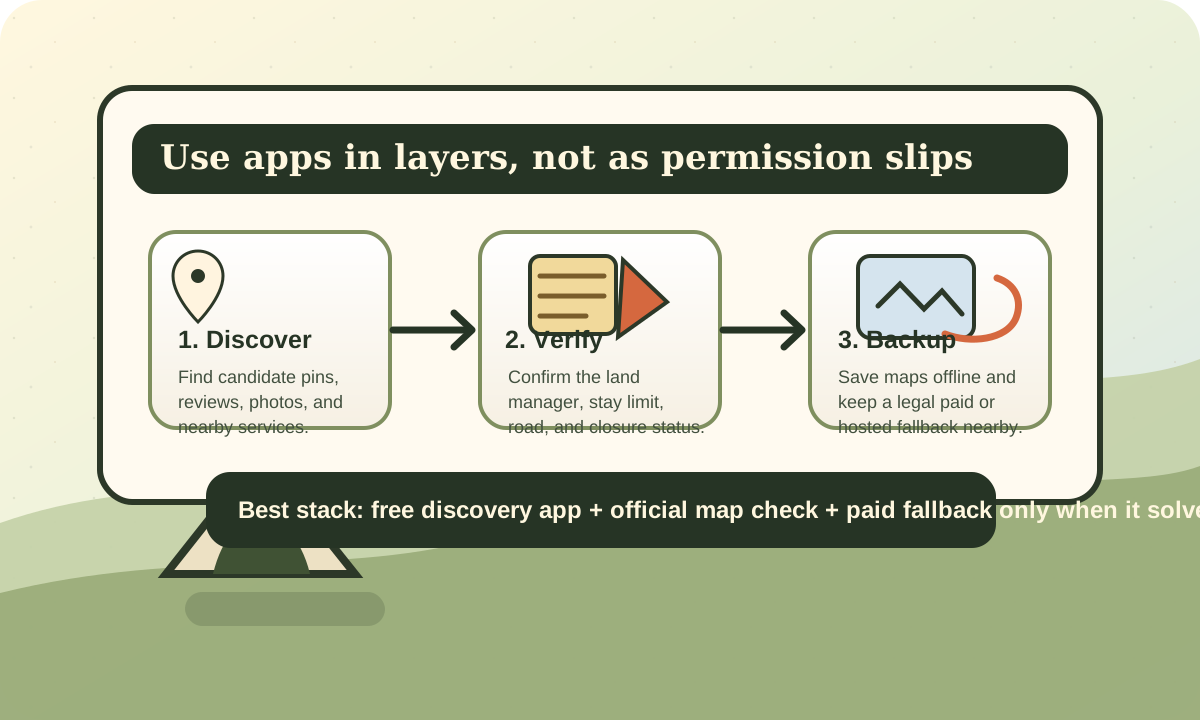
The cleanest setup is a three-layer stack:
- Discovery app: iOverlander, The Dyrt, Campendium/Roadtrippers, or Hipcamp finds possible places.
- Verification layer: official land-manager pages, MVUMs, state maps, fire restriction pages, and local office notes confirm whether the place is legal for your dates.
- Fallback layer: a saved paid campground, Harvest Hosts stop, Hipcamp listing, or known legal overnight option gives you somewhere to go if the free site fails.
This sounds slower than just following the nearest five-star review. It is usually faster in the real world because you are not backing a trailer out of a rutted road at dusk after discovering the campsite is signed closed.
Compare
Free and low-cost camping apps for RVers
Use one comparison matrix to scan the practical differences. Small screens stack each row; wider screens keep the first column pinned.
| Spec | Best use | Free usefulness | Current paid status checked April 11, 2026 | Watch for |
|---|---|---|---|---|
| iOverlander | Overlander-style pins, informal camping notes, water, dump, mechanics, border crossings, and services | Usable free with ads; the free tier showed one downloaded place set at a time | Official page showed Pro at $59.99/year and Unlimited at $99.99/year | Crowd-sourced pins are not legal proof, and RV fit varies wildly by road, weather, and rig size |
| Campendium/Roadtrippers | Campground reviews, RV filters, free-site research, cell reports, and route-adjacent planning | Campendium web content and Roadtrippers browsing can still help with first-pass research | Campendium says premium features moved into Roadtrippers; public Roadtrippers price was not reliably verifiable from an official page during this check | The Campendium Android app is no longer available, and some familiar layers now sit behind Roadtrippers workflows |
| The Dyrt | U.S. campground search, RV parks, free-camping collection, reviews, and route planning | Free search and reviews are useful for shortlisting public and private camp options | Official PRO page showed a 7-day trial, then $59.99/year if continued | The paid free-camping collection can reduce search time, but it still does not replace land-manager verification |
| Harvest Hosts and Boondockers Welcome | Legal travel-day overnights at farms, wineries, breweries, attractions, golf courses, and private-property hosts | Not a free app; you need a membership before it becomes useful | Official plan page showed regular annual pricing of $99 Classic, $169 Harvest Hosts plus Boondockers Welcome, and $179 All Access, with promotional prices also displayed | These are hosted stays, not dispersed camping. You need to follow host rules, arrive respectfully, and be self-contained unless a listing says otherwise |
| Hipcamp | Private-land campsites, farms, cabins, tent sites, and paid alternatives near areas where public camping is limited | Free to search; actual trip cost depends on the listing and booking terms | No annual membership price was verified from the official site; individual campsite rates vary | Listing quality, access roads, RV length fit, hookups, cancellation rules, and host communication matter more than the app brand |
| FreeRoam | Historically used for free-camping research and public-land layers | Official site did not return usable public content during this check | Current official pricing and feature status could not be verified | Treat it as a legacy reference unless you can confirm the app still works on your device and in your target area |
Which app fits your trip
If you are planning your first free public-land night, start with iOverlander or The Dyrt, then verify the site against official land status. Do not begin with a membership product unless you already know you want a hosted or paid stay.
If you are trying to move across the country without booking every night, Harvest Hosts and Boondockers Welcome can be worth the annual cost because they reduce end-of-day uncertainty. The tradeoff is that most stays are one night, many hosts expect self-contained RVs, and you are joining a hospitality network, not reserving a campground with full services.
If you are working remotely, app reviews are only one signal. A campsite with five beautiful photos can still fail if the signal is poor, the road is loud, or the solar exposure is blocked. Pair your app search with the connectivity planning mindset and keep a backup site with known signal.
If you are wintering in the desert, the app stack matters because many popular pins are overused, dusty, crowded, or close to land-boundary changes. The desert boondocking checklist is a better final pass than another hour of scrolling reviews.
Free does not mean low-risk
Free campsites usually cost you in some other currency: drive time, rougher roads, weaker services, less certainty, or a higher chance of arriving to a full or closed area.
The app may show a legal-looking pin while the local rule has changed. It may show old photos before washboard damage got worse. It may show a five-bar cell report from a different carrier, a different season, or a phone on the roof of a truck.
That is why the app workflow should include boring questions:
- Who manages this land?
- Is dispersed camping allowed here right now?
- Is camping restricted to designated sites?
- What is the stay limit?
- Are there fire, travel, seasonal, or restoration closures?
- Can my rig turn around before the road gets worse?
- Where is the nearest legal paid fallback?
If you cannot answer those questions before leaving service, save the site as a maybe, not a plan.
Worked example: how to verify one promising pin
Say iOverlander shows a desert pullout with recent reviews, The Dyrt shows nearby public-land camping, and an older Campendium review says larger trailers have fit there before. That is a lead, not a decision.
The next step is to identify the land manager, check whether dispersed camping or designated-site camping is allowed there now, look for fire restrictions, and compare the last-mile road against your rig length and turnaround comfort. Then save one paid fallback before leaving town. That 10-minute workflow is less exciting than scrolling more pins, but it is what turns an app result into an actual plan.
Offline maps matter more than fancy filters
The most expensive app feature is not always the most useful one. For RV boondocking, offline access often matters more than a prettier filter list.
If the app loses service right when you need the final mile, you need a saved map, coordinates, route notes, and a backup. iOverlander now separates free, Pro, and Unlimited features by downloaded place sets and offline maps. The Dyrt PRO and Roadtrippers Premium position paid features around trip planning, free-camping collections, overlays, and offline-style convenience.
That can be worth paying for if it reduces uncertainty on a long trip. It is less useful if you only camp near known areas and already use a dedicated offline map tool.
When paid apps are worth it
Paid camping apps make sense when they solve a specific problem you keep having.
Pay for The Dyrt PRO or Roadtrippers-style premium features if you need faster filtering, route planning, overlays, and saved research across many U.S. stops. Skip it if you already know your region, mostly camp in familiar public-land zones, and are disciplined about official map checks.
Pay for Harvest Hosts or Boondockers Welcome if you travel between destinations often and want legal overnight options that feel calmer than parking-lot roulette. Skip it if you prefer staying multiple nights, need hookups often, or dislike coordinating arrival windows with hosts.
Use Hipcamp when public land is limited, closed, muddy, smoky, or too far from the route. Skip it when the listing does not clearly answer RV length, road surface, turn-around space, generator rules, pet rules, and cancellation terms.
A better pre-trip workflow
Do the app work before you are tired.
- Save two free-site candidates and one paid fallback before the travel day starts.
- Screenshot or save the land-manager rule page if service may disappear.
- Write the last safe turnaround point in your notes.
- Check weather, fire restrictions, and road conditions before leaving pavement.
- Confirm fresh water, gray capacity, and dump options before extending the stay.
The water calculator is useful here because many free sites are easy to find and hard to stay at. If water or waste is your limiter, a beautiful pin may only be a one-night stop.
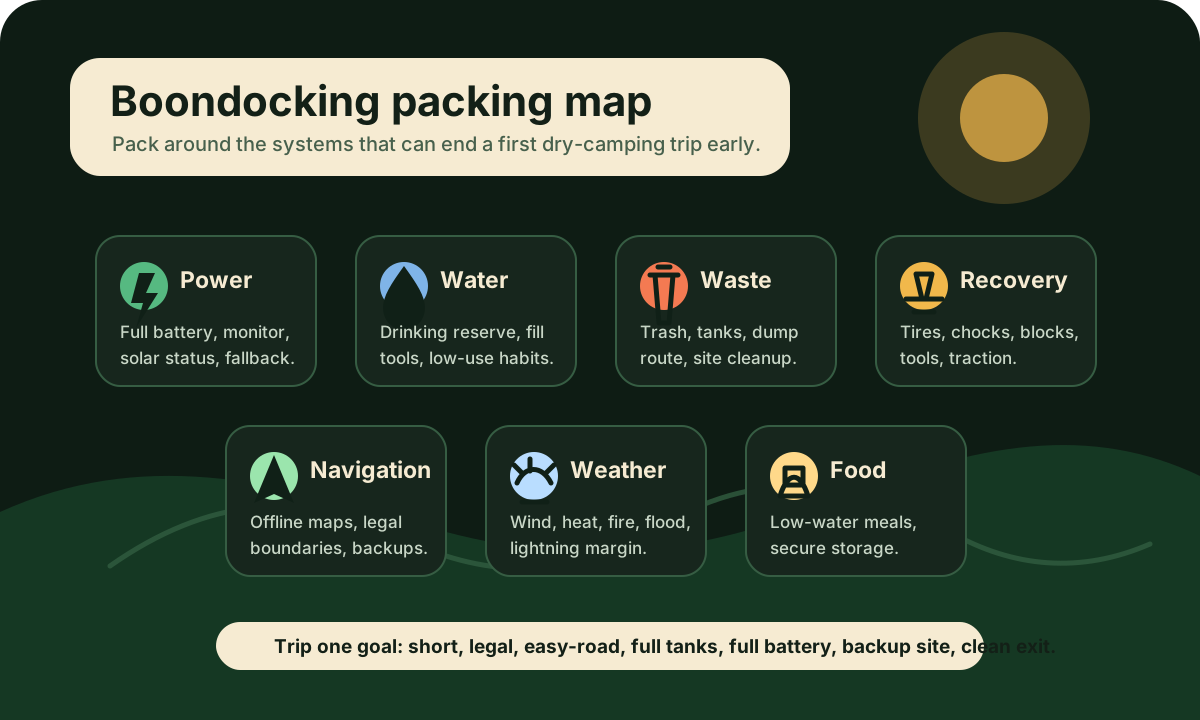
The first-time boondocking packing list also helps because app confidence does not fix missing leveling blocks, recovery gear, offline maps, or a drinking-water reserve.
Common mistakes
The biggest mistake is using review count as a safety score. A place can have hundreds of reviews and still be wrong for your rig because the road changed, the land manager changed rules, the area filled with seasonal campers, or the last mile is not trailer-friendly.
The second mistake is confusing paid with verified. A paid app can reduce research time, but it cannot promise that a public-land site is open, legal, quiet, clean, and drivable on your exact date.
The third mistake is arriving too late to make a better decision. If you cannot inspect the road, read signs, check neighbors, and turn around in daylight, your app stack did not leave enough margin.
Final thought
The best camping app is the one that gets you to a good shortlist without making you lazy about verification. Let apps find options, let official sources confirm permission, and keep a fallback ready so the trip stays flexible when the perfect pin turns out to be full, closed, muddy, smoky, or just not right for your RV.
Frequently asked
Questions RVers usually ask next.
What is the best free camping app for RVers?
For a free discovery layer, iOverlander is usually the most useful starting point because it has crowd-sourced camping pins and practical services such as water, dump, and repair notes. The tradeoff is that crowd-sourced data is not legal proof, so you still need to verify the land manager and current rules.
Is Campendium still a separate app?
Campendium support says its most-loved features are now available in Roadtrippers and that the Campendium Android app is no longer available. The Campendium website can still help with research, but new users should expect more Roadtrippers integration than the old standalone workflow.
Is The Dyrt PRO worth paying for?
It can be worth it if you want a polished U.S. campground database, free-camping collection, and trip-planning tools in one app. It is less compelling if you already know your region, use separate offline maps, and are comfortable checking land-manager pages yourself.
Are Harvest Hosts and Boondockers Welcome boondocking apps?
They are better described as hosted overnight networks. They can be excellent low-friction travel-day fallbacks, but they are not the same as dispersed public-land camping and they come with host rules, stay limits, and self-contained RV expectations.
Can I trust free campsite pins?
Use them as leads, not final answers. Before you drive in, confirm the land manager, camping legality, stay limit, fire restrictions, road condition, and turnaround options, especially with a larger trailer or motorhome.
Freshness note
Last checked April 11, 2026
This topic can change when products, plans, prices, campsite rules, or fit guidance move. These notes show what was reviewed most recently.
This review included
- Checked official app status, public pricing, and feature availability for iOverlander, Campendium/Roadtrippers, The Dyrt, Harvest Hosts, Boondockers Welcome, Hipcamp, and FreeRoam.
- Verified that Campendium features moved into Roadtrippers and that the Campendium Android app is no longer available.
- Confirmed that FreeRoam's official site did not return usable public content during this check, so it is treated as a legacy option rather than a primary recommendation.
Recent change log
April 11, 2026
Published a free and low-cost camping app comparison with current official pricing checks, app-status notes, and a legal-verification workflow for boondocking pins.
Broader editorial corrections are tracked on the Corrections and Updates page.