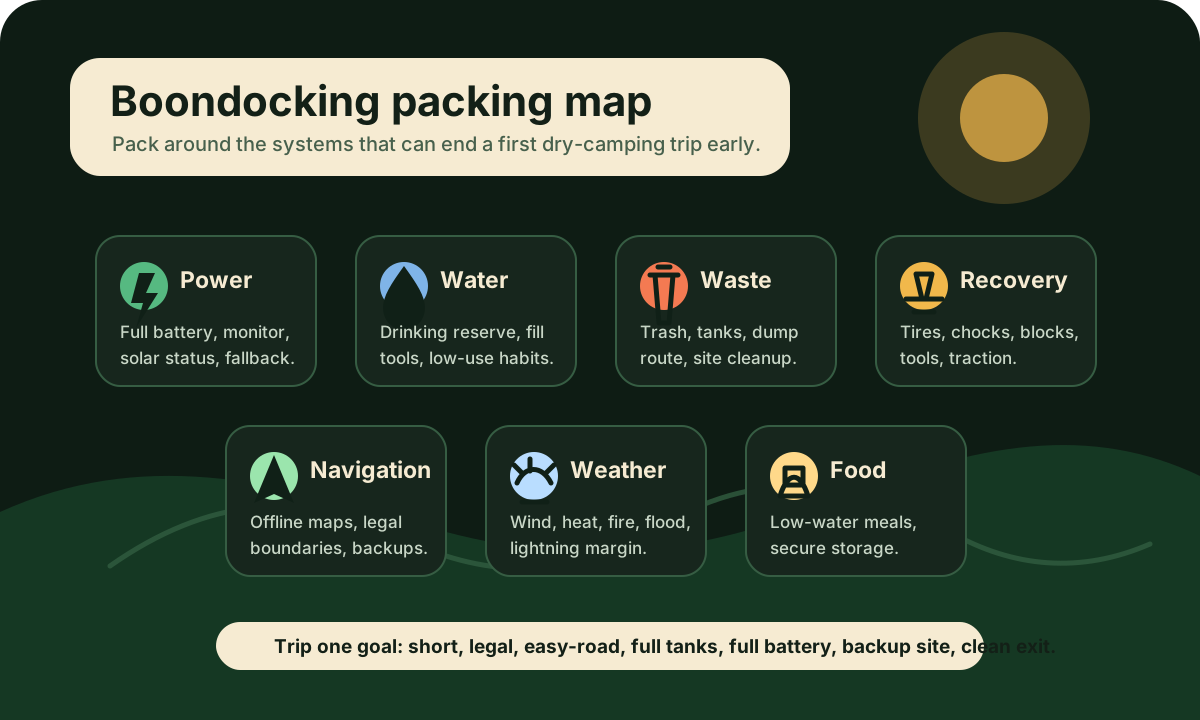
First boondocking packing list at a glance
Use this as the pre-trip sorting map. The exact items change by rig, season, and campsite, but these categories should not be skipped.
Power
Charge, measure, recover
Full batteries, tested inverter loads, solar status, shore adapter, and a fallback charging plan matter more than extra gadgets.
Water
Drink first, wash second
Carry drinking water separately from wash water and know the next legal refill before you leave pavement.
Waste
Leave with capacity
Trash bags, toilet paper plan, tank room, and legal dump routing prevent the least romantic early departure.
Recovery
Tires and soft ground
Chocks, leveling blocks, compressor, pressure gauge, jack pad, and basic traction gear solve more first-trip problems than fancy camp decor.
Navigation
Offline and physical backups
Offline maps, saved coordinates, public-land boundaries, and a paper fallback matter when cell service disappears.
Weather
Wind, fire, flood, heat
Check restrictions and storm risk before arrival. Do not learn flash-flood or fire-season rules at camp.
Pack for the failure points, not the fantasy version of camp
Most first-time boondocking packing lists get padded with nice-to-have camp items. Those are fine, but they are not what keeps the trip from unraveling.
Your first dry-camping trip usually gets shortened by something boring:
- The fresh tank falls faster than expected.
- The gray tank fills before the battery gets interesting.
- The battery monitor is vague or the inverter was left on.
- The road is rougher than the map implied.
- The site is occupied, illegal, too shaded, too exposed, or too tight to turn around.
- A weather change makes the original plan unsafe.
Pack around those failure points first. Chairs, rugs, string lights, and camp toys can come after the systems are covered.
If you have not done the broader trip prep yet, use the off-grid RV readiness checklist before you use this packing list. The checklist catches the pre-departure systems. This guide focuses on what should actually be in the rig.
The short first-trip box
For a first boondocking trip, keep one box or tote dedicated to boring-but-critical items. It should be easy to reach without unloading half the basement.
Compare
The first-trip boondocking box
Use one comparison matrix to scan the practical differences. Small screens stack each row; wider screens keep the first column pinned.
| Spec | Why it matters | What to pack | What to avoid |
|---|---|---|---|
| Water margin | Water ends more first trips than people expect | Dedicated drinking water, collapsible or rigid water containers, refill funnel or transfer pump if your setup needs it | Counting only the fresh tank if you have not measured real daily use |
| Waste control | Trash, toilet paper, pet waste, and gray/black capacity become public-land issues quickly | Heavy trash bags, zip bags, toilet paper plan, gloves, hand sanitizer, legal dump-station notes | Assuming dispersed sites have trash service, toilets, or a nearby dump |
| Road recovery | Soft shoulders, sand, mud, and uneven sites are common first-trip surprises | Tire gauge, compressor, jack pad, chocks, leveling blocks, work gloves, traction boards if terrain warrants | Driving farther down a rough road because the first few hundred feet were easy |
| Navigation backup | Cell service often disappears where the good sites begin | Offline maps, saved coordinates, public-land boundary app, paper map or printed route notes | Trusting one app, one pin, or one bar of service |
| Weather fallback | Wind, heat, lightning, fire restrictions, and flash flooding change the campsite decision | NOAA-capable weather app or radio, extra water, shade plan, warm layer, rain shell, backup site | Parking in a wash, under dead limbs, or at the end of a road with no exit margin |
This is the difference between a packing list and a trip plan. The gear is only useful if it answers a specific failure mode.
Power and battery gear
Do not pack power gear by guessing what an influencer's rig needed. Pack what lets your rig stay visible, recoverable, and honest.
Start with:
- Fully charged house batteries before departure
- Battery monitor or at least a known voltage-check method
- Solar controller checked before leaving
- Inverter tested with the largest load you actually plan to run
- Shore-power cord, adapters, and surge protector for the fallback campground
- Generator, fuel, or alternator-charging plan if that is part of your recovery strategy
- Spare fuses for the circuits you know how to service
- Headlamp or flashlight you can use with both hands free
- USB battery bank for phones and small essentials
For a first trip, the most important power item is not always another panel. It is knowing what the system is doing.
If the fridge, laptop, furnace, or Starlink load is still a guess, use the RV appliance wattage chart and then run the numbers through the solar calculator. If you are mostly worried about overnight reserve, use the battery calculator.
Pack the fallback adapter, not just the off-grid dream
Even if the plan is to stay off-grid, carry the shore cord, adapter, and surge protection needed for a paid campground or driveway recovery night. A first trip is a learning trip, not a test of pride.
Water packing
Water planning should start with drinking water, then washing, then comfort.
Bring:
- Dedicated drinking water separate from the fresh tank
- Extra fresh-water containers if the route allows legal refills
- Hose, regulator, filter, and fittings you have already tested
- A way to transfer water into the rig if containers are part of the plan
- Dish basin or spray bottle for low-water dishwashing
- Quick-dry towels or wipes for low-water cleanup
- Electrolytes if heat, altitude, or hiking is part of the trip
- A written or saved refill option for the drive out
The first trip is not the time to learn that your container does not fit under a spigot, your hose fitting leaks, or your pump-transfer plan needs a part you left at home.
Use the water calculator if you do not know whether the trip is a two-night plan or a four-night plan. Small habit changes move the answer.
Bathroom, tank, and trash packing
Public-land managers keep saying the same thing for a reason: do not leave trash, sewage, toilet paper, food waste, pet waste, or camp debris behind.
Pack:
- Heavy trash bags and a place to store trash inside or in a secured compartment
- Zip-top bags for micro-trash, used wipes, and small waste items
- Toilet paper plan that does not leave paper outside
- Disposable gloves
- Hand sanitizer and soap
- Tank treatment if your system uses it
- Dump-station route saved before arrival
- Pet waste bags if you travel with dogs
- A small brush or dustpan for cleaning the site before you leave
For RVers, the key is not just "pack it out." It is having a place to put it until you can pack it out.
If bathroom strategy is the weak link, read the boondocking bathroom and waste strategy before trying to stretch a stay.
Do not turn a dispersed site into a dump station
Never dump black water, gray water, trash, oil, fuel, or food waste on public land. If tank capacity is the limiter, the right move is to leave earlier, use a legal dump, or change the trip length.
Recovery and road gear
First-time boondockers often think recovery gear is for extreme trails. In RV use, it is often for ordinary dirt roads, soft shoulders, sloped sites, and poor turnarounds.
Pack:
- Tire pressure gauge
- Portable compressor that can handle your tire pressure
- Lug wrench and jack plan that actually fit the rig
- Jack pad or base plate
- Wheel chocks
- Leveling blocks
- Work gloves
- Basic tool kit
- Traction boards or recovery boards for sand, mud, or soft desert shoulders
- Tow strap or recovery point knowledge if your rig and route justify it
- Spare key plan
The best recovery tool is restraint. If the road is getting worse and you have not seen a turnaround, stop before the decision gets narrower.
For a first trip, choose a site that matches the rig you have now, not the driver you hope to become someday.
Navigation and legality
The prettiest campsite is not useful if you cannot prove it is legal, reach it safely, or leave without damage.
Pack and prep:
- Offline map for the full route, not just the final pin
- Public-land boundary layer or printed map
- Saved coordinates for the primary site and two backups
- Local land-manager page or office note saved offline
- Road-condition notes when available
- Paper map or printed route summary
- Arrival plan that gets you to the final dirt road before dark
- A message to someone off-site with your route and expected return
Use the legal boondocking site guide if you are still relying on one app or one social-media pin.
BLM guidance is clear that dispersed camping rules vary by office and posted restriction. Forest Service guidance makes the same practical point: check local regulations, stay limits, fire rules, and maps before assuming the land is open to your exact use.
Weather, fire, and exposure gear
Weather can change the packing list more than any gear review.
Pack:
- Warm layer even on mild trips
- Rain shell
- Sun hat, sunscreen, and sunglasses
- Extra drinking water for heat
- Shade plan if camping in desert or open grassland
- NOAA-capable weather app, weather radio, or reliable alert method
- Fire restriction notes saved before arrival
- Fire extinguisher and a plan to avoid campfires when restrictions or wind make them wrong
- Backup site away from washes, narrow canyons, dead trees, or exposed ridge lines
The National Weather Service warns against camping or parking along washes and streams during threatening conditions. That matters for RVers because a dry wash can look like a perfect flat campsite until a storm miles away changes the whole risk.
The BLM also emphasizes checking fire restrictions before travel and fully extinguishing any legal fire with water, stirring, and cooling before leaving.
Food and camp kitchen
Food packing for boondocking is about lowering water use, reducing trash, and keeping animals uninterested.
Pack:
- Meals that do not create a mountain of dishes
- Pre-washed produce when practical
- Cooler or fridge plan that matches your power system
- Sealable food storage
- Trash control for packaging and scraps
- Dish basin, scraper, and low-water soap routine
- Backup food that does not require the microwave or a large inverter load
- Coffee plan that does not surprise the battery bank
The mistake is packing the same kitchen routine you use at hookups and assuming the tanks, trash, and batteries will absorb it.
If a cooking appliance needs inverter power, make sure it is already in the power plan.
Camp setup and comfort
Comfort gear is worth bringing, but it should not bury the safety and systems gear.
Useful first-trip comfort items include:
- Camp chairs
- Small outdoor table
- Doormat or ground mat to control dirt
- Lantern or low-draw camp light
- Earbuds instead of a speaker
- Bug control appropriate to the area
- Basic first-aid kit
- Pet leash, tie-out, paw towel, and extra pet water if needed
- Simple entertainment that does not require strong internet
Keep the first setup small. A compact camp is easier to move if the site is wrong, the wind comes up, a ranger asks you to relocate, or the battery plan is weaker than expected.
What not to pack for trip one
Some items are not bad. They are just premature.
Skip or minimize:
- Large outdoor setups that take a long time to break down
- Heavy appliances you have not included in the battery plan
- Extra decor that crowds basement access
- Anything that depends on strong cell service
- Firewood if fire restrictions, local wood movement rules, or wind make a fire unlikely
- New gear you have never tested at home
- A week of supplies for a first two-night learning trip
Your first boondocking trip should teach you what the rig actually needs. Overpacking can hide that signal.
The clean first-trip strategy
A clean first trip looks like this:
- Short stay
- Mild weather
- Legal site with easy road access
- Nearby fallback campground or town
- Full batteries
- Known water and tank status
- Offline maps
- Trash and waste plan
- Simple meals
- Small camp setup
That is not timid. It is how you learn without turning every lesson into a recovery bill.
After the first trip, write down what actually limited you. If it was water, improve water logistics. If it was power, run the load math. If it was route confidence, improve maps and site selection. If it was setup friction, simplify camp.
Then the second packing list gets smarter.
Final thought
The best first-time boondocking packing list is not the longest one. It is the one that protects the systems most likely to end the trip early.
Bring enough water, battery awareness, waste capacity, navigation backup, weather margin, and recovery gear to keep the first trip boring in the right ways. Once those are covered, the rest of the camp setup becomes personal preference instead of emergency planning.
Sources and verification notes
- BLM camping guidance informed the public-land legality, stay-limit, road, water-distance, trash, human-waste, and fire-safety sections: BLM Camping on Public Lands.
- BLM Know Before You Go guidance informed the fire, heat, flash-flood, waste, and water-carrying cautions: BLM Know Before You Go.
- Forest Service Know Before You Go guidance informed the sanitation, paper-map, trash, food, local-regulation, and cool-to-touch campfire guidance: Forest Service Rocky Mountain Region Know Before You Go.
- National Weather Service monsoon safety guidance informed the warnings about washes, low-water crossings, flash floods, and lightning shelter: NWS Monsoon Safety.
Frequently asked
Questions RVers usually ask next.
What should I bring for my first boondocking trip?
Bring the basics that protect power, water, waste, navigation, recovery, weather, food storage, and camp setup. The highest-value items are usually extra drinking water, trash and waste bags, offline maps, a legal dump/refill plan, leveling and chocking gear, tire tools, and a way to monitor battery use.
How much water should I pack for first-time boondocking?
Start with dedicated drinking water separate from the fresh tank, then estimate wash water from your habits. Many first-timers use more water than expected because dishes, handwashing, and short showers add up. Use the water calculator before stretching beyond a short first trip.
Do I need recovery boards for boondocking?
Not for every site, but they are useful if you camp on sand, mud, soft shoulders, or desert roads with loose pullouts. A tire gauge, compressor, jack pad, chocks, and leveling blocks are more universal first-trip items.
Can I rely on camping apps for boondocking?
Use apps as clues, not proof. Verify land ownership, current restrictions, road access, stay limits, and backup options. Save maps offline because cell service often disappears near dispersed sites.
What is the biggest first-time boondocking packing mistake?
Packing comfort items before system items. Chairs and lights are nice, but water, waste, battery visibility, route confidence, weather awareness, and recovery gear are what keep the first trip from ending early.
Freshness note
Last checked April 10, 2026
This topic can change when products, plans, prices, campsite rules, or fit guidance move. These notes show what was reviewed most recently.
This review included
- Checked public-land packing priorities against current BLM camping and Know Before You Go guidance.
- Checked dispersed-camping sanitation, trash, paper-map, food, water, and fire guidance against current Forest Service Know Before You Go guidance.
- Checked storm, flash-flood, wash, and lightning safety framing against current National Weather Service outdoor safety guidance.
Recent change log
April 10, 2026
Published a first-time boondocking packing list organized around the systems that most often end a dry-camping trip early.
April 10, 2026
Added a custom packing-list visual and linked the guide into the readiness, beginner boondocking, and public-land planning paths.
Broader editorial corrections are tracked on the Corrections and Updates page.
