Shortlist first
Use this to find the winner first, then compare the alternates only if their tradeoffs fit your rig better.
Shortlist labels are editorial recommendations, not popularity rankings. Fit score still matters, but the label tells you why each pick made this guide.
How fit scores work
Scores are editorial fit scores, not user-review averages. The rubric weighs stated RV-use fit, verified specs and limits, whole-rig friction, visible downsides or support risk, and value for the specific job in this guide. Read the full scoring rubric.
If you need one baseline option before reading the full guide, start with Clearsource Ultra RV Water Filter System for highest-protection rv inlet system.
The first option to evaluate if you want the strongest all-around fit for this guide. Check the other cards only if their award label matches your constraint better.
| Product | Why shortlisted | Fit score | Key spec | Best for | Actions |
|---|---|---|---|---|---|
| Clearsource Ultra RV Water Filter System Links to: Clearsource Ultra RV Water Filter System | Best overall The first option to evaluate if you want the strongest all-around fit for this guide. | 4.8 / 5 fit scoreScore rubric | $599.99 | 3-stage + VirusGuard | 4.5 GPM | replacement pack $79.99 | Highest-protection RV inlet system | Read Clearsource Ultra RV Water Filter System notesCheck listing at ClearsourceMerchant link - direct listing. Verify price and specs at Clearsource. |
| Clearsource Premier RV Water Filter System Links to: Clearsource Premier RV Water Filter System | Upgrade pick The higher-end option to justify only when its extra capability matters in your build. | 4.6 / 5 fit score | $499.99 | 0.2-micron absolute | 6-6.5 GPM | replacement pack $69.99 | Best flow-to-protection balance | Read Clearsource Premier RV Water Filter System notesCheck listing at ClearsourceMerchant link - direct listing. Verify price and specs at Clearsource. |
| Camco TastePURE KDF Hose-End Filter Links to: Camco TastePURE Water Filter | Budget pick The lower-cost route to check when the premium option is more than the job needs. | 4.1 / 5 fit score | $34.99 | 1.15 lb shipping weight | hose-end filter | not a purifier | Cheap taste and sediment cleanup | Read Camco TastePURE KDF Hose-End Filter notesCheck listing at CamcoMerchant link - direct listing. Verify price and specs at Camco. |
| LifeStraw Peak Series Gravity Filter System 8L Links to: LifeStraw Peak Series Gravity Filter System 8L | Also great A strong alternate when its specific tradeoffs fit your rig better than the winner. | 4.3 / 5 fit score | $95.95 | 0.2 micron | 8L | 2,000 L membrane life | sold out direct | Group drinking-water backup | Read LifeStraw Peak Series Gravity Filter System 8L notesCheck listing at LifeStrawMerchant link - direct listing. Verify price and specs at LifeStraw. |
| Sawyer Micro Squeeze Water Filtration System Links to: Sawyer Micro Squeeze Water Filtration System | Also great A strong alternate when its specific tradeoffs fit your rig better than the winner. | 4.2 / 5 fit score | $33.99 | 0.1-micron absolute | up to 100,000 gal | out of stock direct | Pocket emergency backup | Read Sawyer Micro Squeeze Water Filtration System notesCheck listing at SawyerMerchant link - direct listing. Verify price and specs at Sawyer. |
Why this comparison exists
RV water filters get marketed like there is one clean ladder: cheap inline filter, better inline filter, premium canister filter, then some miracle countertop purifier. That is not how off-grid water planning works.
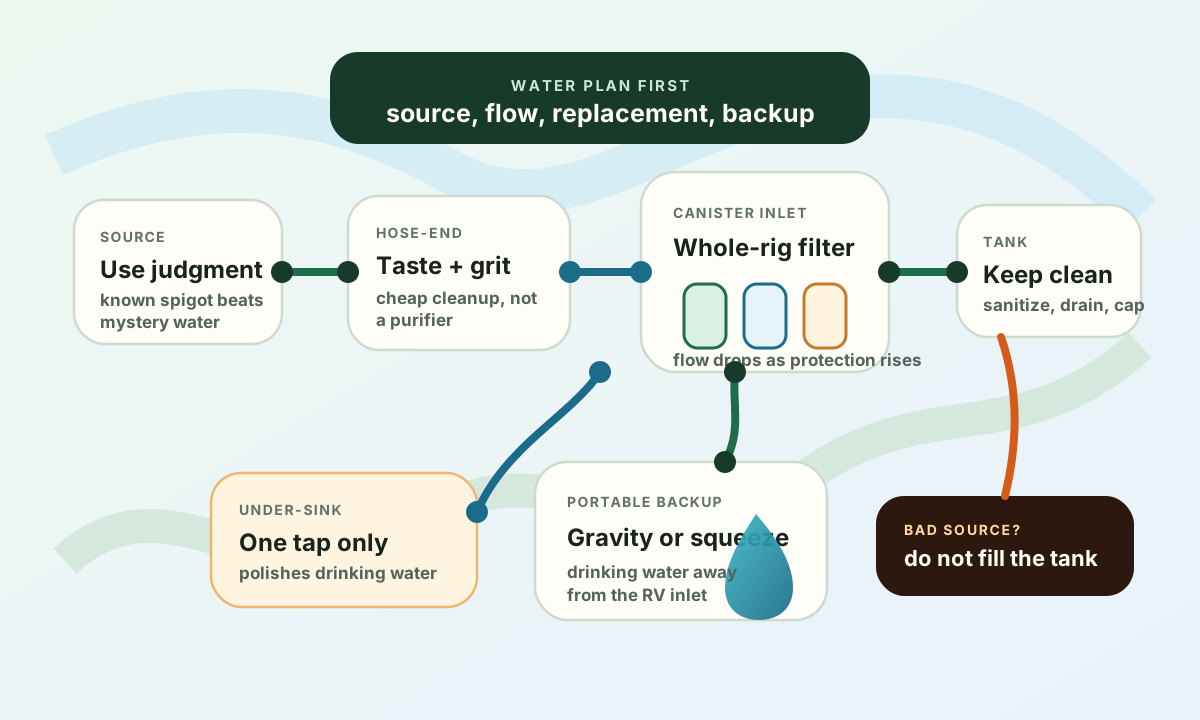
The real decision is where the filter sits in the rig:
- at the campground spigot before water enters the hose
- outside the RV as a two- or three-canister inlet system
- under the sink for one drinking tap
- in a portable gravity or squeeze setup for backup drinking water
Those jobs overlap, but they are not the same job. A filter that improves campground taste may do almost nothing for lake-water pathogens. A backpacking filter that handles bacteria and protozoa may be painfully slow for filling a fresh tank. A countertop gravity system may make sense in a house and still be awkward in an RV where storage, sloshing, freeze risk, and replacement-filter availability matter.
That is why this guide compares protection lanes instead of pretending every water filter belongs in one ranking. If you are still working out how long the water has to last, start with the water calculator, then pair the result with a refill plan and the portable water container guide.
Price and availability note
Prices below were captured from official manufacturer or brand pages on April 11, 2026; the linked product pages were re-verified live on June 6, 2026 (all return successfully), but the direct prices render dynamically, so confirm the live price and stock before buying. LifeStraw and Sawyer direct pages showed the two portable filters as sold out or not publicly sold online at the time checked, so use their product pages as spec references and verify current retailer availability before buying.
One filter rarely solves the whole water problem
Most RVers need to separate water quality into four lanes.
The first lane is taste, odor, chlorine, and sediment. That is where a Camco-style hose-end filter is useful. It can make campground water less unpleasant and catch some visible grit before it reaches the hose, but that is not the same as making unsafe water safe.
The second lane is bacteria, protozoa, and cysts. That is where absolute micron ratings and tested removal claims start to matter. A 0.1- or 0.2-micron filter can be meaningful here, but the exact claim and test method matter more than the marketing phrase.
The third lane is viruses. Many small hollow-fiber and carbon filters do not claim virus removal because viruses are smaller and harder to handle mechanically. If virus protection is a real requirement, look for an explicit purifier-style claim, a clear test protocol, or a disinfection step that matches the water source.
The fourth lane is chemicals, heavy metals, fuel, agricultural runoff, PFAS, and bad source judgment. This is where filter marketing gets dangerous. A normal RV filter is not permission to fill from a suspect ditch, stagnant stock pond, flood-contaminated spigot, or unknown industrial area.
For boondocking, filtration should sit beside the habits in the water conservation guide, not replace them. The cleanest setup is known-source water, sanitary hoses, a reasonable inlet filter, protected tank habits, and a small portable backup for drinking water if the source story gets messy.
RV water filter decision checkpoints
Use these before you compare price. The right filter depends on source risk, flow needs, and where the filter sits in the rig.
Whole-rig inlet
Clearsource Ultra or Premier
Best when you want every gallon entering the RV to pass through the same external filter stack.
Cheap campground cleanup
Camco TastePURE
Good for taste, odor, chlorine, and sediment reduction, but not a stand-alone purifier.
Backup drinking water
LifeStraw or Sawyer
Useful when you need a point-of-use filter away from the rig, not when you need to fill the fresh tank fast.
Under-sink lane
Good after inlet strategy
A dedicated drinking tap can polish water, but it does not protect the tank, shower, toilet, hose, or outdoor spigot workflow.
Virus concern
Read claims carefully
Do not infer virus protection from a bacteria or protozoa claim unless the manufacturer explicitly supports it.
Source judgment
Still non-negotiable
No RV filter makes every unknown water source a smart fill point.
How to read the specs without getting fooled
Micron rating is useful only when you know whether it is nominal or absolute. An absolute 0.2-micron claim is stronger than a vague small-micron claim because it describes the pore-size boundary more strictly. That is why the Clearsource Premier's 0.2-micron absolute second stage is more meaningful than a generic "filters sediment" phrase.
Flow rate matters because RV filtration is not just drinking from a bottle. A whole-rig system has to feed showers, faucets, toilets, and tank filling without making every hookup feel broken. The Premier's official 6-6.5 GPM claim is a real advantage if you mostly use established water points. The Ultra's 4.5 GPM claim is the tradeoff for its higher-protection filter stack.
Filter life matters because replacement discipline is where many water systems quietly fail. If the replacement filters are expensive, hard to find, or easy to forget, the paper spec does not protect you six months later.
NSF/ANSI and EPA-style claims need exact reading. If a product page says "meets" a protocol, "tested to" a standard, or "reduces" a contaminant, those phrases do not always mean the same thing as a current certification listing. For a medical, immune-compromised, infant, or high-risk water situation, ask for current performance data sheets and treat manufacturer claims as the starting point, not the whole answer.
Official product and source-check links
These are the source pages used for the April 11, 2026 price check; all were re-verified live on June 6, 2026. Reopen them before checkout because price, stock, and claim language can change.
Pre-arrival checks
Check the current claim language
If the claim matters for health, reopen the official page and request current test documents before relying on the filter.
Check replacement availability
A filter system is only as useful as the cartridges you can actually buy and replace on schedule.
Check source risk first
Filtration should not turn unknown, contaminated, or flood-affected water into a casual tank-fill decision.
Berkey belongs in the caution lane in 2026
I would not build a new RV water plan around Berkey as the primary recommendation in 2026 unless you already own the system, can verify genuine current replacement elements, and understand exactly what claims are supported by current documentation.
That is not the same as saying every gravity countertop filter is useless. The issue is availability and claim clarity. An EPA stop-sale, use, or removal order tied to Black Berkey filter products, plus out-of-stock replacement-element status on Berkey-related pages, makes it a poor first recommendation for a traveler who needs repeatable RV logistics.
If you already have one, treat it like a drinking-water polishing station that needs careful replacement-element verification. Do not assume it replaces a sanitary fill process, tank maintenance, or a known-good water source.
Worked example: campground spigot versus uncertain backroad source
A normal campground spigot with chlorine taste, sediment, and hose grime is a very different problem from an uncertain backroad source. The first problem is usually about taste, odor, sediment, and keeping the RV plumbing cleaner. A whole-rig inlet filter or even a basic hose-end filter may be a reasonable fit.
An uncertain source is different. If you do not know the source history, recent flooding, livestock exposure, industrial risk, or maintenance status, the filter choice should become more conservative and the fill decision may need to change entirely. Use a known potable fill when you can. If the source story is questionable, keep it out of the fresh tank and use a separate point-of-use or backup drinking-water plan only when the product's actual claims match the risk.
That distinction matters because many RVers try to solve source uncertainty with a better filter alone. Filtration is part of the system. Source judgment, clean hoses, tank sanitation, replacement discipline, and reserve water are the rest of it.
For a weeklong boondocking trip, I would rather see two moderate filters used correctly than one impressive filter used lazily. Fill from known potable sources, protect the hose ends from dirt, filter into a clean tank, carry separate drinking reserve, and keep a small gravity or squeeze filter for hikes, emergencies, or questionable campground taps. The premium whole-RV filter improves the normal workflow; the portable backup protects the human drinking-water lane when the normal workflow breaks.
Compare
RV water filter protection and workflow comparison
Use one comparison matrix to scan the practical differences. Small screens stack each row; wider screens keep the first column pinned.
| Spec | Clearsource Ultra | Clearsource Premier | Camco TastePURE | LifeStraw Peak 8L | Sawyer Micro Squeeze |
|---|---|---|---|---|---|
| Price checked | $599.99 | $499.99 | $34.99 | $95.95 | $33.99 |
| Best lane | Whole-RV inlet with higher protection | Whole-RV inlet with stronger flow | Cheap hose-end taste and sediment filter | Group drinking-water gravity backup | Pocket emergency drinking-water backup |
| Primary protection claim | Sediment, carbon, and VirusGuard stage | Carbon block plus 0.2-micron absolute second stage | Taste, odor, chlorine, and sediment reduction positioning | Bacteria, parasites, microplastics, silt, sand, and cloudiness | Bacteria, protozoa, and microplastics |
| Micron / pore detail | VirusGuard stage; exact pore size not the main official spec | 0.2-micron absolute second stage | No exact micron claim on current product page | 0.2 micron | 0.1-micron absolute hollow-fiber membrane |
| Flow / use rate | 4.5 GPM | 6-6.5 GPM | Not listed on official product page | Gravity use; no whole-RV flow claim | Squeeze / point-of-use flow |
| Replacement path | Ultra replacement pack $79.99 | Premier replacement pack $69.99 | Replace whole hose-end filter | Membrane replacement $17.95, sold out direct when checked | Backwashable; replacement filter listing shown at $84.95 |
| Direct availability checked | Available to add to cart | Available to add to cart | Available to add to cart | Product page showed sold out | Product page showed out of stock / not sold publicly |
| Main watchout | Expensive, heavy, and slower than Premier | No explicit VirusGuard stage | Not a pathogen purifier | Not a whole-RV inlet filter | Not for tank filling, viruses, chemicals, or taste polishing |
The shortlist
- Latest product check
- Specs, fit notes, and current listing context were reviewed June 6, 2026.
- Evidence label
- Spec-verified: Score is based on current published specs, official documentation, pricing context, compatibility, and RV-use fit analysis.
- Price context
- Pricing and availability can change, so confirm the merchant listing before buying.
Product facts last checked June 6, 2026
Clearsource Ultra RV Water Filter System
Editorial fit score
The Ultra is the right first look when you want every gallon entering the rig to pass through a dedicated external system with sediment, carbon, and VirusGuard stages. The official page lists a $599.99 direct price, 4.5 GPM flow rate, 18.75 x 15.25 x 7.5 inch footprint, and 28 pound weight. The tradeoff is that it is expensive, it is not small, and the stronger protection stack costs you some flow compared with the Premier.
Review verdict
- Short verdict
- The strongest whole-rig RV inlet pick in this comparison if you want to bias toward protection and can live with the cost, weight, and 4.5 GPM flow rate.
- Evidence used
- Spec-verified
- Score is based on current published specs, official documentation, pricing context, compatibility, and RV-use fit analysis.
- Why it made the shortlist
- Best overall
- The first option to evaluate if you want the strongest all-around fit for this guide.
- Best if
- Highest-protection RV inlet system
- Why not this product?
- If you mostly fill from known municipal hookups, the Premier or even a basic hose-end filter may be the calmer choice.
- Watch for
- Costs far more than a hose-end filter
- Product check date
- Specs, fit notes, and current listing context were last checked June 6, 2026.
Key specs
- Price checked
- $599.99
- Filtration path
- Sediment + carbon + VirusGuard
- Flow rate
- 4.5 GPM
- Dimensions
- 18.75 x 15.25 x 7.5 in
Score basis
Score is based on current published specs, official documentation, pricing context, compatibility, and RV-use fit analysis. These are editorial fit scores, not customer-review averages. Read the scoring rubric.
- RV-use fit
- 30% weight
- Verified specs and limits
- 25% weight
- Whole-rig friction
- 20% weight
- Downsides and support risk
- 15% weight
- Value for the job
- 10% weight
How directly the product solves the specific off-grid RV job in this guide.
Capacity, dimensions, electrical limits, protection claims, and compatibility constraints we can verify from current sources.
Install effort, storage, wiring, service access, weight, refill workflow, or daily-use hassle.
Known tradeoffs, unclear claims, warranty coverage, support risk, and wrong-buyer failure modes.
Whether the price makes sense after fit, specs, and tradeoffs still hold.
Testing limits
- This is not a hands-on endurance or lab test unless the review explicitly says so.
- Specs, pricing, bundles, and availability can change, so confirm the current listing and manual before buying.
Reasons to buy
- Strongest protection stack in this RV inlet group
- Filters all incoming RV water instead of only one drinking tap
- Replacement pack is clearly available from Clearsource
- Good fit for travelers who do not trust every campground or refill stop equally
Watch-outs
- Costs far more than a hose-end filter
- 28 pounds is a real storage and handling commitment
- 4.5 GPM is slower than the Premier
- Still does not make every unknown water source a smart fill point
Whole-bank math
Why it wins
Protection-first inlet filtering
This is the pick when the water source changes often and you want one serious filter path before water enters the RV.
Best buyer
Longer-loop RVer
It makes the most sense when refill quality varies enough that a cheap inline filter no longer feels honest.
Skip if
Flow and simplicity matter most
If you mostly fill from known municipal hookups, the Premier or even a basic hose-end filter may be the calmer choice.
Related parts and setup checks
Water calculator
Use this before overbuying. If you only carry 30 gallons and refill from known spigots, the Ultra may be more filter than the trip demands.
Open Water calculatorPortable water containers
A strong inlet filter still needs a clean hauling routine if you bring water back from town in containers.
Open Portable water containersWater conservation guide
Filtering water is only half the stay-length problem. Lower daily use makes each filtered fill matter more.
Open Water conservation guideCheck current listing
Clearsource Ultra RV Water Filter System
Use the listing after the fit notes make sense for your rig. Pricing and availability can change, so verify the merchant page before buying.
- Latest product check
- Specs, fit notes, and current listing context were reviewed June 6, 2026.
- Evidence label
- Spec-verified: Score is based on current published specs, official documentation, pricing context, compatibility, and RV-use fit analysis.
- Price context
- Pricing and availability can change, so confirm the merchant listing before buying.
Product facts last checked June 6, 2026
Clearsource Premier RV Water Filter System
Editorial fit score
The Premier is the system I would put in front of many campground-plus-boondocking RVers before the Ultra. It costs $499.99 direct, uses a first-stage carbon block plus a second-stage 0.2-micron absolute filter, and the official page lists 6-6.5 GPM flow. It gives up the Ultra line's VirusGuard positioning, but the flow and price make it easier to justify for normal mixed-source travel.
Review verdict
- Short verdict
- The better balanced whole-RV inlet pick if you want a serious external filter with stronger flow and lower cost than the Ultra.
- Evidence used
- Spec-verified
- Score is based on current published specs, official documentation, pricing context, compatibility, and RV-use fit analysis.
- Why it made the shortlist
- Upgrade pick
- The higher-end option to justify only when its extra capability matters in your build.
- Best if
- Best flow-to-protection balance
- Why not this product?
- If virus-level uncertainty is why you are shopping, start with the Ultra or add a verified disinfection step.
- Watch for
- Does not include the Ultra line's VirusGuard stage
- Product check date
- Specs, fit notes, and current listing context were last checked June 6, 2026.
Key specs
- Price checked
- $499.99
- Filtration path
- Carbon block + 0.2-micron absolute
- Flow rate
- 6-6.5 GPM
- Dimensions
- 15 x 15.25 x 7.5 in
Score basis
Score is based on current published specs, official documentation, pricing context, compatibility, and RV-use fit analysis. These are editorial fit scores, not customer-review averages. Read the scoring rubric.
- RV-use fit
- 30% weight
- Verified specs and limits
- 25% weight
- Whole-rig friction
- 20% weight
- Downsides and support risk
- 15% weight
- Value for the job
- 10% weight
How directly the product solves the specific off-grid RV job in this guide.
Capacity, dimensions, electrical limits, protection claims, and compatibility constraints we can verify from current sources.
Install effort, storage, wiring, service access, weight, refill workflow, or daily-use hassle.
Known tradeoffs, unclear claims, warranty coverage, support risk, and wrong-buyer failure modes.
Whether the price makes sense after fit, specs, and tradeoffs still hold.
Testing limits
- This is not a hands-on endurance or lab test unless the review explicitly says so.
- Specs, pricing, bundles, and availability can change, so confirm the current listing and manual before buying.
Reasons to buy
- Best flow rate among the RV inlet systems compared here
- 0.2-micron absolute claim is more useful than vague filter language
- Costs $100 less than the Ultra when checked
- Good fit for filtering the whole RV without chasing the highest-protection model
Watch-outs
- Does not include the Ultra line's VirusGuard stage
- Still a 24 pound external system
- Still much more expensive than a hose-end filter
- Not a substitute for source judgment or tank sanitation
Whole-bank math
Why it wins
Flow stays livable
The Premier is easier to live with when normal RV plumbing feel matters as much as protection.
Best buyer
Practical mixed-source traveler
This is the filter for RVers who use campground and municipal fills often but still want stronger inlet filtering.
Skip if
Virus concern is the driver
If virus-level uncertainty is why you are shopping, start with the Ultra or add a verified disinfection step.
Related parts and setup checks
How long can you boondock?
Useful if the filter purchase is really part of a stay-length problem, not just a taste problem.
Open How long can you boondock?Water calculator
Compare how many filtered gallons you actually need between realistic refill windows.
Open Water calculatorBest water-saving upgrades
A better showerhead, dish basin, or faucet habit may reduce water pressure on the whole setup.
Open Best water-saving upgradesCheck current listing
Clearsource Premier RV Water Filter System
Use the listing after the fit notes make sense for your rig. Pricing and availability can change, so verify the merchant page before buying.
- Latest product check
- Specs, fit notes, and current listing context were reviewed June 6, 2026.
- Evidence label
- Spec-verified: Score is based on current published specs, official documentation, pricing context, compatibility, and RV-use fit analysis.
- Price context
- Pricing and availability can change, so confirm the merchant listing before buying.
Product facts last checked June 6, 2026
Camco TastePURE KDF Hose-End Filter
Editorial fit score
The Camco TastePURE KDF hose-end filter is useful because it is cheap, compact, and easy to replace. The official Camco page listed a $34.99 direct price, 1.15 pound shipping weight, USA country of origin, SKU 40043, and a 12 month purchase-receipt warranty when checked. The downside is the important part: the current product page does not make this a bacteria, protozoa, or virus purifier, so it should not be treated like one.
Review verdict
- Short verdict
- A cheap campground-water cleanup filter, not a boondocking purifier. Buy it for taste, odor, chlorine, and sediment help, not for making questionable water safe.
- Evidence used
- Spec-verified
- Score is based on current published specs, official documentation, pricing context, compatibility, and RV-use fit analysis.
- Why it made the shortlist
- Budget pick
- The lower-cost route to check when the premium option is more than the job needs.
- Best if
- Cheap taste and sediment cleanup
- Why not this product?
- If the source story is unclear, this is not the filter that should make the decision for you.
- Watch for
- Not a pathogen purifier
- Product check date
- Specs, fit notes, and current listing context were last checked June 6, 2026.
Key specs
- Price checked
- $34.99
- SKU
- 40043
- Shipping weight
- 1.15 lb
- Dimensions
- 2.56 x 3.88 x 12.19 in
Score basis
Score is based on current published specs, official documentation, pricing context, compatibility, and RV-use fit analysis. These are editorial fit scores, not customer-review averages. Read the scoring rubric.
- RV-use fit
- 30% weight
- Verified specs and limits
- 25% weight
- Whole-rig friction
- 20% weight
- Downsides and support risk
- 15% weight
- Value for the job
- 10% weight
How directly the product solves the specific off-grid RV job in this guide.
Capacity, dimensions, electrical limits, protection claims, and compatibility constraints we can verify from current sources.
Install effort, storage, wiring, service access, weight, refill workflow, or daily-use hassle.
Known tradeoffs, unclear claims, warranty coverage, support risk, and wrong-buyer failure modes.
Whether the price makes sense after fit, specs, and tradeoffs still hold.
Testing limits
- This is not a hands-on endurance or lab test unless the review explicitly says so.
- Specs, pricing, bundles, and availability can change, so confirm the current listing and manual before buying.
Reasons to buy
- Low direct price compared with canister systems
- Easy to keep as a spare in the water bay
- Useful for normal campground taste, odor, chlorine, and sediment complaints
- Simple enough that most RVers will actually use it
Watch-outs
- Not a pathogen purifier
- No whole-system replacement cartridge path because the filter itself gets replaced
- Official product page does not list a specific flow rate
- Can create false confidence if you use it on a questionable source
Whole-bank math
Why it wins
Cheap friction reduction
It solves the common taste-and-sediment annoyance without making the water routine complicated.
Best buyer
Known-water RVer
Best for campground, fairground, and municipal fills where taste or grit is the main issue.
Skip if
Source safety is unknown
If the source story is unclear, this is not the filter that should make the decision for you.
Related parts and setup checks
Portable water containers
If you are hauling known water from town, a simple hose-end filter may be enough alongside clean containers.
Open Portable water containersBoondocking bathroom and waste strategy
Water quality and water use both affect how long the camp works before the next service run.
Open Boondocking bathroom and waste strategyWater conservation guide
Lower daily demand keeps a basic filter from becoming the hero of a weak water plan.
Open Water conservation guideCheck current listing
Camco TastePURE Water Filter
Use the listing after the fit notes make sense for your rig. Pricing and availability can change, so verify the merchant page before buying.
- Latest product check
- Specs, fit notes, and current listing context were reviewed June 6, 2026.
- Evidence label
- Spec-verified: Score is based on current published specs, official documentation, pricing context, compatibility, and RV-use fit analysis.
- Price context
- Pricing and availability can change, so confirm the merchant listing before buying.
Product facts last checked June 6, 2026
LifeStraw Peak Series Gravity Filter System 8L
Editorial fit score
The LifeStraw Peak 8L fits the group backup plan well. The official page listed a $95.95 price, 8 liter capacity, 0.2 micron pore size, 19 ounce weight, 14 x 23.5 inch dimensions, and membrane microfilter life up to 2,000 liters. It also says the filter meets US EPA and NSF P231 drinking water standards for bacteria and parasite removal. The direct product page showed sold out when checked, so verify availability before planning around it.
Review verdict
- Short verdict
- A good group drinking-water backup for camp, but not a replacement for a whole-RV inlet filter or a fast tank-filling system.
- Evidence used
- Spec-verified
- Score is based on current published specs, official documentation, pricing context, compatibility, and RV-use fit analysis.
- Why it made the shortlist
- Also great
- A strong alternate when its specific tradeoffs fit your rig better than the winner.
- Best if
- Group drinking-water backup
- Why not this product?
- This will not make tank filling or RV plumbing feel like a normal hookup.
- Watch for
- Direct page showed sold out when checked
- Product check date
- Specs, fit notes, and current listing context were last checked June 6, 2026.
Key specs
- Price checked
- $95.95
- Capacity
- 8 L
- Pore size
- 0.2 micron
- Filter life
- 2,000 L / 500 gal
Score basis
Score is based on current published specs, official documentation, pricing context, compatibility, and RV-use fit analysis. These are editorial fit scores, not customer-review averages. Read the scoring rubric.
- RV-use fit
- 30% weight
- Verified specs and limits
- 25% weight
- Whole-rig friction
- 20% weight
- Downsides and support risk
- 15% weight
- Value for the job
- 10% weight
How directly the product solves the specific off-grid RV job in this guide.
Capacity, dimensions, electrical limits, protection claims, and compatibility constraints we can verify from current sources.
Install effort, storage, wiring, service access, weight, refill workflow, or daily-use hassle.
Known tradeoffs, unclear claims, warranty coverage, support risk, and wrong-buyer failure modes.
Whether the price makes sense after fit, specs, and tradeoffs still hold.
Testing limits
- This is not a hands-on endurance or lab test unless the review explicitly says so.
- Specs, pricing, bundles, and availability can change, so confirm the current listing and manual before buying.
Reasons to buy
- Good capacity for a small group drinking-water station
- Official page lists bacteria, parasite, microplastic, silt, sand, and cloudiness protection
- Meets US EPA and NSF P231 drinking-water standards for bacteria and parasites per LifeStraw
- Useful when you need filtered drinking water away from the RV inlet
Watch-outs
- Direct page showed sold out when checked
- Not a whole-RV inlet filter
- Gravity workflow needs clean-bag and dirty-water discipline
- Does not solve tank filling, hose sanitation, or shower-water questions
Whole-bank math
Why it wins
Camp drinking-water station
It is easier for a crew than passing one squeeze filter around.
Best buyer
RVer with backup discipline
Good when you want a separate potable-water backup without rebuilding the whole RV plumbing setup.
Skip if
You need whole-rig flow
This will not make tank filling or RV plumbing feel like a normal hookup.
Related parts and setup checks
Water conservation guide
A gravity backup works better when drinking water and general-use water are planned separately.
Open Water conservation guideDesert boondocking checklist
A backup filter is more useful when heat, dust, and refill distance are already accounted for.
Open Desert boondocking checklistWater calculator
Use this to decide how much water should be tank water versus dedicated drinking water.
Open Water calculatorCheck current listing
LifeStraw Peak Series Gravity Filter System 8L
Use the listing after the fit notes make sense for your rig. Pricing and availability can change, so verify the merchant page before buying.
- Latest product check
- Specs, fit notes, and current listing context were reviewed June 6, 2026.
- Evidence label
- Spec-verified: Score is based on current published specs, official documentation, pricing context, compatibility, and RV-use fit analysis.
- Price context
- Pricing and availability can change, so confirm the merchant listing before buying.
Product facts last checked June 6, 2026
Sawyer Micro Squeeze Water Filtration System
Editorial fit score
The Sawyer Micro Squeeze is strong for its size because the official page lists a 0.1-micron absolute hollow-fiber membrane, up to 100,000 gallon rating, 5.44 ounce listed product weight, and claimed bacteria, protozoa, and microplastic removal. The page showed $33.99 but also out of stock / not sold publicly when checked, so treat the direct page as a spec source and check current retailers. It is a smart backup, but it is not the answer to filtering a whole RV.
Review verdict
- Short verdict
- The smallest backup in this guide. It belongs in the emergency drinking-water lane, not the RV inlet or tank-fill lane.
- Evidence used
- Spec-verified
- Score is based on current published specs, official documentation, pricing context, compatibility, and RV-use fit analysis.
- Why it made the shortlist
- Also great
- A strong alternate when its specific tradeoffs fit your rig better than the winner.
- Best if
- Pocket emergency backup
- Why not this product?
- Squeeze filtering is fine in a pinch. It is not a civilized daily water system for a couple or family.
- Watch for
- Direct page showed out of stock / not sold publicly when checked
- Product check date
- Specs, fit notes, and current listing context were last checked June 6, 2026.
Key specs
- Price checked
- $33.99
- Filter material
- 0.1-micron absolute hollow fiber
- Filter life
- Up to 100,000 gal
- Listed weight
- 5.44 oz
Score basis
Score is based on current published specs, official documentation, pricing context, compatibility, and RV-use fit analysis. These are editorial fit scores, not customer-review averages. Read the scoring rubric.
- RV-use fit
- 30% weight
- Verified specs and limits
- 25% weight
- Whole-rig friction
- 20% weight
- Downsides and support risk
- 15% weight
- Value for the job
- 10% weight
How directly the product solves the specific off-grid RV job in this guide.
Capacity, dimensions, electrical limits, protection claims, and compatibility constraints we can verify from current sources.
Install effort, storage, wiring, service access, weight, refill workflow, or daily-use hassle.
Known tradeoffs, unclear claims, warranty coverage, support risk, and wrong-buyer failure modes.
Whether the price makes sense after fit, specs, and tradeoffs still hold.
Testing limits
- This is not a hands-on endurance or lab test unless the review explicitly says so.
- Specs, pricing, bundles, and availability can change, so confirm the current listing and manual before buying.
Reasons to buy
- Very small backup for emergency drinking water
- Official page lists bacteria, protozoa, and microplastic removal
- Long rated filter life if maintained and backwashed properly
- Works with pouches, disposable bottles, and point-of-use setups
Watch-outs
- Direct page showed out of stock / not sold publicly when checked
- Too slow and small for normal RV tank filling
- Not a virus, chemical, or taste-polishing solution
- Requires clean handling so dirty water does not contaminate the clean side
Whole-bank math
Why it wins
Tiny backup
It earns a place because it is easy to store and can solve a drinking-water emergency.
Best buyer
Prepared RVer
Good as the backup you hope not to need, especially away from the rig.
Skip if
You want convenience
Squeeze filtering is fine in a pinch. It is not a civilized daily water system for a couple or family.
Related parts and setup checks
Off-grid readiness checklist
A small water filter belongs beside backup water, power, maps, and recovery basics, not as the only water plan.
Open Off-grid readiness checklistHow to find legal boondocking sites
Water backup planning starts with picking camps where legal access, road condition, and service runs make sense.
Open How to find legal boondocking sitesWater calculator
Use this if you are deciding whether a pocket filter is backup gear or a sign your main water plan is too thin.
Open Water calculatorCheck current listing
Sawyer Micro Squeeze Water Filtration System
Use the listing after the fit notes make sense for your rig. Pricing and availability can change, so verify the merchant page before buying.
Where under-sink filters fit
An under-sink drinking-water filter can be useful in an RV, but I would usually add it after the inlet strategy, not before it.
The reason is simple: an under-sink filter protects one faucet. It does not protect the fresh tank, outdoor shower, toilet, water heater, hose, or the water you use for dishes and handwashing unless that water passes through the same tap.
That can still be the right answer if your fill sources are reliable and your main complaint is taste at the kitchen sink. It is the wrong first move if the real concern is source uncertainty, sediment entering the tank, or all-fixture water quality.
Which one should you buy?
If you full-time, move between older parks, fill from varied public sources, and want the strongest RV inlet option here, buy the Clearsource Ultra.
If you mostly use municipal or campground water but want stronger whole-rig filtering without giving up as much flow, buy the Clearsource Premier.
If your water is already known-safe and you mainly want to improve taste, odor, chlorine, and sediment on a budget, use the Camco TastePURE and spend the rest of the money on clean hoses, tank sanitation, and better refill habits.
If you want a separate backup for drinking water, carry a LifeStraw Peak 8L for group camp use or a Sawyer Micro Squeeze for small emergency use. Do not confuse either one with a fast whole-RV inlet system.
If you were planning to buy Berkey because you saw old RV forum recommendations, pause. Verify current replacement-element availability and documentation before you build the plan around it.
The mistake most RVers make
The mistake is buying a filter as if it can erase source judgment.
The better question is not "what filter removes the most things?" It is "what water sources will I realistically use, how much flow do I need, what replacement path will I maintain, and what backup do I need if the source is worse than expected?"
That answer often becomes a stack:
- known-source water whenever possible
- clean drinking-water hose and fittings
- inlet filter matched to source risk
- sanitary tank habits
- separate backup drinking-water filter
- enough containers to avoid desperate fills
That stack is less glamorous than a single product claim, but it is how the trip actually holds together.
Final thought
The best RV water filter is not the one with the biggest promise. It is the filter that matches the water source, flow demand, replacement routine, and risk level you actually travel with. Build the water plan first, then buy the filter that fills the real gap.
Frequently asked
Questions RVers usually ask next.
Is an inline RV water filter enough for boondocking?
An inline hose-end filter can be enough for known campground or municipal water when taste, chlorine, odor, and sediment are the main complaints. It is not enough if the source is biologically questionable or if you are trying to treat unknown surface water.
Do RV water filters remove bacteria and viruses?
Some filters claim bacteria and protozoa reduction, but virus protection is a separate claim and should not be assumed. Read the exact manufacturer language, test data, and replacement requirements before relying on a filter for pathogen risk.
Should I filter water before or after the RV fresh tank?
For general RV use, filtering before the tank keeps sediment and taste issues from entering the system in the first place. A separate drinking-water filter after the tank can still make sense, but it does not replace inlet filtration or tank sanitation.
Is Berkey still a good RV water-filter recommendation?
I would not make Berkey the default new recommendation in 2026 because replacement-element availability and EPA-related claim clarity create too much uncertainty for a repeatable RV plan. If you already own one, verify genuine current elements and treat it as a drinking-water station, not a full RV water strategy.
What is the best RV water filter setup for desert boondocking?
Start with known-source water, clean storage containers, and enough capacity to avoid questionable emergency fills. Then use a serious inlet filter if sources vary, plus a small portable backup filter for drinking water if a planned fill falls through.
Helpful next reads
Freshness note
Last checked June 6, 2026
This topic can change when products, plans, prices, campsite rules, or fit guidance move. These notes show what was reviewed most recently.
This review included
- Verified current official pricing, availability, micron ratings, flow claims, replacement filter costs, and filter-life claims for the shortlist.
- Checked official manufacturer pages for Camco, Clearsource, Sawyer, and LifeStraw before updating product sections.
- Reviewed the current Berkey Black filter availability and EPA stop-sale status before deciding not to make Berkey a primary RV recommendation.
Recent change log
June 6, 2026
Freshness re-verify against official sources. All six external links re-checked and return HTTP 200 (no rot), including the Camco, Clearsource Ultra, Clearsource replacement-filters, LifeStraw Peak 8L, and Sawyer Micro Squeeze product pages and the EPA FIFRA SSURO PDF. All five products and their official pages are current. The Clearsource, Camco, LifeStraw, and Sawyer direct prices render dynamically and were not independently re-fetched this round, so they are kept as the clearly-dated April 11 capture (the guide already flags LifeStraw/Sawyer stock and tells readers to reopen the source pages before checkout). No spec or link changes were needed.
April 11, 2026
Refreshed water-filter protection levels, current product availability, and Berkey recommendation guidance.
Broader editorial corrections are tracked on the Corrections and Updates page.

