Shortlist first
Use this to find the winner first, then compare the alternates only if their tradeoffs fit your rig better.
Shortlist labels are editorial recommendations, not popularity rankings. Fit score still matters, but the label tells you why each pick made this guide.
How fit scores work
Scores are editorial fit scores, not user-review averages. The rubric weighs stated RV-use fit, verified specs and limits, whole-rig friction, visible downsides or support risk, and value for the specific job in this guide. Read the full scoring rubric.
If you need one baseline option before reading the full guide, start with Espar Airtronic AS3 D2L 12V kit for high-altitude winter rv use.
The first option to evaluate if you want the strongest all-around fit for this guide. Check the other cards only if their award label matches your constraint better.
| Product | Why shortlisted | Fit score | Key spec | Best for | Actions |
|---|---|---|---|---|---|
| Espar Airtronic AS3 D2L 12V kit Links to: Espar Airtronic AS3 D2L Diesel 12V Heater Kit | Best overall The first option to evaluate if you want the strongest all-around fit for this guide. | 4.8 / 5 fit scoreScore rubric | $1,479 kit | 0.85-2.2 kW | 0.10-0.27 L/h | automatic altitude adjustment | High-altitude winter RV use | Read Espar Airtronic AS3 D2L 12V kit notesCheck listing at HeatsoMerchant link - direct listing. Verify price and specs at Heatso. |
| Webasto Air Top 2000 STC 12V kit Links to: Webasto Air Top 2000 STC Diesel 12V Heater Kit | Upgrade pick The higher-end option to justify only when its extra capability matters in your build. | 4.6 / 5 fit score | $1,149 kit | 0.9-2.0 kW | 0.03-0.06 gal/h | 14-29W operating draw | Premium 2kW service-network default | Read Webasto Air Top 2000 STC 12V kit notesCheck listing at HeatsoMerchant link - direct listing. Verify price and specs at Heatso. |
| VEVOR 8KW All-in-One 12V Bluetooth heater Links to: VEVOR 8KW All-in-One 12V Diesel Air Heater with Bluetooth App | Budget pick The lower-cost route to check when the premium option is more than the job needs. | 3.8 / 5 fit score | $117.90 direct | 8kW claimed | 0.16-0.62 L/h | 5L tank | Budget test or secondary heat lane | Read VEVOR 8KW All-in-One 12V Bluetooth heater notesCheck listing at VEVORMerchant link - direct listing. Verify price and specs at VEVOR. |
Why this comparison exists
An RV diesel heater is tempting because the fuel and power numbers look tiny compared with electric heat. A 2kW diesel air heater can sip fuel overnight while drawing less battery than a small inverter load.
That does not make it a simple upgrade. A diesel heater burns fuel outside the cabin air stream, pulls combustion air from outside, sends exhaust outside, and blows cabin air across a heat exchanger. If the exhaust path, intake path, fuel line, mounting plate, or CO alarm plan is sloppy, the cheapest heater in the world is not a bargain.
The real decision is not "which heater is hottest." It is which heater fits your RV, your altitude, your fuel plan, your install tolerance, and how much support you want if it faults at 11 p.m. in a cold campsite.
If you are still checking whether the rig is ready for cold off-grid camping, start with the off-grid RV readiness checklist. If you are trying to model overnight electrical draw, use the battery-bank sizing guide before adding another always-on winter load.
This is safety gear, not decor
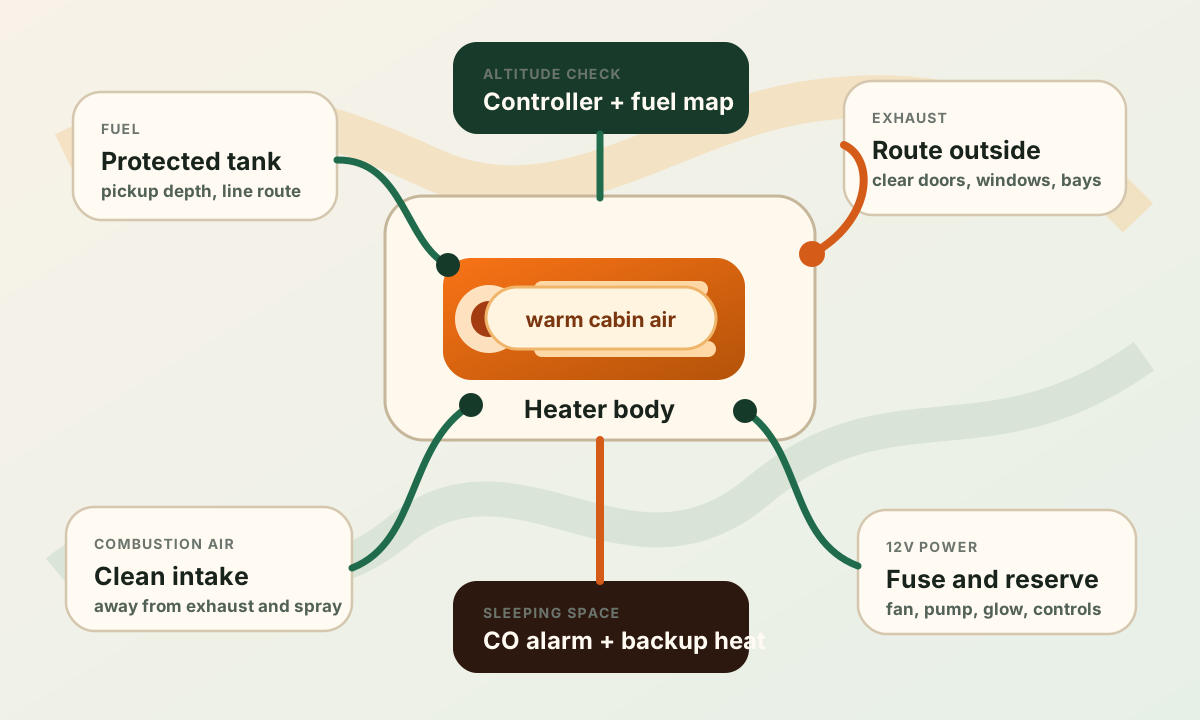
Diesel heaters are combustion appliances. Treat the manufacturer installation manual, local code, exhaust clearance, combustion-air routing, fuel-line protection, fusing, and CO detection as part of the purchase. If you are not comfortable with that work, hire a qualified installer instead of learning on a sleeping space.
Do not compare diesel heaters by kW alone
The budget market has trained people to shop by 5kW or 8kW labels. That can lead you backward.
Most vans, truck campers, small Class C rigs, and compact travel trailers are better served by a well-controlled 2kW-class heater than by a large heater that short-cycles, runs too hot, or spends too much time idling. Diesel heaters need periodic hot operation to stay clean. Oversizing can create soot, smell, cycling, and comfort swings.
That is why Webasto and Espar look modest on paper. The Webasto Air Top 2000 STC is a 0.9-2.0 kW heater. The Espar Airtronic AS3 D2L is a 0.85-2.2 kW heater. Those are not weak numbers for a small insulated RV zone. They are controlled heat ranges built around stable combustion.
An 8kW all-in-one budget heater can still be useful. It may make sense for a cargo trailer, workshop-style build, temporary setup, or very leaky space where the low purchase price matters more than refinement. Inside a sleeping RV, the "more heat for less money" story needs a second look.
Altitude is where the premium heaters earn their keep
High elevation changes combustion because the air is thinner. A heater that runs cleanly near sea level can run rich at altitude, which can increase smoke, soot, failed starts, and maintenance needs.
Eberspacher's current Airtronic S3/M3 product family lists automatic altitude adjustment up to 5,500 m depending on version, and the D2L diesel spec shows the 0.85-2.2 kW range, 0.10-0.27 L/h fuel consumption, 28W max electrical draw, and 310 x 115 x 122 mm body size. That is the cleanest altitude story in this comparison.
Webasto's official Air Top 2000 STC page lists 0.9-2.0 kW, 0.03-0.06 gal/h fuel consumption, 14-29W power consumption, 55 cfm airflow, and a compact 12.25 x 4.78 x 4.85 in body. Heatso's current 12V Webasto kit page lists max operating altitude as 5,000 ft. If you routinely camp in Colorado, Utah high country, the Sierra, or cold desert plateaus, verify the exact controller, altitude mode, and kit configuration before checkout.
VEVOR's Bluetooth all-in-one product page claims automatic altitude compensation up to 18,045 ft. That is useful if the exact model performs as advertised, but I would not treat a budget heater's altitude claim the same way I treat Webasto or Espar documentation, parts access, diagnostics, and installer familiarity.
Fuel, exhaust, and combustion air are safety boundaries
The heater body should not be the first installation decision. The first decision is where the exhaust can leave safely without pointing at an entry door, window, slide seam, awning space, storage bay, tire, or anything that can trap fumes under the rig.
Combustion air also matters. The heater needs clean intake air for the burner, and that path should not be placed where road spray, dust, mud, snow, or exhaust can feed it bad air. Hot-air ducting is separate from combustion air. Do not mix those ideas.
Fuel supply is the next boundary. A diesel motorhome or diesel van may be able to tap the vehicle tank correctly with the proper standpipe and pickup depth. A gasoline RV using a diesel air heater usually needs a separate protected diesel tank, which adds filling, spill, smell, and storage decisions.
The safest install path is boring: short protected fuel run, secure metering pump angle, proper exhaust slope and clearance, protected intake, correct floor plate, correct fuse, clean wiring, and CO alarms where people sleep. If that list sounds fussy, that is the point. Fussy beats casual here.
For desert routes, the heater is only one part of the overnight plan. The desert boondocking checklist is still worth using because cold nights, wind, dust, and long refill distances show up together.
Electrical draw is small, but it still belongs in the battery math
Diesel heat is often a battery win because the heat comes from fuel instead of resistance electric heat. The heater still needs 12V power for startup, glow, fan, controller, and fuel pump.
The Webasto kit page lists 13-30W operating draw. Heatso's Espar kit page lists 6-27W during operation, while the Eberspacher data sheet lists 28W max for the D2L. VEVOR lists 12V/3A operating consumption, which is about 36W when running.
Those numbers are not scary, but they run when the sun is down and the battery is cold. A 25W average draw for 10 hours is 250 Wh before other winter loads. Add fans, fridge cycling, water pump, Starlink, laptop charging, and furnace backup, and your "tiny heater load" becomes part of the real overnight reserve.
If your battery plan is one small lead-acid battery, diesel heat may still leave you short in cold weather. Pair this guide with cold-weather lithium battery planning if your winter routes regularly dip below freezing.
RV diesel heater decision checkpoints
Use these checks before comparing checkout prices. The expensive failure is usually the install or fit, not the heater body.
Heat target
2kW is often enough
Small insulated RV spaces usually need controlled heat more than a high advertised kW number.
Altitude
Verify before buying
High-elevation camping rewards heaters with clear altitude compensation, diagnostics, and parts support.
Exhaust
No shortcuts
Exhaust route, slope, clearance, and termination location are safety decisions, not cosmetic choices.
Fuel plan
Tank type changes the install
Diesel rigs can be simpler. Gas rigs usually need a separate protected diesel tank and fill routine.
Battery draw
Small but overnight
Fan, controller, pump, and startup draw need a place in the winter battery reserve math.
Support path
Worth paying for
Premium heaters cost more, but faults, parts, manuals, and installer familiarity matter in cold weather.
Exact cold-weather specs compared
Compare
RV diesel heater spec comparison
Use one comparison matrix to scan the practical differences. Small screens stack each row; wider screens keep the first column pinned.
| Spec | Espar Airtronic AS3 D2L 12V kit | Webasto Air Top 2000 STC 12V kit | VEVOR 8KW All-in-One 12V Bluetooth |
|---|---|---|---|
| Price checked | $1,479 Heatso kit | $1,149 Heatso kit | $117.90 VEVOR direct |
| Best fit | High-altitude winter RV use where diagnostics and support matter | Premium 2kW-class install with a broad service-network feel | Budget test heater, secondary heat, or simple all-in-one use case |
| Heat output | 0.85-2.2 kW / 2,900-7,500 BTU | 0.9-2.0 kW / 3,100-7,000 BTU | 8 kW claimed |
| Fuel consumption | 0.10-0.27 L/h official D2L range | 0.03-0.06 gal/h / 0.12-0.24 L/h | 0.16-0.62 L/h |
| Electrical draw | 28W max official D2L; Heatso lists 6-27W operating | 14-29W official; Heatso lists 13-30W | 12V/3A listed operating consumption |
| Altitude signal | Automatic altitude adjustment up to 5,500 m depending on version | Heatso kit lists 5,000 ft max operating altitude; verify exact controller for high country | VEVOR claims automatic altitude compensation below 5,500 m / 18,045 ft |
| Dimensions | 310 x 115 x 122 mm / about 12.2 x 4.5 x 4.8 in | 12.25 x 4.78 x 4.85 in | 15.7 x 9.8 x 12.2 in |
| Weight | 2.5 kg / about 5.5 lb heater body | 5.73 lb heater body | 20.6 lb all-in-one unit |
| Fuel tank | Separate vehicle or auxiliary tank install | Separate vehicle or auxiliary tank install | Integrated 5L / 1.3 gal tank |
| Warranty signal | Heatso lists 2-year North American warranty | Heatso lists 2-year kit warranty | VEVOR lists a 12-month warranty policy on product support pages |
| Main watchout | Highest price in the shortlist and still needs a proper combustion install | Altitude details depend on exact kit and controller choice | Low price does not buy the same documentation, service path, or confidence in a sleeping space |
Worked example: desert shoulder season versus high-country winter
A diesel heater that is perfectly reasonable for chilly desert mornings can be the wrong heater for high-country winter use.
For shoulder-season desert camping, the main job may be taking the edge off the cabin before sunrise and avoiding heavy propane furnace cycling. A budget all-in-one heater can be tempting here because the use case is lower consequence, the heater may be treated as secondary heat, and the owner can test the routine without redesigning the RV.
For mountain winter camping, the stakes change. Altitude behavior, combustion-air routing, exhaust safety, diagnostics, parts availability, and installer familiarity matter more than the cheapest heat output claim. If the heater is the difference between a safe night and a dangerous one, the premium support path is not cosmetic.
This is why the Espar and Webasto lanes stay important even though the VEVOR price is almost absurdly low by comparison. You are not only buying heat. You are buying documentation, fault diagnosis, serviceability, and confidence that the system will behave when the weather makes troubleshooting unpleasant.
Before checkout, decide whether the diesel heater is primary sleeping-space heat, secondary comfort heat, or a garage/workshop-style experiment. Those are three different risk profiles, and they should not all point to the same product.
The shortlist
- Latest product check
- Specs, fit notes, and current listing context were reviewed June 6, 2026.
- Evidence label
- Spec-verified: Score is based on current published specs, official documentation, pricing context, compatibility, and RV-use fit analysis.
- Price context
- Pricing and availability can change, so confirm the merchant listing before buying.
Product facts last checked June 6, 2026
Espar Airtronic AS3 D2L Diesel 12V Heater Kit with EasyStart Pro Controller
Editorial fit score
The current Espar D2-family pick here is the Airtronic AS3 D2L 12V kit. Eberspacher's official S3/M3 data sheet lists the D2L at 0.85-2.2 kW, 0.10-0.27 L/h fuel consumption, 28W max electrical consumption, 2.5 kg, and 310 x 115 x 122 mm. Heatso listed the AS3 D2L 12V kit with EasyStart Pro controller at $1,479 when re-verified on June 6, 2026, with a two-year North American warranty signal and automatic altitude adjustment noted on the kit page.
Review verdict
- Short verdict
- The strongest choice for RVers who camp cold, camp high, and want the cleanest blend of altitude behavior, diagnostics, controlled output, and dealer-supported parts.
- Evidence used
- Spec-verified
- Score is based on current published specs, official documentation, pricing context, compatibility, and RV-use fit analysis.
- Why it made the shortlist
- Best overall
- The first option to evaluate if you want the strongest all-around fit for this guide.
- Best if
- High-altitude winter RV use
- Why not this product?
- It is expensive, especially once brackets, ducting choices, fuel-tank work, and professional installation are included.
- Product check date
- Specs, fit notes, and current listing context were last checked June 6, 2026.
Key specs
- Price checked
- $1,479 Heatso kit
- Output
- 0.85-2.2 kW
- Fuel use
- 0.10-0.27 L/h
- Draw
- 28W max official
Score basis
Score is based on current published specs, official documentation, pricing context, compatibility, and RV-use fit analysis. These are editorial fit scores, not customer-review averages. Read the scoring rubric.
- RV-use fit
- 30% weight
- Verified specs and limits
- 25% weight
- Whole-rig friction
- 20% weight
- Downsides and support risk
- 15% weight
- Value for the job
- 10% weight
How directly the product solves the specific off-grid RV job in this guide.
Capacity, dimensions, electrical limits, protection claims, and compatibility constraints we can verify from current sources.
Install effort, storage, wiring, service access, weight, refill workflow, or daily-use hassle.
Known tradeoffs, unclear claims, warranty coverage, support risk, and wrong-buyer failure modes.
Whether the price makes sense after fit, specs, and tradeoffs still hold.
Testing limits
- This is not a hands-on endurance or lab test unless the review explicitly says so.
- Specs, pricing, bundles, and availability can change, so confirm the current listing and manual before buying.
Reasons to buy
- Automatic altitude behavior is the cleanest premium story in this shortlist.
- The low-fire range and stepless control are better suited to sleeping spaces than a blunt oversized heater.
- Diagnostics, controls, parts access, and dealer familiarity are valuable when winter heat is not optional.
- The D2L output range fits many vans, truck campers, Class C rigs, and small-to-mid trailers without chasing oversized heat.
Watch-outs
- It is expensive, especially once brackets, ducting choices, fuel-tank work, and professional installation are included.
- A 2kW-class heater may not carry a large, leaky fifth wheel or poorly insulated toy hauler by itself.
- The install still has real combustion, exhaust, fuel, and wiring consequences; premium hardware does not make a casual install safe.
Whole-bank math
Overnight draw
About 60-280 Wh for 10 hours
That uses the 6-28W operating lane before startup spikes and other winter loads.
Fuel use
About 1-2.7 L for 10 hours
Actual consumption depends on duty cycle, insulation, wind, setpoint, and altitude.
Best pairing
Shunt plus winter reserve
Track overnight draw instead of assuming the heater is too small to matter.
Related parts and setup checks
Check current listing
Espar Airtronic AS3 D2L Diesel 12V Heater Kit
Use the listing after the fit notes make sense for your rig. Pricing and availability can change, so verify the merchant page before buying.
- Latest product check
- Specs, fit notes, and current listing context were reviewed June 6, 2026.
- Evidence label
- Spec-verified: Score is based on current published specs, official documentation, pricing context, compatibility, and RV-use fit analysis.
- Price context
- Pricing and availability can change, so confirm the merchant listing before buying.
Product facts last checked June 6, 2026
Webasto Air Top 2000 STC Diesel 12V Heater Kit
Editorial fit score
Webasto's official Air Top 2000 STC product page lists 3,100-7,000 BTU/h, or 0.9-2.0 kW, with 0.03-0.06 gal/h fuel consumption, 14-29W power consumption, 55 cfm airflow, 12 or 24V versions, a 12.25 x 4.78 x 4.85 in body, and 5.73 lb weight. Heatso listed the 12V diesel kit at $1,149 when captured April 11, 2026 (specs re-verified June 6, 2026; the Heatso kit price renders dynamically, so confirm the live price), and its kit page lists a 5,000 ft max operating altitude and two-year warranty signal.
Review verdict
- Short verdict
- The premium default if you want a proven 2kW heater, compact body, low fuel use, and a familiar service ecosystem, but high-elevation buyers should verify the altitude configuration before buying.
- Evidence used
- Spec-verified
- Score is based on current published specs, official documentation, pricing context, compatibility, and RV-use fit analysis.
- Why it made the shortlist
- Upgrade pick
- The higher-end option to justify only when its extra capability matters in your build.
- Best if
- Premium 2kW service-network default
- Why not this product?
- The Heatso 12V kit page lists a 5,000 ft max operating altitude, so frequent high-country campers need to verify the exact altitude solution.
- Product check date
- Specs, fit notes, and current listing context were last checked June 6, 2026.
Key specs
- Price checked
- $1,149 Heatso kit
- Output
- 0.9-2.0 kW
- Fuel use
- 0.03-0.06 gal/h
- Draw
- 14-29W official
Score basis
Score is based on current published specs, official documentation, pricing context, compatibility, and RV-use fit analysis. These are editorial fit scores, not customer-review averages. Read the scoring rubric.
- RV-use fit
- 30% weight
- Verified specs and limits
- 25% weight
- Whole-rig friction
- 20% weight
- Downsides and support risk
- 15% weight
- Value for the job
- 10% weight
How directly the product solves the specific off-grid RV job in this guide.
Capacity, dimensions, electrical limits, protection claims, and compatibility constraints we can verify from current sources.
Install effort, storage, wiring, service access, weight, refill workflow, or daily-use hassle.
Known tradeoffs, unclear claims, warranty coverage, support risk, and wrong-buyer failure modes.
Whether the price makes sense after fit, specs, and tradeoffs still hold.
Testing limits
- This is not a hands-on endurance or lab test unless the review explicitly says so.
- Specs, pricing, bundles, and availability can change, so confirm the current listing and manual before buying.
Reasons to buy
- The official specs are clear, conservative, and easy to size around.
- Compact dimensions make it easier to fit under seats, in cabinets, or in serviceable compartments.
- Fuel consumption and electrical draw are low enough for realistic overnight off-grid heating.
- Webasto support, manuals, dealers, and installer familiarity are meaningful advantages over anonymous budget heaters.
Watch-outs
- The Heatso 12V kit page lists a 5,000 ft max operating altitude, so frequent high-country campers need to verify the exact altitude solution.
- It costs far more than budget all-in-one heaters before installation labor or accessories.
- The 2kW class is not a whole-rig answer for large, drafty, or poorly insulated RVs in serious winter weather.
Whole-bank math
Overnight draw
About 140-290 Wh for 10 hours
That uses the official 14-29W operating draw before startup behavior and other loads.
Fuel use
About 0.3-0.6 gal for 10 hours
Real fuel use is lower when the heater cycles or modulates down in a well-insulated space.
First fit check
Altitude and controller
Confirm the exact high-altitude setup before routing this into mountain winter plans.
Related parts and setup checks
Desert winter checklist
Cold desert nights can make heat, dust, wind, battery reserve, and water protection all matter at once.
Open Desert winter checklistRV readiness checklist
Use the heater decision alongside detectors, batteries, roof leaks, water lines, and backup heat.
Open RV readiness checklistCheck current listing
Webasto Air Top 2000 STC Diesel 12V Heater Kit
Use the listing after the fit notes make sense for your rig. Pricing and availability can change, so verify the merchant page before buying.
- Latest product check
- Specs, fit notes, and current listing context were reviewed June 6, 2026.
- Evidence label
- Spec-verified: Score is based on current published specs, official documentation, pricing context, compatibility, and RV-use fit analysis.
- Price context
- Pricing and availability can change, so confirm the merchant listing before buying.
Product facts last checked June 6, 2026
VEVOR 8KW All-in-One 12V Diesel Air Heater with Bluetooth App
Editorial fit score
VEVOR's current all-in-one Bluetooth model, item model XMZ-D1, was listed at $117.90 direct when captured April 11, 2026 (specs re-verified June 6, 2026; VEVOR runs frequent promos and recently listed this model around $104-$116, so confirm the live price). The official product page lists 8kW heating power, 12V/3A operating consumption, 0.16-0.62 L/h fuel consumption, a 5L / 1.3 gal tank, Bluetooth plus LCD plus remote control, claimed automatic altitude compensation below 5,500 m / 18,045 ft, 20.6 lb net weight, and a 15.7 x 9.8 x 12.2 in product size.
Review verdict
- Short verdict
- The budget pick only if you understand that cheap heat is not the same as a refined, serviceable, sleep-space heating system.
- Evidence used
- Spec-verified
- Score is based on current published specs, official documentation, pricing context, compatibility, and RV-use fit analysis.
- Why it made the shortlist
- Budget pick
- The lower-cost route to check when the premium option is more than the job needs.
- Best if
- Budget test or secondary heat lane
- Why not this product?
- The 8kW claim should not be compared casually against premium 2kW heaters with better documentation and control behavior.
- Product check date
- Specs, fit notes, and current listing context were last checked June 6, 2026.
Key specs
- Price checked
- $117.90 VEVOR direct
- Output
- 8kW claimed
- Fuel use
- 0.16-0.62 L/h
- Draw
- 12V/3A listed
Score basis
Score is based on current published specs, official documentation, pricing context, compatibility, and RV-use fit analysis. These are editorial fit scores, not customer-review averages. Read the scoring rubric.
- RV-use fit
- 30% weight
- Verified specs and limits
- 25% weight
- Whole-rig friction
- 20% weight
- Downsides and support risk
- 15% weight
- Value for the job
- 10% weight
How directly the product solves the specific off-grid RV job in this guide.
Capacity, dimensions, electrical limits, protection claims, and compatibility constraints we can verify from current sources.
Install effort, storage, wiring, service access, weight, refill workflow, or daily-use hassle.
Known tradeoffs, unclear claims, warranty coverage, support risk, and wrong-buyer failure modes.
Whether the price makes sense after fit, specs, and tradeoffs still hold.
Testing limits
- This is not a hands-on endurance or lab test unless the review explicitly says so.
- Specs, pricing, bundles, and availability can change, so confirm the current listing and manual before buying.
Reasons to buy
- The purchase price is low enough to make diesel heat experimentation accessible.
- The all-in-one tank and case can be simpler for testing than designing a permanent vehicle-tank pickup immediately.
- The listed 5L tank, remote, LCD, and Bluetooth control are convenient for a budget product.
- It can be useful as secondary heat for a cargo area, shop, enclosed trailer, or non-critical setup.
Watch-outs
- The 8kW claim should not be compared casually against premium 2kW heaters with better documentation and control behavior.
- Budget heaters can bring more variability in documentation, component quality, noise, diagnostics, parts support, and long-term serviceability.
- An all-in-one case still needs safe exhaust, combustion air, fuel handling, 12V power, and CO protection if used near a living space.
- For full-time winter living, the low price is not enough reason to make it the only heat source.
Whole-bank math
Overnight draw
About 360 Wh for 10 hours at listed 3A
That is manageable for many lithium banks but still meaningful on cold cloudy mornings.
Fuel use
About 1.6-6.2 L for 10 hours
The 5L tank may not cover a long hard overnight at the upper consumption range.
Best safeguard
Treat as a system, not a gadget
Inspect clamps, exhaust, intake, wiring, fuse, fuel line, and detector placement before use.
Check current listing
VEVOR 8KW All-in-One 12V Diesel Air Heater with Bluetooth App
Use the listing after the fit notes make sense for your rig. Pricing and availability can change, so verify the merchant page before buying.
Which one should you buy?
Buy the Espar Airtronic AS3 D2L if heat is mission-critical, you camp above 5,000 ft often, or you want the best premium support path in this shortlist. It is the expensive answer, but the altitude behavior and diagnostics are the reason it exists.
Buy the Webasto Air Top 2000 STC if you want a proven, compact, premium 2kW diesel heater and your routes do not routinely ask it to solve high-elevation winter camping without the right altitude configuration. It is the easiest premium recommendation for many small RV heating zones once the altitude question is answered.
Buy the VEVOR 8KW all-in-one only when budget is the main constraint and the use case is not your only sleeping-space heat in serious winter. If you choose it, spend the saved money on safe exhaust routing, correct wiring, a CO alarm, and a backup heat plan.
Skip a diesel heater if you cannot install the exhaust and combustion air correctly, cannot protect the fuel tank and lines, or do not want another maintenance system. In that case, improving insulation, adding vent-fan covers, tightening drafts, carrying propane reserve, and choosing warmer sites may be the better first move.
The mistake most RVers make
The common mistake is treating a diesel heater as a cheap way to delete the RV furnace.
Sometimes it can reduce propane use dramatically. Sometimes it becomes the main heat source. But the factory furnace may still protect underbelly plumbing, provide a known backup, or heat zones the diesel air heater does not reach.
The better move is to define the job. Is the diesel heater for sleeping comfort in the main cabin? Is it for a van interior? Is it for a garage bay? Is it a propane-saving shoulder-season tool? Is it a true winter primary heat source?
Once you name the job, the shortlist gets smaller. Premium heaters make more sense when failure is expensive. Budget heaters make more sense when the use case is experimental, secondary, or easy to supervise.
FAQ
Frequently asked
Questions RVers usually ask next.
Is a 2kW diesel heater big enough for an RV?
Often, yes, if the heated zone is a van, truck camper, small trailer, or compact Class C and the rig has reasonable insulation. A large fifth wheel, toy hauler garage, or drafty older trailer may need more heat or multiple zones. Do not size only by floor area; wind, insulation, slides, window area, and desired indoor temperature all matter.
Can I use a diesel heater in a gas RV?
Yes, but the fuel plan gets less convenient because you usually need a separate diesel tank. That tank must be mounted, filled, vented, and protected correctly, and the fuel line still needs a safe route to the heater. If you do not want that routine, propane furnace improvement may be calmer.
Are Chinese diesel heaters safe for RVs?
They can be used safely only when the installation is safe. The risk is not just brand name; it is exhaust routing, combustion air, fuel-line quality, wiring, fusing, mounting, and CO detection. Budget heaters demand more inspection because documentation, support, and component consistency are less predictable.
Do diesel heaters work at high altitude?
Some do, but altitude behavior is model-specific. The Espar Airtronic S3/M3 family has the strongest official altitude signal here, while Webasto kit altitude details depend on the exact configuration and controller, and VEVOR claims altitude compensation on the current all-in-one page. If you camp high often, verify altitude support before buying.
Will a diesel heater drain my RV battery overnight?
Not usually by itself, but it still adds a real overnight load. A 25W average draw for 10 hours is about 250 Wh, and startup can draw more briefly. Add the heater to your battery math with the fridge, fans, devices, router, lights, and cold-weather reserve.
Helpful next reads
- Off-grid RV readiness checklist
- How to size an RV battery bank
- Desert boondocking checklist
- Cold-weather boondocking guide
Freshness note
Last checked June 6, 2026
This topic can change when products, plans, prices, campsite rules, or fit guidance move. These notes show what was reviewed most recently.
This review included
- Verified current official manufacturer specs for the Webasto Air Top 2000 STC, Eberspacher Airtronic AS3 D2L, and VEVOR 8KW all-in-one 12V diesel heater.
- Checked live kit pricing from Heatso for the premium heater kits and from VEVOR for the budget all-in-one heater.
- Reviewed altitude behavior, fuel consumption, electrical draw, exhaust routing, combustion air, fuel tank handling, warranty signals, and CO safety implications before ranking the shortlist.
Recent change log
June 6, 2026
Freshness re-verify against official sources. All three models + specs current: Eberspacher Airtronic AS3 D2L (0.85-2.2 kW), Webasto Air Top 2000 STC (3,100-7,000 BTU/h), VEVOR XMZ-D1 8KW. Espar AS3 D2L kit price re-confirmed at $1,479 on Heatso. Webasto's Heatso kit price renders dynamically and was not re-fetched, so its $1,149 stays a dated April-11 capture. VEVOR's direct price has drifted with its frequent promos (recently around $104-$116 vs the $117.90 April capture), so a live-price note was added. No spec changes were needed.
April 18, 2026
Restored clear affiliate-disclosure language for product-link transparency.
April 17, 2026
Clarified that direct merchant links are not affiliate relationships before program approvals.
April 11, 2026
Published the first RV diesel heater shortlist with exact altitude, install, and serviceability tradeoffs.
Broader editorial corrections are tracked on the Corrections and Updates page.

