Official winter safety checks
Use these references before treating a cold campsite as just another dry-camping stop. Weather, heating, and carbon monoxide risk can change the safety margin quickly.
Pre-arrival checks
Before choosing the site
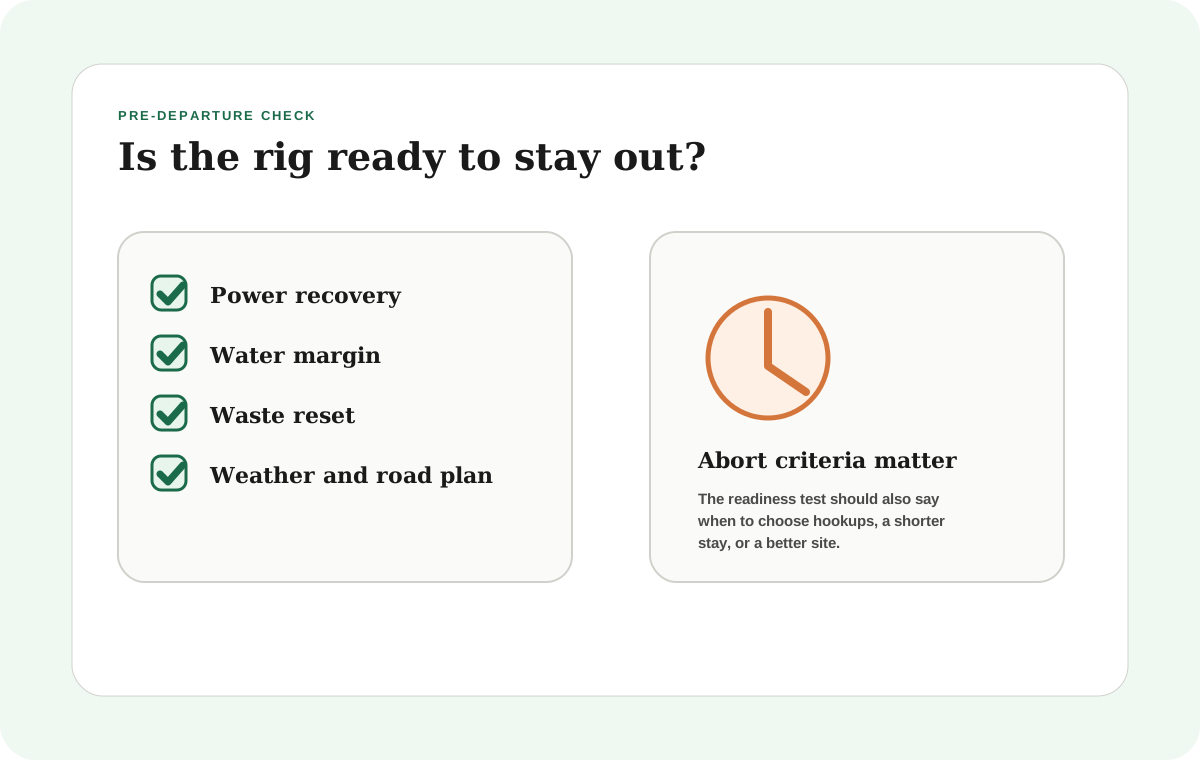
Check low temperature, wind, snow or freezing rain risk, road exit, cell signal, fuel reserve, and whether the rig can recover by morning.
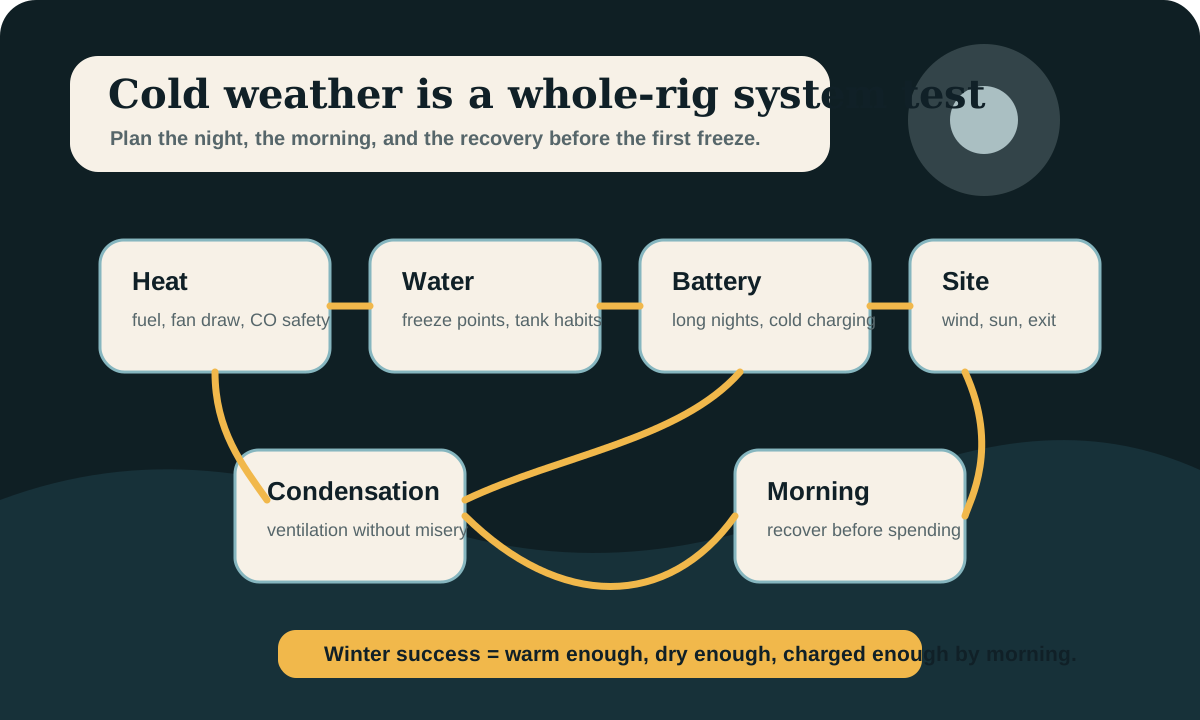
Winter boondocking is a systems test
Cold-weather boondocking compresses the margin in a way mild-season camping does not.
In warm weather, a slightly weak solar day or a sloppy water routine may be annoying. In cold weather, the same looseness can turn into a hard morning:
- the furnace fan or diesel-heater fan ran for hours
- the battery bank is lower than expected
- lithium charging may be limited if the battery compartment is cold
- tanks, hoses, valves, or low plumbing runs are closer to freezing
- condensation has collected on windows and bedding
- wind exposure makes the rig work harder than the forecast number implied
That is why the right winter question is not "Can the RV survive one cold night?"
It is: "Can the whole system still feel calm on the second morning?"
The winter camp planning table
Compare
Cold-weather boondocking planning lanes
Use one comparison matrix to scan the practical differences. Small screens stack each row; wider screens keep the first column pinned.
| Spec | Mild cold snap | Repeated freezing nights | Storm or remote winter stay |
|---|---|---|---|
| Typical pattern | One or two chilly nights with daytime recovery | Multiple nights below freezing with limited daytime thaw | Weather, road, or service risk can change the trip quickly |
| Main priority | Keep reserve and moisture under control | Protect water and battery charging assumptions | Shorten stay, strengthen fallback, and avoid fragile sites |
| Power concern | Furnace fan and longer lights-on time | Long nights plus weaker solar recovery | Heat, communications, and exit readiness all need reserve |
| Water concern | Avoid exposed hoses and lazy overnight habits | Know what can freeze and what stays warm | Be ready to run partially winterized or carry water inside |
| Best next check | Furnace drain and battery reserve | Battery temperature and water protection | Weather window, road exit, fuel, and paid fallback |
Heat is the center of the plan
Cold camps revolve around heat because heat affects comfort, power, water, and safety.
Propane furnaces are familiar, but the fan still uses battery power. Diesel air heaters can be efficient and steady, but they add combustion-air, exhaust, fuel, altitude, and installation questions. Electric space heat is usually a shore-power tool, not a boondocking plan, unless the energy source is very specific and honest.
The heat plan should answer:
- What keeps people warm overnight?
- What keeps critical spaces warm enough?
- What uses battery while heat is running?
- What is the carbon monoxide plan?
- What happens if the heater stops?
Use the furnace battery drain calculator before assuming the furnace fan is a small detail. If you are considering a diesel heater, compare the RV diesel heater guide before shopping by advertised kW alone.
Combustion heat needs a real safety routine
Any combustion heat or generator plan should include working carbon monoxide alarms, ventilation judgment, exhaust awareness, and a no-shortcuts mindset around enclosed spaces. Warm is not the same as safe.
Water strategy changes below freezing
Cold-weather water planning is not only about using fewer gallons. It is about knowing which parts of the system are exposed.
Check:
- fresh tank location
- low-point drains
- exposed valves
- exterior shower fixtures
- dump valves
- water pump area
- hose use
- gray and black tank exposure
A four-season-rated rig may reduce risk, but it does not remove judgment. Wind, road spray, overnight lows, and how long the temperature stays below freezing all matter.
For short cold trips, some RVers keep the fresh system simple, carry drinking water inside, avoid exterior hoses overnight, and dump before the hard freeze window. For longer winter stays, the plan needs to be more deliberate.
If water is usually your limiter, pair this with the water conservation guide and the water calculator. The winter version of "enough water" has to include what remains usable, not just what the tank holds.
Batteries need a cold-morning plan
Winter batteries have two separate questions:
- Can the battery discharge enough to run the rig overnight?
- Can the battery safely accept charge in the morning?
That second question is where lithium trips up a lot of people. Many lithium batteries protect themselves from low-temperature charging. That protection is useful, but it also means your solar or charger may be ready before the battery is warm enough to accept current.
That is why battery location matters. An interior or warmed compartment behaves differently than an exterior box. Heated lithium batteries behave differently than unheated ones. AGM behaves differently from lithium but has its own usable-capacity and weight tradeoffs.
Read the cold-weather lithium battery guide before assuming a sunny winter morning automatically means useful charging.
Condensation is not just a comfort nuisance
Cold RVs collect moisture because people breathe, cook, dry gear, and heat small spaces. Sealing the rig tight can feel warmer for a moment, then make bedding, windows, and corners damp.
The goal is balance:
- enough heat to keep the living space livable
- enough ventilation to move moisture out
- enough airflow around cold surfaces
- enough habit change to reduce interior moisture
Common winter moisture mistakes include drying wet clothing inside without ventilation, cooking high-steam meals during already damp conditions, blocking airflow around bedding, and ignoring window condensation until it becomes normal.
Campsite choice matters more in winter
A good winter site helps the rig.
Look for:
- morning sun if solar recovery matters
- less wind exposure when safe and legal
- a road you can still exit if weather changes
- enough cell signal to monitor weather and call for help
- a paid fallback within a realistic drive
Avoid sites that are beautiful but brittle: shaded all day, exposed to wind, on a muddy or icy exit road, or too far from a reset when the forecast is uncertain.
If you are still building your site-selection process, start with the legal boondocking guide and the off-grid readiness checklist before adding winter complexity.
The morning recovery workflow
The best winter routine is built around the morning.
Before bed:
- note battery state
- reduce unnecessary inverter or idle loads
- decide the minimum overnight temperature plan
- protect water and hoses
- crack the moisture-control routine instead of sealing everything tight
At sunrise:
- check battery state before turning on extra loads
- check battery temperature if lithium charging is involved
- confirm solar, alternator, generator, or shore-power recovery path
- delay optional loads until recovery is real
- reassess weather and exit conditions before committing to another night
That sequence is boring. Good. Winter camping should be boring in the places where risk can compound.
A two-night winter example
Imagine a couple planning two nights with lows around 25 deg F and daytime highs near 45 deg F. The trip is not extreme, but it is cold enough to expose weak habits.
The safer plan starts before arrival:
- arrive with the battery bank full
- fill fresh water only if the water system is protected enough for the forecast
- carry separate drinking water inside
- check propane or diesel fuel before leaving town
- park for morning sun instead of the prettiest shaded view
- name a paid campground or town reset within a realistic drive
Night one is the test. If the furnace or heater runs harder than expected, windows are soaked by morning, and the battery is lower than planned, night two should become more conservative. That could mean fewer inverter loads, simpler cooking, earlier ventilation, a generator recovery window if legal and safe, or moving to the fallback before the second overnight stretch.
The key is not proving the rig can endure the coldest possible night. The key is learning early enough that you still have choices.
Final thought
Cold-weather boondocking works when the rig still has margin after the hard part of the night.
Plan the stay around heat, water, battery temperature, condensation, exposure, and exit options. If those systems still make sense by morning, the trip is winter camping. If they are all strained before breakfast, the trip is teaching you to shorten the plan.
Frequently asked
Questions RVers usually ask next.
What is the biggest cold-weather boondocking mistake?
The biggest mistake is treating heat as the only winter problem. Heat, battery reserve, safe charging, water protection, condensation, wind exposure, and exit conditions all interact overnight.
Can I use my RV water system below freezing?
Sometimes, but only if the tank, pump, lines, valves, and dump hardware are protected for the actual conditions. Many RVers simplify water use or carry drinking water inside during short freezing trips.
Why do lithium batteries need special winter planning?
Lithium batteries can discharge in cold conditions, but many should not be charged when the cells are too cold unless they have the right protection or heating strategy. Battery location and morning temperature matter.
How should I choose a cold-weather boondocking site?
Choose a site that supports the systems: morning sun if you need solar, lower wind exposure, a reliable exit road, weather communication, and a realistic fallback if the forecast worsens.
Freshness note
Last checked April 21, 2026
This topic can change when products, plans, prices, campsite rules, or fit guidance move. These notes show what was reviewed most recently.
This review included
- Checked National Weather Service cold-weather and winter safety guidance for wind chill, exposure, and storm planning.
- Checked Ready.gov and CPSC winter-generator safety guidance for carbon monoxide, heating, and backup-power cautions.
- Expanded the guide with a winter-system visual, source grid, scenario table, morning recovery workflow, and stronger internal handoffs.
Recent change log
April 21, 2026
Expanded the cold-weather boondocking guide with official safety sources, a winter systems map, scenario planning, and concrete morning-recovery guidance.
April 17, 2026
Published cold-weather boondocking guide with verified gear recommendations and propane consumption data.
Broader editorial corrections are tracked on the Corrections and Updates page.