Source checks for solar maintenance
Use exact component manuals first. These official resources help anchor output expectations, controller review, and RV-specific solar vocabulary.
Pre-arrival checks
Before troubleshooting
Compare output against weather, season, shade, battery acceptance, and the controller manual before replacing panels.
RV solar is low maintenance, not no maintenance
One reason people love RV solar is that once it is installed well, it mostly works quietly in the background. That is true. But "mostly automatic" is not the same as maintenance-free.
Dust, shade buildup, loose connections, cable wear, mounting stress, and configuration drift can all reduce performance over time. These issues rarely announce themselves dramatically at first. They usually show up as a system that feels a little worse, a little slower, or a little less trustworthy than it used to.
That is why a simple maintenance routine matters.
Compare current output to what is normal for the season, inspect roof hardware and cable support, review controller behavior, and only then decide whether you have a cleaning issue, wiring issue, or battery-side issue.
If the system is already acting wrong, jump to the RV solar troubleshooting guide instead of treating this as a normal maintenance pass. Maintenance is for preserving a working baseline; troubleshooting is for explaining a changed one.
Start by knowing what normal looks like
Maintenance is much easier if you already understand the system's usual behavior.
You should have a general sense of:
- how the battery typically looks in the morning
- what good-sun recovery feels like
- what the controller usually reports in favorable conditions
- whether inverter-heavy days normally feel easy or tight
Without that baseline, it is hard to tell whether the system is healthy or merely functioning.
Keep a small maintenance log
The easiest way to avoid overreacting to one cloudy afternoon is to keep a light log of normal behavior. It does not need to be elaborate. A few notes before long trips and after unusual travel are enough to make later troubleshooting much less mysterious.
Useful log entries include:
- date and general location
- weather and shade notes
- morning battery state
- best controller output observed in good sun
- whether the battery reached the expected charge stage
- any new roof work, cable movement, or branch contact
- what changed since the last trip
This turns maintenance into trend awareness. If the system used to recover confidently after similar overnight loads and now does not, you have a clue worth following. If output is lower but the season, shade, or weather changed, the log can keep you from replacing healthy parts.
The log is also useful when asking for help. "My system is weak" is hard to diagnose. "In similar sun last month the controller usually showed a stronger recovery window, and now it does not after a roof-rack install" gives an installer or manufacturer support team a much better starting point.
Compare
RV solar maintenance rhythm
Use one comparison matrix to scan the practical differences. Small screens stack each row; wider screens keep the first column pinned.
| Spec | Before long trips | During regular travel | When output changes |
|---|---|---|---|
| Panel surface | Check for debris, film, sap, bird mess, or new shade patterns | Clean only when buildup is meaningful for the conditions | Compare clean-panel output against realistic sun before blaming the panel |
| Roof wiring | Look for loose support, chafe, lifted cable, or stressed entry points | Notice changes after rough roads, wind, or roof work | Inspect connectors and cable paths before assuming controller failure |
| Controller behavior | Confirm charge profile matches the current battery bank | Watch whether normal stages and peak behavior still look familiar | Use the exact manual before changing settings |
| Battery side | Confirm terminals, shunt, and monitor readings still make sense | Track whether the bank recovers like it used to | Separate solar weakness from battery aging or acceptance limits |
| Baseline notes | Record normal harvest in good sun for the season | Compare trend, not one weird afternoon | Escalate when the same conditions produce a worse result repeatedly |
The roof deserves regular visual checks
Your panels live in a rough environment. They see highway grime, tree debris, wind, rain, heat, and movement. That does not mean they need constant fussing, but they do deserve periodic attention.
Look for:
- debris buildup
- obvious dirt or film that affects the glass
- shading that has changed because of roof add-ons
- shifted or stressed mounting hardware
- cable paths that no longer look well-supported
These checks do not need to be elaborate. The goal is simply to catch obvious deterioration before it starts looking normal.
Dirt matters, but context matters too
Panel cleaning advice can sometimes become exaggerated. A thin layer of ordinary dust is not the same as a serious performance problem. On the other hand, pollen, road grime, sap, bird mess, and long stretches without rain can absolutely affect real-world harvest.
The practical approach is:
- clean when the panels are visibly dirty
- clean more often in dusty travel patterns
- do not scrub aggressively or thoughtlessly
- use safe methods that will not damage the panel surface or roof setup
The right maintenance rhythm depends on where and how you travel, not on an arbitrary calendar.
Do not ignore cable support and entry points
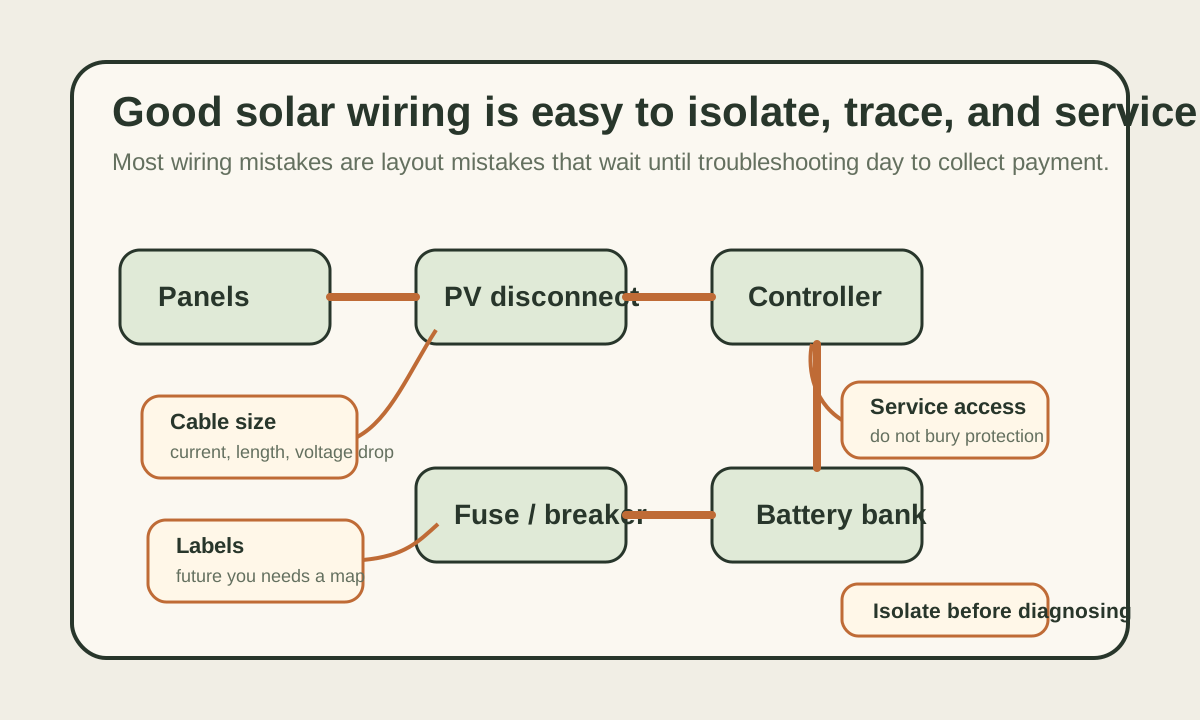
A lot of solar performance problems start not on the panel face but along the path the power takes into the coach.
Inspect:
- roof cable support
- entry glands or pass-throughs
- exposed sections of wiring
- connectors that may have loosened or aged
- any place vibration or movement could create stress
The goal is to find wear before it becomes an intermittent electrical mystery.
A healthy-looking panel can still be part of an unhealthy system
If output drops, do not stop the inspection at the glass. Wiring support, entry points, controller settings, and battery-side behavior often explain more than the panel face does.
The controller is part of maintenance too
Controllers are often checked only when something seems wrong. It is smarter to look at them occasionally even when the system feels fine.
Useful things to review:
- whether the controller settings still match the battery chemistry
- whether the charging stages look familiar and reasonable
- whether the controller appears to be limiting unexpectedly
- whether the system ever behaves differently after updates, battery changes, or reconfiguration
This matters especially if the system has evolved. A controller originally configured for one battery setup may not be ideal for the current one.
Controller behavior is easier to interpret if you understand the role it plays in the whole system. The RV solar charge controller guide and the series-vs-parallel wiring guide are the right companions when settings, voltage, or array layout are part of the maintenance question.
Battery-side maintenance matters even in a solar article
Solar does not exist in isolation. If the battery bank is struggling, the whole system can feel like the solar side is weak even when the real issue is storage or charging acceptance.
That is why solar maintenance should include:
- checking that terminals remain clean and secure
- reviewing whether the battery still performs like expected
- noticing if recovery trends have changed
- making sure the monitor or shunt still provides trustworthy information
If the system feels harder to trust, do not assume the problem started on the roof.
Use the RV battery maintenance guide when the solar side looks healthy but the bank still feels weaker than it used to. A clean array cannot make an aging or poorly monitored battery bank feel predictable.
Seasonal shifts should change your expectations
Many RVers misdiagnose seasonal reality as equipment failure.
If the system produces less in winter or shoulder seasons, that may reflect:
- shorter days
- lower sun angle
- different campsite choices
- weather changes
- temperature effects on overall system behavior
Maintenance should account for this by separating "seasonally normal" from "unexpectedly weak."
Watch for behavioral clues before technical ones
You do not always need a deep diagnostic session to know the system wants attention.
Some common early clues:
- the battery feels lower than usual by evening
- good-sun days do not seem to recover as confidently
- the inverter trips or complains more often under familiar loads
- the controller readings look odd or less consistent
- the rig feels electrically tighter on trips that used to feel easy
These clues matter because they show the system's lived experience changing. That is often the first signal maintenance is due.
A practical maintenance rhythm
Before longer trips
- visual roof check
- confirm clean-enough panels
- inspect obvious cable runs
- confirm controller and battery monitoring are behaving normally
During regular travel
- notice if output or recovery feels weaker
- watch for changed shade patterns or debris accumulation
- pay attention to system confidence, not just numbers
A few times per season
- inspect mounting confidence and cable support more deliberately
- review controller settings and battery-side connections
- compare system behavior to earlier expectations
This keeps maintenance grounded and realistic.
Good maintenance is mostly about trend awareness
A healthy RV solar routine does not require constant tinkering. It requires knowing what normal feels like so changed performance stands out early.
Maintenance should make the system easier to trust
The real goal is not having the cleanest panels on social media. It is preserving confidence in the system.
That means maintenance is successful when:
- you catch issues before the trip is affected
- output stays predictable
- service access remains clean
- the system keeps feeling understandable instead of mysterious
That is what a well-maintained off-grid system should feel like: boring in the best possible way.
Frequently asked
Questions RVers usually ask next.
How often should you clean RV solar panels?
It depends on where and how you travel. Visibly dirty panels, heavy dust, pollen, road grime, or debris are good reasons to clean sooner. The key is responding to real buildup instead of following a rigid schedule that ignores actual conditions.
What should I inspect besides the panels themselves?
Look at roof cable support, entry points, connectors, controller behavior, and battery-side confidence. Solar underperformance is often caused by more than just dirty glass.
How do I know whether lower output is a maintenance issue or just seasonal change?
Compare the system's behavior to the season, weather, and campsite conditions. Lower winter or shoulder-season output can be normal. What matters is whether performance is weaker than what those conditions should reasonably produce.
What is the first sign something may be off with an RV solar system?
Often it is a changed feeling rather than a dramatic failure: weaker recovery, lower battery confidence by evening, or a system that feels tighter under familiar loads than it used to.
Freshness note
Last checked April 17, 2026
This topic can change when products, plans, prices, campsite rules, or fit guidance move. These notes show what was reviewed most recently.
This review included
- Verified panel cleaning recommendations, connection inspection intervals, and maintenance procedures from manufacturer documentation.
Recent change log
April 17, 2026
Published RV solar maintenance guide with verified cleaning and inspection procedures.
Broader editorial corrections are tracked on the Corrections and Updates page.

