Shortlist first
Use this to find the winner first, then compare the alternates only if their tradeoffs fit your rig better.
Shortlist labels are editorial recommendations, not popularity rankings. Fit score still matters, but the label tells you why each pick made this guide.
How fit scores work
Scores are editorial fit scores, not user-review averages. The rubric weighs stated RV-use fit, verified specs and limits, whole-rig friction, visible downsides or support risk, and value for the specific job in this guide. Read the full scoring rubric.
If you need one baseline option before reading the full guide, start with Reliance Aqua-Tainer 7 Gallon for everyday refill jug.
The first option to evaluate if you want the strongest all-around fit for this guide. Check the other cards only if their award label matches your constraint better.
| Product | Why shortlisted | Fit score | Key spec | Best for | Actions |
|---|---|---|---|---|---|
| Reliance Aqua-Tainer 7 Gallon Links to: Reliance Aqua-Tainer 7 Gallon | Best overall The first option to evaluate if you want the strongest all-around fit for this guide. | 4.7 / 5 fit scoreScore rubric | $22.99 | 7 gal | 2 lb empty | 11.5 x 11.25 x 15.75 in | Everyday refill jug | Read Reliance Aqua-Tainer 7 Gallon notesCheck listing at RelianceMerchant link - direct listing. Verify price and specs at Reliance. |
| Reliance Water-Pak 5 Gallon Links to: Reliance Water-Pak 5 Gallon | Also great A strong alternate when its specific tradeoffs fit your rig better than the winner. | 4.6 / 5 fit score | $23.99 | 5 gal | 1.76 lb empty | swivel handle + stackable | Compact carry-and-pour use | Read Reliance Water-Pak 5 Gallon notesCheck listing at RelianceMerchant link - direct listing. Verify price and specs at Reliance. |
| Reliance Desert Patrol 6 Gallon Links to: Reliance Desert Patrol 6 Gallon | Also great A strong alternate when its specific tradeoffs fit your rig better than the winner. | 4.6 / 5 fit score | $21.99 | 6 gal | 1.9 lb empty | 14.8 x 6.6 x 19.15 in | Slim jerry-can style hauling | Read Reliance Desert Patrol 6 Gallon notesCheck listing at RelianceMerchant link - direct listing. Verify price and specs at Reliance. |
These are exact containers, not vague water-jug categories
Portable water containers seem simple until they become part of the real boondocking routine:
- refill in town
- haul back to camp
- lift into the truck bed or storage bay
- pour into the rig without soaking everything around you
At that point, the little details matter more than the capacity sticker:
- handle shape
- spigot design
- empty weight
- overall footprint
- whether the container actually stores well when it is not in use
That is why this guide compares three exact current Reliance containers instead of talking in generic terms about "big jugs" and "heavy-duty cans."
Price note
Prices below were checked against current Reliance product pages on April 21, 2026. If a size variant goes in and out of stock, treat the price as a decision-useful snapshot rather than a forever promise.
Official container checks
Use these official pages for current model details, then check your own storage bay, refill vehicle, and lifting routine before buying more gallons than you want to move.
Pre-arrival checks
Weigh the full container mentally
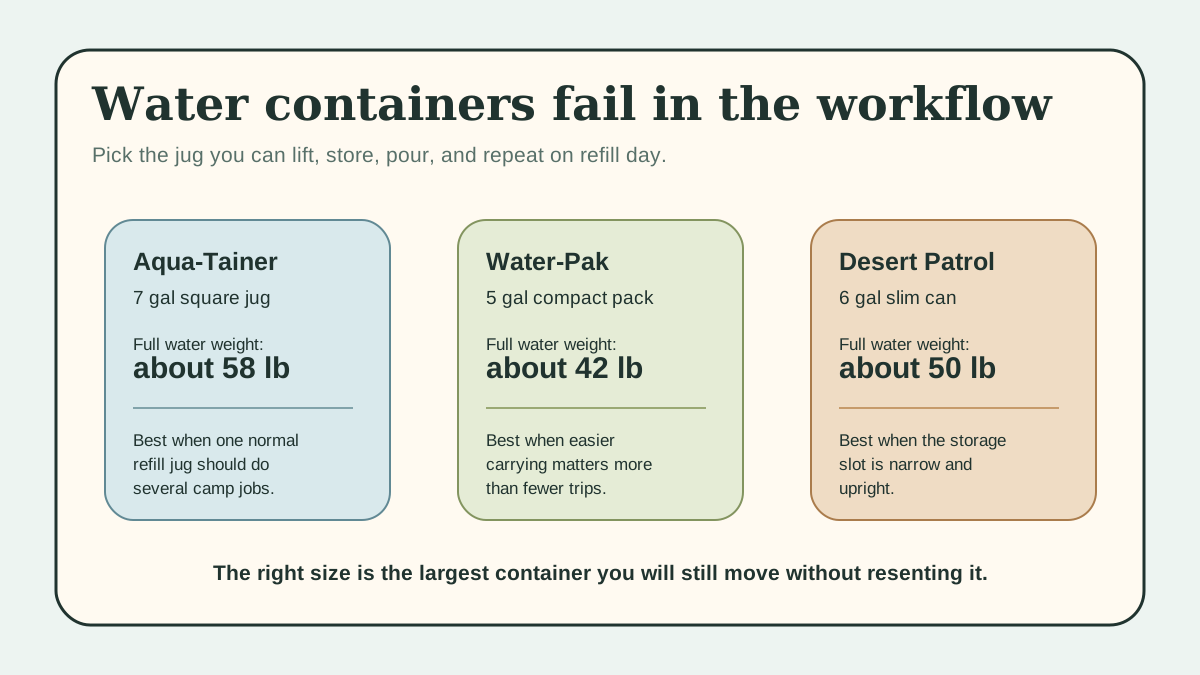
A seven-gallon container carries roughly 58 lb of water before the container itself is included.
Measure the storage slot
A square jug, compact stackable pack, and tall slim can fit very different RV bays and truck-bed gaps.
Plan the pour
The best jug is the one you can lift, tilt, pump, or gravity-feed without spilling into the storage bay.
What matters before you buy any water container
Real hauling weight beats theoretical capacity
Water weighs about 8.3 pounds per gallon. That means the container you buy is only practical if the full container is still realistic to move:
- 5 gallons is already about 41.5 pounds of water before container weight
- 6 gallons is about 49.8 pounds of water
- 7 gallons is about 58.1 pounds of water
That is why the "biggest one you can find" answer is often the wrong one.
The practical test is simple: can you lift the full container from the refill point into the vehicle, from the vehicle to the RV, and into the pouring position without twisting, dropping, or soaking the bay? If the answer is "only when everything is perfect," buy smaller or split the water across two containers.
Two 5-gallon containers can be easier to live with than one awkward larger container because each lift is more controlled. One 7-gallon container can be better when the refill source is close, the vehicle height is reasonable, and the jug can pour from a stable surface. A slim 6-gallon can can be better when the truck-bed slot or pass-through compartment is narrow.
Spigot quality decides whether refill day feels civilized
The container is not just about transport. It is also about how messy or easy the transfer is once you get back to the RV.
A hideaway spigot is convenient when the container sits on a picnic table, tailgate, or camp shelf. A reversible spout is useful when the container has to pour like a field can. A pump accessory can help when the container stays upright and you do not want to lift it to pour.
The transfer path matters too. If you are pouring into the RV fresh-fill port, make sure the container can sit high enough and close enough without putting stress on the spout. If you are using a small transfer pump, make sure the container opening, hose, and power source all fit the routine.
Storage shape matters as much as capacity
A tall narrow can, a squat stackable pack, and a square jug all solve very different storage problems.
Before ordering, measure the place the container will ride while full. Do not measure only the empty storage bay. Account for:
- tie-down points
- whether the jug can tip or slide
- access to the spigot or cap
- whether another bin blocks the handle
- whether the container can be removed without unloading the whole bay
- whether the full jug is riding near food, electrical gear, or bedding
Water containers should be boring in transit. If they roll, wedge against plumbing, rub on sharp edges, or ride above gear you do not want wet, the storage solution is not finished.
Compare
Compare fast
Use one comparison matrix to scan the practical differences. Small screens stack each row; wider screens keep the first column pinned.
| Spec | Reliance Aqua-Tainer 7 Gallon | Reliance Water-Pak 5 Gallon | Reliance Desert Patrol 6 Gallon |
|---|---|---|---|
| Price checked | $22.99 | $23.99 | $21.99 |
| Capacity | 7 gal / 26 L | 5 gal / 20 L | 6 gal / 23 L |
| Empty weight | 2 lb | 1.76 lb | 1.9 lb |
| Dimensions | 11.5 x 11.25 x 15.75 in | 10.5 x 9.5 x 15.5 in | 14.8 x 6.6 x 19.15 in |
| Handle / pour style | Top handle + hideaway spigot | Swivel handle + hideaway spigot | Angled jerry-can handle + reversible 3-piece spout |
| Storage personality | Square everyday jug | Compact stackable pack | Slim upright can |
| Best fit | General everyday refill use | Short carry + easy pour routine | Tighter truck-bed or bay storage |
Which refill workflow fits which container?
Choose the Aqua-Tainer if you want one standard jug that can live at camp, sit on a table, and handle normal refill duty. It is the easiest recommendation when the storage bay accepts a square footprint and the full 7-gallon lift is realistic.
Choose the Water-Pak if the physical handling matters more than maximizing water per trip. It is the better choice for solo travelers, smaller vehicles, and anyone who would rather make one extra refill than wrestle a heavier jug.
Choose the Desert Patrol if storage geometry is the problem. Its slim profile can fit a truck-bed side gap, pass-through edge, or narrow upright slot better than a square jug. It is less universal as a camp-table dispenser, but it can solve storage layouts the other two do not.
If you refill from town, also think about the vehicle. A container that works in an RV bay may be awkward in a car trunk or back seat. If you refill from a campground spigot, the carry distance may matter more than the vehicle fit. If you refill from a water station with a short hose, cap opening and fill angle matter.
Worked example: a four-night desert stay
Say two people use 6 gallons per day with careful habits: drinking, coffee, simple cooking, quick dishwashing, and a light rinse routine. Four nights can easily consume about 24 gallons before pets, hot weather, or showers are included.
One 7-gallon Aqua-Tainer adds useful buffer, but it does not double the trip. Two 5-gallon Water-Paks add about 10 gallons in easier lifts. Two 6-gallon Desert Patrol cans add 12 gallons in a slimmer storage shape. The right answer depends on the limiting chore.
If the campsite is close to town and lifting is the problem, the Water-Pak route may be better. If the campsite is remote and refill trips are expensive, the Aqua-Tainer or Desert Patrol route may be better. If the storage bay is narrow, the Desert Patrol may win even though it is not the biggest container.
Use the water calculator before buying. If the rig uses 15 gallons per day, no small jug will rescue a long stay. If the rig uses 5 gallons per day, even one easy container can meaningfully stretch the trip.
The shortlist
- Latest product check
- Specs, fit notes, and current listing context were reviewed April 21, 2026.
- Evidence label
- Spec-verified: Score is based on current published specs, official documentation, pricing context, compatibility, and RV-use fit analysis.
- Price context
- Pricing and availability can change, so confirm the merchant listing before buying.
Product facts last checked April 21, 2026
Reliance Aqua-Tainer 7 Gallon
Editorial fit score
The Aqua-Tainer stays popular for a reason. Its square footprint is easy to understand, the hideaway spigot is straightforward, and the 7-gallon capacity gives you meaningful carry volume without pushing into awkward specialty-container territory. The tradeoff is simple too: once full, it is heavy enough that not every RVer will love lifting or pouring it.
Review verdict
- Short verdict
- The best all-around RV water jug when you want one simple container that handles refills, backup water, and campsite use without getting weird.
- Evidence used
- Spec-verified
- Score is based on current published specs, official documentation, pricing context, compatibility, and RV-use fit analysis.
- Why it made the shortlist
- Best overall
- The first option to evaluate if you want the strongest all-around fit for this guide.
- Best if
- Everyday refill jug
- Why not this product?
- If the container needs to live in a tight truck-bed gap or a narrow storage compartment, the Desert Patrol shape is easier to live with.
- Watch for
- A full 7-gallon load is heavy for many people to lift and pour cleanly
- Product check date
- Specs, fit notes, and current listing context were last checked April 21, 2026.
Key specs
- Price checked
- $22.99
- Capacity
- 7 gal / 26 L
- Empty weight
- 2 lb
- Dimensions
- 11.5 x 11.25 x 15.75 in
Score basis
Score is based on current published specs, official documentation, pricing context, compatibility, and RV-use fit analysis. These are editorial fit scores, not customer-review averages. Read the scoring rubric.
- RV-use fit
- 30% weight
- Verified specs and limits
- 25% weight
- Whole-rig friction
- 20% weight
- Downsides and support risk
- 15% weight
- Value for the job
- 10% weight
How directly the product solves the specific off-grid RV job in this guide.
Capacity, dimensions, electrical limits, protection claims, and compatibility constraints we can verify from current sources.
Install effort, storage, wiring, service access, weight, refill workflow, or daily-use hassle.
Known tradeoffs, unclear claims, warranty coverage, support risk, and wrong-buyer failure modes.
Whether the price makes sense after fit, specs, and tradeoffs still hold.
Testing limits
- This is not a hands-on endurance or lab test unless the review explicitly says so.
- Specs, pricing, bundles, and availability can change, so confirm the current listing and manual before buying.
Reasons to buy
- Best general-purpose shape for common RV refill use
- Hideaway spigot keeps the container easy to store
- 7-gallon capacity is enough to matter without becoming a specialty solution
Watch-outs
- A full 7-gallon load is heavy for many people to lift and pour cleanly
- Square jug shape is not the slimmest option for tight storage bays
- Best when you can pour from a manageable height rather than overhead
Whole-bank math
Why it wins
Simple, normal, repeatable
This is the least overthought answer for most RVers who just need a container they will actually keep using.
Best buyer
General-purpose boondocker
Especially good if the container will split time between backup drinking water, refill runs, and campsite cleanup jobs.
When to skip it
Frequent narrow-space hauling
If the container needs to live in a tight truck-bed gap or a narrow storage compartment, the Desert Patrol shape is easier to live with.
Related parts and setup checks
Water calculator
Use this before buying to estimate how many days your fresh-water routine is actually covering between refills.
Open Water calculatorWater-saving upgrades guide
Helpful if the real fix is stretching your tank longer instead of hauling more water more often.
Open Water-saving upgrades guideHow long can you boondock?
Use this when the jug is part of a bigger water-autonomy plan rather than a stand-alone convenience purchase.
Open How long can you boondock?Check current listing
Reliance Aqua-Tainer 7 Gallon
Use the listing after the fit notes make sense for your rig. Pricing and availability can change, so verify the merchant page before buying.
- Latest product check
- Specs, fit notes, and current listing context were reviewed April 21, 2026.
- Evidence label
- Spec-verified: Score is based on current published specs, official documentation, pricing context, compatibility, and RV-use fit analysis.
- Price context
- Pricing and availability can change, so confirm the merchant listing before buying.
Product facts last checked April 21, 2026
Reliance Water-Pak 5 Gallon
Editorial fit score
The Water-Pak wins on ergonomics more than headline capacity. The swivel handle, smaller footprint, and stackable shape make it the easiest pick for RVers who want a more compact, easier-to-manage container than a full-size square jug. The tradeoff is exactly what you would expect: less capacity per trip.
Review verdict
- Short verdict
- The easiest recommendation when the real problem is not maximum capacity, but a container you can carry, stack, and pour without dreading refill day.
- Evidence used
- Spec-verified
- Score is based on current published specs, official documentation, pricing context, compatibility, and RV-use fit analysis.
- Why it made the shortlist
- Also great
- A strong alternate when its specific tradeoffs fit your rig better than the winner.
- Best if
- Compact carry-and-pour use
- Why not this product?
- If the goal is hauling more water per run rather than making each run easier, the larger Aqua-Tainer is a better fit.
- Watch for
- Less water per trip than the Aqua-Tainer
- Product check date
- Specs, fit notes, and current listing context were last checked April 21, 2026.
Key specs
- Price checked
- $23.99
- Capacity
- 5 gal / 20 L
- Empty weight
- 1.76 lb
- Dimensions
- 10.5 x 9.5 x 15.5 in
Score basis
Score is based on current published specs, official documentation, pricing context, compatibility, and RV-use fit analysis. These are editorial fit scores, not customer-review averages. Read the scoring rubric.
- RV-use fit
- 30% weight
- Verified specs and limits
- 25% weight
- Whole-rig friction
- 20% weight
- Downsides and support risk
- 15% weight
- Value for the job
- 10% weight
How directly the product solves the specific off-grid RV job in this guide.
Capacity, dimensions, electrical limits, protection claims, and compatibility constraints we can verify from current sources.
Install effort, storage, wiring, service access, weight, refill workflow, or daily-use hassle.
Known tradeoffs, unclear claims, warranty coverage, support risk, and wrong-buyer failure modes.
Whether the price makes sense after fit, specs, and tradeoffs still hold.
Testing limits
- This is not a hands-on endurance or lab test unless the review explicitly says so.
- Specs, pricing, bundles, and availability can change, so confirm the current listing and manual before buying.
Reasons to buy
- Easiest carry-and-pour profile in this group
- Compact footprint makes storage less annoying
- Stackable shape is useful when carrying multiple containers
Watch-outs
- Less water per trip than the Aqua-Tainer
- May not reduce refill frequency enough for longer stays
- Not as slim as a jerry-can style container for narrow slots
Whole-bank math
Why it wins
Convenience first
This is the right answer when refill day needs to be physically easier, not just theoretically more efficient.
Best buyer
RVer who values easy handling
Great for couples or solo travelers who do not want the whole water-haul plan to depend on one heavy jug.
When to skip it
Trying to cut trip count
If the goal is hauling more water per run rather than making each run easier, the larger Aqua-Tainer is a better fit.
Related parts and setup checks
Water calculator
A smaller jug makes more sense when you know the extra refill frequency still fits your actual water use.
Open Water calculatorBoondocking basics
Useful if you are still building a first water routine and want to know how portable jugs fit into the broader camp workflow.
Open Boondocking basicsWater-saving upgrades guide
A 5-gallon jug gets much more useful when the rig is already stretching shower, dish, and cleanup water well.
Open Water-saving upgrades guideCheck current listing
Reliance Water-Pak 5 Gallon
Use the listing after the fit notes make sense for your rig. Pricing and availability can change, so verify the merchant page before buying.
- Latest product check
- Specs, fit notes, and current listing context were reviewed April 21, 2026.
- Evidence label
- Spec-verified: Score is based on current published specs, official documentation, pricing context, compatibility, and RV-use fit analysis.
- Price context
- Pricing and availability can change, so confirm the merchant listing before buying.
Product facts last checked April 21, 2026
Reliance Desert Patrol 6 Gallon
Editorial fit score
The Desert Patrol is the jerry-can-style answer in this group. Its tall, narrow profile fits spaces that a square jug does not, and the angled handle plus reversible spout make it feel more purpose-built for transport than camp-table storage. The tradeoff is that taller narrow containers can be a little more specific in how and where they are best used.
Review verdict
- Short verdict
- The best slim-profile water hauler when the real problem is fitting a serious container into tighter storage spaces or vehicle-side gaps.
- Evidence used
- Spec-verified
- Score is based on current published specs, official documentation, pricing context, compatibility, and RV-use fit analysis.
- Why it made the shortlist
- Also great
- A strong alternate when its specific tradeoffs fit your rig better than the winner.
- Best if
- Slim jerry-can style hauling
- Why not this product?
- If you are not fighting for narrow storage space, the Aqua-Tainer is the more universal and beginner-friendly answer.
- Watch for
- Less natural as an everyday camp-table or utility jug
- Product check date
- Specs, fit notes, and current listing context were last checked April 21, 2026.
Key specs
- Price checked
- $21.99
- Capacity
- 6 gal / 23 L
- Empty weight
- 1.9 lb
- Dimensions
- 14.8 x 6.6 x 19.15 in
Score basis
Score is based on current published specs, official documentation, pricing context, compatibility, and RV-use fit analysis. These are editorial fit scores, not customer-review averages. Read the scoring rubric.
- RV-use fit
- 30% weight
- Verified specs and limits
- 25% weight
- Whole-rig friction
- 20% weight
- Downsides and support risk
- 15% weight
- Value for the job
- 10% weight
How directly the product solves the specific off-grid RV job in this guide.
Capacity, dimensions, electrical limits, protection claims, and compatibility constraints we can verify from current sources.
Install effort, storage, wiring, service access, weight, refill workflow, or daily-use hassle.
Known tradeoffs, unclear claims, warranty coverage, support risk, and wrong-buyer failure modes.
Whether the price makes sense after fit, specs, and tradeoffs still hold.
Testing limits
- This is not a hands-on endurance or lab test unless the review explicitly says so.
- Specs, pricing, bundles, and availability can change, so confirm the current listing and manual before buying.
Reasons to buy
- Slim profile is easier to store in narrow spaces
- Angled handle is better for field-style hauling than many square jugs
- Good capacity without the full bulk of a 7-gallon square container
Watch-outs
- Less natural as an everyday camp-table or utility jug
- Taller shape can feel more specific in how it is best stored and poured
- Less universally familiar than the classic square jug format
Whole-bank math
Why it wins
Shape solves the problem
This is the pick when storage geometry or transport layout matters more than having the most generic container shape.
Best buyer
RVer with tighter storage constraints
Especially good for travelers carrying water in a truck bed, pass-through edge, or other narrow slot where square jugs waste space.
When to skip it
Want the simplest do-everything jug
If you are not fighting for narrow storage space, the Aqua-Tainer is the more universal and beginner-friendly answer.
Related parts and setup checks
Water calculator
Helpful if you are trying to decide whether 6 gallons in a better storage shape beats 7 gallons in a bulkier square footprint.
Open Water calculatorHow long can you boondock?
Use this to see whether the container is solving a short refill gap or a bigger tank-capacity mismatch.
Open How long can you boondock?Water-saving upgrades guide
If refill runs are frequent, the real win may still be reducing demand instead of just changing the container shape.
Open Water-saving upgrades guideCheck current listing
Reliance Desert Patrol 6 Gallon
Use the listing after the fit notes make sense for your rig. Pricing and availability can change, so verify the merchant page before buying.
What most RVers still get wrong
The biggest mistake is buying around the highest gallon number instead of the easiest repeated workflow.
Ask these first:
- where will the jug ride while traveling?
- can I comfortably move it full?
- how will I pour it into the RV?
- will I be happier with one bigger jug or two easier jugs?
Those questions usually matter more than squeezing out one more gallon. If the source itself is the weak point, use the RV water filter guide before you turn a bigger hauling setup into a bigger risk.
Another mistake is using portable containers as a substitute for knowing your onboard system. A jug helps only if the fresh-fill port, gravity fill, pump setup, venting, and storage routine all work. If the RV fresh tank is hard to fill without splashback, or the transfer pump needs 120V power you do not have at the refill point, the container is only half the solution.
Also separate drinking backup from utility water. Some RVers keep one clean drinking-water container isolated from general washing and tank-refill duty. That can be smarter than using every container for every job, especially when fill sources vary.
Common buying mistakes
The first mistake is buying one huge container because the capacity looks efficient. Efficiency disappears if the full container is miserable to lift.
The second mistake is ignoring height. A container can fit the storage bay but still be too tall to stand upright in the vehicle used for refill runs.
The third mistake is forgetting the pour. The jug has to move water into the rig or into smaller bottles without making the campsite slippery.
The fourth mistake is mixing potable and non-potable jobs. If a container ever gets used for gray water, rinse water, or questionable source water, do not casually return it to drinking-water duty.
The fifth mistake is treating water hauling as the only fix. Low-flow fixtures, dish routines, gray-tank awareness, and shower habits often reduce refill pressure more than a larger jug.
How many containers should an RVer carry?
For most RVers, the best answer is one primary refill container plus one smaller backup container. That gives you enough flexibility to top off the rig, carry drinking water separately, or split a heavy lift between two people.
One 7-gallon Aqua-Tainer works well when the refill run is simple and the full lift is realistic. Two 5-gallon Water-Paks work better when the user wants easier handling and stackable storage. A slim Desert Patrol paired with a square jug can work when one container rides in a narrow vehicle slot and the other stays at camp.
Do not carry more portable water than you can store safely. Full containers should be tied down, kept away from sharp edges, and stored where a leak will not ruin electrical gear, bedding, food, or documents. If the only place for extra water is loose in the aisle, the water plan is not finished.
Gravity pour, transfer pump, or smaller bottle?
A container can move water three ways.
Gravity pouring is the simplest when the container can sit above the fill point. It is also the hardest when the jug is heavy, the RV fill is high, or the spout angle is awkward.
A small transfer pump can make larger containers easier to use, especially when the container stays on the ground or in the truck bed. The tradeoff is another part to power, store, clean, and troubleshoot.
Decanting into smaller bottles is slower but useful for drinking water, indoor use, or people who cannot safely lift a full jug. It is not glamorous, but it can turn one heavy refill into several controlled movements.
Cleaning and potable-water discipline
Treat drinking-water containers as food-contact gear. Keep caps clean, avoid setting spouts in dirt, and do not use the same container for questionable source water, gray-water tasks, or utility rinse jobs.
If a container has been stored for a while, inspect it before the next trip. Look for odor, residue, cracks, cap damage, spigot issues, and whether the inside actually dried after the last use. A container that smells wrong or is hard to clean should not be trusted for drinking water just because the outside looks fine.
This is where a dedicated drinking-water container can make sense. Use one container for potable drinking and cooking water, then use a separate utility container for rinsing, cleanup, or tank top-offs from sources you plan to filter or treat.
Water hauling gets easier when the container matches the workflow
The best setup is often two manageable containers instead of one theoretically efficient monster jug. Reducing spill risk and lifting frustration is usually worth more than one more gallon per trip.
Final thought
The best portable water container for RV use is the exact container that fits your storage slot, lifting tolerance, and refill pattern. Water hauling is not hard once. It is hard every time. Buy the model you will keep using without resentment.
Frequently asked
Questions RVers usually ask next.
What size portable water container is best for RVers?
The best size is the largest container you can still move, store, and pour comfortably. For many RVers, a manageable 5- to 7-gallon container is more useful than a larger jug that is miserable to lift once full.
Is the Aqua-Tainer or Water-Pak better for RV use?
The Aqua-Tainer is the better general-purpose choice when you want more water per trip. The Water-Pak is the better choice when easier handling, a swivel handle, and a more compact footprint matter more than maximum capacity.
Why would an RVer choose the Desert Patrol shape?
The Desert Patrol makes sense when a slimmer jerry-can-style shape fits the storage bay, truck bed, or transport layout better than a square jug.
What matters most in a portable RV water container?
Real lifting weight, handle and spigot behavior, storage shape, and how the full container fits your actual refill routine matter more than raw capacity alone.
Freshness note
Last checked April 21, 2026
This topic can change when products, plans, prices, campsite rules, or fit guidance move. These notes show what was reviewed most recently.
This review included
- Rechecked current Reliance product pages for Aqua-Tainer 7G, Water-Pak 5G, and Desert Patrol 6G capacity, dimensions, weight, handle, and spigot design.
- Reviewed full-container carrying weight, storage shape, refill vehicle fit, and pouring workflow so the hauling-fit advice matches real RV use.
- Expanded the shortlist with a custom fit visual, official resources, worked refill examples, and water-system handoffs.
Recent change log
April 21, 2026
Expanded the water-container buyer guide with official Reliance sources, a custom fit visual, full-container weight math, refill workflows, and storage/pouring decision rules.
April 10, 2026
Refreshed exact Reliance model comparison, specs, and hauling-fit guidance.
Broader editorial corrections are tracked on the Corrections and Updates page.
