Source checks used for this guide
Use the manual for the exact components you install. These official references anchor the general wiring, protection, and controller-layout guidance here.
Pre-arrival checks
Before final wiring
Confirm wire size, fuse size, disconnect locations, controller limits, battery manual requirements, and whether the layout can be serviced later.
Wiring mistakes are usually design mistakes in disguise
When RVers think about solar wiring mistakes, they often picture a dramatic polarity error or a melted connector. Those can happen, but the more common problems are quieter.
They look like:
- weak charging that never quite matches the solar math
- confusing troubleshooting because nothing is labeled
- fuses hidden where nobody wants to reach them
- voltage drop from long or undersized runs
- cable routes that rub, flex, or disappear behind furniture
- controller placement that made install day easy and service day miserable
The system may still work. That is what makes these mistakes so persistent.
A wiring plan should be judged by three standards:
- does it charge correctly?
- can it be isolated safely?
- can a tired owner understand it six months later?
If the answer to the last two is no, the install is not really finished.
The quick mistake map
Compare
Common RV solar wiring mistakes
Use one comparison matrix to scan the practical differences. Small screens stack each row; wider screens keep the first column pinned.
| Spec | Mistake | What it causes | Better check |
|---|---|---|---|
| Undersized cable | Wire chosen by habit instead of current and run length | Voltage drop, heat, weak charging, nuisance behavior | Use current, one-way length, voltage, and acceptable voltage drop |
| Poor fuse placement | Protection added wherever it fit | Unprotected positive runs or protection nobody can identify | Place overcurrent protection close to the source it protects |
| Bad service access | Controller, fuse, or disconnect buried for a clean look | Troubleshooting requires unloading cabinets or removing panels | Make isolation and inspection reachable without dismantling the rig |
| No labels | Runs looked obvious on install day | Future diagnosis becomes guesswork | Label panel input, controller output, battery path, fuses, and disconnects |
| No growth plan | Tiny first phase blocks the next upgrade | Expansion requires redoing wire, controller, or routing | Plan the finished roof and battery lane before drilling |
Mistake 1: choosing cable size too casually
Wire size is not an opinion. It is a result of current, distance, system voltage, insulation rating, installation environment, and acceptable voltage drop.
The same current hurts more on a low-voltage RV system than many beginners expect. A few feet of extra run can matter. A shortcut through the wrong interior path can turn a neat idea into a charging penalty.
Bad cable sizing can show up as:
- solar harvest lower than expected
- controller output that looks weak
- warm cable or terminals
- inverter complaints under heavier loads
- batteries that recover slowly even in decent sun
Use a wire-size calculator as a planning check, then verify the result against the component manuals and accepted DC wiring practice. The calculator is a starting point, not permission to ignore the manual.
Mistake 2: placing protection without a clear source
Fuses and breakers should protect conductors. That means the location matters.
The common vague version is:
"There is a fuse in the system somewhere."
The better version is:
"This fuse protects this positive run from this source, and it is close enough to that source to matter."
In a solar charging path, think through:
- array-side isolation
- controller battery-side protection
- battery positive protection
- inverter positive protection if the system has one
- what each disconnect actually disconnects
If you cannot explain what a fuse protects, the protection strategy is not finished.
Do not let a fuse become decoration
A fuse that is present but poorly located can give false confidence. Protection should be placed intentionally, labeled clearly, and sized for the conductor and component requirements.
Mistake 3: making troubleshooting physically difficult
Some RV solar installs look clean because all the hard parts are hidden. That can be fine until the first intermittent fault.
Poor access often means:
- the controller is mounted where its status lights are hard to see
- the battery fuse requires unloading a storage bay
- the roof entry is inaccessible from inside
- wire paths vanish behind permanent trim
- a disconnect is reachable only with tools
Serviceability is not cosmetic. It is part of the electrical design.
Before final mounting, ask:
- Can I isolate the panels quickly?
- Can I isolate controller output?
- Can I inspect the battery-side protection?
- Can I check voltage at each major point?
- Can I tighten or inspect terminals later?
If the answer is no, fix the layout before the rig is packed.
Mistake 4: letting roof-entry convenience drive the whole system
The best roof penetration is not always the easiest hole.
A roof entry point should support the whole route:
- panel layout
- cable protection on the roof
- interior cable path
- charge controller location
- battery-side distance
- future service access
If the easy roof entry creates a long controller-to-battery run, hides cable behind furniture, or forces awkward protection placement, it may cost more than it saves.
Use the RV solar installation guide and the roof layout planner before committing to holes, gland placement, or controller location.
Mistake 5: confusing neatness with vanity
Clean wiring is not just for photos.
It helps because:
- cable paths are easier to trace
- abrasion and strain are easier to spot
- labels stay readable
- future upgrades are less intimidating
- a helper or technician can understand the system faster
The goal is not show-car perfection. It is a layout that makes sense after vibration, storage changes, and normal RV life.
Good labels should answer:
- where does this wire come from?
- where does it go?
- what fuse or breaker belongs to this path?
- what should be disconnected before working here?
Labels are cheap. Guesswork is expensive.
Mistake 6: ignoring controller limits
Panel wiring affects controller risk.
Series wiring can reduce current and voltage drop on the PV side, but it raises voltage. Cold panels can produce higher open-circuit voltage than the warm-weather number many people remember. That matters because exceeding a charge controller's PV input limit can damage equipment.
Parallel wiring keeps voltage lower but raises current, which changes cable and protection requirements.
That is why the series-versus-parallel decision belongs before wire and controller purchases, not after.
Use the series vs parallel solar guide and the solar string-sizing calculator before deciding that a roof layout is electrically safe.
Mistake 7: building for the first phase only
Many RV solar systems grow.
The first phase might be:
- two panels
- one small MPPT
- one lithium battery
- no inverter upgrade yet
That is fine. The mistake is building phase one in a way that makes phase two ugly.
Think through likely upgrades:
- more roof panels
- a larger controller
- a battery monitor
- a bigger battery bank
- an inverter or inverter/charger
- DC-to-DC charging
You do not need to overspend on every future possibility. You do need to avoid obvious traps, like a controller mounted where no larger cable can reach it or a wire route that cannot be accessed without tearing out cabinetry.
Mistake 8: judging only by "it works"
A system can work and still be poorly designed.
It may:
- charge slowly because voltage drop is high
- be hard to diagnose because labels are missing
- be less safe because protection is unclear
- block future upgrades because routes are too tight
- make every maintenance question feel like detective work
"It works" is the first standard. "I can trust and service it" is the better one.
If the system is already weak or intermittent, use the RV solar not working troubleshooting guide before tearing into the wrong section.
When to stop and get help
DIY solar can be reasonable. So can calling in help.
Get qualified help if:
- you are unsure how to size overcurrent protection
- wire runs are near high-current inverter loads
- the battery manual conflicts with your plan
- the roof entry path is unclear
- the system will interact with shore power, generator charging, or an inverter/charger
- you cannot confidently isolate the circuit you are touching
The cost of help is easier to accept before the mistake is buried behind finished trim.
Final thought
RV solar wiring should respect the future owner of the system, even if that owner is you six months from now.
Build it so the major paths are easy to understand, protection makes sense, labels reduce confusion, and service access exists when the day is hot, the batteries are low, and the problem is not obvious.
That is the difference between solar that merely turns on and solar you can live with.
Frequently asked
Questions RVers usually ask next.
What is the most common RV solar wiring mistake?
The most common mistake is treating wire size, route length, fuse placement, and service access as install details instead of design decisions. The system may work at first but become weak, confusing, or hard to maintain later.
Why does voltage drop matter in RV solar wiring?
Voltage drop reduces the useful voltage that reaches the controller, battery, or load. In low-voltage RV systems, current and distance can make voltage drop meaningful enough to hurt charging performance or create troubleshooting confusion.
Do I need a disconnect between solar panels and the controller?
Many RV systems benefit from a clear way to isolate the array before service or diagnosis. The exact method should match the controller manual, system voltage, current, and component ratings.
Is neat solar wiring actually safer?
Neat wiring is not automatically safe, but clean routing, strain relief, labels, and reachable protection make problems easier to spot and service. In RV solar, clarity is a functional safety and maintenance advantage.
Freshness note
Last checked April 21, 2026
This topic can change when products, plans, prices, campsite rules, or fit guidance move. These notes show what was reviewed most recently.
This review included
- Checked Victron Wiring Unlimited for voltage drop, cabling, fusing, and DC wiring layout principles.
- Checked Victron SmartSolar MPPT documentation for controller-side PV input and battery-side installation context.
- Expanded the guide with a serviceability map, comparison table, practical mistake checks, and when-to-stop guidance.
Recent change log
April 21, 2026
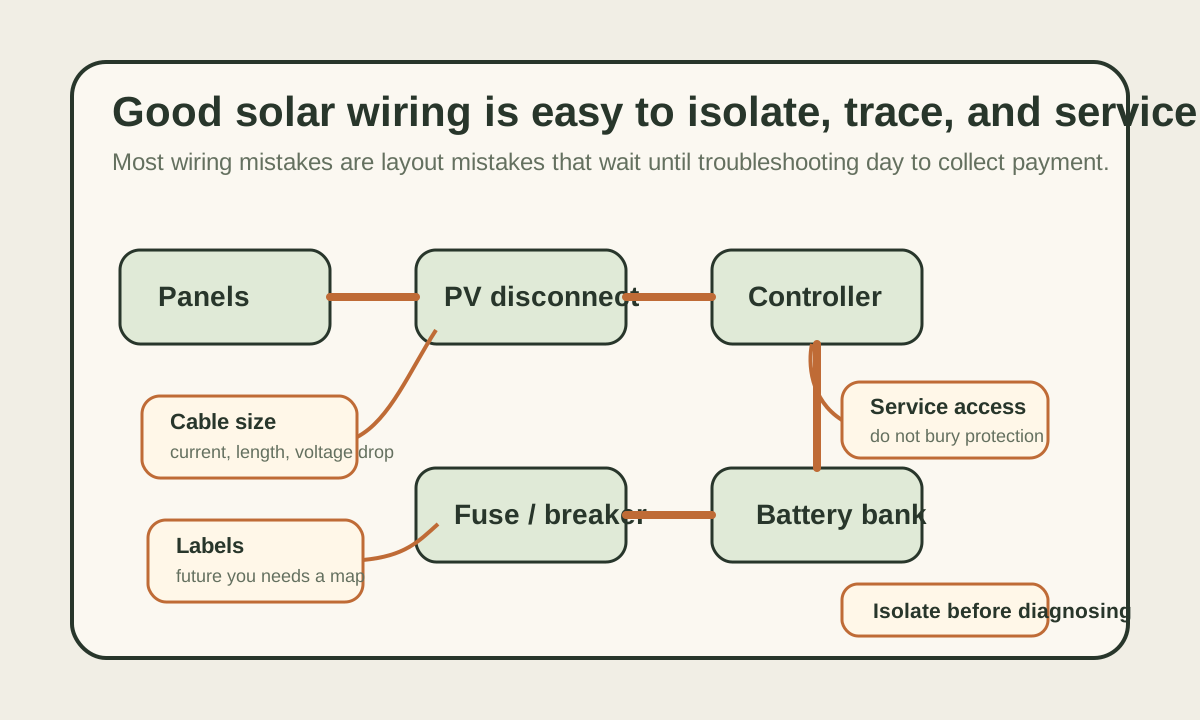
Expanded the wiring mistakes guide with official source checks, a wiring-service visual, comparison table, and fuller troubleshooting prevention guidance.
April 17, 2026
Published RV solar wiring mistakes guide with verified wiring-layout and protection guidance.
Broader editorial corrections are tracked on the Corrections and Updates page.

