Mount choice should follow the bigger Starlink for RV decision, not replace it. If you are still deciding whether satellite belongs beside cellular, compare Starlink vs. hotspot for RVers and use the internet backup planner.
Shortlist first
Use this to find the winner first, then compare the alternates only if their tradeoffs fit your rig better.
Shortlist labels are editorial recommendations, not popularity rankings. Fit score still matters, but the label tells you why each pick made this guide.
How fit scores work
Scores are editorial fit scores, not user-review averages. The rubric weighs stated RV-use fit, verified specs and limits, whole-rig friction, visible downsides or support risk, and value for the specific job in this guide. Read the full scoring rubric.
If you need one baseline option before reading the full guide, start with Starlink Mini Roof Rack Mount for roof-rack travel rigs.
The first option to evaluate if you want the strongest all-around fit for this guide. Check the other cards only if their award label matches your constraint better.
| Product | Why shortlisted | Fit score | Key spec | Best for | Actions |
|---|---|---|---|---|---|
| Starlink Mini Roof Rack Mount Links to: Starlink Mini Roof Rack Mount | Best overall The first option to evaluate if you want the strongest all-around fit for this guide. | 4.7 / 5 fit scoreScore rubric | $55.00 | OEM rack mount | fits 12-48 mm bars up to 88 mm wide | Roof-rack travel rigs | Read Starlink Mini Roof Rack Mount notesCheck listing at MobileMustHaveMerchant link - direct listing. Verify price and specs at MobileMustHave. |
| Starlink Mini Mobility Mount Links to: Starlink Mini Mobility Mount | Upgrade pick The higher-end option to justify only when its extra capability matters in your build. | 4.6 / 5 fit score | $50.00 | 1.32 lb | 9° mount angle | waterproof seal | Permanent low-profile install | Read Starlink Mini Mobility Mount notesCheck listing at WinegardMerchant link - direct listing. Verify price and specs at Winegard. |
| Star-Mount MINI Explorer Mount Links to: Star-Mount MINI Explorer Mount | Also great A strong alternate when its specific tradeoffs fit your rig better than the winner. | 4.6 / 5 fit score | $149.00 | laser-cut aluminum | surface, magnet, or suction options | Flexible RV hard mount | Read Star-Mount MINI Explorer Mount notesCheck listing at Star-MountMerchant link - direct listing. Verify price and specs at Star-Mount. |
Official and manufacturer mount checks
Starlink accessory details and third-party mount availability can change. Verify the current guide, surface fit, and installation instructions before drilling, clamping, or driving with a mounted dish.
Pre-arrival checks
Prove the sky view first
Temporarily place the dish where the mount would live before committing to holes, adhesives, or permanent cable routing.
Choose removal speed on purpose
Frequent movers need a different mount than a rig that parks in open desert for weeks.
Route cable like it will be serviced
Avoid sharp edges, pinch points, trip paths, roof leaks, and cable runs that require dismantling the install to troubleshoot.
These are exact mounts, not generic mounting ideas
Starlink conversations often stay too abstract:
- roof mount
- ladder mount
- pole mount
- temporary mount
But RVers do not buy abstract mounting categories. They buy exact mounts with real hardware, fit ranges, and install tradeoffs.
That is what changes the decision:
- will it fit the rack or surface you already have?
- can you remove the dish quickly on travel days?
- does it tolerate real weather and cable routing?
- does it lock you into roof placement when the campsite is partially blocked?
Price note
Prices below were checked on April 21, 2026. For Starlink accessories, the cleanest public fit details often live in official install guides while the current public pricing can vary by reseller, so treat the price as a current comparison point instead of a forever number.
The mount should be the last decision, not the first one. Start with the connection job:
- Is Starlink the primary internet source or backup?
- Do you work from open desert, wooded campgrounds, state parks, or mixed routes?
- Does the dish need to move away from the RV for sky view?
- Can you safely reach the mount location on travel days?
- Is the cable path temporary, semi-permanent, or fully routed through the coach?
If those answers are fuzzy, use the dish on its kickstand or a temporary setup for a few trips before drilling. A permanent mount is wonderful after the location is proven. It is frustrating when it locks the dish into the wrong sky window.
What matters before you buy any RV Starlink mount
Removal speed matters more than it seems
If the dish needs to come down often, a mount that is slightly less elegant but faster to detach can be a better real-world answer.
Removal speed affects more than theft prevention. It affects how often you reposition the dish for trees, whether you take it down before rough roads, and how annoying travel-day shutdown becomes. If the mount requires a ladder, tools, and a careful roof walk every time, the dish may stay in a bad place because moving it is too much work.
For frequent movers, a mount should either travel securely in place according to its instructions or come down quickly enough that removal is not a chore. For long-stay campers, a more permanent mount can make sense if the campsite pattern is predictable and the roof position is proven.
Permanent-looking is not always campsite-friendly
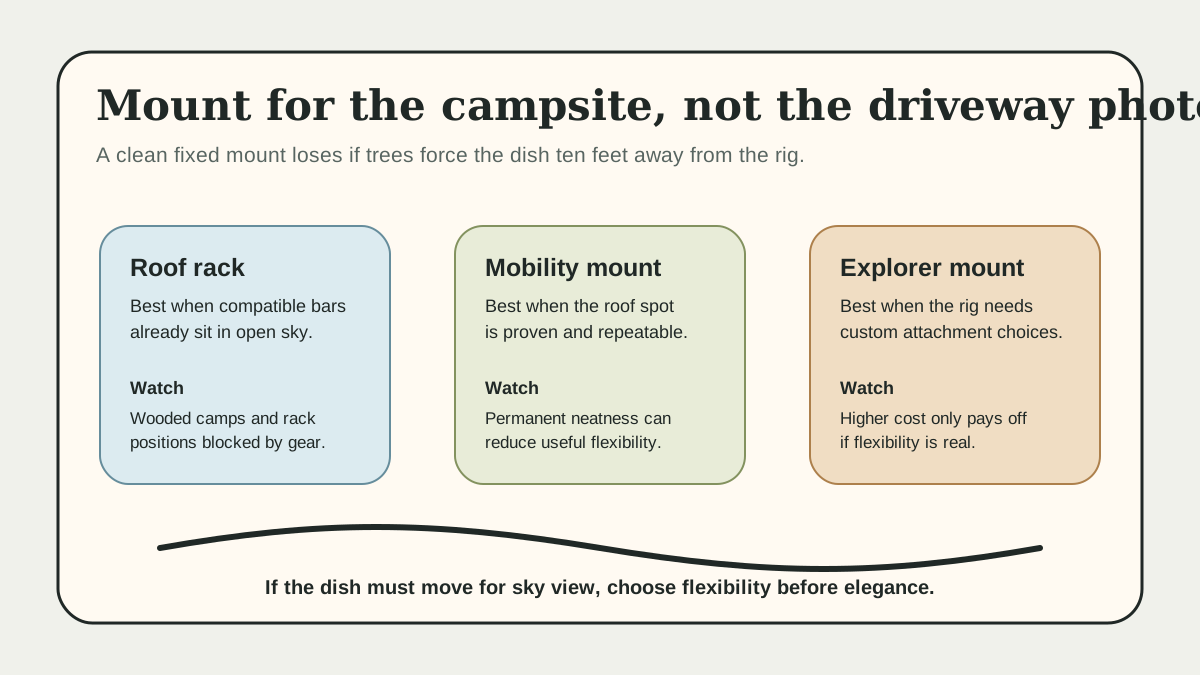
The cleaner the mount, the more likely it is that the dish stays in one place. That is great in open desert sites and less great in campgrounds with patchy sky exposure.
For portable use cases, the Starlink Mini for RVers guide is the natural companion. The Mini's value depends heavily on whether you can place it where the sky view works without making setup miserable.
This is the Starlink mount trap: a beautiful roof install can be the wrong internet setup in trees. If the route includes national forest campgrounds, state parks, wooded private campgrounds, or canyon sites, the best mount may be the one that lets the Mini move ten or twenty feet away from the rig.
Open-sky travelers can optimize for clean installation. Mixed-route remote workers should optimize for adaptability first, then cleanliness.
Cable routing and surface choice are part of the purchase
Wood, fiberglass, metal, and rack bars are different problems. The mount should match the surface instead of forcing the surface to match the mount.
Cable routing deserves the same respect as the mount. A sloppy cable route can create leaks, wind noise, pinch damage, tripping hazards, or a setup that is too annoying to deploy. A clean route should answer four questions:
- Where does the cable enter the rig or power source?
- What happens when the dish is removed?
- Can the cable be replaced without destroying the install?
- Does the route stay clear of roof edges, doors, ladders, and hot surfaces?
If the route is temporary, keep it simple and visible. If it is permanent, plan strain relief, drip loops, sealant, service access, and how the cable will be inspected later.
Compare
Compare fast
Use one comparison matrix to scan the practical differences. Small screens stack each row; wider screens keep the first column pinned.
| Spec | Starlink Mini Roof Rack Mount | Starlink Mini Mobility Mount | Star-Mount MINI Explorer Mount |
|---|---|---|---|
| Price checked | $55.00 | $50.00 | $149.00 |
| Mount style | OEM roof-rack bracket | Permanent low-profile surface mount | RV-focused hard mount with multiple attachment options |
| Published fit detail | Fits bars 12-48 mm thick, max 88 mm wide | Designed for wood, fiberglass, metal, and plastic | Direct surface, magnets, or mini suction cups |
| Weight | Not prominently listed on retailer page | 1.32 lb | Retail page does not clearly publish a clean installed weight |
| Removal behavior | Quick-release style, easy to remove from rack | Semi-permanent once installed | Flexible depending on chosen attachment method |
| Best fit | Frequent movers with open-sky roof-rack placement | Semi-permanent clean install | Flexible RV-focused hard mounting |
Which mount fits which campsite pattern?
Choose the roof rack mount if your roof rack already lives in a clean sky view and you move often. The fast removal story is the reason this option makes sense. It is not the best answer if the rack is buried behind solar panels, bikes, storage boxes, or roof hardware.
Choose the mobility mount if the roof location is proven and you want the Mini to feel integrated with the coach. This is strongest for open-sky routes where the dish can stay in one place and the owner wants a clean surface mount.
Choose the Explorer-style mount if the official accessory path is too rigid for your rig. It makes sense when surface, magnet, or suction options solve a specific installation problem. It is harder to justify if a simple rack mount already works.
Worked example: open desert versus state park trees
A couple who mostly camps in open desert can mount Starlink Mini to a roof rack and be happy. The sky is clear, the dish can stay high, and the quick-release behavior keeps travel days simple. For that route, a clean roof-rack setup may beat a portable routine.
The same mount can disappoint a remote worker who spends most trips in wooded state parks. The rack may be easy to use, but the sky window may be blocked by trees. That worker may need a more flexible setup: roof mount for open sites, kickstand or flexible mount for obstructed sites, and cellular backup for places where satellite is not worth fighting.
This is why the mount should follow the route. Satellite internet is only useful when the dish has sky. The mount's job is to make the right sky position repeatable.
Installation checks before committing
Before installing any mount, test the location for a full work block if possible. A quick speed test can miss obstructions that show up as dropouts during calls. Leave the dish in the intended spot long enough to see whether trees, nearby rigs, wind, or roof hardware cause practical trouble.
Then check the mechanical side:
- Does the mount match the bar, surface, or attachment method?
- Can the roof or rack structure handle the forces it will see?
- Is the mount compatible with the dish orientation required by the guide?
- Can you remove or service it without unsafe roof work?
- Does the cable route stay protected during travel?
If any of those answers are uncomfortable, pause. A Starlink mount is not just an internet accessory. It becomes part of the roof, rack, travel-day checklist, and remote-work reliability plan.
Three setup patterns that actually work
The first pattern is roof rack primary, ground backup. The dish rides or sets up on the roof rack in open-sky sites, but you keep the original stand or a small portable option for wooded camps. This is often the best mixed-route answer because the roof rack handles easy sites and the backup placement handles obstruction.
The second pattern is permanent roof position plus cellular backup. This works for travelers who mostly camp in open sky and want the dish to feel integrated. The cellular backup matters because the mount cannot solve every obstruction, campground rule, storm, or satellite availability issue.
The third pattern is fully portable by default. This is best for state parks, forest campgrounds, and routes where the rig often sits in shade. It is less elegant, but it lets the dish chase sky view. If calls or deadlines matter, flexibility usually beats a pretty roofline.
Travel-day checklist
Before moving, decide whether the dish travels installed, comes down, or moves inside. Do not let that decision happen casually after the first rough road.
Check:
- mount fasteners or clamps
- cable slack and strain relief
- whether the dish can catch branches or road wind
- roof-rack interference with other cargo
- whether the cable can flap against paint, solar panels, or sealant
- where the dish lives if removed for travel
If removal takes too long, you will avoid doing it. If leaving it mounted feels uncertain, you will worry about it while driving. The right mount should make the travel-day answer obvious.
When the best mount is no mount
Some RVers should delay the mount purchase. If you are still learning whether Starlink is primary internet, backup internet, or only for certain regions, keep the setup portable for a few trips. The original stand, a temporary table, or a simple ground setup can teach you where the dish wants to live.
After three or four trips, patterns appear. Maybe every good location is on the roof. Maybe the dish keeps moving away from trees. Maybe cellular handles most work and Starlink only comes out for special sites. That experience makes the mount choice much harder to get wrong.
The shortlist
- Latest product check
- Specs, fit notes, and current listing context were reviewed April 21, 2026.
- Evidence label
- Spec-verified: Score is based on current published specs, official documentation, pricing context, compatibility, and RV-use fit analysis.
- Price context
- Pricing and availability can change, so confirm the merchant listing before buying.
Product facts last checked April 21, 2026
Starlink Mini Roof Rack Mount
Editorial fit score
This is the easiest 'keep it simple' Starlink Mini mount for travelers who already have a compatible roof-rack setup. The published fit range covers bars 12 mm to 48 mm thick and up to 88 mm wide, and the quick-release style makes it easier to remove the dish when you are not driving or when campsite conditions change.
Review verdict
- Short verdict
- The cleanest recommendation when the rig already has usable roof-rack bars and you want an OEM-style travel mount that detaches quickly.
- Evidence used
- Spec-verified
- Score is based on current published specs, official documentation, pricing context, compatibility, and RV-use fit analysis.
- Why it made the shortlist
- Best overall
- The first option to evaluate if you want the strongest all-around fit for this guide.
- Best if
- Roof-rack travel rigs
- Why not this product?
- If you regularly need the dish away from the roof because of obstructions, a more flexible mounting strategy is better.
- Watch for
- Only works cleanly if the rack location also has a reliable sky view
- Product check date
- Specs, fit notes, and current listing context were last checked April 21, 2026.
Key specs
- Price checked
- $55.00
- Bar thickness fit
- 12-48 mm / 0.47-1.9 in
- Maximum bar width
- 88 mm / 3.5 in
- Mount style
- OEM aluminum roof-rack bracket
Score basis
Score is based on current published specs, official documentation, pricing context, compatibility, and RV-use fit analysis. These are editorial fit scores, not customer-review averages. Read the scoring rubric.
- RV-use fit
- 30% weight
- Verified specs and limits
- 25% weight
- Whole-rig friction
- 20% weight
- Downsides and support risk
- 15% weight
- Value for the job
- 10% weight
How directly the product solves the specific off-grid RV job in this guide.
Capacity, dimensions, electrical limits, protection claims, and compatibility constraints we can verify from current sources.
Install effort, storage, wiring, service access, weight, refill workflow, or daily-use hassle.
Known tradeoffs, unclear claims, warranty coverage, support risk, and wrong-buyer failure modes.
Whether the price makes sense after fit, specs, and tradeoffs still hold.
Testing limits
- This is not a hands-on endurance or lab test unless the review explicitly says so.
- Specs, pricing, bundles, and availability can change, so confirm the current listing and manual before buying.
Reasons to buy
- Best clean travel-day answer if the roof rack is already there
- Published fit range makes compatibility clearer than most improvised options
- Fast removal is a real quality-of-life win
Watch-outs
- Only works cleanly if the rack location also has a reliable sky view
- Less flexible in wooded camps than a more movable setup
- Depends heavily on the existing rack layout being truly useful
Whole-bank math
Why it wins
Travel simplicity
This is the least-fussy answer for frequent movers who want Starlink Mini mounted high and ready without inventing a custom system.
Best buyer
RVer with a usable roof rack already installed
Especially strong when the rack position is naturally open to the sky and the dish does not need to move around camp often.
When to skip it
Tree-heavy camping
If you regularly need the dish away from the roof because of obstructions, a more flexible mounting strategy is better.
Related parts and setup checks
Starlink Mini buyer's guide
Use this before mounting to make sure the dish itself still fits the power, monthly-cost, and workday job you want it to do.
Open Starlink Mini buyer's guideInternet backup planner
Helpful if you are still deciding whether Starlink should be the main connection, backup connection, or a selective add-on in your route plan.
Open Internet backup plannerStarlink vs hotspot guide
Best read before you commit to a fixed mount if you are still unsure how often satellite really beats cellular in your travel pattern.
Open Starlink vs hotspot guideCheck current listing
Starlink Mini Roof Rack Mount
Use the listing after the fit notes make sense for your rig. Pricing and availability can change, so verify the merchant page before buying.
- Latest product check
- Specs, fit notes, and current listing context were reviewed April 21, 2026.
- Evidence label
- Spec-verified: Score is based on current published specs, official documentation, pricing context, compatibility, and RV-use fit analysis.
- Price context
- Pricing and availability can change, so confirm the merchant listing before buying.
Product facts last checked April 21, 2026
Starlink Mini Mobility Mount
Editorial fit score
The Mini Mobility Mount is the semi-permanent option in this comparison. Current public listings describe a waterproof seal, stainless steel fasteners, compatibility with wood, fiberglass, metal, and plastic, and a 9-degree mounting angle to support weather-resistant fixed installation. It is the best fit when you want Starlink Mini to feel built into the rig rather than temporarily attached to it.
Review verdict
- Short verdict
- The best low-profile permanent Mini mount when you want cleaner surface mounting and you are confident the dish can live in one good sky position.
- Evidence used
- Spec-verified
- Score is based on current published specs, official documentation, pricing context, compatibility, and RV-use fit analysis.
- Why it made the shortlist
- Upgrade pick
- The higher-end option to justify only when its extra capability matters in your build.
- Best if
- Permanent low-profile install
- Why not this product?
- If you are new to Starlink Mini or still unsure how often you need to move the dish around camp, stay more flexible first.
- Watch for
- Much less flexible once installed
- Product check date
- Specs, fit notes, and current listing context were last checked April 21, 2026.
Key specs
- Price checked
- $50.00
- Package weight
- 1.32 lb
- Dimensions
- 6.39 x 5.51 x 2.19 in
- Mount angle
- 9°
Score basis
Score is based on current published specs, official documentation, pricing context, compatibility, and RV-use fit analysis. These are editorial fit scores, not customer-review averages. Read the scoring rubric.
- RV-use fit
- 30% weight
- Verified specs and limits
- 25% weight
- Whole-rig friction
- 20% weight
- Downsides and support risk
- 15% weight
- Value for the job
- 10% weight
How directly the product solves the specific off-grid RV job in this guide.
Capacity, dimensions, electrical limits, protection claims, and compatibility constraints we can verify from current sources.
Install effort, storage, wiring, service access, weight, refill workflow, or daily-use hassle.
Known tradeoffs, unclear claims, warranty coverage, support risk, and wrong-buyer failure modes.
Whether the price makes sense after fit, specs, and tradeoffs still hold.
Testing limits
- This is not a hands-on endurance or lab test unless the review explicitly says so.
- Specs, pricing, bundles, and availability can change, so confirm the current listing and manual before buying.
Reasons to buy
- Cleanest semi-permanent install path in this group
- Published waterproof and stainless-hardware details make the weather story clearer
- Good fit when the roof location is known and stable
Watch-outs
- Much less flexible once installed
- Best only when you already know the dish can live in one reliable location
- A clean fixed install can be the wrong answer in mixed-obstruction camps
Whole-bank math
Why it wins
Clean integrated install
This is the answer when Starlink Mini is becoming part of the coach instead of a removable experiment.
Best buyer
Remote worker with a known mounting spot
Especially good if the rig repeatedly camps in open-sky conditions and the owner values a permanent-looking solution.
When to skip it
Still learning your use pattern
If you are new to Starlink Mini or still unsure how often you need to move the dish around camp, stay more flexible first.
Related parts and setup checks
Starlink Mini buyer's guide
Worth reading first so the dish, power draw, and plan cost still justify a semi-permanent place on the rig.
Open Starlink Mini buyer's guideHow to take video calls from an RV
Helpful if the mount decision is being driven by remote-work uptime rather than casual internet use.
Open How to take video calls from an RVInternet backup planner
Use this if you are deciding whether a permanent Mini lane beats investing more deeply in a stronger cellular stack first.
Open Internet backup plannerCheck current listing
Starlink Mini Mobility Mount
Use the listing after the fit notes make sense for your rig. Pricing and availability can change, so verify the merchant page before buying.
- Latest product check
- Specs, fit notes, and current listing context were reviewed April 21, 2026.
- Evidence label
- Spec-verified: Score is based on current published specs, official documentation, pricing context, compatibility, and RV-use fit analysis.
- Price context
- Pricing and availability can change, so confirm the merchant listing before buying.
Product facts last checked April 21, 2026
Star-Mount MINI Explorer Mount
Editorial fit score
The MINI Explorer Mount is the most RV-hacker-friendly option here. Star-Mount's current product page describes a laser-cut aluminum mount with black coated stainless steel hardware and multiple attachment paths including direct surface mounting, magnets, or mini suction cups. That flexibility is exactly why it stays interesting for RVers who want something more adaptable than a single fixed OEM accessory.
Review verdict
- Short verdict
- The best flexible RV-focused hard mount when you want more mounting creativity than the official options offer.
- Evidence used
- Spec-verified
- Score is based on current published specs, official documentation, pricing context, compatibility, and RV-use fit analysis.
- Why it made the shortlist
- Also great
- A strong alternate when its specific tradeoffs fit your rig better than the winner.
- Best if
- Flexible RV hard mount
- Why not this product?
- If the roof rack or a clean fixed mount already solves the job, this is more mount than you need.
- Watch for
- Most expensive mount in this group
- Product check date
- Specs, fit notes, and current listing context were last checked April 21, 2026.
Key specs
- Price checked
- $149.00
- Construction
- Laser-cut aluminum
- Hardware
- Black coated stainless steel
- Attachment options
- Surface, magnets, mini suction cups
Score basis
Score is based on current published specs, official documentation, pricing context, compatibility, and RV-use fit analysis. These are editorial fit scores, not customer-review averages. Read the scoring rubric.
- RV-use fit
- 30% weight
- Verified specs and limits
- 25% weight
- Whole-rig friction
- 20% weight
- Downsides and support risk
- 15% weight
- Value for the job
- 10% weight
How directly the product solves the specific off-grid RV job in this guide.
Capacity, dimensions, electrical limits, protection claims, and compatibility constraints we can verify from current sources.
Install effort, storage, wiring, service access, weight, refill workflow, or daily-use hassle.
Known tradeoffs, unclear claims, warranty coverage, support risk, and wrong-buyer failure modes.
Whether the price makes sense after fit, specs, and tradeoffs still hold.
Testing limits
- This is not a hands-on endurance or lab test unless the review explicitly says so.
- Specs, pricing, bundles, and availability can change, so confirm the current listing and manual before buying.
Reasons to buy
- Most flexible physical-mount story in this comparison
- Better fit for custom RV installs than the one-path OEM accessories
- Material and hardware details are stronger than improvised DIY mounts
Watch-outs
- Most expensive mount in this group
- Less plug-and-play than the official Starlink accessories
- Best value depends on truly needing the custom-fit flexibility
Whole-bank math
Why it wins
Flexibility without improvising junk hardware
It gives you a more RV-specific mounting toolkit than the basic official accessories without dropping all the way into random DIY solutions.
Best buyer
RVer building around a custom use case
Best when your rig, rack, or cable-routing reality does not line up neatly with the official accessory assumptions.
When to skip it
Just need a clean simple answer
If the roof rack or a clean fixed mount already solves the job, this is more mount than you need.
Related parts and setup checks
Starlink Mini buyer's guide
Helpful before you spend more on the mount than some OEM accessory paths cost.
Open Starlink Mini buyer's guideStarlink vs hotspot guide
Useful if the mounting question is part of the bigger decision about whether Starlink is your main internet lane or just a specialty backup.
Open Starlink vs hotspot guideInternet backup planner
Use this to decide whether the extra mount flexibility is actually solving a real route problem for your work setup.
Open Internet backup plannerCheck current listing
Star-Mount MINI Explorer Mount
Use the listing after the fit notes make sense for your rig. Pricing and availability can change, so verify the merchant page before buying.
The most common mistake
The biggest mistake is choosing the mount that photographs best on a clean driveway instead of the mount that behaves best in repeated campsites.
Real campsites add:
- trees
- height limits
- roof clutter
- tear-down fatigue
That is why the "cleanest" mount is not automatically the smartest one.
Do not separate mount choice from campsite reality
The cleaner the permanent installation, the less flexible it usually becomes when the campsite is partially blocked. If you work from wooded or mixed-sky camps often, mount flexibility may be worth more than visual neatness.
Final thought
The best RV Starlink mount is the exact mount that matches your travel rhythm, surface, and obstruction reality. If it keeps setup repeatable without trapping the dish in the wrong place, it is doing its job.
Frequently asked
Questions RVers usually ask next.
Is a roof-rack mount the best RV Starlink option?
It is the best option when the RV already has compatible rack bars in a reliable sky position and you value quick removal. It is less compelling if you camp in wooded sites and need to move the dish around camp often.
Who should buy the Starlink Mini Mobility Mount?
It is best for RVers who want a cleaner semi-permanent mount and already know the dish can live in one dependable spot on the coach.
Why would someone choose the Star-Mount MINI Explorer Mount?
It makes sense when the official accessory paths are too rigid and you want more attachment flexibility across surfaces, magnets, or suction-cup-style setups.
What matters most in an RV Starlink mount?
Balance removal speed, obstruction flexibility, cable routing, surface compatibility, and how often Starlink is part of your repeated work or travel routine.
Freshness note
Last checked April 21, 2026
This topic can change when products, plans, prices, campsite rules, or fit guidance move. These notes show what was reviewed most recently.
This review included
- Rechecked the Starlink Mini accessories guide, Starlink Mini roof rack install guide, Starlink Mini mobility mount install guide, Winegard mobility listing, and Star-Mount MINI Explorer listing.
- Reviewed current mount fit ranges, pricing context, removal behavior, surface compatibility, cable routing, and campsite-obstruction tradeoffs.
- Expanded the guide with a custom mount decision visual, official-source checks, install workflow, and campsite scenario examples.
Recent change log
April 21, 2026
Expanded the Starlink mount guide with official Starlink install resources, a custom decision visual, deeper campsite-fit workflow, and mounting scenario guidance.
April 10, 2026
Refreshed Starlink Mini mount options, pricing context, and campsite workflow tradeoffs.
Broader editorial corrections are tracked on the Corrections and Updates page.
