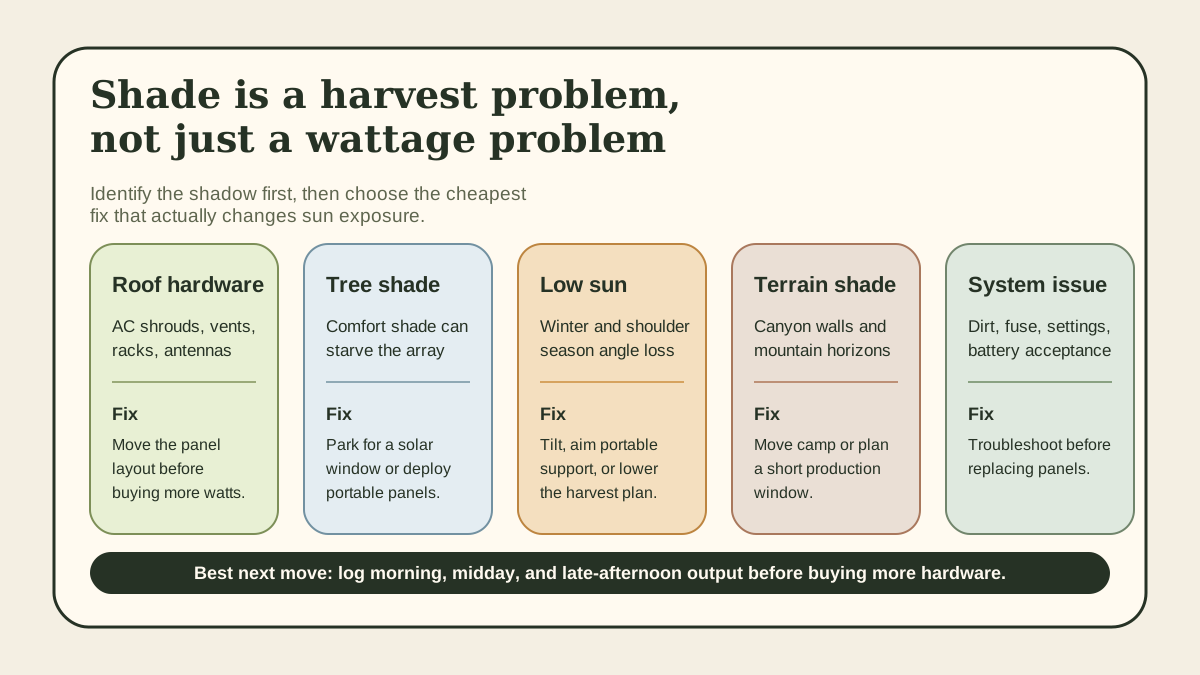
Shade is why nameplate solar lies
RV solar math usually starts with panel watts. Campsite life starts with shade.
A 600W roof array can be a strong setup in open desert and a frustrating setup under trees. A small portable panel can beat a bigger roof array if the rig sits in shade and the portable panel sits in sun. A panel partly shaded by an air conditioner shroud can drag down production enough that the daily result feels nothing like the sales page.
Before replacing hardware, use the solar tilt and shade calculator to estimate what shade is costing. Then use the RV solar troubleshooting guide if actual output is much lower than the realistic estimate.
Shade management snapshot
The clean answer depends on where the shade comes from and whether it is predictable.
Most fixable shade
Campsite orientation
A small parking change can move roof panels out of vent, tree, or awning shadows.
Best hardware fix
Portable or hybrid support
A movable panel helps when the rig needs shade but the battery needs sun.
Most ignored cause
Roof hardware shadows
AC shrouds, vents, racks, and antennas can shade the same panel every day.
Official checks for shade and real-harvest planning
Use these resources to separate location harvest, controller behavior, and RV-specific panel layout before assuming the fix is more wattage.
Pre-arrival checks
Estimate harvest by site and season
A shaded forest camp in October should not be judged against an open-desert summer production number.
Check the controller before rewiring
Series, parallel, voltage, current, and MPPT input limits all matter before changing panel strings.
Treat portable panels as a routine
Portable solar only helps if the cable route, storage, security, and daily setup are realistic.
Identify the kind of shade first
Compare
RV solar shade types
Use one comparison matrix to scan the practical differences. Small screens stack each row; wider screens keep the first column pinned.
| Spec | Roof hardware shade | Tree or campsite shade | Low winter sun | Mountain or canyon shade |
|---|---|---|---|---|
| What causes it | AC shrouds, vents, racks, antennas, roof boxes | Trees, nearby rigs, awnings, picnic shelters | Flat roof angle and long shadows | Terrain blocking morning or afternoon sun |
| Best first fix | Change panel layout or parking orientation | Use portable support or park with a solar window | Tilt, aim portable panels, or add winter margin | Move camp or plan lower harvest |
| Common mistake | Buying more watts without moving the shadow | Parking for comfort and expecting desert output | Using summer sun-hour assumptions | Ignoring sunrise/sunset blocked by terrain |
Shade management starts with a plain observation: when is the panel shaded, and by what?
Walk around the rig in the morning, midday, and late afternoon. Look for fixed shadows from the RV itself. Then look for moving shadows from trees, terrain, and nearby campers. A single noon glance misses the problem.
The easiest field test is a three-photo log. Take one photo of the roof or portable panel location around 9 a.m., one around solar noon, and one around 4 p.m. Then write down the controller output or battery charging current at the same times. The exact numbers do not need to be lab-perfect. You are looking for a pattern.
If the morning and afternoon are weak but midday is strong, the site may simply have a short solar window. If one side of the roof is shaded at the same time every day, the panel layout or campsite orientation is probably the problem. If output stays weak in clean full sun, stop blaming shade and troubleshoot the system.
That simple log protects you from the most expensive shade mistake: adding panels to a roof zone that never sees useful sun.
Campsite orientation can be the cheapest solar upgrade
Sometimes the best solar improvement is moving the rig ten feet or turning it around.
When you arrive, ask:
- Will the roof see morning sun, afternoon sun, or neither?
- Is one panel predictably shaded by an AC shroud or vent lid?
- Does the best shade for comfort also block every panel?
- Is there a sunny patch nearby for portable solar?
- Will mountain or canyon walls cut the day short?
This is where solar and comfort argue. Parking in full sun improves harvest and can make the living space hotter. Parking in shade improves comfort and can drain the battery. The right answer depends on whether heat, power, pets, internet, or water is the controlling limit.
For campsite-level tradeoffs, use the campsite suitability calculator before assuming the prettiest site is the best system choice.
A good arrival routine takes less than five minutes:
- Find the likely shade line for late afternoon.
- Check whether roof hardware will shade the panels when the sun drops.
- Decide whether comfort shade is worth the solar loss.
- Look for a safe portable-panel patch before committing to the site.
- Park so the solar window matches the battery's low point.
That last item matters. If your battery is usually lowest in the morning after furnace, fridge, fan, CPAP, or internet loads, morning sun is valuable. If the biggest load is afternoon laptop and Starlink use, a clear afternoon window may matter more. Shade planning should follow the load pattern, not just the prettiest camp angle.
Portable solar is the shade escape valve
Portable solar exists because the RV and the sun often want different campsites.
If you camp in trees, a portable panel can sit in sun while the rig stays comfortable. That can be more useful than adding roof panels that will live under the same shade pattern.
The tradeoff is effort:
- deployment
- aiming
- cable routing
- wind protection
- theft risk
- storage
- moving the panel as the sun shifts
If you will not do those chores, portable solar is theoretical. Read portable vs. roof solar before buying, then compare exact portable options in the portable solar panel guide.
The cleanest portable setup usually has a defined storage place, a cable path that does not cross the main walking route, and a deployment spot you can see from camp. If the panel has to live under the bed, fight a tangled cable, and sit where every dog leash crosses it, it will not get used.
Portable panels also change the security and weather plan. Wind can flip a panel. Rain can complicate cable routing. Theft risk may matter in dispersed sites, trailhead-adjacent camps, and busy campgrounds. The right panel is the one you will actually deploy often enough to justify the space it consumes.
Worked example: the shaded forest weekend
Suppose a travel trailer has 600W of flat roof solar and a 200Ah lithium bank. On paper, that sounds like a comfortable weekend setup. In a pine forest site, the roof gets direct sun only from 11 a.m. to 1:30 p.m., and an AC shroud shades one panel in the late morning.
The owner sees weak charging and assumes the array is too small. The shade log says something different. Midday output is decent when the panels are clear, but the useful window is too short. Adding another roof panel in the same shade pattern would not fix the core problem.
The better answers are:
- move to a site with a longer solar window
- park so the roof gets better morning sun
- add a portable panel that can sit outside the tree shadow
- reduce loads during that forest stay
- plan a drive, shore, or generator reset if the stay is longer
That is why shade management is more like route planning than product shopping. The right fix is the one that gives the system a longer or cleaner sun window.
Wiring choices affect shade behavior
Series and parallel wiring do not just change voltage and current. They can change how shade affects the array.
Series wiring raises voltage and can reduce current on the roof run, which can help wire sizing and controller startup. But shade on one panel in a series string can affect the string more noticeably.
Parallel wiring keeps voltage lower and current higher, which can help shade tolerance in some layouts but may require heavier wire, combiner protection, and careful controller current checks.
There is no universal answer. Use series vs. parallel RV solar wiring and the solar string sizing calculator before copying a diagram from a different roof.
Do not solve a shade problem with only more panels
More watts help only if the new panels get better sun or improve the layout. If every panel is under the same tree, vent shadow, or canyon wall, a bigger array may still underperform.
Roof layout can prevent permanent shade losses
Shade from roof hardware is especially frustrating because it repeats.
Before mounting panels, map:
- AC shroud shadows
- vent lids when open
- antenna shadows
- roof rack shadows
- Starlink or satellite mount shadows
- panel-to-panel spacing
- service paths and cleaning access
The best roof layout may use smaller panels rather than one large panel. It may also split the array into better strings, leave space for future expansion, or reserve a clean cable-entry path.
If the roof layout is still theoretical, read the RV solar installation guide before drilling. Roof layout is cheaper to fix with cardboard than with sealant.
Cardboard layout mockups are not silly. They reveal whether the panel corner lives under a vent lid, whether the cable gland lands above a cabinet you cannot access, and whether a future cleaning or service path still exists. A perfect panel spec can become a poor roof choice when the physical rectangle is wrong.
Shade can also argue for splitting the array. If one roof zone is frequently shaded and another is often clear, combining everything into one behavior may be worse than separating strings or controllers. That does not mean every RV needs multiple controllers. It means shade behavior should influence the electrical layout before the roof is drilled.
Troubleshoot before buying
Low harvest is not always shade.
It can also be:
- dirty panels
- loose connectors
- blown fuse
- open disconnect
- wrong controller setting
- battery already full
- battery too cold to accept charge
- loads consuming solar as fast as it arrives
- series string exceeding or failing controller startup behavior
If output is weaker than expected, use RV solar not working troubleshooting. Replacing panels before checking the simple causes is how small solar problems turn into expensive parts piles.
A simple shade test on the next trip
You do not need lab gear to learn a lot about your shade problem.
On the next sunny camp day, write down three readings or observations:
- morning harvest when the sun first clears trees or terrain
- midday harvest when the array should be strongest
- late-afternoon harvest when roof hardware and tree shadows stretch
Then compare those notes with where the rig was parked. If midday is strong but morning and afternoon are weak, the site may simply have a short solar window. If one panel or one side of the roof is shaded at the same time every day, the layout may be the problem. If the whole array is weak in full sun, move into troubleshooting instead of blaming shade.
This little log makes future buying decisions cleaner. You can decide whether the fix is a portable panel, a different parking habit, a wiring change, cleaning, or more battery reserve.
Common shade-management mistakes
The first mistake is comparing shaded production to an open-sky estimate. That makes a normal forest campsite look like equipment failure.
The second mistake is assuming all shade is equal. A tiny vent shadow across the wrong part of one panel can behave differently from broad weak light across the whole array.
The third mistake is buying portable solar without planning storage and deployment. A panel that stays folded is not part of the system.
The fourth mistake is overlooking the battery. If the battery is full, cold, in protection mode, or being loaded heavily while charging, the controller output may not tell a simple shade story.
The fifth mistake is designing only for the best camp. A good RV solar plan should tolerate the ordinary mix: open desert, partial tree shade, a cloudy day, and a site where comfort shade is more important than harvest.
Final thought
Good shade management is not about camping in a parking lot forever. It is about knowing which resource controls the stay. Sometimes shade is worth the lower harvest. Sometimes power is more important than comfort shade. The system gets calmer when that tradeoff is intentional instead of discovered at sunset.
Frequently asked
Questions RVers usually ask next.
Can RV solar panels work in shade?
They can produce some power in weak or partial light, but output can drop sharply depending on the shade pattern, panel layout, wiring, and controller behavior. Treat shaded output as reduced, not as a small detail.
Is portable solar better for shaded campsites?
Often, yes. Portable panels can be moved to a sunny patch while the RV stays in shade, but only if you are willing to deploy, aim, secure, and store them consistently.
Should I wire RV solar panels in parallel for shade?
Parallel can help some shade situations, but it is not automatic. The better layout depends on panel specs, controller limits, roof wiring, current, voltage drop, and how the panels are shaded.
Freshness note
Last checked April 21, 2026
This topic can change when products, plans, prices, campsite rules, or fit guidance move. These notes show what was reviewed most recently.
This review included
- Checked NREL PVWatts, Victron MPPT calculator guidance, Go Power RV solar resources, and internal troubleshooting/string-sizing paths for shade-specific planning.
- Expanded the guide with a custom shade decision visual, official-source checks, daily harvest logging, roof-layout diagnosis, and a worked shaded-campsite example.
Recent change log
April 21, 2026
Expanded the shade-management guide with official sources, a custom shade map, campsite logging workflow, and practical roof-versus-portable decision examples.
April 15, 2026
Published an RV solar shade management guide to fill the shade and real-harvest gap in the solar hub.
Broader editorial corrections are tracked on the Corrections and Updates page.

