Official references for an RV solar retrofit
Use official manuals and product references before cutting into a roof or tying another charging source into an older battery system.
Pre-arrival checks
Use the manual for the exact part
Panel, controller, gland, fuse, and sealant instructions can vary by model and roof material.
Hire help for unsafe unknowns
Unknown owner wiring, damaged roof structure, high-current inverter paths, and unclear factory prep are good reasons to bring in a qualified RV tech.
Existing RVs need a retrofit plan
A new solar build starts with a blank diagram. An existing RV starts with a history. It may already have a converter, shore-power charger, battery disconnect, inverter, generator, factory solar port, sidewall portable plug, old flooded batteries, a hidden shunt, or a previous owner's half-finished wiring idea.
That history is why adding solar to an existing RV should feel slower than buying a kit online. Solar adds another charging source to a system that already has at least one charger and may have several. If the new controller bypasses the battery monitor, uses an undersized factory wire path, or charges a bank that the converter cannot support, the install may create more confusion than independence.
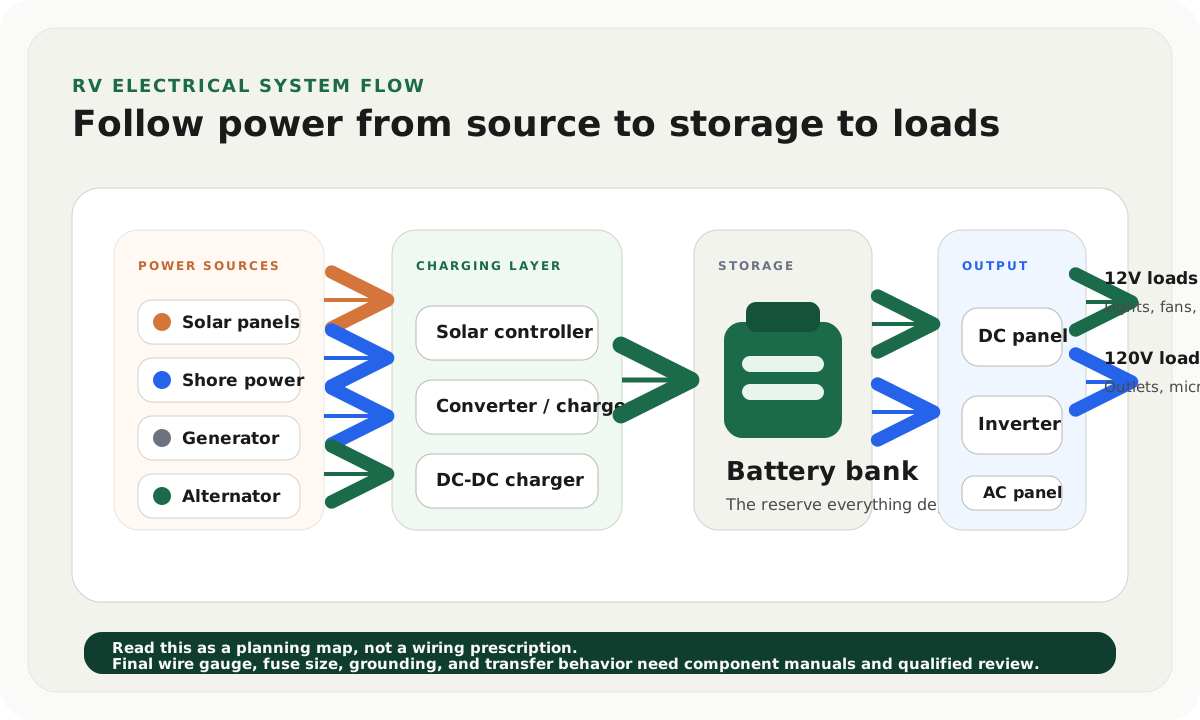
Start by opening the RV electrical system diagram and mapping what is actually in your rig. Then use the solar calculator to decide how much charging is worth installing. A retrofit goes better when the array size comes after the audit, not before it.
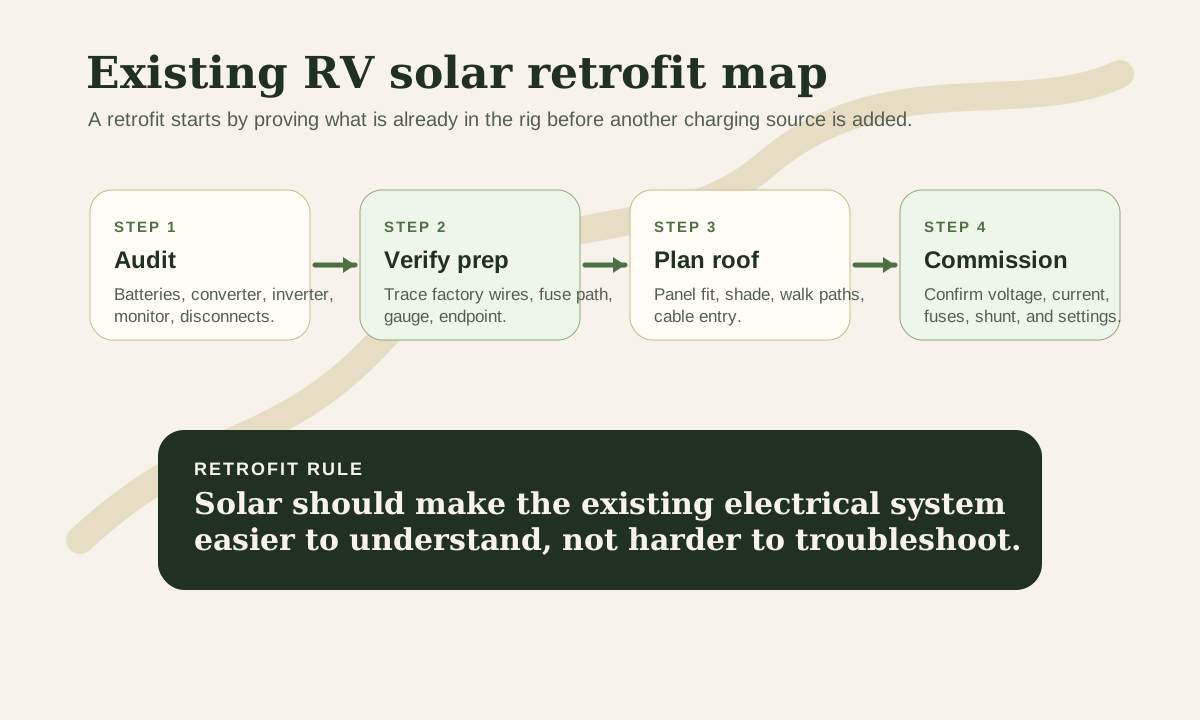
Existing-RV solar retrofit snapshot
The cleanest retrofit protects the system you already have before adding more charging.
First check
Battery and converter
Solar cannot fix a weak battery bank or a converter that does not match the battery chemistry.
Common trap
Trusting factory prep
Solar prep may be useful, but wire size, route, controller location, and fuse plan still need verification.
Best sequence
Audit, add, commission
Map the existing system before adding panels, controller, fuses, disconnects, and battery tie-ins.
Step 1: audit the system before buying panels
Write down the battery chemistry, battery age, battery capacity, converter or charger model, inverter size, battery monitor location, battery disconnect path, current fuse or breaker locations, factory solar prep endpoints, roof space, cable-entry options, and whether the alternator or generator already charges the house bank.
This is not paperwork for its own sake. It tells you whether solar should be the next part of the project. If the AGM bank is failing, the converter is wrong for lithium, the inverter cable is unprotected, or the battery monitor is already bypassed by another charger, adding panels will not solve the real problem.
Use when to replace AGM RV batteries if the existing bank is tired. Use RV battery charging from shore, solar, and alternator if you are not sure which charging sources will remain after the retrofit.
Technical tutorial step 1
Map the existing charging system
Step goal
Identify every source that can charge the house battery before adding solar.
Required tools or parts
- Multimeter
- Phone photos of labels and wiring
- Owner manuals or model numbers
- Painter tape or labels
- Notebook or wiring sketch
Safety note
Disconnect shore power and turn off battery disconnects before opening electrical compartments. Do not loosen high-current cables unless you know how the system is isolated.
How to check success
You can name the battery chemistry, converter model, inverter path, battery monitor path, and existing fuse or breaker locations.
What can go wrong
A hidden previous-owner modification can make the new controller bypass the shunt or land on an unprotected battery path.
Step-specific handoff
Electrical system diagram
Use the diagram guide to turn the compartment audit into a simple system map.
Step 2: verify factory solar prep like a wire, not a promise
Factory solar prep is helpful only after it is proven. The sticker may point to a roof port, sidewall portable port, controller location, hidden wire pair, or brand-specific connector. None of that tells you automatically what array size is safe.
Trace where the positive and negative conductors start and end. Confirm wire gauge and approximate length. Check whether a controller is already installed or whether the prep is only a raw wire path. Look for a fuse or breaker near the battery. Confirm whether the prep is designed for portable panels, roof panels, or a specific ecosystem. If you cannot verify the current and voltage limits, do not size the project around the label.
Compare
Factory solar prep versus new wire route
Use one comparison matrix to scan the practical differences. Small screens stack each row; wider screens keep the first column pinned.
| Spec | Use factory solar prep | Run a new roof-to-controller path | Start with portable solar |
|---|---|---|---|
| Best fit | Small to moderate arrays after wire gauge is verified | Larger permanent arrays or unknown factory prep | Testing habits, shaded camps, or no-drill starts |
| Main risk | Unknown gauge, route, controller location, or fuse plan | More labor, roof penetrations, and planning responsibility | Setup effort, theft risk, storage space, and inconsistent use |
| Decision check | Can you prove voltage, current, and termination points? | Can you seal the entry correctly and protect the wire? | Will you actually deploy it every camp day? |
Step 3: fix the battery and charging foundation first
Solar should match the battery bank. If the RV has old flooded or AGM batteries, solar may help keep them topped up, but it will not turn a tired bank into a lithium-style reserve. If you plan to switch to lithium, the converter, solar controller, alternator charging, battery monitor, and cold-weather charging behavior all need to match that choice.
This is where many retrofits drift. The owner adds panels, then discovers the shore converter is not lithium-ready. Or the solar controller is set correctly, but the alternator charge path is uncontrolled. Or the new lithium bank has Bluetooth, but the whole-system monitor is still reading only part of the current.
The cleaner sequence is battery decision, charger profile decision, solar controller decision, then array decision. That order may feel less exciting, but it keeps all chargers speaking the same language.
Technical tutorial step 2
Confirm battery chemistry and charger profiles
Step goal
Make sure the solar controller will not be the only lithium-aware charger in the rig.
Required tools or parts
- Battery model number
- Converter or inverter-charger manual
- Solar controller manual
- DC-DC charger documentation if alternator charging remains
Safety note
Charging settings affect battery life and safety. Use the battery manufacturer's manual for voltage and temperature limits.
How to check success
Every charging source has a documented profile or a decision to replace, disable, or reconfigure it.
What can go wrong
Solar may charge correctly while shore power, alternator charging, or generator charging still uses the wrong profile.
Step-specific handoff
Battery charging source guide
Use this to coordinate shore, solar, alternator, and generator charging.
Step 4: plan roof fit before choosing wattage
Roof wattage is limited by vents, skylights, air conditioners, antennas, walk paths, shadows, and cable-entry options. A 600W plan on paper can become a frustrating 400W roof once you account for shade and service access.
Place panels where they will not be shadowed constantly by the air conditioner or roof rack. Leave room to inspect sealant. Avoid routes that make future roof maintenance harder. Decide whether the controller belongs near the battery, in a pass-through compartment, or in an accessible interior bay. The controller output should reach the battery or DC distribution through a protected path that the battery monitor can see.
If the roof layout is tight, use the RV solar installation guide and RV solar wiring diagram before committing to panel sizes. If the project is really about deciding array size, start with how many solar watts you need.
Technical tutorial step 3
Lay out panels, cable entry, and controller location
Step goal
Prove the physical install before ordering panel sizes or drilling roof penetrations.
Required tools or parts
- Tape measure
- Cardboard panel templates
- Roof photos
- Panel dimensions
- Controller manual
- Sealant and roof-material documentation
Safety note
Roof work introduces fall risk and leak risk. Do not drill until the roof material, backing, gland, fasteners, and sealant are all confirmed.
How to check success
Panel positions, cable entry, controller location, fuse or breaker locations, and service access are marked on a simple drawing.
What can go wrong
A panel layout that fits on paper can block roof service, live in shade, or force a long controller-to-battery run.
Step-specific handoff
Solar installation guide
Use the full install guide for roof prep, routing, controller placement, and commissioning details.
Step 5: commission under real sun before expanding
The first sunny commissioning day matters. Confirm open-circuit voltage before landing panel wires. Confirm polarity. Confirm controller battery profile. Confirm the controller sees the battery before the array is connected if the manual requires that sequence. Confirm charge current under sun. Confirm the battery monitor sees the solar current. Confirm fuses, breakers, and disconnects are labeled.
Document normal numbers: battery voltage before charge, array voltage, charge current, controller mode, and state of charge after several hours. Those numbers become your baseline when a fuse opens, a connector loosens, or shade suddenly cuts production.
Take photos of the final installation while the compartments are still clean. Photograph the roof entry, controller wiring, fuse labels, disconnect labels, battery monitor shunt, battery model label, and charger settings. A solar retrofit is much easier to troubleshoot when you can compare the current system against the day it first worked.
Do not expand the array after one good afternoon. Use the first few trips to learn whether the system is short on panel wattage, battery capacity, travel-day charging, or simple load discipline. Those are different problems. Adding another panel may not help if the real issue is a weak converter, a shaded roof, or an inverter left on all night.
Technical tutorial step 4
Commission the system and document normal behavior
Step goal
Make the first solar day a controlled test instead of a hopeful launch.
Required tools or parts
- Multimeter
- Controller app or display
- Battery monitor app or display
- Label maker or permanent labels
- Photos of fuse and disconnect locations
Safety note
Follow the controller manual for connection order. PV wires can produce voltage whenever panels are exposed to light.
How to check success
The controller charges on the correct profile, solar current passes through the monitor path, and normal voltage and current readings are documented.
What can go wrong
If solar is wired around the shunt or the controller profile is wrong, the system may appear to work while state-of-charge data or battery treatment is wrong.
Step-specific handoff
Solar wiring diagram
Use this if the commissioning readings do not match the expected wire path.
When to replace instead of add
Sometimes the right move is not more solar. Pause the panel purchase if the battery bank is failing, the roof needs repair, the factory prep cannot be traced, the converter is wrong for the planned battery chemistry, the inverter cables are unprotected, the battery bay is already hacked together, or the daily load estimate is still a guess.
Solar is most satisfying when it is added to a system that already makes sense. If the system does not make sense yet, the next best dollar may be a battery monitor, a safer fuse layout, a converter upgrade, a DC-DC charger, or a roof repair.
When to hire help
Hire a qualified RV electrical tech if you see scorched cable, unknown splices, unprotected inverter conductors, water damage near electrical compartments, a previous owner modification you cannot trace, or a roof condition that makes sealing uncertain. Also hire help if the planned inverter and battery bank involve high current beyond your comfort level.
DIY solar can be very reasonable on a simple rig. DIY guessing is different. The moment you cannot explain how the current returns to the battery and how the positive path is protected, stop and get another set of qualified eyes on the system.
The same rule applies to roof work. If the membrane is brittle, the decking feels soft, a previous leak is visible, or you do not know which sealant matches the roof material, pause. A small solar project can become an expensive roof problem when penetrations are rushed.
Final thought
Adding solar to an existing RV is not a roof project first. It is a system audit. Once the battery, converter, wiring, monitor, roof, and charging sources are understood, the panel decision gets calmer and the retrofit is much more likely to make the rig easier to live with.
Frequently asked
Questions RVers usually ask next.
Can I use my RV's factory solar prep?
Yes if you can verify the wire gauge, route, current limit, voltage limit, controller location, and fuse plan. If you cannot prove those details, treat the prep as a clue rather than a finished design.
Should I upgrade batteries before adding solar?
If the existing batteries are failing or the planned chemistry is changing, fix the battery and charger foundation first. Solar works best when every charging source matches the bank.
Where should the solar controller connect?
The controller output should connect through a protected, serviceable path to the battery or DC distribution, and the charging current should pass through the battery monitor shunt if you rely on state-of-charge readings.
How much solar should I add to an existing RV?
Size the array from daily watt-hour use, roof fit, shade, battery capacity, and charging expectations. Do not size it only from what the factory prep sticker or kit listing suggests.
Freshness note
Last checked April 21, 2026
This topic can change when products, plans, prices, campsite rules, or fit guidance move. These notes show what was reviewed most recently.
This review included
- Checked official Go Power RV solar resources, Victron MPPT tools, Dicor sealant resources, and Blue Sea Systems circuit-protection references for retrofit planning context.
- Expanded the retrofit sequence for existing RVs with factory solar prep, older converters, mixed battery banks, existing inverters, roof-layout constraints, and commissioning checks.
Recent change log
April 21, 2026
Added a custom retrofit visual, official-resource grid, technical tutorial steps, factory-prep verification checks, and a fuller commissioning workflow.
April 15, 2026
Published a retrofit-focused guide for adding solar to an existing RV without overbuilding or bypassing the existing electrical system.
Broader editorial corrections are tracked on the Corrections and Updates page.