Why Class B solar is different
Class B RVs and camper vans have a simple advantage: smaller loads. They usually have less interior volume, fewer large appliances, and less space to heat or cool.
They also have a simple problem: less roof.
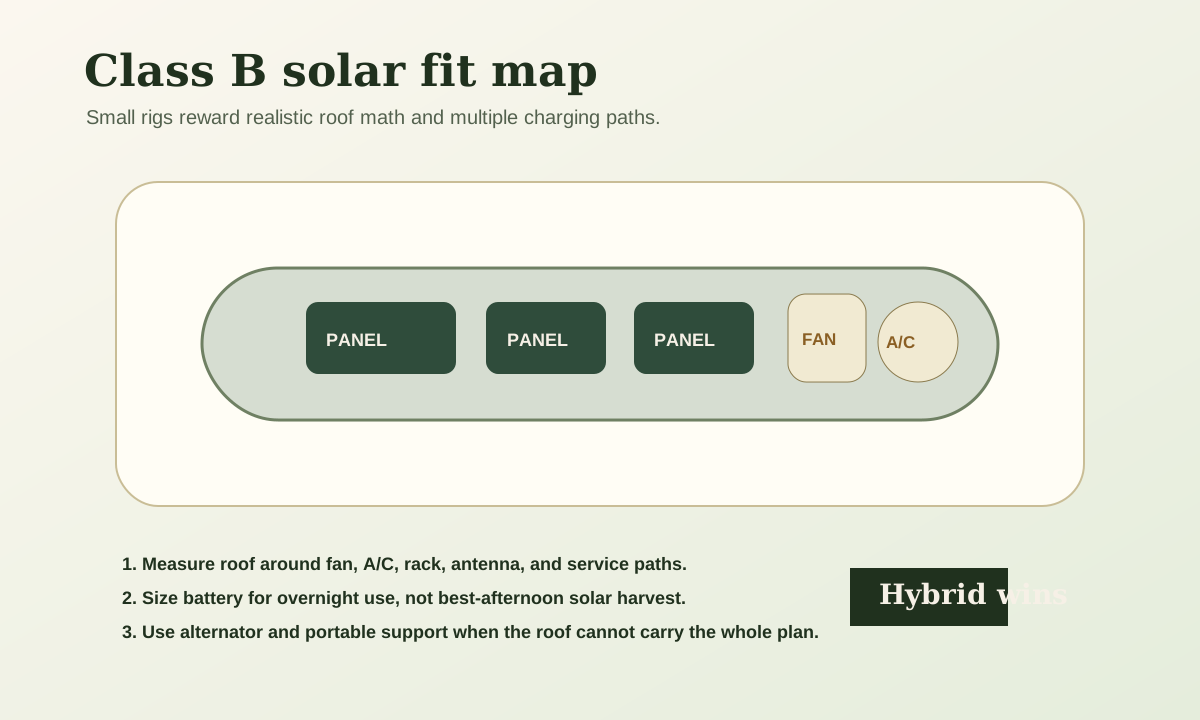
That roof may already be crowded with a vent fan, air conditioner, skylight, antenna, rack, Starlink mount, deck panels, or a storage box. A trailer can often solve a weak estimate by adding another roof panel. A Class B may not have that move available.
Start with the roof solar fit calculator before shopping panels. Then run the solar calculator with the daily loads you actually use. In a van, the question is not "how much solar would be nice?" It is "what can the roof collect, and what other charging source covers the gap?"
Class B solar planning snapshot
Small rigs reward realistic load control and multiple charging paths.
Common roof target
200W to 600W
Many vans land in this range depending on roof gear, panel shape, and whether the AC unit stays.
Best backup charger
DC-DC alternator charging
Drive days can recover a van battery bank when the roof cannot carry the full daily load.
Main mistake
Ignoring roof clutter
A panel layout that works on paper can fail when vents, racks, shade, and walk paths are real.
Official checks for Class B solar planning
Use official model and component pages as planning boundaries, then verify the exact coach sticker, roof layout, options, and manuals before ordering parts.
Pre-arrival checks
Verify the exact roof, not only the model
A fan, AC shroud, rack, awning hardware, antenna, or dealer-installed option can change what panels actually fit.
Match charger size to the whole van
Alternator charging, battery chemistry, wire run, fuse sizing, and heat management matter as much as the DC-DC charger's headline amperage.
Keep payload and storage in the conversation
Portable panels, extra batteries, tools, and mounting hardware all compete for space in a small rig.
The Class B solar decision order
Do not start with a kit.
Use this order:
- List daily watt-hours with the RV appliance wattage chart.
- Decide which loads are truly daily: fridge, fan, lights, pump, laptops, internet, CPAP, induction, or coffee.
- Measure roof space with real panel dimensions.
- Decide whether a portable panel is realistic for your storage and camp routine.
- Size battery reserve for overnight and bad-weather use.
- Add alternator charging if drive days are part of the travel pattern.
- Pick panels, controller, fuses, disconnects, and wire path after the layout is real.
That order keeps a small rig from being designed around a fantasy roof.
It also prevents the classic van mistake: buying one big kit because the wattage looks right, then discovering that the panel shape fights the fan, the cable gland lands above cabinetry, and the battery bay cannot accept the bank you assumed. In a Class B, inches matter. A narrower panel that fits cleanly can be better than a higher-watt panel that creates shade, roof-service problems, or a terrible cable route.
Make a simple sketch before ordering anything. Draw the roof from above, mark every obstruction, leave a service path where you need one, and measure the cable entry location from inside and outside. Then list the daily loads beside that sketch. The roof drawing tells you what the van can collect. The load list tells you whether that collection is enough.
Class B roof solar, portable solar, and alternator charging
Compare
Class B solar charging paths
Use one comparison matrix to scan the practical differences. Small screens stack each row; wider screens keep the first column pinned.
| Spec | Roof solar | Portable solar | DC-DC alternator charging |
|---|---|---|---|
| Best job | Always-on background charging | Recovering when the van is parked in shade | Recovering on drive days or cloudy travel days |
| Main limit | Roof space and shade from van hardware | Setup effort, storage, wind, theft, and cable routing | Requires correct charger sizing and alternator-aware installation |
| Best fit | Frequent movers and low-effort camp routines | Longer stays in shaded camps | Travelers who drive often enough to make charging predictable |
Most Class B rigs should treat roof solar as baseline charging, not the whole energy plan. A 300W or 400W roof array can be excellent if the daily load is modest. It can feel weak if the rig also runs Starlink, laptops, a compressor fridge, fans, an inverter, and induction cooking.
Portable solar is attractive in vans because parking the van in shade often makes camp more livable. The panel can sit in the sun while the van stays comfortable. The tradeoff is storage and setup. If the portable panel is annoying enough that it stays folded, it is not part of the real system.
Alternator charging matters more in vans than many roof-solar articles admit. If you drive every few days, a properly sized DC-DC charger can recover the battery bank more predictably than roof solar alone. Use the DC-DC charger guide before assuming the alternator can safely be treated like a giant free charger.
The right mix depends on how the van is used:
- Frequent movers usually benefit most from a modest roof array plus a DC-DC charger.
- Shade campers often benefit from a smaller roof array plus portable panels that can be moved into sun.
- Remote workers may need more battery reserve because the van is occupied during the day while loads run continuously.
- Weekend travelers can often stay simpler if they reset from shore power between trips.
That is why "how many watts fit?" is only half of the question. The better question is, "Which charging source will be available when the battery is actually low?"
How much battery does a Class B need?
Battery reserve is what makes a van feel calm after sunset.
For light travel, a 100Ah lithium battery can support a simple fridge, lights, fan, and device-charging routine if you manage loads carefully. For remote work, Starlink, inverter use, or longer cloudy stretches, 200Ah to 400Ah becomes more realistic.
The smaller rig does not remove the need for battery math. It just makes every mistake more obvious because there is less room for hardware and less storage for backup gear.
Use how to size an RV battery bank after the solar estimate. If the battery plan requires more parallel batteries than the van can safely mount, the answer may be fewer loads, more alternator charging, or a higher-voltage professional design rather than forcing more parts into a small compartment.
For a practical starting point:
- 100Ah lithium can work for light weekends with a fridge, lights, fan, pump, and device charging.
- 200Ah lithium is the calmer starter target for many couples who want two nights without thinking about every watt.
- 300Ah to 400Ah becomes realistic when remote work, Starlink, inverter use, or bad-weather margin matter.
Battery size should be tied to recovery. A 400Ah bank is useful only if you can recharge it. In a van with 300W of flat roof solar, that bank may take several good days to refill from deep discharge without alternator or shore power help. More battery creates more reserve, but it does not create energy by itself.
Also watch where the bank lives. Class B conversions sometimes place batteries under a seat, in a rear cabinet, underbody, or in a tight utility bay. Each location changes temperature, service access, ventilation needs, cable routing, and how easy it is to add a shunt, fuse, disconnect, or inverter later.
Roof layout is the gatekeeper
Class B roofs often lose solar potential to small details:
- roof fans placed in the middle of the usable rectangle
- AC shrouds casting afternoon shade
- roof rails that force narrow panel choices
- antennas and satellite mounts
- curved roof edges
- walking paths needed for service
- cable entry locations that create awkward interior runs
This is where exact panel dimensions matter. A 200W panel with the wrong footprint can be worse than two smaller panels that fit the roof cleanly.
If you already know the roof will be tight, compare exact panels in the best RV solar panels guide, then check wiring with series vs. parallel RV solar. Small roofs often make shade behavior and controller limits more important than the headline watt number.
Think of roof space in three zones.
The first zone is fixed obstruction space. Vents, fans, antennas, AC units, skylights, awning hardware, and racks are already making decisions for you.
The second zone is clean panel space. This is where a panel can sit without shade from tall hardware, without blocking service, and without putting a cable entry in a terrible location.
The third zone is future-service space. This is the space people forget. If every inch is covered, cleaning, sealant inspection, fan service, and cable troubleshooting get harder. A van roof does not need a boardwalk, but it does need a service plan.
Panel orientation also changes shade behavior. Long narrow panels may fit beside a fan. Two smaller panels may avoid a roof curve better than one large panel. A lower-watt layout with less partial shade can outperform a bigger layout that is always clipped by the AC shroud.
Worked example: 300W roof plus DC-DC charging
Imagine a Class B with:
- 300W of roof solar
- 200Ah lithium battery
- 30A DC-DC charger
- compressor fridge, fan, lights, water pump, laptops, and a hotspot
- occasional inverter use for small AC loads
On a mild day, the roof might cover a large share of the fridge, fan, lights, and device charging. If the van uses 900-1,200Wh per day and the roof returns 700-1,000Wh, the system feels stable.
Now add shade, winter sun, or a long workday. The roof may only return 300-600Wh. The same van now needs another recovery source. A 30A DC-DC charger at a 12V-class charging voltage can return meaningful energy during a drive day, but it still needs correct wiring, fuse protection, alternator-aware installation, and battery settings. It is not magic. It is a predictable second charger that helps when the roof cannot keep up.
This is why a smaller van can work well with modest solar. The roof provides daily background recovery. The battery carries nights and cloudy periods. The DC-DC charger restores margin when the travel pattern supports it. Shore power handles deep resets before or after difficult stretches.
If that same van tries to run electric heat, long induction cooking, a large inverter left on all night, and Starlink every day, the math changes. At that point the answer may be load control, more battery, more alternator charging, portable solar, or simply choosing camps with shore power when those loads are non-negotiable.
The clean Class B strategy
The cleanest van system is usually staged:
- control daily loads first
- install enough roof solar to cover easy background charging
- add a battery bank sized for overnight and weather margin
- add DC-DC alternator charging if you drive often
- add portable solar only if you will actually deploy it
- avoid designing around air conditioning unless the battery, inverter, and charging plan are built for it
That last point matters. Solar-powered air conditioning is possible in larger builds under favorable conditions, but a Class B roof usually does not have the collection area to make AC a casual solar load. If AC is the goal, read how much solar for an RV air conditioner before buying panels.
The other clean strategy is to keep upgrades reversible where possible. Roof holes, heavy battery moves, inverter relocation, and underbody battery work are harder to unwind than a portable panel, load-control habit, or plug-in monitor. If you are new to Class B travel, a staged approach lets the real routine teach you where the system is weak.
Start with monitoring. A battery monitor or shunt shows whether the fridge, fan, router, and inverter are behaving the way the estimate predicted. Then add charging where the data says the gap is. Some vans need more roof. Some need alternator charging. Some need a larger battery. Some need fewer overnight AC loads. Guessing is expensive in a small rig because every component competes for space.
Common Class B solar mistakes
The first mistake is treating the roof like a rectangle. Measure around every vent, rack, shroud, and service path.
The second is skipping alternator charging. Vans move enough that drive-day charging is often part of the real answer.
The third is buying a portable panel without a storage plan. A panel that blocks the aisle or lives under the bed can become a chore fast.
The fourth is oversizing the inverter before sizing the battery. Large AC loads can overwhelm a compact bank even when the solar math looks fine.
The fifth is forgetting heat. Batteries, chargers, inverters, and cable bundles need to live somewhere serviceable and thermally reasonable. A beautiful hidden install can be a poor install if it traps heat, blocks fuses, or makes troubleshooting miserable.
The sixth is treating the van like a tiny house instead of a moving system. A Class B has vibration, temperature swings, tight storage, limited roof area, and a travel pattern that can help or hurt charging. The best system respects that movement instead of fighting it.
Final thought
Class B solar is not about building the biggest array. It is about making a small roof, small battery bay, and real travel pattern work together. A modest roof array, honest load list, right-size battery, and alternator charger often beat a bigger solar fantasy that never fit the van in the first place.
Frequently asked
Questions RVers usually ask next.
How much solar can a Class B RV usually fit?
Many Class B roofs land somewhere around 200W to 600W of practical fixed solar, but the real answer depends on vents, AC, racks, antennas, roof shape, and exact panel dimensions. Measure the roof before choosing a wattage target.
Is portable solar better for camper vans?
Portable solar can be better when the van parks in shade and there is sun nearby. Roof solar is better for low-effort charging, travel days, and quick stops. Many vans do best with a small roof array plus optional portable support.
Do Class B RVs need DC-DC charging?
Not always, but it is often the missing piece. If you drive every few days, a DC-DC charger can recover the battery bank when roof space or weather limits solar production.
Freshness note
Last checked April 21, 2026
This topic can change when products, plans, prices, campsite rules, or fit guidance move. These notes show what was reviewed most recently.
This review included
- Checked current official Winnebago camper-van pages, Victron MPPT sizing guidance, Go Power RV solar resources, and Ford Transit commercial-van specs for Class B planning context.
- Expanded the Class B solar guide with a custom visual, official-resource checks, a worked 300W roof plus DC-DC charging example, and a clearer roof-fit workflow.
Recent change log
April 21, 2026
Expanded the Class B solar guide with official sources, a roof-fit visual, worked small-roof math, and a staged charging plan for van owners.
April 15, 2026
Published a Class B RV solar guide to fill the small-rig solar planning gap in the solar hub.
Broader editorial corrections are tracked on the Corrections and Updates page.


