Shortlist first
Use this to find the winner first, then compare the alternates only if their tradeoffs fit your rig better.
Shortlist labels are editorial recommendations, not popularity rankings. Fit score still matters, but the label tells you why each pick made this guide.
How fit scores work
Scores are editorial fit scores, not user-review averages. The rubric weighs stated RV-use fit, verified specs and limits, whole-rig friction, visible downsides or support risk, and value for the specific job in this guide. Read the full scoring rubric.
If you need one baseline option before reading the full guide, start with Renogy 400W Complete Kit with Two 100Ah Batteries for best all-in-one first system.
The first option to evaluate if you want the strongest all-around fit for this guide. Check the other cards only if their award label matches your constraint better.
| Product | Why shortlisted | Fit score | Key spec | Best for | Actions |
|---|---|---|---|---|---|
| Renogy 400W 12V Solar Premium Kit Links to: Renogy 400W 12V Solar Premium Kit | Also great A strong alternate when its specific tradeoffs fit your rig better than the winner. | 4.7 / 5 fit score | $639.99 | 4 x 100W N-type | Rover 40A MPPT | no battery/inverter included | Best roof-only starter backbone | Read Renogy 400W 12V Solar Premium Kit notesCheck listing at RenogyMerchant link - direct listing. Verify price and specs at Renogy. |
| Renogy 400W Complete Kit with Two 100Ah Batteries Links to: Renogy 400W 12V Complete Solar Kit with 2.4kWh Batteries | Best overall The first option to evaluate if you want the strongest all-around fit for this guide. | 4.8 / 5 fit scoreScore rubric | $2,599.99 lithium / $1,899.99 AGM | 2.4kWh bank | 2000W inverter | Best all-in-one first system | Read Renogy 400W Complete Kit with Two 100Ah Batteries notesCheck listing at RenogyMerchant link - direct listing. Verify price and specs at Renogy. |
| Jackery Explorer 1000 v2 + SolarSaga 200W Links to: Jackery Explorer 1000 v2 + SolarSaga 200W | Specialized pick A narrower recommendation that wins only for a specific use case. | 4.6 / 5 fit score | $749.00 | 1070Wh LFP | 1500W output | 200W panel included | Best no-drill portable starter | Read Jackery Explorer 1000 v2 + SolarSaga 200W notesCheck listing at JackeryMerchant link - direct listing. Verify price and specs at Jackery. |
These are exact beginner systems, not generic kit styles
The word "kit" covers three very different first moves:
- a roof kit that gives you panels and a controller but expects you to choose the battery and inverter path
- a complete system that includes the storage and AC side already
- a portable solar generator bundle that avoids roof work entirely
If you only need a deployable panel and already have the battery or power station figured out, start with the portable RV solar panel guide instead. This page is for the bigger first-system decision: roof kit, complete kit, or no-drill solar-generator path.
That is why a good beginner guide has to compare exact products, not just talk about "starter solar" in the abstract.
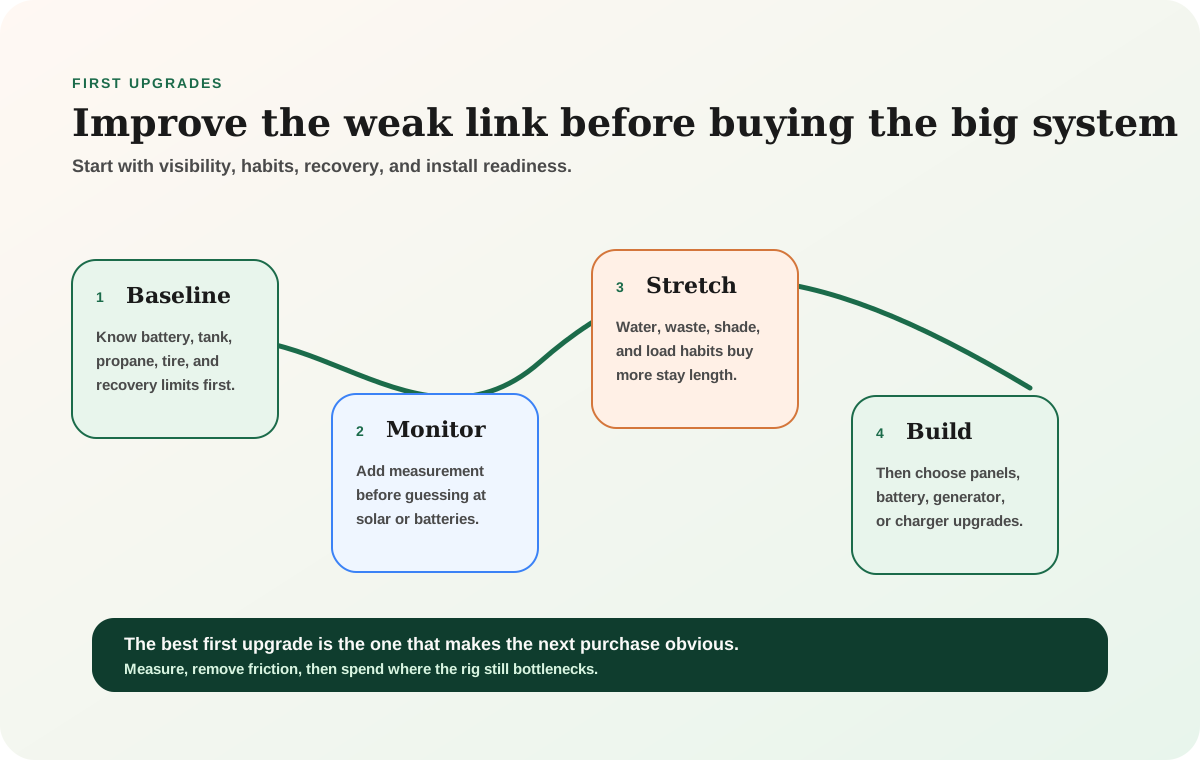
If you are not sure whether a kit should be your first electrical purchase, start with the first off-grid upgrades guide. A beginner kit makes more sense after you know whether the real bottleneck is power, water, monitoring, or campsite behavior.
Price note
Prices below were checked against official manufacturer product pages on April 9, 2026. Kit pricing, sale bundles, and battery variants move fast, so use these numbers as current comparison points.
Must read before you buy a roof kit
Before a roof kit goes in the cart, read the RV solar installation guide. The guide walks through roof layout, cable entry, controller placement, fusing, disconnects, sealant, and commissioning so the kit matches the install instead of the other way around.
What matters more than the headline watt number
Included components decide how beginner-friendly the kit really is
A 400W kit without batteries and inverter is not wrong. It is just a different beginner path than a bundle that includes the full AC side and storage from day one.
Roof friction versus daily-use friction is the tradeoff
A roof kit asks more from you during install and less from you later. A portable solar generator bundle flips that logic and asks less on install day but more every time you set up and store it.
Battery chemistry changes the whole experience
The difference between an AGM bundle and a LiFePO4 bundle is not just weight. It changes usable capacity, recharge speed, and how fast the system starts to feel cramped as your off-grid habits grow.
Before buying a kit because the wattage sounds safe, run your loads through the solar calculator and compare the storage side against lithium vs. AGM RV batteries. If you are leaning roof-mounted, the RV solar installation guide will tell you whether the install friction is realistic for your rig.
Compare
Compare fast
Use one comparison matrix to scan the practical differences. Small screens stack each row; wider screens keep the first column pinned.
| Spec | Renogy 400W Premium Kit | Renogy 400W Complete Kit | Jackery 1000 v2 + SolarSaga 200 |
|---|---|---|---|
| Price checked | $639.99 | $2,599.99 lithium / $1,899.99 AGM | $749.00 |
| Solar included | 4 x 100W N-type panels | 4 x 100W N-type panels | 1 x SolarSaga 200W |
| Charge controller | Rover 40A MPPT | Rover 40A MPPT | Built into power-station ecosystem |
| Battery included | No | Yes: 2 x 100Ah AGM or LiFePO4 | Yes: 1070Wh LiFePO4 station |
| Inverter included | No | Yes: 2000W pure sine | Yes: 1500W AC / 3000W surge |
| Install style | Roof-mounted DIY starter backbone | Roof-mounted whole-system starter | Portable no-drill starter system |
| Best fit | DIY beginner who wants upgrade flexibility | Beginner who wants one matched package | Beginner not ready to drill or wire the rig |
A beginner solar kit should solve the next stage, not every stage
The safest way to buy a beginner kit is to decide which stage you are really in.
If you are still learning your loads, a no-drill portable system may be the right first move because it lets you use real devices and see what the battery does without changing the RV. If you already know the rig needs daily charging support, a roof kit may be the better first stage because it turns sunlight into a repeatable habit instead of another loose piece of camp gear. If the existing battery bank is weak and you want one matched package, a complete kit starts to make more sense.
Those stages are easy to confuse because the product pages all use solar language. A 400W roof kit, a 400W complete kit, and a 200W solar-generator bundle are not small, medium, and large versions of the same decision. They are different ways to begin.
Worked example: two beginners with the same 400W idea
Beginner A owns a small travel trailer with a tired lead-acid battery, a weekend camping habit, and no interest in running heavy AC loads. They mostly need lights, water pump, phones, a fan, a laptop, and maybe a small inverter for brief use. A complete kit can be tempting because it feels done, but the smartest first move might be the Premium Kit plus a deliberate battery choice. That leaves the owner free to choose lithium, keep the inverter modest, and learn the roof-install process without paying for a bundle that may not match the final bank.
Beginner B owns a Class C, has no useful solar, wants a single matched package, and does not want to research every controller, battery, inverter, fuse, and cable one by one. For that person, the Complete Kit may be worth the higher entry price because decision fatigue is a real cost. The kit still requires careful installation, but at least the shopping path is less fragmented.
Beginner C is not sure the RV will be kept long term, camps under trees, and mostly wants laptop, phone, camera, and small appliance backup. A portable Jackery bundle may be the most honest starting point. It does not make the coach a solar RV, but it gives the owner a real power lane while they learn whether off-grid camping becomes a repeat habit.
The point is not that one product is universally better. The point is that the first kit should match the learning stage. Buying too much permanent hardware too early can be just as frustrating as buying a portable system when the real goal is a dependable coach battery bank.
What to measure before checkout
Before buying any of these kits, write down five numbers:
- daily watt-hours you expect to use
- battery capacity you already have
- roof space that is actually usable after vents, AC shrouds, antennas, shade, and service paths
- largest AC load you expect to run from an inverter
- number of days you want the system to support without a full reset
If those numbers are guesses, the kit can still be a good first step, but you should buy with humility. A beginner kit is not a substitute for knowing whether the fridge is a light propane-control load, a 12V compressor load, or a residential refrigerator load. It is not a substitute for knowing whether a microwave or coffee maker will be part of the daily routine. It is not a substitute for knowing whether the roof can physically fit the panels without creating shade or service problems.
The best order is simple: estimate loads, check roof fit, choose storage, then buy hardware. The RV Power Audit Spreadsheet exists for people who want that load list to survive more than one trip or quote review.
How the three kits age as you upgrade
The Premium Kit ages well when you want the roof side to be a first stage. Because it does not include batteries or inverter hardware, it leaves the storage decision open. That is useful if you are still deciding between AGM and lithium, or if you know the battery bank may grow.
The Complete Kit ages well when the included pieces match the long-term plan. It is weaker when you buy it mainly to avoid research, then later discover the battery chemistry, inverter size, or layout does not fit how the RV is actually used. The lithium version is easier to defend for future use; the AGM version can still be useful, but the weight and usable-capacity tradeoffs arrive quickly.
The Jackery bundle ages well as a portable support lane. It can remain useful even after a built-in system is added because it can power devices away from the RV, support work outside, or act as a backup. It ages poorly only if the buyer expected it to become the central coach system.
Beginner install questions that matter
For roof kits, ask:
- Where will each panel sit on the roof?
- What objects shade the panels in morning and afternoon sun?
- Where will the cable enter the RV?
- Where will the controller mount?
- How far is the controller from the battery?
- What fuse, breaker, and disconnect plan protects the battery side?
- Can the roof still be serviced after the panels are mounted?
For complete kits, add:
- Where will the batteries go?
- How much weight does that location add?
- Is the compartment suitable for the battery chemistry?
- Does the inverter need a dedicated AC transfer plan?
- What owner-visible monitor will show whether the system is working?
For portable bundles, ask:
- Where will the panel be stored?
- How often will you actually deploy it?
- Can the panel sit in sun while the RV stays comfortable?
- Is the cable path safe from doors, pets, rain, theft, and foot traffic?
If you cannot answer those questions yet, do not panic. That is normal at the beginner stage. Just do not let the checkout button pretend the questions do not exist.
The shortlist
- Latest product check
- Specs, fit notes, and current listing context were reviewed April 17, 2026.
- Evidence label
- Spec-verified: Score is based on current published specs, official documentation, pricing context, compatibility, and RV-use fit analysis.
- Price context
- Pricing and availability can change, so confirm the merchant listing before buying.
Product facts last checked April 17, 2026
Renogy 400W 12V Complete Solar Kit with Two 100Ah Batteries
Editorial fit score
The Complete Kit is the easiest recommendation when the goal is not just to learn solar, but to end up with a working first off-grid system quickly. Renogy's official page lists four 100W N-type panels, the Rover 40A MPPT, a 2000W inverter, and either two 100Ah AGM batteries or two 100Ah Bluetooth self-heated LiFePO4 batteries.
Review verdict
- Short verdict
- The best matched all-in-one beginner kit when you want solar, storage, and inverter hardware in one package instead of piecing together the whole first system yourself.
- Evidence used
- Spec-verified
- Score is based on current published specs, official documentation, pricing context, compatibility, and RV-use fit analysis.
- Why it made the shortlist
- Best overall
- The first option to evaluate if you want the strongest all-around fit for this guide.
- Best if
- Best all-in-one first system
- Why not this product?
- If you are not sure the RV really needs a 400W roof system plus storage and inverter yet, the Premium Kit or Jackery bundle can be a cleaner first step.
- Watch for
- Highest cost of entry by a wide margin
- Product check date
- Specs, fit notes, and current listing context were last checked April 17, 2026.
Key specs
- Price checked
- $2,599.99 lithium / $1,899.99 AGM
- Solar included
- 4 x 100W N-type panels
- Battery included
- 2 x 100Ah AGM or 2 x 100Ah LiFePO4
- Inverter included
- 2000W pure sine wave inverter
Score basis
Score is based on current published specs, official documentation, pricing context, compatibility, and RV-use fit analysis. These are editorial fit scores, not customer-review averages. Read the scoring rubric.
- RV-use fit
- 30% weight
- Verified specs and limits
- 25% weight
- Whole-rig friction
- 20% weight
- Downsides and support risk
- 15% weight
- Value for the job
- 10% weight
How directly the product solves the specific off-grid RV job in this guide.
Capacity, dimensions, electrical limits, protection claims, and compatibility constraints we can verify from current sources.
Install effort, storage, wiring, service access, weight, refill workflow, or daily-use hassle.
Known tradeoffs, unclear claims, warranty coverage, support risk, and wrong-buyer failure modes.
Whether the price makes sense after fit, specs, and tradeoffs still hold.
Testing limits
- This is not a hands-on endurance or lab test unless the review explicitly says so.
- Specs, pricing, bundles, and availability can change, so confirm the current listing and manual before buying.
Reasons to buy
- Best true all-in-one beginner package in this comparison
- Matched inverter, controller, solar, and battery story reduces decision fatigue
- Lithium variant gives a serious first system instead of a token starter setup
Watch-outs
- Highest cost of entry by a wide margin
- Still a real install project, not a plug-and-play solution
- AGM version is cheaper but much heavier and less future-friendly than the lithium version
Whole-bank math
Why it wins
Most complete beginner answer
It is the least fragmented path from 'I want off-grid capability' to an actual working first system.
Best buyer
Beginner who wants one matched package
Strong for people who want fewer compatibility decisions and are comfortable paying more to simplify the process.
When to skip it
Still exploring the use case
If you are not sure the RV really needs a 400W roof system plus storage and inverter yet, the Premium Kit or Jackery bundle can be a cleaner first step.
Related parts and setup checks
Solar calculator
Helpful if you want to compare this bundle against your actual loads before committing to the battery version.
Open Solar calculatorFirst off-grid upgrades guide
Use this if you want help deciding whether a whole-system jump is really the right first move for your RV.
Open First off-grid upgrades guideBattery-bank sizing guide
Especially important if you are choosing between the AGM and lithium versions of the kit.
Open Battery-bank sizing guideCheck current listing
Renogy 400W 12V Complete Solar Kit with 2.4kWh Batteries
Use the listing after the fit notes make sense for your rig. Pricing and availability can change, so verify the merchant page before buying.
- Latest product check
- Specs, fit notes, and current listing context were reviewed April 17, 2026.
- Evidence label
- Spec-verified: Score is based on current published specs, official documentation, pricing context, compatibility, and RV-use fit analysis.
- Price context
- Pricing and availability can change, so confirm the merchant listing before buying.
Product facts last checked April 17, 2026
Jackery Explorer 1000 v2 + SolarSaga 200W
Editorial fit score
Jackery's Explorer 1000 v2 bundle is the right beginner answer when portability and low-commitment learning matter more than permanent integration. The official page lists 1070Wh of LiFePO4 storage, 1500W AC output, a current bundle price of $749.00, and a SolarSaga 200W panel sized for portable use instead of permanent roof life.
Review verdict
- Short verdict
- The best beginner solar kit when the real first need is to learn off-grid power without drilling the roof or building the RV's electrical system yet.
- Evidence used
- Spec-verified
- Score is based on current published specs, official documentation, pricing context, compatibility, and RV-use fit analysis.
- Why it made the shortlist
- Specialized pick
- A narrower recommendation that wins only for a specific use case.
- Best if
- Best no-drill portable starter
- Why not this product?
- If the goal is dependable coach-integrated solar, one of the Renogy roof kits is a cleaner long-term move.
- Watch for
- Portable setup asks more from you day to day
- Product check date
- Specs, fit notes, and current listing context were last checked April 17, 2026.
Key specs
- Price checked
- $749.00
- Battery included
- 1070Wh LiFePO4 station
- Inverter included
- 1500W AC / 3000W surge
- Panel included
- 1 x SolarSaga 200W bifacial panel
Score basis
Score is based on current published specs, official documentation, pricing context, compatibility, and RV-use fit analysis. These are editorial fit scores, not customer-review averages. Read the scoring rubric.
- RV-use fit
- 30% weight
- Verified specs and limits
- 25% weight
- Whole-rig friction
- 20% weight
- Downsides and support risk
- 15% weight
- Value for the job
- 10% weight
How directly the product solves the specific off-grid RV job in this guide.
Capacity, dimensions, electrical limits, protection claims, and compatibility constraints we can verify from current sources.
Install effort, storage, wiring, service access, weight, refill workflow, or daily-use hassle.
Known tradeoffs, unclear claims, warranty coverage, support risk, and wrong-buyer failure modes.
Whether the price makes sense after fit, specs, and tradeoffs still hold.
Testing limits
- This is not a hands-on endurance or lab test unless the review explicitly says so.
- Specs, pricing, bundles, and availability can change, so confirm the current listing and manual before buying.
Reasons to buy
- Lowest-friction beginner entry point
- Includes storage and AC output without custom wiring
- Easiest path for people not ready to commit to a roof install
Watch-outs
- Portable setup asks more from you day to day
- Only 200W of panel is a modest solar lane for serious RV use
- Not a true built-in system for the coach
Whole-bank math
Why it wins
Fastest path to usable solar learning
It lets beginners start using solar and battery storage without immediately committing to a permanent roof build.
Best buyer
No-drill or shade-heavy beginner
Strong for RVers who want a portable first system or need solar to stay flexible rather than roof-mounted.
When to skip it
You already know the RV needs a built-in system
If the goal is dependable coach-integrated solar, one of the Renogy roof kits is a cleaner long-term move.
Related parts and setup checks
Portable versus roof solar guide
This is the essential follow-up if you are trying to decide whether this is a first step or the long-term answer.
Open Portable versus roof solar guideSolar calculator
Useful if you want to compare a portable 1070Wh / 200W setup against the loads you are actually trying to support.
Open Solar calculatorPortable power station guide
Helpful if you are still deciding whether a solar generator bundle is more realistic than a built-in system for your use case.
Open Portable power station guideCheck current listing
Jackery Explorer 1000 v2 + SolarSaga 200W
Use the listing after the fit notes make sense for your rig. Pricing and availability can change, so verify the merchant page before buying.
Which one should you buy?
Buy the Renogy 400W Premium Kit if you want the best roof-mounted starting backbone and are comfortable choosing the battery and inverter pieces separately.
Buy the Renogy 400W Complete Kit if you want the least fragmented path to a real first off-grid system and are ready to pay for a matched package.
Buy the Jackery Explorer 1000 v2 + SolarSaga 200W if you want the easiest possible solar learning path and are not ready to drill, wire, and permanently build out the RV yet.
The mistake most beginners make
The most common mistake is buying around comfort instead of future fit.
That shows up as:
- buying a portable system when the real goal is a permanent built-in coach setup
- buying a roof kit without budgeting for the storage and inverter side
- buying a complete kit before confirming the RV actually needs that much system on day one
The right beginner kit is the one that solves the first stage honestly, not the one that sounds like it ends the entire solar conversation forever.
Frequently asked
Questions RVers usually ask next.
Are RV solar kits good for beginners?
Yes, when they simplify compatibility and first-step decisions without boxing you into weak components or an unrealistic system size. The best kits reduce decision fatigue while still leaving room for growth.
Should a beginner buy a roof kit or a portable kit first?
It depends on how you camp. Roof kits are usually easier to live with once installed, while portable kits make more sense for shade-heavy travel or for RVers who are not ready to commit to a permanent install yet.
What is the biggest beginner-kit mistake?
Buying a kit based only on panel wattage without thinking about battery sizing, controller quality, or whether the system matches your real install tolerance and future upgrade plan.
Can a beginner solar kit become part of a larger system later?
Sometimes, yes. The best kits either solve a modest use case cleanly or form a sensible first stage of a larger long-term system.
Freshness note
Last checked April 17, 2026
This topic can change when products, plans, prices, campsite rules, or fit guidance move. These notes show what was reviewed most recently.
This review included
- Rechecked the current beginner-kit lineup, included components, and official price points for the exact kits compared here.
- Reviewed controller style, expansion path, and install-complexity differences so the shortlist stays beginner-useful.
- Updated the guidance around when a kit still fits and when piecing a system together is the better move.
- Clarified the intent split between complete beginner kits and portable panel-only shopping.
Recent change log
April 21, 2026
Added a pre-purchase installation callout so roof-kit shoppers check layout, cable entry, protection, and commissioning before ordering parts.
April 17, 2026
Added clearer internal routing between beginner solar kits and portable panel-only shopping.
April 9, 2026
Refreshed exact beginner solar-kit comparison, included components, and fit guidance.
Broader editorial corrections are tracked on the Corrections and Updates page.