Do you need an RV water pressure regulator?
Yes. Any time you hook up to a campground or city water spigot, you should put a pressure regulator between that spigot and your rig, because the pressure coming out of the ground is entirely out of your control. Some campgrounds run gentle pressure; others, fed by a strong municipal main or a well pump, push water at 50 to 100 or more pounds per square inch, and it can spike without warning. RV plumbing — the PEX lines, the fittings, the water heater, the fixtures — is designed for a far more modest pressure, so connecting straight to a high-pressure spigot gambles your whole water system against a number you cannot see.
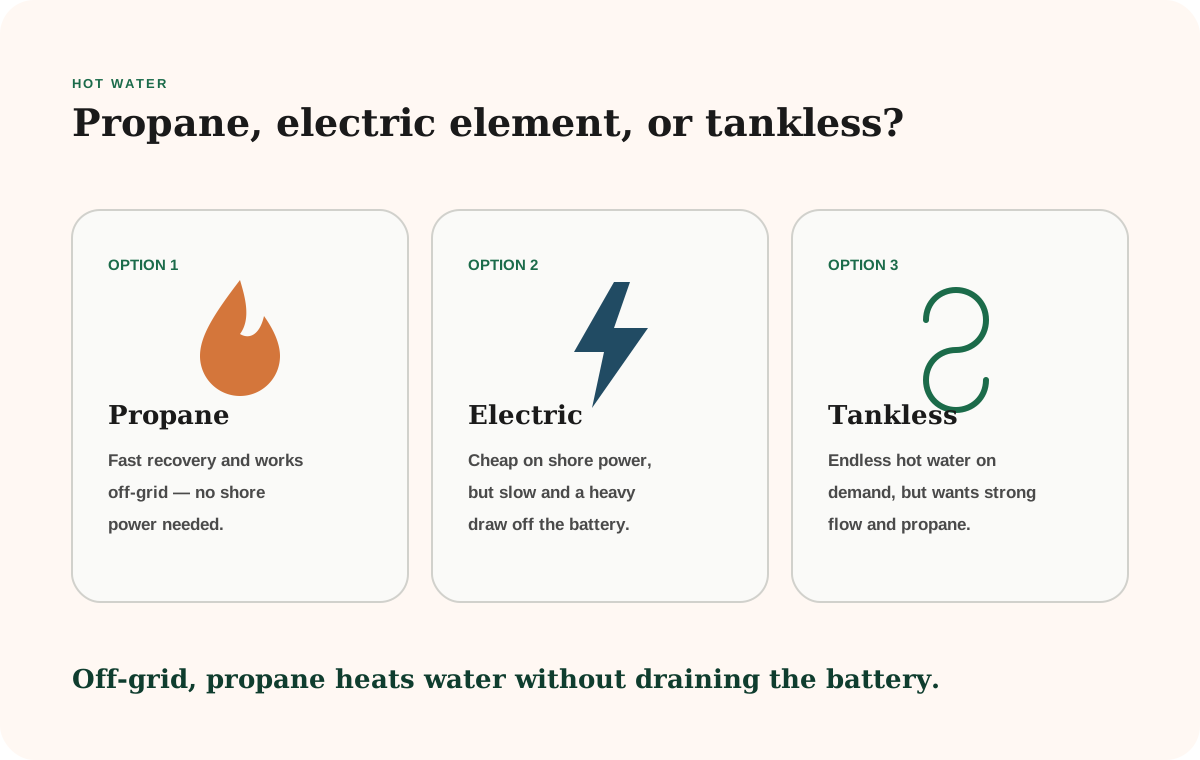
The regulator solves that by capping the pressure entering your rig at a safe level no matter what the spigot delivers. It is one of the least expensive pieces of RV gear and protects against one of the most expensive kinds of damage, which is why experienced RVers treat it as mandatory rather than optional. This pairs naturally with the rest of your water-system care, from keeping the lines from freezing in winter to understanding your water heater — protecting the plumbing from over-pressure is simply the hookup-time half of that same job.
Why city water pressure is the real threat
The danger is not that high pressure is dramatic; it is that it is invisible and constant. When you screw your hose onto a campground faucet, whatever pressure that system runs is now sitting on every fitting and line in your rig, all day and all night. Many RV manufacturers recommend keeping incoming water pressure somewhere around 40 to 50 psi or lower, yet plenty of spigots deliver well beyond that, and the weak points in any plumbing system — an aging crimp fitting, a tired fixture, a slightly stressed joint — fail under sustained pressure they were never meant to hold. Check your own rig's recommended maximum, because it is usually lower than people assume.
What makes this genuinely costly rather than merely annoying is timing. A line or fitting rarely lets go while you are standing at the sink ready to shut the water off; it tends to fail when you are out hiking or asleep, and city water keeps flowing into the rig until something stops it. The result is a flooded interior, soaked subfloor, and ruined cabinetry — water damage that ranks among the priciest RV repairs and can sideline a rig for weeks. The regulator exists precisely to remove that gamble, and the math is lopsided: a small device versus a major repair.
What a regulator does and where it goes
A water pressure regulator is a brass (ideally lead-free, potable-water-rated) device that limits the pressure passing through it to a safe downstream level, regardless of how hard the supply pushes. You thread it onto the campground spigot first, then connect your drinking-water hose from the regulator to the rig. Installing it at the spigot rather than at the rig's inlet is the small detail that matters: that way your hose is also protected, so a high-pressure system cannot stress or burst the hose between the post and your trailer. It is a thirty-second addition to the hookup routine that quietly guards everything downstream of it.
Because it sits in your drinking-water path, the material matters. Use a regulator marketed as lead-free and safe for potable water, the kind RV-focused makers like Valterra and Camco build, rather than a generic garden fitting. Beyond safety, that also keeps the taste and quality of your water where it should be. Once it is on, the regulator simply does its job in the background every time you are on city water, and the only real decision left is which style of regulator suits how you camp.
Fixed vs. adjustable regulators
Compare
The two kinds of RV water pressure regulator, and who each suits
Use one comparison matrix to scan the practical differences. Small screens stack each row; wider screens keep the first column pinned.
| Spec | Set point | Gauge | Flow | Best for |
|---|---|---|---|---|
| Fixed inline regulator | Preset (~40-50 psi) | None | Often lower | Budget, occasional, simple protection |
| Adjustable regulator (with gauge) | You dial it (e.g., 40-60 psi) | Yes | Usually higher | Full-timers, comfort, monitoring |
RV water pressure at a glance
The numbers and habits that protect your plumbing.
City water
50-100+ psi
Unpredictable and out of your control — can spike without warning.
RV plumbing
~40-50 psi
Many makers suggest keeping inlet pressure here or lower — check your spec.
The regulator's job
Cap it safely
Limits downstream pressure no matter how hard the spigot pushes.
Install point
At the spigot
Thread it onto the faucet first so your hose is protected too.
The simplest option is a fixed inline regulator: a small brass unit preset to a safe pressure, usually somewhere around 40 to 50 psi, with no gauge and nothing to adjust. It is inexpensive and bulletproof, and for an occasional camper it is entirely adequate protection. Its one drawback is flow — many fixed regulators are fairly restrictive, so you may notice a weaker shower or slower fill, especially the cheapest disc-style units. For someone who just wants to be safe and does not fuss over water pressure at the tap, a fixed regulator is a fine, no-thought choice.
The step up is an adjustable regulator with a gauge, which lets you dial the outlet pressure to a chosen number and read it on the gauge. These higher-flow units protect your plumbing just as well while preserving a stronger, more satisfying flow at the fixtures, and the gauge lets you see exactly what the campground is delivering. Full-timers and anyone who values a good shower tend to prefer them, because you can set a safe pressure — often in the 40-to-50 psi neighborhood for a sensible balance — and still enjoy comfortable flow. The tradeoff is a bit more cost and bulk, in exchange for control and better performance.
When you don't need one
There is one situation where the regulator sits in the cupboard: when you are running off your own fresh-water tank and the rig's 12-volt water pump rather than a city hookup. The pump is built to deliver water at a modest, self-limited pressure, so there is no external supply to regulate and no over-pressure risk — the pump simply cannot produce the kind of pressure that threatens your plumbing. This is the normal state of affairs when boondocking, which is why the regulator is fundamentally a city-water-hookup tool, not an all-the-time one.
That said, the moment you reconnect to a spigot — at a campground, a dump station's potable fill, or a friend's house — the regulator goes back on first. A useful habit is to keep the regulator threaded onto your drinking-water hose so it is simply part of the hose assembly and never forgotten. The cost of forgetting it once, on the wrong high-pressure spigot, is exactly the flooded-rig scenario the device exists to prevent, so make it automatic rather than a decision.
A worked example: the 80-psi campground
Picture pulling into a campground fed by a strong municipal line running around 80 psi. Hook your hose straight to that spigot with no regulator and your rig's plumbing is now holding 80 psi continuously — well above the 40-to-50 psi range many RV makers recommend. Everything may seem fine for a day or two, right up until a stressed fitting or an older line gives way while you are off at the trailhead. You come back to water pouring through the floor, a soaked interior, and a repair bill that dwarfs anything you saved by skipping the regulator.
Now run the same arrival with a lead-free regulator on the spigot, set to about 45 psi. The campground is still pushing 80, but your rig only ever sees the safe, capped pressure, and the hookup is uneventful — which is exactly what you want. The device that prevented all of that is small, inexpensive, and lives on your hose. That asymmetry, a few dollars of brass against a multi-thousand-dollar flood, is the entire argument, and it is why the regulator is the rare piece of gear with essentially no downside.
The short version
You need an RV water pressure regulator any time you connect to a campground or city spigot, because the supply pressure is out of your control and can run well above the roughly 40-to-50 psi RV plumbing prefers — and a line that bursts under city pressure floods the rig, often while you are away. Use a lead-free, potable-rated regulator, install it at the spigot so your hose is protected too, and choose a fixed unit for simple budget protection or an adjustable-with-gauge model for better flow and control. Off-grid on your fresh tank and pump you do not need it; the instant you hook to city water, you do.
How to protect your RV's plumbing
- Get a lead-free regulator. Choose a potable-water-rated unit — fixed for simple protection, or adjustable with a gauge for better flow and control.
- Install it at the spigot. Thread the regulator onto the campground faucet first, then connect your drinking-water hose from it to the rig, so the hose is protected too.
- Set a safe pressure. Leave a fixed unit as-is, or dial an adjustable one to roughly 40-50 psi, confirming your rig's recommended maximum.
- Use it every city hookup. Keep the regulator on your hose so it is automatic; reconnect it at every spigot, including potable fills.
- Skip it on the pump. Running off the fresh tank and 12V pump needs no regulator, since the pump self-limits pressure.
A burst line floods the rig — usually when you're not there
Over-pressure failures tend to happen while you're away or asleep, and city water keeps flowing until something stops it, so the damage is often severe. Always regulate city water, use a lead-free potable-rated unit, install it at the spigot, and confirm your rig's maximum recommended inlet pressure. This is general guidance, not a substitute for your RV maker's plumbing specifications.
Official references
Confirm regulator type, pressure settings, and your rig's limit from the source.
Frequently asked
Questions RVers usually ask next.
Do you really need an RV water pressure regulator?
Yes, whenever you connect to a campground or city spigot. The supply pressure is out of your control and can exceed what RV plumbing handles, and a burst line floods the rig — often while you're away. A small lead-free regulator caps the pressure safely and is cheap insurance against major water damage.
What pressure should I set an RV regulator to?
Many RVers set around 40 to 50 psi, which balances safety with comfortable flow, but confirm your rig's recommended maximum inlet pressure first. A fixed regulator is preset near that range; an adjustable one with a gauge lets you dial it in and watch the actual pressure.
What's the difference between a fixed and adjustable regulator?
A fixed inline regulator is preset (often around 40-50 psi), inexpensive, and simple, but can restrict flow. An adjustable regulator has a gauge and lets you set the pressure, usually with better flow for a stronger shower. Full-timers tend to prefer adjustable; occasional campers are well served by fixed.
Where do you install an RV water pressure regulator?
Thread it onto the campground spigot first, then run your drinking-water hose from the regulator to the rig. Installing it at the spigot protects the hose as well as the rig, so high pressure cannot stress or burst the hose between the post and your trailer.
Do you need a regulator when boondocking?
No. When you run off your fresh-water tank and the 12V pump, the pump delivers water at a modest, self-limited pressure, so there is no external supply to regulate. The regulator is specifically for city or shore water hookups; put it back on the moment you connect to a spigot.
Freshness note
Last checked June 6, 2026
This topic can change when products, plans, prices, campsite rules, or fit guidance move. These notes show what was reviewed most recently.
This review included
- Framed the safe inlet-pressure range (many RV makers recommend keeping incoming water pressure around 40-50 psi or lower) and the city-pressure threat as guidance to confirm against your rig's spec, anchored to Valterra and Camco RV water-regulator documentation.
- Kept the fixed-versus-adjustable and install-at-the-spigot guidance at the mechanism level and avoided asserting specific prices.
- Confirmed a regulator protects city/shore-water hookups, not fresh-tank-and-pump operation, and linked the freeze and water-heater guides.
Recent change log
June 6, 2026
Published an RV water-pressure-regulator guide: why city water is the threat, what a regulator does, fixed vs adjustable, the flow tradeoff, when you don't need one, a worked example, and how to install and set it.
Broader editorial corrections are tracked on the Corrections and Updates page.