RV water heater: propane, electric, or tankless?
For off-grid use, propane is the answer and the electric element is a campground bonus. A typical RV tank water heater can make hot water two ways: a propane burner rated around 8,800 to 12,000 BTU per hour, and a 1,440-watt electric element for when you are plugged in. Boondocking, you burn propane, which sips gas because the heater only fires to reheat the tank. At a campground with power included, you flip to the electric element and stop spending propane entirely. A tankless on-demand heater is the third path: it makes hot water only while you shower, never reheats a standing tank, and uses about half the propane of a tank heater — at a higher purchase price and with a fussier appetite for water flow.
Hot water is one of the off-grid resources this site treats like power, water, and propane: worth understanding by the number rather than the marketing. Here is how the three options actually behave.
How an RV water heater works
A traditional RV water heater is a small tank — usually 6 gallons, sometimes 10 — that keeps a reservoir of water hot and ready. When you open a hot tap, heated water leaves the tank and cold water flows in to replace it, so a 6-gallon tank gives you roughly ten minutes of steady hot water before it runs cool and needs to recover. Most modern units are "gas-electric," meaning they can heat with a propane burner, a 1,440-watt electric element, or both at once for the fastest recovery. The propane burner reheats the full tank in well under half an hour; the electric element alone recovers around 6 gallons per hour, so figure roughly 18 to 24 minutes to fully reheat after a long shower.
A tankless, or on-demand, water heater throws out the tank entirely. It fires a much larger propane burner — the Truma AquaGo is rated around 60,000 BTU and the Girard around 42,000 BTU — only while water is flowing, heating it instantly as it passes through. There is no reservoir to keep warm and no ten-minute limit: hot water lasts as long as the propane and water hold out. The catch is that the burner needs a minimum water flow to light and hold a stable temperature, and the unit needs 12V power for its ignition and electronics, so it is a more system-dependent device than a simple tank.
Propane versus the electric element
RV water heater at a glance
The numbers that decide which heat source you actually use, and where.
Tank propane burner
~8,800-12,000 BTU/hr
Reheats a 6-gal tank in under 30 minutes. Your off-grid default.
Electric element
1,440 W (~120A at 12V)
A shore-power tool. Far too much current to run off a battery.
Tankless on-demand
~42,000-60,000 BTU/hr
Endless hot water, ~half the propane of a tank, only while running.
Off-grid hot water
Propane wins
Both tank and tankless run on propane; the battery only powers ignition.
The electric element deserves a hard line, because it confuses people. A 1,440-watt element is wonderful on shore power — it makes hot water for free when the campground bundles electricity, sparing your propane. But it is not an off-grid option. Drawing 1,440 watts through a 12V system is about 120 amps from the battery, the same kind of brutal load that makes running an electric space heater off the battery a mistake. The appliance wattage reference makes the pattern plain: heat-making elements are shore-power and generator devices, never battery ones. Off the grid, you let propane make the heat and keep the battery for pumps, fans, and electronics.
Tank versus tankless
Compare
Tank versus tankless RV water heaters
Use one comparison matrix to scan the practical differences. Small screens stack each row; wider screens keep the first column pinned.
| Spec | 6-gallon tank (gas-electric) | Tankless on-demand (propane) |
|---|---|---|
| Hot water capacity | ~10 minutes, then recovery | Endless while propane and water last |
| Propane use | Sips gas; fires to reheat the tank | Roughly half a tank heater's gas for the same shower |
| Standby loss | Keeps a tank warm even unused | None — only runs while water flows |
| Off-grid fit | Strong; simple, low battery draw, electric on shore power | Strong on propane, but needs steady water flow and 12V |
| Cost and complexity | Cheaper, simpler, familiar parts | Pricier, more sensitive to flow and inlet temperature |
The honest tradeoff is capacity versus simplicity. A 6-gallon gas-electric tank is cheap, familiar, and forgiving: it works at any water pressure, recovers fast on propane, and gives you the free electric option at campgrounds. Its limit is the tank — about one good shower before you wait for recovery, which a family learns to work around with quick, staggered showers. A tankless trades that limit for endless hot water and lower propane use, since it never wastes gas keeping a standing tank warm. In exchange you pay more up front, depend on adequate water flow and a working 12V supply, and accept that very cold inlet water or a trickle from a weak pump can leave it struggling to hold temperature.
A worked example: a family of four
Picture four people wanting showers on a cold morning off-grid. With a 6-gallon gas-electric tank on propane, the first person gets a full hot shower, the second a shorter one, and then the tank needs fifteen to twenty minutes on the burner before the third and fourth go. The fix is the classic RV "navy shower" — wet down, water off, soap up, rinse — which lets a 6-gallon tank stretch across all four with a short recovery in the middle. Propane use is modest because the burner only runs to reheat.
Swap in a tankless and the same four showers happen back to back with no waiting, because the burner heats on demand. Over those four showers the tankless burns hard while running but for less total gas than the tank would use reheating between each person, and it never spent propane overnight keeping a tank warm. The payoff is comfort and a little propane saved; the cost is the higher price of the unit and the need for steady water pressure from the pump. Either way, off-grid the heat is propane — the propane-tank-life guide shows how little hot-water heating actually moves the needle compared with the furnace.
How to choose for off-grid RV life
- Default to a gas-electric tank for simplicity. A 6-gallon tank with a propane burner and a 1,440-watt element covers most rigs: propane off-grid, free electric on shore power.
- Choose tankless for endless hot water and propane savings. If long showers, a family, or full-timing make tank capacity a daily annoyance, the comfort and lower gas use are worth the price and the flow requirement.
- Never plan to run the electric element off the battery. At ~120 amps it is a shore-power and generator feature only; off-grid, the burner makes the heat.
- Protect your water and propane. Use navy showers to stretch a tank, run the electric element when power is included, and turn the heater off when you are not using it to save standby gas.
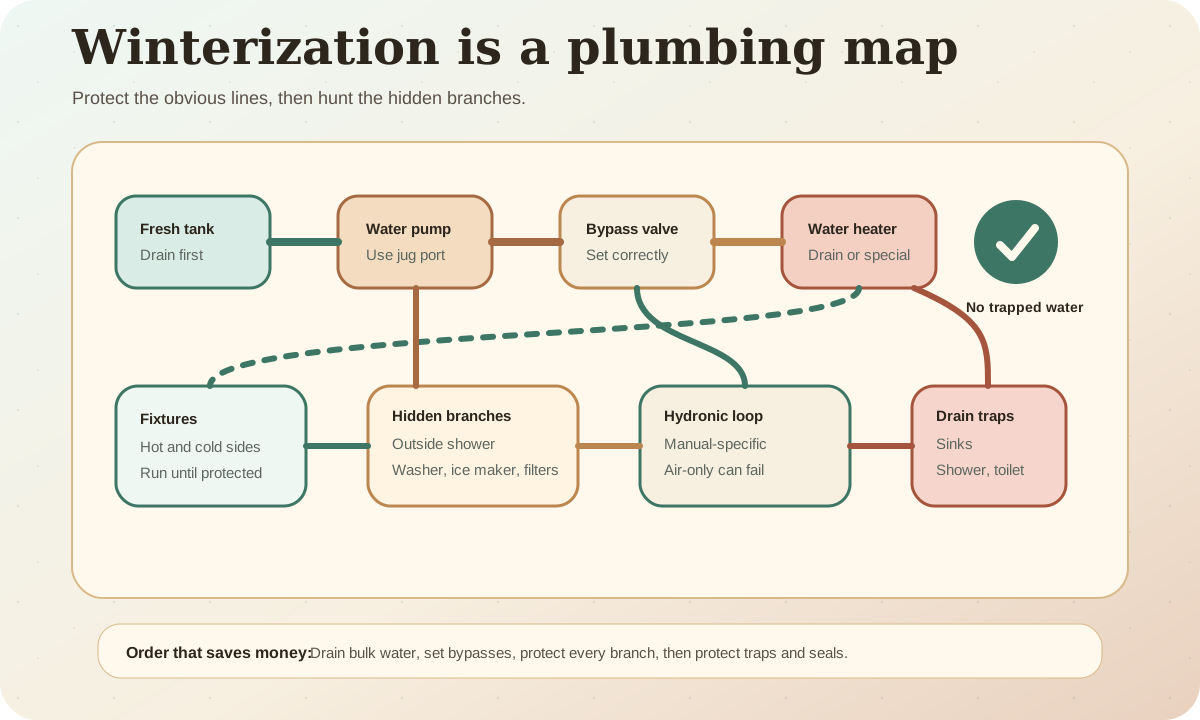
- Winterize the heater every cold season. Drain the tank and use the bypass, or follow your tankless unit's freeze procedure — see the RV winterizing guide.
Hot water, handled safely
Both propane and tankless heaters are combustion appliances vented to the outside; keep their exterior vents clear and a carbon monoxide alarm working. Water heaters can scald — many RV units run hot, so test before kids or pets get in. And never fire a tank water heater dry: confirm it is full of water before lighting the burner or switching on the electric element, or you can destroy the element and the tank.
The short version
For an RV, the water heater question is really "propane off-grid, electric on shore power, and do you want a tank or tankless." A 6-gallon gas-electric tank is the simple, cheap, forgiving default that gives you both heat sources and one solid shower at a time. A tankless trades a higher price and a need for steady water flow for endless hot water and roughly half the propane. And the 1,440-watt electric element, tempting as it looks, is a campground bonus that never belongs on your battery. Match the choice to how you camp, keep hot water on fuel when you are off the grid, and it becomes one more number you plan instead of a surprise cold shower.
Official water-heater references
Confirm capacity, BTU input, and the tank-versus-tankless tradeoff before you choose or upgrade.
Frequently asked
Questions RVers usually ask next.
Should an RV water heater run on propane or electric?
Off-grid, run propane — the burner sips gas and your battery only powers the ignition. On shore power, switch to the 1,440-watt electric element, which makes hot water for free when electricity is included in the site fee. Many RV heaters do both, so you pick based on where you are parked.
Can you run an RV water heater's electric element off a battery?
No. A 1,440-watt element draws about 120 amps from a 12V battery, far more than a normal bank should deliver and a fast way to flatten it. The electric element is a shore-power and generator feature; off-grid, use the propane burner instead.
Is a tankless RV water heater worth it?
It is worth it if you value endless hot water and lower propane use and do not mind the higher price. A tankless on-demand heater (around 42,000 to 60,000 BTU) never runs out and uses roughly half the propane of a tank for the same shower, but it needs steady water flow and 12V power and can struggle with very cold inlet water.
How long does the hot water last in a 6-gallon RV water heater?
About ten minutes of steady hot water before it runs cool, then roughly 18 to 24 minutes to recover on the electric element, or under half an hour on propane. A 'navy shower' — water off while you soap up — lets one 6-gallon tank cover several people.
Does an RV water heater use a lot of propane?
No, surprisingly little. Because it only fires to reheat the tank, a propane water heater is a minor draw compared with the furnace; the propane-tank-life guide shows heat is the real gas hog. A tankless uses even less for the same hot water by never keeping a standing tank warm.
Freshness note
Last checked June 6, 2026
This topic can change when products, plans, prices, campsite rules, or fit guidance move. These notes show what was reviewed most recently.
This review included
- Confirmed tank water-heater propane input (about 8,800-12,000 BTU/hr) and the 1,440-watt electric element against current Suburban, Dometic, and Atwood specifications.
- Checked tankless on-demand outputs — Truma AquaGo ~60,000 BTU and Girard ~42,000 BTU — and the U.S. Department of Energy comparison of tank versus demand water heaters.
- Framed all figures as planning numbers grounded in published ratings, with scald, winterizing, and combustion-safety notes.
Recent change log
June 6, 2026
Published an RV water-heater guide comparing propane, the electric element, and tankless on-demand, with BTU and battery numbers, a tank-vs-tankless comparison, a worked family-shower example, and off-grid hot-water tactics.
Broader editorial corrections are tracked on the Corrections and Updates page.